
Music is the universal language
“Glory to God in the highest heaven, and on earth peace to those on whom his favor rests.” - Luke 2:14
General Interest
Radiohead’s Johnny Greenwood “found it strange” the band didn’t play any new material on their recent reunion tour

Radiohead’s Jonny Greenwood has been reflecting on their recent tour, and says he found it odd that they didn’t play any new material while on the road.
After a seven-year hiatus, Radiohead reunited and embarked on a EU/UK tour last year spanning 20 shows. Prior to this, Greenwood had been working on orchestral and film composition work, and even though the band enjoyed the stint, it seems a new record is unlikely.
Speaking to The Times, Greenwood shares, “It was great to revisit songs that we always felt were good and to find lots of other people now agree with us. And it was really nice to be playing and listening to Thom [Yorke] again. But I found it strange not to be doing anything new on the tour. I guess we are all doing new music elsewhere now so that’s where our creative energies are going.”
Asked about the possibility of a new album from the band, he replies, “I’ve no idea. I mean, I’m surprised that the tour actually happened and that we all enjoyed it so much. But venues get booked so far in advance. To do another we would have to decide now, and even then it wouldn’t happen for 18 months.”
Recently, Greenwood spoke out against the use of his music in the Melania Trump documentary. The documentary was released at the end of January this year, and centred around Melania’s life in the days leading up to her husband’s 2025 inauguration.
A section of music from the score that Greenwood wrote for the 2017 film Phantom Thread was used in the doc, and both he and its director released a statement sharing their unhappiness.
“It has come to our attention that a piece of music from Phantom Thread has been used in the Melania documentary. While Jonny Greenwood does not own the copyright in the score, Universal failed to consult Jonny on this third-party use which is a breach of his composer agreement,” they allege. “As a result Jonny and Paul Thomas Anderson have asked for it to be removed from the documentary.”
Guitar.com reached out to Universal for comment.
The post Radiohead’s Johnny Greenwood “found it strange” the band didn’t play any new material on their recent reunion tour appeared first on Guitar.com | All Things Guitar.
Wolfgang Van Halen thinks rock music is “perfectly great where it is”: “There’s room for everything”

Modern rock might not be everyone’s cup of tea, but Wolfgang Van Halen believes it’s exactly where it needs to be right now.
Wolf is driving rock music forwards with his own band, Mammoth, and while some people may believe the genre is oversaturated, he believes there’s room for all kinds of bands and musicians within it. With artists like Yungblud, Sleep Token, and many more taking off, it’s clear rock isn’t going anywhere, but is definitely evolving.
During an interview with Special K of The Sound 228, Wolfie says (via Blabbermouth), “I think there’s room for everything. I think it’s a knee-jerk reaction for people to be upset about this or that.
“In this day and age, we’re just inundated with a crazy amount of things, but I think there’s room for everything to breathe and to coexist. So I think rock is perfectly great where it is. If it changes, that’s cool. If it doesn’t, I think there’s a space for everybody to enjoy it.”
Asked for his advice for up-and-coming musicians, he replies, “You really gotta love the playing and the writing of the music part, ‘cause the business, like every other business, is a very predatory and tough-to-navigate sort of thing. So I think as long as the writing and the playing of the music is what matters to you more than anything, I don’t think you can lose.”
Last year, WVH spoke of his own place within rock, and said he felt happy that people were beginning to take him seriously as an artist in his own right, rather than Eddie Van Halen’s son.
“It’s pretty great,” he said during an interview with Radio Futuro. “I’m very lucky and happy that people are beginning to take me seriously as my own artist and separate me from my family history.
“At the end of the day, that’s all I would really like to do, is be taken at face value for what I represent and not for what my family represents. And I think that’s why I’m trying to do something different.”
You can catch Mammoth on tour this year, with shows kicking off in March. Find out more via the Mammoth website.
The post Wolfgang Van Halen thinks rock music is “perfectly great where it is”: “There’s room for everything” appeared first on Guitar.com | All Things Guitar.
“Always ready to ribbit”: This pedal makes your guitar sound like a frog – because why the hell not

The pedal market is full of marvellous creations. Whether you’re wanting to add a toot of flatulence to your track with the Fart Pedal, or capture the essence of Japanese Vocaloid Hatsune Miku with Korg’s Miku Guitar Pedal, there’s plenty of options out there. Now, if only you could make your guitar sound like a frog…
Wait – what’s that? You can!? That’s right – FruitFX has hopped to the challenge, collaborating with Jordan.wav to create the Frog Pedal. Boasting croaky riffs and ribbits, this mighty monophonic octaver pedal is sure to tempt the amphibian ladies back to your lily pad.
Originally crafted from one of Jordan.wav’s own pedal creations from 2010, which he explains “created a bit of online buzz” back in the day. The renewed FruitFX Frog Pedal adds a few extra elements to make it shine.
Users have the option of adjusting two separate dials: both Volume and, unsurprisingly, Frog. Full-Frog will provide a full-bodied froggy experience (“think Bull Frog”), while its lower setting provides a snappier fuzzy sound. There’s also a switch to adjust your octave drops, with the option of dropping just one octave, or two octaves for a “deep growling effect”.
With the Frog Pedal, there’s plenty of fun to be had. You can enlist the entire pond by playing chords, allowing you to curate your own frog choir, or you can just twang a single note if you’re just wanting to scatter in a few croaks.
If we were to put this froggish transformation into words, it’s like a fuzzy octave drop. It’s pretty groovy, honestly – we could imagine it being a fun way to quirk up a slap bass performance in particular. As Jordan.wav puts it, it’s “funky, massive, and froggy in the best possible way”.
Alongside its sonic charm, this analogue stompbox also looks pretty dang cute. Who could resist that little cartoon frog? He looks very trustworthy. And the website vows that he is “always ready to ribbit”, so don’t keep him waiting.
The FruitFX x Jordan.wav Frog Pedal is available now for £124. For more information, head to FruitFX.
The post “Always ready to ribbit”: This pedal makes your guitar sound like a frog – because why the hell not appeared first on Guitar.com | All Things Guitar.
“He said, ‘I wish I could let that go, but it’s hard!” Paul Gilbert explains why Joe Satriani feels the need to “prove” he can shred on his records

You’d think that once you’re Paul Gilbert or Joe Satriani, the need to prove you can shred would quietly disappear. Between platinum records, sold-out tours and decades of jaw-dropping guitar technique, what exactly is left to demonstrate?
Quite a lot, as it turns out.
Speaking to MusicRadar, the Gilbert admits that resisting the urge to tear into full-blown shred mode isn’t always easy – even when the song might benefit from restraint.
“Well, I try to be aware of my own habits, both good and bad, and so, if I find myself getting too dense, I’ll try to slow down,” he says. “To me, that is actually a courageous thing to do, to not go crazy all the time, and rely on the fact that it works for the song – and not have to prove yourself every single second.”
That need to “prove” yourself isn’t unique to Gilbert. And he realised just how universal it was during a conversation with one of guitar’s biggest names.
“It was funny, I did a [guitar] camp once with Joe Satriani,” he recalls. “I can’t remember exactly how he worded it but he said something like, ‘Every time I do an album, I feel like the first song I have to prove that I can play guitar.’ And he said, ‘I don’t like that. I wish I could let that go. But it’s just really hard!’ I thought, ‘I know exactly what you mean.’”
“There’s like this athletic element where you want to prove that you can still swim – like you’re Michael Phelps, ‘I can still swim just as fast as I did when I was 22!’”
And yet, some of his most effective playing arrives when he does the opposite. On Orderly And Distinctly, from his forthcoming album WROC, Gilbert deliberately reins it in.
“The solo is almost like something the Edge from U2 would do, just basically playing a three-note melody over and over again,” says the musician. “And then there is a little bit in the end where I play the vocal line on guitar. But the majority is almost like it’s just a riff. That one, to me, it was perfect for the song, and it’s not a shred thing, and it’s not a prog thing. It is just, like, this melody fits here.”
WROC is now available for pre-order and arrives on 27 February via Music Theories.
The post “He said, ‘I wish I could let that go, but it’s hard!” Paul Gilbert explains why Joe Satriani feels the need to “prove” he can shred on his records appeared first on Guitar.com | All Things Guitar.
Neural DSP Quad Cortex Mini review: “this is the most universal Quad Cortex yet”

$1,399/£1,129, neuraldsp.com
Finland might have spent the best part of the last decade at the top of the World Happiness Report table, but Helsinki-based Neural DSP seems to have a rare talent for inciting the opposite emotion in large swathes of the guitar internet.
It’s easy to forget that it’s been less than five years since Guitar.com brought you the world-exclusive review of the Quad Cortex – a truly game-changing hybrid of profiling and modelling that has since replaced traditional amps for arena bands, touring artists and even pub giggers. The fidelity and usability of Neural’s hardware has made Doug Castro’s company one of the biggest new players in the guitar world, but it’s also had a trickier side effect.
When you reshape the entire gear landscape with your first hardware product, expectations are raised to unreasonable levels – and it’s something the company has been battling against for the last few years.
 Image: Adam Gasson
The launch of the Nano Cortex in 2024 was the first sign that people on the internet were going to get weird when it came to new Neural products. While a bizarre pre-launch video didn’t do them many favours, the sheer vitriol that greeted what was an unquestionably excellent product was bizarre. It was taking pelters, primarily it seemed, for not being the fantasy product people on forums had dreamed up in their head – a Quad Cortex that was roughly a third of the size, but featured all the same functionality and features for a third of the price.
Neural admitted it was somewhat taken aback by the response in the aftermath, and it’s perhaps not surprising that they’ve simplified the pre-release hype somewhat with recent releases. But with the release of a brand new Cortex product – and one that seemingly gives people the vast majority of things they complained was missing from the Nano – the grumblers are back: certainly they were in full voice in our Instagram comments.
But does any of this actually matter? Well, no… the awkward truth is that as loud as the boo-boys are online, it makes not one jot of difference to whether the Quad Cortex Mini is actually any good in the real world. So let’s ruminate on that, shall we?
 Image: Adam Gasson
Neural DSP Quad Cortex Mini – what is it?
In the grand old tradition of saying what you see, the Quad Cortex Mini is… well, a Mini Quad Cortex. Unlike the Nano, which stripped down a fair bit of the functionality to turn a $1,500 pedal into a $500 one, the Mini keeps the QC’s mojo intact, but in a form factor that’s roughly a third of the size – just 8 inches long and a hair over 4.5 inches wide.
That ambitious goal is what gives the Mini its rather polarising look – in order to squeeze the QC’s impressive and essential 7” capacitive touchscreen into a box this size, concessions have had to be made. That means we lose seven of the QC’s 11 footswitches, as well as the rotary volume knob (replaced by a subtle up/down switch on the pedal’s top), as well as a few elements of the I/O side of things.
There’s one fewer combi-jack input here – though you do still get a standard jack input for stereo rigs – and the dual effects loops are now condensed into a combined input/output pair that you’ll need a TRS insert cable to utilise both loops. Another sacrifice to space is the second expression pedal output – if you want to run two expression pedals you’ll need to connect one via MIDI.
Far be it for me to dismiss the I/O needs of the wider guitar community, but certainly from my point of view, these feel like the sort of niche-use luxuries that I’d be happy to sacrifice to get a Quad that fits on my Pedaltrain Nano and costs $400 less… your mileage may vary, of course.
Other than that, Neural is at pains to stress that it is 100 per cent a Quad Cortex – with the same underlying hardware, UX and processing power as the big boi, just in a box that looks like someone’s put an iPhone on a punishing protein supplement regimen.
Ah yes, the screen – the thing that has provoked the most chin-stroking amongst guitar people in the weeks since the Mini’s launch. Neural has been at pains to stress that making the top surface of an effects pedal that is designed to be stepped on in a variety of dimly lit environments is fine. They say they’ve tested it to extremes and that you don’t have to worry about that glass cracking under normal use. I would counter that by saying that Apple has been boasting about how hardcore the glass in their iPhone screens is for the last decade and yet every town in the land has at least two shops that do screen repairs…
 Image: Adam Gasson
Neural DSP Quad Cortex Mini – build quality
Right then, let’s get this out of the way up top: the screen. I’ll admit to firmly being in the eyebrow-raised camp when I saw the QC Mini at NAMM this year, but having spent some time with it at home, I can’t deny that this feels like an incredibly well-made piece of kit.
It’s reassuringly heavy, precision engineered, and that glass feels thick and has coped with plenty of stomping over my few weeks of testing without so much as a scratch.
As I’m a clumsy oaf, I’ve also knocked a few things onto it, dropped it onto my desk (oops), and generally not been particularly careful with it and it still looks as pristine as it did when I pulled it out of the box.
I did contemplate dropping a Les Paul strap button-first onto it from a height, but I was genuinely worried my guitar would come off worse than the pedal. In lieu of that, I’d say don’t drop anything very heavy onto it, or drop it from a great height onto a hard floor. To be fair, this is generally just good (and you would hope unnecessary) advice when talking about any pedal that doesn’t have Boss written on its rubber-capped footswitch.
The pedal’s unconventional design doesn’t exactly help on the reassurance side of things. The proximity of the switches to that screen – and the way you have to step across them due to the way they’re laid out – does invite an accidental step on the screen in a way that it wouldn’t were the switches all situated on one side or in a line across the bottom. It’s for this reason that I can still see DeckSaver doing a fairly good trade if they were to make a perspex cover to slot over the top of this thing – belt and braces and all that.
A big tick however, for the new locking power cable – a great way to ensure that your entire rig won’t be plunged into silence because someone trips or yanks the power cable during set-up or mid-gig – especially given that the QC Mini takes about a minute to reboot after a reset or power loss.
 Image: Adam Gasson
Neural DSP Quad Cortex Mini – usability
It’s perhaps inevitable that a pedal offering significantly fewer actual physical controls would have a bit more of a learning curve than its bigger brother, and so it is with the Mini.
This is most apparent when you boot the QC Mini up for the first time – unlike the original Quad, it doesn’t have that instant intuitive setup, especially if you’re not overly familiar with the QC’s existing UX. Each of the three modes – preset, stomp and scenes (effectively presets within a preset) – requires you to learn a series of tap-dancing switch shortcuts to switch between sounds and the like.
There’s an element of this with any multi-effects of course, but it’s definitely accentuated here because of how many functions are tied to these four switches. The tuner, for example, is selected by a quick tap on the A and C footswitches together… but closing it requires you to hit the B footswitch instead of simply tapping the same one again. Equally, holding down those two switches simultaneously instead of a taping on them scrolls up between the preset banks in preset mode.
It sounds more confusing than it is in practice, but it does require you to wire your brain to the specific set of button presses to get stuff done in a way that you didn’t necessarily have to with the bigger unit.
One thing that I certainly do appreciate is the clever addition of rotary footswitches. Each of the four switches also doubles as a rotary control that is smart-bound to select and then edit certain parameters. It’s a dramatically more precise and useful way of tweaking your sound both in a live setting or in the studio – and offsets a fair bit of the tedium of endless touchscreen fiddling.
The QC Mini having wifi for wireless updates and downloading new presets and captures is a fantastic holdover from the original QC, but I was disappointed that unlike the Nano, it doesn’t have Bluetooth, thus meaning that you can’t pair it with the Cortex Cloud app.
The Cortex Cloud app is essential for creating presets on your phone that you could then load onto the screen-less Nano wirelessly, but it’s a shame that the Mini doesn’t offer similarly smooth off-pedal editing.
You can connect it to your laptop via USB-C and use the Cortex Control app of course, but given that this pedal is designed more than its bigger brother to live on a pedalboard, it’s a shame you have to either take it off your board or get down on your hands and knees to do the deep stuff. Is it a big hassle? No, but Neural is usually so good at streamlining the creation process, it’s a rare oversight.
 Image: Adam Gasson
Neural DSP Quad Cortex Mini – sounds
The greatest compliment I can give Neural about the entire Cortex ecosystem is that no matter what piece of hardware I’m talking about, the sounds section could be copy and pasted without much in the way of deviation. There’s a reason that all your favourite bands have pivoted to the Quad Cortex in some way shape or form – the quality and consistency of the sounds on tap is truly remarkable.
While the out of the box presets do tend to skew more towards the heavier side of the market (a perception that Neural has been starting to change recently), the quality and fidelity of these sounds – not to mention the instant usability of them – is quite a thing to behold.
A lot of multi-effects presets are about showing off – showcasing all the myriad different sounds you can get out of a thing without thinking too much about whether these sounds would actually work in a mix, but Neural doesn’t get too caught up in this. The basic presets showcase a Mount Rushmore of iconic amps presented without too much embellishment – meaning you could boot it up and roll right into a Marshall Plexi or a Deluxe Reverb and use it without ever needing to get into the deep editing side of things.
And it bears repeating how impressive not just the sound but the feel of Neural’s captures are – more so than anything else I’ve tried. Is it indiscernible from a real valve amp? Well, yes – but only slightly. It’s also probably not quite as good sonically as Universal Audio’s amp pedals – but they cost $400 each, and feel as good in terms of response.
I always think the high gain and ethereal clean amp models are the easiest things for digital to replicate – it’s the stuff in between where you really earn your coin. And it’s here that I find myself dwelling more often than not. Cranked vintage Marshalls, cooking Tweed combos, these are the things that digital has always struggled with, but the QC Mini makes them compelling and organic.
The built-in suite of effects is impressive too – especially compared to the pared-down offering that the Nano provides – and it’s also very nice to be able to try out a bunch of captured dirt pedals in the chain, too.
While the QC Mini plays nicely with pedals both in and out of the loop, and does so in a way that feels organic and authentic, the quality and variety of the effects on tap will likely cause many players to consider whether they even need them. There’s serious horsepower under the hood here, and it’s being put to very good use.
 Image: Adam Gasson
Neural DSP Quad Cortex Mini – should I buy one?
It would seem that Castro and his mates can’t win at this stage. They’ve been Mark Hamill-ed; doomed to have their stratospheric early success hung round their necks like a millstone, no matter what they do next.
It felt harsh when Neural started getting so much grief about the Nano Cortex, and the grumbling feels even more out of place here. The Quad Cortex Mini is everything that fans have been asking for in terms of size and functionality – it’s a truly pedalboard-ready QC that makes very few compromises (and those it does are broadly quite acceptable).
I’ve seen a lot of grumbling about the price, but this is still $400 cheaper than the original – what exactly were people expecting here? Players may compare the Quad Cortex Mini to the HX Stomp, conveniently forgetting that they are quite different bits of kit in both form and function. Line 6’s new Helix Stadium is a more fair competitor, and that costs about the same as the original Quad, and hasn’t even launched its Proxy profiling technology yet.
Unquestionably, $1,400 is a hell of a lot of money to spend on any damn thing – but in the context of the high-end, capture-enabled modeller world, it’s about par? It intentionally sits nebulously between the full-fat QC and the Nano, but offers a much more complete package than its screenless stablemate.
There are so many options for so many use cases in the modern world of modellers and multi-effects – but the Mini might be the most universal one of the lot. They know how to make people happy in Finland, and when you plug in the Quad Cortex Mini, it’s impossible not to smile.
[products ids=”19PQzuW8mz3waD0guXZFLS”]
Neural DSP Quad Cortex Mini – alternatives
There are, bluntly, shitloads of options at all manner of price points in the multi-effects and amp modelling game, but not many of them have both the profiling ability of the Quad Cortex, nor its huge library of user captures that is Cortex Cloud. If your budget doesn’t stretch to the QC Mini, then the Nano Cortex ($569 / £449) is an impressive gateway to the ecosystem. The Line 6 Helix Stadium XL ($1,699 / £1,549) is a big, unapologetic high-end modelling station, but with its own Proxy capture technology dropping imminently, it’s got the potential to offer much more than previous Helix units. If you want profiling on an absolute budget, the Tonex Pedal ($329 / £329) is limited in functionality but has some impressive sounds and features. Finally, the OG is of course Kemper, and the brand’s Profiler Stage Mk II ($1,649 / £1,499) can compete with the best of them sonically – in terms of ease of use and modern convenience however, the German brand is lagging far behind.
The post Neural DSP Quad Cortex Mini review: “this is the most universal Quad Cortex yet” appeared first on Guitar.com | All Things Guitar.
The Next Generation Grand Auditoriums Have Arrived

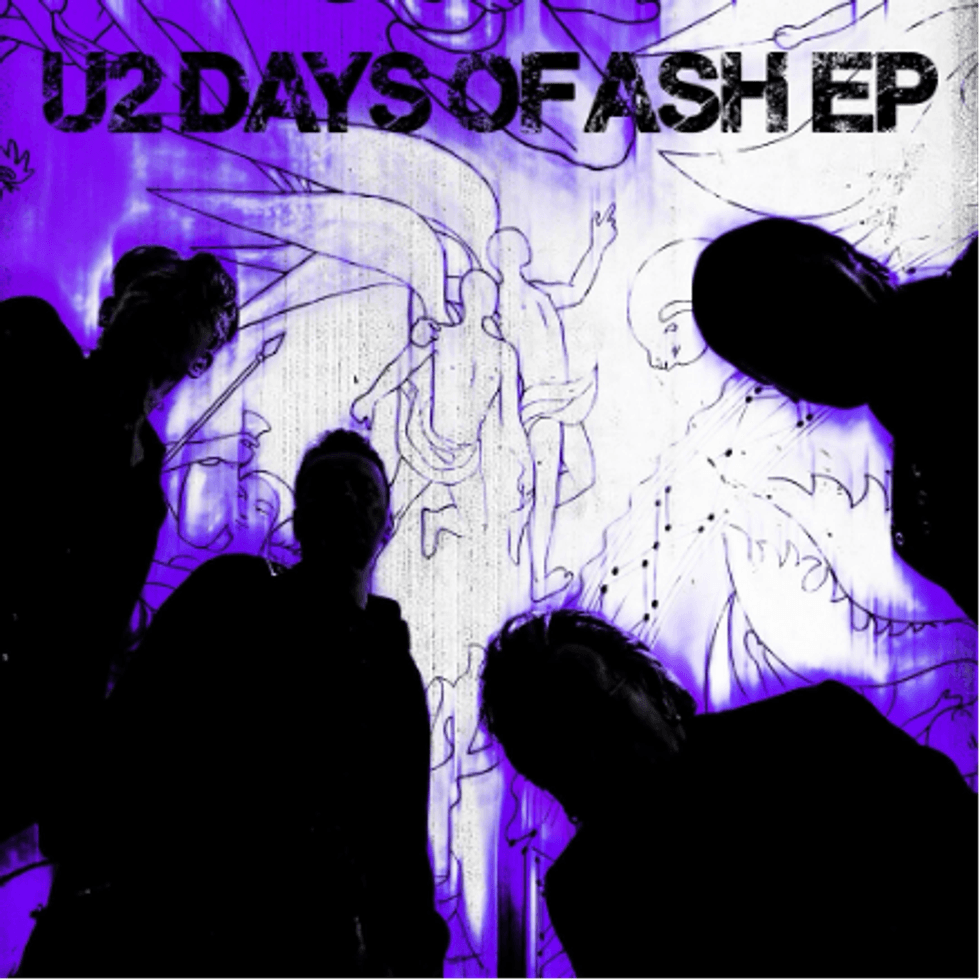
U2 Announce New Standalone 6-Track EP U2 "Days Of Ash"

Interscope Records today announces the release of U2 - Days Of Ash, a brand new standalone 6-track EP from U2. Out now, listen HERE. Watch lyric videos HERE.
In advance of a new album in late 2026, the U2 - Days Of Ash EP is a self-contained collection of five new songs and a poem - "American Obituary," "The Tears Of Things," "Song Of The Future," "Wildpeace," "One Life At A Time," and "Yours Eternally" (ft. Ed Sheeran & Taras Topolia) - an immediate response to current events and inspired by the many extraordinary and courageous people fighting on the frontlines of freedom. Four of the five tracks are about individuals – a mother, a father, a teenage girl – whose lives were brutally cut short. A soldier who’d rather be singing but is ready to die for the freedom of his country.
“It’s been a thrill having the four of us back together in the studio over the last year… the songs on Days of Ash are very different in mood and theme to the ones we’re going to put on our album later in the year. These EP tracks couldn't wait; these songs were impatient to be out in the world. They are songs of defiance and dismay, of lamentation. Songs of celebration will follow, we’re working on those now… because for all the awfulness we see normalized daily on our small screens, there’s nothing normal about these mad and maddening times and we need to stand up to them before we can go back to having faith in the future. And each other.
“If you have a chance to hope it’s a duty…” is a line we borrowed from Lea Ypi.
A laugh would be nice too. Thank you.”
Bono
“Who needs to hear a new record from us? It just depends on whether we’re making music we feel deserves to be heard. I believe these new songs stand up to our best work. We talk a lot about when to release new tracks. You don’t always know… the way the world is now feels like the right moment. Going way back to our earliest days, working with Amnesty or Greenpeace, we’ve never shied away from taking a position and sometimes that can get a bit messy, there’s always some sort of blowback, but it’s a big side of who we are and why we still exist.”Larry Mullen Jr.
“I’m excited about these new songs, it feels like they’re arriving at the right time.”
Adam Clayton
"American Obituary" speaks to the shocking event the world witnessed in Minneapolis, Minnesota on January 7th, 2026 where Renée Nicole Macklin Good, an idealistic mother of three, was shot at almost point-blank range while exercising her right to peacefully protest, a right that is protected under the First Amendment of the United States Constitution. This unarmed mother was then described as a “domestic terrorist” by a government who will not withdraw the description even though they know it’s not true. Or mount a proper enquiry into what happened for the sake of everyone involved.
"The Tears Of Things" borrows its title from a book by Franciscan friar Richard Rohr, which examines, through the writings of the Jewish prophets, how one can live compassionately in a time of violence and despair. The song imagines a conversation between Michelangelo’s David and his creator… where the young man with the sling and five smooth stones refuses the idea that he has to become Goliath to defeat him... he’s also revealed as having heart shaped pupils half a millennia before the heart shaped emoji, which puzzles visitors at the Galleria dell’Accademia in Florence, Italy, to this day.
The star of the lyric, Sarina, in "Song of the Future" honors the life of 16-year-old Sarina Esmailzadeh, one of thousands of Iranian schoolgirls who took to the streets as part of the Woman, Life, Freedom movement in 2022. These protests were sparked by the death of Jina Mahsa Amini, a young Kurdish-Iranian woman who died in Tehran on September 16th that year from injuries sustained following her arrest by the so-called "morality police" for not wearing a hijab in accordance with government standards. Seven days later, Sarina was beaten by the Iranian security forces and died from her injuries, the regime claiming she killed herself. The song aims to capture Sarina’s free spirit, the promise and hope of her short life.
The Days of Ash EP includes a reading of "Wildpeace" - a poem by Israeli author and poet Yehuda Amichai - by Nigerian artist Adeola of Les Amazones d'Afrique, with music by U2 and Jacknife Lee.
"One Life At A Time" is written for Awdah Hathaleen, a Palestinian father of three. A nonviolent activist and English teacher, Awdah was killed in his village in the West Bank by Israeli settler Yinon Levi on July 28th, 2025. Awdah was a consultant on the Oscar-winning documentary “No Other Land,” made by Palestinians and Israelis. At his funeral, one of the directors, Basel Adra, spoke of the slaughter of his friend and the experience of Palestinians being erased “one life at a time.” U2 took that line and turned it around to suggest that a peaceful resolution will be wrought “one life at a time.”
"Yours Eternally" sees Bono and The Edge joined on vocals by Ukrainian musician-turned-soldier Taras Topolia, as well as Ed Sheeran. In the spring of 2022, following Russia’s invasion of Ukraine, Bono and The Edge traveled to Kyiv to busk in a metro station at the invitation of President Zelensky. A couple of days prior to that, Ed connected Taras Topolia, and by extension his band Antytila, with Bono. Bono, Taras and The Edge met for the first time on that subway platform. They’ve been friends ever since. Taras is the inspiration for "Yours Eternally," a song written in the form of a letter from a soldier on active duty with a bold, mischievous spirit to match Ukraine’s.
"Yours Eternally" will also be proudly accompanied by a short 4½ minute documentary film directed by Ukrainian cinematographer and filmmaker Ilya Mikhaylus, that will be released on Tuesday, February 24th - the 4th anniversary of Russia’s invasion of Ukraine. Shot in December 2025 while Mikhaylus and his crew were embedded alongside the 40,000-strong Khartiya Corps, the film captures the extraordinary daily lives of Alina and her fellow soldiers fighting on the frontlines of the war.
U2 Days of Ash EP is accompanied by the return of Propaganda as a one-off digital zine, with a limited-edition print run. Forty years ago, in February 1986, the first issue of Propaganda dropped through the letterboxes of U2 fans around the world. Aspiring to match other fan magazines at that time, Propaganda was born out of the punk-era D.I.Y. zine culture that embraced attitude, ideas and dialogue. In the spirit of those early issues, this standalone EP will be accompanied by a one-off limited edition print run plus digital e-zine drop of Propaganda titled "U2 - Days Of Ash: Six Postcards From The Present… Wish We Weren’t Here." This 52-page special publication accompanies the release of the Days Of Ash EP and includes exclusive interviews with "Yours Eternally" film director Ilya Mikhaylus and film producer Pyotr Verzilov, as well as musician and soldier Taras Topolia. It also includes song lyrics; notes from the four band members; plus a Q&A interview with Bono. Read Propaganda HERE.
Question of the Month: The Most Wanted Albums of 2026

Question: What record are you most looking forward to this year?
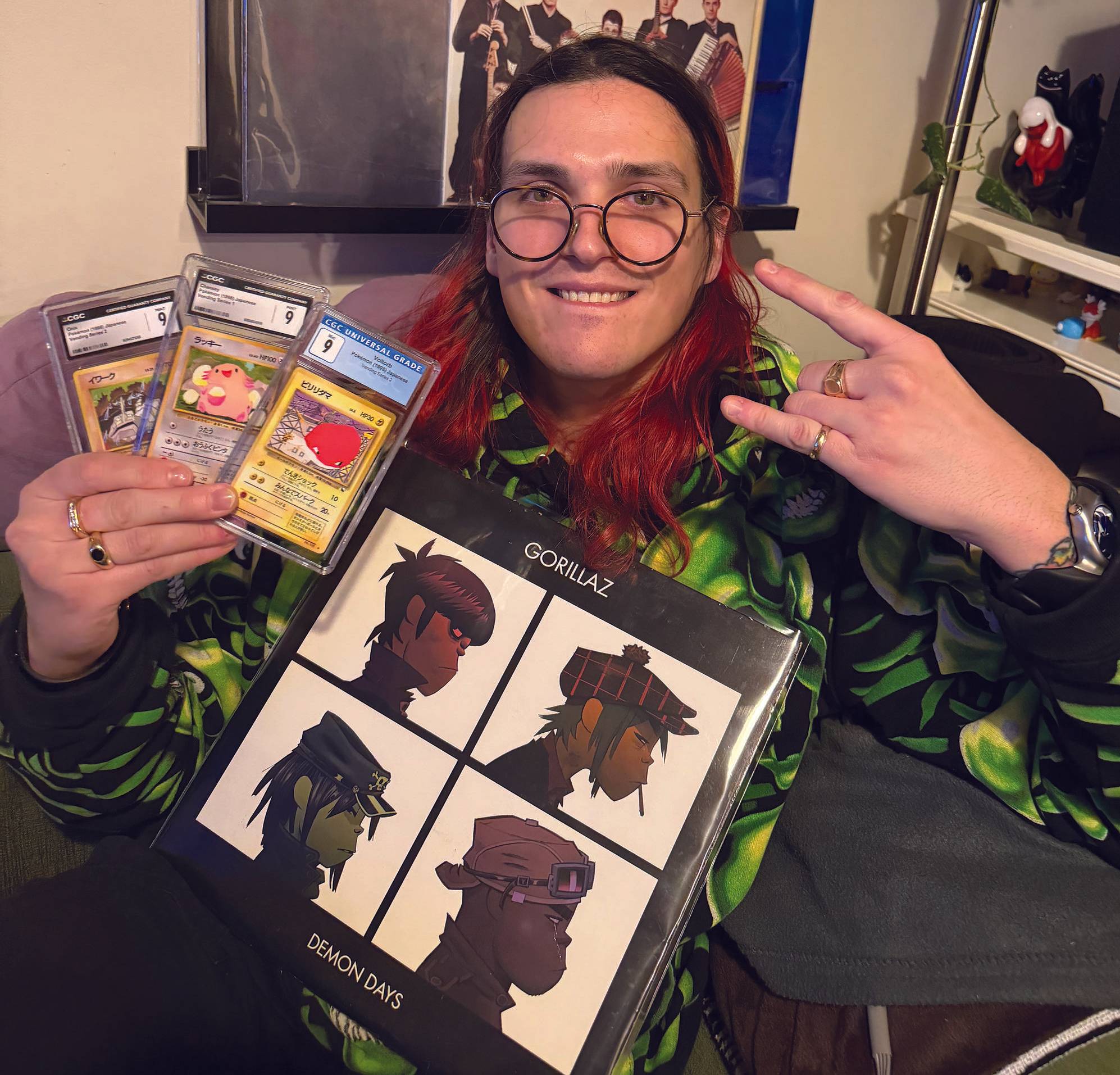 Joe Sutkowski
Dirt Buyer/This Is Lorelei
A: To be so honest, I don’t really know very much about upcoming releases, but I do know that Gorillaz is putting out a new record and I hope that it’s good. The singles have been pretty cool. The thing that I appreciate about Damon Albarn is that he’s a serial collaborator and just kind of does whatever he wants, and that’s Gorillaz. It’s always been his weird version of pop music that nobody else can touch.
Obsession: Right now I’m totally obsessed with old Pokémon cards. I have a pretty huge collection at this point. I have binders full of slabs and top-loaders; some of my favorite cards from the vending series from 1998. The art is mostly all crudely drawn and looks like it was made by a child. There’s this Onyx (a big and long rock-snake Pokemon) card where he’s crying and taking refuge from a storm inside of a cave. There are so many cool cards like that and I’m so passionate about it. Scalpers are ruining collecting, but you can still find affordable gems.
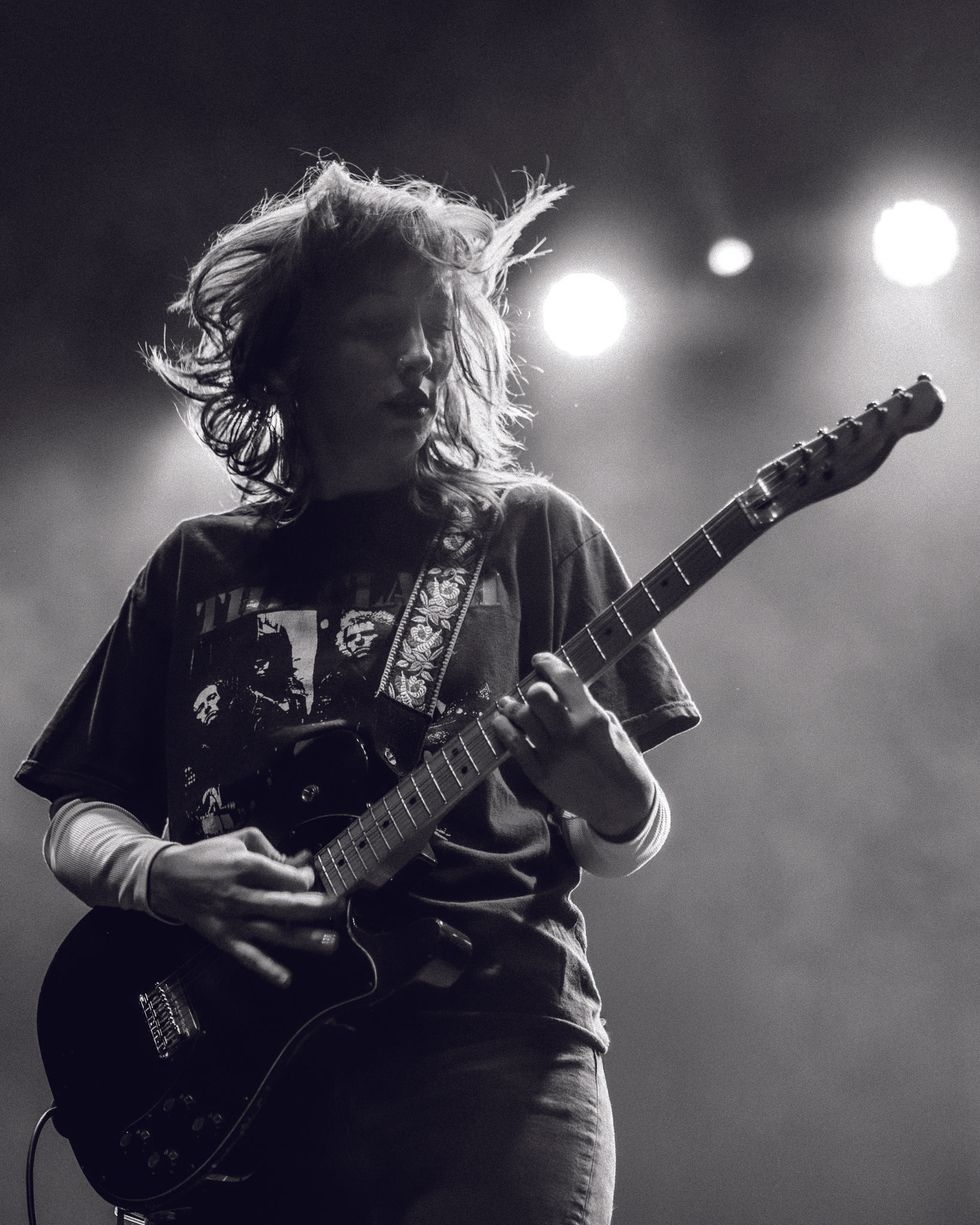 Augusta Koch
Gladie
A: My most anticipated record this year would have to be a new rumored release from Aldous Harding. It’s been four years since her last release, Warm Chris, which was a masterpiece in my book. Her albums are always such inspirations to me. She builds these incredibly beautiful sonic worlds you can dive into. Fingers crossed these rumors are true.Obsession: My current obsession these days is watching videos on projection mapping and trying to figure out how to do it, and staying in on weekends working on all my little projects.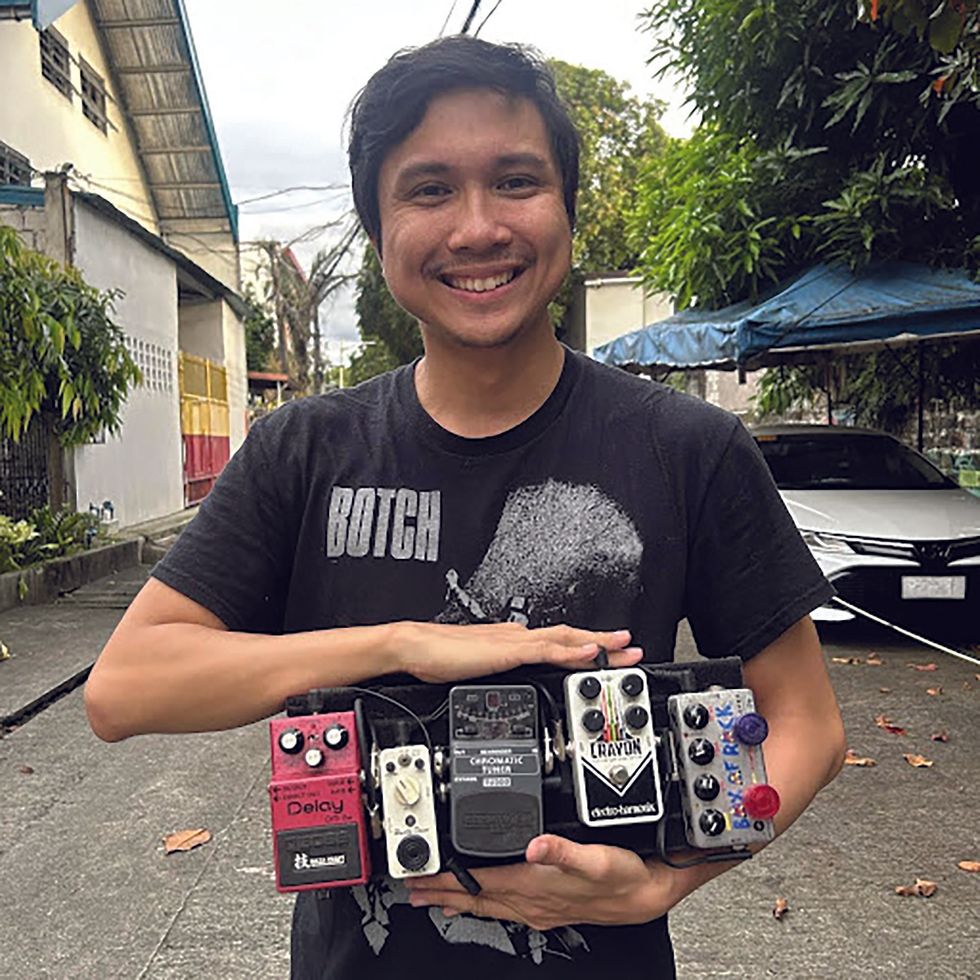 Jom Grana
 Reader of the Month
A: I don’t really stay up to date on upcoming releases, plus I have my own bands (Mindless Pop, Warpten, Irrevocable) busy trying to record and release hopefully this year, too. But! I do know that most of the bands I’ve been listening to since forever are still alive and kicking: Streetlight Manifesto are dropping The Place Behind The Stars on June 24 so I’m hoping this doesn’t jinx them, and while a new RX Bandits record isn’t coming anytime soon, their vocalist Matt Embree is releasing his solo album Orion this March 7.
Obsession: HBO Max’s The Pitt.
 Richard Bienstock
 Editorial Director
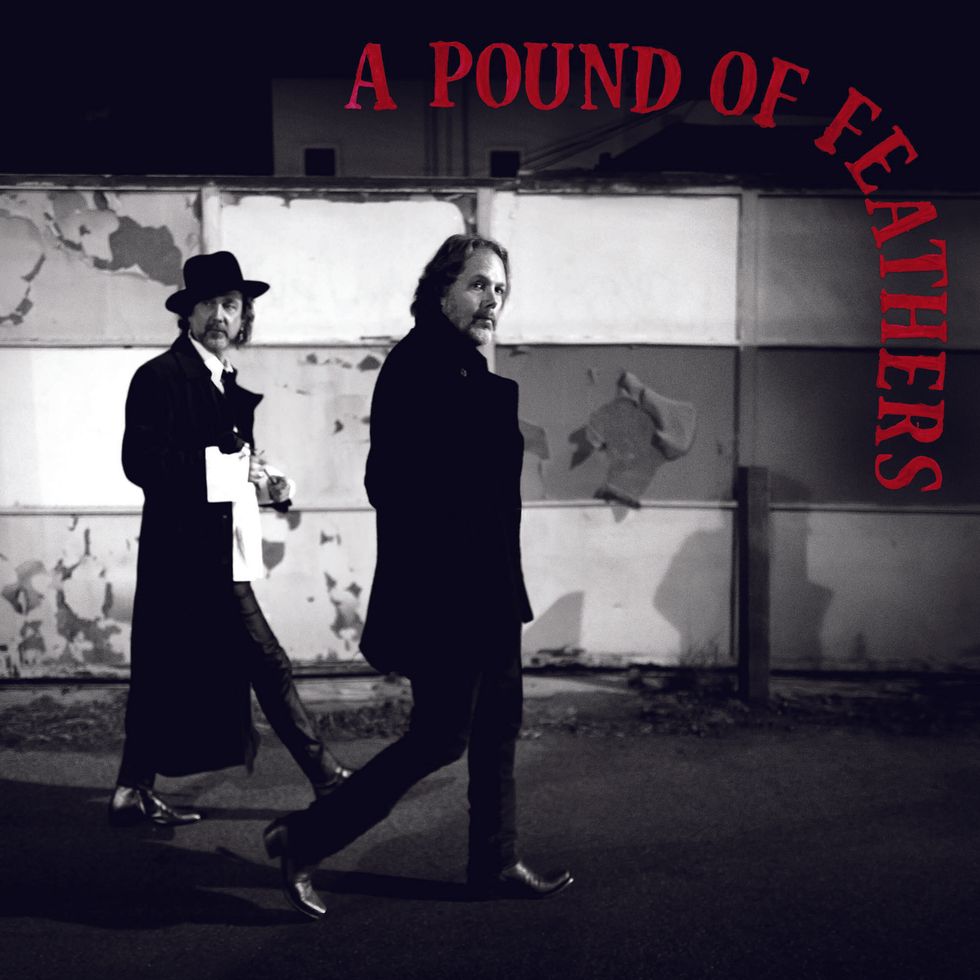
A: The new Black Crowes album, A Pound of Feathers. I’m a day-one Crowes fan. Sure, they work within a very specific lane, but they do it with overwhelming personality. You can hear the Stones, the Faces, and a dozen other classic-rock touchstones, but that kind of swagger and soul can’t be carbon-copied. You either have it or you don’t. The Robinsons have it. I was genuinely psyched when they got back together (again!) a few years back, and thought 2024’s Happiness Bastards was a strong, if somewhat straight-ahead, comeback. Even better was last year’s Amorica reissue, a deep dive into what’s arguably their creative peak.
Based on the two songs they’ve released from A Pound of Feathers so far—which dropped the day I’m writing this, actually—I’m fully in. “Profane Prophecy” in particular opens with a killer Keith Richards-style riff, features some smoking slide guitar, and finds the band sounding looser and more playful (those call-and-response backing vocals) than they have in years. Plus, they always kill it onstage.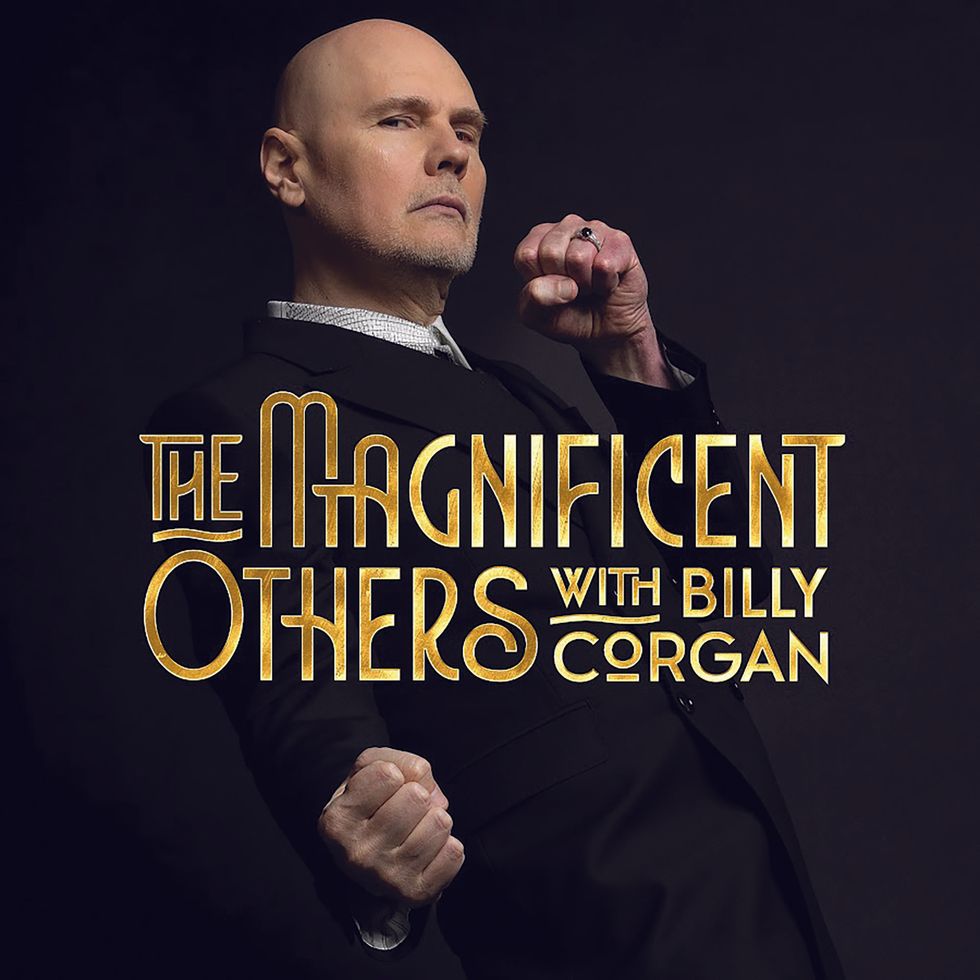
Obsession: Billy Corgan’s The Magnificent Others podcast. Corgan as a host, like Corgan as a musician, is very much a love-it-or-hate-it proposition. I love the music, and I think I love the podcast, too. Yes, he sometimes dominates the conversation, and yes, almost anything a guest says somehow ends up looping back to his own experiences—but the upside is a run of surprisingly great, weird, and revealing conversations. Steve Vai, Vernon Reid, and particularly Dale Bozzio, were excellent. But so were Chazz Palminteri, Corey Feldman, and freakin’ Carrot Top. It’s a wild mix, and absolutely worth an hour or so of your time.
“These are recordings that were going to be the next Van Halen record”: Alex Van Halen sheds light on upcoming “Van Halen” album featuring Steve Lukather
![[L-R] Steve Lukather and Eddie Van Halen](https://guitar.com/wp-content/uploads/2025/03/Steve-Lukather-Eddie-Van-Halen-hero@2000x1500.jpg)
Last year, Alex Van Halen teased that he and Toto’s Steve Lukather were working together on a new Van Halen record. Now, the Van Halen drummer has shed more light on the project.
While it’s unclear whether it will be released under the ‘Van Halen’ name, the record will feature a slew of archival Van Halen demos. Speaking to Brazilian journalist Gastão Moreira for Kazagastão, Alex explains that the project will rework tracks that he and his brother, Eddie Van Halen, never finished. “These are recordings that were going to be the next [Van Halen] record,” he explains [via Blabbermouth]. “We stopped because [Eddie] didn’t live that long…”
In the past, Alex has previously insisted that there is enough Van Halen material in the vault for another “three or four records”. It seems that this project with Lukather will allow some of those tracks to see the light of day.
“Many people have asked, ‘What about releasing unreleased stuff?’” he says. “Well, we’re not gonna release it in its embryonic form because it wouldn’t make any sense. But I’ve been fortunate enough to have Steve Lukather, who was a good friend of Ed’s, and we’re working on putting a record together.”
As Alex explains, “quality” is of the utmost importance. The release aims to honour Eddie’s original riffs, and create a record fans will love. “It’s not just to say, ‘Hey, here’s some music that we made,’” he says. “No – It has to be of a certain level of quality.”
That’s exactly why Lukather has played a pivotal role in the recording process. Last March, Alex told Dutch newspaper De Telegraaf that, due to Lukather knowing his late brother, he has an understanding of how Eddie might have worked. “Ed and Steve Lukather were very good friends and they often worked together,” the drummer said [via Guitar World]. “There is no one who can do this process with me as well as he can.”
In the new chat with Moreira, Alex once again praises Lukather’s guitar skill. “He is the connective tissue,” he explains. “Luke can play anything – but because of this talent that kind of blends in with everything, he doesn’t get the recognition that I think he deserves… I love the guy. We’ve known him for years.”
Of course, some of Eddie’s original riffs may still be included. While he doesn’t exactly say “yes”, he hints that some guitar parts were already tracked. “The drums, the guitar and the bass are already in there,” he says. “What we didn’t have was a vocalist, and obviously the subtleties…”
Alex has also revealed that another key Van Halen cog will feature, with Wolfgang Van Halen once again serving his bass duties. Though he says “most” of the basslines are Wolf, due to the recordings being from those original Van Halen recording sessions prior to Eddie’s passing. It’s unclear whether Wolf has tracked anything in more recent studio sessions.
Considering the last piece of music Alex and Eddie written together, Unfinished, didn’t feature a vocalist, journalist Moreira asks whether any vocalists will feature on the upcoming record. “We originally had plans to have FREE’s Paul Rodgers… but he can’t do it anymore,” he reveals. “[We] are looking for somebody else now… I really believe that the universe will work something out, and this project will come out the best it can possibly be. We have no other intent other than to have it come to fruition.”
The post “These are recordings that were going to be the next Van Halen record”: Alex Van Halen sheds light on upcoming “Van Halen” album featuring Steve Lukather appeared first on Guitar.com | All Things Guitar.
Nile Rodgers reveals how a last-minute change to Shrek 2 made him “a fortune”

Sync licensing can be a highly lucrative income stream, particularly for artists who land their music in big Hollywood feature films. And as Nile Rodgers explains in a new interview with Vulture, a significant proportion of his earnings have come from such placements.
The guitarist has enjoyed an illustrious five-decade career dabbling in a whole host of different genres, most notably performing in disco powerhouse band Chic, and alongside A-list music stars like Daft Punk, Pharrell Williams and Michael Jackson, to name a few.
But his music has often been featured in motion pictures, too, including Chic smash hit Le Freak, which plays during a scene in Shrek 2. And as Rodgers explains, that placement earned him a fair bit of coin.
“A lot of my songs have brought in a lot of money from sampling, but the most lucrative ones have been placed in films,” he says.
“The only reason why I know that this one made a fortune was because of the length of the cue: There’s a film called The Birdcage from the mid-’90s, starring Robins Williams, that took place at a queer club in Miami.
“It opens with a camera going across South Beach and then the shot goes straight into a club where [Chic’s] We Are Family is being performed by a group of drag performers. It’s a very long music cue. And then We Are Family is played several more times later in the film. My bank account was happy to see that deposit.”
He goes on, explaining how he earned a “fortune” from the placement of Chic’s Le Freak in Shrek 2 (2004).
“The film originally had the Gap Band’s Burn Rubber (Why You Wanna Hurt Me) as the cue when Shrek and his girlfriend take off in the car and their friends are behind and watching their house. Or is it a cart? What do ogres drive?
Rodgers explains that the scene wasn’t landing with audiences during test screenings, leading producers to test out Le Freak instead.
“Right before Shrek 2 locked, and I really mean an hour or so before, I got a call asking if they could try Le Freak,” Rodgers recalls. “I said, ‘Sure, cool.’ So Shrek turns around and his friends are partying like crazy to Le Freak. It was clear that the song made the joke work. It’s a teeny, tiny cue, and I made a fortune.”
Elsewhere in the interview, Nile Rodgers speaks on his unashamedly confident approach to session work. Asked to name the most intimidating collaborator he’s ever worked with, he replies: “Nobody. No way, man.
“If I ever believed that, it would mean I’m walking into the studio and thinking, ‘You can make a record better than me.’ And nobody can make a record better than me. Please don’t take this in an egotistical way. Who have I made records with? Herbie Hancock, Stevie Wonder, Al Jarreau, the London Symphony Orchestra. I’m not intimidated. I’m here to have fun…
“The one thing that’s super important is to make an artist know that I have their best interests at heart. That’s all I care about. My legacy is pretty much written.”
The post Nile Rodgers reveals how a last-minute change to Shrek 2 made him “a fortune” appeared first on Guitar.com | All Things Guitar.
It’s been a long wait, but the highly anticipated Line 6 Helix Stadium Floor is finally shipping

The wait is over – Line 6’s Helix Stadium Floor, the latest instalment in its Helix series, has finally began shipping.
Eight months ago, Line 6 first shared news of its new Helix Stadium amp modellers. In the initial announcement, the company teased a pair of new modellers, with the flagship Helix Stadium XL Floor earning an earlier release and shipping out at the end of last year. Now, it’s the Helix Stadium Floor’s time to shine.
While the XL model offers the most “comprehensive and integrated guitar processor ever created by Line 6”, according to the brand, the smaller Helix Stadium Floor offers a cheaper, more streamlined alternative. It scraps the built-in expression pedal, and halves the amount of effects loops, external expression pedals, and drum trigger inputs it can support to just two each.
While it’s taken a while for the ball to get rolling, the original announcement of the new amp modellers marked the 10th anniversary of the original Line 6 Helix.
A decade on, the new amps utilise a new modelling algorithm called Agoura, a revamped take on Helix’s HX modelling tech. The tech allows for more authentic amp modelling, as well as a more accuracy when modelling how a physical amp would respond to you.
Both the XL and streamlined Stadium model also have a ‘Hype’ control, allowing you to shift between “idealised” and “ultra-authentic” tone. This allows users the option of a cleaner, more digital sound or something a little more gritty and real.
The Stadium line also offers a new engine for live shows called Showcase. This can trigger MIDI changes, engage presets, and even automate lighting for your stage setup. As well as this, there’s also both WiFi and Bluetooth connectivity to store and make captures of your gear.
With its new improvements and revamped technology, Line 6 has promised that the Stadium line is its “most powerful and most flexible” Helix to date.
Eric Klein, Chief Product Design Architect, states: “Helix Stadium XL Floor and Helix Stadium Floor are in many ways a new type of product. In addition to featuring the best-sounding, most powerful, and most flexible processing Line 6 has ever offered, they can serve as performance workstations that aim to upend the way you approach playing – whether that’s writing and learning songs, jamming with friends, or controlling your band’s entire stage rig. And most of all, they’re fun to use.”
The Helix Stadium Floor is available now, with prices starting at $1,799.99. For more information, head to Line 6.
The post It’s been a long wait, but the highly anticipated Line 6 Helix Stadium Floor is finally shipping appeared first on Guitar.com | All Things Guitar.
JHS Pedals Launches Morning Glory Clean Overdrive
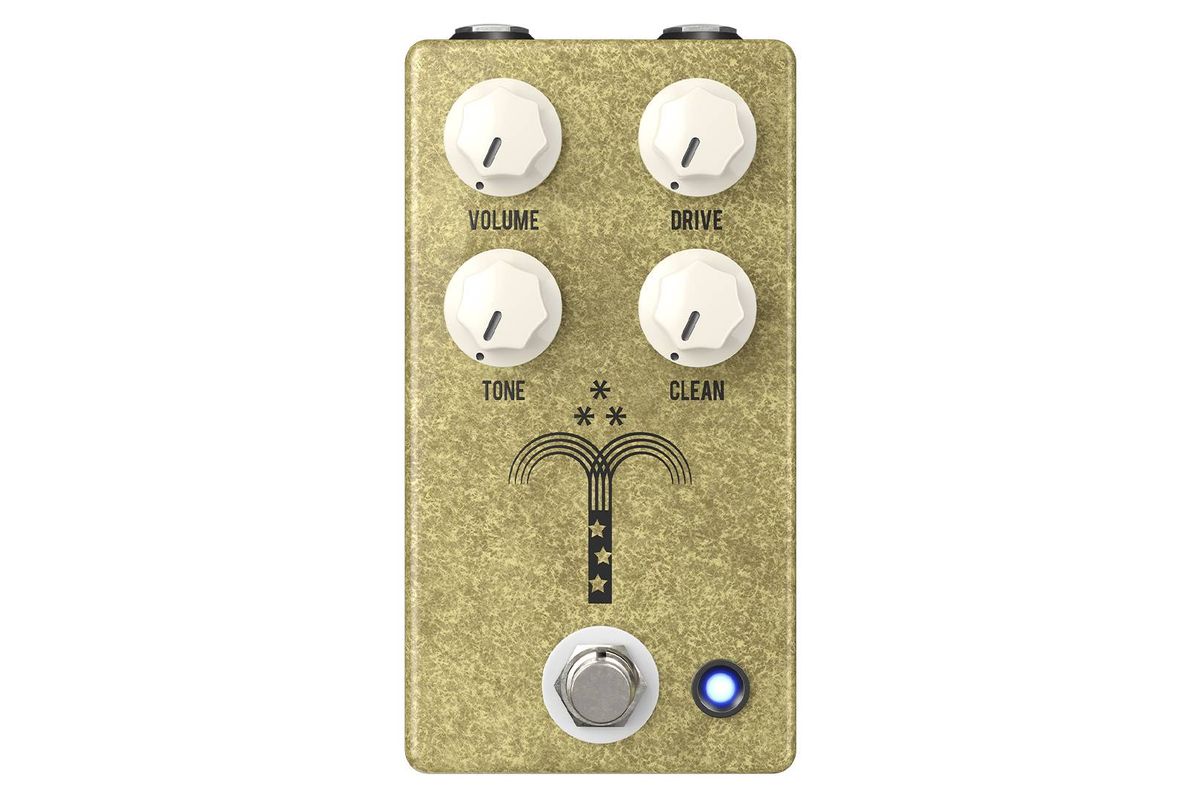
JHS Pedals has introduced the Morning Glory Clean pedal, the latest version of the company’s revered Morning Glory transparent overdrive.
The Morning Glory Clean offers clearer pick attack, improved low end, and more versatile gain stacking. It’s designed to provide an ideal first-stage overdrive pedal for a broad range of musical styles.
For the new Morning Glory Clean, JHS took their Morning Glory circuit (a Bluesbreaker-style topology) and completely rebuilt it around a studio-grade parallel clean blend. It’s not just a modification, but a redesign from the ground up.
Why blend a clean signal into something already transparent? The Morning Glory's magic happens when you turn up the Drive, and the circuit boosts higher harmonics and adds soft compression. The newly added parallel clean circuit lets you keep all that while dialing the natural low end back in.
The new Morning Glory Clean offers a four knob control set: Volume, Drive, Tone and Clean.
Volume — Adjusts the overall volume in conjunction with the drive and clean.
Clean — Full left: original Morning Glory. Full right: pure clean signal. Start with Clean and Drive maxed, dial Clean back (counter clockwise) until you find your perfect balance.
Drive — Saturation. Crank it and use the Clean control as your balance. This pedal is designed to be used this way.
Tone — Classic Morning Glory tone stack. This Tone control affects only the overdrive path. Your clean signal stays parallel and untouched. Adjust Tone back for warmth, forward for clarity.
Clean Boost Pro Tip – Morning Glory Clean can be used as a stand-alone clean boost. Set the Clean to 100% (fully clockwise) and increase the Drive. In this configuration, the Drive will not produce any overdrive clipping - only clean volume boosting.
This isn't a Clean knob slapped on a Morning Glory. The Clean control uses a dual-gang potentiometer. As you turn it, clean gain scales proportionally with the drive signal — it’s perfectly engineered from the ground up. Think of the Clean control as adding back in wattage, clarity, and punch. Most clean blends are an afterthought — a simple mix knob tacked onto an existing circuit. This one was designed so the two signals track together across all gain settings – with no volume or weird phase issues. Just seamless blending from Morning Glory to pure signal and everything in-between.
The pedal is also well suited for bass. The Clean blend dials that low end back on command for different bass and amplifier needs, making it a highly versatile bass overdrive.
Other Morning Glory Clean features include:
- Pedalboard friendly top-mounted jacks
- Uses standard 9V DC Center Negative external power – no battery compartment
- Silent Buffered Bypass Switching
An important note: this pedal does NOT replace the JHS Morning Glory V4 pedal, which remains a key item in the company’s product lineup.
The new Morning Glory Clean carries a street price of $179. For more information visit jhspedals.com.
Gibson Custom Debuts the Gary Clark Jr. ES-355
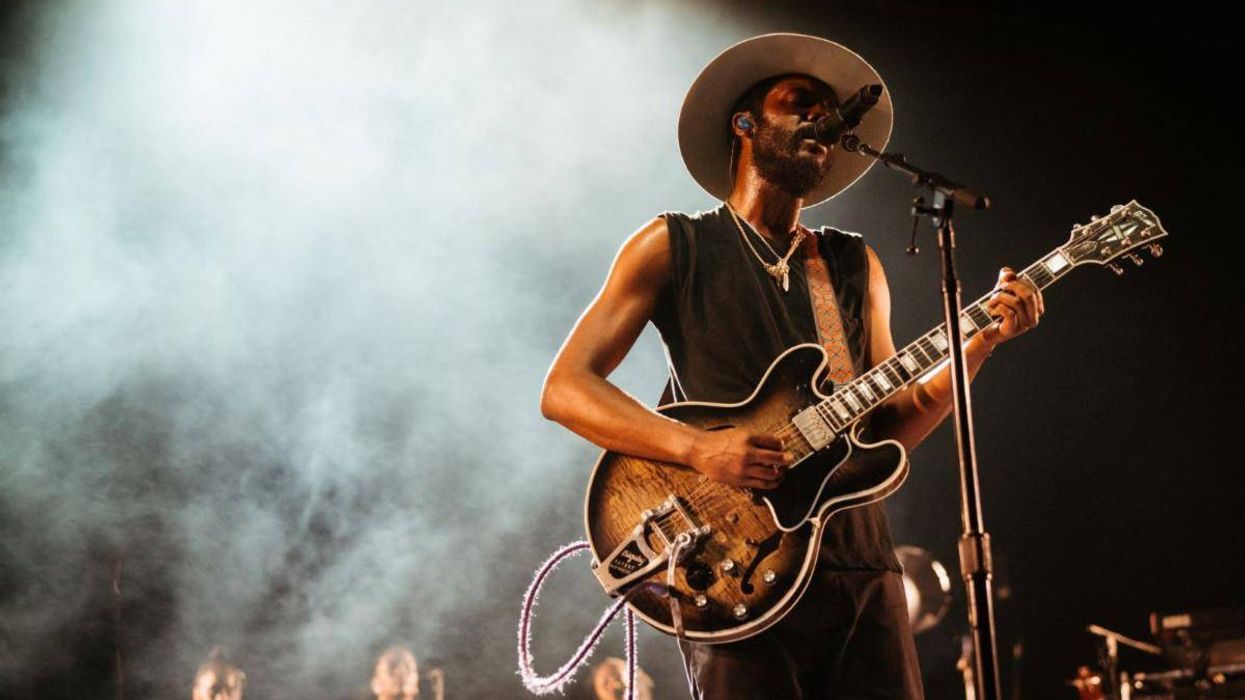
Gibson Custom today proudly unveils the new Gary Clark Jr. ES‑355™, a striking signature model created in close collaboration with the four‑time GRAMMY® Award–winning guitarist, singer, and songwriter. Austin-born and globally celebrated for his electrifying live performances, Gary Clark Jr. has long blended blues, rock, soul, and hip hop into a sound entirely his own. His previous Gibson and Epiphone signature instruments—the SG™ and Casino™—each captured facets of his musical identity, but the ES‑355 represents a deeper personal connection. Inspired by the first time he saw B.B. King command the stage with one, the ES‑355 has become Clark’s new number‑one guitar, now reimagined with the craftsmanship and detail of the Gibson Custom Shop. The Gary Clark Jr. Custom ES‑355 is available worldwide at Gibson Garage locations in Nashville and London, via authorized Gibson Custom dealers, and on Gibson.com.

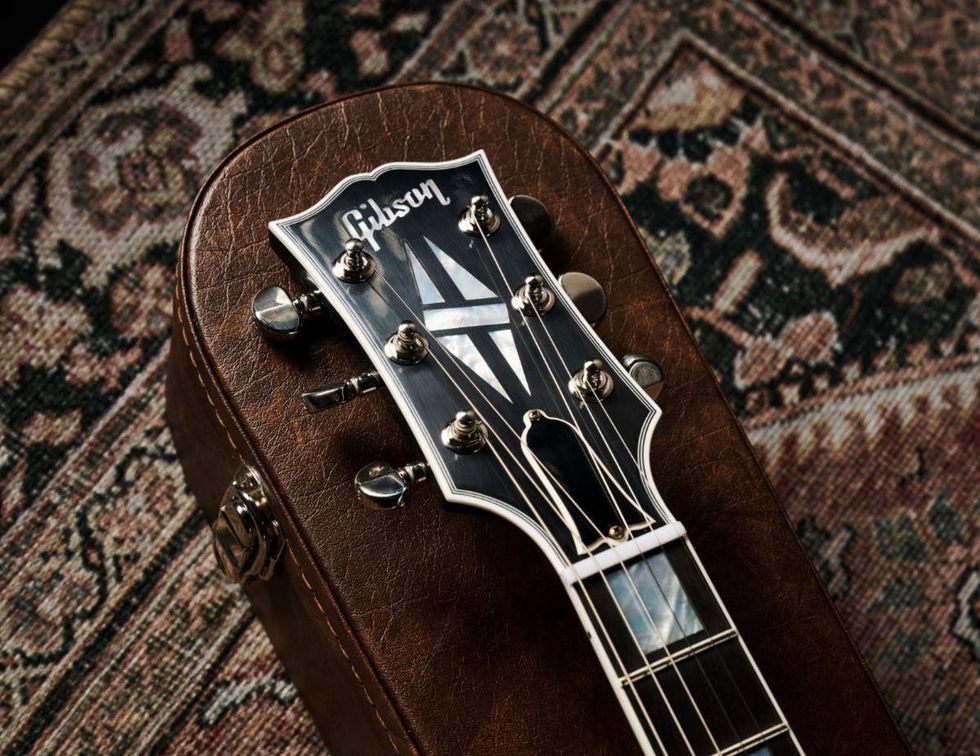
The Gary Clark Jr. Custom ES‑355 is built with a three‑ply maple/poplar/maple body with a figured maple outer layer, paired with a mahogany neck carved to a comfortable 50s Rounded Medium C profile. A bound ebony fretboard with 22 Historic medium jumbo frets and mother‑of‑pearl block inlays delivers a classic playing feel, while multi‑ply binding on the body and headstock elevates the guitar’s vintage‑inspired aesthetic. The headstock features the iconic Custom split diamond inlay and Grover® Rotomatic® tuners with kidney buttons, underscoring the instrument’s premium heritage.
Under the hood, the ES‑355 is equipped with a pair of unpotted Custombuckers featuring Alnico 3 magnets, chosen for their warm, articulate response and dynamic range. The pickups are wired with CTS® audio taper pots, paper‑in‑oil capacitors, a Switchcraft® three‑way toggle, and a mono Varitone circuit topped with a black chicken‑head knob, offering players a wide spectrum of tonal colors. True Historic gold Top Hat knobs with dial pointers complete the control layout, reinforcing the guitar’s vintage authenticity.
Every detail of the instrument reflects Gibson Custom’s commitment to precision and artistry. The hardware is finished in VOS nickel, including the ABR‑1 Historic no‑wire bridge and a Bigsby® B7 vibrato for expressive pitch control. The guitar is offered in a stunning VOS Cobra Burst finish, adding a dramatic visual flair that complements its sonic versatility. Each model ships in a Gibson Custom hardshell case adorned with Gary Clark Jr. graphics, featuring a brown exterior and black plush interior.
This special run is limited to just 100 guitars, handcrafted by the expert luthiers of the Gibson Custom Shop in Nashville, Tennessee. With demand expected to be high among collectors, players, and fans alike, the Gary Clark Jr. ES‑355 stands as an extraordinary opportunity to own the artist’s new go‑to instrument—an inspired blend of heritage, innovation, and unmistakable style.
In 2026, Gary Clark Jr. continues to push his creative boundaries while bringing the bold sonic world of his 2024 album JPEG RAW to audiences across North America. The project marks a defining leap in his artistry—melding blues, rock, hip-hop, jazz, and global influences into a unified, future-leaning sound that has earned widespread critical acclaim. Onstage, Clark channels this new era with a renewed sense of urgency and experimentation, weaving immersive grooves, pointed lyricism, and explosive guitar work into performances that reaffirm his status as one of modern music’s most electrifying live artists.
Listen to Gary Clark Jr. HERE, and for the latest tour dates, go HERE.
Beyond the studio and the stage, Clark’s artistic reach has expanded into film, cultural programming, and high-profile collaborations, underscoring his evolution as a multifaceted creative force. His portrayal of Arthur “Big Boy” Crudup in Baz Luhrmann’s Elvis, his role as Music Director for Jon Stewart’s Mark Twain Prize ceremony, and his continued work with icons across genres reflect an artist operating at the height of his influence. With JPEG RAW ushering in a bold new chapter and a major tour underway, Clark stands firmly at the forefront of contemporary music—restless, visionary, and shaping the sound of what comes next. Rooted in the blues yet unbound by genre, he’s pushing the tradition forward with purpose and originality, cementing his place as one of his generation’s defining guitarists and storytellers.
Shnobel Tone Unveils Dumbbell Driver OD/Boost Pedal
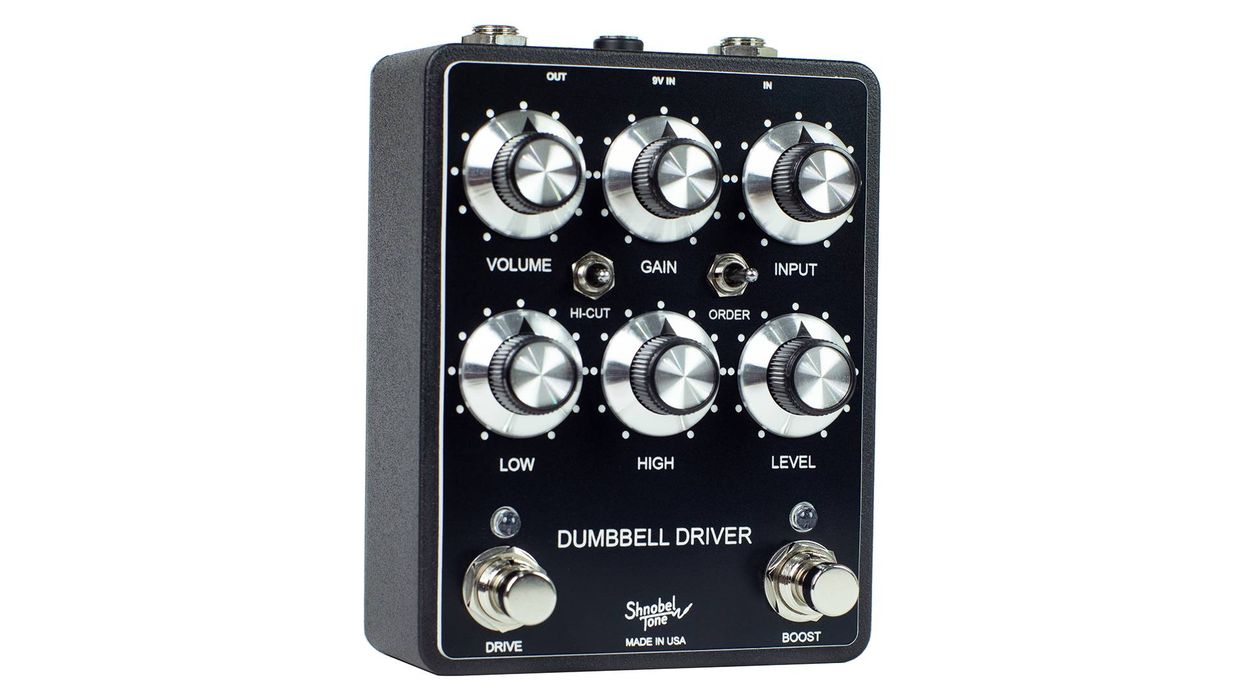
Shnobel Tone has introduced the latest addition to its line of premium guitar effects. The new Dumbbell Driver combines the company’s acclaimed Daily Driver Overdrive with the recently launched Dumbbell Boost into a single, super flexible pedal.
The Dumbbell Boost and Daily Driver circuits are identical to the standalone versions of these pedals. Both the overdrive and boost circuits are completely independent and can be used together or separately, activated by their own dedicated true-bypass footswitches. A two-position toggle switch allows you to assign the order of the effects when both circuits are in use: Boost>>Overdrive or Overdrive>>Boost are available, providing a huge range of sonic options. Setting the toggle to the right places the Dumbbell Boost in front of the Daily Driver.
The pedal offers an intuitive 6-knob control set. The four knobs on the left side of the pedal control the Daily Driver circuit with Volume, Gain, High frequency and Low frequency EQ. The Daily Driver controls on the left side also include a three-position toggle switch for added EQ flexibility: the switch offers two different high-cut settings, along with a flat setting in the center position, so you can dial in the perfect overdrive sound with any amp.
The two knobs on the right side of the pedal control the Dumbbell Boost circuit. The Input knob adjusts the input impedance and acts as a supplemental tone control: when turned all the way to the left it gives you a brighter, less bassy sound; turned all the way to the right it delivers a full range sound with rich harmonics reminiscent of a Dumble-style circuit. The Level knob controls the Dumbbell Boost’s output level.
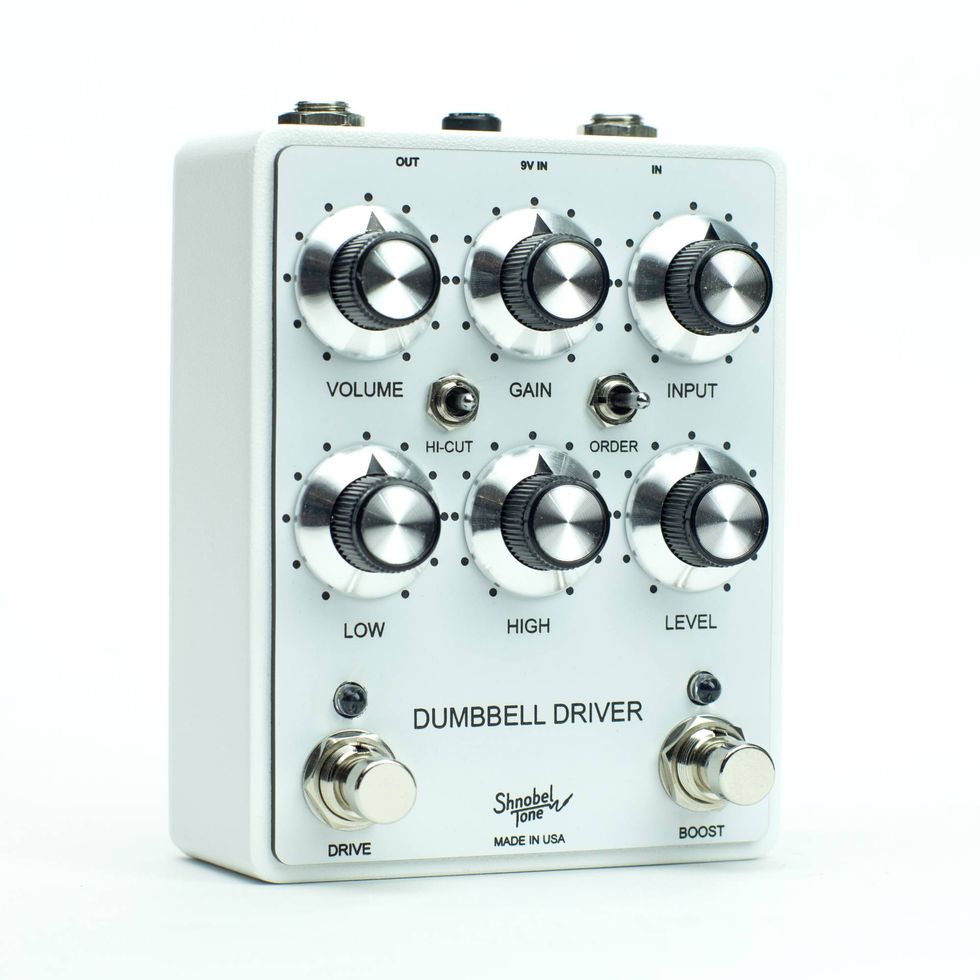
Sporting gloriously retro-flavored chrome-skirted knobs and available in either Black or White, Shnobel Tone’s Dumbbell Driver includes these features:
- Six control knobs: Four knobs on the left side for adjusting the Daily Driver overdrive; and two knobs on the right side for adjusting the Dumbbell boost.
- Three-position “Hi Cut” toggle switch affects just the Daily Drive portion of the circuit (not the Dumbbell boost).
- Two-position toggle selects the order of effects when both circuits are engaged
- Two true bypass foot switches for activating each circuit
- Pedalboard-friendly top mounted power and in / out jacks
- Hand-built with top quality through-hole components
- Standard 9v center negative power – no battery compartment
Shnobel Tone’s Dumbbell Driver carries a street price of $329 and can be purchased at shnobeltone.com.
“It’s a dream come true”: Gary Clark Jr’s signature Gibson honours his hero BB King

To honour Gary Clark Jr’s fusion of blues, rock, hip-hop and jazz, Gibson has unveiled a new signature model in his name. Inspired by BB King’s beloved Gibson, the Gary Clark Jr. ES-355 serves as a testimony to the blues legend as well as marking Clark’s ongoing impact on the genre.
While Clark has previously worked with Gibson on his SG and Casino models, this guitar is particularly special. “When I was a child, I had a poster on my wall with BB King playing his signature Lucille guitar,” Clark explains in a Gibson promo clip. “As a kid, I always wanted one of those guitars. I would go to the music shop, I would see them on the wall, and I liked the way that they sounded. I just wanted to be a part of that world.”
Handcrafted in Nashville by the Gibson Custom Shop, the Gary Clark Jr. ES-355 boasts a three-ply maple and poplar body. The multi-ply binding allows for a more vintage aesthetic, thanks to its figured maple outer layer and VOS Cobra Burst finish.
The guitar also has a mahogany neck, which has been shaped into a ‘50s Rounded Medium C profile, with a bound ebony fretboard. In terms of frets, you’re looking at 22 medium jumbo frets and mother‑of‑pearl block inlays.
Up on the headstock, there’s another vintage nod in the form of the iconic Gibson Custom Shop split diamond inlay. There are also Grover Rotomatic tuners, to add a more premium feel.
 Credit: Gibson
The hardware has also all been finished in VOS nickel, emphasising that aged and vintage feel. That extends to the ABR‑1 Historic no‑wire bridge and a Bigsby® B7 vibrato. Gold Top Hat knobs with dial pointers have also been used to add that nostalgic edge.
The Gary Clark Jr. ES-355 is also kitted out with unpotted Custombuckers featuring Alnico 3 magnets, to capture a warm and dynamic range. The pickups are also wired with CTS audio taper pots and paper‑in‑oil capacitors, while there’s also a three‑way toggle, and a mono Varitone circuit to tweak and toy with your tone.
With a limited run of 100 guitars, it’s no wonder why the Gary Clark Jr. ES-355 has already sold out. Each lucky buyer will receive their guitar in a Gibson Custom hardshell case adorned with Gary Clark Jr. graphics.
Now a four-time Grammy Award winner, having his own signature Gibson is no longer a dream. It’s a reality he has earned. “It’s a dream come true, really,” he says. “And it’s one of the most versatile instruments… with the humbuckers and semi-hollow body, you can play it acoustic. It’s my go-to instrument at this time. And it’s gorgeous!”
For more information, head to Gibson.
The post “It’s a dream come true”: Gary Clark Jr’s signature Gibson honours his hero BB King appeared first on Guitar.com | All Things Guitar.
Metal-ready shredders and new Broadkaster models: Inside a massive new guitar drop from Jackson, Charvel and Gretsch

Since the furore of NAMM – where hundreds of brands launched more exciting new products than we could realistically keep track of – the world of guitar gear has felt relatively quiet. But it seems things are starting to switch back on, as a slew of new guitars arrive courtesy of Jackson, Charvel and Gretsch.
So get ready for some six-string eye-candy, and if you like, to nerd out on some spec sheets from the massive new drop. Here’s everything you need to know:
Jackson Pro Plus Pure Metal
 Credit: Jackson
Three new guitars join Jackson’s blacked-out Pro Plus Pure Metal series, a line of instruments “built for speed and designed to withstand the demands of relentless touring”.
Comprising the Pro Plus Pure Metal Limited Edition Soloist SL1A, Limited Edition Rhoads RR1A and Limited Edition Kelly KE1A, the three new additions come loaded with singular Bare Knuckle Holydiver humbuckers, Floyd Rose 1000 Series double-locking tremolos and stainless steel frets.
Learn more at Jackson.
Charvel Pro-Mod Plus Dinky
Charvel has expanded its Pro-Mod Plus Dinky line with five new guitars, which blend “sophisticated style with assertive tone”.
Specifically, the new additions are the DK24 HH 2PT E in Raven Black and Celestial Silk, DK24 HH 2PT E QM in Midnight Ocean and Chlorine Burst, DK24 HH HT E QM in Violet Radiance, DK24 HSS 2PT QM in Blue Curaçao, Limited Edition DK24-7 HH 2PT EB in Celestial Silk.
These guitars sport Seymour Duncan Full Shred TB-10, Alnico Pro II APH-1N and Custom Flat Strat SSL-6 pickups in various configurations.
Learn more at Charvel.
Gretsch Broadkaster LX Figured Center Block with String-Thru Bigsby
 Credit: Gretsch
Four new Broadkaster models join the Gretsch lineup: the Broadkaster LX – with a figured center block and string-thru Bigsby – in Havana Burst and Bourbon Stain, and the Broadkaster Jr. LX in Caramel Dawn and Tropic Aura. Both feature Pro Twin Six humbucking pickups and Adjusto-Matic bridges with string-thru Bigsby B7GP vibrato tailpieces.
Learn more at Gretsch.
The post Metal-ready shredders and new Broadkaster models: Inside a massive new guitar drop from Jackson, Charvel and Gretsch appeared first on Guitar.com | All Things Guitar.
Rig Rundown: Spiritbox
Ahead of Spiritbox’s recent show at Nashville’s Pinnacle, PG’s Chris Kies spent some time with the Canadian alt-metal giants’ guitarist Mike Stringer and bassist Josh Gilbert to get the story on their down-tuned mayhem. See about the highlights below, and watch the full Rig Rundown for more.
Brought to you by D’Addario.
Signature 7
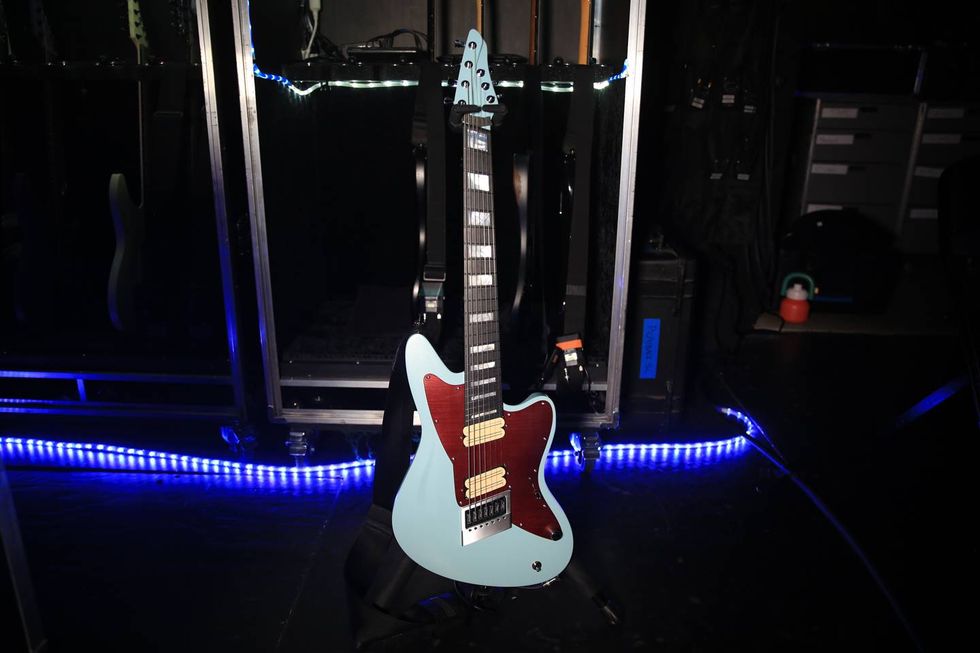
Stringer’s signature Aristides STX guitars, like this 7-string, are the first axes he reaches for. Inspired by Kurt Cobain’s Jag-Stang, the STX comes in 6-, 7-, and 8-string configurations, as well as multi-scale options. In lieu of traditional guitar woods, Aristides’ proprietary Arium material works perfectly for Stringer’s needs—it can hit any “stupid-low” tuning with ease and clarity. The guitar is loaded with Stringer’s signature Bare Knuckle Halcyon pickups and an EverTune bridge. The 7-string STXs are in F-sharp tuning, with Ernie Ball Custom Paradigm strings (.010–.074).
Ocho Loco
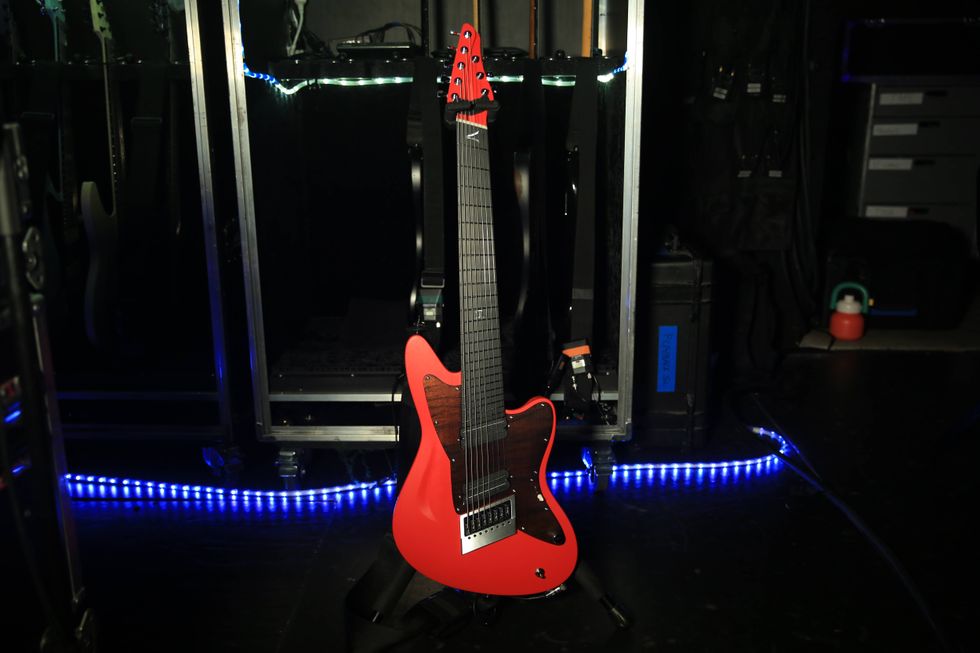
Stringer calls this 8-string Aristides the “prototype,” since it was the first one produced. It’s employed on “Fata Morgana.”
PVH vs. EVH
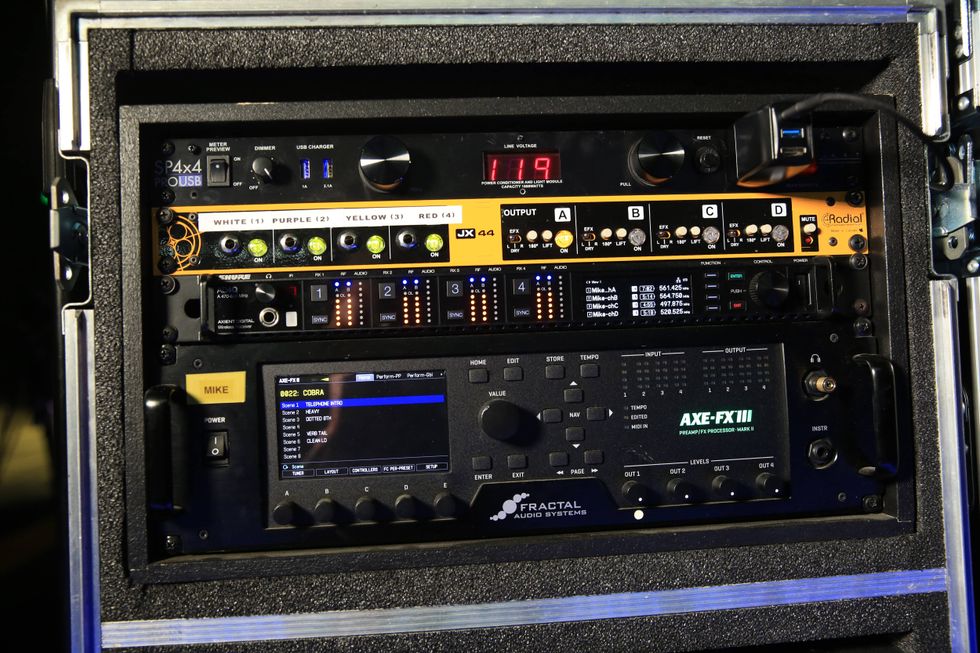
Stringer uses a Fractal Axe-Fx III, favoring a PVH 6160 model based on the EVH 5150 Stealth. It shares rack space with an ART Pro Audio SP4X4 power distribution system, Shure AD4Q, and Radial JX-44.
Mike Stringer’s Pedalboard
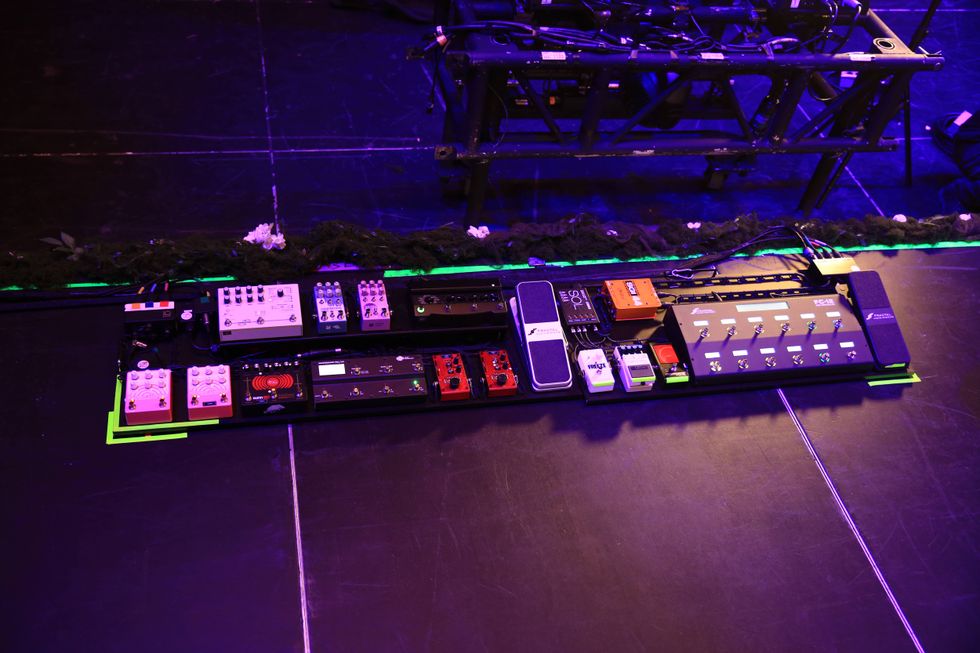
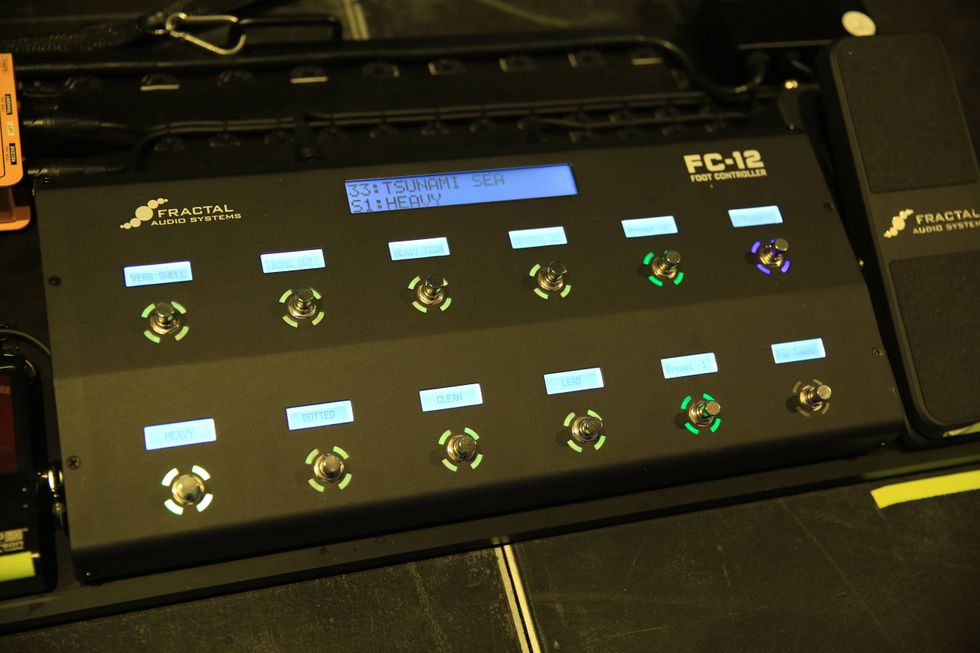
Stringer’s buddy at Omilion Audio built out his onstage boards. Along with a Fractal FC-12 Foot Controller, RJM Mastermind PBC/6X, and a Radial SGI-44, Stringer’s board carries a Peterson StroboStomp tuner, Boss DD-6, Electro-Harmonix Freeze, a pair of DigiTech Whammy Ricochets, Line 6 DL4 MkII, Chase Bliss Mood and Generation Loss, EarthQuaker Devices Sunn O))) Life, a pair of EarthQuaker Rainbow Machines, and a Hologram Electronics Microcosm.
Charvel Shredder
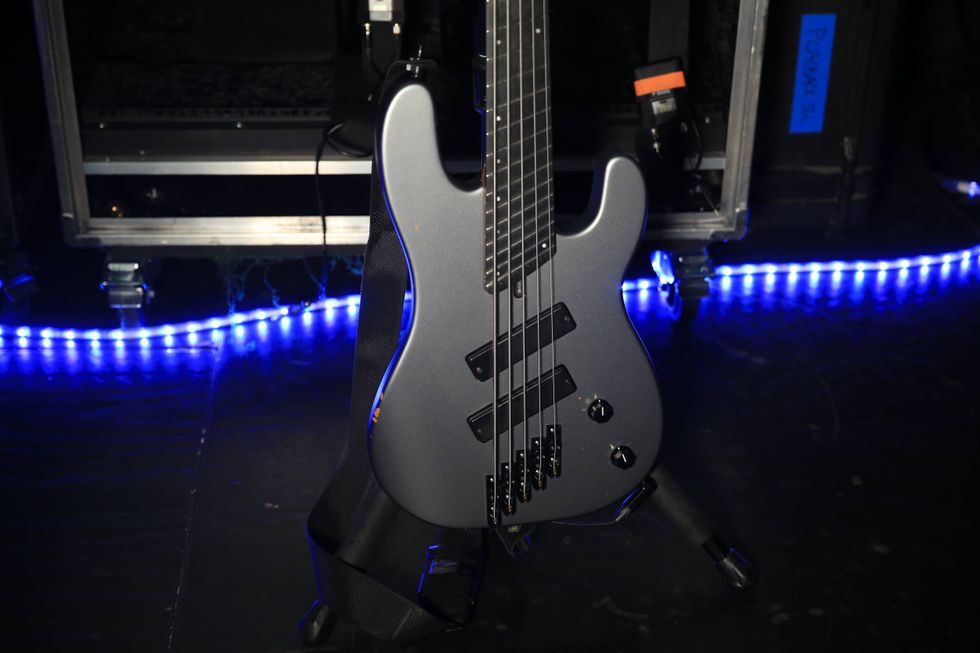
Modeled on Charvel’s San Dimas bass, this multi-scale (34-37") 5-string is tuned to F-sharp, and has Nordstrand pickups and a Darkglass B2M2 Tone Capsule onboard preamp. The custom-gauge strings come from Kalium Music.
Four-String Friend
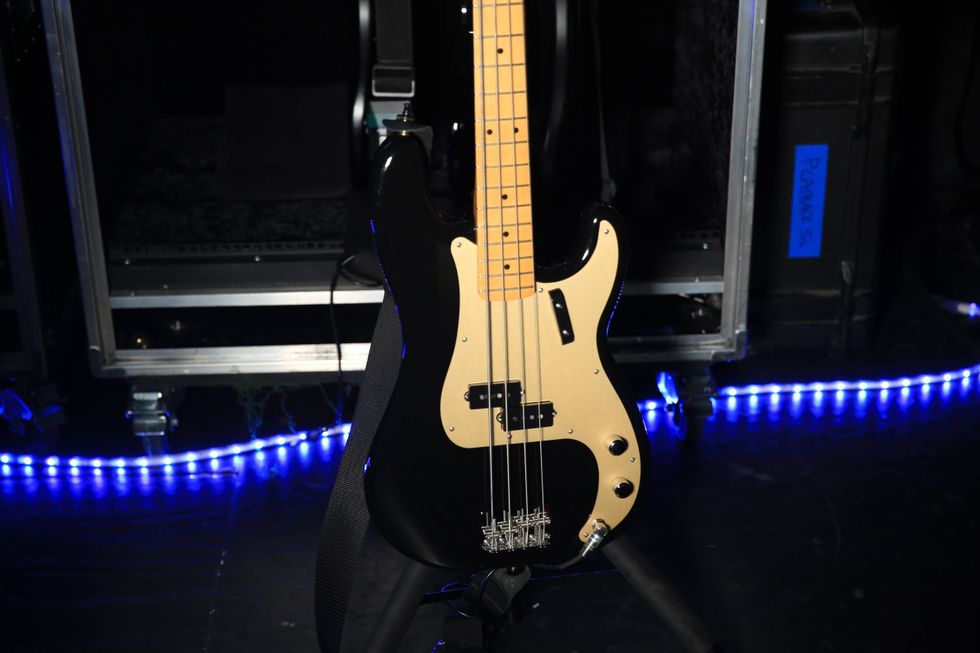
This Fender Precision bass is also on hand, tuned to B-A-D-G. It takes Ernie Ball strings.
Axe and Block
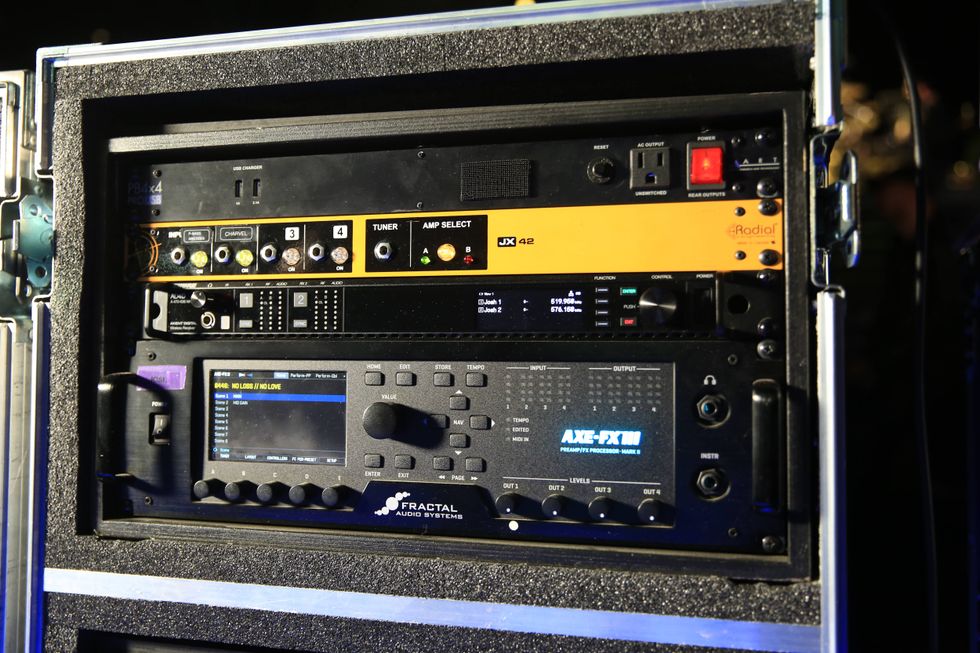
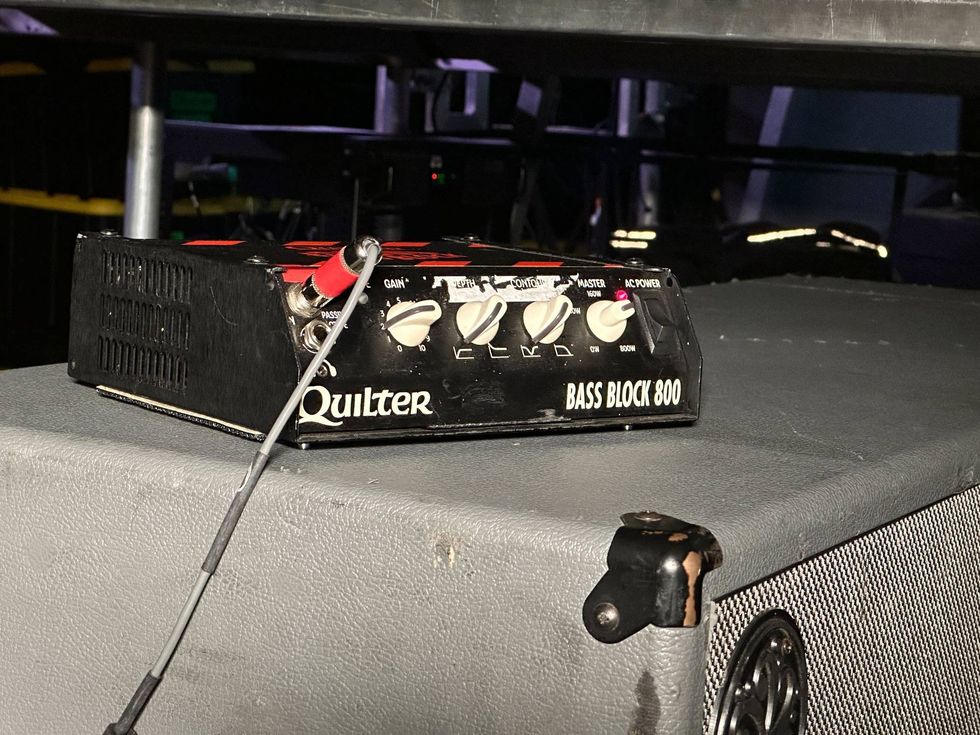
Along with his Quilter Bass Block 800, Gilbert, too, uses a Fractal Axe-Fx III, nestled in his backstage rack alongside a Shure AD4D and a Radial JX 42. Like Stringer, he uses a 6160 model for his dirty tones; a Darkglass B7K model is also in the mix. Gilbert’s tonal “scene changes” are handled in Ableton.
EarthQuaker Devices Sunn O))) Life
Thoughtful Tips for Supporting Others Musically

Thieves steal Martin D-28 worth $15k from Baltimore music store: “You feel violated – it’s really sad”

Police are appealing for help identifying four suspects believed to have stolen a Martin D-28 acoustic guitar worth $15,000 from a music store in Baltimore, Maryland.
The guitar – located high on the wall in the acoustic room at Music Land in Bel Air – was the target of a group of four thieves believed to be of Romani origin, police say. As CCTV footage shows, the suspects wait for the employee present to step out of the room, before taking the guitar from the wall and concealing it inside a big winter coat.
- READ MORE: How Taylor quietly revolutionised its most iconic design with the Next Generation Grand Auditorium
“One of the female suspects was on lookout,” says store owner Larry Noto [via WMAR-2 News Baltimore]. “The other two suspects took the guitar. She had a long black winter coat on, a very puffy coat. It was freezing out. You know how it was a couple of weeks ago and had sort of a black bag that they slipped the guitar in.”
It’s believed that the theft took place in under a minute. Noto explains of the rare, high-price D-28: “This was a consignment piece from 1947, so a very rare, special piece that we just happened to have on sale as part of our consignment programme.”
“You know you trust people, and they came and they even said, ‘Oh, you have such a nice store,’ and we just thought these were nice people looking for guitars,” says Noto.
“You do feel violated and it was really sad and disturbing to watch the video that had happened. We’re a local family-owned business, [and have] served the community for 55 years.You just don’t think something like that’s going to happen to you.”
Those with information on any of the suspects are encouraged to contact Bel Air police on 410-638-4500.
Sadly, music gear remains a common target for thieves. Just this month, guitarist Chris Buck appealed for help finding a selection of gear stolen from his car in Bristol.
And Music Land is far from the first brick-and-mortar store to deal with thieves; for example, in 2024, criminals made off with a $5,200 Gibson Les Paul by simply walking out of a Canada store with it.
The post Thieves steal Martin D-28 worth $15k from Baltimore music store: “You feel violated – it’s really sad” appeared first on Guitar.com | All Things Guitar.
“I started dicking around and said, ‘F**k, this is a totally new technique”: Eddie Van Halen explains the origins of his legendary tapping technique in unearthed 1978 interview

One of the greatest guitar players who ever lived, Eddie Van Halen is widely credited with popularising two-handed tapping as a guitar technique.
Many guitarists dabbled with tapping before Eddie entered the limelight in the late ‘70s – with evidence of the technique predating hard rock by decades, used by the likes of Harvey Mandel, Frank Zappa, Steve Hackett and Italian guitarist Vittorio Camardese, to name a few.
But it was Eddie who really brought tapping to a mainstream audience following the release of Van Halen’s landmark debut in 1978, and has become somewhat synonymous with the technique.
And in a newly unearthed 1978 interview with rock journalist, author and Eddie’s close friend Steve Rosen, the legendary guitarist can be heard recounting his experience stumbling across the technique, before it would later captivate audiences on classic Van Halen cut Eruption.
“It’s like having a sixth finger on your left hand,” Eddie explained shortly following the release of the band’s debut album. “Instead of picking, you’re hitting a note on the fretboard.”
Asked by Rosen whether he developed the technique himself or had heard it elsewhere, Eddie replied: “I really don’t know how to explain it. I was sitting in my room at the pad at home, drinking a beer. I remember seeing people just stretching one note and hitting the note once…
“Anyway, it’s just one note like that, and they popped the finger on it real quick to hit one note and I said, ‘Well, fuck nobody is really capitalising on that.’ I mean nobody’s really doing more than just one stretch and one note real quick.”
He continued: “So I started dicking around and said, ‘Fuck, this is a totally new technique that nobody really does.’ ‘Cause it is. I really haven’t seen anyone really get into that as far as they could because it is a totally different sound. A lot of people listen to that, and they don’t even think it’s a guitar.”
Elsewhere in the interview, Eddie reflected on how he “hates” bands at the time who overloaded their records with overdubs and extra tracks. He explained that the majority of the songs on Van Halen were relatively simple in terms of additional guitar tracks.
“I’d say out of the 10 songs, three of them, like Runnin’ with the Devil – [that’s] a melodic solo, so I put a rhythm underneath it, you know.
“Songs that have a spontaneous solo like I’m the One, Ice Cream Man, and most of the songs on the album – Ted [Templeman], our producer, felt, and us also, that it was good enough on its own without fattening it up. Also then when we play it live it sounds the same.
He went on: “I hate people – without naming names – all these bands, they over-produce in the studio, and then when they walk out on stage people go, ‘Wow, is that the same band?’ It doesn’t sound the same.
“With us, it sounds exactly the same, and maybe even better, because you get to see us doing it at the same time. It’s very energetic. We’ll get you up and shake your ass.”
You can watch the full unearthed 1978 interview below:
The post “I started dicking around and said, ‘F**k, this is a totally new technique”: Eddie Van Halen explains the origins of his legendary tapping technique in unearthed 1978 interview appeared first on Guitar.com | All Things Guitar.
Pages
