
Music is the universal language
“Glory to God in the highest heaven, and on earth peace to those on whom his favor rests.” - Luke 2:14
General Interest
Dophix Magnifico Dual Boost Pedal Collaboration with Artur Menezes
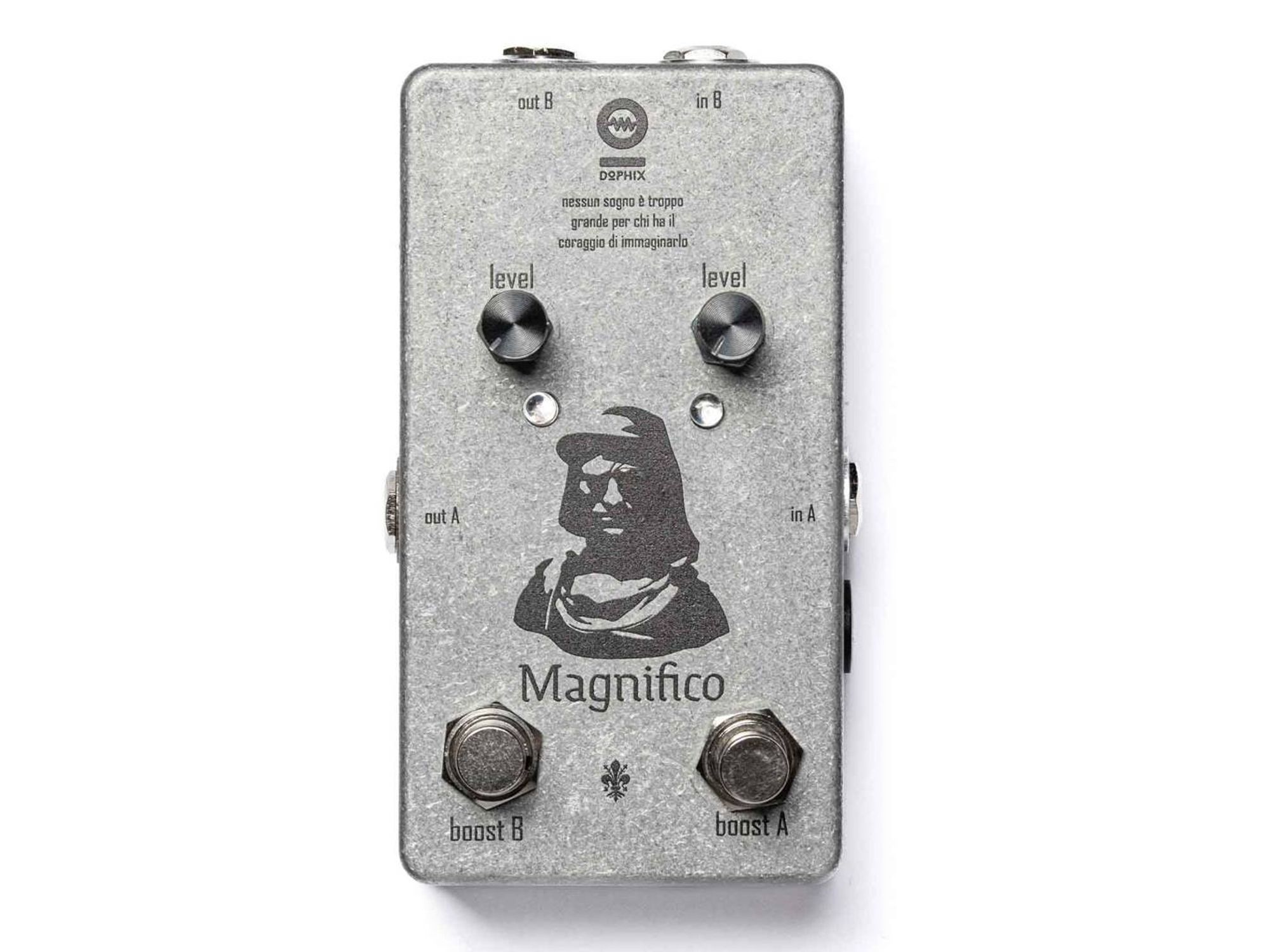
Italian effects maker Dophix®, known for its handmade analog pedals that blend sonic artistry with Tuscan craftsmanship, announces the release of the Magnifico Dual Independent Boost Pedal. The pedal is the result of a collaboration with Artur Menezes and the first ten will be personally signed my Menezes. Available now worldwide through select retailers, the Magnifico represents a refined evolution in the pursuit of expressive tone and musical warmth.
Inspired by the spirit of Lorenzo de’ Medici’s “Il Magnifico”, the celebrated patron of Renaissance art and culture, the new Magnifico pedal embodies both elegance and power. This dual channel boost pedal offers players exceptional dynamics, precision, and tonal control in a fully analog, hand-wired design.
Featuring two completely independent boost circuits, each has its own Level control and dedicated input/output jacks for true signal separation. Whether used to push an amplifier into natural overdrive or to elevate solos with transparent volume lift, the Magnifico gives guitarists total command over their tone.
Constructed with discrete, high-quality components and vintage-grade resistors, the Magnifico delivers the warmth, clarity, and harmonic richness that define the Dophix sound. Each pedal is handcrafted in Italy, employing true bypass switching to preserve tonal integrity when not engaged. Designed for flexibility and musical sensitivity, it draws only 19 mA with LED on and operates on a 9V DC external power supply.
Rooted in the artistic legacy of Florence, Dophix continues its mission to merge Italian design, handcrafted quality, and vintage sound philosophy. The Magnifico stands as both a tribute to Renaissance craftsmanship and a modern tool for discerning guitarists who demand authentic analog character.
For detailed specifications, please visit www.dophix.it.
Street Price: $350.00 USD/€300.00 EUR
The Wicked World of Vintage Guitars with Joe Bonamassa
Blues-rock virtuoso and legendary collector Joe Bonamassa joins Axe Lords for an episode that dives deep into the wild, weird, and sometimes downright wicked world of vintage guitars. Buckle up as Joe tries to convince Tom to stop weighing his instruments, expounds on the mythology of double-white PAFs, explains why taking a Flying V into a motel room is “sick and wrong,” and reveals that having a stage persona (and a good suit) is the true path to spiritual liberation.

Mike Hickey, Joe’s longtime guitar tech, also drops into the conversation. Shenanigans ensue.
This episode originally aired in April 2024 as part of Season 1 of Axe Lords.
Axe Lords is presented in partnership with Premier Guitar. Hosted by Dave Hill, Cindy Hulej and Tom Beaujour. Produced by Studio Kairos. Executive Producer is Kirsten Cluthe. Edited by Justin Thomas (Revoice Media). Engineered by Patrick Samaha. Recorded at Kensaltown East, NYC. Artwork by Mark Dowd. Theme music by Valley Lodge.
Follow Axe Lords @axelordspod for news, updates, and cool stuff.
Follow Joe @joebonamassa
Silver and Black: Last-Minute Fender Saves
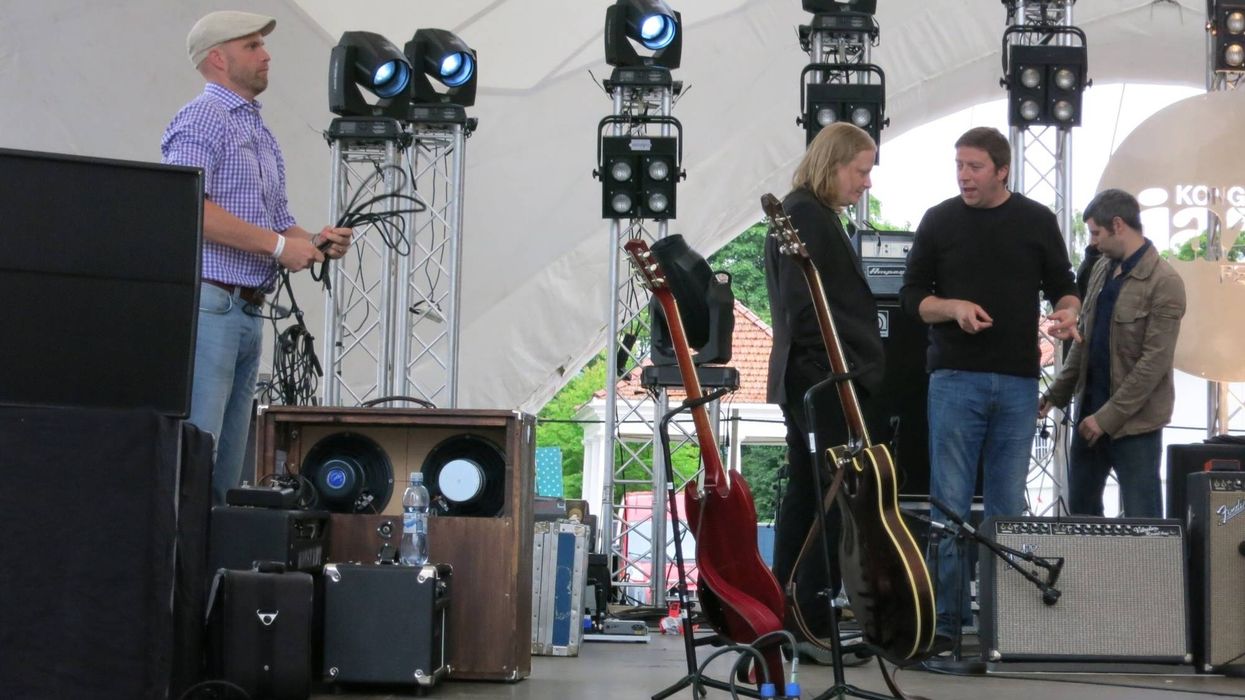
As a Fender amp guy, I frequently cross paths with musicians and guitar players in all sorts of situations. What I enjoy most is fieldwork—setting up amps onstage or troubleshooting tubes, fuses, speakers, and rattling noises on the fly. Here are a couple of stories where I got the last-minute call to save the gig.
In 2013, organizers of the Kongsberg Jazzfestival in Norway reached out in urgent need of guitar amps for Robben Ford and Matt Schofield. I was thrilled—I knew I had the perfect amps for these blues aficionados. Though I had never seen Ford play live, I knew from reading interviews that he liked black panel Fenders. Schofield was more familiar to me. I’d caught him several times, always playing his SVL guitars through Two-Rock amps. I particularly remember one time he taped over the logo of a 4x12" Marshall speaker cabinet, probably because he didn’t want to be associated with the brand.
I loaded my car with my best Super Reverb, a silver panel Vibrolux Reverb, and a silver panel Deluxe Reverb as backup amps, both converted to black panel specs with modern upgraded speakers. The Vibrolux had a pair of 10" Weber 10A125s and the Deluxe a 12" Celestion Century Vintage, the very first guitar amp speaker with a neodymium magnet. Together with a custom pair of 6L6s, this amp was both lighter and twice as loud and punchy as a normal Deluxe Reverb.
For Matt, I borrowed my brother’s Two-Rock Custom Signature v3 and a 40 kg oak cabinet loaded with four heavy-duty Weber 10A150 and 10F150 speakers. It even had a cool Weber logo on the front. At soundcheck, I met up with Simon Law, Matt’s guitar tech and the founder of SVL Guitars. He was a bit unsure about the robustness of the original CTS speakers in the Super, but I assured him that they could take a beating.
We set up both the Super and Vibrolux for Robben and the Two-Rock for Matt on top of the huge Weber cabinet. I remember Matt spending a lot of time rotating the Two-Rock’s knobs to find his tone. Meanwhile, Robben didn’t even look at his amps before he struck a chord, and he was shocked by the loud volume! He walked back a few meters to dial down the level on both amps.
“The whole shop erupted when Kirk demoed a few Albert King licks—powerful bends, vibrato, and those unmistakable facial expressions to match.”
During the gig, I stood right in the line of fire of all the amps and enjoyed the show. Robben’s ES-335 sounded clean and articulate, and Matt had his typical saturated and fat single-coil neck-pickup Strat tone. They both sounded fabulous. It was great seeing them perform, and also meeting them before the gig.
A few years later, I was introduced to two of my all-time guitar heroes, Kirk Fletcher and Josh Smith. The meeting came via the talented Adam Douglas, who also lives in Norway. Adam came up with an idea to do a daytime jam session with Kirk and Josh in a guitar store. So I texted with the owner of Vintagegitar, a high-end boutique shop in Oslo, who immediately said yes. I lifted 15-20 different vintage Fender amps into my Fenderguru trailer and headed for town.
On the shop floor, we had nearly every Fender blackface amp in existence, plus a few great silver panels. Kirk played his flametop Les Paul while Josh had his regular black Chapin T-Bird. I plugged them into different amps and started turning knobs. Josh spent time with my 1966 Princeton Reverb, loaded with a custom '60s Jensen C10n speaker. Meanwhile, Kirk grabbed a Flying V hanging on the wall. I plugged him into a stock 1964 Twin Reverb with Oxford 12T6 speakers. With the volume between 4 and 5, the Twin was loud, and the Flying V's hot humbuckers filled the room with sustaining single notes.
The whole shop erupted when Kirk demoed a few Albert King licks—powerful bends, vibrato, and those unmistakable facial expressions to match. Goosebumps.
Kirk liked that Twin so much he asked to borrow it for his gig that night. A few songs from that October 2015 show at Herr Nilsen are documented on YouTube for anyone wanting to hear some serious blues guitar.
Finally, after 5 years of talking Fender amps for Premier Guitar, the time has come for me to say goodbye to all of you. I’d like to offer a huge thanks to all the readers and the professional, fun, and knowledgeful people at PG, in particular my editors Ted Drozdowski and Luke Ottenhof. I have really enjoyed working with you, and I hope my contributions have inspired older and newer generations to enjoy the classic Fender amps and to keep the legacy going.“It’s a sacred role”: Why Dream Theater’s Mike Portnoy was “relieved” Alex Lifeson and Geddy Lee didn’t ask him to be Rush’s new drummer
![Rush's Alex Lifeson and Geddy Lee [main], Dream Theater drummer Mike Portnoy [inset]](https://guitar.com/wp-content/uploads/2026/02/Rush-Mike-Portnoy-hero@2000x1500.jpg)
Though now back on home turf atop the throne in Dream Theater, Mike Portnoy has performed with many bands over the years, including Adrenaline Mob and Liquid Tension Experiment – two bands he co-founded – and even Avenged Sevenfold throughout 2010.
And in a new interview with Metal Hammer, Portnoy reflects on the rumours that he was even in the running to join Rush following the death of Neil Peart in 2020.
Last year, Rush guitarist Alex Lifeson reflected on being “bombarded” with offers from drummers offering themselves in the wake of Peart’s death. “After Neil passed, it didn’t take more than a few minutes before we started getting emails from all kinds of drummers who wanted to audition for the band, thinking that we were just gonna replace somebody that we played with for 40 years…” he said. “I don’t know what some of these people were thinking.”
Indeed, it didn’t look like a Rush reunion would ever be on the cards given repeated comments made by Lifeson and Geddy Lee. That is until they sent prog fans into a frenzy in October, and announced plans to head out on the road once again in 2026, with drummer Anika Nilles in tow.
Asked by a fan in the new issue of Metal Hammer whether it crossed his mind to try and put himself forward as Rush drummer should the prog powerhouse start the machine up again, Portnoy answers simply: “No.”
“I did send my condolences to Geddy and Alex after Neil passed, but I never tried to throw my hat in the ring for Neil’s gig,” he says. “It’s a sacred role that should only be filled if Geddy and Alex choose for it to be so. Sure enough, here we are with them choosing to finally do so [with Anika Nilles], which has been incredible.”
![[L-R] Geddy Lee and Alex Lifeson of Rush](https://guitar.com/wp-content/uploads/2025/10/Rush-2026@2000x1500.jpg) Rush’s Geddy Lee and Alex Lifeson photographed ahead of their reunion tour announcement in October 2025. Credit: Richard SibbaldBut Portnoy makes the distinction between offering himself up for the role, and how his stance would have changed if he had instead been asked by Lee and Lifeson.
Rush’s Geddy Lee and Alex Lifeson photographed ahead of their reunion tour announcement in October 2025. Credit: Richard SibbaldBut Portnoy makes the distinction between offering himself up for the role, and how his stance would have changed if he had instead been asked by Lee and Lifeson.
“If they hypothetically ever approached me with it, of course, I would have done it with the utmost respect and honour,” Portnoy goes on. “But frankly, I’m relieved they didn’t. First of all, filling Neil’s shoes is going to be impossible. If anybody ever thought Mike Mangini filling my shoes was tough, try filling Neil Peart’s shoes!
“And I came back home to Dream Theater, which is where I belong. So if, hypothetically, they’d approached me with this reunion that they’re doing, it would have put me in an awkward position because of the timing of it all.”
Things have changed drastically in the Rush camp in recent years; Geddy Lee recently sent pulses racing when he hinted at potential new Rush music in the future, depending on the success of their upcoming tour.
“My intent, before we got into this celebration of Rush’s history, was to put some music together,” he said. “I assumed I would be doing that on my own, not with Alex. When we started jamming, I started seeing the possibility of doing something. But that went on hold, because there’s too much work.”
“If we manage to survive the tour, go back to Canada, and have a rest, who knows what will happen,” he teases. “But I suspect some music will eventually come out.”
Tickets are available for both Rush and Dream Theater’s respective 2026 tours now.
The post “It’s a sacred role”: Why Dream Theater’s Mike Portnoy was “relieved” Alex Lifeson and Geddy Lee didn’t ask him to be Rush’s new drummer appeared first on Guitar.com | All Things Guitar.
“The jazz people were laughing when they saw me at the audition with my Telecaster”: Steve Morse reflects on his early guitar journey

Long before Deep Purple, Kansas, or the Dixie Dregs made him a household name among guitarists, Steve Morse was figuring out how to make music work – on his own terms.
In a new interview with Classic Rock, the guitarist reminisces about his early journey, including the very first time he picked up a guitar.
“[I was] about 10 or 11,” says Morse. “My brother brought home a guitar and was learning the three chords for his first lesson. Maybe I could get lessons too? There were group lessons at our music store for $1.50 each. The store rented me a guitar for $5 a month, a Gibson LG-O acoustic. I was left-handed, but the instructor said, ‘We don’t have any left-handed guitars. Try this’ – a regular right-handed guitar. So that’s the way I learned.”
That adaptability would go on to become a hallmark of Morse’s playing – and his career. At 16, Morse was admitted to the University of Miami, one of the only places in the US at the time where one could seriously study guitar. But his arrival didn’t exactly go smoothly.
“The music programme at Miami wasn’t ideal,” Morse recalls. “I was very interested in classical guitar. I wasn’t that interested in the jazz department, because I was playing Jimmy Page songs and weird, teenage angsty music. So I didn’t know how that was going to work out.”
“When I got there I didn’t fit in with the classical people. I wasn’t advanced enough. And the jazz people were laughing when they saw me at the audition with my Telecaster – that wasn’t the right presentation,” he says. “You were supposed to have an acoustic hollow body guitar with a pickup on it, like Wes Montgomery.”
“So they rolled their eyes and said, ‘Put him in the rock ensemble,’ which was really a Latin jazz group. There were only six of us in that programme; guitarists like me that failed the jazz audition. So Miami started off really bad, but being around all those other guitarists, suddenly I could relate to them.”
For Morse, that period also marked a shift away from “pure rock” and toward the eclectic style that would define the Dixie Dregs and his later work.
“During that year I wrote a lot and played with people. We did hybrid music, crossing between jazz and rock, using polychords. I ended up writing and presenting ideas that were closer to what Kansas were doing than to what Jimmy Page was doing,” he says.
Morse also admits that he first felt confident he could make a career as a professional musician when he accepted that the music he loved wasn’t destined to top the charts.
“I thought to myself that the music that I liked was never going to be big or achieve the big numbers, but if I worked hard I was going to be okay,” says the guitarist. “I knew I wasn’t destined to be a rich star [but] I knew I could come up with stuff that people would like to listen to. Although I never could come up with stuff that record companies wanted to listen to!”
“I felt like that people were reachable if I could get in front of them. I said to myself, ‘It’s going to be a modest existence, but it’s going to be possible. I have to work hard and be versatile, be ready to play lots of different kinds of gigs.’ And that’s exactly what happened.”
The post “The jazz people were laughing when they saw me at the audition with my Telecaster”: Steve Morse reflects on his early guitar journey appeared first on Guitar.com | All Things Guitar.
Meryl Streep to star as Joni Mitchell in upcoming biopic

Could anyone capture the voice and vision of the legendary Joni Mitchell on screen? According to reports, Meryl Streep is about to try.
Producer and music executive Clive Davis apparently confirmed Streep’s casting at a post-Grammys party, and director Cameron Crowe has since referred to Davis’s comments, though neither Streep nor Mitchell has officially spoken on it.
The project has quietly been in development for several years, with the multi-time Oscar winner long rumoured to be involved. There have also been whispers (via Stereogum) that Anya Taylor-Joy could play a younger version of Mitchell, though those reports remain unverified.
Crowe has previously stressed how central Mitchell herself is in shaping the project. Speaking on The Late Show last year, he explained: “We’ve been working on it for about four years. We have regular meetings where I can ask her anything and she speaks with her heart about all kinds of stuff. It’s a movie that will be not from a distance… This is from her perspective, her life, looking out.”
He also hinted at the depth of material available for the production: “She’s kept all of her costumes, all of her clothes, all of her instruments. She’s even still the landlady of her famous house in Laurel Canyon. So this is a really personal, wonderful look at her life and music.”
Mitchell has always been protective of her story on screen. In 2014, she famously “squelched” a proposed biopic starring Taylor Swift, later remarking in a New York Magazine interview, “I’ve never heard Taylor’s music. I’ve seen her. Physically, she looks similarly small-hipped and high cheekbones. I can see why they cast her. I don’t know what her music sounds like, but I do know this – that if she’s going to sing and play me, good luck.”
The post Meryl Streep to star as Joni Mitchell in upcoming biopic appeared first on Guitar.com | All Things Guitar.
The art of the backwards guitar solo – and how Dream Theater’s John Petrucci nailed it

If speaking in reverse is the work of the devil, then playing a guitar solo backwards is just devilishly impressive work. Sure, modern digital techniques have made a backwards – or backmasked – solo as easy as the press of a button rather than having to manually reverse the tape, but the uniqueness and inventiveness of a well-positioned backwards solo still requires acute attention to composition. And a decent reverse mode on your delay pedal perhaps.
Debate surrounds exactly who did it first – while George Harrison’s solo in I’m Only Sleeping no doubt was the most important and impactful early example, Joe Walsh may have pipped him to the innovation first on Nancy Sinatra’s Sand recorded just a few months earlier.
Either way, those early experimenters were having to flip the physical tape to create the otherworldly sound, and it soon caught on with the likes of Jimi Hendrix (Are You Experienced?, Castles Made of Sand and Drifting), REM (What’s The Frequency Kenneth?), or Rush (Chain Lightning and Mystic Rhythms), The Beatles (I’m Only Sleeping, Tomorrow Never Knows, Rain), My Bloody Valentine, Red Hot Chilli Peppers (Give It Away, Slow Cheetah) and Garbage (Only Happy When It Rains).
Refining the Formula
But what does it take to truly nail the concept? Dream Theater guitarist John Petrucci took a leaf from George Martin’s playbook and pursued the same method the Beatles’ visionary producer used decades earlier. On Dream Theater’s track Misunderstood from 2002, Petrucci went through the rigmarole of old-school steps to achieve an overall sense of unease the song demanded. Petrucci is on the line from his New York home, where he’s spending Christmas between a heavy touring schedule that began in October 2024 and continues from February through May 2026.
“It’s a pretty weird song, I think, as far as the sounds that were used and the arrangement of it,” he says. “So, if there are any songs to have a backwards guitar solo, that was the one. Also, lyrically, it kind of speaks to being displaced in your life, and the feeling that you have of a surreal disconnect.”
The inspiration was an interview with Billy Joel that Petrucci heard, where Joel recalled coming off stage, having played to a stadium of 60,000 people, and the next thing he does is return to his hotel room to eat his dinner alone.
“Having a guitar solo that’s backwards, I think, speaks to that, because it creates a disconnect. It’s like, ‘Well, this sounds normal-but-not’. You can’t tell what’s making it sound so weird. The backwards guitar solo is really appropriate for that song.”
The method, says Petrucci, is thanks to DT drummer Mike Portnoy’s Beatles fandom.
“Mike was aware of a technique that George Martin used, and so we tried that,” he explains. “And the technique is as follows: We were recording to tape at the time so, basically, I played the guitar solo the way I would normally do a guitar solo. I constructed it the way I wanted it to sound from front to back. Then, we flipped the tape so it was backwards, and instead of just playing that back in the master mix, I learned the backwards version, note for note, and then I recorded the backwards version myself, then harmonised it. And then we flipped the tape back over.”
It’s a lot of course, but the idea and the whole point of doing it backwards, is to create something that unsettles the listener.
“You get the original construction that I intended of the solo, but it sounds bizarrely backwards,” says Petrucci. “So, it’s not actually backwards. Doing it that way, the Beatles way, lets you construct the solo the way you want it front-to-back, which then gives you a sense of ‘normal but not’ and the harmony I added to it also made it sound strange.”
Performing the song live is a challenge, but Fractal Audio’s flagship Axe-Fx comes in handy.
“In the Fractal Axe-Fx are some backwards effects that don’t make what you’re playing sound backwards, but I can sort of emulate the backwards phrasing a little bit. The backwards delay just makes it sound a bit off-putting and surreal. That’s the closest I can get to the studio result in the live arena.”
Back To Basics
When the Beatles were experimenting with backwards sounds in 1966 however, they were having to essentially innovate the method from scratch. Initially, John Lennon had been experimenting with reversing vocal takes, but they soon branched out to trying it with other instruments.
In his book Sound Pictures: The Life of Beatles Producer George Martin, The Later Years, 1966-2016, historian Kenneth Womack recalls the recording of the Paperback Writer B-side track Rain in 1966 as epiphanous in the experimental recording sessions of the band. Harrison, Womack claims, “was ecstatic over the possibilities that backward recording entailed.”
Womack quotes Harrison as saying, “With Rain, George Martin turned the master upside down and played it back. We were excited to hear what it sounded like, and it was magic – the backwards guitarist! The way the note sounded, because of the attack and the decay, was brilliant. We got very excited and started doing that on overdub. And then there was a bit of backwards singing as well, which came out sounding like Indian singing.”
Whether it’s tape-flipping, studio effect, or post-production trickery, the backwards guitar solo remains a tool in the composition kit worthy of exploring, and between Dream Theater, The Beatles, Garbage and My Bloody Valentine, the effect evidently knows no genre boundaries.
The post The art of the backwards guitar solo – and how Dream Theater’s John Petrucci nailed it appeared first on Guitar.com | All Things Guitar.
Cloud Microphones Launches Cloudlifter Mini CL-25
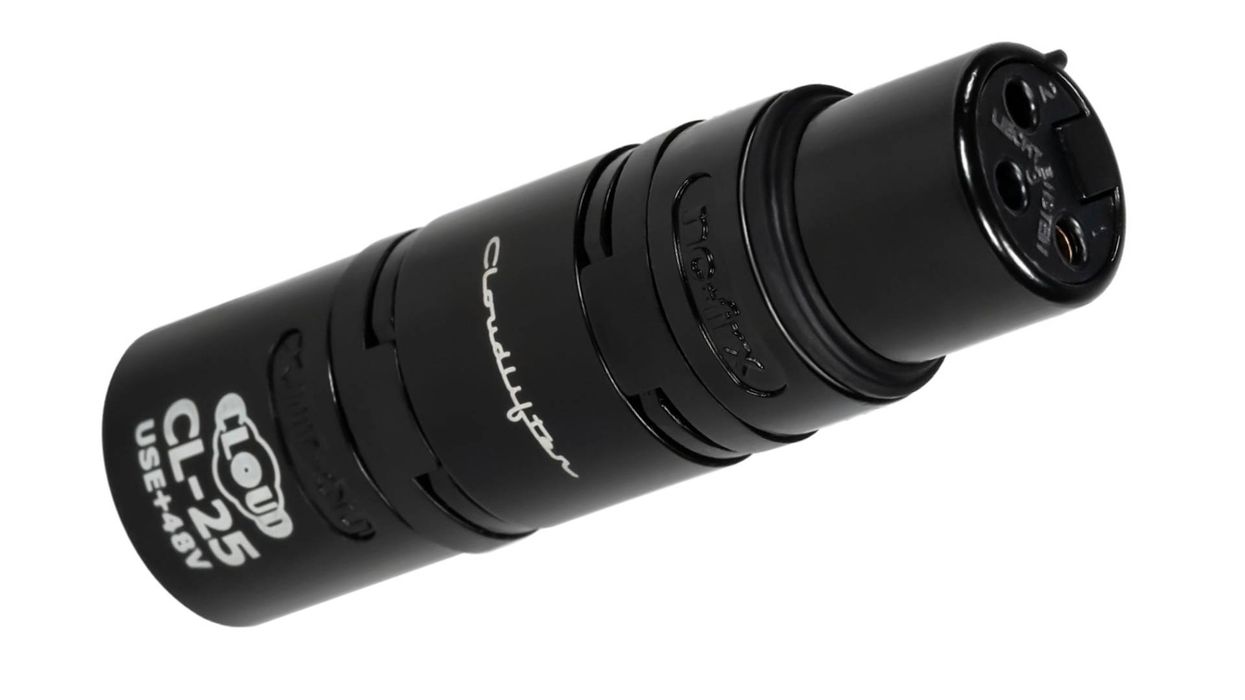
Cloud Microphones has unveiled its new Cloudlifter Mini CL-25 compact mic preamp. Offering the same award-winning circuitry and performance specs as the original Cloudlifter CL-1, the Mini CL-25 is a custom engineering collaboration with Neutrik. Using standard 48-volt phantom power, the unit’s ultra-compact in-line design interfaces directly with dynamic, ribbon, and tube microphones to provide up to +25 dB of ultra-clean gain, and is the smallest and most portable Cloudlifter ever produced for studio, broadcast, and live sound professionals.
Plugging directly into microphones, preamps, mixers, stage boxes, and wall panels, the Mini CL-25 is built utilizing a custom Neutrik gold-plated XLR connector system. Employing hard-soldered, wire-free internal circuitry designed to meet the demands of thousands of insertion cycles, the device offers reliability within live and studio environments where daily hard use is the norm.
As a tool to achieve more clarity while reducing noise or coloration, the Mini CL-25 adds clean, transparent gain before your preamp using standard phantom power that isn’t passed along to the microphone. Along with cleaner gain, the unit lets users operate with lower preamp gain settings to better preserve clarity, detail, and authenticity. Resulting performance provides more of the actual microphone and less preamp coloration and artifacts, along with increased headroom.
Optimal for voice mics, dynamic mics, and low-output microphones, plus situations where protection for ribbon mics is desirable, the CL-25 will find itself completely at home in applications including studio recording, broadcast, location recording, podcasting, and live sound. Advantages within the latter category center around its compact form factor that won’t pull or stress microphone connectors, clear gain and natural frequency response (which helps reduce artifacts that cause feedback), easier EQ control from the mixing console, its ability to eliminate the need for an extra mic cable, and an external black finish that maintains a low visual profile onstage.
Designed using state-of-the-art multilayer technology and high-tech engineering, the streamlined miniaturization process at the heart of the Mini CL-25 brings the smallest footprint possible to the Cloudlifter universe, but guarantees that no sacrifices to either performance or audio quality are made along the way. The true sound of the source with all the attributes the Cloudlifter line has built its reputation upon remains totally uncompromised.
The Cloudlifter Mini CL-25 is now shipping and carries a street price of $149. For more information visit cloudmicrophones.com.Silktone Expander Review
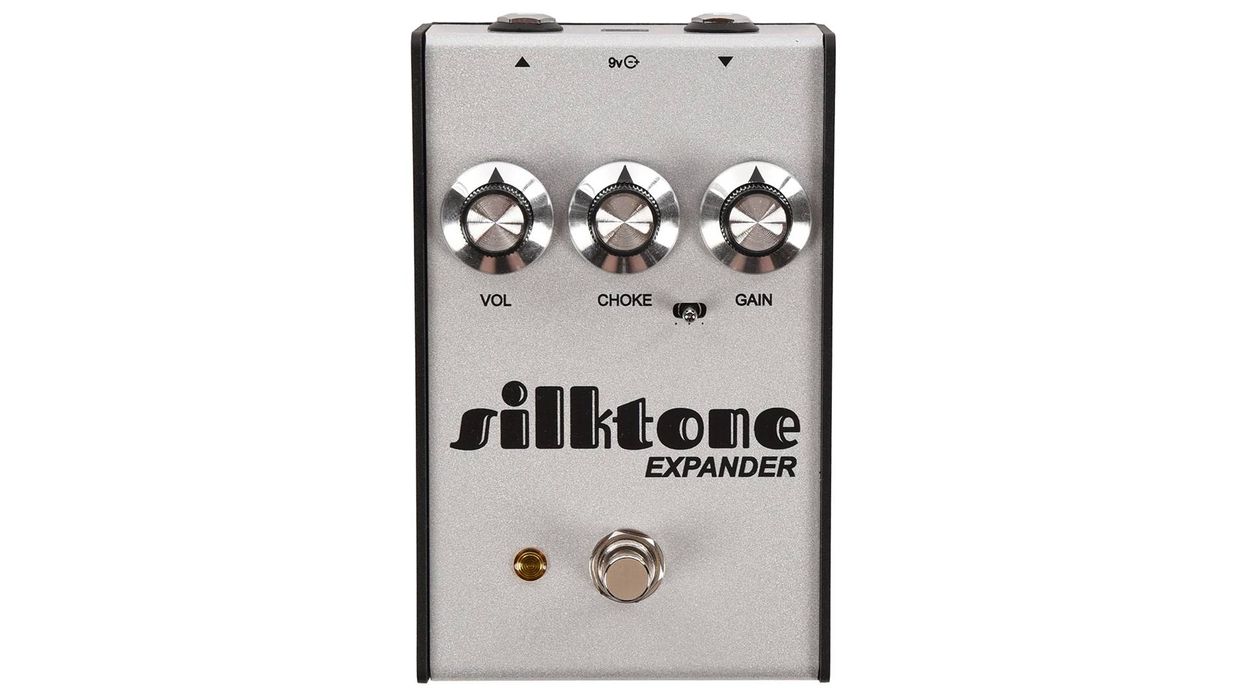
Spending quality time with the Silktone Expander is like getting lost in a garden maze in late spring. You might not always know where you are, but the sensory overload is so rich and intoxicating that you’ll forget you were trying to get anywhere specific in the first place. Using the Expander, a player encounters full, resonant boost, overdrive, and distortion tones that can sound great in the most straightforward applications. But there are also unusual gain flavors in abundance, ranging from exploding-5-watt-antique-amp textures, thrilling uncommon fuzz fare, and ghostly, smoky, fiery, in-between sounds that defy easy categorization but can drive a mixer, arranger, or songwriter’s inspiration to white-hot levels.
Getting the most out of the Expander’s, well, expansive tone vocabulary requires you to be realistic and honest about your relationship to strictly analog methods. There are no presets here. And while the Expander can cover textures you might otherwise assign to three or four gain devices with their own dedicated footswitches, you do all that here with a single footswitch, three knobs, and a toggle. So, tapping into the breadth of the Expander’s capabilities in performance takes confidence, and a creative mindset that allows for happy accidents. If your composing and performance style is more “roll-with-it” than surgical and uncompromising, the Silktone Expander opens doors that reveal unexpected surprises.
A Chameleon, An Individual
One of the trickiest things about reviewing the Expander and boiling it down to its essence is how hard it is to find equivalent sounds as a base for comparison. The germanium heart of the pedal is inspired by a Dallas Rangemaster, and some overdriven and fuzzy facets of its personality sound and behave like a germanium Fuzz Face. At other times it responded like my Jext Telez Selmer Buzz Tone clone running at 3 volts. Some of the Expander’s warm, fizzy drive tones also evoke console preamp-style pedals like the Hudson Broadcast. But on the flip side, I’d plug the Expander in alongside a favorite clean boost, sparkly overdrive, or preamp, and end up totally preferring its balance of clarity, detail, and energy.
If you find a combination this pedal sounds lousy with, let us know! We’re still looking.
How did Silktone craft a pedal that’s so many pedals in one? There are clues to Silktone founder Charles Henry’s intent. In addition to the Rangemaster influence, Henry gravitated toward the Shin-Ei FY-2 and FY-6 as well as the Roland Bee Baa—all fuzzes that speak through bold, often radical voices. Certainly, tones of that ilk live here. But there is much in the Expander that reflects the mindset of an amp builder—and Henry is a very creative one. In lay terms, the Expander’s circuit works like this: A JFET transistor that emphasizes rich, consonant, 2nd order harmonics makes up the first power stage. The second stage is Henry's riff on the germanium Rangemaster circuit. That is almost certainly the origin of many of the Expander’s hazier, fuzzier, but also more dynamically responsive tendencies. A JFET at the output stage effectively emulates the saturation that occurs in a real tube amplifier's first stage—probably a reason the Expander sounds great at low amp volumes. There’s nothing terribly complex going on here. But in practice you hear a balance more typical of a great amp: Warm when clean, full of overtone character when run at its limits, and responsive across a wide dynamic range and EQ spectrum.
Equal Opportunity Expander
Though I tried, I really couldn’t find an amp and guitar pairing that wasn’t enhanced by the Expander. A Jaguar running through a hot, 15-watt EL84 amp at attenuated levels? Magic! An SG driving a Fender Reverb tank and a 50-watt Bassman? Double, extra-thrilling, super-loud magic! A Rickenbacker and Champ? That combo sounded ten times as big and fat, all at a volume that any soundman or engineer could love. I could go on. I threw Danelectros and Eko 12 strings at this pedal. Mixed it with other gain sources as divergent as Harmonic Percolators, Selmer Buzz Tone clones, Tube Screamers, Boss DS-1s and Vox Tone Benders. In every case the Expander was not just agreeable and accommodating but had real enhancements to lend. If you find a combination this pedal sounds lousy with, let us know! We’re still looking.
The Verdict
For all its understated, elegant design, the Silktone Expander is packed with sounds that not only bring a lifeless amp to life, but do so in ways distinctive enough to jump-start a stalled recording project or rescue a song from the doldrums. The straight-ahead, all-analog design means that presets aren’t coming to save you in a pinch. You’ll need to get crafty, be resourceful, and practice using the Expander. But it is incredibly forgiving, a willing co-pilot, and full of alternative tone treasures—particularly for players willing to explore and improvise. While $269 might seem a lot for a pedal this simple, the quality is tip-top, and it certainly makes several of my gain devices feel superfluous. If you have downsizing to do, the Silktone Expander, despite its name, is a beautiful solution that leaves you no less rich in tone options.
Rig Rundown: MGK’s Justin Lyons and Sophie Lloyd
MGK—formerly known as Machine Gun Kelly—released his seventh studio record, Lost Americana, last August. When he took it out on tour, he hired two firebreathing fretboard masters, Justin Lyons and Sophie Lloyd, to knock his audiences dead. Ahead of their gig at Nashville’s Bridgestone Arena, PG’s Chris Kies met up with Lyons and Lloyd to get the lowdown on how they bring MGK’s music to life. Scope some of the highlights below.
Brought to you by D’Addario.
Make Your Mark
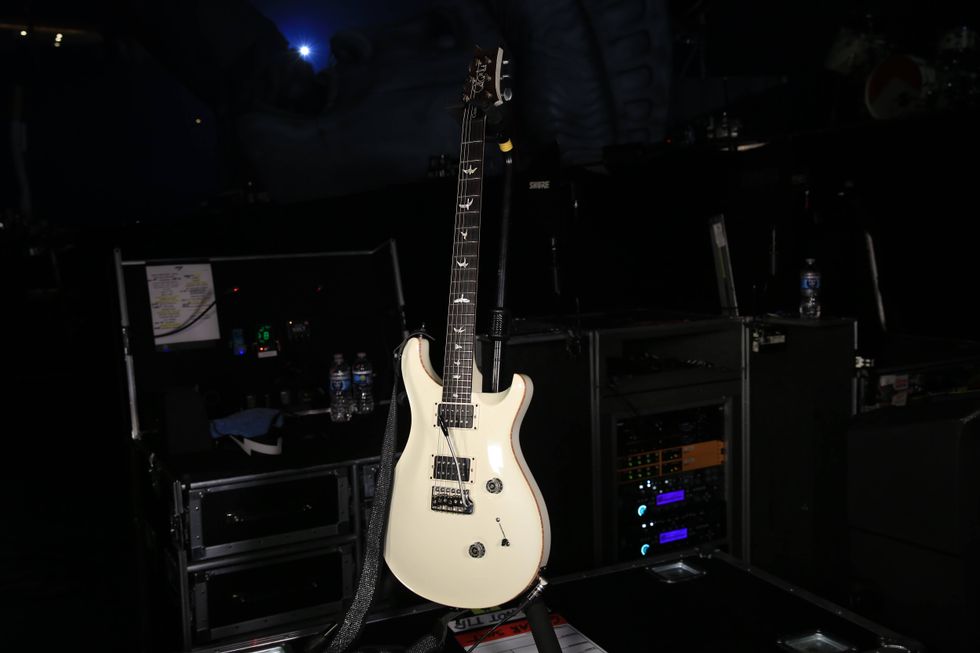
This PRS Mark Tremonti is one of Lyons’ current favorites, despite the black finish—typically, he’d never take a black guitar, but this one’s so good that it gets a pass.
Bow Down
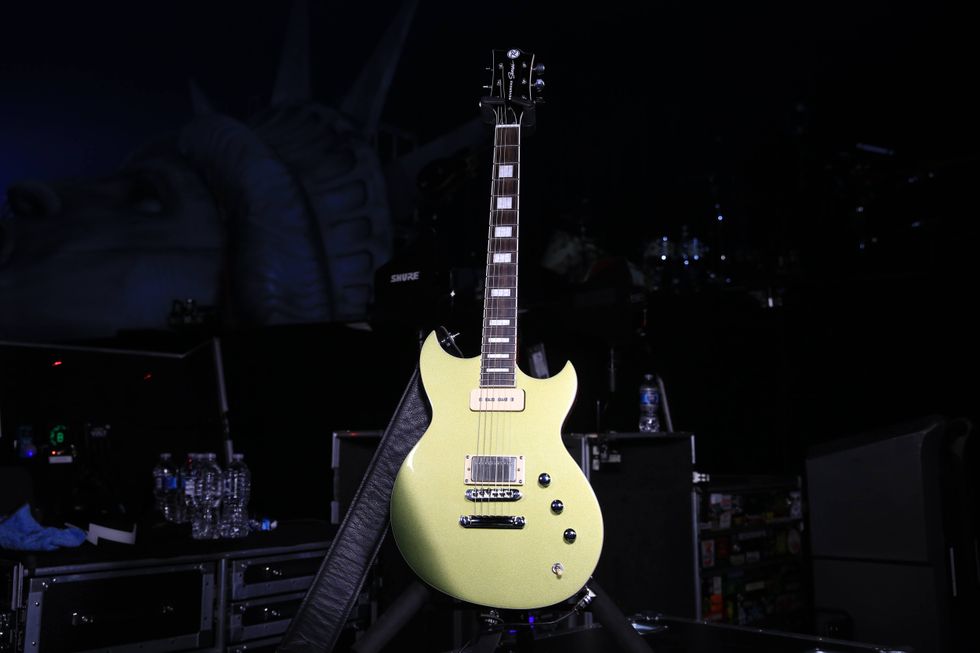
Just before Christmas, Reverend sent over this Sensei model, along with a Roundhouse. Lyons, who’s in talks with the company to build a signature model, can’t put the Sensei down.
Justin Lyons’ Tone Master Rig
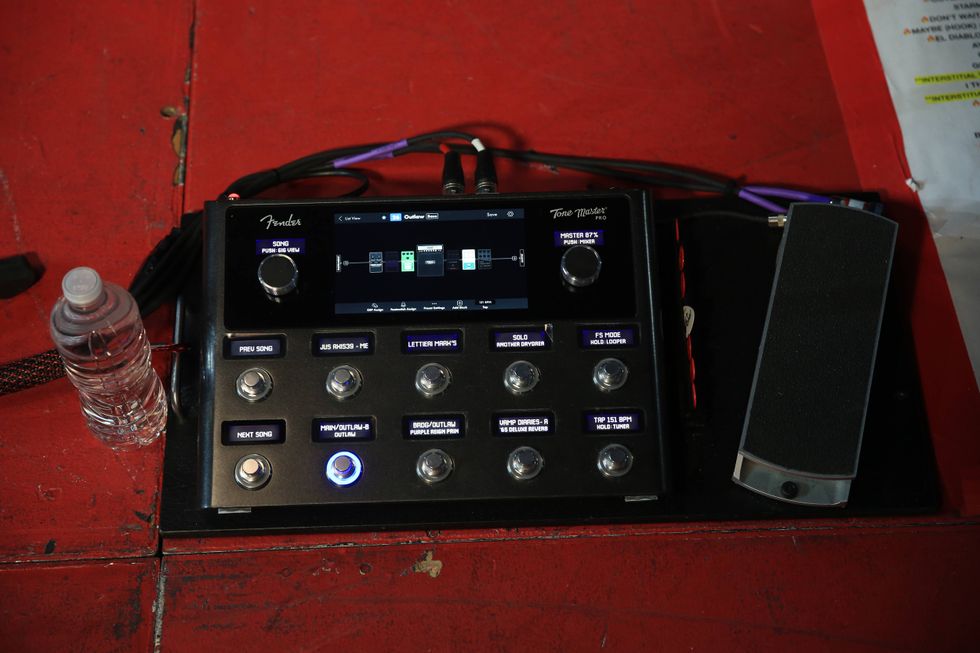
For their amp-free, in-ear monitor stage setup, Lyons loves the Fender Tone Master Pro unit, which lets him emulate his treasured Mesa/Boogie amps. Tack a TS-style boost in front and he’s in tone heaven. He also digs Mark Lettieri’s patch pack.
Kiesel Engine
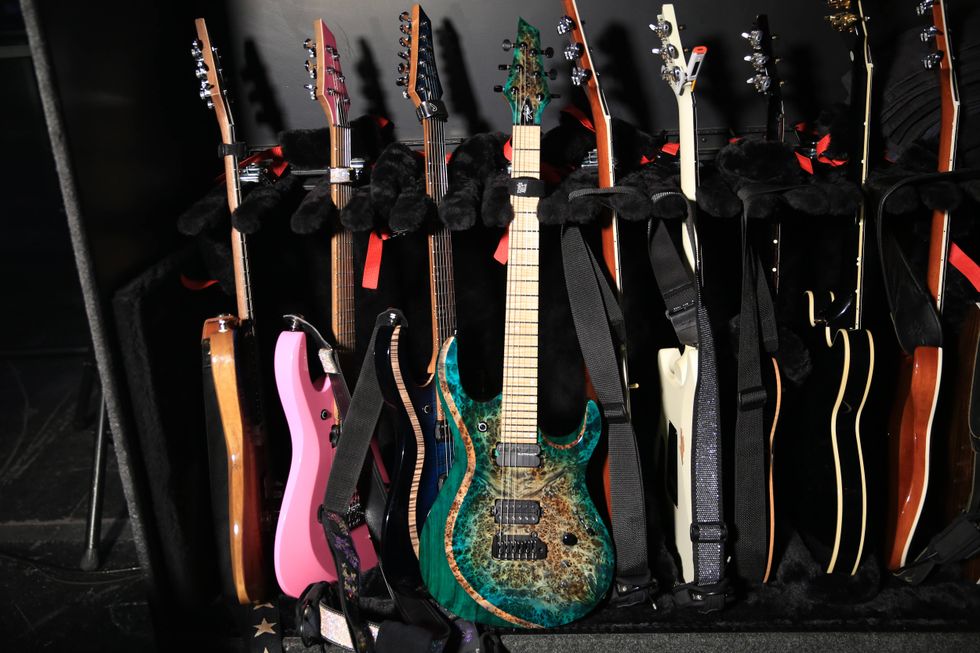
Lloyd was Kiesel’s first female signature artist, and she brought a stable of them out with MGK. Lloyd’s models feature black limba bodies and walnut necks, with Kiesel Lithium pickups in the bridge position. Her signatures are unique because they include a Sustaniac in the neck position, which makes the guitar “ring out forever” and offers different octave options. Lloyd uses the kill switch on her guitars during the show for “big ending” moments. She runs her Kiesels with Ernie Ball Paradigm strings (.010–.046).
Sophie Lloyd’s Kemper Rig
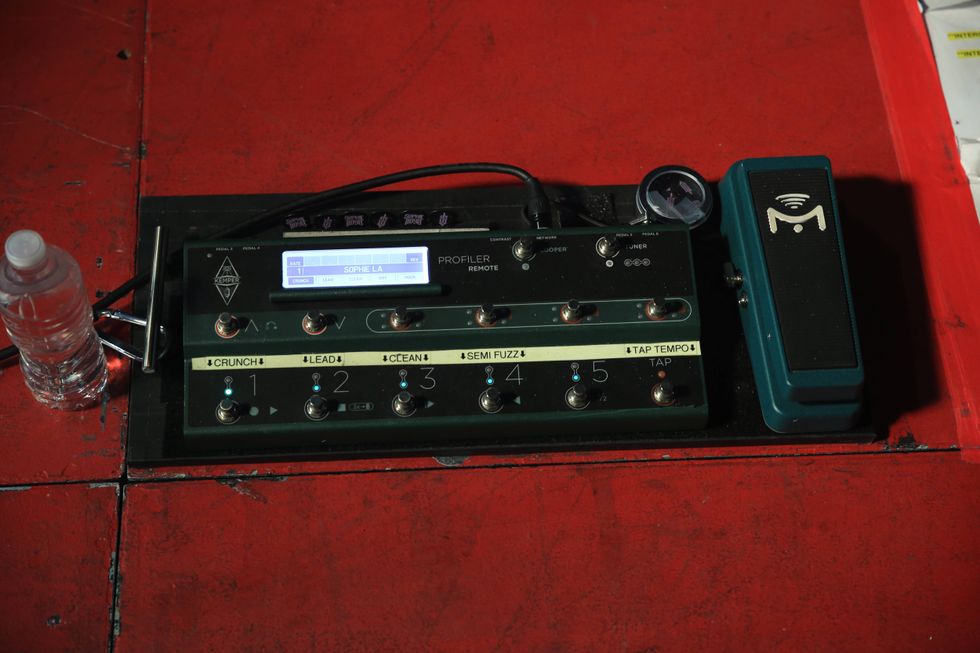
Back home, Lloyd likes playing through a Neural Quad Cortex, but on this tour, she’s running a Kemper Profiler like the rest of the band. She was skeptical at first that it could replicate that magic of her favorite Diezel amp, but it does the job—and then some.
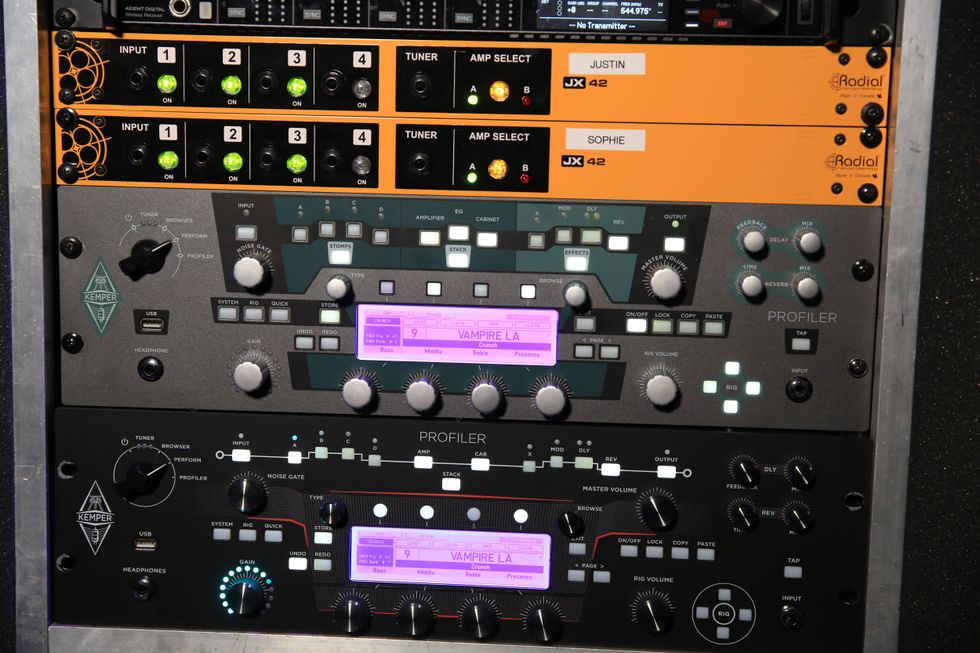
The rack backstage carries the Profiler brains, plus the Radial JX42 and Shure AD4Q units that handle Lloyd’s and Lyon’s signals.
“Are you f**king kidding me? He’s one of the only guitarists you can identify with one note”: Joe Bonamassa’s brutal response to those who claim BB King “doesn’t play much on guitar”

The blues would look very, very different without BB King, and as such, Joe Bonamassa has strong words for anyone who would dare to criticise his playing.
Often nicknamed ‘The King of the Blues’, BB King was instrumental in shaping the blues genre over his 70-year career, playing hundreds upon hundreds of shows and releasing, honestly, nearly too many records to count.
In a new interview with Classic Rock, contemporary blues ace Joe Bonamassa waxes lyrical on King’s lasting influence, calling him a “total artist”, and “such an entity”.
“The singing, the playing, the songs. I think he made, like, 60 records over the years,” says Bonamassa, listing some of his favourites in Live at the Regal (1965) and Blues Is King (1967), as well as his top BB King studio albums Indianola Mississippi Seeds (1970) and Completely Well (1969).
“When people say: ‘Oh, BB King doesn’t play much on guitar,’ it’s like: ‘Are you fucking kidding me?’” Bonamassa adds.
“He’s one of the only guitarists to ever play that you can identify with one note. If you listen to BB’s playing, he actually had a lot of jazz in him; he had some Wes Montgomery and definitely Charlie Christian, but also some T-Bone Walker.
“But once you got into the ‘60s, his approach and phrasing were so uniquely him. I think, most of all, what he was able to do was time. Y’know, where he would place notes. He was never in a hurry. And I think one of the most overlooked things about BB’s playing is that every solo he took had a great story.”
Joe Bonamassa continues, recounting his first experience meeting BB King, and how it ended up shaping him as a player, as well as his general attitude towards the blues.
“When I first met BB [in 1989], I didn’t really grasp the gravity of it,” he says. “When you’re 12 years old, you know what I mean? But he was this larger-than-life personality and figure. I was blessed to know him for 25 years. He showed me the right way to tour, taught me about the professionalism. The band was always immaculately dressed, on time, respectful. And if you can live by that, then you got no worries.”
Joe Bonamassa released his last album Breakthrough back in July 2025. Back in November, he updated fans on an injury he suffered during a show, which saw him suddenly lose “80%” of his hearing’s high end.
He has since long been cleared, and has a string of shows booked all over the world for 2026.
For a full list of live dates, head to Joe Bonamassa’s official website.
The post “Are you f**king kidding me? He’s one of the only guitarists you can identify with one note”: Joe Bonamassa’s brutal response to those who claim BB King “doesn’t play much on guitar” appeared first on Guitar.com | All Things Guitar.
Orquidea: This radical headless model from FM Guitars “fits perfectly with the human body” – and offers some serious eye candy to boot

Suitable for all playing styles and genre preferences, it’s available as a regular six-string guitar, bass, or as a more typical “FM style” guitar or bass – think very wide fretboards and strings from seven and up.
The Orquidea (meaning Orchid), was designed as an alternative to FM Guitars’ Esphera model. It’s single cut, and a little bigger and thicker in general compared to its sibling. The body has unique curves and bevels designed for regular horizontal, classical and upright playing, according to the brand.
Orquidea also features a “guitar handle” and a lower horn design that allows access to the higher frets seamlessly, and balances the guitar in any position. Its neck profile is thin, and FM Guitars says it doesn’t “like to add extra wood where it’s not necessary”.
Due to the unique designs of these guitars, they’re not available through a simple purchase online. To get your hands on one, you’ll need to join a waitlist by emailing info@fmguitars.com. You’ll be informed when your order can be taken. Just take a look at some of the unusual finishes and variations made so far.
 Image: FM Guitars
 Image: FM Guitars
You can check out the six- and seven-string variations in the videos below:
In other news in the world of headless guitars, Strandberg has recently lifted the lid on the Arc TILT – a patent-pending tremolo design for “smooth motion, stable pitch control and a more intuitive playing experience”. The news arrives after the unveiling its MIDI-infused headless Chameleon guitar with Jamstik, and its design is said to reimagine how a tremolo responds to the player, with a pivot system and tremolo block engineered to move in sync with the bridge, “resulting in a fluid and controlled feel” while maintaining stability.
Find out more about the Orquidea over at FM Guitars.
The post Orquidea: This radical headless model from FM Guitars “fits perfectly with the human body” – and offers some serious eye candy to boot appeared first on Guitar.com | All Things Guitar.
Did Unplugged Shop “Unplug” Me From Their Aggregator?
I started this blog in 2007 to share and talk about my woodworking and guitar making. I am very grateful that my blog has been on the two best woodworking aggregators: Norse Woodsmith and Unplugged Shop. Thanks to them the word got about my work.
The other day, I noticed that Unplugged Shop didn’t share my last post and took down the previous post on their website. Since this happened I have noticed that the number of visitors to my website are down. I submitted a request to have my website appear on their aggregator, I haven’t heard back from them.
I wonder if the AI robot that assists their website doesn’t consider a guitar maker to be a “woodworker”? Is it because I don’t make stick chairs or turn bowls anymore? And that I don’t post much “how to” about guitar making? I’m a little baffled by Unplugged Shop’s action.
I hope that norsewoodsmith.com continues to share my and other woodworkers blog posts, I am very grateful for that old school aggregator. Thanks!
Build Flatpicking Skills Using Classical Guitar Repertoire with Matteo Carcassi’s Etude No. 1

“It’s a flamethrower”: Mark Morton’s new Signature Les Paul Modern Quilt unites Les Paul heritage with metal-ready specs and aesthetics

Lamb Of God’s Mark Morton has teamed up with Gibson for the launch of a new signature model, the Les Paul Modern Quilt.
As the name suggests, the AAA quilted maple top is a real standout on this new model, which is set off by a smokey Translucent Ebony Burst Satin finish. Morton’s input doesn’t stop there of course, and its features have been designed with modern metal players in mind.
The Mark Morton Les Paul Modern Quilt has a mahogany body utilising Gibson’s Ultra Modern Weight Relief for comfort. Its mahogany neck with a SlimTaper profile and Modern Contoured Heel aids upper-fret access, while the ebony fingerboard offers a compound radius and 22 medium jumbo frets. Its aesthetic is complemented by chrome hardware, Grover Rotomatic locking tuners, black rings with chrome trim, and a truss rod cover bearing Morton’s signature.
Tones come of two exclusive Mark Morton signature humbucker pickups, which have been specially handcrafted by the Gibson Pickup Shop to deliver his tonal desires. While this model was in the making, Morton had been taking prototypes of these pickups with him on tour to try them out in his actual work environment.
The rhythm pickup features moderate, Patent Applied For-style windings with a ceramic magnet for clarity and punch, while the lead pickup offers higher-output windings and a ceramic magnet for added presence and power. Both pickups are wired to individual volume and tone controls with Orange Drop capacitors and a three-way selector switch.
“I wanted something that stayed classic to the heritage and the history of the Les Paul, and something that looked heavy metal. The quilt top and the trans black satin finish felt dark and metal to me, but not over the top,” says Morton.
“The 60s style knobs are a cool throwback to the John Sykes model that was done a long time ago. The way it is contoured at the heel allows me to reach the upper registers comfortably, and the ebony fretboard is really fast. This model has a slim taper neck which was very important for me, as it’s the most comfortable neck profile.”
 Image: Gibson
Morton continues, “The pickups are unique to this guitar, it’s a brand new Gibson pickup and I worked closely with Jim DeCola (Master luthier at Gibson), and the Gibson Pickup Shop in designing them. The neck pickup [is] more conservative in terms of its output, which allows me to flip to the neck position and play clean, and roll back the volume to not hit the amp as hard. Switching to the bridge pick up, it’s just a flame thrower; it’s super high output.”
He concludes, “It’s an iconic guitar and an important piece of music history, and for me to be associated with the legacy of the Les Paul is one of the greatest honours of my career. I am thrilled with the process of developing this guitar, and I am immensely thrilled with the outcome.”
The Mark Morton Signature Les Paul Modern Quilt is available now for £2,699. Find out more via Gibson.
The post “It’s a flamethrower”: Mark Morton’s new Signature Les Paul Modern Quilt unites Les Paul heritage with metal-ready specs and aesthetics appeared first on Guitar.com | All Things Guitar.
Seymour Duncan Announces The 50th Anniversary Limited Edition JB / Jazz Humbucker Set
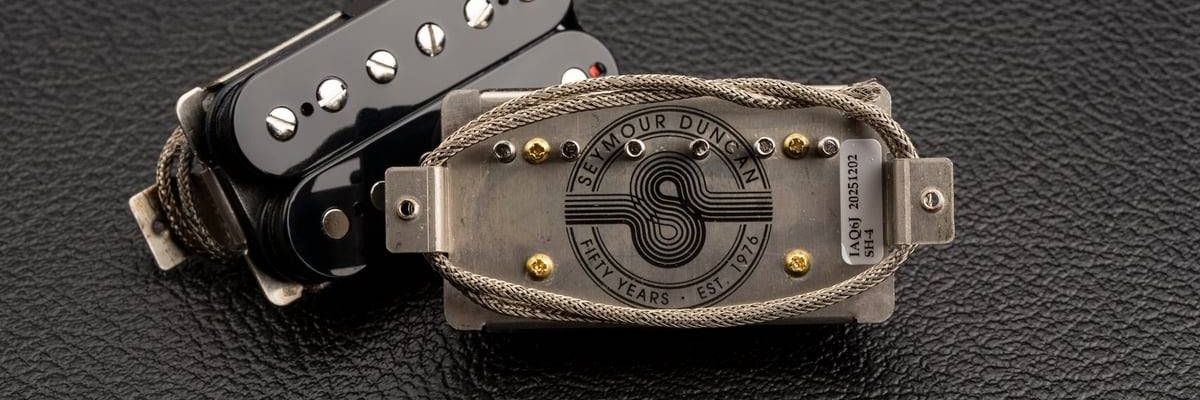
Seymour Duncan, a leading manufacturer of guitar and bass pickups, effects pedals, and pedal amps, is proud to announce The 50th Anniversary Limited Edition JB / Jazz Humbucker Set is now available to order from seymourduncan.com and from authorized Seymour Duncan dealers.
Experience the true origin of the hot-rodded humbucker with the 50th Anniversary Limited Edition JB / Jazz Set. Built with historically accurate parts including butyrate bobbins and rough-cast magnets, this set faithfully replicates the earliest production models. Presented in retro silver packaging and limited to 2026 production only, this is a collectible piece of tone history.
- Authentic recreation of the original JB / Jazz humbuckers
- Limited-edition packaging inspired by early Seymour Duncan designs
- Features a commemorative 50th Anniversary logo on the bottom plate
- Includes butyrate bobbins crafted using our original 1970's mold and true to vintage design specifications
- Proven JB / Jazz versatility from articulate cleans to expressive rock gain
- Available for a limited time in 2026 only, making it a true collector’s item
- DC Resistance: Jazz 7.5k - JB 16.6k - Magnet: Rough Cast Alnico V
- Cable: 1c Braided - Long Leg Bottom Plate
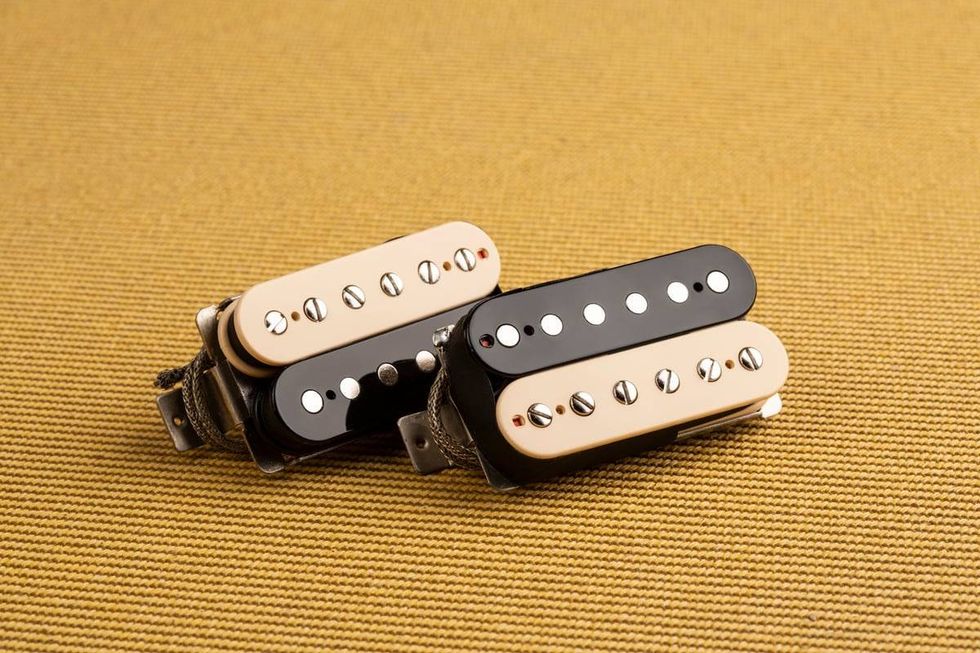
- Available in traditional Black and Zebra
MAP pricing: $258.00
Half a century of legendary tone starts here. In 1976, Seymour Duncan officially launched the company that would revolutionize electric guitar sound, but the story began years earlier in a London workshop where Seymour crafted pickups for rock's most influential players. Among his greatest achievements was a revolutionary humbucker set that would become the foundation of countless iconic recordings. Now, as we celebrate 50 years of innovation and craftsmanship, we're honoring that legacy with something truly special: the 50th Anniversary Limited Edition JB / Jazz Humbucker Set.
These aren't just commemorative pickups. They're the benchmark combination that has defined versatile guitar tone for generations, now crafted with the exact vintage-correct specifications of our earliest production models. When the JB officially went into production, the basic recipe was already set, but those earliest models used butyrate bobbins, long-legged baseplates, single-conductor cable, maple spacers, and rough-cast Alnico V magnets. Over time, practical updates were added for consistency and flexibility, such as modern bobbin materials that better handle vacuum wax potting, precision-ground Alnico V magnets, and short legs. Today's standard production JB / Jazz delivers that same legendary tone with these modern refinements. This special 50th Anniversary set faithfully recreates the original vintage-correct component blueprint while preserving the familiar JB and Jazz voice players already trust, with the legendary clarity and dynamics that earned the combo its status as the industry standard. Whether you're tracking sessions at home or covering everything from blues to hard rock at the club, this is the proven tone that does it all without compromise.
For serious players ready to finish their number one guitar, this is your moment. The JB / Jazz combination remains one of our best-selling humbucker sets because it simply works: rich harmonics, singing sustain, articulate clarity, and everything from warm neck cleans to aggressive bridge drive in one definitive package. Now you can own this iconic pairing in its most collectible form, built exactly as Seymour crafted them in our earliest years. The set arrives in limited edition silver packaging that echoes our original artwork from the company's founding era, while the bottom plate bears our commemorative 50th Anniversary logo. Available exclusively during 2026, this limited production run ensures you're not just upgrading your guitar; you're acquiring a rare celebration of 50 years of uncompromising excellence. Secure this definitive heritage piece for your instrument and connect to 50 years of Seymour Duncan legacy.
Kiesel Guitars Unveils the Mark 66
Kiesel Guitars has introduced the newest model in the company’s iconic line of custom-built instruments: the Mark 66 now joins the lineup of Kiesel’s premium US-made instruments.
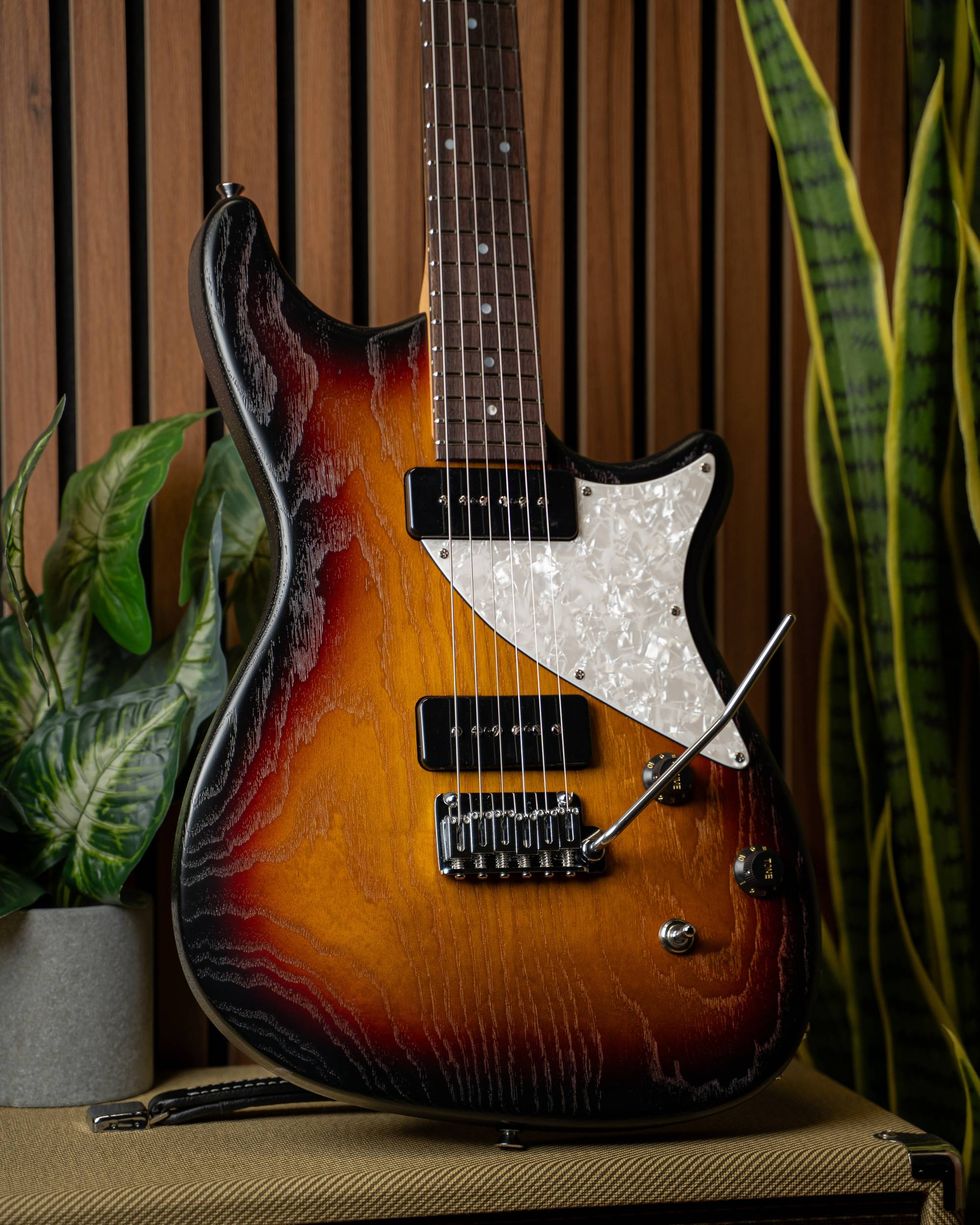
Designed to excel in a variety of musical styles, the versatile Mark 66 is available in a 6-string configuration. Key features include:
- BODY WOOD OPTIONS: Alder, Black Limba, Mahogany, Swamp Ash, 1-Piece Swamp Ash, Walnut, or 1-Piece Roasted Swamp Ash
- NECK SCALE LENGTH: 25.5” or 30”
- FRETBOARD MATERIAL: Over 15 different options
- NUMBER OF FRETS: 22 frets
- NOTABLE PICKUP/ELECTRONICS OPTIONS: Kiesel’s new AP90s or two humbuckers
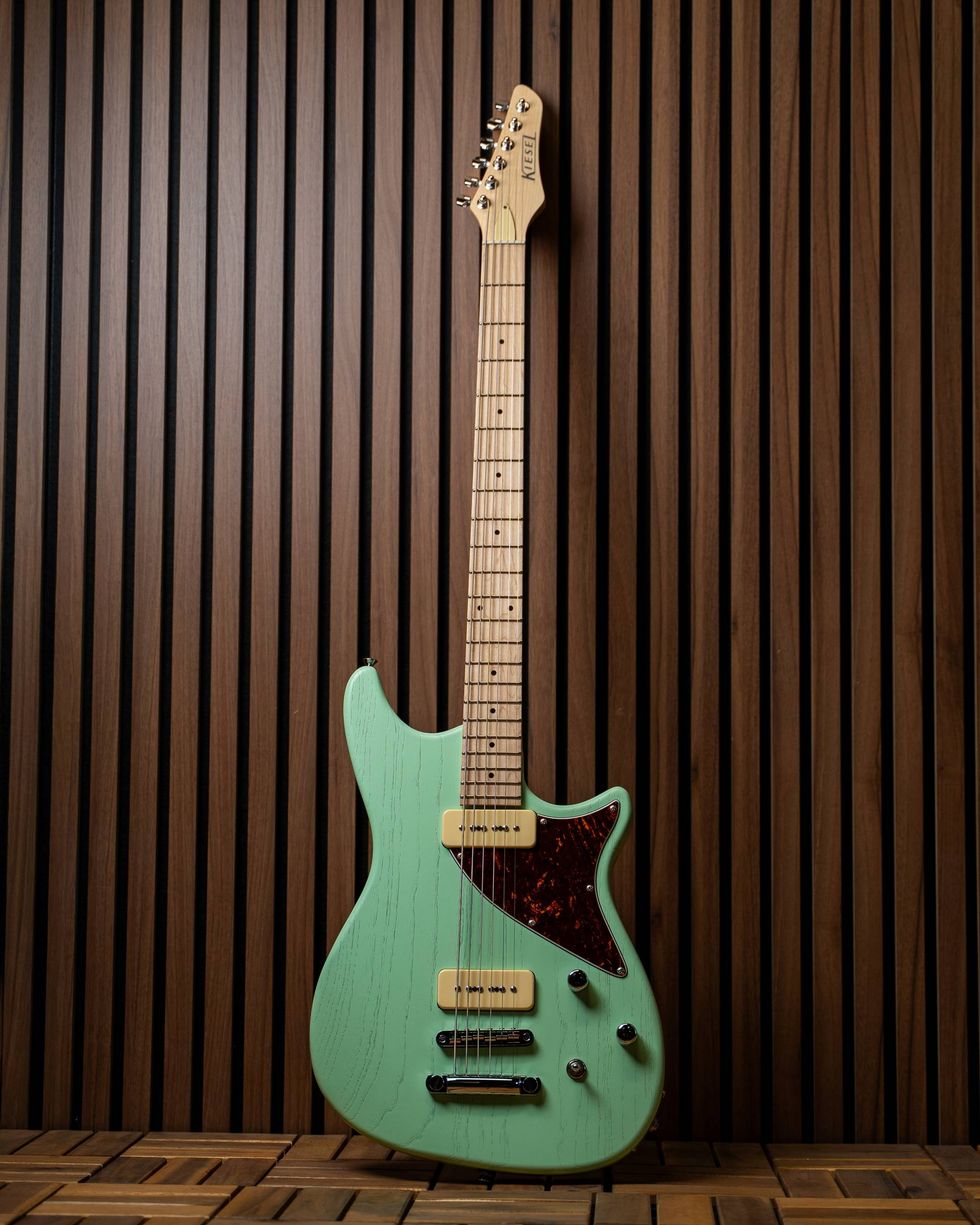
Like other Kiesel models, the new Mark 66 is available in a wide range of options for unique customization. Players can select their favorite finish, tonewoods, electronics and hardware to create the guitar of their dreams…expertly crafted in Kiesel’s Southern California custom shop.
Kiesel’s new Mark 66 is available for street pricing starting at $1,649. For more information, visit kieselguitars.com.
Ultimate Support Systems Unveils Trio of Gig Bags
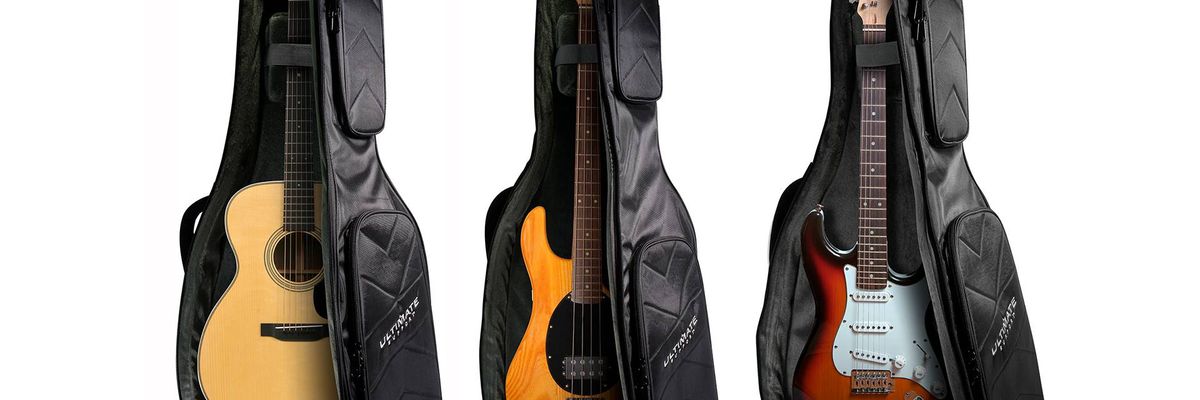
Ultimate Support Systems has introduced three new gig bags: available for acoustic guitar, electric guitar and electric bass, these new gig bags offer an updated balance of protection, comfort and practicality.
Built from water resistant materials that stand up to the rigors of travel and unexpected weather, each bag is made of 1680D luggage-grade ballistic nylon and features a 15mm padded interior as well as a dedicated neck support. The snug, structured fit prevents unwanted shifting during transport, protecting the guitar’s most vulnerable points from impact or pressure. The ergonomic design also helps distribute weight evenly for maximum comfort and portability.
Additionally, the backpack-style straps make it easy to carry the instrument while juggling other gear like pedals and cables. With two exterior storage pockets, musicians can also stash other accessories, like tuners, strings and sheet music — or any other last-minute stage essentials. There’s enough space to stay organized without adding bulk, striking the perfect balance between sleek and functional.
With streamlined dimensions to best accommodate each model, the new Gig Bags ensure a glove-like fit no matter what. Designed to fit most standard acoustics, the Acoustic Guitar Gig Bag has an interior length of 40.5 inches, a depth of five inches, upper bout of six inches and a lower bout of 15.5 inches. The Electric Guitar Gig Bag has a 38.75-inch interior length, 14.5-inch lower bout, six-inch upper bout and a sleek, two-inch deep profile, tailored to most standard electrics. Finally, the Electric Bass Gig Bag is built for larger-scale instruments, measuring 46.5 inches internally, 14.75 inches across the lower bout and six inches at the upper, while maintaining a slim, two-inch depth for a clean, secure fit.
“For many players, the road to the next gig can be filled with unpredictable conditions, such as sudden downpours, crowded subways and tight load-in spaces,” says Shawn Wells, Market Manager — Sound, ACT Entertainment. “We understand that a great performance starts long before the first note, which is why we are introducing these three new gig bags, designed for musicians living life on the go. From rehearsals and home studios to stages and sessions, Ultimate Support Systems’ new gig bags embody the brand’s long-standing commitment to helping artists perform with durability and comfort that is crafted for real-world use.”
All three versions of Ultimate Support Systems’ new gig bags carry a street price of $99.99. For more information visit: actentertainment.com/ultimate-support-detail/.
Gibson And Mark Morton Unveil the Les Paul Modern Quilt
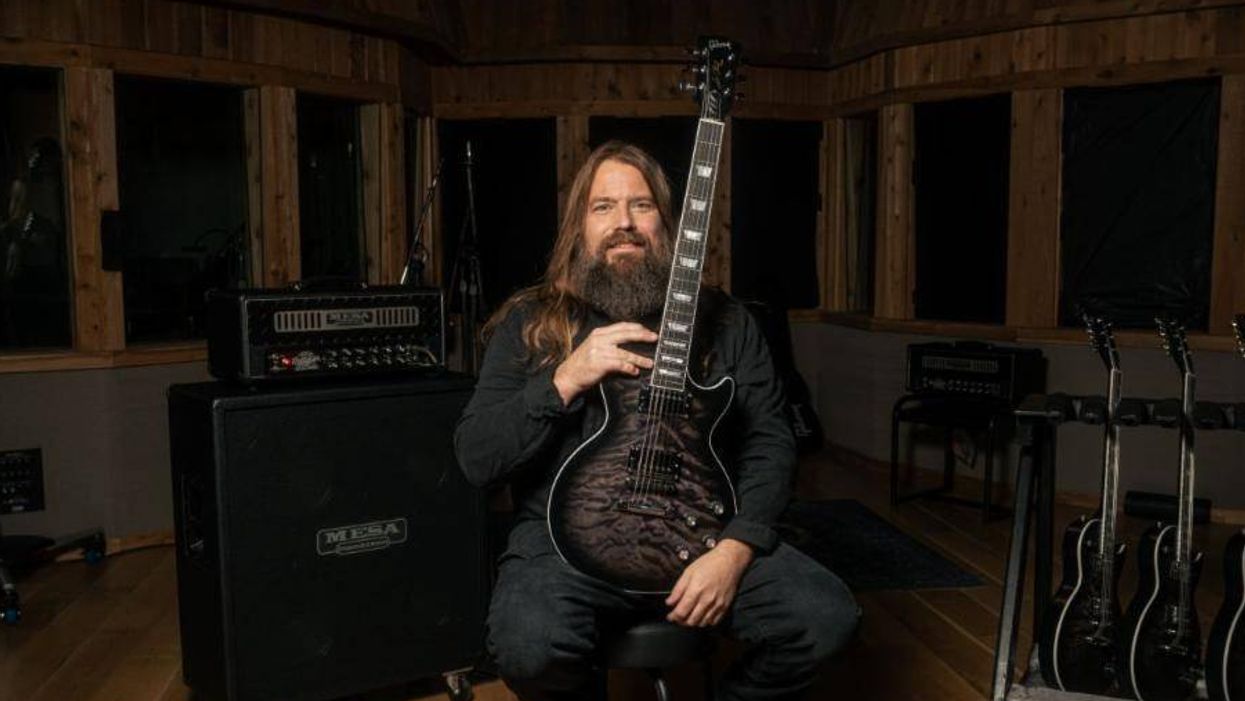
Gibson today announces the release of the Mark Morton Les Paul™ Modern Quilt, a bold new signature model designed in collaboration with Mark Morton, the acclaimed guitarist and co-founder of Lamb of God. Known for his ferocious riffs, intricate solos, and genre-defining blend of metal, thrash, and blues influences, Morton has long been celebrated as one of the driving forces behind the new wave of American heavy metal. His new signature Les Paul captures that same fearless musical spirit—delivering precision, power, and uncompromising performance for players who demand the very best. The Mark Morton Les Paul Modern Quilt is available worldwide at Gibson Garage locations, via authorized Gibson Custom dealers, and on Gibson.com.
“I wanted something that stayed classic to the heritage and the history of the Les Paul, and something that looked heavy metal,” says Mark Morton. “The quilt top and the trans black satin finish felt dark and metal to me, but not over the top, it still feels like and looks like a Les Paul. Once we decided on the finish of the top, and the guitar, there’s are all of these different design elements to play with re picking out the hardware and plastics. We tried a bunch of different options, and we paid a lot of attention to how we were going to finalize those little details, and for me it’s a bullseye.
The 60s style knobs are a cool throwback to the John Sykes model that was done a long time ago. The way it is contoured at the heel allows me to reach the upper registers comfortably, and the ebony fretboard is really fast. This model has a slim taper neck which was very important for me, as it’s the most comfortable neck profile.”
Morton continues, “The pickups are unique to this guitar, it’s a brand new Gibson pickup and I worked closely with Jim DeCola (Master luthier at Gibson), and the Gibson Pickup Shop in designing them. They’re both ceramic-based pickups the neck pickup wise more conservative and terms of its output which allows me to flip to the neck position and play clean and roll back the volume and not hit the amp as hard and clean things up quite a bit. Switching to the bridge pick up it’s just a flame thrower, its super high output, and when you’re really swinging at these bridge pickups they give you all the gain you want they really hit hard and you can pull back to get more of a crunch sound.
We went back and forth on these pickups for quite a while trying different prototypes and models. It was a lot of fun developing them and hearing the subtle nuances and different changes. The great thing about it was I was touring a lot, so I’d take prototypes and put them in a guitar and try them onstage. I got to put them through the paces, in an actual work environment.
It’s an iconic guitar and an important piece of music history, and for me to be associated with the legacy of the Les Paul, is one of the greatest honors of my career. I am thrilled with the process of developing this guitar, and I am immensely thrilled with the outcome. These are great guitars, I am so proud to play them, and people are really going to like them.”
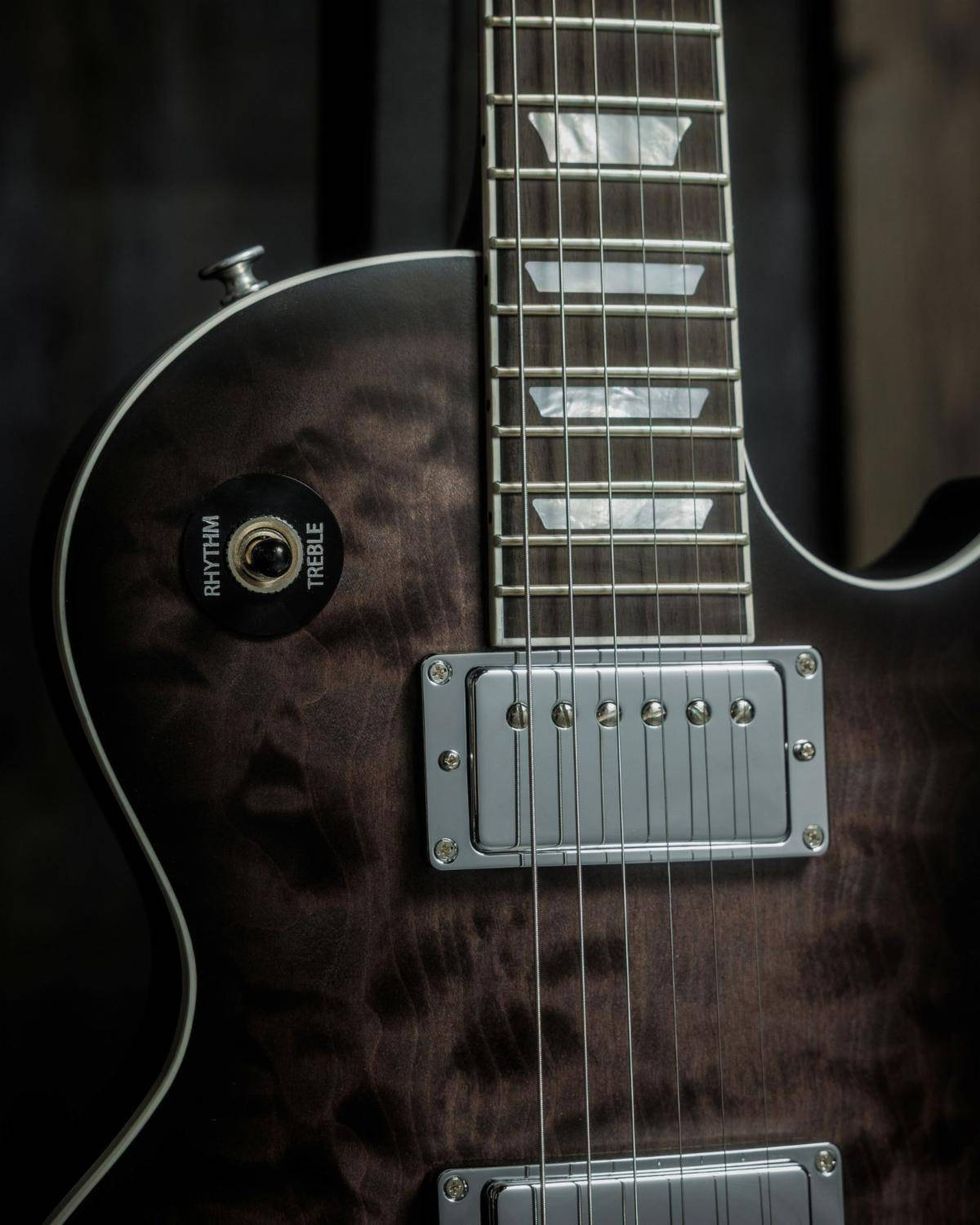
Crafted for comfort and expression, the Mark Morton Les Paul Modern Quilt features a AAA quilted maple top paired with a mahogany body utilizing Gibson’s Ultra Modern Weight Relief, offering exceptional resonance with reduced weight for long sets on stage or in the studio. Its mahogany neck with a SlimTaper™ profile and Modern Contoured Heel provides effortless upper-fret access, while the ebony fingerboard boasts a compound radius, 22 medium jumbo frets, and mother-of-pearl trapezoid inlays for a fast, elegant playing experience. Finished in Translucent Ebony Burst Satin, the guitar’s striking aesthetic is complemented by chrome hardware, Grover® Rotomatic® locking tuners, black rings with chrome trim, and a truss rod cover bearing Morton’s signature.
At the heart of the instrument are two exclusive Mark Morton signature humbucker™ pickups, handcrafted by the Gibson Pickup Shop to deliver the guitarist’s unmistakable tone. The rhythm pickup features moderate, Patent Applied For-style windings with a ceramic magnet for clarity and punch, while the lead pickup offers higher-output windings and a ceramic magnet for added presence and power. Both pickups are wired to individual volume and tone controls with Orange Drop® capacitors and a three-way selector switch, giving players a wide dynamic range and exceptional tonal precision.
Each guitar ships in a Modern hardshell case and includes a premium accessory kit, along with a set of Stringjoy® Mark Morton Artist Series Signature Electric Guitar Strings. The result is a signature model built for the intensity of the world’s biggest stages yet refined enough for the most demanding studio sessions.
The Mark Morton Les Paul Modern Quilt stands as a testament to Morton’s artistry and Gibson’s commitment to crafting instruments that inspire. Designed for players who push boundaries, it delivers the power, finesse, and unmistakable character worthy of one of metal’s most influential guitarists.
Lamb of God have announced Into Oblivion, their first full‑length album in four years, arriving March 13 via Epic Records alongside a new music video for the title track. The 10‑song record finds the band fully embracing their status as modern metal veterans—leaning into their roots, sharpening their signature groove, and expanding their sonic reach with a sense of creative freedom. The title track’s video, directed by Tom Flynn and Mike Watts, channels the band’s trademark aggression through psychologically charged lyrics and unrelenting intensity. Guitarist Mark Morton describes the album as a return to unpressured creativity, while vocalist Randy Blythe frames its themes around the accelerating breakdown of the social contract.
Watch the new video for the single “Into Oblivion” HERE.
Ahead of the announcement, Lamb of God previewed the album’s range with two blistering singles: “Sepsis,” a nod to the early 90s Richmond underground that shaped their beginnings, and “Parasocial Christ,” a three‑minute blast of classic Lamb of God energy. Produced and mixed by longtime collaborator Josh Wilbur, Into Oblivion was recorded across locations central to the band’s identity—drums in Richmond, guitars and bass at Morton’s home studio, and Blythe’s vocals at the storied Total Access Recording in Redondo Beach. The result is a record that feels both deliberate and untethered, reaffirming Lamb of God’s place at the forefront of heavy music.
The Modern Metal Les Paul Has Arrived!
The Lamb of God lead flamethrower has played Gibsons since the '90s and now has a signature model that brings the modern chug and crunch with some contemporary changes to the iconic recipe.
Pages
