
Music is the universal language
“Glory to God in the highest heaven, and on earth peace to those on whom his favor rests.” - Luke 2:14
General Interest
The best modulation pedals: tremolo, chorus, flange, phase & beyond
Modulation pedals are all about adding movement and colour. Imagine your guitar sound as a beautiful landscape photograph in black and white – now think of it turned into a video clip, with green grass swaying in the breeze and ripples moving gently across the blue water. And maybe a couple of rabbits, just for scale.
That’s what all the stompboxes in this roundup are doing – some in a simple and low-key way, others with a much more dramatically transformative effect. It’s an idea with a long and distinguished history, and the last half-century or so would have had a very different soundtrack without phasers, flangers, chorus pedals and the rest.
In fact, it’s widely agreed that the first ever effects unit designed for the electric guitar was a modulation device: the DeArmond Tremolo Control of the 1940s. Tremolo is one of the simplest effects of all, just making a signal rhythmically louder and softer – and it shouldn’t be confused with up/down pitch vibrato (although Fender famously did: if you see ‘vibrato’ on a black-panel amp, that’s the trem channel).
The psychedelic swirliness of phasing and flanging started out in the 60s as tape-based studio effects, but the transistor revolution soon paved the way for compact stompboxes that could replicate those sounds plus the shimmery warble of chorus – sometimes in glorious stereo – and the legendary Uni-Vibe effect, which can sound like all of the above going off at once.
Those, then, are the main pillars of modulation. But there are also some very interesting effects to be found beyond the vintage-correct basics – and they’re all covered below.
At a glance:
- Best pedal for chorus and vibrato: Mythos The Fates
- Best retro chorus: Ghost Note Audio The Swirls
- Best phaser: Beetronics Larva
- Best flanger: Walrus Audio Polychrome
- Best tremolo: Electro-Harmonix Nano Pulsar
- Best Harmonic Tremolo: Jam Pedals Harmonious Monk
- Best rotary speaker simulator: Neo Instruments Micro Vent 122
- Best Uni-Vibe-inspired pedal: ThorpyFX ER-2
- Best pedal for lo-fi wobbles:: Chase Bliss Generation Loss MkII
- Best mutli-modulation pedal: UAFX Astra
- Why you can trust Guitar.com
[products ids=”Dj6GzrQhiBvY16DUZimpj,7Xl6gusfAkTHAu4ZTowMo,3UU5pfcASmXMmXZI9qtx5M,6cUUVfASegj91GOPxhdXOE,4R75Ukb8KrIE0aaYIA13I0,6hS9iXALEqmeEHkp5lsJSj,ug2AGZwoY4XKfVHaO3FOX”]
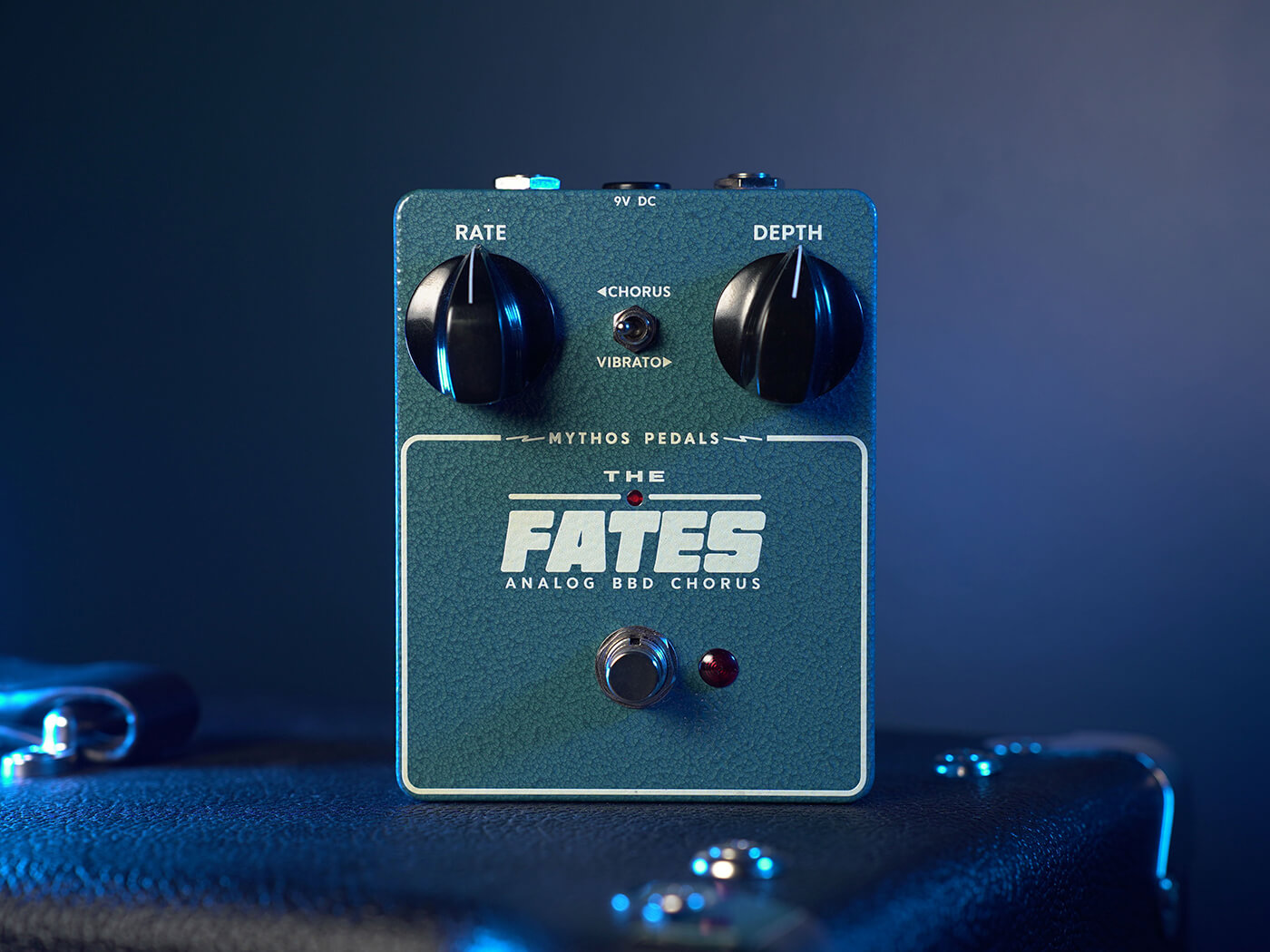
Best pedal for chorus and vibrato: Mythos The Fates
 Mythos The Fates
[products ids=”Dj6GzrQhiBvY16DUZimpj”]
It’s a miracle that chorus made it out of the 80s alive… and yet, having been overused so horribly throughout the decade of excess, it’s been having something of a revival in recent years. This simple but classy analogue effort from Mythos – based on the old Boss CE-2 – is about as good as it gets, bringing the watery wiggle in tasteful style.
And there’s more! The chorus effect is produced by applying a gently oscillating pitch-shift then blending it with the dry signal… so if you take that dry signal away, you’re left with pure pitch vibrato. With some chorus pedals this comes across as an afterthought, but the Fates – like the Jam Pedals Waterfall, which is a superb compact alternative – treats vibrato as a worthy modulation effect in its own right.
Need more? Read our Mythos The Fates review.
Best retro chorus: Ghost Note Audio The Swirls
 Image: Press
Yes, the Swirls is another chorus – but the gap between this and the Mythos is so wide you could drive a 1984 Bentley Continental through it. For a start it’s stereo, and it’s digital… plus it’s actually two modulation effects in one (the second being a non-oscillating ‘detune’ shift), with a compressor thrown in for good measure. The overall result is what Ghost Note calls “an entire 80s rack in a pedal”.
And that’s exactly what it sounds like. A bountiful array of knobs and switches gives it supreme tonal versatility, but ultimately the Swirls is about one thing: gigantic, spectacular, shamelessly syrupy lushness. It’s worth buying a second amp just so you can set this thing up in stereo and bask in it until you feel queasy.
Need more? Read our Ghost Note Audio The Swirls review.
Best phaser: Beetronics Larva
 Beetronics Larva. Image: Adam Gasson for Guitar.com
[products ids=”7Xl6gusfAkTHAu4ZTowMo”]
When you buy a phaser you’re really getting two pedals in one box: at fast speeds it’s an agreeably pulsating wibble-wibble effect, but slow it right down and you have a gently sweeping frequency filter that arcs up and down in a uniquely musical way. The Beetronics Larva does both of those things brilliantly, and even lets you ‘ramp’ from one setting to another by holding down a footswitch.
Just note that, while most phasers set out for a degree of tonal transparency, this one has a preamp that colours the tone quite heavily. For some that might be an issue, but for others it’ll be a bonus – especially as, if you crank the gain, that preamp gets properly gritty, turning the Larva into a combined phaser and overdrive pedal. So I guess that makes it three pedals in one box?
Need more? Read our Beetronics Larva review.
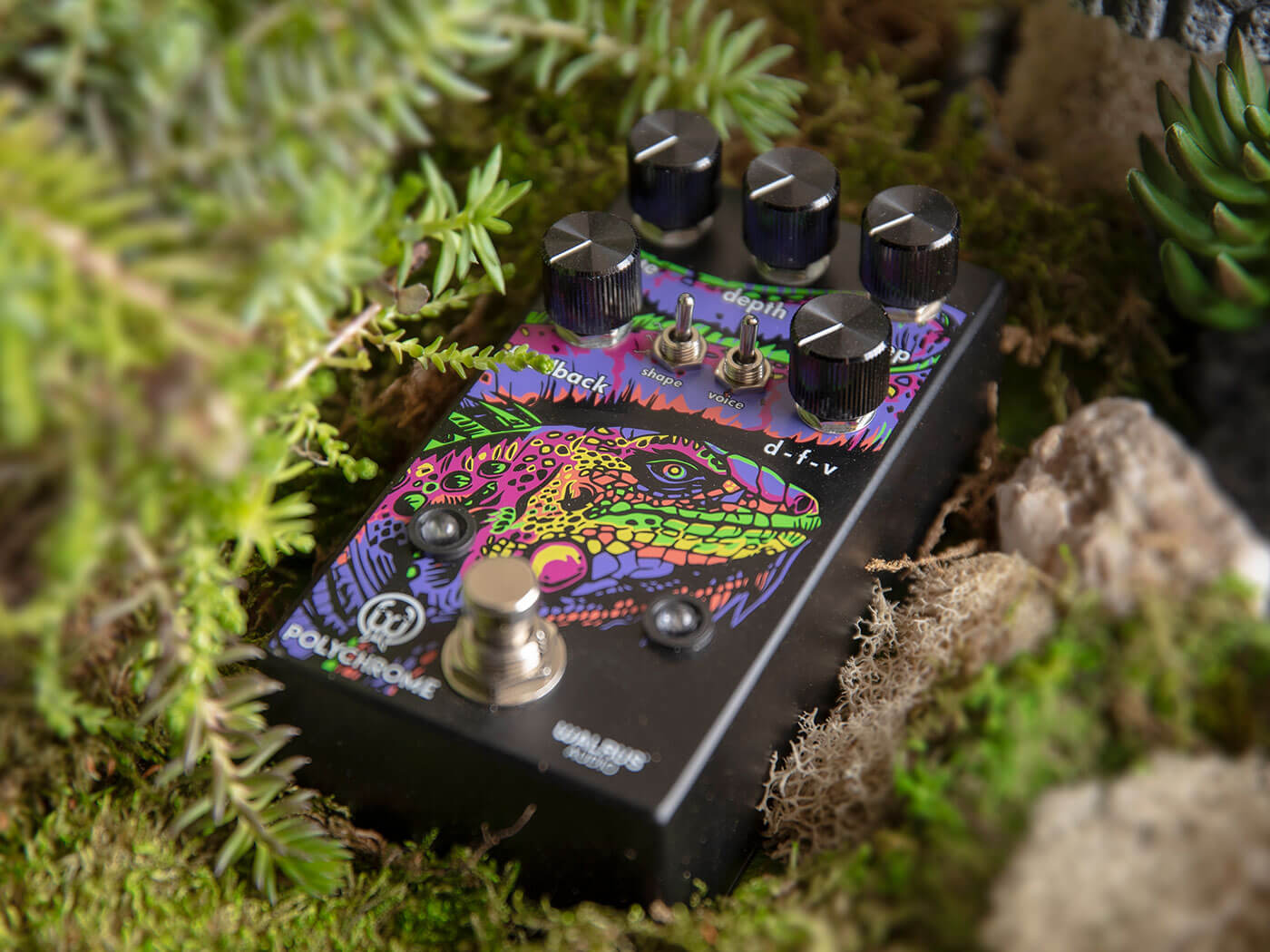
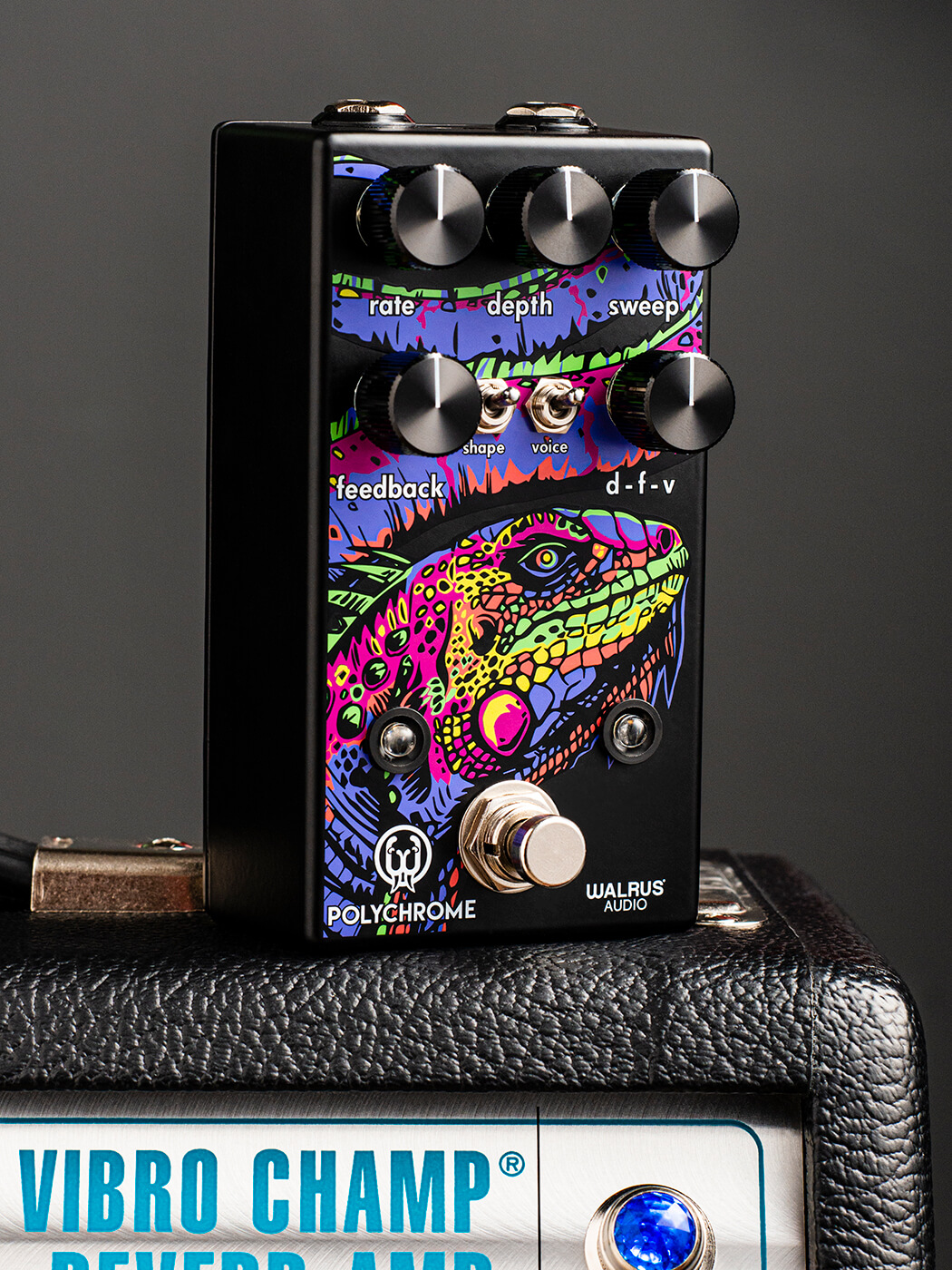
Best flanger: Walrus Audio Polychrome
[products ids=”3UU5pfcASmXMmXZI9qtx5M”]
Flanging is closely related to chorus in terms of how the effect is produced, but the result tends to be more like a phaser with an attitude problem. A flanger can swoosh like a jet engine, it can clang like grinding sheets of metal… and if you’ve got a good one that lets you keep the feedback in the circuit nicely controlled, it can also sound surprisingly pretty. The Walrus Polychrome is a good one.
An analogue flanger that sets out to do everything, with the added perk of having a cute lizard on the enclosure, the Polychrome covers all the classic 80s indie/goth tones but can also go deep into more hazardous sonic territory. It’s a blast – though it has a strong rival in the ThorpyFX Camoflange, which sounds different but also has a lizard on it.
Need more? Read our Walrus Audio Polychrome review.
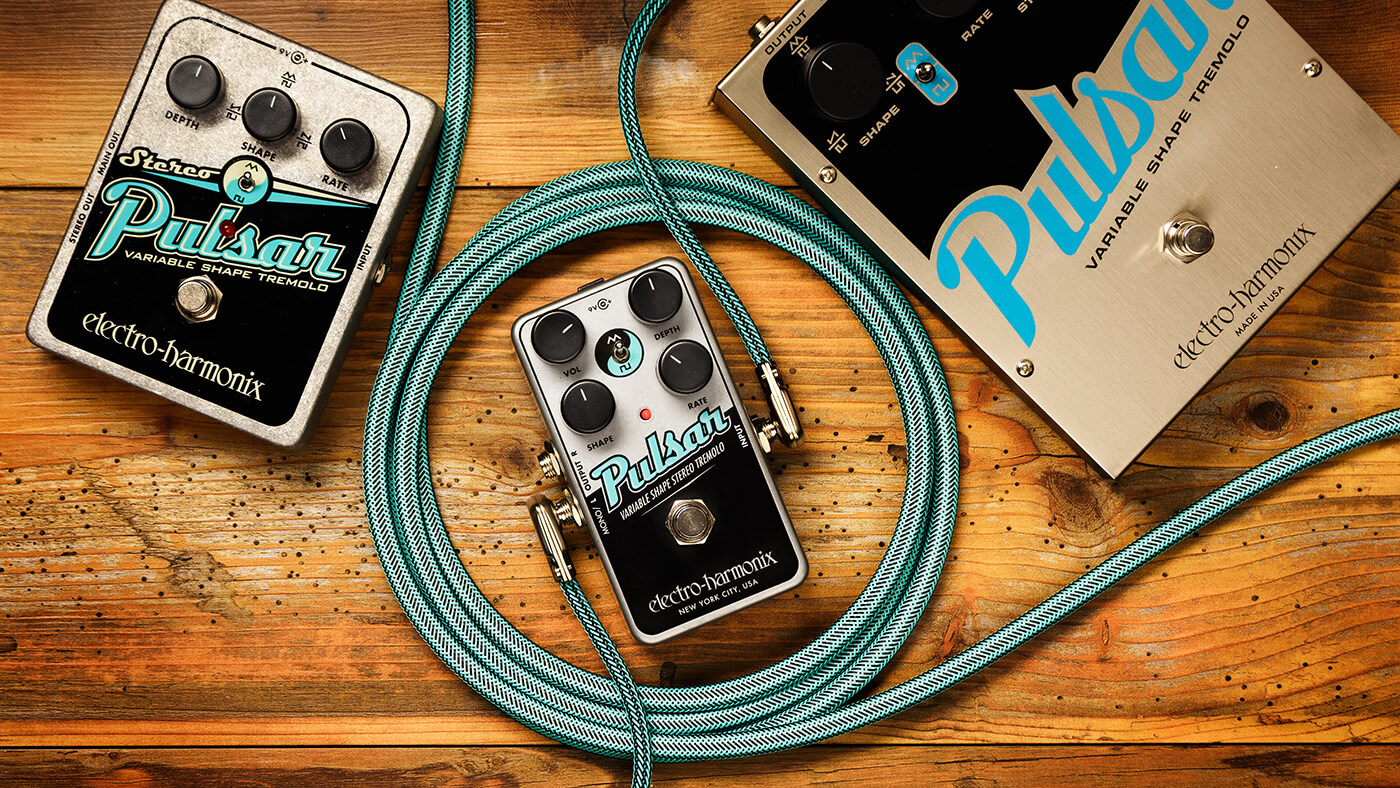
Best tremolo: Electro-Harmonix Nano Pulsar
[products ids=”6cUUVfASegj91GOPxhdXOE”]
There’s nothing basic about the cheapest pedal in this guide. In fact, compared to what the average tremolo pedal could do 20 years ago – and what a lot of similar-priced units can do even today – the pocketable Pulsar is a veritable multi-tool of modulation.
First of all, while some make do with rate and depth controls, this unit adds a volume knob – useful for boosting the output to compensate for any perceived level drop caused by the tremolo itself. And then you get the nifty combo of a triangle/square wave switch and a shape knob, allowing for complete control over the character of the sound. Oh, and if you use both outputs, it suddenly becomes a whole new effect: an automatic stereo panner.
Need more? Read our Electro-Harmonix Nano Pulsar review.
Best Harmonic Tremolo: Jam Pedals Harmonious Monk
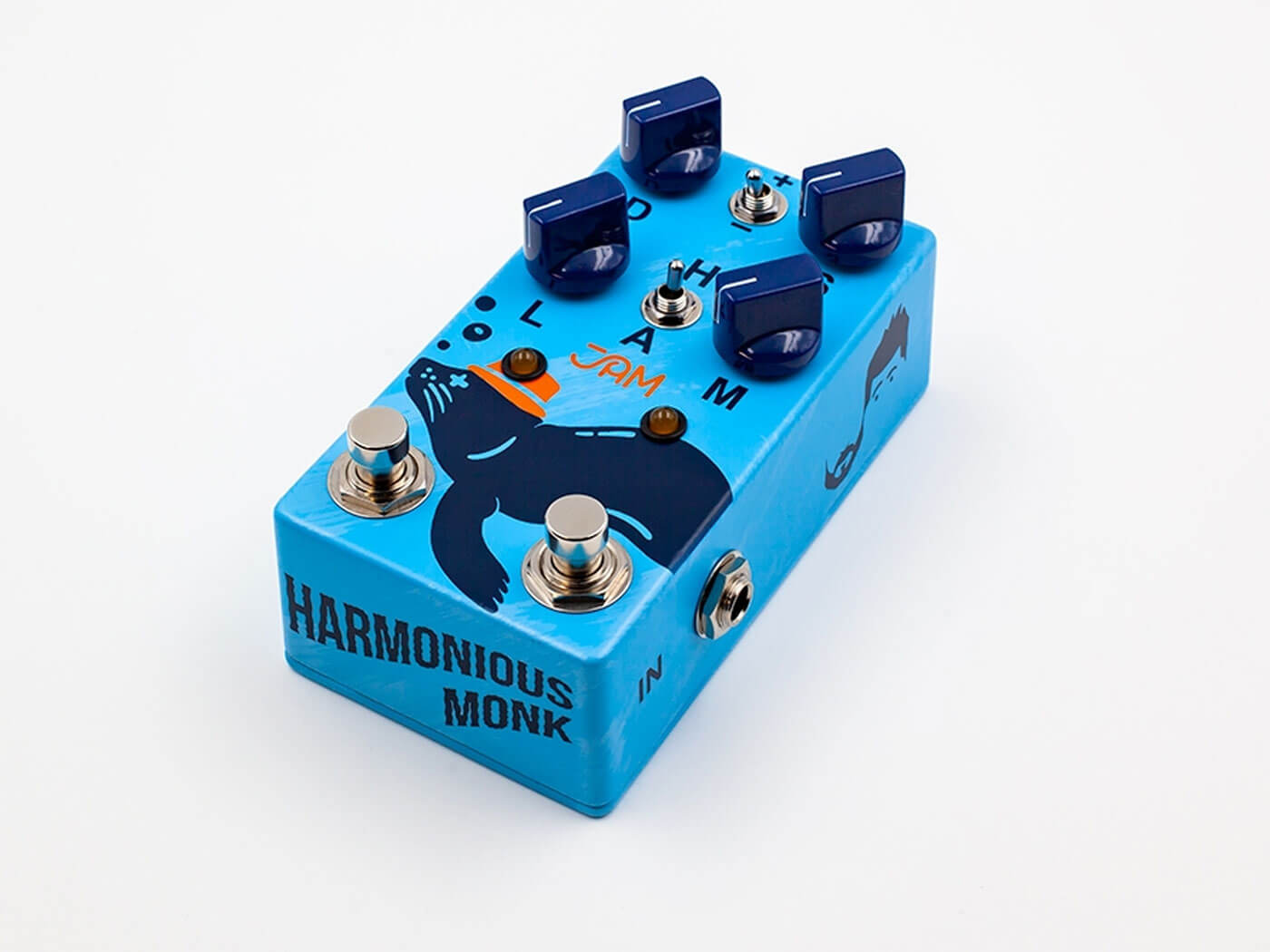 Image: Jam Pedals
[products ids=”4R75Ukb8KrIE0aaYIA13I0″]
Harmonic tremolo has come out of nowhere to hit the pinnacle of hipness, and the Harmonious Monk can take a slice of the credit for that. This pedal takes a simple idea – splitting the high and low frequencies of your signal and applying tremolo to them separately – and turns it into a wonderfully tangy effect, somewhere between standard trem and phasing.
If you really want to go to town on the harmonic bit, tweaking the crossover point and time lag between the two frequency bands for a rainbow of tonal coloration options, grab yourself the amazing Spaceman Effects Delta II; but for most people, there’s no need to look beyond the Monk. That is, as long as you don’t mind having a stompbox with a picture of Dan and Mick from That Pedal Show on the side…
Need more? Read our Jam Pedals Harmonious Monk review.
Best rotary speaker simulator: Neo Instruments Micro Vent 122
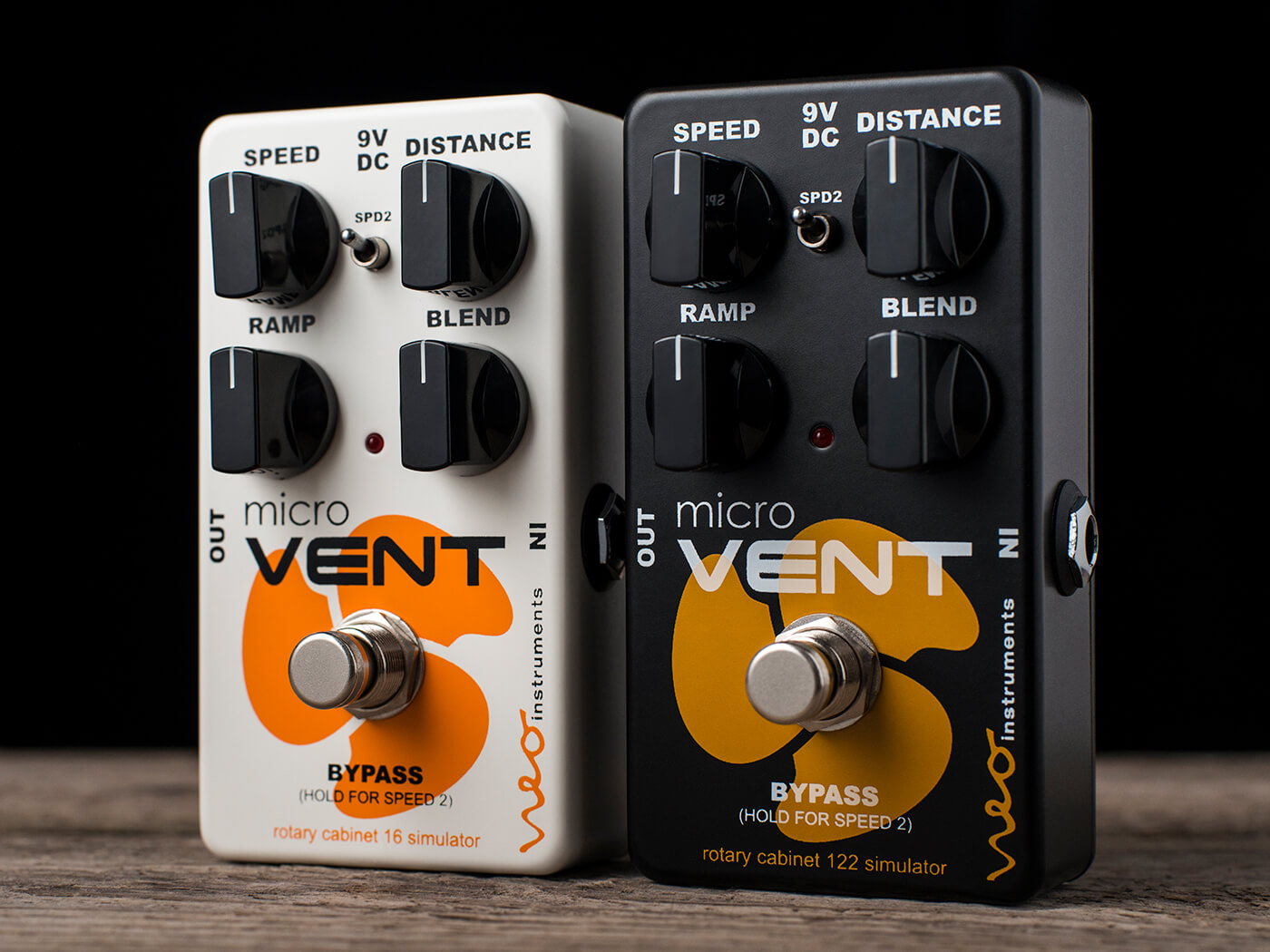
The rotary effect was never intended for guitarists: Donald Leslie’s original invention was designed for Hammond organs. But the harmonically complex Leslie swirl – created by the combination of a full-range speaker in a rotating drum and a high-frequency horn spinning independently – was just too lovely to be left to keyboard-clompers. Like a phaser, a rotary pedal sounds very different at fast and slow speeds; but unlike a phaser, it gets extra-swooshy when ramping between the two because the virtual horn and drum accelerate and decelerate at differing rates.
You have several great-sounding options in this category, most notably Neo’s own full-size Ventilator II and twin-footswitch Mini Vent II; but if you want a compact Leslie sim that runs off a standard 9v power supply, and are happy with mono-only output, the Micro Vent 122 is the undisputed champ.
Need more? Read our Neo Instruments Micro Vent 122 review.
Best Uni-Vibe-inspired pedal: ThorpyFX ER-2
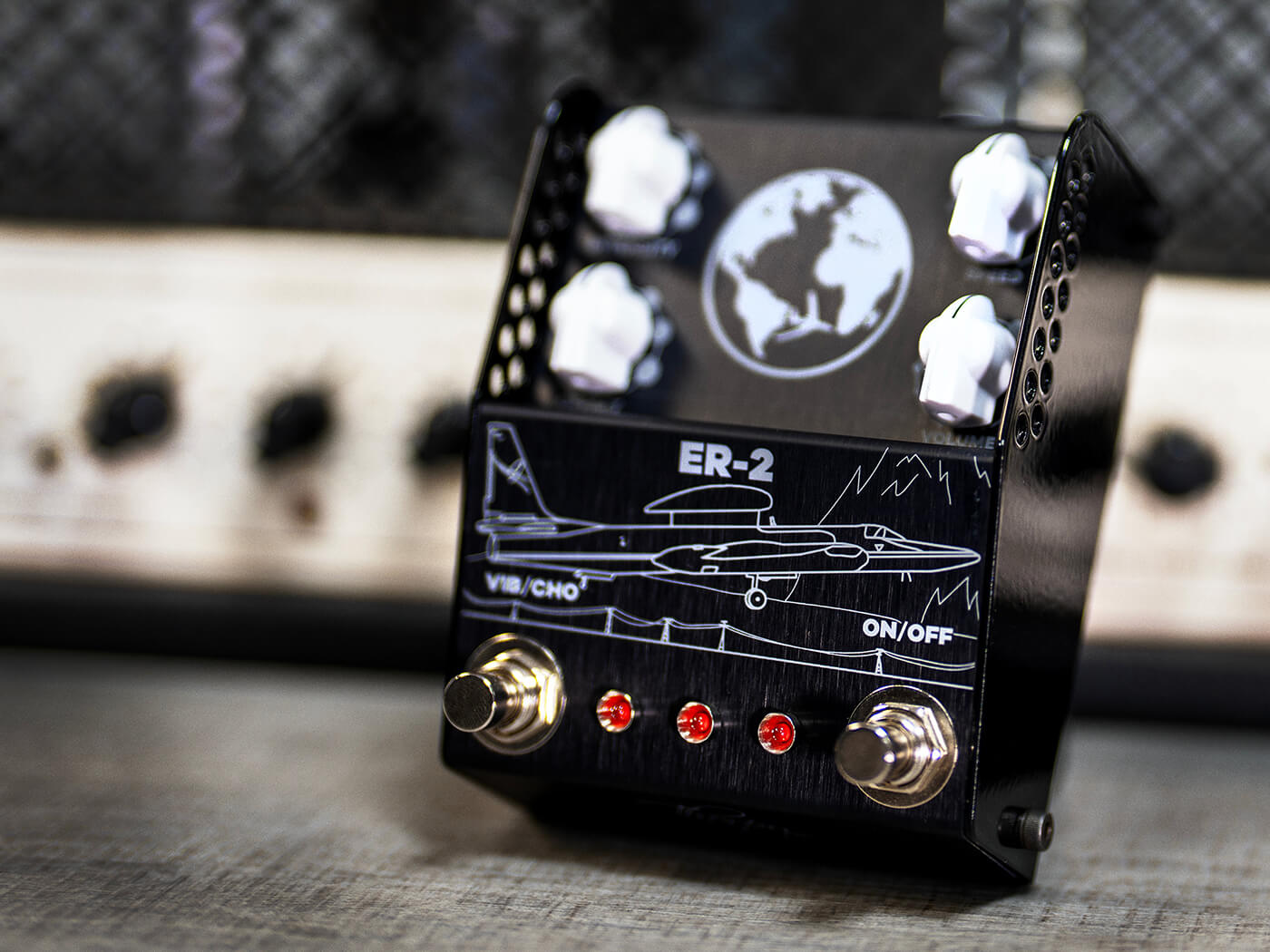 ThorpyFX ER-2. Image: ThorpyFX
[products ids=”6hS9iXALEqmeEHkp5lsJSj”]
The DeArmond Tremolo Control wasn’t technically a pedal, and the Leslie speaker definitely wasn’t… which means the Japanese-made Honey/Shin-ei Uni-Vibe of the late 1960s must surely qualify as the first ever modulation stompbox. Jimi Hendrix and David Gilmour famously used it, but what actually is a Uni-Vibe? Well, it’s a sort of phaser, but with a distinctively throbby quality, and it’s powered by a lightbulb inside an array of LDRs (light-dependent resistors).
This is another category where your list of options is long, and many of them sound superb; but the ER-2 might just be the one to get because, quite aside from its perfect vintage tones and ultra-rugged build quality, it has a vibrato mode – the Uni-Vibe’s more subtle setting, largely ignored by most players – that sounds much nicer than it really should.
Need more? Read our ThorpyFX ER-2 review.
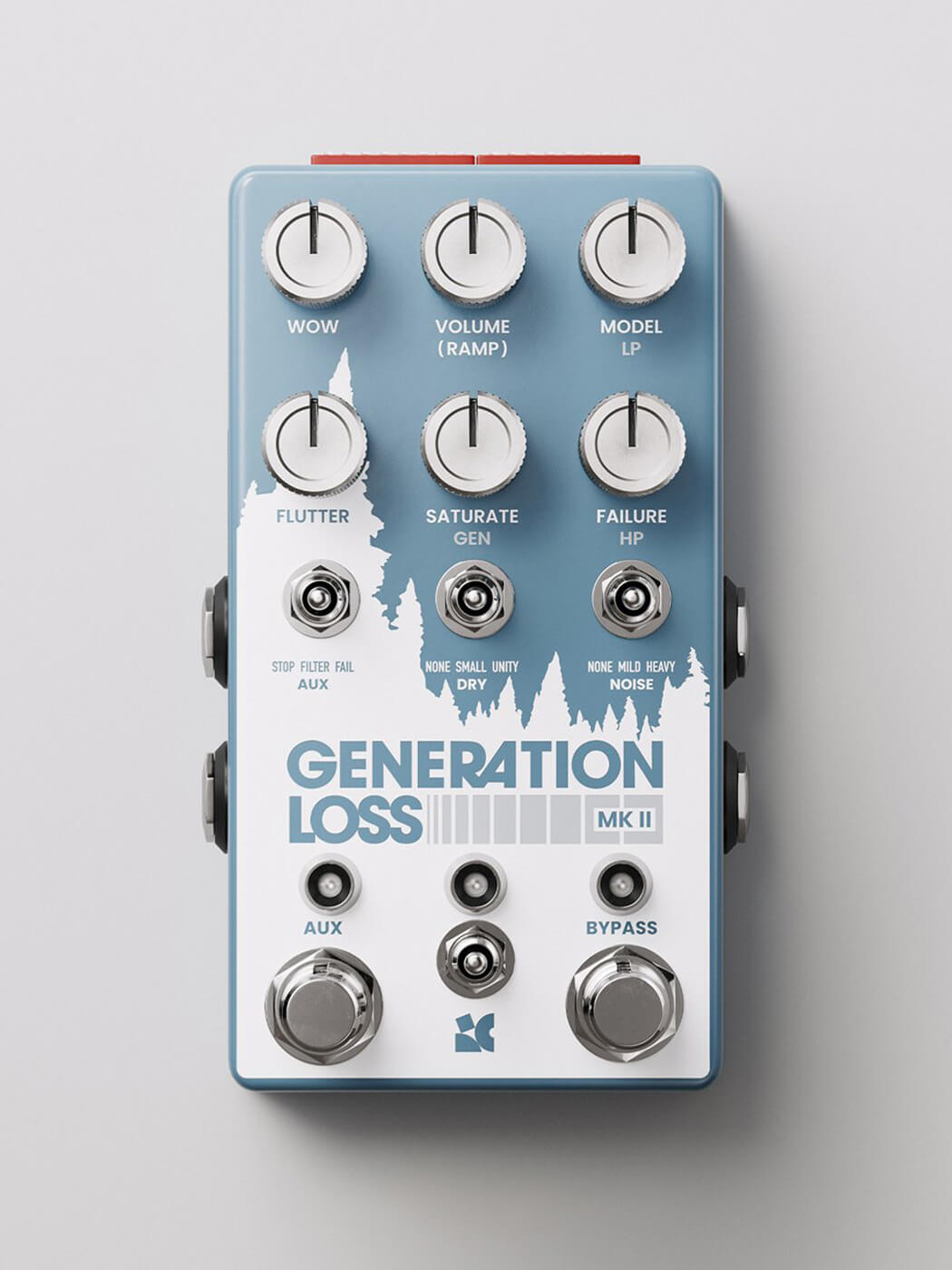
Best pedal for lo-fi wobbles:: Chase Bliss Generation Loss MkII
[products ids=”ug2AGZwoY4XKfVHaO3FOX”]
The Generation Loss MkII does things that go way beyond modulation however you define it – including extreme tonal filtering and the addition of gratuitous background noise. The idea is to make your clean tone sound like something that’s been rescued from an old VHS videotape – a fine example of digital tech being used to create an analogue feel.
But it’s the other part of that ageing process that interests us here: a range of lo-fidelity vibrato and chorus effects with an element of randomness that adds depth, charm and – if you’re old enough to remember the pre-digital age – nostalgia. The Gen Loss is an expensive pedal, and the word ‘niche’ hardly feels strong enough for it, but it is addictive. And you can easily turn the background noise off.
Need more? Read our Chase Bliss Generation Loss MkII review.
Best mutli-modulation pedal: UAFX Astra
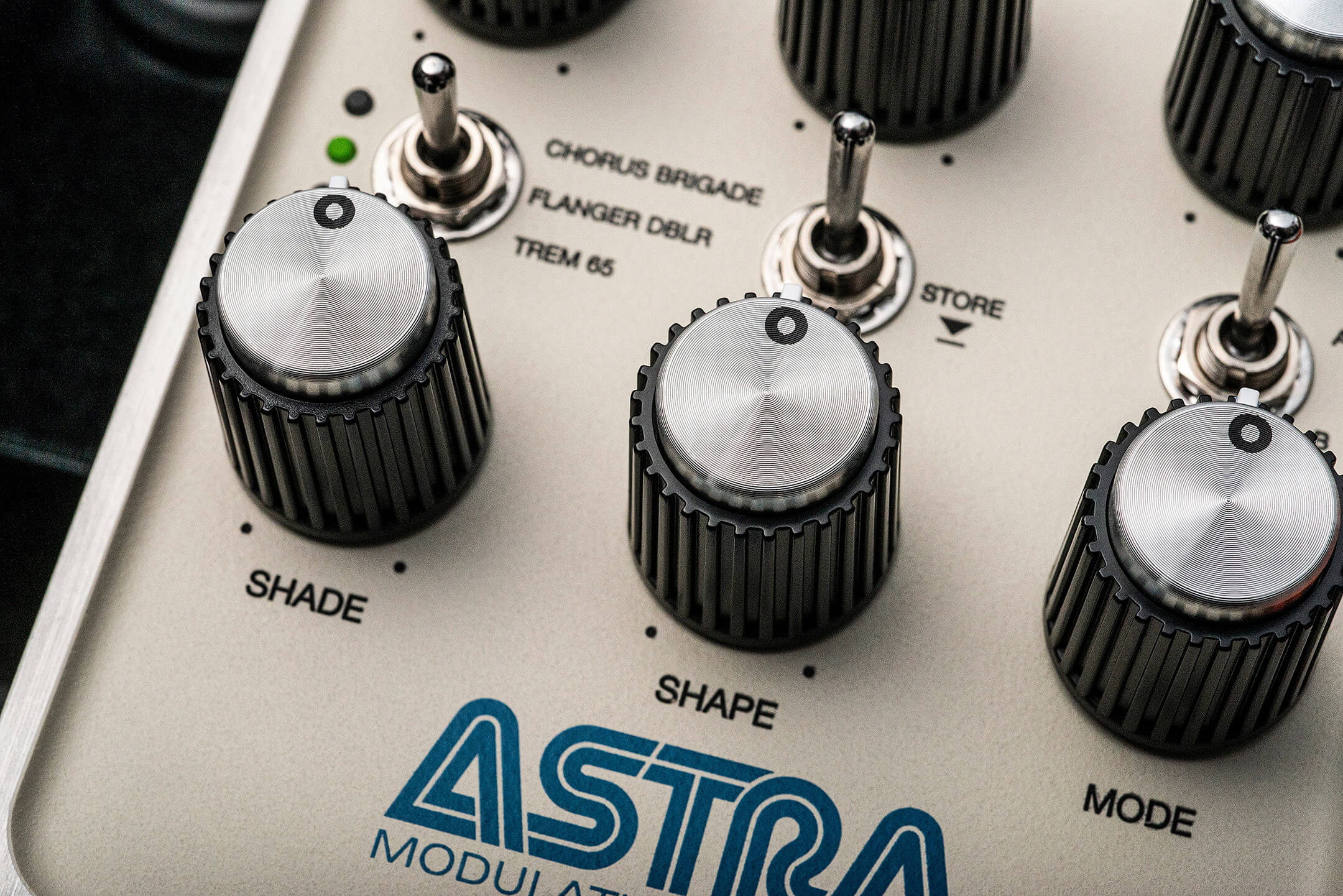
Only got space on the pedalboard for one modulation unit and can’t decide which effect you need most? Ah, just get a bigger board. Or, if that sounds like too much fun, you could always compromise by investing in a single pedal that does the lot… or at least, most of it.
The Kernom Elipse is a strong contender here – an analogue pedal with digital control that lets you blend between different effect types and then dial in a bonus phaser – but Universal Audio’s compact Astra is probably a better bet. Yes, it has some annoying design quirks, but the bottom line is that UA’s digital chorus, flanger, tremolo and phaser sounds are simply unbeatable.
Need more? Read our UAFX Astra review.
Why You Can Trust Us
Every year, Guitar.com reviews a huge variety of new products – from the biggest launches to cool boutique effects – and our expert guitar reviewers have decades of collective experience, having played everything from Gibson ’59 Les Pauls to the cheapest Squiers.
That means that when you click on a Guitar.com buyer’s guide, you’re getting the benefit of all that experience to help you make the best buying decision for you. What’s more, every guide written on Guitar.com was put together by a guitar obsessive just like you. You can trust that every product recommended in those guides is something that we’d be happy to have in our own rigs.
The post The best modulation pedals: tremolo, chorus, flange, phase & beyond appeared first on Guitar.com | All Things Guitar.
“This is an offer of Peace and Love”: Neil Young gifts his entire catalogue to residents of Greenland

Neil Young has provided residents of Greenland with full access to his entire music catalogue for free as a gesture of peace.
Young’s decision to do so follows US President Donald Trump’s threats to annex Greenland for “national security reasons”. Young, who often speaks out on political issues, is a prominent critic of Trump, and has previously taken legal action to prevent him from using his music at campaign rallies.
Greenlanders who wish to take Young up on his offer will need to provide their name, email address and phone number to get free access to his complete archive for 12 months. In a statement shared via his Neil Young Archives website, the Canadian-American musician writes, “As a gesture of kindness and respect, we stand with you along with a strong majority of Americans.
“I would like to offer a free one-year subscription to all Greenland residents. I hope my music and music films will ease some of the unwarranted stress and threats you are experiencing from our unpopular and hopefully temporary government. It is my sincere wish for you to be able to enjoy all my music in your beautiful Greenland home, in its highest quality.”
He concludes, “This is an offer of Peace and Love. All the music I have made during the last 62 years is yours to hear. You can renew for free if you are in Greenland. We do hope other organisations will follow in the spirit of our example.”
Last year, Young played at Glastonbury Festival after originally withdrawing due to involvement from the BBC. He headlined its mighty Pyramid stage and brought out some of his most iconic instruments, including Hank Williams’ 1941 D-28, his Bigsby-loaded ’54 Goldtop and of course, his famous Old Black.
Find out more and sign up via the Neil Young Archives website.
The post “This is an offer of Peace and Love”: Neil Young gifts his entire catalogue to residents of Greenland appeared first on Guitar.com | All Things Guitar.
New Amps For ToneX
EBS Introduces CurlySquare and Regular Square Bass Cables
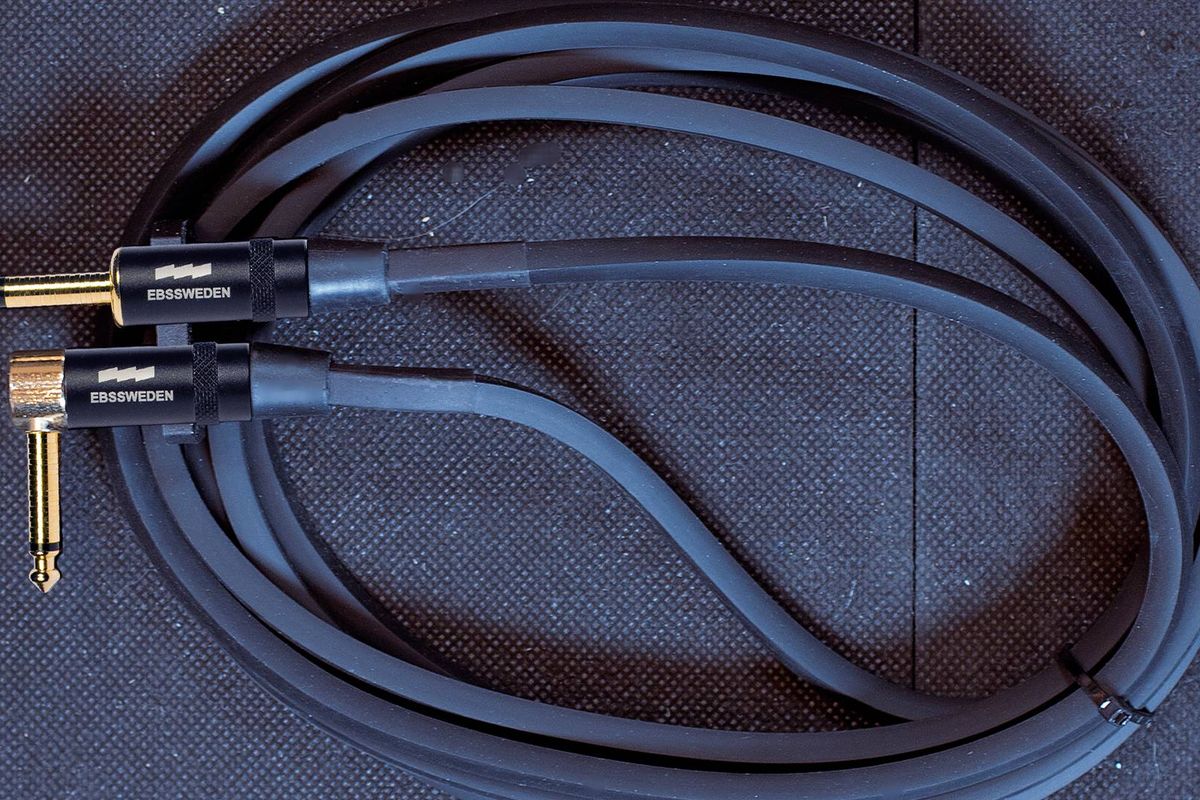
EBS has introduced two new lines of high-performance cables: the CurlySquare and Regular Square instrument cable.
The EBS CurlySquare coiled instrument cable features a bold design with jumbo-sized curls and square-shaped cable. The innovative shape performs an important function: its square shape prevents the cable from turning into a mess due to cable memory, and the heavy-duty insulation makes it extra durable and protected.
These cables feature a unique design by EBS called WaveGrip, which means the 1/4” contacts have annular grooves spaced along the shaft that lock the contact in the jack. That means the risk of stepping on the cable and losing signal because it pulls the plug out of the jack is eliminated.
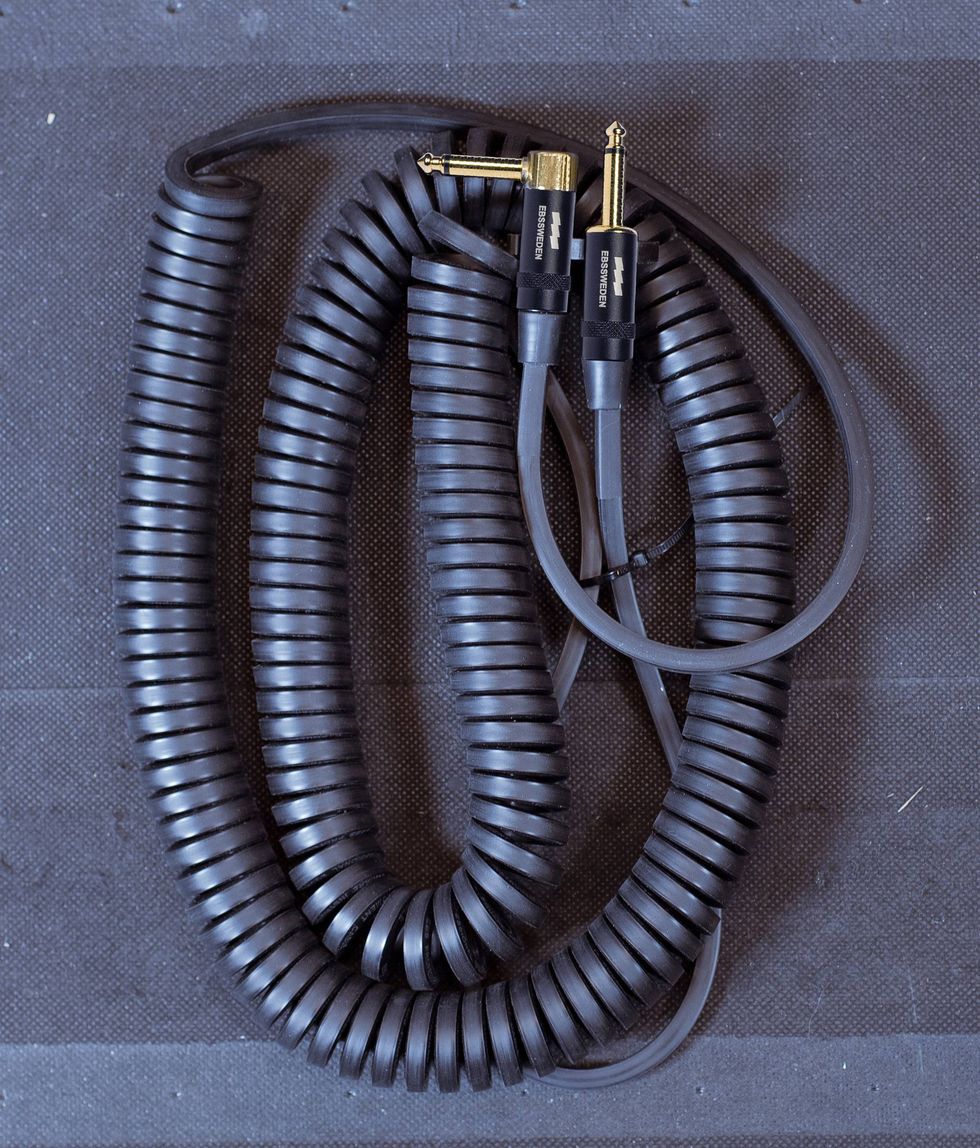
The CurlySquare cables are available in two lengths: 4.6 m (15 ft) and 7.6 m (25 ft), and configurations with straight/straight or straight/angled contacts.
If you prefer a more discreet design but still want the heavy-duty insulation and square-shaped cable, pick the EBS Regular Square edition, a straight instrument cable version available in 3.8 m (12.5 ft) and 6.8 m (22 ft) lengths, with the same contact configurations as the CurlySquare cables.
The CurlySquare name and WaveGrip design both have pending patent applications in Europe and the USA.
For more information visit www.ebssweden.com.
Shure Introduces Slx-D+ Wireless Microphone System
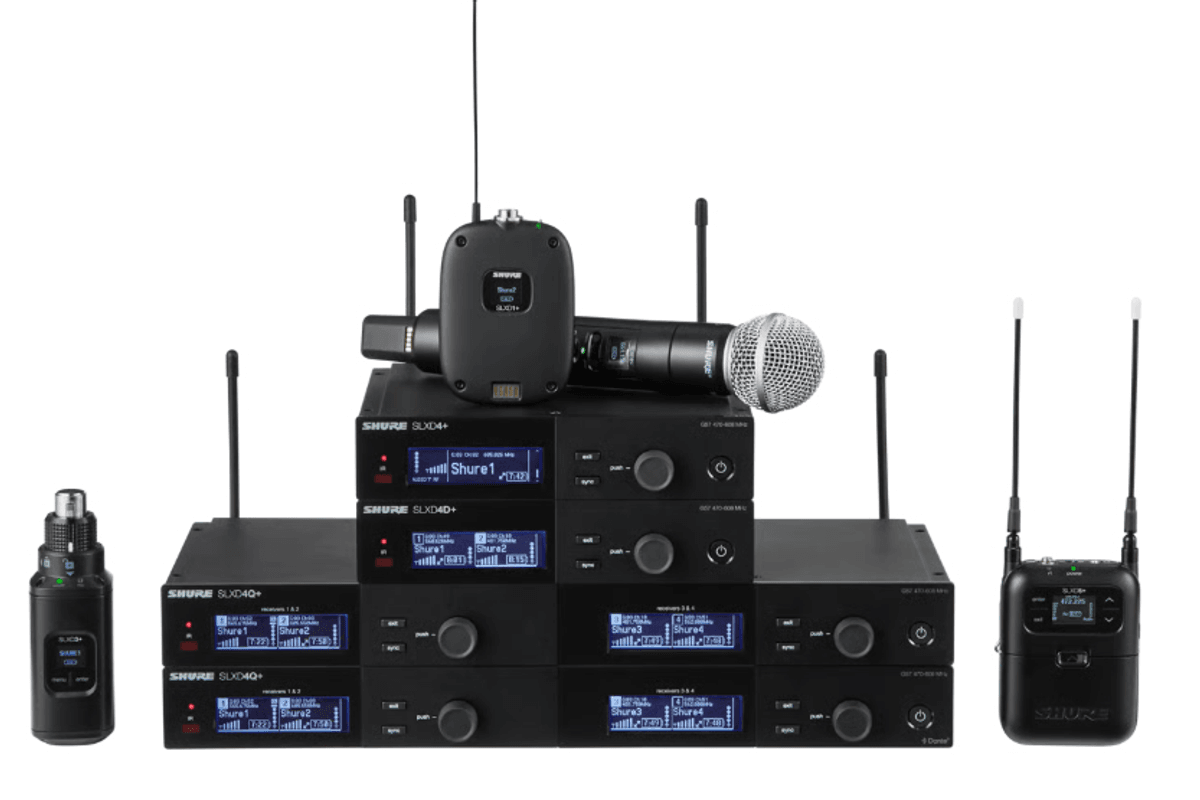
Today at NAMM 2026, Shure introduced the SLX-D+ Wireless Microphone System, the next evolution in its renowned wireless portfolio. Building on SLX-D’s proven success, SLX-D+ delivers a powerful combination of advanced features and ease-of-use, now accessible to audio professionals and experienced volunteers in live performance, houses of worship, education, content creation, electronic newsgathering (ENG), broadcast, and video industries.
SLX-D+ empowers users with greater flexibility, reliability, and control, making wireless audio management easier than ever. With wide tuning across all components, users benefit from simplified setup, seamless deployment in any environment, and reduced inventory complexity. Remote system management, AES-256 encryption and automatic feedback suppression further streamline operation, ensuring clear, secure, and uninterrupted performance.
“As we introduce SLX-D+, we’re not just raising the bar for wireless technology; we’re empowering our customers to push creative boundaries by removing complexity from their workflows,” said Nick Wood, Associate VP, Marketing and Product Management. “By making advanced features like wide tuning and remote management accessible to a broader audience, we’re making wireless more resilient to the most common challenges, streamlining the path to great audio, and shaping a future where audio professionals and volunteers alike can innovate with confidence.”
Wide Tuning: Simplified Deployment and Inventory
SLX-D+ features wide tuning across all components up to 138 MHz*, enabling seamless countrywide deployment and minimizing inventory complexity. Systems can operate across multiple frequency bands, reducing the need to own several product variants.
ShowLink® Ease: Effortless Remote Control
The new ShowLink Ease technology, inspired by ShowLink® on Shure’s premier Axient Digital wireless system, provides real-time, two-way communication between receiver and transmitter. Once synced, the transmitter remains paired to the receiver every time it is powered on. This allows for automated radio frequency (RF) set up, and remote parameter adjustments, eliminating the need for physical proximity and streamlining live management from performance to performance.
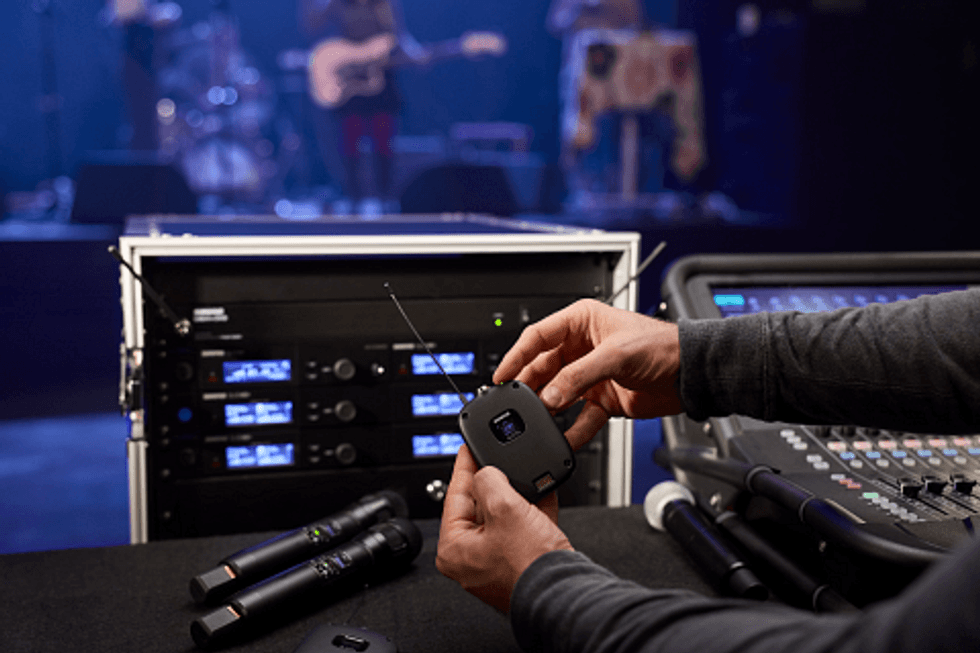
Interference Management: Enhanced Operation with Continuous Connectivity
Should interference occur, the SLX-D+ system can automatically scan for a new, clean frequency and deploy it to both the receiver and transmitter without requiring user interaction, ensuring enhanced operation and continuous connectivity.
Digital Feedback Reduction: Reliable and Clear Sound
SLX-D+ integrates advanced digital feedback reduction (DFR) algorithms to automatically detect and suppress audio feedback, delivering clarity and confidence in any environment.
Mobile Management with Wireless Workbench Applications: Flexible, On-the-Go Control
With robust mobile management via the Wireless Workbench (WWB) Mobile app, users can monitor and adjust their systems remotely using Wi-Fi or Bluetooth, which is available for the first time in SLX-D+ systems to improve workflow efficiency. Gain visibility and control over system gain, transmitter locking and unlocking, battery status, frequency scans and changes, and audio metering.
Backward Compatibility, Streamlined Design
SLX-D+ maintains compatibility with existing SLX-D systems and introduces a new half-rack dual receiver, supporting straightforward upgrades and flexible configurations.
RF Cascade and Audio Summing for Added Flexibility
RF cascading makes it possible for three SLX-D+ Quad Receivers to be linked together to create a twelve-channel SLX-D+ receiver system. This facilitates the ability to quickly scale up and condense the footprint of multi-channel wireless systems without requiring additional accessories.
SLX-D+’s audio summing feature on dual and quad receivers enables users to set and combine audio levels, then mix them down between one and two outputs, simplifying the process of managing wireless output levels and managing receiver outputs to best match open mixer channels.
Availability
Shure is showcasing the SLX-D+ Wireless System for the first time at NAMM 2026 in Anaheim, California at booth 15608. SLX-D+ components will be available in February 2026, with the option to select key wireless configurations for a variety of applications, including handheld bodypack systems and a portable system option. Rechargeable batteries and charging accessories are available separately.
*region dependent
Julian Lage: The Art of Limitations

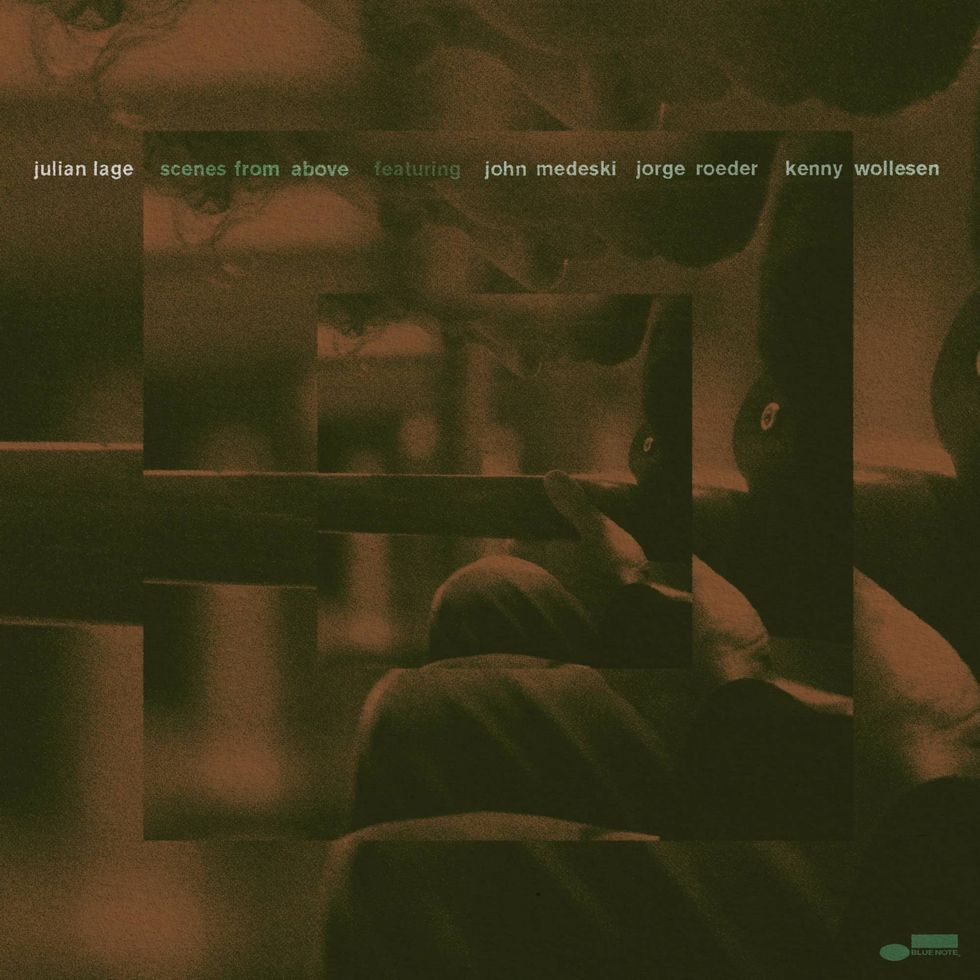
It all started with a self-imposed time limit. Julian Lage, who at the relatively young age of 38 already stands near the pinnacle of artistry in jazz guitar, was preparing to enter the recording studio with producer Joe Henry and a formidable quartet of musicians: acoustic bassist Jorge Roeder, drummer Kenny Wollesen, and keyboardists John Medeski and Patrick Warren. He needed new original material for their two-day springtime session at Sear Sound in New York City, so he set a timer for 20 minutes and let his fingers do the fretboard walking, in concert with prompts from his personal spontaneous creative muse. When the timer beeped, the composition was done, for better or worse. Lage recorded a quick demo of what he came up with over the past third of an hour. Then he reset the timer and repeated the process again.
And again.
And again.
More than a hundred times.
At this point, Lage needs to clarify something. “It wasn’t always 20 minutes,” the soft-spoken guitarist explains via Zoom from his California home. “Sometimes it was 10. I guess it’s a way to have some parameter that’s different than, ‘Is it good?’ or ‘Is it bad?’ It’s more like, what can you do with this limitation? I’ve known many composers who do something similar, and typically it helps prevent you from dwelling on any one facet of the music, which I would say is beneficial if you’re trying to make a larger body of songs to pick from.”
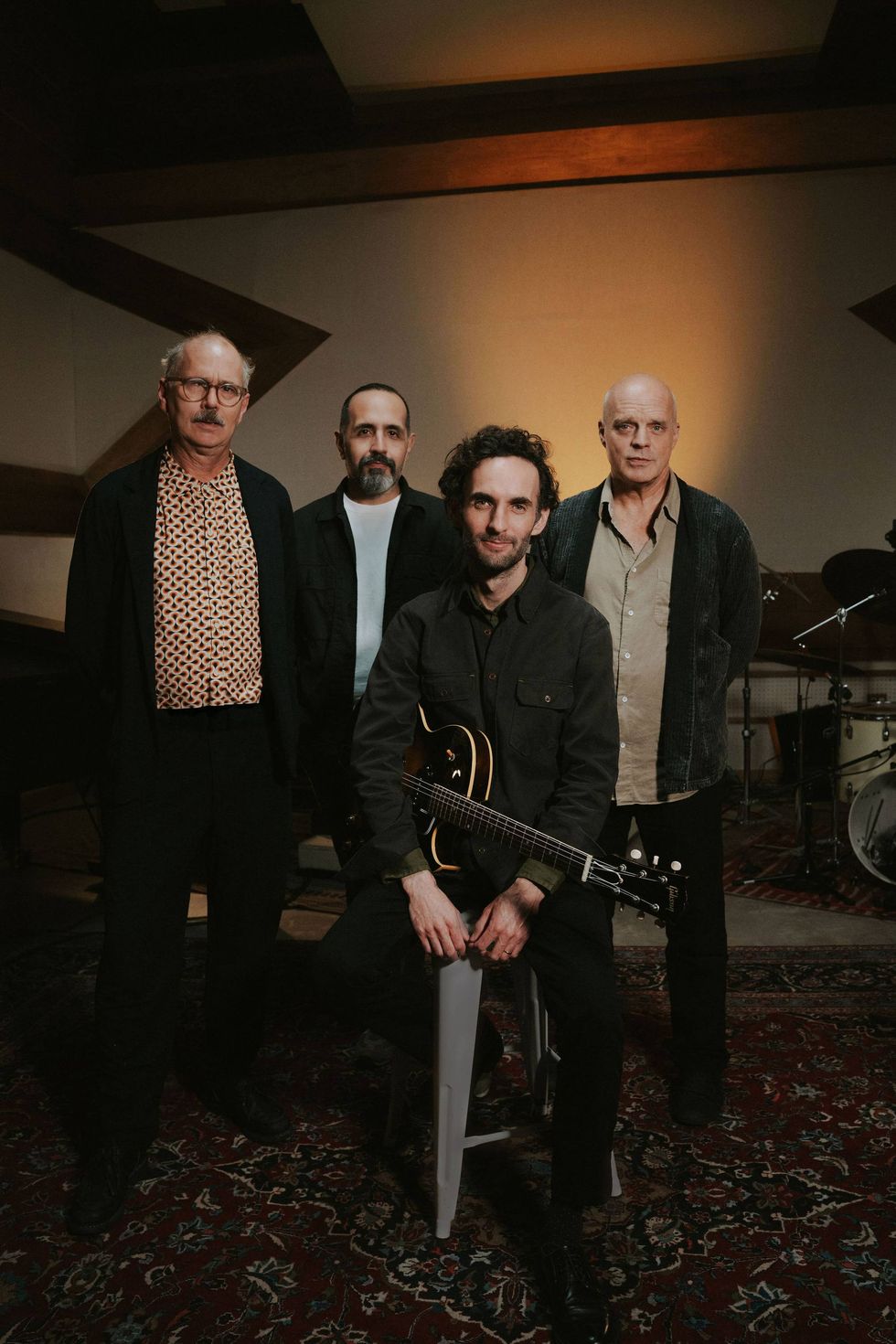
Julian Lage's Gear
Guitars
- 1955 goldtop Gibson Les Paul
- Nacho/Gibson ’50s Les Paul reissue with Ellisonic pickups
- 1956 Gibson ES-225
- Nacho 1657 Tele-style with Ellisonic (neck) and Fatpups Blackguard (bridge) pickups
- Collings Julian Lage 470 JL
- 1932 Gibson L-00 acoustic (borrowed from wife Margaret Glaspy)
- Collings Julian Lage OM1A JL acoustic
- 1939 Martin 000-18 acoustic
Amps
- Austen Hooks Filmosound 385
- Standel 25L15
- Magic Amps Vibro Deluxe
- 1959 and 1960 Fender tweed Champs
Effects
- Strymon Flint tremolo and reverb
- Shin-ei B1G 1 preamp gain boost
- Sonic Research ST-300 Turbo Tuner Mini
Strings & Picks
- D’Addario Flatwounds (.011–.049) for electrics
- D’Addario Nickel Bronze (.012–.053) for acoustics
- Dunlop Tortex .88 mm picks
That was exactly what Lage was after. Over a period of several months, from 100 or so quickly assembled fragments of melody, harmony, and rhythm, emerged the nine evocative tunes that make up Scenes from Above. Of course, the guitarist himself would be the first to acknowledge that these nine tracks aren’t entirely his work. From the start, he was writing with particular musicians in mind—one of whom, Medeski (best known as a cofounder of Medeski Martin & Wood and a longtime collaborator with John Scofield, among many others), he’d never recorded with before, although they’ve known each other for years. In a manner similar to one of his heroes, Duke Ellington, Lage was intentionally underwriting, trusting his colleagues to flesh out the music as only they could.
“Individuality and freedom of expression are really paramount to the whole experience,” he explains. “It’s not so much, ‘Well, I wrote it, so you’ve gotta play it.’ I don’t feel that kind of attachment to this music, and I think that was reflected in how it went down. There were songs where I thought pretty quickly, ‘Yes, you could justify doing this if we had the time to rehearse and workshop it, but we don’t, so we’re gonna go for the ones that are clear from the start.’ And that’s a nice place to be, going into a recording date.”
“Individuality and freedom of expression are really paramount to the whole experience.”
As intended, that clarity is greatly enhanced by the contributions of the other musicians. This is apparent from the opening track, “Opal,” in which Medeski shades Lage’s wistful, unpretentious melody with ghostly layers of Hammond B-3 organ and piano, while Roeder and Wollesen establish a bottom so spacious that you feel it more than you hear it. The sense of effortlessness that runs through the piece becomes more remarkable once you learn what a struggle it was getting Scenes from Above made to Lage’s satisfaction.
“I had so many guitars at that session, man,” he recalls with a shake of the head, “and none of them worked. We were in midtown Manhattan, right near the Empire State Building, and for whatever reason it was just, like, hum central. I was planning to use my ’55 Les Paul goldtop with P-90s”—a guitar given to Lage by its previous owner, comedy legend and Spinal Tap co-creator Christopher Guest, emblazoned with Les Paul’s own signature— “but with the whole electricity situation in the studio, I just couldn’t use anything with single-coil pickups. And even amongst multiple humbucking guitars, the only one that was usable was a Nacho Les Paul”—a Gibson ’50s reissue brought up to period-correct specs by Spanish luthier/wizard Nacho Baños—“with Ron Ellis pickups. There was a lot of work done later to make that sound more single-coil, because it wouldn’t be what I’d naturally gravitate towards.” That later work largely involved re-amping Lage’s performances: taking the tracks he’d already recorded and running them through different amplifiers to capture new tones.
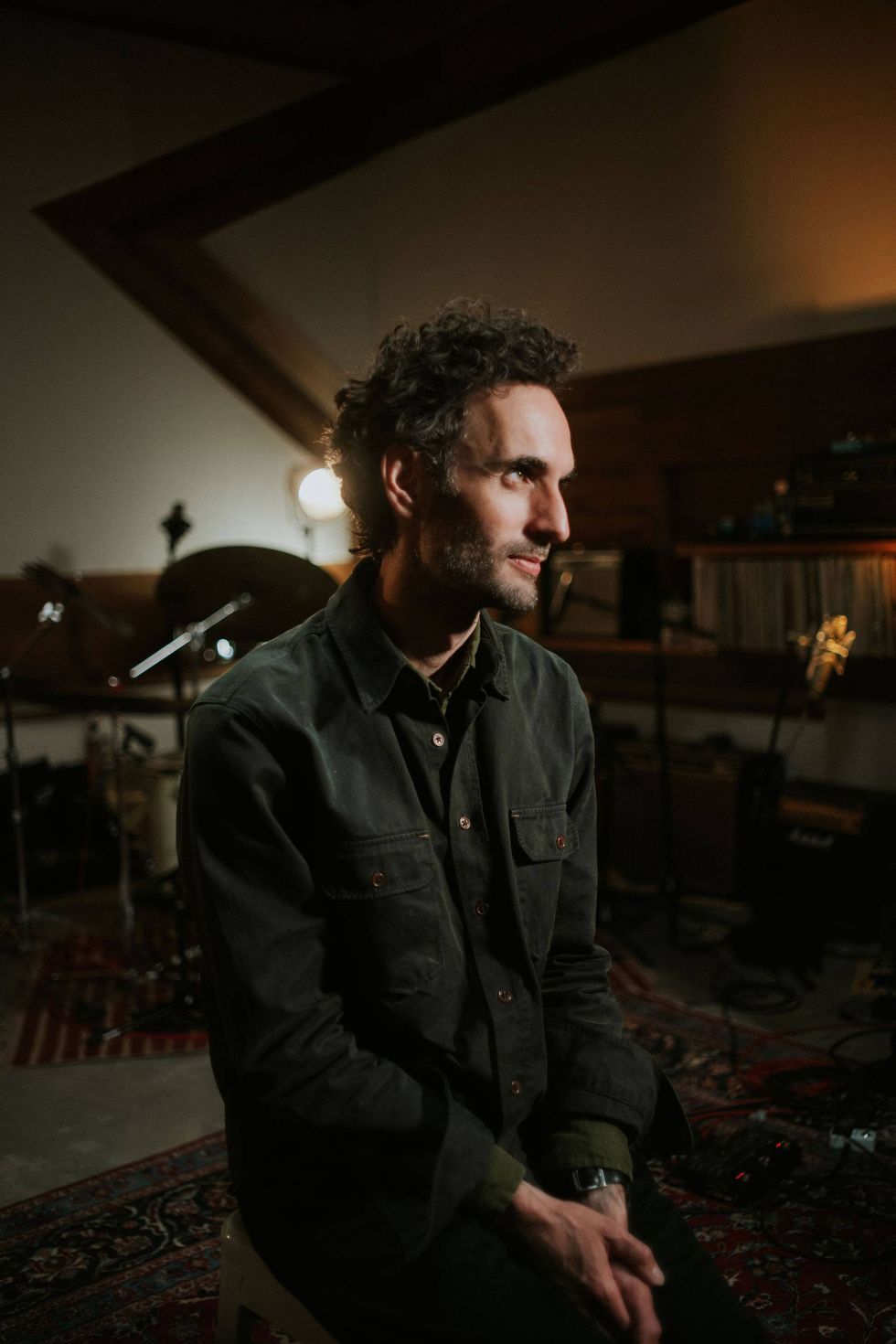
“We tracked everything with a black-panel [Fender] Deluxe Reverb,” Lage continues. “When we re-amped, we went through two amps. One was a Benson … and not a new Benson. [20th-century session guitarist extraordinaire] Howard Roberts had this guy [Ron Benson] years ago in L.A. who made him a few amps. There’s really not many of them, but a friend of mine has one, and I think it might be the one that Howard Roberts used on a bunch of film scores. Kind of like a Magnatone style, shallow body, 12" speaker, beautiful built-in tremolo, not loud, but we used it in combination with a 100-watt [Fender] Bandmaster head that [Two-Rock Amplifiers founder] Bill Krinard had done something on years ago through a Marshall half-stack. And that’s the sound, with those two amps running simultaneously, not in series. The clarity and the life force comes from the [Fender/Marshall combo], and the unusualness comes from the Benson.”
“People I studied with said, ‘Hey, have you really considered what it takes to play a note on the guitar, or are you just squeezing it for dear life?’”
From what’s in the grooves, however, you’d never suspect how much post-production tweaking went on. And even when Lage’s melodies are at their most circuitous, the music always feels direct. The album’s peak comes five tracks in, on “Night Shade,” a rootsy, soulful, slow-building ballad that’s highly reminiscent of the Band. Its focal point is a simple series of hammer-ons and pull-offs on the Les Paul’s high-E string, over G and C major chords. The first couple of times through, Lage alternates between a melodious seventh-fret B and an open E; the third time around, the B becomes a B-flat, creating a nasty tritone interval with the E that he emphasizes repeatedly, with obvious glee.
“That’s an older song,” Lage notes. “I think I wrote it for [2016’s] Arclight, and I used to play it in the trio with Kenny Wollesen and [bassist] Scott Colley as an encore. But I remember thinking, well, it’s kind of slow and we need more ‘up’ tunes. So that was always just sitting in the background. That feature of it, the pull-off/hammer-on business, I didn’t anticipate that it would have the impact it had. But in this group, I quickly realized that it’s a nice and super-guitaristic way to interrupt this steady groove. The quartet orchestration reveals that this feature is, in fact, a feature.”
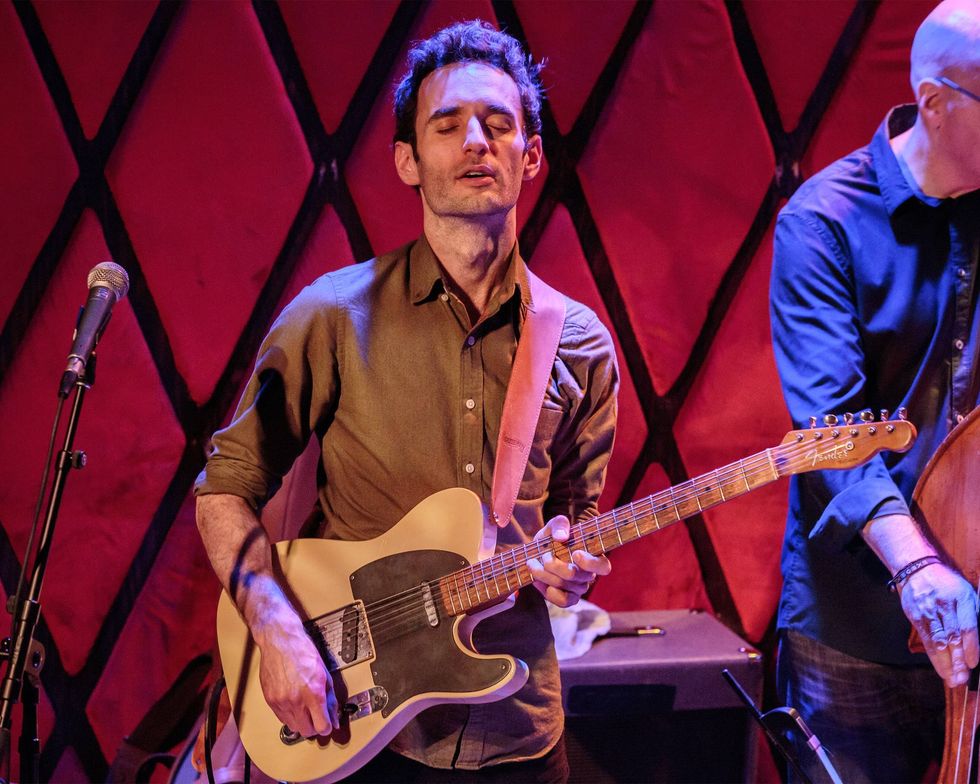
A similar harmonic surprise lurks within the chord structure of “Solid Air,” titled in tribute to British folk great John Martyn’s 1973 song and album of the same name, but dissimilar to them in all other ways. Lage’s “Solid Air” is in the key of E major, and for most of its duration employs chords firmly rooted in that scale. Then, at the end of the head arrangement, with little warning, the music descends chromatically from E flat to A before rising back up to D—the flat seven of E major—and resettling on the tonic. This strange but gratifying move is the indirect result of some deep historical listening.
“When I think of someone like Willard Robison, who wrote ‘Old Folks’ and some other really cool songs,” Lage says, “or pre-1930s writers before the Great American Songbook era of Broadway musicals, or I listen to Nick Lucas’ ‘Picking the Guitar,’ or ‘April Kisses’ by Eddie Lang, they’re these pieces that have unexpected shifts to different keys. They happen all the time, and they’re not terribly subtle, you know? Now we’re here, now I moved up a half step, and now I’m back down a half step. Do I feel like going up a minor third? Okay, I’ll go up a minor third. There’s nothing clever about it. If anything, it’s rather inelegant—which can be really what the doctor ordered. Aesthetically, I’m drawn to that. The impact of it excites me.”
“It’s all a miracle. It doesn't feel like it when you can’t play like you used to. But it really is miraculous, what’s going on.”
Lage’s battle with the sinister forces of hum during the Scenes from Above sessions was certainly not the first time he’s faced major challenges with his chosen instrument. A little more than a decade ago, he basically had to relearn how to play the guitar. In 2013, after experiencing a scary succession of left hand and arm spasms, he was diagnosed with focal hand dystonia, a neurological disorder brought on, or at least worsened by, years of incessant practice from an early age (a child prodigy, Lage began playing when he was five). In sum, the connection between his brain and left hand had been overused to the point of burnout, and needed to be repaired.
“There’s so much sense of identity that’s wrapped into playing,” Lage acknowledges. “And if something interrupts that, there can be a tremendous amount of embarrassment or shame, or a feeling of, like, ‘I thought I was doing well, why is this happening now?’ It was the first time I had to consider that the techniques I’d been employing since I was a little boy weren’t appropriate for an adult-statured human. They could have been perfect for 20 years, but now you’re not that height, you’re not that weight. There’s a reckoning to be done, and a reconfiguration. When I started talking about it to people, I quickly became aware that I’m not alone, that a lot of people struggle with similar stuff. It could be focal dystonia, it could be tendinitis, it could be anything, but the point is there’s something going on with the material form that is trying to get our attention.”
Working with fellow guitarists like Jerald Harscher and Juanito Pascual and studying the Alexander Technique, a therapy developed to help treat stress-related chronic conditions, Lage gradually rewired his reflexes to be kinder. “People I studied with said, ‘Hey, have you really considered what it takes to play a note on the guitar, or are you just squeezing it for dear life?’ Entering into a dialogue about that was healing. I mean, how do you even talk about tension without just pointing to it and saying it hurts? Well, there are these mechanisms. The head/neck relationship dictates a lot of your reflexes. Are your knees locked? Are your hips locked? Are your ankles locked? Are you breathing? What’s your vision like? There’s a pretty holistic approach to how you can unpack an injury. So I just jumped in. There was no other choice, right?”
Looking back on this fraught time from 10 years onward, fully recovered and getting ready to hit the road with Medeski, Roeder, and Wollesen in support of Scenes from Above, Lage marvels at what it all took, and takes. “There’s this great quote by an Alexander teacher, Patrick Macdonald. He said that people often think their bodies are disobedient, but that couldn’t be further from the truth. Typically, we’re not aware of what we’re asking our system. I was asking a lot of my system, practicing guitar endlessly, and my body was doing the best it could until it just couldn’t anymore. … I guess I’m saying it’s all a miracle. It doesn’t feel like it when you can’t play like you used to. But it really is miraculous, what’s going on.”
Alessandro The Dane Review
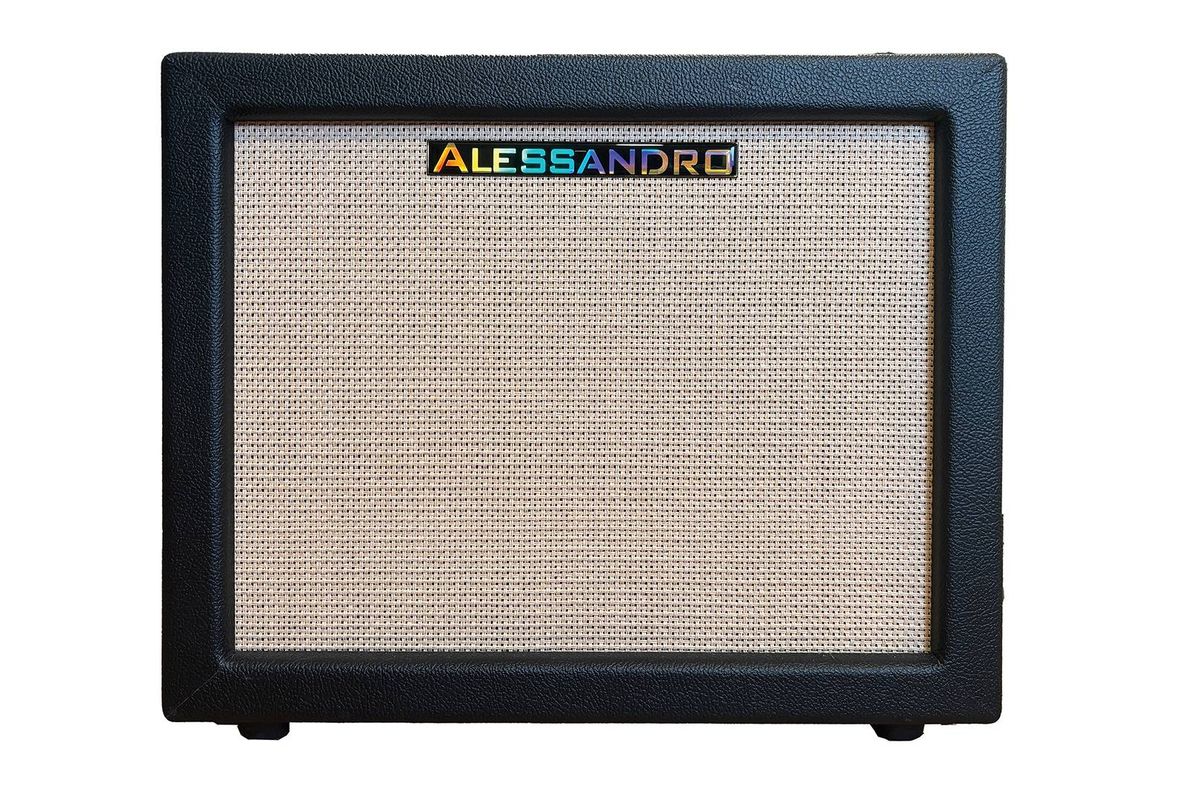
The tweed Deluxe circuit sets the gold standard in tone for many of us. And for good reason. It’s simple and responsive, with a warm, compressed, midrange-forward voice that’s perfect for jazz and country lines at low to moderate volumes—and a distinctive, saturated gnarliness in the upper reaches of its output that’s hard to beat for rock. If that’s the sound you hear in your head, many would say a vintage model is still the one to have.
If anyone could top that with a true “tweed killer,” I’d put my money on George Alessandro. That’s not just because his clientele reads like a Mount Rushmore of guitar tone—David Gilmour, Derek Trucks, and Warren Haynes are just a few who’ve cited Alessandro in current gear lists in PG. It’s the combination of his deep firsthand knowledge of the history of guitar amp circuits and his tireless quest to source the finest components that not only land him those rock-star devotees, but easily place his name among mythical amp wizards like Alexander Dumble and Ken Fisher, and make him the guy for the job.
I’ve had the good fortune to play one of Alessandro’s 5E3 copies, and it was so familiar, it felt like what I imagine one of those amps must have sounded like fresh out of the factory in the late ’50s. With his new combo, The Dane, he’s used that circuit as a jumping off point—with a nod toward Dumble as well—and optimized it for a modern pedal-using player. Not only does the 14-watt The Dane deliver the same sonic hallmarks as the 5E3, it offers more headroom and an even wider range of touch-sensitive response.
Do the Evolution
Despite all the tweed Deluxe talk, the Dane is no clone. Instead, it’s inspired by the 5E3 circuit and a Dumble Tweedle Dee—that legendary amp builder’s own tweed Deluxe mod—that landed on Alessandro’s bench for service. From there, Alessandro evolved the design, creating a unique preamp circuit, which uses a pair of ECC83MG/12AX7s. On the user end, the most recognizable change might be the inclusion of a 3-band EQ. Alessandro paired his preamp with a ’50s-style output section that employs a pair of 6V6s. Together, and in conjunction with Alessandro’s signature Eminence GA-SC59, they evoke a vintage vibe, achieving the tube compression and harmonic complexity tweed Deluxe players know well, but with more clean volume.
As a tweed Deluxe player who also loves pedals, I’ve often found myself a little bit conflicted. There’s a weird imaginary line I feel like I cross every time I plug a fuzz—or even worse, a digital pedal—into my 1949 5A3. But if I want to use my prized amp on as many gigs as I do, it’s a necessity. With The Dane, not only is there no conflict, it actually feels more welcoming to pedals. That’s not just about headroom, though that certainly helps—the 3-band EQ really goes the distance when it comes to shaping your sound.
Much like the dynamic interplay between the tone and volume controls on a vintage Deluxe, each of The Dane’s EQ controls seems to shape the whole of the sound. I found this to be especially helpful with dialing in dirt tones. Over the course of a few sessions with The Dane, I plugged in a wide range of gritty pedals, including a Klon KTR, Analog Man King of Tone, EHX Ripped Speaker (there’s some comedy here in using a fuzz that’s supposed to sound a little broken), and an Analog Man Sun Fuzz. In each, I found that I was able to shape their tones with the EQ more than I would ever expect from other amps. And that goes for using those to push The Dane into overdrive as well, which, as ruthlessly delightful as it is to do on a tweed Deluxe, is not especially sculpt-able. With the KTR adding some gain and heading into cranked volume territory, the mid control alone added a heft to my Creston JM-style that felt resolutely heavy and thick—much more so than I would expect from JM-style pickups. And at more polite volumes, I could use the pedal alone to get my overdrive, while still preserving the character and voice of the amp.
Full Control at Your Fingertips
While reviewing The Dane, there’s a quote that kept coming back to me from when I interviewed Alessandro a few years ago: “If I can make it a limitless journey, then I did my job right.” With The Dane, he’s managed to take the tweed Deluxe sound and remove the limits.
I think there are a lot of ways Alessandro gets there, and one of those is through his next-level component sourcing. With the fervor of a hi-fi aficionado, Alessandro has most of his components custom built, with quality control that goes well beyond the consumer-grade level.
The result is that The Dane, like every Alessandro amp I’ve played, responds like a performance sports car: It runs silently, has an ultra wide dynamic range, a broad frequency range, and is fast and articulate, all of which keeps control in the player’s hands. That might be daunting if you’re used to an amp that heavily colors your phrasing by limiting the window of control (though pedals can help with that). But if you want to keep that window wide open, The Dane will get you there.
What, exactly, does that mean? The response, dynamics, and EQ keep the controls in your hands. Playing intensity and attack have more noticeable results. Sustain is there when you need it. In short, The Dane is a thrill to play.The Verdict
As a devoted tweed Deluxe user, I’m genuinely taken by The Dane. Alessandro has preserved the character of the original while opening it up with more dynamic range, control, and possibility. But it goes beyond that, because The Dane isn’t just a 5E3-style amp—it’s a solution. Whether you’re playing clean articulate lines (I didn’t have an archtop handy, but I can assure you this amp would be the perfect transparent companion for jazz hits) or cranking with abandon, The Dane has the harmonic range and firepower for the gig. Its 14 watts are not only bold and powerful, this combo maintains its composure through its entire output, making it fully usable at all levels. At $3,000, The Dane, handmade by one of the ultimate legends of amp building, is an unrivaled feat.
“Washburn’s business model was too slow – I was so frustrated”: Why YouTube star Ola Englund launched his own company, Solar Guitars

The intersection of heavy metal and guitar YouTube has proved to be a verdant ground for innovative new guitar companies to bloom. Alongside Rob Chapman’s Chapman Guitars, Ola Englund’s Solar Guitars has been another key success story in this area.
Now nearly 10 years later, Solar is a widely revered guitar company catering to the heavier inclined, but what prompted Englund – who was with Washburn at the time – to do his own thing in the first place?
As he explains in the new issue of Guitar World magazine, Englund felt disillusioned with the speed at which his designs with Washburn became available to the public, and was inspired to start his own brand instead.
“I had a successful model with Washburn,” he says. “I brought them my designs, they released it and it did very well. But being a social media, YouTube guy. I know the world moves so fast now and people’s attention spans are so short.
“I felt that Washburn’s business model; was too slow. There was a bureaucracy behind everything – the making of the guitars, selling to dealers and getting them to distributors.
“It’s such a long process before an actual customer gets to see the guitar – like, about a year – and I was so frustrated because I knew people wanted the guitars but had to wait a long time before they could get them.”
Englund – who has nearly 1 million YouTube subscribers, and also plays guitar in bands The Haunted and Feared – explains that upon the expiration of his three-year contract with Washburn, he was faced with a decision: either renew for another three years, or take matters into his own hands.
“After my three-year contract ended, I figured I could stay there for another three years, but I knew I could do so much better if I could find some people to do a new company with me,” he continues.
“The guy I worked with at Washburn had just left the company, so I gave him a call and we decided to create a model that went straight from us to the consumer because we know exactly what the audience wants. They tell me.
“I took my designs out of Washburn, and we formed Solar. We launched in late 2017 and had 300 guitars to sell and ship immediately. We’ve grown very fast.”
In other news, Extreme guitar legend Nuno Bettencourt made waves in the guitar industry late last year when he followed in Ola Englund’s footsteps, ending his 35-year relationship with Washburn to start his own guitar company, Nuno Guitars.
The post “Washburn’s business model was too slow – I was so frustrated”: Why YouTube star Ola Englund launched his own company, Solar Guitars appeared first on Guitar.com | All Things Guitar.
Reader Guitar of the Month: A ’60s Hopf Telstar-Turned-Schwartocaster
Reader: Andreas Schwartau
Hometown: Hamburg, Germany
Guitar: Schwartocaster #1
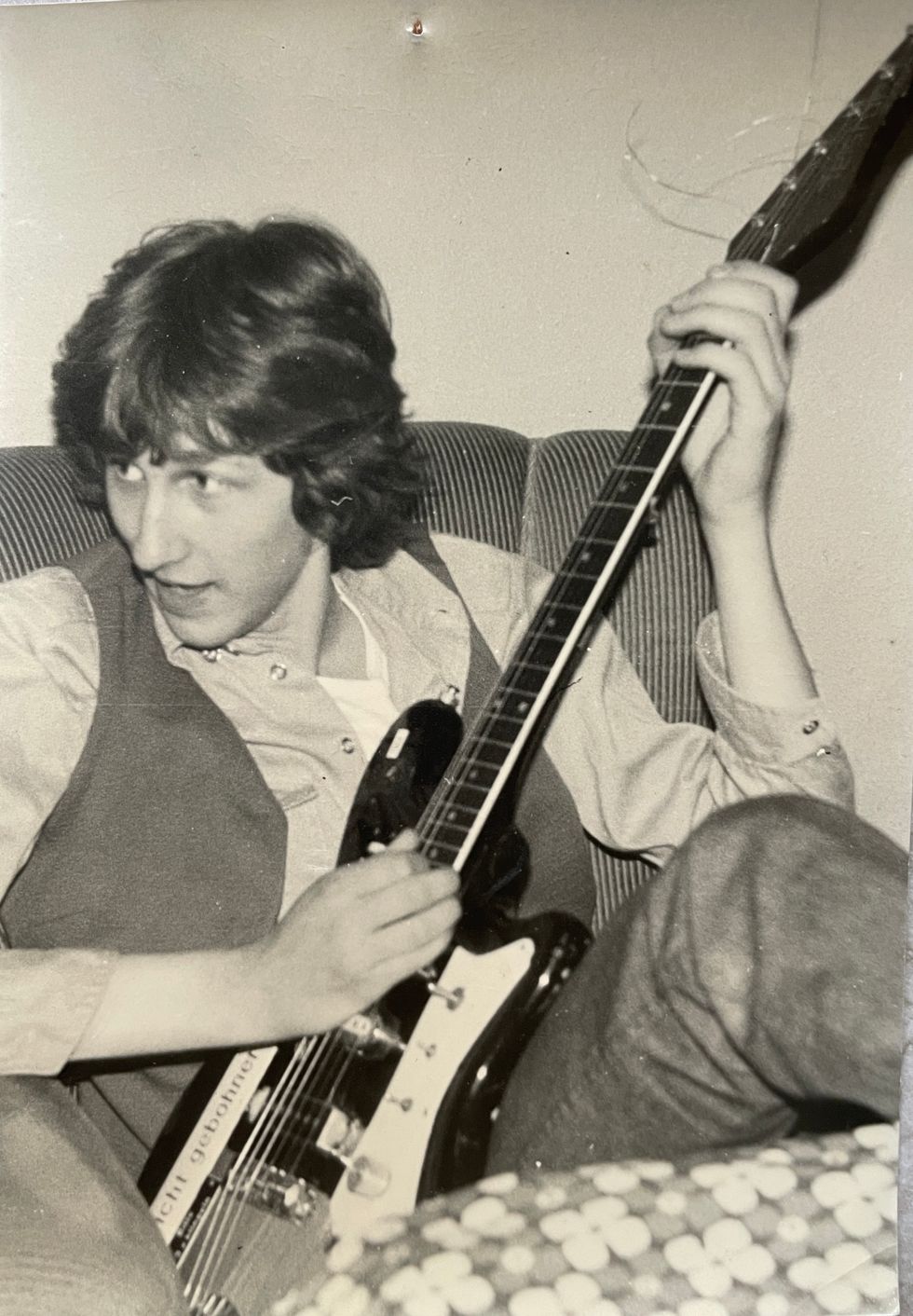
1974. Picture a boy in his PJs in front of a black-and-white idiot box with eyes and mouth wide open, staring at the outrageous glittery costumes, risky platform boots, and over-the-top makeup of glam rock bands the Sweet, Slade, T. Rex, and Sparks. Today, when I watch these clips from the German TV show Disco on YouTube, I still get excited by the music these bands made and how they looked. I also understand why my parents were horrified and worried for the mental health of their 11-year-old firstborn. I imagine their faces when I asked for a guitar for my birthday as they considered how the urge to create these crunching, screaming, chugging noises on a shiny axe had gripped me.
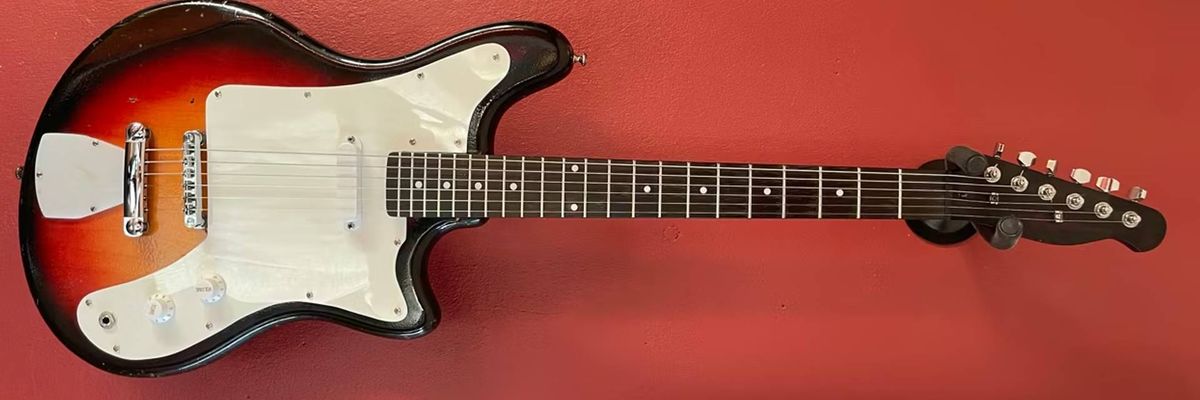
Thanks to an intervention by my grandma, I was allowed to buy an acoustic, though I had to scrape together half of the 130-Deutschmark cost for a Framus Wanderlust, which I still play today! Just one year later, I had my first electric—a used and very worn ’60s Hopf Telstar Standard with an already badly warped neck. I played it for a few years, though the many pickups, switches, and pots confounded me. In an attempt to fix the neck, I tore out the frets, sanded the fretboard flat and played it as a fretless for a while, then left it lying around for almost 50 years. In the intervening years, Arias, Ibanezes, Fenders, and Gibsons came and went. Yet the ruined Hopf stayed and settled dust. I’m sure more than a few Premier Guitar readers can relate why I kept it, right?
“What a glorious moment it was when I first strung it up to ‘feel the noize’ of the still pickup-less body and neck for the first time in decades!”
Last year I decided to either throw it out or Frankenstein it. I can do some easy repairs on my own guitars and those that belong to friends, but I’m not a luthier by any stretch. Anyhow, I accepted the challenge. Removing the bolt-on neck was hard, because a previous owner had applied glue. I read Irish luthier Gerry Hayes’ recommendable newsletter and found out how to steam it off, which took days and a lot of patience. Everything else was relatively easy though. I found a sort of T-style neck from a flea market, some half decent tuners, and a pickguard blank. And because the original selection of pickups and switches was confusing anyway, I made the move to a single Seymour Duncan Mustang-style pickup, and two pots. A lot of measuring, sawing, and drilling ensued, and I’ll admit I drilled through the fretboard once. I also did a lot of manual sanding to fit the neck into the narrow pocket. I feared I would have to relocate the bridge posts since the Hopf neck was a shorter scale, but it ended up working fine. What a glorious moment it was when I first strung it up to “feel the noize” of the still pickup-less body and neck for the first time in decades!
Sure, the Telstar is far from a professional-grade guitar. The tuning stability could be better and the narrow spacing of the neck bolts—typical for German guitars of that era—makes the neck a bit wobbly. Maybe I’ll fix this at some point. But even now my Schwartocaster #1 is great fun to play. It’s lightweight and balanced, it intonates well, and the single pickup has a husky, jazzy voice. I still marvel at how I pulled it off, but I’m glad I tried, and I’m glad it worked out.
Blackwater Holylight’s Heavenly Heaviness
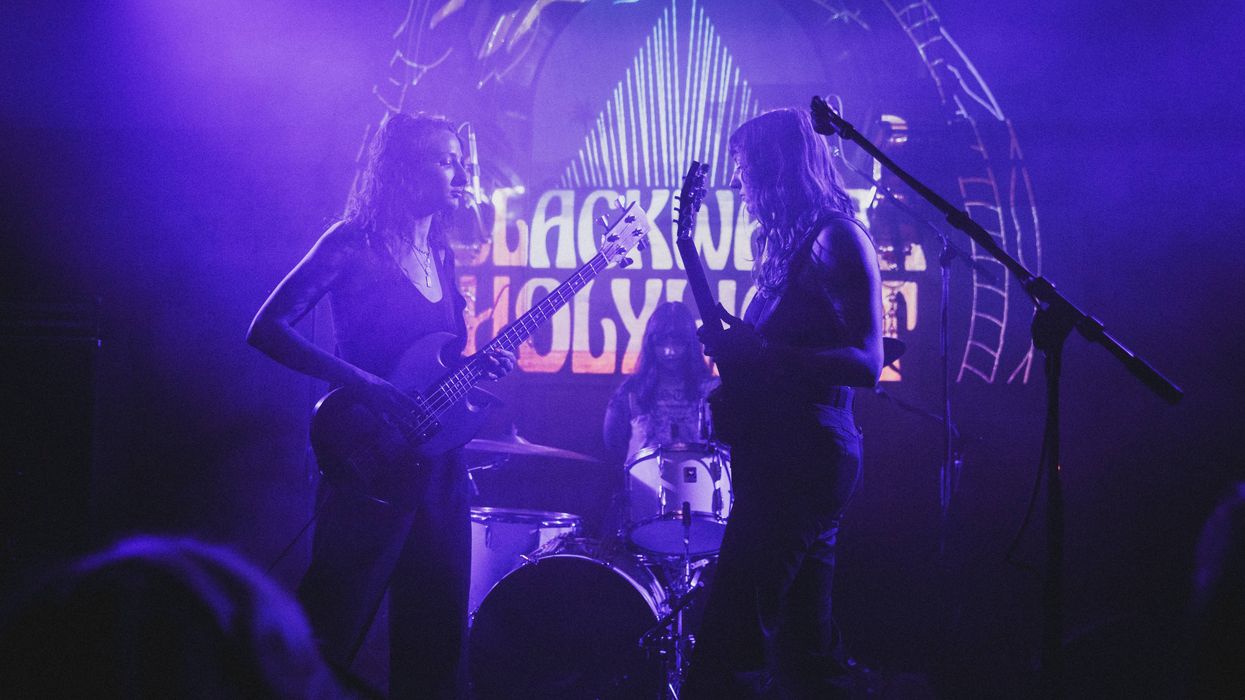
Several years ago, after releasing a trio of well-received stoner-doom albums, the core members of Blackwater Holylight—vocalist/guitarist/bassist Allison “Sunny” Faris, guitarist/bassist Mikayla Mayhew, and drummer Eliese Dorsay—left their hometown of Portland, Oregon, and took off for Los Angeles. News of the move filled some of the band’s fans with dread: Would the blissed-out, carefree Cali lifestyle result in a lighter and friendlier Blackwater Holylight? Would the band start writing—yikes!—happy music?
“Not a chance,” Faris scoffs. “I think our music is more depressing than ever.”
“We needed to get out of the physical gloom of Portland, but I guess we took a little bit of that with us,” Mayhew says. “It’s not like we came to L.A. and everybody went, ‘Yay, you’re here!’ We had to start all over in a lot of ways—meet a bunch of new people, find different opportunities. It was hard. It would have been easy to stay where we were, but I think we needed to grow to keep the band sounding fresh.”
“Fresh” might be a relative term when discussing Blackwater Holylight’s songs—there’s no frothy singalong choruses and nary a trending dance beat to be found—but there’s a looseness and a recklessness to their new album, Not Here Not Gone, that feels like something of a breakthrough. It’s there in the woozy, fuzzed-out guitar rhythms on bulldozers like “Bodies” and “Spades,” which come at you gritty and grimy, yet with a disarming playfulness to the dissonance. Another track, “Heavy, Why?” is rooted in thick layers of distorted sludge, but boasts plenty of kinetic sass and swagger—and when Faris swoops in with her ethereal, almost angelic vocals, complemented by former bandmate Sarah McKenna’s feather-light synth lines, the effect is transcendent. The capper to it all is the mini epic “How Will You Feel,” in which Mayhew’s scarifying, Iommi-esque guitar tones seem to take flight when the band locks in for a wicked, post-grunge jam.
“Our last album [2021’s Silence/Motion] was pretty much written and recorded during the Covid pandemic,” Mayhew says. “We couldn’t tour or go out that much, and we didn’t have a lot of time to work on material. With this album, we took a lot of time to write. Some of the songs were written years ago, so we had time to demo and play around with them.”

Kicking up Blackwater Holylight’s kind of apocalyptic racket (Mayhew calls it “sensually murderous”) means that neither Faris nor Mayhew is epoxied to a guitar or bass—live and in the studio, the two alternate instruments. “There’s no set formula,” Faris says. “I might write a guitar part and have a melody, and I’ll bring it to practice and Mikayla will play bass to it. And sometimes she’ll have a guitar part, and I’ll play bass and start singing to it. We’re flexible.”
Occasionally, a different scenario unfolds. “I might bring in a guitar part, and we’ll start playing and I’ll go, ‘You know, maybe I should play bass on this,’” Mayhew says. “I think our skills are pretty equal on bass and guitar, and nobody has a big ego about who plays what.”
The two share a love of “heavy music,” though their distinct influences differ wildly. Faris sings the praises of My Bloody Valentine and the Brian Jonestown Massacre, while Mayhew cites Nirvana, the Beatles, and Black Sabbath as her essential references. Asked to assess her bandmate’s playing style, Faris says, “Mikayla is a lot more forward in terms of lead lines. She’s better at being kind of noodly. I think that helps to balance us out, because she can do more of a shreddy, cruising-around-the-fretboard thing, and I can play more rhythm stuff.”
Describing Faris’ strengths, Mayhew says, “Sunny has more of a folky background, so she’s really good at fingerpicking, which I think is cool. She’s got the rhythm down, and her bass playing is great. Sometimes she plays guitar like a bass.”
Their amp preferences—and, significantly, how they crank up the walloping distortion—present more examples of sonic divergence. Mayhew relies on the vintage clean tones of a Music Man HD-130 through a 4x12 cabinet, with all dirt conjured via pedals. “My main one is a Fuzz War by Death By Audio,” she says. “I absolutely love that pedal. I also like to use a [EarthQuaker Devices] Terminal fuzz and a Big Muff. And, of course, I gotta use a Tube Screamer.”
For her part, Faris stands by her Sovtek MIG100H, a Russian-made amp favored by metal and stoner rockers for its Marshall-like high-gain firepower. “I borrowed one from a friend a few years ago, and I just fell in love with the sound,” she says. “They’re not too easy to find, but I did locate a guy selling one in Eugene, Oregon, and I was like, ‘I’m buying this!’”
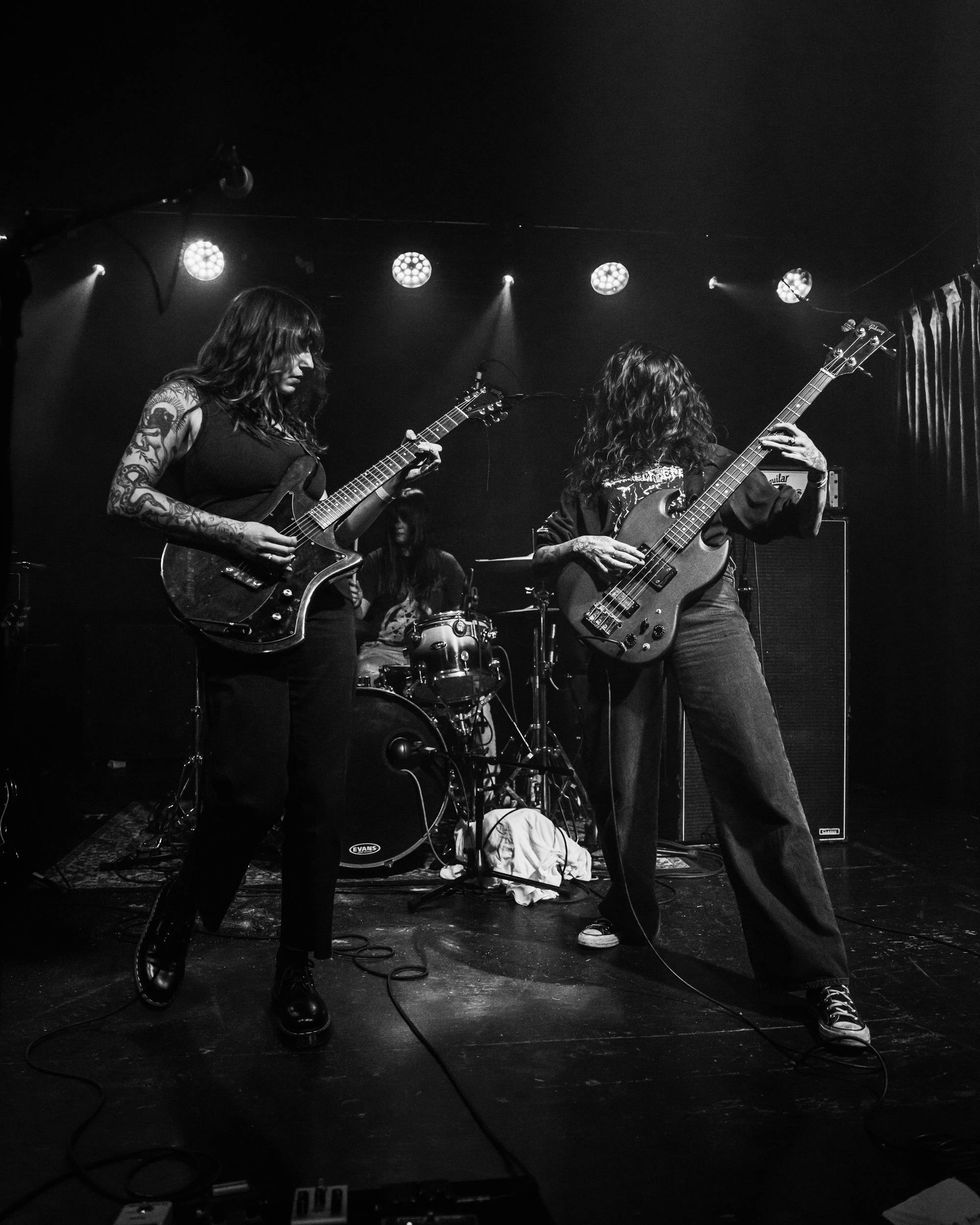
She adds, “The Sovtek is a killer guitar amp, but we also use it for the bass. Normally, we run our basses through an Ampeg SVT, but the Sovtek really comes through. We like to flip-flop what we use.”
They do agree on one key aspect of their approach to ultimate heaviness: Standard tunings are out, alternate tunings are in. “I don’t remember how we got there. I think we started using alternate tunings by accident and they just sort of stuck,” Mayhew says. “We have a couple of tunes where we tune down to D, and we have a few that are in DADGAD. Most of the tunes on this record are in open C minor—that’s C–G–C–G–C–Eb—and we even go down to open B minor.”
Before recording Not Here Not Gone, the band had only performed “Heavy, Why?” live, but they promise that their upcoming spring tour will feature a healthy dose of new tunes. “We’ve got a lot to learn, but it’ll be fun,” Faris says. “I’m really proud of what we accomplished on the new album, especially the way we’re experimenting with dynamics and how things can be crushing and heavy, but also soft and beautiful. When you think about it, that’s what life is.”Sunny Faris’ Gear
Guitar and Bass
Gibson SG Custom
Gibson SG Standard bass
Amp
Sovtek MIG100H
Ampeg SVT
Ampeg 8x12 cabinet
Effects
Death By Audio Fuzz War
EarthQuaker Devices Terminal
Tech 21 Boost RVB
Tark Audio Morty’s Fuzz Drive
Boss GEB-7 bass equalizer
Strings, Picks, & Cables
“I’m not sure what strings I use. They’re thick, though.”
Dunlop Tortex .73mm
“Cheap cables”
Mikayla Mayhew’s Gear
Guitars and Bass
Gibson SG Custom
Guild S-60
Gibson SG Standard bass
Amp
Music Man HD-130
Music Man 412 GS cabinet
Ampeg SVT
Ampeg 8x12 cabinet
Effects
Death By Audio Fuzz War
EarthQuaker Devices Terminal
Ibanez Tube Screamer
Electro-Harmonix Big Muff
Hologram Electronics Microcosm
Strymon Cloudburst
Tech 21 Boost RVB
Tark Audio Morty’s Fuzz Drive
Strings, Picks, & Cables
Ernie Ball Power Slinkys
“I can’t remember the bass strings. It’s been so long.”
Dunlop Tortex .73mm
Ernie Ball cables—“If I want to splurge.”
A Mint-Condition 1959 Gibson Les Paul Junior Sees the Light of Day
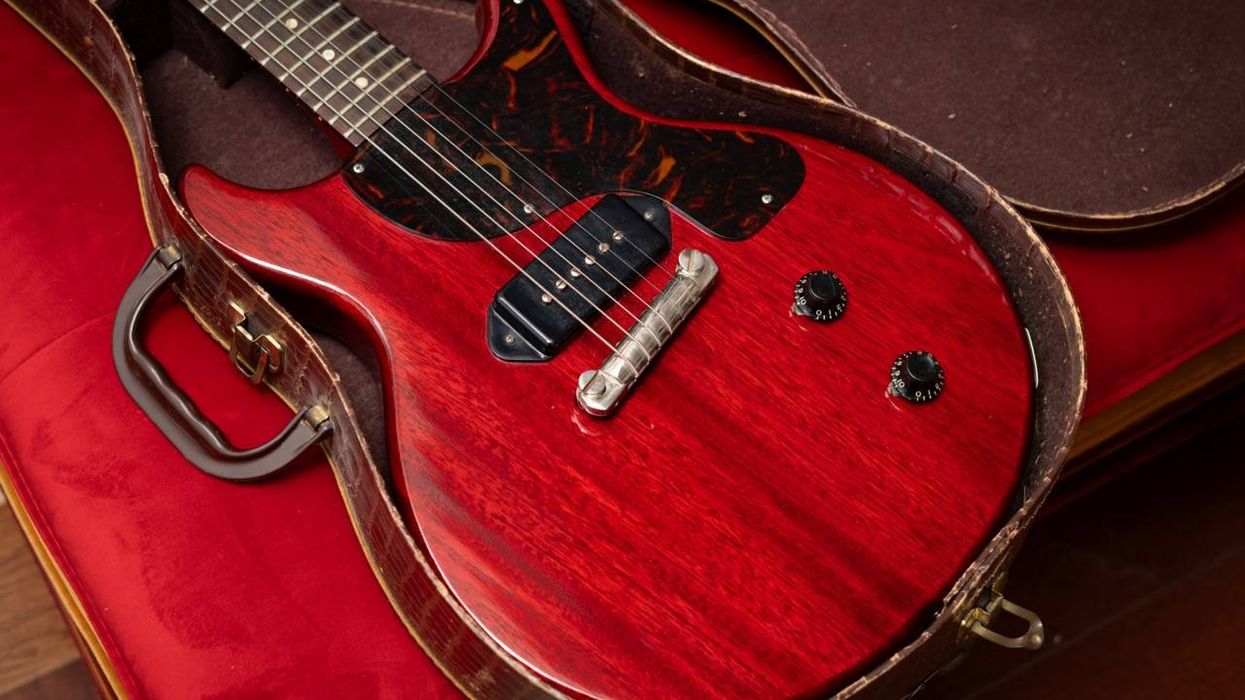
We recently traveled an hour from our shop to a small town (and down at least half a mile of actual dirt road) to the hilltop home of Buford, a man interested in selling a 1959 Gibson Les Paul Junior, a gift from his mother to his father back when it was new. We had seen snapshots, but were unprepared for the glory that awaited us when he opened the original alligator grain chipboard case. Even a spotlight couldn’t have made the glossy, unfaded, cherry-red lacquer finish shine much brighter. We have seen, played, and even owned a lot of Les Paul Juniors—single cutaway, double cutaway, 3/4, sunburst, cherry, TV yellow, refinished, lacking any finish at all, wraparound tailpiece, Bigsby, you name it. To collectors, they aren’t and haven’t ever been the brightest-shining Gibson star of the 1950s. While very well made, the variations of this model were built simply and offered at an affordable price. It has always been an underrated, championship-level workhorse, but once these instruments transitioned to being “used” guitars, they found their way to clubs more often than arenas.
But in addition to being well cared for and clean as a whistle, this particular guitar has a combination of specs many players (and collectors, who admittedly may also be players) want. This Junior’s six-digit serial number shows it was made in late 1959 (a stamped 9 xxxx with a space between the 9 and other 4 digits would have been done earlier in the year). The mahogany body is lightly and very deliberately contoured, unlike the slab mahogany with squared-off edges that this model would have had the year prior. It has a nice chunky neck paired with larger frets than would have been found on most made before 1960. Plus, it has a surprisingly robust “dog-ear” P-90, probably due to it saving up all its energetic magnetism for the 21st century. Unlike many Juniors, the bridge posts are tip-top straight, and the tortoiseshell pickguard is flat, with no cracks, chips, or even, well, picks. The buttons on the Kluson single-line tuners are still a stark white and every piece of metal looks virtually new. The red anodyne dye Gibson used back then reacts to being exposed to both light and hands, but the neck on this Junior is just as cherry red as the body. The vintage strings (a wound third!) didn’t even have the appearance of being played.
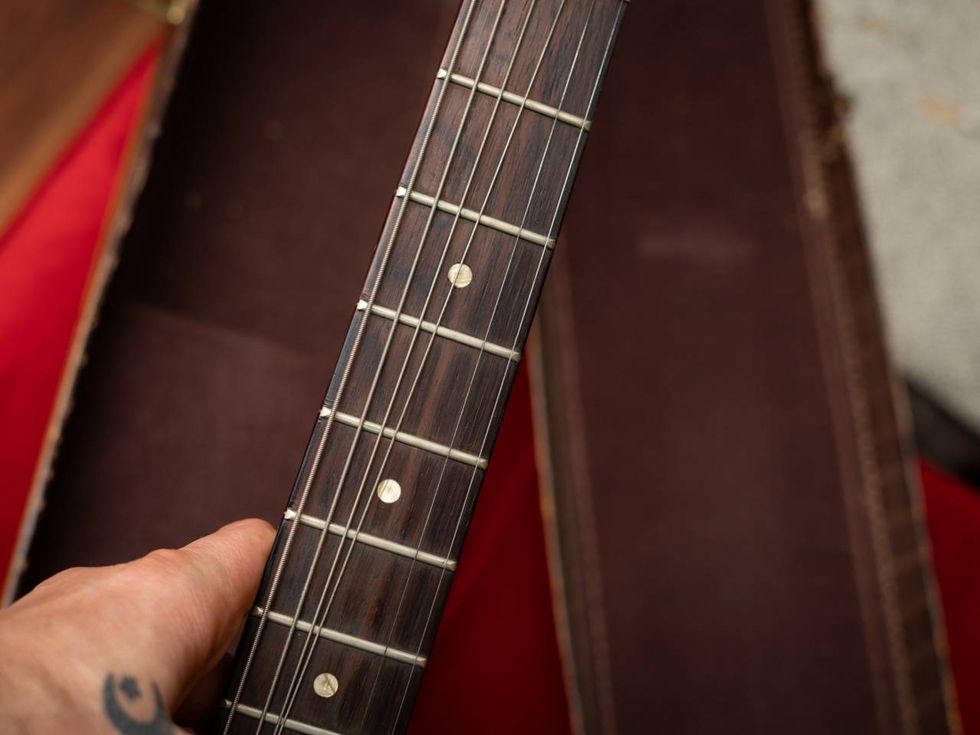
That all being said, just because a vintage guitar is in near-mint condition doesn’t mean it’s great overall. Some are super clean because they must have always been somewhat uninspiring. We’ve played stunningly beautiful bursts that didn’t have “the thing,” and over the years we’ve come to realize that some of the guitars that have been played to within an inch of their lives are like that for a very distinct reason: They brought out the best in the people who owned them.
In this case, it seems both Bufords were hardworking men who just plain didn’t pick up the guitar and play it. Buford Sr. kept it safe (it was a gift, after all), and then Buford Jr. did the same because it was his dad’s. Considering this particular Gibson era, Buford Jr.’s mother could have just as easily purchased a 1959, 1960, or even a “brand-new” 1958 Les Paul Standard. Seeing such a clean, glossy, bright cherry Junior gives us hope that one of those Standards is still waiting in a closet somewhere, barely played and awaiting its second life in someone else’s hands (and preferably not in their closet, or sitting unused in a display case). To us, uncirculated vintage guitars, and more particularly the stories from the people ready to part with them, really are the most interesting vintage guitars these days. The pleasant drives out in the country are a nice bonus, too.
“If we manage to survive the tour, who knows what will happen”: Geddy Lee says new Rush music could be on the cards soon
![[L-R] Geddy Lee and Alex Lifeson of Rush](https://guitar.com/wp-content/uploads/2025/10/Rush-2026@2000x1500.jpg)
When news of Rush’s 2026 Fifty Something reunion tour surfaced, prog fans were in a frenzy – the ‘rush’ for tickets lead to Geddy Lee and Alex Lifeson expanding the sold-out tour within days, announcing a further 17 dates. Now, Rush are giving fans another reason to get excited: new music may be on the horizon
In a MusicRadar interview, Lee reveals that he and Lifeson have been brainstorming new Rush tracks. However, fans will have to wait until after tour before anything is finished. “My intent, before we got into this celebration of Rush’s history, was to put some music together,” he says [via Blabbermouth]. “I assumed I would be doing that on my own, not with Alex. When we started jamming, I started seeing the possibility of doing something. But that went on hold, because there’s too much work.”
“If we manage to survive the tour, go back to Canada, and have a rest, who knows what will happen,” he teases. “But I suspect some music will eventually come out.”
Following on from drummer Neil Peart’s death in 2020, it seemed the Rush days were over; Lifeson was adamantly “not interested” in a Rush reunion back in 2024. Hell, even last January Lifeson told Classic Rock that he didn’t want to reunite and tarnish Rush’s “legacy” by sounding like a “bad Rush tribute band”.
Considering how adamant Lifeson seemed to oppose a reunion, it made the news of the 50-year celebration an even greater surprise to fans – news of new music is just an extra cherry to top things off.
While Peart’s iconic shoes are impossible to fill, German drummer, composer and producer Anika Nilles is stepping up to the plate to join the remaining Rush duo on tour. And, according to Lee, she might even be involved in crafting new Rush tracks.
“It would be fun to see what [Nilles] can do in a creative situation,” he tells MusicRadar. “That would be fun. But it’s all speculation until it isn’t, so…”
When news of Nilles joining the band broke, Lee and Lifeson emphasised how challenging it was to find a drummer that would honour Peart’s memory. “Life is full of surprises, and we have been introduced to another remarkable person; an incredible drummer and musician who is adding another chapter to our story while continuing her own fascinating musical journey,” they explained.
“Her name is Anika Nilles, and we could not be more excited to introduce her to our loyal and dedicated Rush fanbase, whom, we know, will give her every chance to live up to that near impossible role… No small task, because as we all know Neil was irreplaceable.”
The post “If we manage to survive the tour, who knows what will happen”: Geddy Lee says new Rush music could be on the cards soon appeared first on Guitar.com | All Things Guitar.
These Bluetooth practice amps from JBL have AI stem separation – and might just change the way you practice guitar

JBL has launched its new line of BandBox Bluetooth speakers/practice amps – and with on-board AI-powered stem separation technology, they might just supercharge your guitar practice sessions.
While the BandBox line – comprising the Solo and more powerful Trio – will no doubt find an audience among Bluetooth speaker fans and general audiophiles, onboard stem separation makes them an alluring prospect for musicians looking to upgrade their practice. Ever wished you could remove the solo from your favourite track so you can play along yourself? With BandBox, you can.
- READ MORE: Looking for an affordable floor-based amp modeller? This one from Harley Benton is now under £200
That’s the general principle, but let’s dive a bit deeper into the specs on offer with both the BandBox Solo and Trio.
BandBox Solo
 Credit: JBL
Aimed at individual musicians looking for a raft of practice-friendly features, the 30W BandBox Solo features a single guitar/mic input, and allows guitarists to stream songs via Bluetooth, and use JBL’s Stem AI feature to reduce or even completely remove specific elements of a track.
The Solo also sports a built-in looper, pitch shifter, tuner and integrated LED screen, as well as a range of amp models and effects including phaser, chorus and reverb, all controllable via the companion JBL ONE app.
There’s also a headphone in for quiet practice sessions, plus a USB-C output for recording straight into your DAW.
BandBox Trio
 Credit: JBL
The 135W BandBox Trio offers a more powerful option, with four instrument inputs, as well as a 6.5” woofer and two 1” tweeters.
Perfect for group sessions of band setups, the four-channel mixer allows you to balance levels while crafting tones and applying effects, while a replaceable battery means you can undertake longer practice sessions without fear of running out of charge.
As with the Solo, the Trio is loaded with a built-in tuner, metronome, looper and integrated LCD colour screen, as well as steam separation capabilities, JBL ONE app compatibility and a USB-C output for DAW recording.
“JBL BandBox is created with musicians’ needs in mind, and made possible by cutting-edge technology,” says Carsten Olesen, President of Consumer Audio at HARMAN, JBL’s parent company.
“This is the first speaker to feature an on-device Stem AI algorithm capable of removing vocals or instruments, without the need for cloud processing or an internet connection. With this breakthrough, it’s easier than ever to practice, improve and enjoy playing music either on your own or with friends.”
Pricing and availability
Available from February, the BandBox Solo is priced at £199, while the BandBox Trio is £529.
For more info, head to JBL.
The post These Bluetooth practice amps from JBL have AI stem separation – and might just change the way you practice guitar appeared first on Guitar.com | All Things Guitar.
Guitar.com Magazine: how to get your copy of the January/February 2026 issue

The first Guitar.com Magazine of the year is out this week – and comes in a bundle with NME Magazine! Here’s how you can get a copy of the January/February 2026 issue.
Last April, we announced the relaunch of the Guitar.com print edition after a four-year hiatus, featuring Mateus Asato and Yvette Young on the covers of the first two issues. This Thursday, you’ll be able to get your hands on the third issue of Guitar.com Magazine, featuring unmissable features and reviews, which comes with a copy of the January/February 2026 issue of NME Magazine.
Mark your calendars for Thursday January 29 at 2pm GMT – that’s when the cover stars of both magazines will be revealed and the mags go on sale exclusively via retailer Dawsons. The waiting room is open, so check it out now.
Besides Guitar.com, MusicTech has also returned to print. Guitar.com, MusicTech and NME are sister publications under NME Networks. The new Guitar.com and MusicTech print editions alternate with every bi-monthly edition of NME Magazine – which itself was relaunched in 2023 – meaning three print editions per calendar year for each brand.
Subscribe here for more information about Guitar.com Magazine and to receive an exclusive queue jump opportunity, where readers can get their hands on a copy before anyone else. Guitar.com will send out queue jump tickets shortly before the magazine goes on sale to subscribers on the mailing list.
The post Guitar.com Magazine: how to get your copy of the January/February 2026 issue appeared first on Guitar.com | All Things Guitar.
Meet Mei Semones, the jazz-founded guitar virtuoso whose genre-defying music knows no bounds

It’s Mei Semones’ world and we’re all just living in it. Well, it certainly feels that way when you’re at one of her concerts and the room erupts in a vortex of jazz, indie pop, accompanying scat singing and threads of bossa nova. It’s funny, feeling so overwhelmed by the technical prowess blasting from stage yet melting totally into its magnetism.
But this Brooklyn-based guitar enthusiast embodies genre fusion in its truest form, wielding her usual PRS McCarty 594 to produce spellbinding jazz-adjacent songs that build from the foundation Chet Baker laid down. And with her full-length debut album Animaru a raging success, this Berklee alumna is well on her way.
“One of the things I love about jazz is that it values the individual voice of a musician, and you really need to have your own voice and your own sound,” Semones tells us from her home in New York. “It’s a tradition that people are learning from, and transcribing what other people have played and taking that language to make it your own… I don’t know, I just really like that part of it.”
But it wasn’t always jazz guitar for Semones. In fact, it wasn’t always guitar at all. At four years old she’d picked up the piano – a gift from Grandma to Semones and her sister. But it didn’t feel quite… right. “I switched to guitar when I was 11,” says Semones.
“I just wasn’t enjoying piano as much anymore, and I watched this movie called Back to the Future.” A sly smile tugs knowingly on her lips before she continues: “There’s that scene where Marty McFly plays a Chuck Berry song and I thought it was really cool. I wanted to play electric guitar because of that.”
 Image: Alec Hirata
Shining Light
Still, it took a little longer to find the area of guitar where Semones now feels most comfortable. Although she’d expressed a new interest in learning guitar, she first had to try nylon-stringed models, classical guitar and rock before she settled on jazz in high school. “My school had a really good jazz program, so that’s when I got into it and started writing my own songs,” she says. Her songwriting and immediate talent for the instrument shone right through, earning Semones a place at Berklee shortly afterwards, which is when she moved from her home town in Michigan to New York to start a blossoming music career.
When Guitar.com speaks to Mei Semones now, she’s just finished a busy tour in Europe and is gearing up to perform in Japan before ending the show run in the US. One of the things her fans adore about her style is how you can hear grains of rock and chamber pop in every third or fourth bar when Semones’ PRS and her bandmate’s drums marry at just the right volume and ferocity. But the next bar might fall into this intoxicating jazz scale that Semones effortlessly mimics with her weightless, dainty vocal. In truth, you never know what you’re going to get at a Mei Semones gig.
“Writing this way comes pretty naturally to me,” says Semones after a pause. “I’m not necessarily thinking about blending different genres to go from bossa nova to rock, say, because I don’t really think of that. I just happen to enjoy these different types of music and they’re also my influences. That’s what I’ve listened to and that’s what I’ve studied, so what comes out is just a blend of those things together.”
 Image: Dan Hureira
Tools For The Job
But as much as you can credit the songwriter and performer for creating such charismatic music, the player must also pick the right instrument and equipment that works best for their style to get the most attuned result. Semones is no exception to this rule:
“My primary guitar is the PRS McCarty 594, semi hollow body, mostly because of how it feels to play, the tone and how comfortable it is. But my first electric guitar was an Epiphone Les Paul, which my dad got me. Not long after that I went to a guitar building camp and made my own Stratocaster-style guitar, which was my second one. Then I got my first acoustic steel string guitar, which was a Hohner, and I still have it now.
“My dad then got me an Ibanez Artcore guitar for high school jazz before I got my PRS for college as a professional-grade guitar. We picked it up from Sweetwater at their headquarters in Indiana, which we drove to from Michigan, and we were there for around eight hours because I tried out so many guitars.
“At first, I didn’t like the bird inlays on the neck of the PRS because I thought it was a bit too flashy. But I just fell in love with it as soon as I played it. Now, it’s probably my favourite guitar I’ve ever had.”
It’s no wonder Semones loves her PRS so much – it’s taken her from being a humble college student to a rising innovator, known for writing original work orchestrated to fit both English and Japanese lyrics.
Since her debut EP Kabutomushi came out in 2024, it’s been clear the 25-year-old is brilliant at conveying feelings of platonic love in both languages. “Both feel pretty natural, because I feel like I’ve been writing songs with lyrics in both languages for a good while now,” she says. “Whatever pops into my head first or fits the melody better in that moment is what I go for.”
Everything Semones releases feels entirely original, and it’s pretty difficult to find another artist she directly sounds like. And when that’s the case with a musician, it can be pretty hard to guess who their inspirations were growing up.
Semones has a good think about her answer for this question before she delves into one: “When I was younger, it was definitely Nirvana for me,” she begins. “But when the Smashing Pumpkins came about, I’d say they were the first band I got into that were directly similar to my own taste. But other than that, I listen to a lot of jazz grades. I really like [Thelonious] Monk and Charlie Parker and Wes Montgomery. There are those classic [musicians] that a lot of people love like Jim Hall or Wayne Shorter as well, but on the flip side I really enjoy João Gilbertoi who’s a Brazilian artist and a huge influence for me.”
 Image: Katherine M. Salvador
Needless to say, there’s certainly an amalgam of inspiration swirling around the music industry. There are the classic trailblazers Semones so aptly credits, plus new performers alike who are inventing their own pocket of genre, but it’s hard to imagine any jazz performer or similar going without crediting Chet Baker at some point. In 2025, Semones contributed towards a collaborative album, Chet Baker Re:imagined, which featured various other young, inspirational musicians like Matilda Mann and dodie covering some of Baker’s greatest hits.
“It was great because I actually love Chet Baker so much,” says Semones of her experience covering My Ideal for the record. “In terms of vocal inspiration, Chet Baker is one of the big ones. Alongside Gilbertoi, they’re my two main vocal inspirations, I would say. So, I was so happy when they reached out to me about [contributing to this record]. I had three options for the songs I wanted to pick, and My Ideal happened to be one of them. It’s actually my favourite song on Chet Baker Sings, so I was really happy about that.”
Having achieved so much in her short career so far, Semones wants to continue reaching for the stars. But, at the same time, she doesn’t have too many expectations as of yet. “I just want to keep going this way and developing as a songwriter,” she says. “I guess the main focus and my long-term goal would be to continue practicing guitar and getting better at it. I want to be the best guitarist that I can be in my lifetime. Hopefully one day I’ll get to the point where I’m good enough at guitar to record a jazz trio album or something like that, because I would love to do that. Or, although it’s definitely not time yet, maybe one day I’ll get to do a jazz standards album and have friends come on and feature on it with me.
“I just hope everyone can listen to and enjoy my music. What makes me really happy is seeing kids at my show who are there with their parents, because I think that’s really sweet. And sometimes I’ll get to meet fans who are learning the guitar and say my music is inspiring them to do it, and that makes me really happy. Music can be interesting to everyone, of all ages too, and I just love it.”
The post Meet Mei Semones, the jazz-founded guitar virtuoso whose genre-defying music knows no bounds appeared first on Guitar.com | All Things Guitar.
Interview: Tyler Ramsey and My Morning Jacket’s Carl Broemel on ‘Celestun’
Touring musicians often bond over simple things: Favorite restaurants, hotel hacks, inside jokes, or a good book.
When Tyler Ramsey and Carl Broemel first met on the road over a decade ago (Tyler was in Band of Horses; Carl is in My Morning Jacket), they connected over a shared love for instrumental guitar records. “Isn’t it fun to find an old reissue of a cool guitar record that has a bunch of mystery to it?” Broemel asks. “There’s a mysterious guy who only made one record and it’s from the ‘70s and then he went off and he was a carpenter or whatever. I love that mystery.”
Having played together over the ensuing years, Ramsey and Broemel have just released Celestun, their first duo record. During the COVID lockdown, they exchanged tracks back and forth through the internet. When restrictions were lifted, they recorded the remaining parts at Broemel’s Nashville studio.
Like some of those mysterious private press recordings they love, it’s a throwback of sorts, a beautifully subdued record of intricate guitar interplay, a soundtrack for a movie that doesn’t exist. The tracks with vocals – “Nevermind,” “Flying Things,” and “Sail Away” – evoke a bit of a Topanga Canyon vibe, but listen closely and you’ll hear another big influence, bluegrass great Clarence White.
Fretboard Journal: When did you guys first meet?
Tyler Ramsey: Back when I played in Band of Horses, we opened some shows for My Morning Jacket. I’m not even sure how many shows, maybe 10 shows? So we got to know each other a little bit then, but not a ton. I was trying to stay out of their way most of the time! And then we reconnected. Carl was coming through town here while touring.
It was [Broemel’s 2018 solo album] Wished Out. His backing band was Steeleism from Nashville and I went to go see him play and we talked afterwards. That’s when the little spark of like, “Hey, we should try and do something together at some point.”
We ended up just booking a tour together before we even had a chance to really know what was going to happen. It happened just quickly. It worked out pretty good.
FJ: And was that tour more singer-songwriter song-based or did you know what you were getting into with the instrumentals?
TR: The plan was we’d play on each other’s songs. We’d go back and forth between Carl’s songs and my songs and accompany each other and sing harmonies. We brought a bunch of different instruments out. I basically just drove to Nashville to Carl’s place and we rehearsed for maybe a day or two and then hit the road with all of our stuff. It was pretty magical.
Carl Broemel: We were already playing “Elizabeth Brown,” one of the songs on Celestun. That became part of the show. We also started doing a flatpicking bluegrass thing just to make the show have more variety.
The album was spawned from those things, trying instrumentals and being like, “Hey, every song doesn’t need to have vocals.” And it was fun to play.
FJ: Carl, on one of your Instagram posts you talk about Tompkins Square records. Were you listening to that sort of music – John Fahey, Robbie Basho, etc. – before you and Tyler collaborated?
CB: A little bit. Tyler was opening my eyes to it. He’s more steeped in that genre than I am. One of my favorite acoustic guitar players is Clarence White. I love Clarence White. He’s the guy that I’ve studied the most and tried to learn his approach to the acoustic guitar, which is crazy. To me, he’s like Eddie Van Halen. I love Eddie Van Halen as much as I love Clarence White as much as I love Nick Drake.
TR: I’ve known Tompkins Square for a long time. For my first-ever solo self-released, self-titled solo record, I went up to New York City and met [Tompkins Square founder Josh Rosenthal] at a record store. I was really gunning for that record to maybe come out with him. So we met and I handed him some copies of this CD that I had burned myself. He liked it, but he didn’t put it out. We’ve stayed friends over the years.
My guitar path has been that kind of [fingerstyle] music. I came across a Michael Hedges cassette in some random New Age store in Brentwood, Tennessee and my mom bought it for me.
And then my uncle gave me a copy of Leo Kottke’s A Shout Toward Noon with Guitar Music on the other side of the cassette. From there, it was all in, finding all this weird stuff. Josh at Tompkins Square is great at digging stuff up and the compilations he puts together are good starting points for finding whole catalogs of people that I wouldn’t have known about.
FJ: Fingerstyle comes in many forms, from Michael Hedges to Kottke to Robbie Basho’s sprawling output and more. Tyler, what style do you gravitate towards?
TR: I gravitate towards more concise, composed lyrical instrumentals. Composition is part of what I try to do with it. I love sitting around and I could play for an hour just noodling on a theme or whatever, trying to play a raga-y kind of thing, but that’s not normally what I present to people that would want to come see me play. I’d rather play a concise, written out, or not technically written out, but a little composed piece of music. I do a lot of alternate tunings as well, so that always leads to new territory and stuff.
FJ: Did you record Celestun at Carl’s studio?
TR: We did. I think the first thing that was the song, “Celestun.” I recorded it here at my place and sent it to him. It was unplanned, but he sent back his pass over the top of it, and then all of a sudden, we were like, “Oh, let’s do this.”
CB: Yeah. Half the record we did in the same room and half was during the pandemic, long distance. He sent me “Celestun” and I sat with it. It made me realize that sometimes sitting with something and working on it for a while and getting the arrangement right is really cool. Also, doing things live is also a great way to record, as well, and we can do both. It was really a unique experience to get “Celestun” and listen to it a bunch of times and just sit with a guitar, try to play along to it, come back to it the next day, try to beat that, maybe do a couple edits here and there.
So I was learning where he left space for me to elaborate or just accompany. I really love that mindset. Should I step out? Do I need to accompany?
I think we both do that naturally and we’re trying to build that skill as we play more and more together. Then, he sent me “Elizabeth Brown” and I sent him one. Thankfully, things were wrapping up with the pandemic and we were able to schedule a time to get together. Originally, it was all going to be instrumentals. We didn’t even know we’re going to release it.
It was just something to do. It’s cool for me being in the music business for this long and strip things back and just start over again. Guitars, no equipment, no tour, no expectations, nothing.
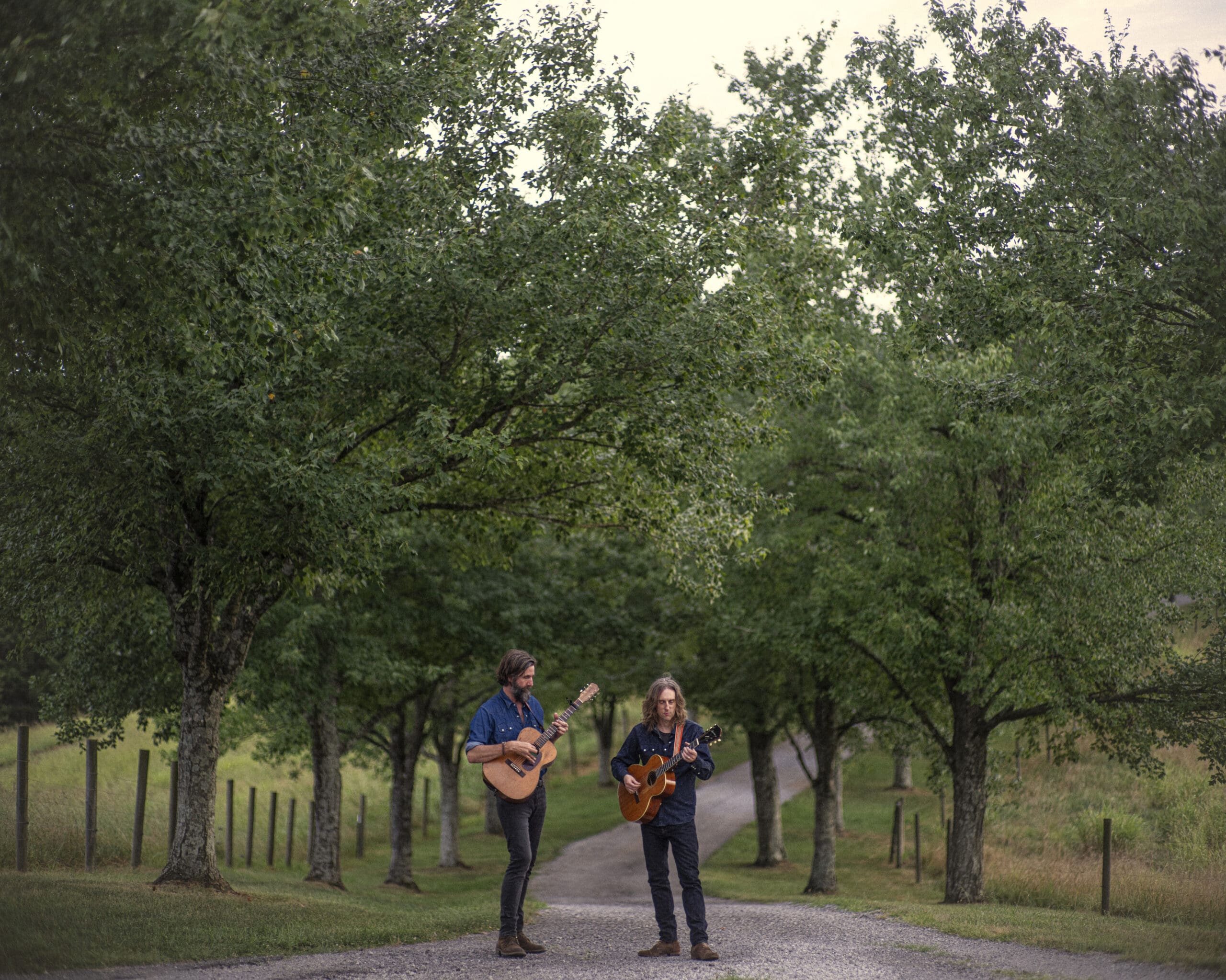
FJ: I have to imagine that it was a lot easier to make spaces for each other when you finally were in the same room for the second half of songs?
CB: Oh, yeah. And then it does become a live action back and forth, stepping up or accompanying. We sat and played “Sail Away” front to back and that was it. I was like, “Wow, this is taking way less time. This is amazing.”
TR: My recording technique is based on my limitations. As a person who can operate any kind of recording program, I end up doing everything front-to-back mostly. If I’m recording a guitar piece, it’s like “press” and “record” on a tape recorder. I don’t even know how to go back and edit. If I don’t get it right, I have to do it over again.
What I was sending Carl might’ve taken me 15 passes, but finally, I got it right. And then when he was talking about filling in the spaces or leaving the spaces in the songs, it was fun to get them back. How much they were elevated by Carl’s playing just blew me away and made me so happy. Everything we’ve passed back and forth has come back better, elevated by us joining forces.
FJ: What kind of guitars did you use for this effort?
TR: My favorite acoustic guitar is a Harmony H162. I believe it’s from the ’50s, from [luthier and conversion guru] Scott Baxendale…
CB: I have two of them, too. Scott got his hooks in me when he had his store in Athens, Georgia. If you walked in there, you left with a guitar because they’re so inviting…these old beat-up instruments, but he makes them so you can actually use them. I have three of his guitars.
TR: Carl’s to blame for me having three of his guitars as well. When we did that first tour together, Carl was letting me use one of his Baxendale conversion guitars and I absolutely fell in love with it. Then we got done with that tour and somehow I accidentally ended up in Athens on my way back from a tour and stopped by Scott’s shop. I was like, “I’m getting one of these.” So that’s the one that I was just talking about.
FJ: How do you separate the sound of two acoustic guitars in a duo setting?
TR: They’re different styles. I think mine’s the H162. It’s a small body, like a 000. Do you have two of the [Roy] Smecks, Carl?
CB: No, one’s a Sovereign, like the Jimmy Page acoustic. And the other one is the Roy Smeck model. It’s interesting. We recorded one song on the record where we did it around one microphone and that was just supposed to be a demo. We were like, “You know what’s amazing? I can’t tell who’s doing what.”
To me, I want to make one big guitar. I don’t want it to be like, “Oh, that’s definitely Carl and that’s definitely Tyler.” I’m like, “Fuck it. Everything’s blending together.”
FJ: Do you know what Baxendale did to modify these old Harmonys for you?
CB: I believe he resets the neck and re-frets the guitars usually and then he re-braces the insides. And then he puts a K&K pickup in there, which I like because I never have to worry about the battery.
For me, instruments are a funny thing. I would love to have a vintage Martin. I have an old Gibson small acoustic because it’s great. But for what we’re doing, these guitars seem to work. They’re interesting sounding. You can’t put your finger on it. They don’t sound necessarily like a Gibson or a Martin. They’re in between. They’re a little rough and ready and I like that about these guitars.
FJ: And how did you record them? What microphone did you use or did it change from track to track?
CB: When we were together, we used KM84s and I think Tyler recorded some of his stuff which was a [Shure] SM57. I would record with a ribbon mic to have a slightly different sound, but that’s basically it.
TR: I’ve got a couple of the mics, but once again, I’m not a proper engineer and this isn’t a proper studio, but I’m able to capture things that are passable. So, yeah, the 57 and I’m not even sure what else.
CB: A lot of the songs ended up going on to my four-track. We didn’t record to the four-track most of the time, but I did dump stuff on and off of there to try to achieve a little bit of that lost acoustic guitar record sound.
I really enjoy what tape does to an acoustic guitar. A lot of times people talk about recording the tape and it’s all about the low end and the bass and the drums. For me, it’s all about the acoustic guitar sound because the very highest part of the acoustic guitar sometimes is irritating to me. And if I put it on cassette, it gets a little mangled up there and I think that’s how we’re supposed to hear it, honestly. Either in-person or off a cassette to me is how you’re supposed to hear an acoustic guitar.
FJ: I love that you guys were just doing this to get through the pandemic. At what point did you know you had an album?
TR: That’s a good question. We had a few things that we started out with. Then, we were like, “Well, let’s just finish, round it out.” But it’s wild because this is the easiest album I’ve ever made in my life. The songs are definitely challenging, but the whole process of making the album just breezed by in this really relaxed way. It just felt like no effort to me.
FJ: And are you guys still trading songs back and forth like before?
CB: There are a couple already in the folder, a couple demos. I’m just stoked.
FJ: Carl, you were talking about Clarence White. Who are your living acoustic guitar heroes?
CB: I just got hip to Cameron Knowler. There’s a playlist of stuff that Tyler made that’s amazing, but Clarence is really my guiding light. Once I started trying learning bass intro to flatpicking and then I heard him do it, I was like, “I really like his approach to it.” He made all these cool little tapes for his students that are amazing to listen to. So I’m trying to slim down who I’m studying. I’m studying Clarence and Eddie Van Halen right now. That’s my thing.
FJ: You could spend the rest of your life doing that.
CB: Exactly. It’s fun to play “Hot for Teacher” and then “Black Mountain Rag.” They’re both great. I’m accepting myself that I am an ’80s rock guy. We just played some metal songs on tour and I was like, “Man, I’m feeling real comfortable right now.” And so I can’t deny that that’s part of who I am, so I’m leaning into that nowadays.
FJ: What about you, Tyler? Who are you listening to?
TR: I definitely have been following Cameron on social media for a while and really enjoying what he’s doing, but I tend to go backwards a little bit. I still will put on Michael Hedges’ Breakfast in the Field or those Leo Kottke records. I’m fully embracing my New Age nerd status.
I still have a huge love for country blues and ragtime, too. I spent a lot of time learning Mississippi John Hurt stuff.
FJ: Well, you did it. Even with your differing music tastes, you made a really cool, mostly instrumental acoustic guitar record. It’s almost unheard of to pull that off.
CB: Yeah, we were joking with someone else that we made the record we knew no one wanted, but we wanted to do. When I play with Tyler, I feel that spark and that challenge always and I get energy out of it. I’m just excited for people to hear the album and they can make what they want out of it.
Listen to Celestun here.
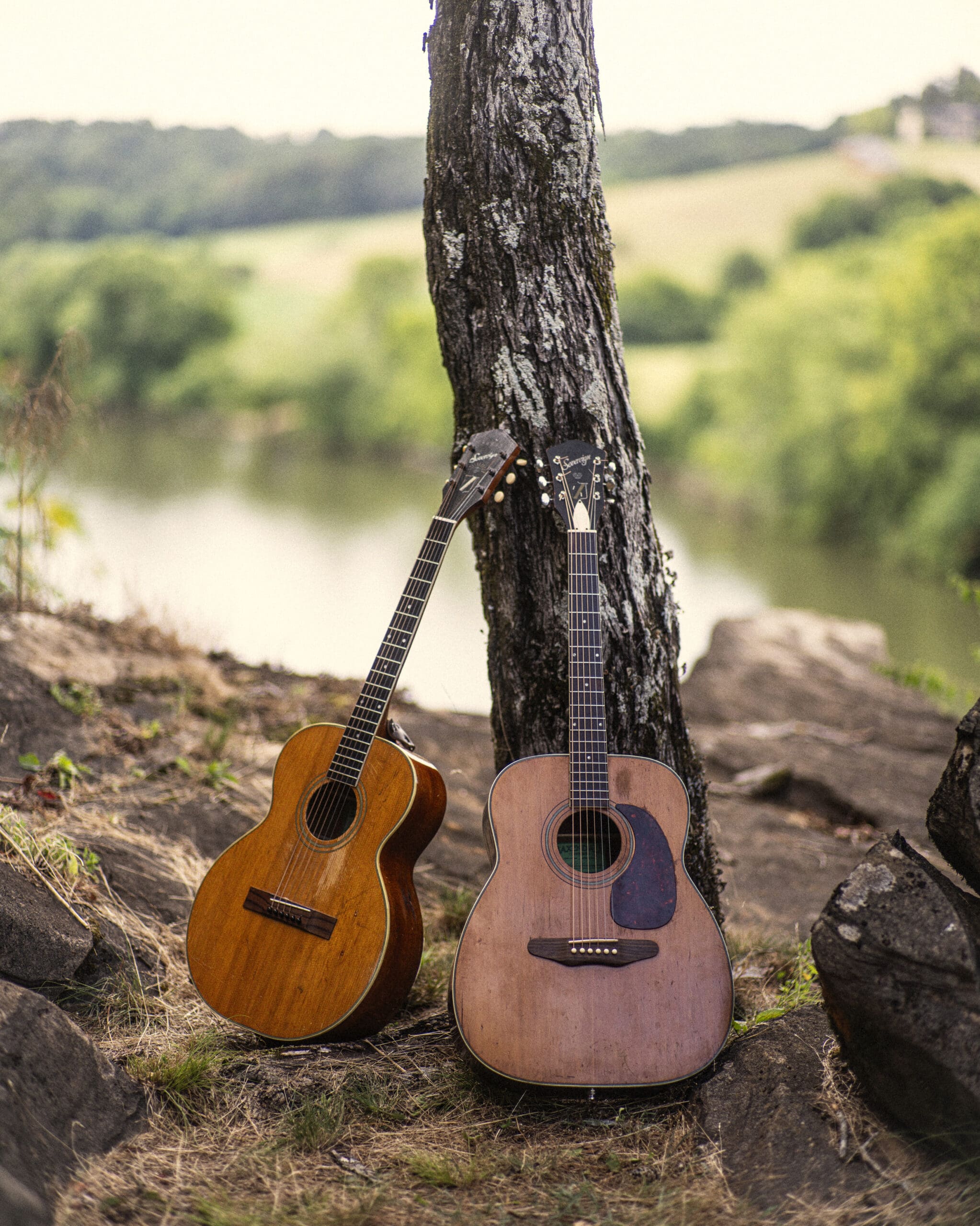
The post Interview: Tyler Ramsey and My Morning Jacket’s Carl Broemel on ‘Celestun’ first appeared on Fretboard Journal.
Looking for an affordable floor-based amp modeller? This one from Harley Benton is now under £200

The amp modeller market is ever-expanding, especially hot on the heels of NAMM, but their high cost means a large number of players are often priced out of getting their hands on one.
Harley Benton offers a super-affordable amp modeller unit, and you can get one for just under £200 via Thomann. The DNAfx GiT Pro offers over 50 amp models, more than 40 effects, and 31 IR cab sims that can be configured and stored as patches in up to 200 memory slots using its colour display.
Now just £199, this Pro version is the flagship model in Harley Benton’s DNAfx GiT line, which also features a standard version and streamlined core version, both of which are also reduced over at Thomann down to £111 and £77 respectively. It’s low price point and wide array of tones make it great for beginners or those looking to try out a modeller for the first time.
The 51 amp models included with this Pro version offer reproductions of a wide range of well-loved rock amplifiers, from the warm, clean sound of Californian vintage amps and to the rugged overdrive of British amps, and more. These can be combined with its cab simulations and effects such as a compressor, EQ, wah, distortion, reverb, and delay.
Its five inch display is accompanied by five controllers located directly below the screen, which allow users to create and organise their patches, control a built-in looper, and check the tuning of their guitar with the integrated tuner.
Hear it in action below:
Shop this deal and more via Thomann.
The post Looking for an affordable floor-based amp modeller? This one from Harley Benton is now under £200 appeared first on Guitar.com | All Things Guitar.
“It’s not a cover song. It’s a song I wrote part of… It doesn’t feel like we’re doing a song by another band”: Dave Mustaine on Megadeth’s Ride the Lightning
![[L-R] Dave Mustaine and James Hetfield perform together at The Fillmore in 2011](https://guitar.com/wp-content/uploads/2026/01/Mustaine-Hetfield-new-hero@2000x1500.jpg)
It’s been a landmark few days in the world of heavy metal, as genre titans Megadeth have just dropped their final-ever album. As you might expect, Dave Mustaine’s swansong is chock-full of abrasive riffs and searing solos (try Let There Be Shred on for size).
One of the biggest things that’s got people talking in the runup to the album’s release, though, is the inclusion of Ride the Lightning, a cover of the Metallica classic which Mustaine helped write all the way back in the early ‘80s.
- READ MORE: NAMM 2026 is done and dusted – and loads of the gear debuted is already available at Sweetwater
But Mustaine helped write a number of Metallica songs before he was fired in 1983, including a selection from the band’s debut album, Kill ‘Em All. So why did he choose Ride the Lightning for Megadeth’s final record?
“We were working on the album and my son, Justis, said, ‘Why don’t you do a Metallica song, Dad?’” he recalls in a new interview with Record Collector.“I thought, ‘I don’t think so.’
“Then I thought about it more and the idea just felt good, so I agreed. I wanted to close the circle and pay my respects to James [Hetfield, Metallica frontman] and Lars [Ulrich, Metallica drummer]. I personally have always thought James was an excellent guitarist, so I think it was the right thing to do.
“Panic [Mustaine’s first band] was never solidified as a real band, so my first real band was Metallica. Now that I’m going into retirement, I think it’s the right way to pay my respects.”
While it was important to pay his respects to his former band, Mustaine says he was also conscious not to make the cover too similar to the original.
“When the time came to actually do the song, we thought, ‘Do we want to make it a little longer? Do we want to make it a little fast? Do we want to extend the solo section?’ We started working on it and everything came together nicely. We did speed it up a bit and we did try to do a couple of things a little different from the original version. It was a great song to play.
“Because I wrote music in that song, it just makes sense. It’s not a cover song. It’s a song that I wrote part of, and it just feels different. It doesn’t feel like we’re doing a song by another band.”
Asked whether he’d ever consider recording covers of the other Metallica songs he had a writing credit on, Mustaine replies: “Not anymore. No. I think I said what I wanted to. Unless something gigantic happens, I don’t know that I’ll be going into the studio again. If I do, it probably won’t be for a very long time.
“With my hands the way that they are, it’s hard to sit in the studio all day long and play guitar. Nine months we were in the studio working [on Megadeth], every day, from the morning hours up until seven o’clock at night. My hands got roasted.”
Megadeth’s last-ever album is out now. The band will embark on a massive final world tour from February. See the official Megadeth website for tickets and details.
The post “It’s not a cover song. It’s a song I wrote part of… It doesn’t feel like we’re doing a song by another band”: Dave Mustaine on Megadeth’s Ride the Lightning appeared first on Guitar.com | All Things Guitar.
Djent Reznor and Millie Wah-bie Brown: check out these unhinged celeb-inspired pedals

Have you ever dreamt of a pedal with Dr. Phil’s face on it? Maybe you’d enjoy a Fuzztin Bieber or a Splitney Spears? Well, look no further than this bizarre lineup of stompboxes from Celebrity Pedals that are straight out of a fever dream.
Handmade and all-analogue, these pedals take inspiration from celebs and meme stars, and have incredibly great punny names and designs. Not just for laughs, these weird delights have been used by some pretty huge musicians who have played with artists like Beyoncé, John Mayer, Phoebe Bridgers, Miley Cyrus, and more.
- READ MORE: RhPf Electronics Mosrawr review – a noise-bringer that’s designed for post-rock and shoegaze
Rated five stars on Reverb no less, the Celebrity Pedals catalogue includes some real highlights, one being the Taylor Shift octave pedal, which is available in three variations. Also right at the top of its listing is the Millie Wah-bie Brown: a wah inspired by Stranger Things star Millie Bobby Brown and her character Eleven, complete with glowing eyes.
This one is an envelope filter loosely based on the Mutron with an added volume knob to prevent the volume boost that sometimes occurs with old school envelope filters. It also has a low pass switch to keep the warmth and bass frequencies present, and a handy sensitivity control.
Some of these celeb names work just great – you can also get an Adam Driver (yep, an overdrive) or a Distorsean Paul distortion pedal, both of which are priced at £160 respectively. Most pedals are priced between £100-300, though there are some great deals across the Celebrity Pedals range.
The Djent Reznor – described as a combination of a BB Preamp and a Tube Screamer, with symmetrical and asymmetrical clipping switch – is now reduced to £150. You can also grab a Hocktave (based on the ‘hawk tuah’ meme) with 21 percent off, or a Splitney Spears II signal splitter for just £89.
Find out more or shop now via the Celebrity Pedals Reverb shop.
The post Djent Reznor and Millie Wah-bie Brown: check out these unhinged celeb-inspired pedals appeared first on Guitar.com | All Things Guitar.
NAMM 2026 is done and dusted – and loads of the gear debuted is already available at Sweetwater

The Guitar.com team is heading home after an action-packed visit to the Anaheim Convention Center for NAMM 2026. This year’s show saw groundbreaking new guitar gear innovations and exciting launches from Gibson, PRS, Neural DSP, and so many more, and loads of that gear is already available to buy at Sweetwater. So if you wanna stay ahead of the curve, well, now you can…
One of the biggest launches from NAMM came from Neural DSP, when the brand launched a downsized version of its flagship amp modeller with the Quad Cortex Mini. It offers the full sound and processing power of its flagship Quad Cortex amp modeller in a significantly smaller unit, measuring just 22.8 x 11.8 x 6.5 cm, and weighing just 1.5 kg. You can order it right now through Sweetwater, and you’ll even get a free Eminence IR Sampler Pack thrown in.
[deals ids=”5fnT7eeWJnc5H7fKGSRasA”]
Also listed on Sweetwater is the new PRS Silver Sky Limited Edition Wild Blue model, and Ed Sheeran’s new PRS SE Hollowbody I Piezo Baritone in Cosmic Splash (the latter is available for pre-order). This limited signature model features eye-catching artwork created by Sheeran himself, and there are only 1,000 available worldwide.
Yamaha’s new single-cut Pacifica guitars are also listed, and its new Chris Buck signature Revstar. Developed in close collaboration with Buck to faithfully reproduce the sound and feel of his custom REVSTAR, it features P90 style pickups tuned to his preferences, a wrap-around bridge, a chambered body and a carbon-reinforced neck.
View the full range of NAMM launches now available through Sweetwater, or catch up on all the biggest highlights from our live blog.
The post NAMM 2026 is done and dusted – and loads of the gear debuted is already available at Sweetwater appeared first on Guitar.com | All Things Guitar.
Pages
