
Music is the universal language
“Glory to God in the highest heaven, and on earth peace to those on whom his favor rests.” - Luke 2:14
General Interest
Recording Dojo: Why Great Amp Modeling Is About Time, Not Tone
Greetings, and welcome to another Dojo. Ever wonder what goes into modelling amps and pedals? Typically, when guitarists talk about whether an amp model “sounds real,” we describe it in tonal terms—gain, EQ, distortion character. But great tone is the successful solution to a complex, essentially time-based problem.
Without getting needlessly technical, an amplifier is not a static filter that reshapes frequency content and stops there. It is a dynamic system that responds differently depending on what just happened, what is happening, and how much energy (a.k.a voltage) is being pushed through it. For modeling technology to work convincingly, it has to track complex changes over time, not just measure a snapshot of a moment of “tone.”
Early amp-modeling systems struggled because they focused primarily on spectral snapshots—what an amp sounds like at a given setting under a narrowly dynamic input level. Those snapshots, while accurate, were often remarkably limited. Real amplifiers don’t remain in one state long enough for a snapshot to matter. They are in constantly transitioning states.
Put your brain in slow motion for a moment. When a string is struck, the initial transient carries enormous energy. Harmonics bloom unevenly, as the fundamental note(s) emerge. Pick material and attack angle alter transient shape before the signal ever reaches the guitar— think fingerstyle versus pick. Also, string gauge and tension alter harmonic emphasis and decay. Pickups engage with the string differently depending on design and height. Guitar wiring and controls shape impedance and bandwidth. Cable capacitance subtly alters high-frequency behavior long before any gain stage is involved. By the time the signal hits the amp, it already contains a history.
What then reaches the amp input is already the result of a complex upstream system, and inside the amplifier, that history continues to develop. Preamp stages interact with tone stacks in non-linear ways. Gain staging determines not only how much distortion occurs, but where it occurs. Effects loops interrupt the signal path at predetermined stages, altering how time-based effects are compressed and re-energized. As gain stages are pushed, harmonic content doesn’t simply increase—it redistributes.
“Convincing modeling can’t focus solely on recreating individual elements in isolation.”
Then comes the power amp—arguably the most misunderstood contributor to feel. Power amps do not simply make things louder. They can also compress under load, recover, and compress again. They respond differently depending on frequency content and sustained energy.
Finally, the speaker and cabinet take over, and physics takes the wheel. Speakers have inherent inertia and wildly different efficiency curves depending on materials and volume. Cabinets add another layer, with resonant frequencies shaped by their dimensions, storing and releasing energy at varying rates.
Now put your brain back into normal speed. Our ear perceives this entire chain as a single event!
A convincing “model” must pass a variety of static and dynamic signals through the real device, measuring input-output behavior, and then build DSP and machine learning to match those behaviors accounting for how dynamic range, harmonic density, compression, and spectral contour shift together across the time domain.
Our ear is exquisitely sensitive to these changes, particularly to the rate at which they occur. Too fast, and the modeled sound comes off stiff. Too slow, and it feels detached.
This is why convincing modeling can’t focus solely on recreating individual elements in isolation. What matters is gestalt behavior: how the whole system responds as energy flows through it, moment to moment.
How do modelers do this? Most developers—Neural DSP, Universal Audio, Kemper, Fractal, Line 6, and others—blend multiple approaches. These typically include running a range of static and dynamic signals through the real device to measure input–output behavior, isolate artifacts, and quantify nonlinear characteristics; circuit analysis (where designers model each component’s behavior mathematically and derive a transfer function for DSP implementation); and extensive listening tests. Increasingly, machine-learning models are trained and iterated to capture the unit’s behavior across multiple control settings, with each pass refining the results.
For players, this means that now more than ever we can enjoy legendary amp and pedal tones in powerful, highly portable hardware or in software form—along with tremendous flexibility when recording, consistent “perfect tone” performance (no tubes or speakers to fail), and the ability to be deeply creative with our tonal palette by mixing amps, speaker cabinets, microphones, and even modeled room environments.
Am I giving up my real amps? Never. But I’m completely comfortable using either technology as I see fit—and enjoying what each brings to the process. Until next time, namaste.
Can You Make Pentatonics Better?

Great music tells a story. It builds on a plot and holds the listener’s attention as the story unfolds. We are especially moved by soloists who bare their souls and who keep us riveted with every twist and turn from their narrative. Pentatonics are the backbone of modern guitar vocabulary. Partially because they just sound good, but also because they lay so easily on guitar. There are several ingredients that make a guitarist sound brilliant, but one of the most important is chromaticism. Could there a be a way we could combine these two? Let’s find out.
This term chromaticism comes from the Greek word chroma, which means “color.” Using chromaticism means having the freedom to use all 12 notes over a given chord. Imagine the possibilities and freedom to play any note over a chord in composition or improvising! The quickest way to start adding color notes to the minor pentatonic scale is to add the 2nd and the 6th, which then gives you a Dorian mode. I’ve outlined it below using the A minor pentatonic scale.
A Minor pentatonic: A–C–D–E–G
A Dorian: A–B–C–D–E–F#–G
In general, there are chromatic notes that are outside the chord/scale, and notes that are outside the key. The latter carries a lot of tension against a chord and needs movement or resolution. From my days of playing jazz gigs in Toledo, OH, I recall what legendary trumpeter Jimmy Cook once told me regarding playing outside: “You can go up to the attic, but you have to come back down.” In other words, you can play outside tonally, but you must resolve at some point in order for your music to sound coherent.
Let’s get started on this journey of chromaticism together.
Before we go hog wild and add random notes, let’s begin by taking an A minor pentatonic scale and fill in the chromatic notes between the already existing box pattern. It’s almost arbitrary, but it will enable you to hear different colors added within the scale (Ex. 1).
Chromatic Burst of Energy. In beat 1 of Ex. 2, we start with an A Dorian fragment followed by an extended chromatic line. The line in beat two starts on the b7 (G), highlighting the b5 (Eb) on beat 3, descending chromatically all the way down to B, and ending with A major pentatonic.
Bounce Around! We start on the b5 (Eb) followed by a typical chromatic rotation where we bounce around the b5. This idea lays quite well in the familiar pentatonic box. It’s easy and will add spice to your shredding (Ex. 3).
Side Stepping. A common approach to playing “outside” is side stepping. In other words, take the scale you’d normally use and displace it by a half-step above or below. By doing this, you’ll have instant access to notes that are harmonically outside the key—don’t think of them as wrong notes, just coloring notes. In Ex. 4 we take a pentatonic pattern from E minor pentatonic and sequence it in F minor pentatonic. As the notes can be analyzed over the E5 chord, it’s more important to view them as passing notes. Remember, the power of the sequence overrides the harmony!
Extend the Side Step. Ex. 5 uses the same concept of side stepping above but adds a note (D) to the displaced pattern. By doing so, this breaks the predictability of the phrase and places subsequent notes in new places.
Changing Tones. Ex. 6 is a fun lick to learn that starts with a strong, repeated three-note polyrhythmic figure (A#–B–D). The chromatic part occurs on beat 4 and utilizes changing tones, which is a type of non-harmonic tone.
Don’t Start On 1. The line starts on the 2nd (B), goes up a whole-step to C# followed by a double chromatic approach to Bb, down a whole-step to (G#), and finally resolving to the root (A). Once the A note is reached, there’s a cascading flurry of four-note groups settling in A minor pentatonic (Ex. 7).
Scrambles. This example (Ex. 8) was inspired by the legendary New York guitarist, Mark Hitt. Mark was a unique player, combining a rock sensibility with a jazz quotient. He developed an arsenal of twisting lines using chromaticism that he referred to as “scrambles.”
The pattern alternates between 1–3–4 and 1–2–4 fingerings, a typical fingering of the diminished scale. It can be analyzed where notes of the pentatonic are being targeted, but it’s all about the texture and excitement that is created. Make sure to play the line with slurs to get a fluid, legato sound.
Half-Step Approach. In this instance, we take the Im triad (Am) from the pentatonic scale and approach each chord tone from a half-step below (Ex. 9). This is more of a concept and exercise rather than a lick. This idea can be used with just about any improvising application.
One String Wonder. Ex. 10 highlights a series of chromatically descending half-steps. It’s an easy technique to get down and one I often use. It provides melodic interest, but also serves as an easy way to connect one position to the next. Here, we start on a high F that walks down a fourth to C in half-steps, followed by a C minor blues phrase.
Practice Tip
These chromatic lines sound best when played fast and with conviction. As always, approach new material slowly and accurately. Ignore your inner voice that may tell you that the “outside” notes are wrong. Once you’re able to play the lines up to speed, you’ll be amazed by how impressive it sounds. These ideas that will add motion, color, and excitement to your playing and enhance your musical expression when soloing.
Paul Gilbert: Power-Drill Picking, the Ibanez Fireman, and Go-To Guitar Techniques
Dave and Tom were so excited about this episode with Mr Big and Racer X guitarist Paul Gilbert that they almost fainted right before taping, leaving a very unamused Cindy to host it alone. It takes a lot to fluster an Axe Lord, but the prospect of talking to Paul Gilbert about designing his Fireman guitars, getting a guided tour through his collection of vintage Ibanez treasures, and finding out how to properly rig a power drill for speed picking is almost more than any fan of highly technical guitar wizardry could stand.
Gilbert, who is promoting his rifftastic new concept album WROC - based on the George Washington-penned tome Washington’s Rules of Civility, is also the first, but hopefully not the last, Axe Lords guest to introduce cosplay to the show. To whit, he appears sporting a revolutionary war-styled Tricorn hat, the perfect accessory for schooling us not just in arcane bits of American history but also in the finer points of high-stakes shred protocol.
Axe Lords is presented in partnership with Premier Guitar. Hosted by Dave Hill, Cindy Hulej and Tom Beaujour. Produced by Studio Kairos. Executive Producer is Kirsten Cluthe. Edited by Justin Thomas (Revoice Media). Engineered by Patrick Samaha. Recorded at Kensaltown East. Artwork by Mark Dowd. Theme music by Valley Lodge.
Follow @axelordspod for updates, news, and cool stuff.
Follow @paulgilbert_official
Mötley Crüe win legal battle over Mick Mars – former guitarist ordered to partially pay back $1.5M advance for not completing tour

For the last two years, Mötley Crüe have been involved in an ongoing legal battle with ex-guitarist Mick Mars. Following his retirement in 2022, Mars alleged that the band were withholding profits that were rightfully his. However, a new ruling has declared that Mars actually owes his former bandmates $750,000.
Despite Mars’ public crusade against the Mötley Crüe gang, arbitrator Honorable Patrick J. Walsh found that Mars had received a $1,500,000 advance payment to perform at 138 Mötley Crüe shows. Mars’ departure from the band meant that he never fulfilled his end of the bargain, rendering him un-entitled to the sum.
“[Mars] understood when he received the advance that it was an advance and that he had to pay it back if he stopped touring,” Walsh concludes in the final arbitration documents. “He stopped touring. Therefore, he must pay it back.”
“Mars is ordered to pay to MCI the pro rata rate for the shows he missed between September 2021 and today,” he continues. “He is not required to pay for shows that have not taken place.”
When Mars first pursued legal action against his former bandmates, his claim centred around his entitlement to the band’s profits as he hadn’t left the band, he had only retired from touring. As a result, he believed he was still owed a 25% cut of profits, including touring revenue.
However, as the arbitration document reveals, a 2008 amendment to the band’s governing agreement stated that if a member “resigns from performing”, he “in no event” would be “entitled to receive any monies attributable to any live performances”.
Furthermore, Nikki Sixx’s testimony claimed that Mars himself had “proposed this amendment” due to concerns that “Vince Neil [vocalist] and/or Tommy Lee [drummer] would again choose to leave the band and he wanted it to be clear… that anyone who left would not share in revenue from touring”.
Alongside the arbitrator ruling in favour of Mötley Crüe, the band were also cleared of allegations that they don’t play live. Mars had publicly alleged that Sixx’s basslines and Lee’s drumming in particular were pre-recorded. In 2023, he even claimed that he had been the only member of the band to ever play live, noting that Sixx “did not play a single note on bass”.
As Business Wire reveals, Mars “formally recanted his prior claims during sworn testimony”. When faced with “extensive live performance recordings” and a testimony from New York University professor specialising in music technology, Mars was “forced to admit under oath that his statements were false”.
The suit also reveals that Mars was cut from the band due to his own “deteriorated” guitar playing. The document explains that the band “believed that his guitar playing had so deteriorated that they had to make provisions to cover for his mistakes when he strayed during concerts”.
Mick Mars has not yet responded publicly to the ruling.
The post Mötley Crüe win legal battle over Mick Mars – former guitarist ordered to partially pay back $1.5M advance for not completing tour appeared first on Guitar.com | All Things Guitar.
The 12 new guitar albums you should all be excited for in 2026
![[L-R] Bruce Springsteen, Phoebe Bridgers and Joe Duplantier of Gojira, photos by Getty](https://guitar.com/wp-content/uploads/2026/01/Bruce-Springsteen-Phoebe-Bridgers-Gojira-hero-credit-Getty@2000x1500.jpg)
It wasn’t too long ago that guitar music was considered passé by the mainstream – a fact that’s frankly mind-boggling to reflect upon now. In 2026, indie and post-punk are two of the hottest genres in the Western world, and heavy metal is the biggest it’s been since the halcyon days of the early 2000s. This year seems set to thrust all those styles and more to new heights, with some of the biggest guitar heavyweights of all time preparing to release new music. From veterans like Bruce Springsteen to a slew of promising up-and-comers, these are the guitar albums everybody should keep an eye out for over the next 12 months.
- READ MORE: Unprocessed’s Manuel Gardner Fernandes names the viral shredders you need to watch in 2026
Bruce Springsteen
Is there any septuagenarian busier than Bruce Springsteen? Still regularly touring five decades into his career, he was recently the subject of a blockbuster biopic and has a ton of music lined up for 2026, chiefly his next solo album. The Boss has been cagey regarding what it’s going to sound like, but he told Rolling Stone in June that he’s also got a box set of unreleased material, Tracks III, on standby. “This is all music from different points in my work life that I’ve made, some with the band, without the band, some that go way back,” he said. A new covers album, the follow-up to 2022’s Only the Strong Survive, has been recorded as well. The man just will not stop.
Phoebe Bridgers
The queen of indie folk melancholy, Phoebe Bridgers hasn’t released a new album since 2020’s Punisher, having taken a detour for her collaborative project Boygenius. That dry spell may come to an end in 2026, however, as multiple sources hint that solo LP number three will come out soon. Among those fuelling the speculation is Phoebe’s own mum, who took to Instagram in January to give her “bold” prediction for the year ahead: “Phoebe Bridgers drops an album.” In addition, former Ticketmaster CEO Nathan Hubbard said on a podcast last year that both Phoebe and Harry Styles will mount comebacks in 2026, and the Harry prediction has already come true…
The Cure
It’s hard to trust Robert Smith with timeframes nowadays, given he initially wanted to release The Cure’s comeback album Songs of a Lost World for the band’s 40th anniversary then missed that deadline by five years. But, when the record was finally unveiled in 2024, he announced that it would be part of a trilogy, with a follow-up already in the can. Surely, if it’s all been recorded, there can’t be another decade-plus wait like there was for Songs…? The stars align even more clearly when you consider all the live dates the goth rock kings have planned for the summer. Fingers crossed that some new tracks come out before The Cure take the stage again.
Gojira
It’s been nearly five years since France’s enviro-metal behemoths put out their last album, but you can’t blame them. After the Fortitude tour lifted Gojira to arena-level, they spent the next few years consolidating their position, playing incessantly in both Europe and America. Then, in 2024, a performance during the opening ceremony of the Paris Olympic Games catapulted them even further. Progress on new material has been slow but steady, with drummer Mario Duplantier saying in 2023 that their upcoming release will be “heavier” than Fortitude. He doubled down last year, telling people to expect a “more modern but more metal sound” and revealing that work is “almost finished”.
Alabama Shakes
In 2018, at the height of their Grammy-gobbling career, roots rock revivalists Alabama Shakes went on a surprise hiatus. The downtime let frontwoman Brittany Howard dedicate herself to her blossoming solo career, then got complicated and presumably extended by drummer Steve Johnson’s series of legal problems. The band regrouped without Johnson in 2024, before signing with major label Island and releasing the exuberant single Another Life last August. The developments have led many to speculate that a long-awaited third album is on the horizon, especially as more and more tour dates for the spring and summer get announced. The expectation’s pretty huge, but if anyone can deliver quality regardless, this lot can.
Mastodon
Mastodon’s 2021 album Hushed and Grim was a monument to late longtime manager Nick John, who died of pancreatic cancer in 2018. Unfortunately, times haven’t got any easier for the sludge metal four-piece. They parted ways with founding guitarist Brent Hinds last spring, marking their first lineup change in a quarter-century, and Hinds was in a fatal motorcycle crash in Atlanta just a few months later. Despite all the turmoil, the band are carrying on with album number nine and involving new guitarist Nick Johnson in the writing process. “[The songs are] all over the place,” drummer/singer Brann Dailor told Metal Hammer last year. “I hear some punk rock in there, but then I hear some insane prog and I hear the heaviest version of ourselves poking its head out again.”
Yard Act
“We’re making the greatest third album any band has ever recorded,” post-punk’s socially conscious cheeky chappies quipped in September. Already beloved for their breakthrough debut The Overload and dance-flecked follow-up Where’s My Utopia?, Yard Act are out to cement their reputation as the next big thing, having recorded with former Nine Inch Nails and Beck bassist Justin Meldal-Johnsen. The Yorkshiremen describe their next release as “the sweet spot” between grindcore agitators Napalm Death and prog rock icon Bill Nelson, promising new textures in a sound that’s already touched upon funk, disco and Pulp-ish Britpop. The band have never been boring, but this could well be their most interesting offering yet.
Man/Woman/Chainsaw
One of the most exciting new bands of the last couple years, Man/Woman/Chainsaw make rock without limits. The six-piece have two guitarists, a violinist and a keyboard player in their ranks, with many members also serving as co-vocalists. On songs like Only Girl, they make irreverent statements that unite indie, baroque pop and heavy riffage under the banner of big, catchy singalongs. 2024 EP Eazy Peezy brought plenty of people onto the hype train, and the next stop will be at their debut album, which they hope to put out this year. “We’re working on a load of new material which will help lift the mind and cleanse the soul,” keyboardist Emmie-Mae Avery told Dork in January.
Slift
Slift write psych-rock epics with prog, jazz and metal bits – not exactly a mainstream approach to music. But, during the pandemic, the Frenchmen defied all logic, hosting a live session that reached more than a million YouTube users. 2024’s Ilion made their songs even more widescreen, and the trio have since secured a reputation as a top-notch live act, playing very loudly in front of kaleidoscopic videos. They ended their last album cycle in the summer and want to put out some more immediate material suited for the stage. “We’ve got the big concept and most of the songs,” singer/guitarist Jean Fossat told this writer in 2024. “It’s just demos, but we can’t wait to start playing these songs.”
Lowen
Lowen are based in London but draw influence from frontwoman Nina Saeidi’s ancestral homeland of Iran. Their music mixes modern heavy metal, inspired by Akercocke and System of a Down, with distinctly Persian melodies and vocals. Plus, the lyrics on their 2024 debut Do Not Go to War with the Demons of Mazandaran used Middle Eastern mythology to comment on Iran’s current, authoritarian regime, which prevents Saeidi from ever visiting the country. The singer recently told The Guardian that album two is in the works, and that one song will sample sounds from the Iran–Israel War in June. “I do not agree with anything that Israel has done,” she said. “It’s bad to bomb Iran. None of those governments are good – neither is ours.”
Courtney Barnett
A modern alt-music guitar hero, Courtney Barnett has dealt in acoustic ballads and fuzzy indie compositions alike. In October, she returned with the noisy Stay in Your Lane: her first new music since her soundtrack project End of the Day two years prior. A press release from the Grammy-winning Aussie called the song the first entry in Courtney’s “next musical chapter”, setting a distorted rock’n’roll precedent for album number five. Stay in Your Lane was recorded in L.A. with producer John Congleton (St Vincent, Big Thief), and Courtney’s recent setlists show other new songs in her repertoire, entitled Sugar Plum and Mantis. Safe to say, more is coming soon.
Elín Hall
Since she released her last album Heyrist í mér? (Can You Hear Me?) in 2023, Icelandic singer/songwriter/actress Elín Hall has played Yungblud’s festival Bludfest, won a few film awards and released a string of singles. Basically, she’s been inescapable, and she’ll continue to be so for the foreseeable future as well, with her fourth record set to come out this year. On her website, the musician says that her next release will be her first English-language effort. She also spills that it was produced and partially co-written by Grammy winner Martin Terefe, who’s collaborated with the likes of Adele and Elín’s old chum, Yungblud. Expect ambience, darkness and the plucking of a good few acoustic guitar strings.
The post The 12 new guitar albums you should all be excited for in 2026 appeared first on Guitar.com | All Things Guitar.
“Huge in tone, mini in size”: Teisco’s vibrant new Mini pedal line covers all the bases of your pedalboard

[Editor’s note: Teisco is owned by Vista Musical Instruments, which, like Guitar.com, is part of the Caldecott Music Group.]
Teisco has launched a vibrant new collection of Mini Pedals, comprising 12 compact stompboxes which don’t compromise on tone.
The Mini Series offers a range of “essential” sounds for players of all levels, covering all the basic needs on your pedalboard, including fuzz, overdrive, delay, modulation, and tuning.
- READ MORE: RhPf Electronics Mosrawr review – a noise-bringer that’s designed for post-rock and shoegaze
Teisco says the sound of these pedals defies their tiny sizing, and they deliver “powerful, inspiring tones, proving that portability no longer comes at the expense of sound quality”. Each one is inspired by Japanese aesthetics, and showcases a distinctive design on its face.
 Credit: Teisco
They utilise modern circuitry and true bypass switching to ensure optimal signal integrity, and make for an ideal entry point into pedals for budding musicians or those looking for no-nonsense pedals to meet their basic tonal needs. Each one offers super streamlined controls, with most featuring just three dials.
Speaking of innovative pedal design, you can now get a pedal inspired by some of the biggest celebs out there – from Millie Bobby Brown to Britney Spears and Adam Driver. Celebrity Pedals makes handmade and all-analogue stompboxes with punny names. Rated five stars on Reverb, its catalogue includes some real highlights, one being the Taylor Shift octave pedal, available in three variations, the Millie Wah-bie Brown, and Fuzztin Bieber – just to name a few.
Prices for Teisco’s Mini pedals start at $59. Find out more and view the full range over at Teisco.
The post “Huge in tone, mini in size”: Teisco’s vibrant new Mini pedal line covers all the bases of your pedalboard appeared first on Guitar.com | All Things Guitar.
“He saved my bacon!”: How Steve Stevens saved an “inexperienced” Steve Vai from tonal humiliation

It goes without saying that Steve Vai knows his way around a guitar. Even when Frank Zappa took Vai on tour in 1980 at the tender age of 20, he deemed the budding axeman a total “genius”. But as he found when he joined David Lee Roth’s band a few years later in 1985, Vai realised his ability to craft a “big rock guitar tone” was lacking.
Nowadays, of course, Vai could probably tackle any guitar tone he needed to. But as he explains in the latest issue of Guitar World, he was “embarrassingly inexperienced” in this area when he joined Roth’s band.
At the time, Roth had just severed ties with Van Halen. Keen to forge his own musical path, Roth was working on a bold, hard rock opus of a debut. To ensure 1986’s Eat ‘Em and Smile was a smash, perfecting the riffs was paramount – and Roth put full faith in 25-year-old Vai to fulfil his vision.
However, when Vai rocked up at New York’s Power Station studios, he realised just how unprepared he was. He’d brought along his Carvin X-100B… and it absolutely wasn’t going to cut it. “The Carvins weren’t cutting through for the more aggressive tracks,” he says.
While Vai was stressing over his weak tone, a guitar guardian angel would soon fly to his aid – or, rather, Steve Stevens. Billy Idol’s trusted guitarist was recording in the same studio, and was more than willing to help the young guitarist. “Luckily, Steve Stevens was recording across the hall,” Vai explains. “I mentioned my tone troubles, and he lent me one of his favourite Marshall heads and cabs. Boom! Instant magic! I ended up using his rig for most of the album.”
At the time, Stevens was working on two 1986 records, so its unclear whether his studio stint was for Idol’s Whiplash Smile or Ric Ocasek’s This Side of Paradise. Regardless, Vai was grateful for the assistance, both saving Roth’s debut and Vai’s reputation.
“He saved my bacon!” Vai laughs.
In other news, Steve Vai recently recounted his surreal encounter with Brian May as he celebrated his own custom Red Special guitar. “I played it like a baby giraffe on roller skates – but it was heaven,” he said.
The post “He saved my bacon!”: How Steve Stevens saved an “inexperienced” Steve Vai from tonal humiliation appeared first on Guitar.com | All Things Guitar.
Soyuz Microphones Launches The V1 Dynamic Mic
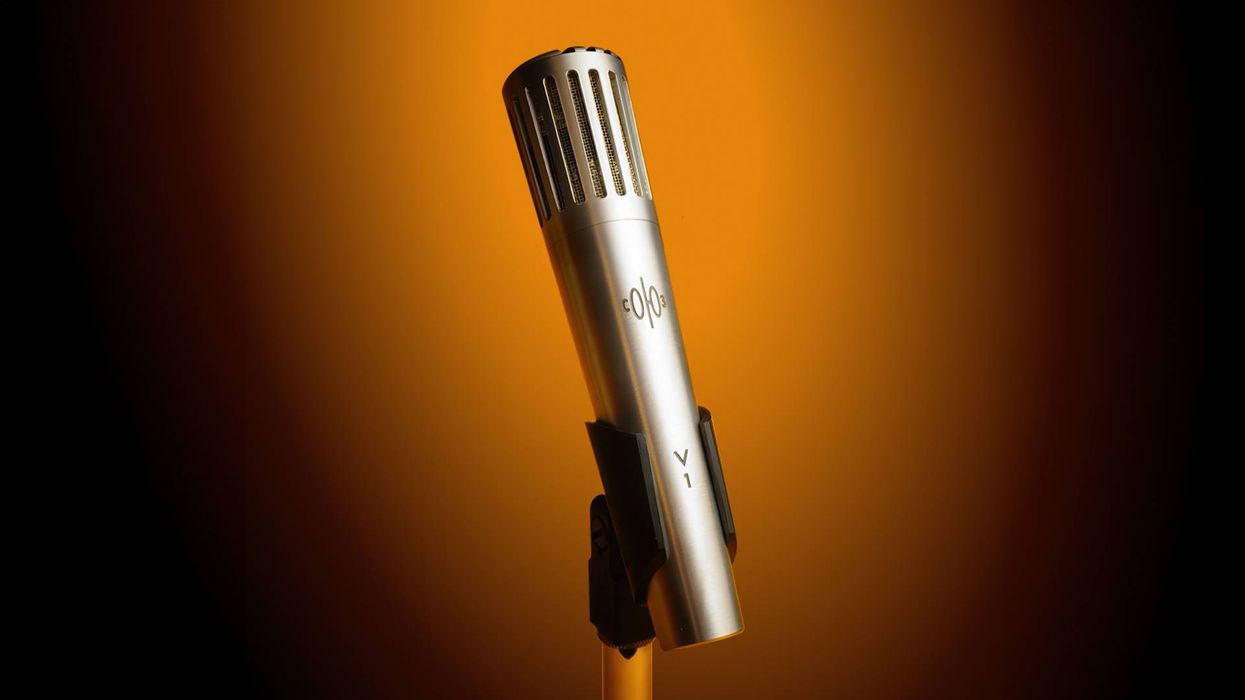
Soyuz Microphones has launched the V1 Dynamic, the first dynamic mic from the acclaimed boutique manufacturer.
For over a decade, Soyuz Microphones has been known for original, handcrafted condenser microphones that blend classic character with modern innovation. Equally at home on stage and in the recording studio, the new V1 Dynamic provides an open, condenser-like clarity and the punch, control, and forgiveness that make dynamic microphones essential.
Named after the spacecraft that carried the first human into space in 1961, the V1 reflects Soyuz’s push into new creative and technical territory.
The V1's naturally extended top end, balanced midrange, and focused low end deliver a smooth, articulate response that sounds right from the start, needing no EQ to "come alive." The controlled proximity effect allows instruments and performers to work close to the grille for full-bodied tone without muddy buildup.
"The V1 Dynamic is an important milestone for us," said David Brown, President and Co-Founder of Soyuz Microphones. "We had always considered building a dynamic mic someday, but we held off until we could create something truly unique that felt genuinely like a Soyuz in both sound and design. It's durable, musical, and simple. It's a dynamic sounding dynamic."
Like all Soyuz products, the V1 is 100% original from concept to construction. Every element is carefully designed and engineered in-house to create a dynamic microphone that sounds as remarkable as it looks.
At the core of the V1 is a custom Soyuz transformer for a hint of color that retains detail. The precision-machined headbasket goes beyond aesthetics, serving as an acoustic component carefully shaped to refine the sound before it even reaches the capsule. The mic’s body is designed to feel balanced in hand and command attention on stage.
SEE THE DEMO VIDEO HERE: https://www.youtube.com/shorts/C_fs4nENjeA
The V1 was developed through hands-on testing and direct feedback from major artists across diverse genres, including Beck, LCD Soundsystem, My Chemical Romance, and many more, during extensive tours and studio sessions.
The V1 Dynamic is engineered to endure the demands of modern recording and real-world performance night after night.
The Soyuz V1 Dynamic carries a street price of $279. For more information, visit soyuzmicrophones.com/v1-dynamic.
Abasi Concepts and Córdoba Introduce the Córdoba Abasi Stage 7
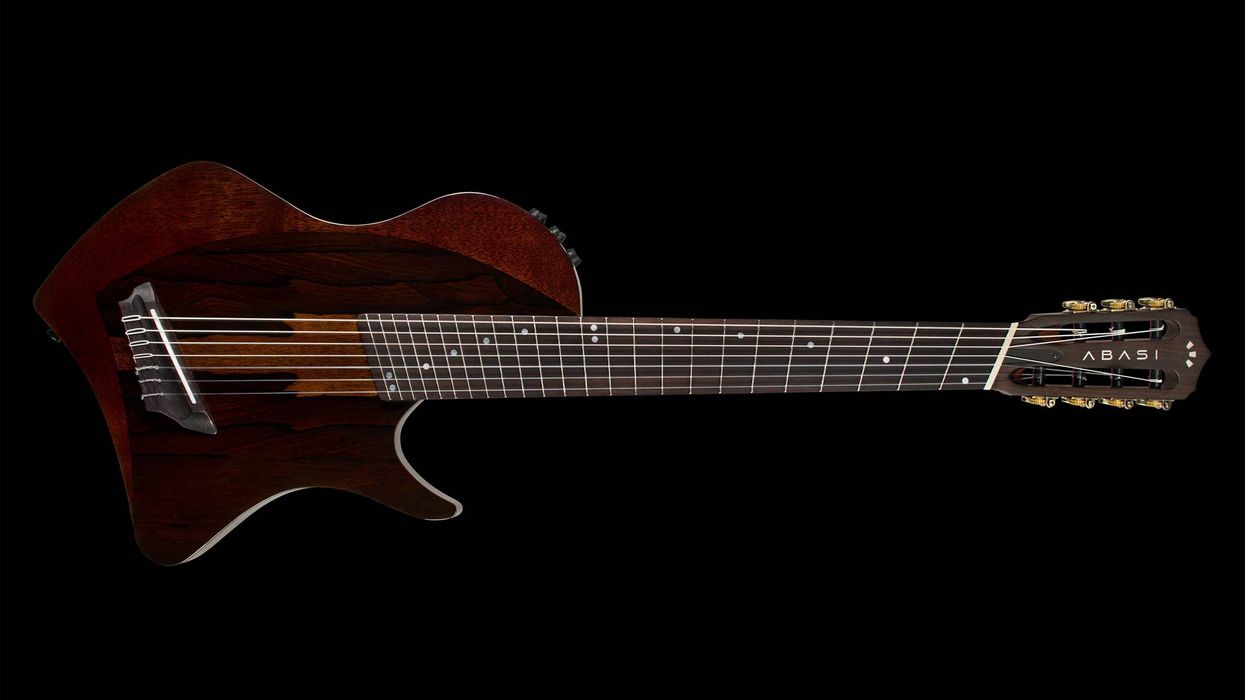
Abasi Concepts and Córdoba® announce the release of the Abasi® Stage 7, a purpose-built nylon string electric guitar engineered from the ground up for electric guitarists seeking authentic nylon tone without the traditional limitations of classical instruments.
Designed with Abasi Concepts on its Larada ergonomic platform and built upon Córdoba’s proven Stage solidbody nylon-string concept, the Abasi Stage 7 redefines what a nylon-string guitar can be in a contemporary performance environment. Rather than adapting a classical instrument for stage use, it was conceived specifically for electrified performance, extended-range clarity, and seamless transition from electric guitar technique.
“At its core, this guitar exists to remove barriers,” said Abasi Concepts. “Electric players are often drawn to the sound of nylon, but held back by feedback, ergonomics, string spacing, or playability. The Abasi Stage 7 was designed to eliminate those obstacles entirely.”
The Abasi Stage 7 features a thin, resonant, extensively chambered mahogany body with custom internal bracing that balances acoustic character with controlled stage performance. This construction minimizes feedback at higher volumes while preserving the organic response expected from nylon strings. Built on the ergonomic foundations of the Larada platform, its sculpted contours and streamlined body depth integrate naturally with the player’s body, whether seated or standing.
Unprecedented for this category, the Abasi Stage 7 offers full 24-fret access with exceptional upper-register reach, enabling modern phrasing, extended techniques, and fluid lead playing rarely associated with nylon-string instruments. Its 7-string multiscale design, tuned B to E, delivers piano-like depth and articulation on the low string while maintaining elasticity, precision, and expressive control on the treble side.
String spacing is intentionally narrower than that of a traditional classical guitar, allowing electric players to transition instinctively without relearning hand mechanics. The result is a nylon-string instrument that feels immediately familiar while opening new sonic territory.
All Abasi Stage 7 guitars are equipped with a bespoke Stage pickup system co-developed by Córdoba and Fishman®. Combining an under-saddle transducer with internal body sensors, the system delivers a natural, balanced nylon-string tone while eliminating the piezo “quack” commonly associated with amplified nylon guitars. A professional-grade preamp with side
mounted Volume, EQ, and Body Blend controls provides precise tonal shaping for live and studio use.
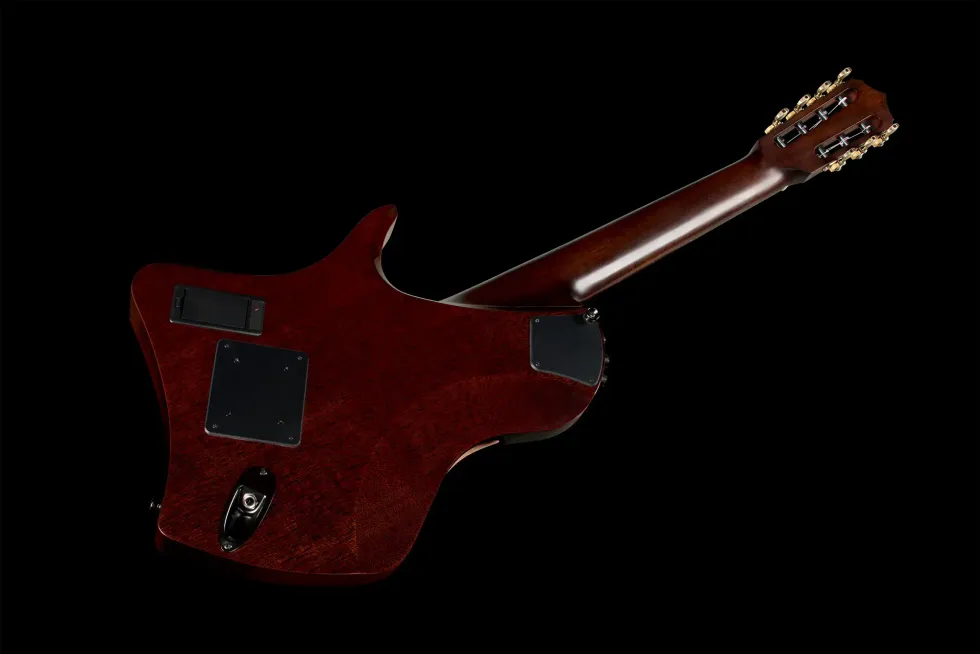
Each model features Córdoba’s Exotic Top design, pairing a solid spruce top with an ultra-thin premium exotic wood veneer to achieve an ideal balance of tone, resonance, and visual depth.
Additional features include a side-mounted oval soundhole, a mahogany flat C-shape set neck with rosewood fingerboard, black top purfling, a Fusion Fan headstock with rosewood overlay and inlaid Córdoba and Abasi logos, a rosewood bridge with bone saddle, and a bone nut.
This collaboration unites Abasi Concepts’ forward-looking design language with Córdoba’s deep expertise in nylon-string construction, manufacturing, and its Stage platform. Together, the two brands have created an instrument that defines a new class of nylon-string guitar, delivering professional-level performance at a price point designed to expand access to this evolving category.
© 2026 Yamaha Guitar Group, Inc. All rights reserved.
Córdoba and the Córdoba logo are trademarks or registered trademarks of Yamaha Guitar Group, Inc. in the U.S. and/or other jurisdictions.
Abasi and Larada are trademarks of Abasi Concepts.
Fishman is a trademark of Fishman Transducers Inc.
KEY FEATURES
- Designed on the Abasi Concepts Larada ergonomic platform
- Córdoba Stage nylon-string construction
- 7-string multiscale design for optimal balance of tension and playability
- Thin, chambered body for reduced feedback and enhanced resonance
- Full 24-fret access for modern phrasing and lead work
- Narrower string spacing for seamless transition from electric guitar
- Custom Fishman Stage pickup system with body sensors for live performance • Side-mounted Volume, EQ, and Body Blend controls for live and studio tone shaping • Solid spruce top with exotic wood veneer
- Ships with Córdoba Abasi gig bag
SPECIFICATIONS
- Body: Chambered solid mahogany with custom internal bracing
- Top: Solid spruce with ultra-thin exotic wood veneer
- Neck: Mahogany set neck, flat C-shape
- Fingerboard: Rosewood
- Scale Length: Multiscale
- Frets: 24 fanned frets
- Fingerboard Radius: Compound 16"-24"
- Nut: Bone
- Bridge: Rosewood with bone saddle
- Headstock: Fusion Fan with rosewood overlay and inlaid logos
- Pickup System: Stage pickup system with under-saddle transducer and internal body sensors
- Controls: Side-mounted Volume, EQ, and Body Blend • Tuners: Córdoba brushed brass tuners
- Finish Options: Acacia, Ziricote, White Burst
Lerxst Announces ATWAS
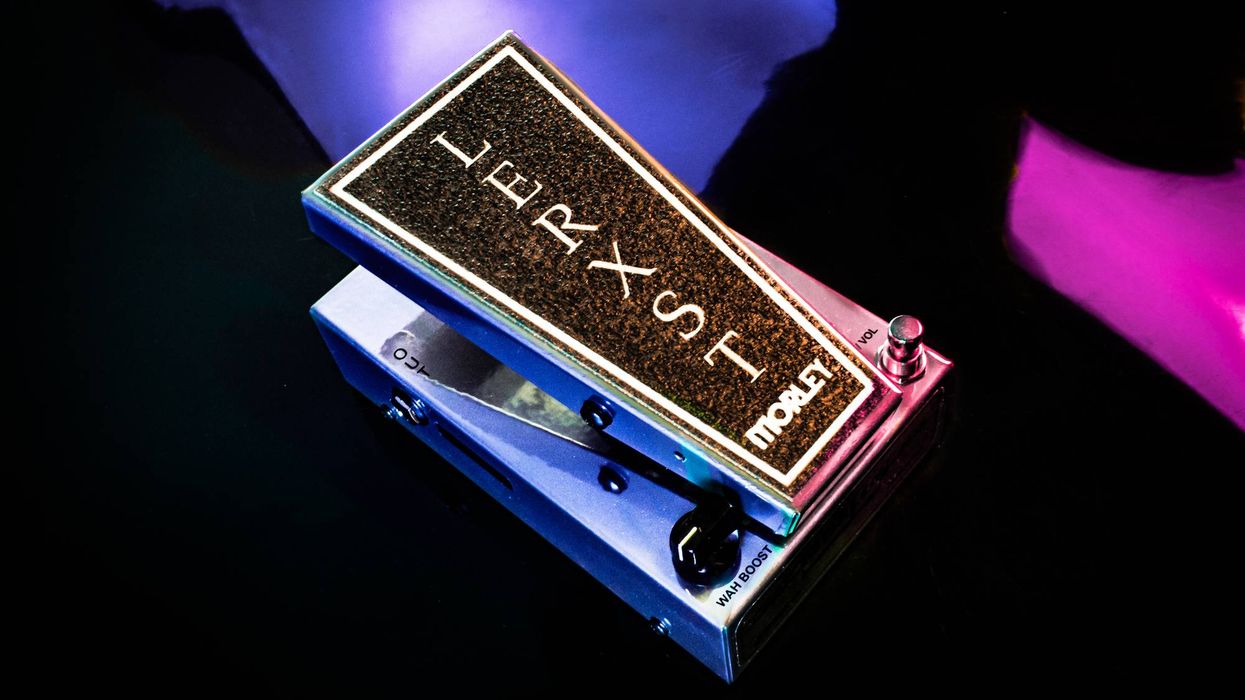
Alex Lifeson and Lerxst, in collaboration with legendary pedal innovators Morley, announce the release of the Lerxst ATWAS (All The World’s A Stage) Wah / Volume Pedal available now for $299 as a limited-run of 500 pedals exclusively through the LERXST Reverb Store. For more information and to purchase, please click here.
Designed for expressive live performance and uncompromising tonal integrity, the ATWAS combines Morley’s iconic optical Wah with ultra-smooth optical Volume control and an onboard Wah Boost—delivering a versatile, stage-ready tool built for modern players who demand feel, reliability, and tone in equal measure.
Inspired by Lifeson’s decades-long relationship with Wah and Volume pedals as tools of musical expression, the ATWAS is engineered to respond naturally to playing dynamics while preserving the player’s core tone. From subtle swells to commanding lead lines that cut through the mix, the ATWAS is built failsafe for real-world stages, studios, and sessions.
“All the world’s a stage, and how you control dynamics on that stage matters,” explains Lifeson. “Wah and volume pedals have always been essential tools for me, not just effects. With the ATWAS, we focused on creating something that feels completely natural underfoot, preserves your tone, and gives you control without distraction.”
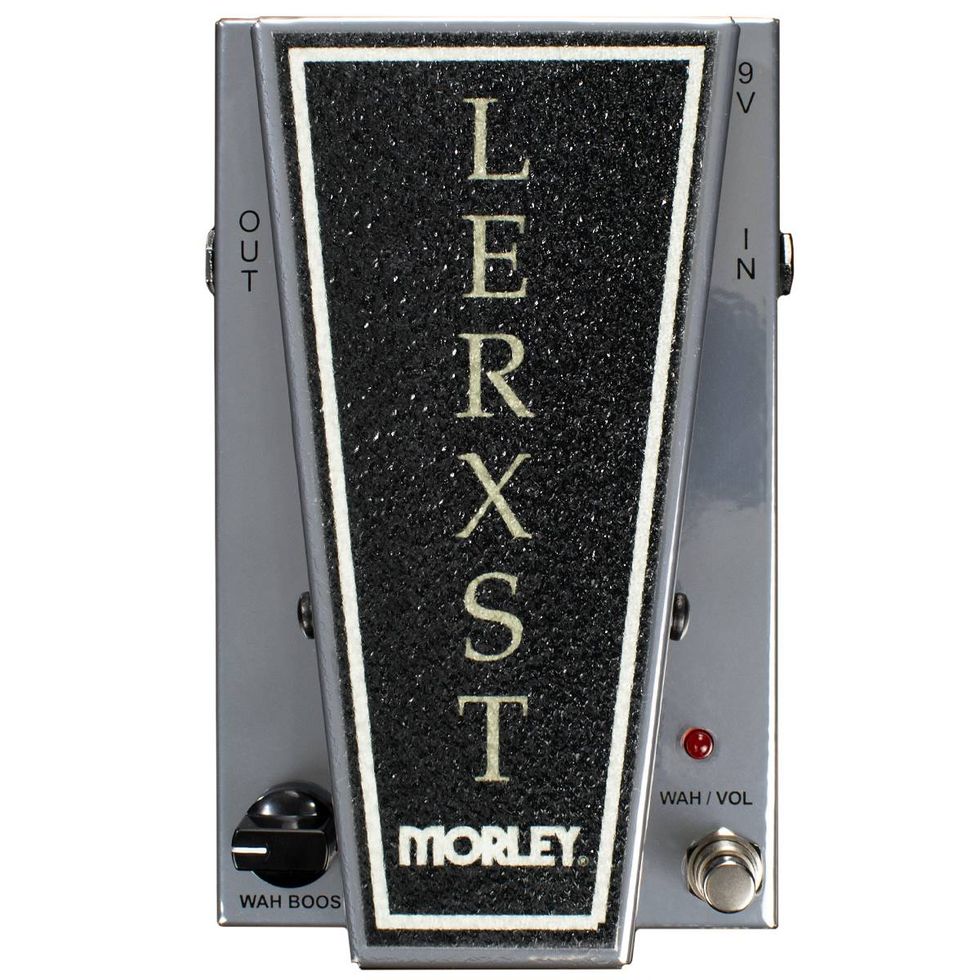
At the heart of the ATWAS is Morley’s proven optical circuitry, eliminating the wear and tear associated with traditional potentiometers. A dedicated Wah / Volume mode switch allows players to select their preferred operation, while the Wah Boost control offers up to 20dB of additional gain—perfect for pushing solos forward without altering the fundamental character of the sound.
“The collaboration with Alex is always about purpose,” said Scott Fietsam of Morley. “The ATWAS isn’t about adding gimmicks—it’s about refining essential tools. Optical Wah, Optical Volume, premium buffering, and rock-solid construction. This pedal is designed to work night after night, exactly the way a professional needs it to.”
Housed in a cold-rolled steel enclosure with a chrome finish and Tel-Ray-style detailing, the ATWAS also features a glow-in-the-dark treadle grip for confident footing on dark stages. Like all Lerxst pedals, it is proudly made in the USA.
Lerxst ATWAS Specifications
- Wah / Volume Mode Switch
- Wah Boost Control (up to +20dB)
- Smooth Optical Wah & Volume Circuitry
- Premium Morley Buffer Circuit
- Glow-in-the-Dark Treadle Grip
- Cold Rolled Steel Enclosure
- 9V DC Center-Negative Power
- Made in USA
Asked whether the world really needs another Wah pedal, Lifeson offered the following perspective:
“All the world’s a stage… but you still need the right tools to play your part.”
For more information on the Lerxst ATWAS Wah / Volume Pedal, please visit: https://lerxstamps.com
Blackstar Unveils High Powered Digital Floorboard with Insane Versatility
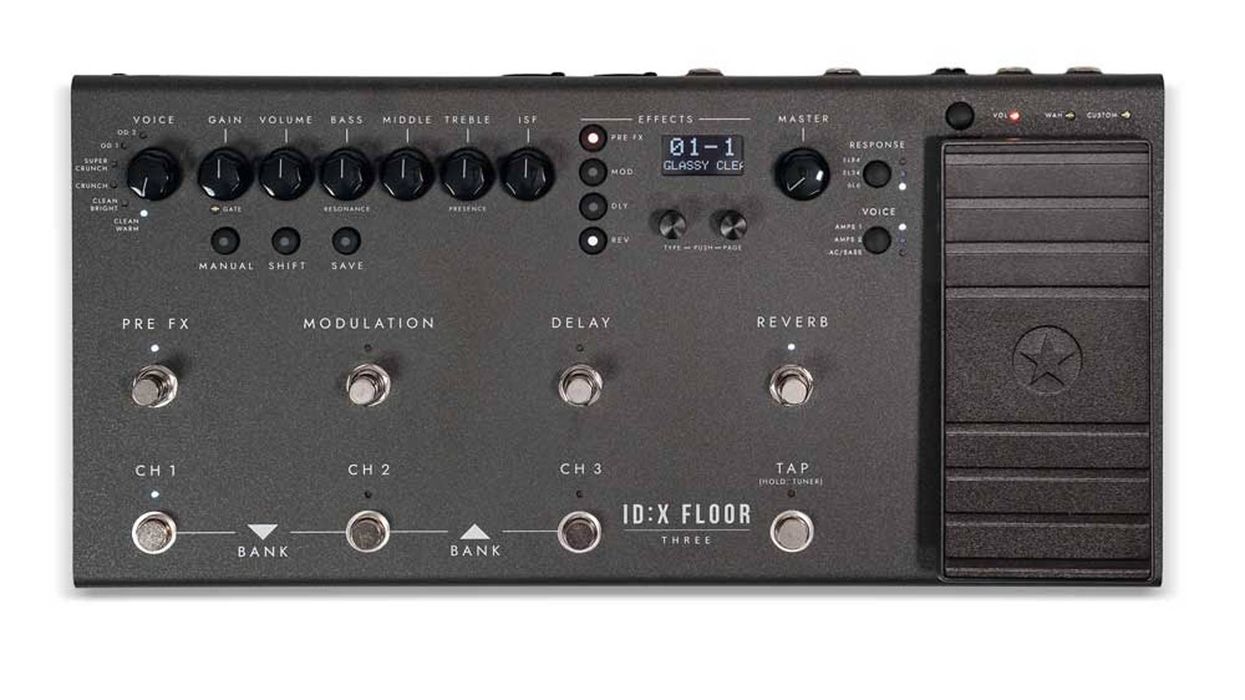
Blackstar Amplification announces the launch of the new ID:X Digital Floorboard series, a powerful new family of advanced DSP floor modelers. Designed in Northampton, UK, the ID:X Floor range has been created for electric guitar, bass and acoustic guitar players who need professional sound, intuitive control and complete connectivity in a single, stage-ready unit. Blackstar set out to solve a familiar problem—how to combine the flexibility of a modern digital modeller with the immediacy and feel of a real amplifier and achieved it through advanced component-level modelling, authentic “In The Room” tone technology, simple, musician-focused controls and three carefully tailored models to suit every style of player.
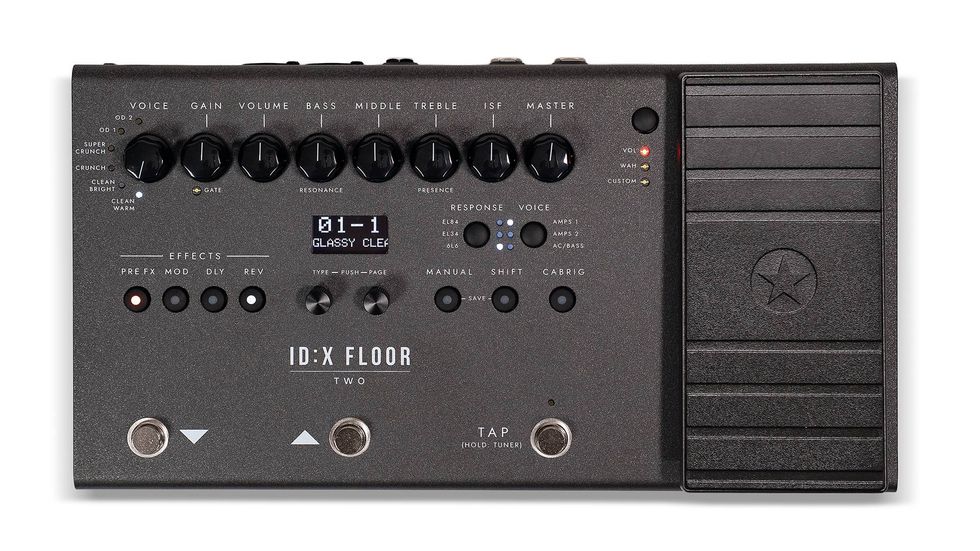
At the heart of every ID:X Floor unit is a high-performance modelling platform that captures the true behavior and musical response of tube amplifiers rather than simply recreating their sound. The series delivers 12 authentic electric amp models alongside three bass amp models, two acoustic voices and an acoustic simulator, complemented by Blackstar’s patented ISF tone shaping and selectable EL84, EL34 and 6L6 power-valve Responses to recreate the feel of different tube architectures under the fingers. More than thirty-five effects are directly editable from the top panel, including drives, modulation, delays and reverbs, while exclusive “In The Room” technology allows players to experience the dynamic sensation of an amp moving air, whether using the floorboard direct to front of house, recording, or integrating into an existing rig. CabRig speaker and microphone simulation with room options is fully controllable from the unit, and 99 patches can be created, stored and recalled without menu-diving thanks to an intuitive control layout and clear OLED display.
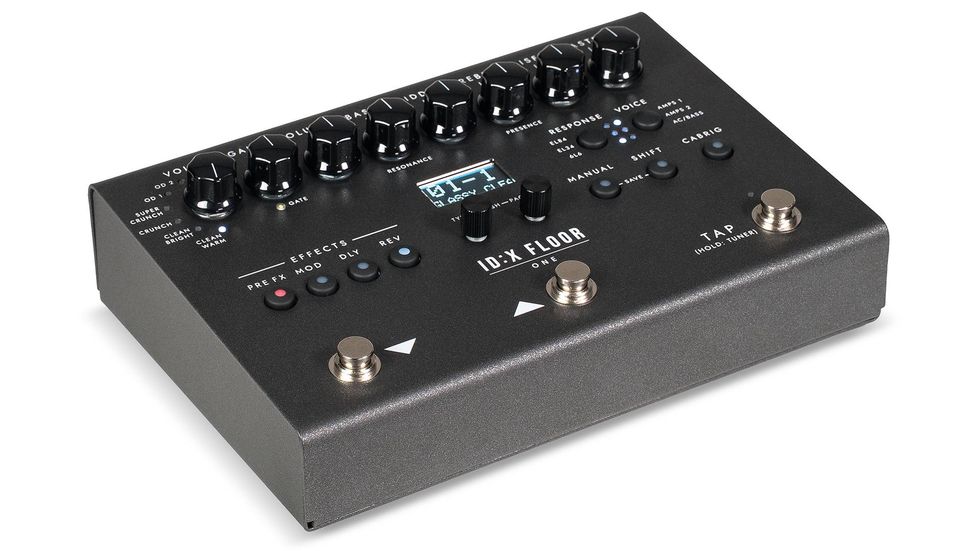
The series introduces three distinct models. ID:X Floor One offers the core platform in a compact footprint, providing full amp modelling, effects, CabRig, USB-C audio interface capability, MIDI input, XLR outputs, tuner, streaming input and headphone connectivity. ID:X Floor Two builds on this by adding an onboard expression pedal that can control Wah, volume or expression parameters, making it ideal for players who want continuous real-time performance control while keeping the same sound engine, editing capability and connectivity. At the top of the range, ID:X Floor Three expands the concept further with MIDI IN and THRU, an effects loop for integration with external pedals, extended switching for patches and effects, and a larger chassis designed for more advanced stage use, while maintaining the same immediate, musician-focused workflow across the lineup. All three models support deep software editing and online patch sharing via Blackstar’s free Architect software, connecting players to a wider creative community.
In use, the ID:X Floor series is intended to feel like a real amplifier rather than a menu-driven processor. Blackstar’s component-accurate modelling, precision tone-stack behavior and carefully developed interaction between preamp, power section and speaker response contribute to a lively, responsive playing experience that reacts dynamically to touch. Combined with robust I/O, USB-C audio interface functionality and an emphasis on ease of use, the ID:X Floor range is positioned as a complete professional floor solution for studio, rehearsal and live performance alike.
For further information on the new Blackstar ID:X Floor range, including ID:X Floor One, ID:X Floor Two and ID:X Floor Three, please visit NAMM Booth #6802 or online at www.blackstaramps.com
Street Price:
ID:X Floor One $269.99 USD
ID:X Floor Two $319.99 USD
ID:X Floor Three $399.99 USD
Aguilar Introduces the TLC DLX Compressor EQ
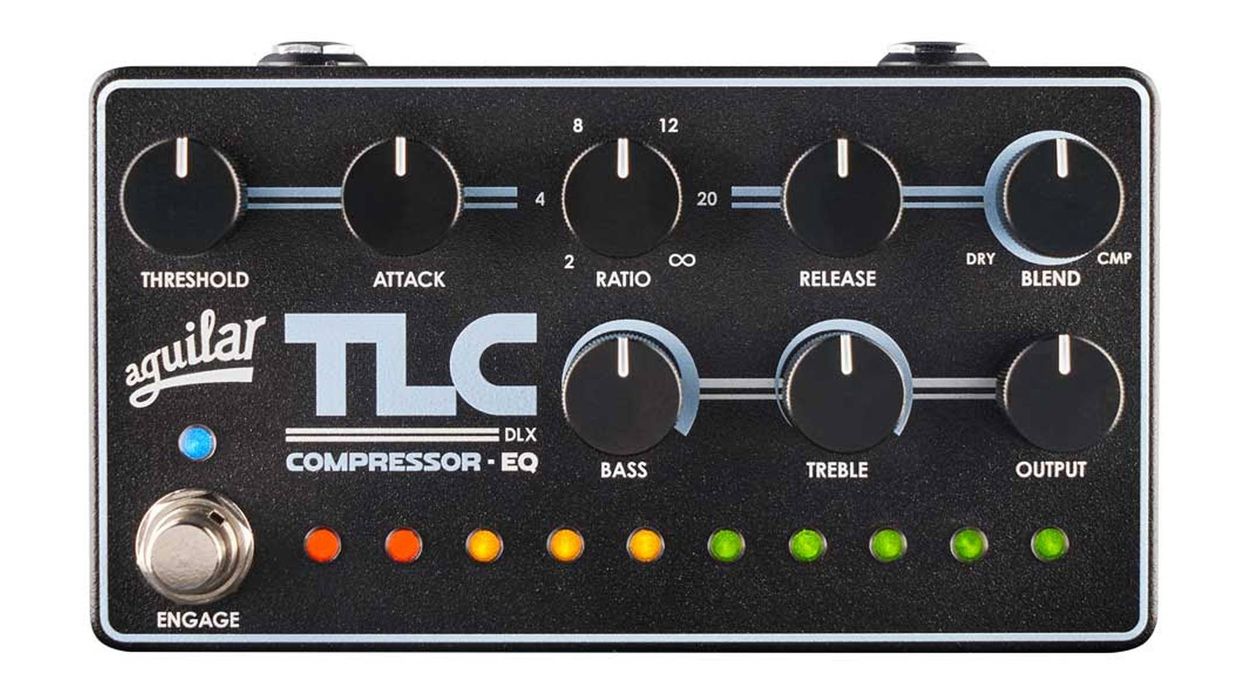
Aguilar has announced the TLC DLX Compressor EQ, an expanded evolution of its trusted TLC Compressor pedal. Designed to give bassists complete control over dynamics while adding musical tone shaping inspired by classic studio workflows, the TLC DLX follows a simple philosophy: control dynamics first, then enhance tone. The result is transparent compression paired with broad, musical EQ in a compact, pedalboard-friendly format suited for both stage and studio use.
At the core of the TLC DLX is a comprehensive compressor control set featuring Threshold, Attack, Release, Ratio, Output, and Blend. These controls allow bassists to shape not just how much compression is applied, but how it feels—from subtle dynamic smoothing to firm peak control. An integrated LED gain-reduction meter provides clear visual feedback for dialing in consistent results, while the Blend control enables parallel compression, preserving natural feel and articulation while adding punch and consistency. The Output control compensates for gain reduction, making unity gain easy to achieve.
Beyond dynamics, the TLC DLX adds integrated tone shaping inspired by Aguilar’s DB 925 boost circuit. Broad, boost-only Bass and Treble controls enhance the instrument’s natural character, adding fullness, clarity, and presence without harshness. Used alongside compression, the EQ helps bass tones sit comfortably in a mix while remaining expressive and musical.
Designed as a compact channel strip for the pedalboard, the TLC DLX delivers studio-inspired dynamic control and tone enhancement in a format built for real-world bass performance. “The original TLC Compressor has been part of so many players’ rigs for years, and the TLC DLX is a natural evolution of that idea,” says Aguilar. “We kept the feel and musicality people love, but expanded on it by adding tone shaping inspired by our classic designs. The result is a pedal that still feels familiar, but gives bassists more flexibility and expression than ever before.”
For more information, visit NAMM Booth 6802 or online at www.aguilaramp.com
The TLC DLX Compressor EQ is available now with a street price of $329.99.
Synergy Unveils Machine-Learning Power Amp Technology
At the 2026 NAMM Show in Anaheim, Synergy will debut a patent-protected Machine-Learning power amp technology that combines the convenience, light weight, and power of class D, with the tone and feel of tubes, for a no compromise amplification solution. This revolutionary design is different than anything currently in the market!
Background - For decades, traditional tube amplifiers have remained the gold standard for guitarists seeking expressive feel, touch sensitivity and harmonic complexity. These qualities come from two critical factors: the inherent nonlinear behavior of the vacuum tubes and the complex real-time interaction between the amp and its speaker cabinet.
While Class D designs have improved in efficiency and portability, their inherent low-impedance output stage makes them an obstacle to recreating true tube amp tone.
Attempts to remedy this have consistently fallen short - often relying on static models and fixed impedance assumptions, resulting in a stiff and sterile tone and a
disconnect from the guitar player. Increasing the impedance outage stage has also failed, as doing so makes the amplifier inefficient or extremely unstable.
Until now!
Synergy’s invention takes a fundamentally different approach, combining high-efficiency, low-impedance Class D output stages, advanced digital signal processing and a proprietary, patent-protected Machine-Learning system that continuously measures voltage and current in real-time at the speaker output.
During initial operation, the amplifier learns your cabinet's impedance through controlled sweeps, then continues to monitor it in real-time. The Machine-Learning power amplifier dynamically adapts to recreate true tube amp voltage-current behavior, including sag, compression, frequency-dependent damping and harmonic richness.
The result is authentic tube amp feel and tone that translates naturally across different cabinets and playing situations, while retaining the efficiency, stability, portability and updatability of modern amplifier designs.
Synergy’s Machine-Learning power amp was designed from the ground up by guitar players, for guitar players, including modern features guitarists demand and consistent, stable and robust power across all speaker cabinet impedances!
To bring this revolutionary technology to life STMicroelectronics enabled SYNERGY as an alpha customer on their new advanced STM32V8 mcu series, which combines advanced 18 nm FD-SOI and ST’s phase-change memory (PCM) technology with a powerful 800 MHz Arm Cortex®-M85 core, delivering up to 6x faster Machine-Learning and DSP processing than previous product generations.
Legends Unite
Synergy has partnered with industry giants Brian Wampler and Dave Friedman in collaboration with Pete Thorn to bring this technology to life with the following products that will debut at NAMM:
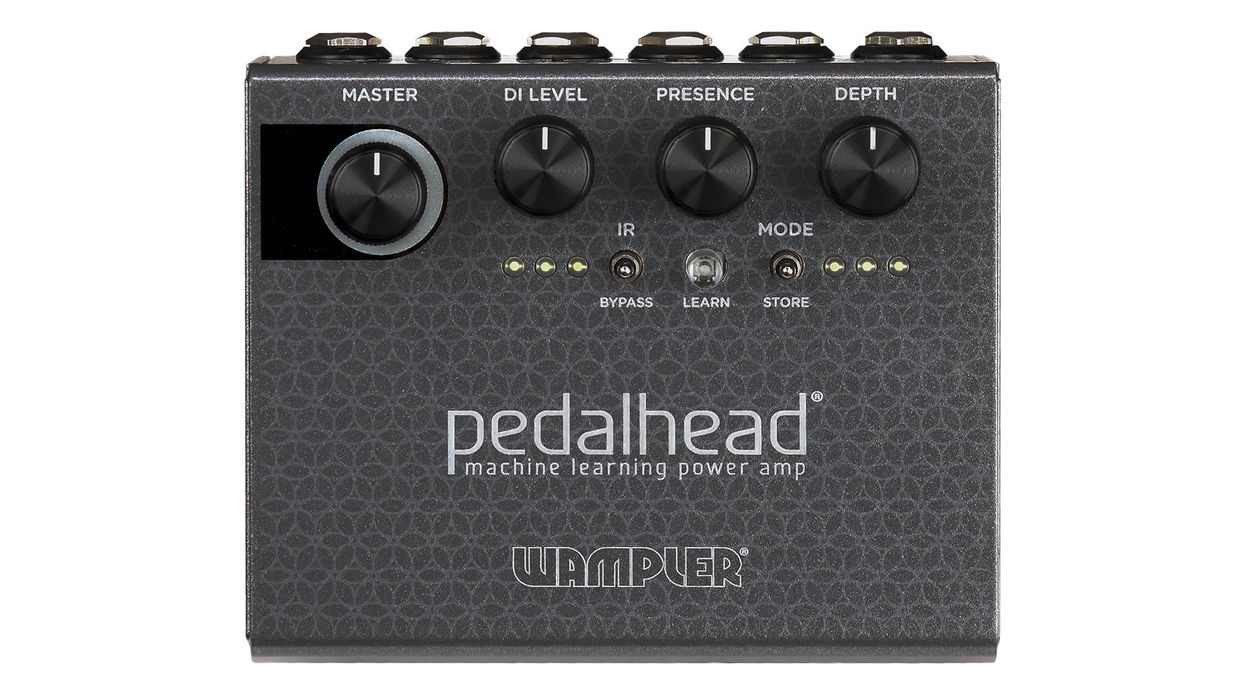
Brian Wampler’s PEDALHEAD - a super-compact pedalboard friendly 240W (60 tube watt equivalent), stereo power amp with IR loader, MIDI and 6 power amp models.
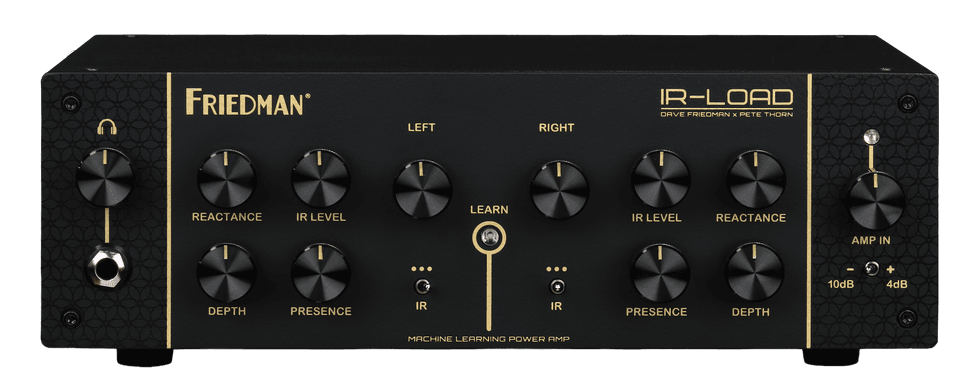
Dave Friedman IR-LOAD, a collaboration with Pete Thorn, that is an all-in-one 360W (90 tube watt equivalent), stereo power amp/load box/attenuator/IR loader/MIDI.
These exciting new products will be demonstrated live at the 2026 NAMM Show at the Boutique Amps Distribution booth (#4626). Dave Friedman and Brian Wampler will be on hand for demonstrations, discussions, and media interviews throughout the show.
Rig Rundown: Gwar
The grossest of ’em all rolls through Nashville.
When GWAR stomped through Nashville with the goriest gear of all, we had to take a look. PG’s Chris Kies caught up with the band at Marathon Music Works to hang with Grodius Maximus, Bälsäc the Jaws ’O Death, and Casey Orr (aka Beefcake the Mighty). The band rolls cab-free, armed with a stack of dangerously signature gear.
Sponsored by D’Addario
Totally Radical
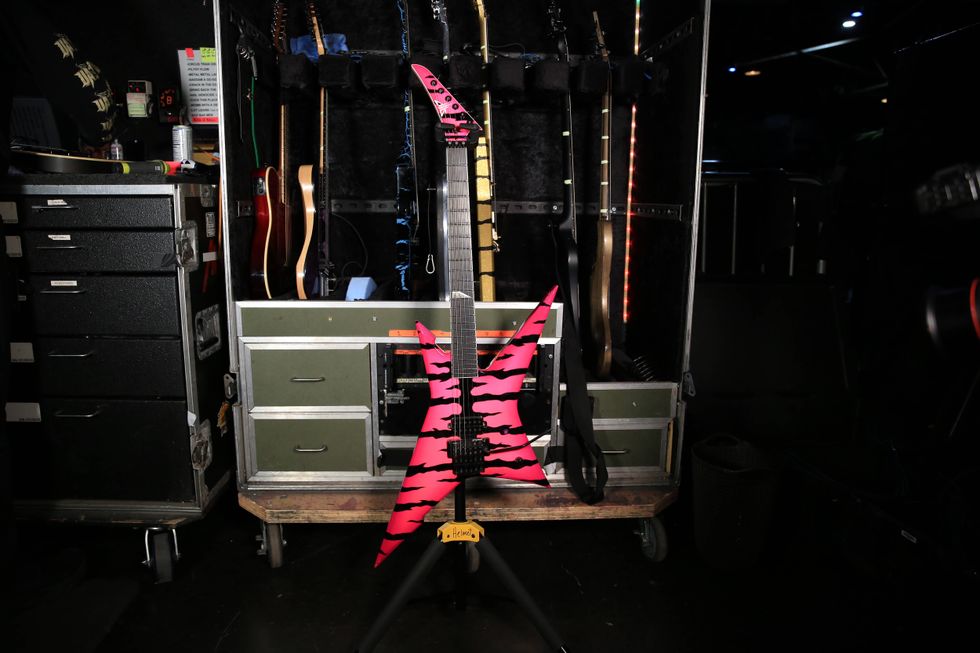
Grodius Maximus’ rig is all about spectacle, aggression, and controlled chaos—designed to sound less like a guitar and more like a “big crazy animal.” His primary instruments come from Radical Instrument Products in Salt Lake City. His go-to is pointy, pink, and equipped with a locking tremolo and a single humbucker. He also carries a gold neck-through model loaded with a pair of humbuckers and a coil tap.
Inspired by Buzz
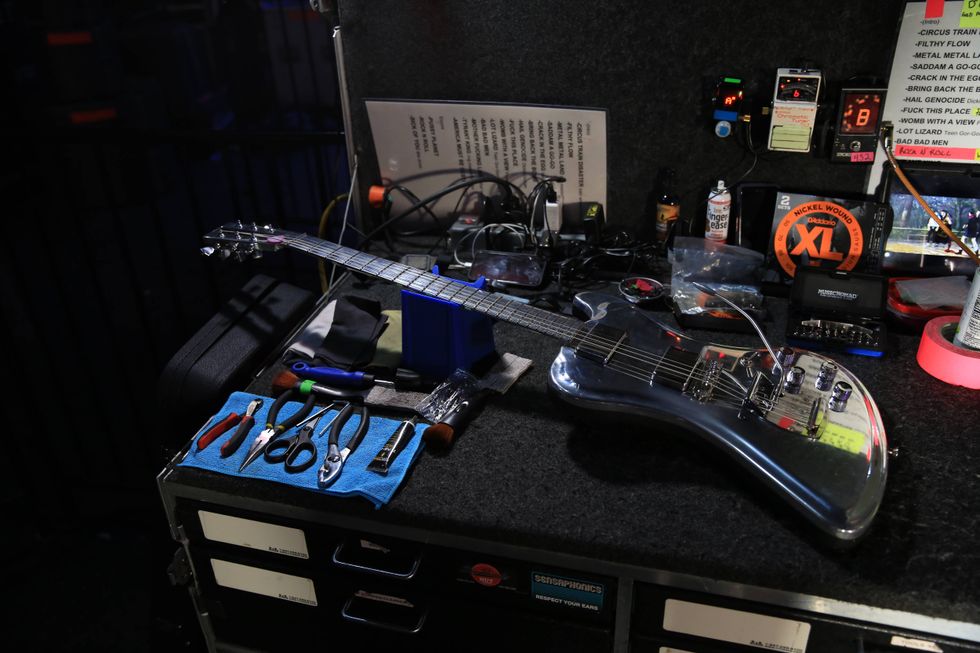
Rounding out the guitar lineup is an Electrical Guitar Company instrument—something Grodius was turned onto by Buzz Osborne of the Melvins. That guitar features dual humbuckers and a Mastery bridge, adding a slightly more refined edge to an otherwise savage setup.
Dark Favorite
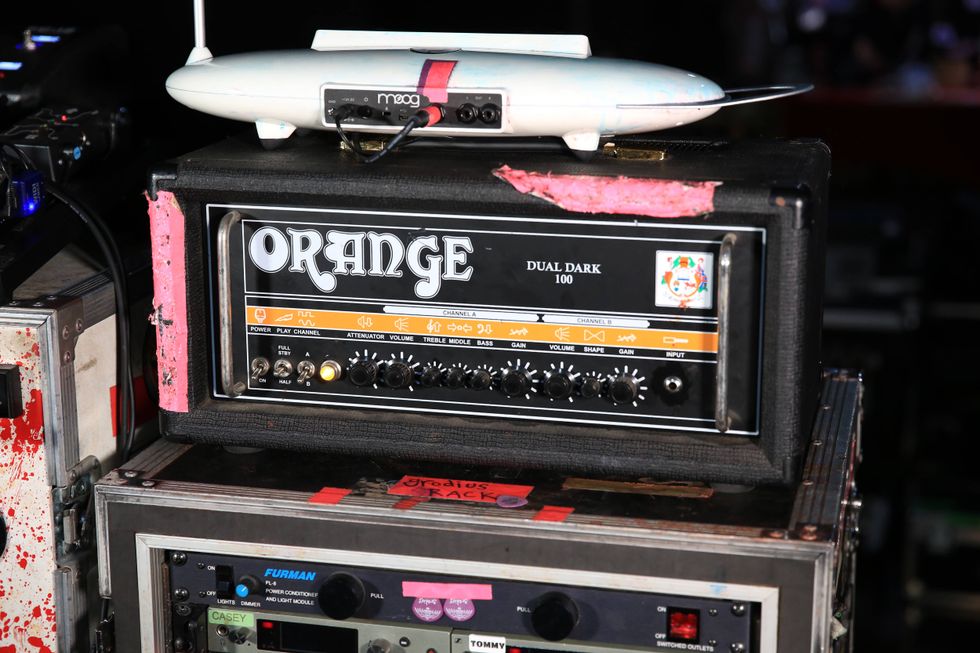
Grodius calls the Orange Dual Dark 100 his favorite amp of all time. While it’s not being used onstage for this show, its DNA is still present via a Kemper, which houses a model of the Dual Dark that anchors his core tone.
All Sorts of Nasty
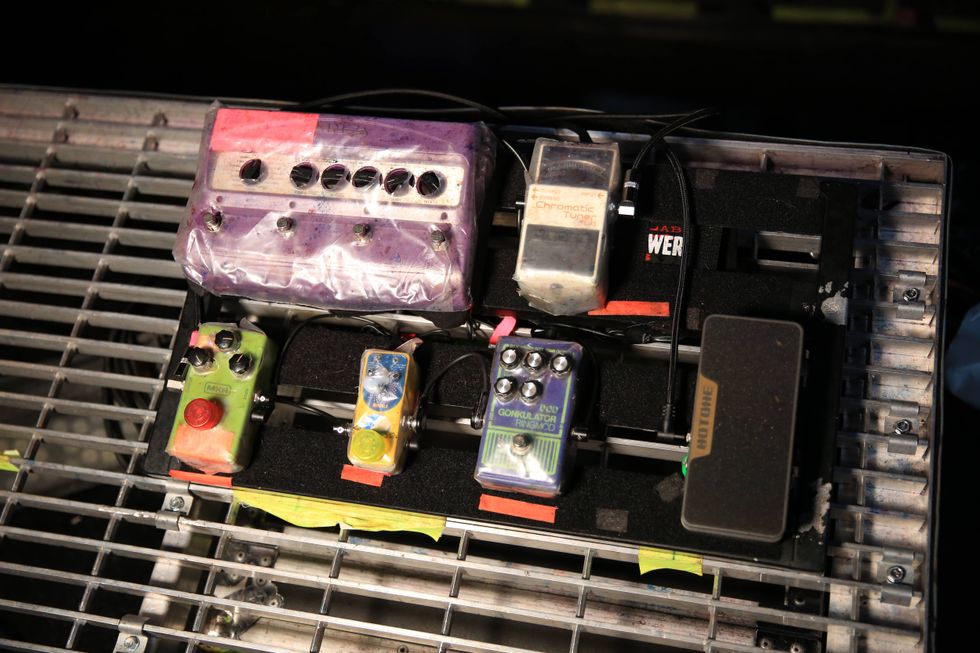
Effects are where things get truly unhinged. On his rack, a Line 6 Filter Pro handles “all sorts of nasty tones,” while a lineup of Bananana Effects pedals sit in reserve, ready to be unleashed when needed. Switching duties are handled by a Voodoo Lab Guitar Audio switcher, and he also shows off a Death By Audio prototype, alongside trusted staples like the DBA Echo Dream 2 and DBA Robot.
His actual pedalboard is deceptively compact but vicious: a Boss Chromatic Tuner, a Line 6 FM4 pedal, a Hotone expression pedal, DOD Gonkulator, Bananana Mandala, and an MXR Carbon Copy Bright, all powered by a Voodoo Lab supply.
Bälsäc the Jaws ’O Death - Blue Beast
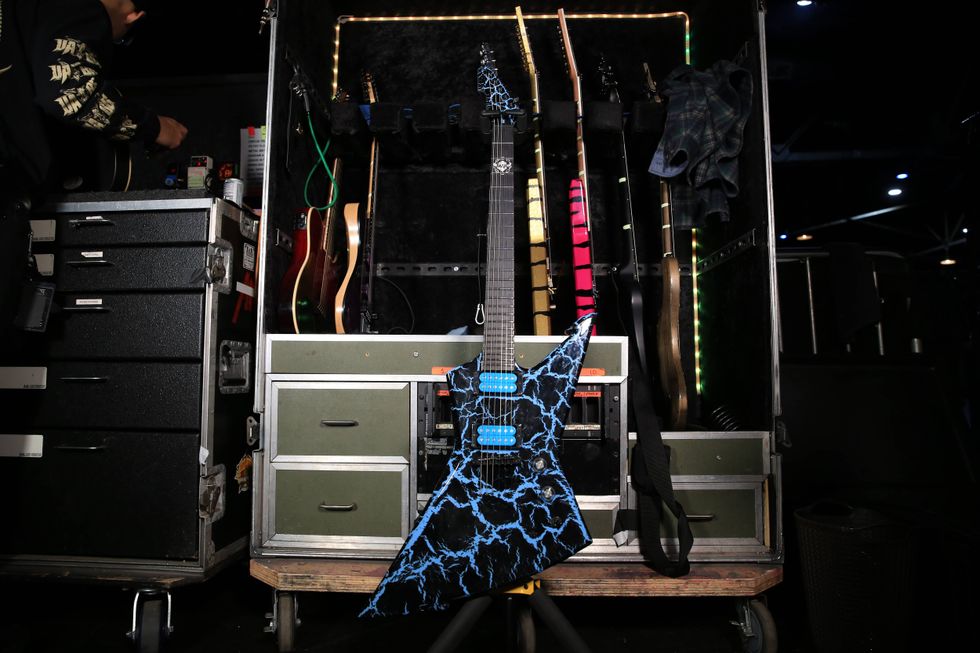
Bälsäc’s rig blends modern metal precision with an openness to conventional and unconventional tools. His signature Schecter Bälsäc Blue Jaw model—soon to be released at what he jokingly calls “an exorbitant price”—is constructed using material from his actual costume. Finished in Antarctic crackle, it’s loaded with a pair of blue Fishman Fluence pickups, delivering clarity and aggression in equal measure.
Non-Metal Vibes
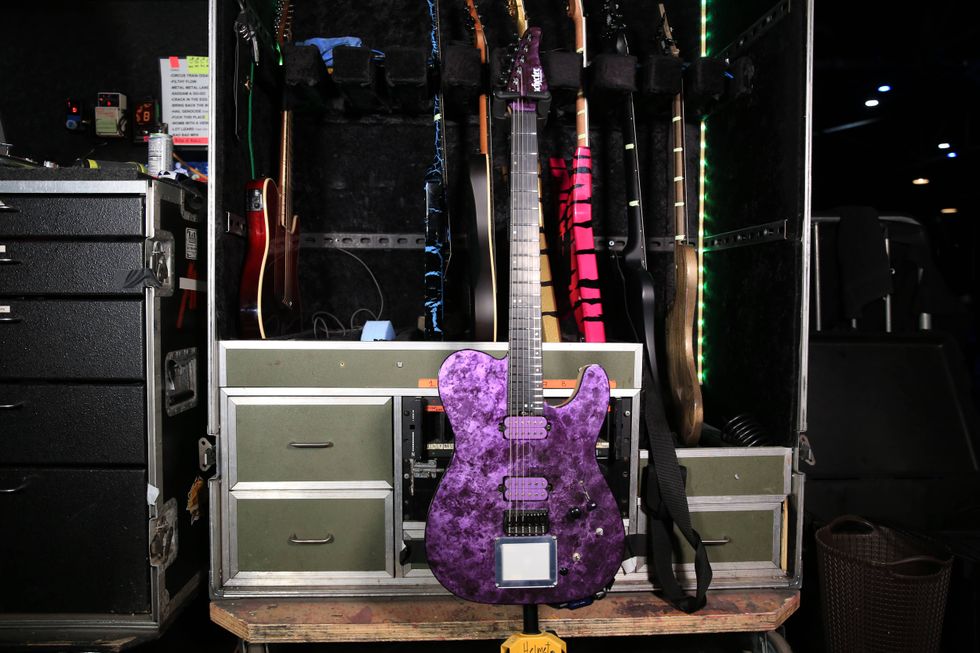
He also relies heavily on a Schecter PT Custom with a purple finish—a T-style guitar that initially raised eyebrows. “It’s surprising how much I love the PTs,” he admits. “It’s such a non-metal shape.” The guitar is outfitted with Fishman Fluence pickups and an Amptone XY MIDIpad, which wirelessly controls his Fractal Axe-Fx III.
Modeling Rig
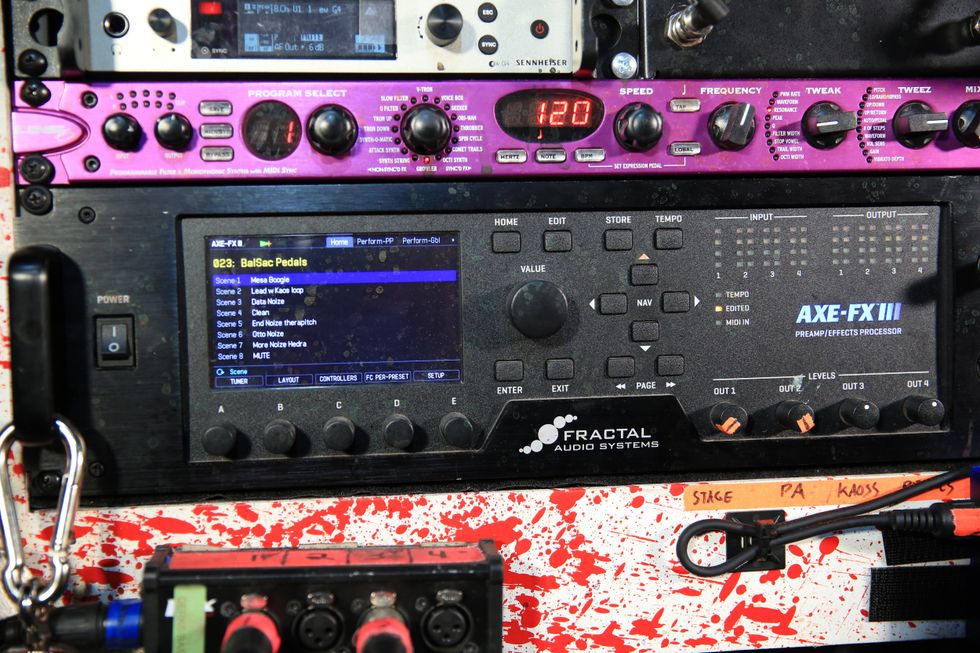
The Axe-Fx handles amp modeling duties, often dialed in to a Mesa/Boogie-style sound. He also rocks the familiar purple Line 6 Filter Pro. Because Gwar performs to click tracks, all patch and effect changes are automated through Ableton, keeping everything locked tight.
Chaos via Kaoss
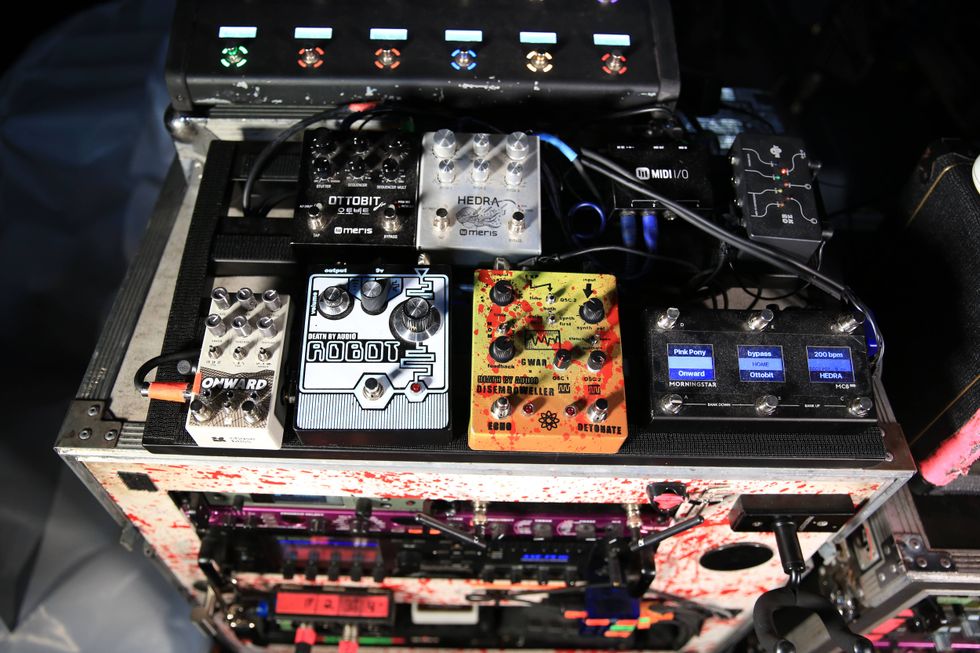
Bälsäc’s pedalboard is deep and experimental: a Chase Bliss Onward, Death by Audio Robot and Disemboweller, and a Meris Ottobit and Hedra. In the rack, he keeps a Korg Kaoss Pad, EarthQuaker Devices Data Corrupter, and an EHX C9 organ emulator, allowing him to blur the line between guitar, synth, and noise weapon. He even uses a Moog Theremini as an expression controller, further expanding his sonic vocabulary.
Casey Orr/Beefcake the Mighty - Slim Nikki
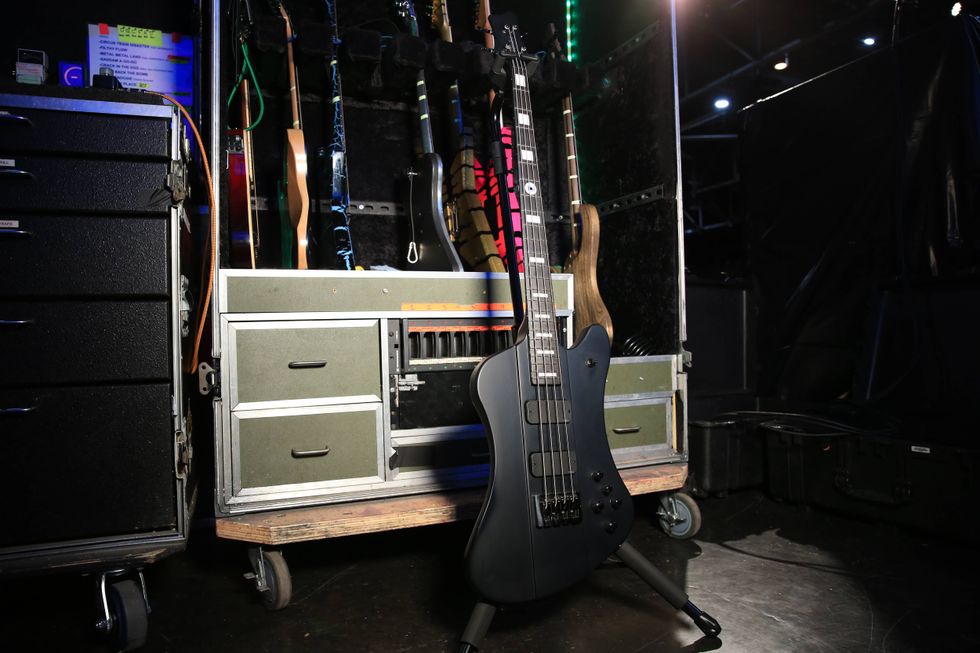
Handling low-end duties behind the scenes is Casey Orr, who you might better as Beefcake the Mighty. His primary instrument is the Schecter Casey Orr Beefcake Bass, which shares its electronics with the Riot 4, but features a Nikki Sixx–style body, slimmed down for comfort. The bass also sports a thinner neck, along with 24 frets, a kill switch, and a pair of EMG pickups—a combination Orr describes simply as “super comfortable.”
Backpack Rig
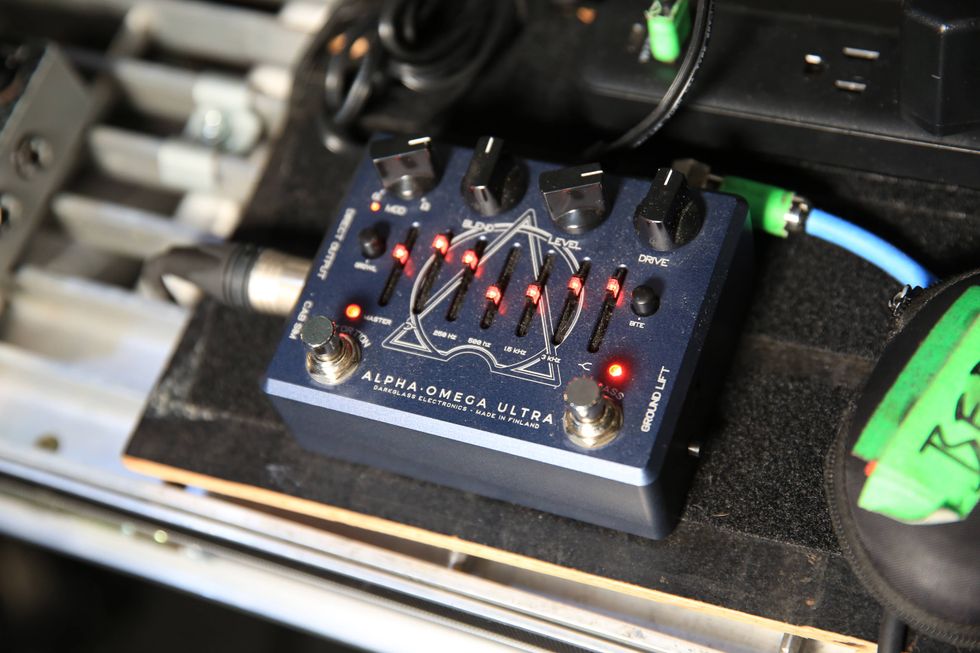
On the amplification side, the cornerstone of Orr’s sound is the Darkglass Alpha·Omega Ultra, which he calls the “missing link” in achieving the bass tone he’d previously been chasing—aggressive, articulate, and perfectly suited to Gwar’s controlled mayhem.

Bälsäc the Jaws ’O Death
Boss Chromatic Tuner
Darkglass Alpha Omega Ultra
DOD Gonkulator
Electro-Harmonix C9
EarthQuaker Devices Data Corrupter
Hotone Expression Pedal
Meris Hedra
Meris Ottobit
Moog Theremini
Schechter Purple PT Custom
Voodoo Lab Guitar Audio Switcher
Voodoo Lab Power
“To join a band like that would be so cool”: Mateus Asato reveals the nu metal band he’d love to join

Social media sensation. Six-string sidekick to the stars. Mateus Asato has worn many hats over the course of his musical career. His latest, of course, is that of fully fledged solo artist, as he gears up to release his landmark debut album, ASATO on 27 February.
He’s crafted a serious name for himself since his early days growing up in the Brazilian countryside, and so it’s only natural he’s always pondering where the future might take him next. For now, Asato seems all-in on his solo career, but might he consider playing alongside other acts in the future?
“Right now, I’m in this phase of sharing my message with my own guitar,” Asato tells Guitar World in its new print issue.
“I’ve done tours by myself in 2019, and that was really amazing. I have so many expectations to continue that chapter. I don’t close the door, but I feel like right is a big standby moment. The main focus for me is to share my instrumental work. But I might get tired of playing my own music and be like, ‘Why not?’ You learn a lot from playing [other] people’s music.”
It’s not the first genre you’d associate with Mateus Asato, but he explains that he’d be open to the idea of playing with a heavier band, should the opportunity ever present itself.
“I think it’s definitely more doable for me to join a band, so yes, I would consider,” he continues. “For example, in 2023 I did a project with Mike Shinoda from Linkin Park, and afterward I went to his studio to write songs for the band.
“I remember that kind of put that sort of flame in my heart, like, “Wow, what if they invite me to play?’ I would love to join a band like that. I know it’s not my cup of tea – like, nu metal – but it’s cool. I’ve played so many styles, so yeah, to join a band like that would be so cool.”
Mateus Asato recently announced he was ending his longtime partnership with Suhr Guitars. In the aftermath, fans speculated as to which brand he might partner with next, but he quickly dispelled any speculation by saying he was “‘single’ and happy where I am”.
Mateus Asato’s debut album, ASATO, lands on 27 February.
The post “To join a band like that would be so cool”: Mateus Asato reveals the nu metal band he’d love to join appeared first on Guitar.com | All Things Guitar.
Shure Unveils KSM Studio Microphones
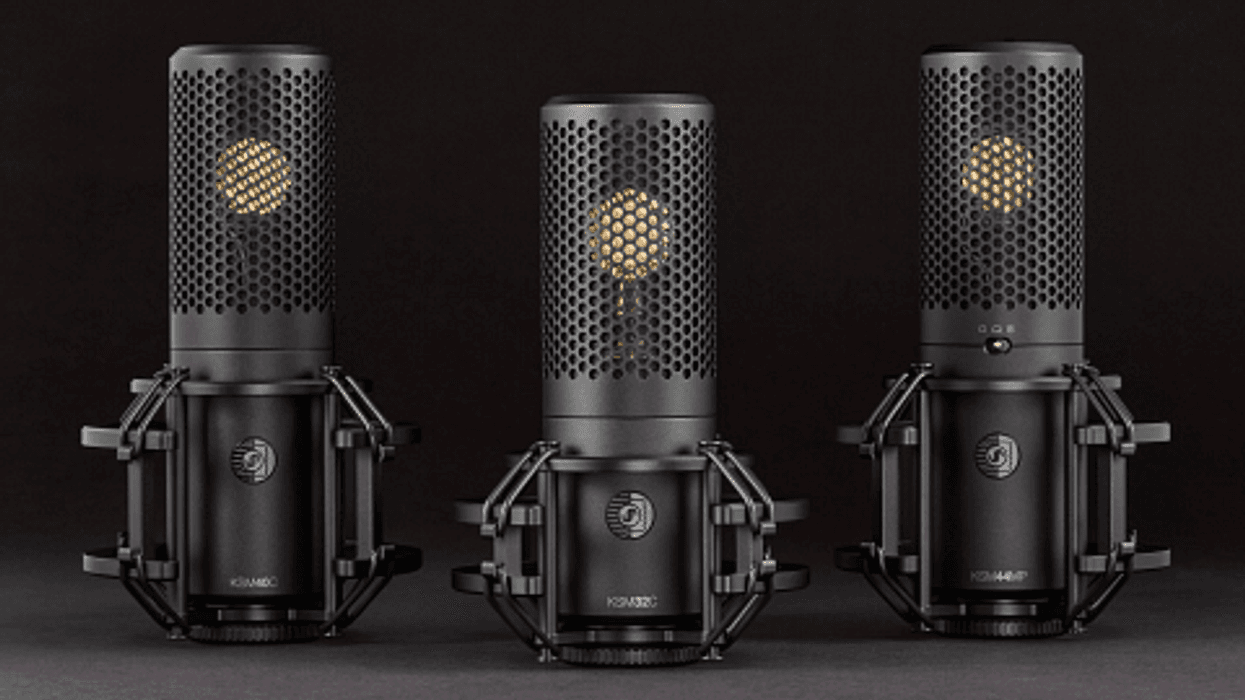
The new line of condenser microphones delivers premium, true-to-life audio capture with ultra-low self-noise in a sleek, modern design.
Shure, a leading manufacturer of audio solutions known for quality, performance, and durability, unveiled its new KSM condenser microphone line today—the KSM32C, KSM40C, and KSM44MP—at NAMM 2026. The new KSM series delivers lifelike fidelity and a thoughtfully engineered design, crafted for musicians and studio professionals.
Shure KSM microphones have delivered exceptional audio quality for decades. With the launch of new models, the KSM line once again sets the benchmark for professional recording by providing premium, true-to-life audio capture and ultra-low self-noise, all within a sleek, modern design.
The KSM line captures every nuance, from the warmth of vocals to the dynamic energy of instruments, with stunning realism. Each model features precision-engineered capsules for maximum control and accuracy, ensuring the source sounds exactly as intended. Whether you're a musician or engineer needing transparent voicing for natural reproduction, rich low-end presence, or multi-pattern flexibility, there’s a KSM microphone ready to elevate any session.
“At Shure, our mission has always been to empower audio professionals and artists with quality tools that deliver uncompromising sound,” said Eduardo Valdes, Associate Vice President of Global Marketing and Product Management, at Shure. “The new KSM microphone line reflects this commitment by offering upgrades to both design and engineering, meeting the evolving needs of recording studios. Featuring circuitry upgrades from previous models, varied capsule options, and premium accessories, we designed every detail to help professionals capture precisely what they want. By making boutique-level quality attainable for both home and professional studios, we’re ensuring exceptional performance is within reach for all professionals."
The KSM Studio Lineup
Built for precision and performance, the new line includes a range of expertly engineered and hand-crafted capsules, from compact ¾" to robust 1" designs, offering exceptional off-axis rejection, clarity, and creative flexibility for vocals, instruments, ensembles, and beyond. Thoughtful details like lightweight, all-metal construction, advanced shock mounts, and curved magnetic pop filters ensure durability and ease of use, while premium accessory options complete the professional package.
- KSM32C—SMALL CAPSULE. BIG SOUND.
The KSM32C is a large diaphragm condenser microphone that delivers a smooth, balanced response and exceptional low-frequency performance. This microphone is ideal for vocals, instruments, drum overheads, and ensemble work, and is available in a stage and studio bundle.
- Precision engineered ¾" capsule
- Exceptional off-axis rejection
- Flattest voicing in the KSM line
- Exceptional flexibility for vocal and instrument recording
- Premium materials and compact design
- KSM40C—WARMTH YOU CAN FEEL. DETAIL YOU CAN HEAR.
The KSM40C is a versatile, large diaphragm condenser microphone that delivers natural, detailed audio with enhanced proximity effect and natural high-frequency boost. An ideal microphone for capturing rich nuances in vocals and instruments, including upright bass, guitar amps and kick drum.
- 1” capsule delivers natural, detailed audio with rich low-end
- Uniform cardioid polar pattern for predictable placement
- Extremely low self-noise
- Sleek, modern design with premium materials
- KSM44MP—STUNNING REALISM. EXCEPTIONAL VERSATILITY.
The KSM44MP offers unparalleled versatility in a sleek, dual-diaphragm design that maximizes sensitivity and stabilizes pattern consistency, improving off-axis control at low frequencies. A multi-pattern microphone with natural clarity and smooth, airy detail, this mic is ideal for vocals, pianos, stereo techniques, distant miking, and ensembles.
- Selectable polar patterns: Cardioid, Omnidirectional, and Bidirectional
- Flat response with subtle high-frequency emphasis
- Optimized polar consistency and low-frequency rejection
- Ultra-low self noise
- Sleek, modern design
“The new KSM microphones look elegant, and have great, low-profile appearance, which is always a nice aesthetic in the studio (and live) environment,” said Greg Norman, Engineer, Electrical Audio. “One of the most immediately striking features is their impossibly low self-noise, so low, in fact, that while tracking a very quiet vocal, I found myself double-checking to confirm the mic was even active. This level of noise performance is seriously impressive.”
What’s Included
- KSM32C/HM—Cardioid Condenser Microphone (Stage Kit) ($659): Includes a KSM32C Cardioid Condenser Microphone, Premium Flocked Foam Windscreen, Premium Zippered Carrying Case, Swivel-Mount Mic Clamp (Hard Mount), Threaded Adapter
- KSM32C/SM—Cardioid Condenser Microphone (Studio Kit) ($729): Includes a KSM32C Cardioid Condenser Microphone, Shock Mount, Magnetic Pop Filter, Premium Zippered Carrying Case, Set Replacement Shock Mount Bands (8), Threaded Adapter
- KSM40C Large Diaphragm Cardioid Condenser Microphone ($879): Includes a KSM40C Large Diaphragm Condenser Microphone, Shock Mount, Magnetic Pop Filter, Premium Zippered Carrying Case, Set Replacement Shock Mount Bands (8), Threaded Adapter
- KSM44MP Large Diaphragm Multi-Pattern Condenser Microphone ($1,099): Includes a KSM44MP Dual Diaphragm Multi-Pattern Condenser Microphone, Shock Mount, Magnetic Pop Filter, Premium Zippered Carrying Case, Swivel-Mount Mic Clamp (Hard Mount), Set Replacement Shock Mount Bands (8), Threaded Adapter
Availability
The KSM line will be available this spring and is on display at the Shure Booth (#15608) at NAMM 2026 in Anaheim (January 22- January 24).
For more information about the KSM microphones, visit these web pages:
Genzler Amplification Announces the New MAGELLAN ULV series
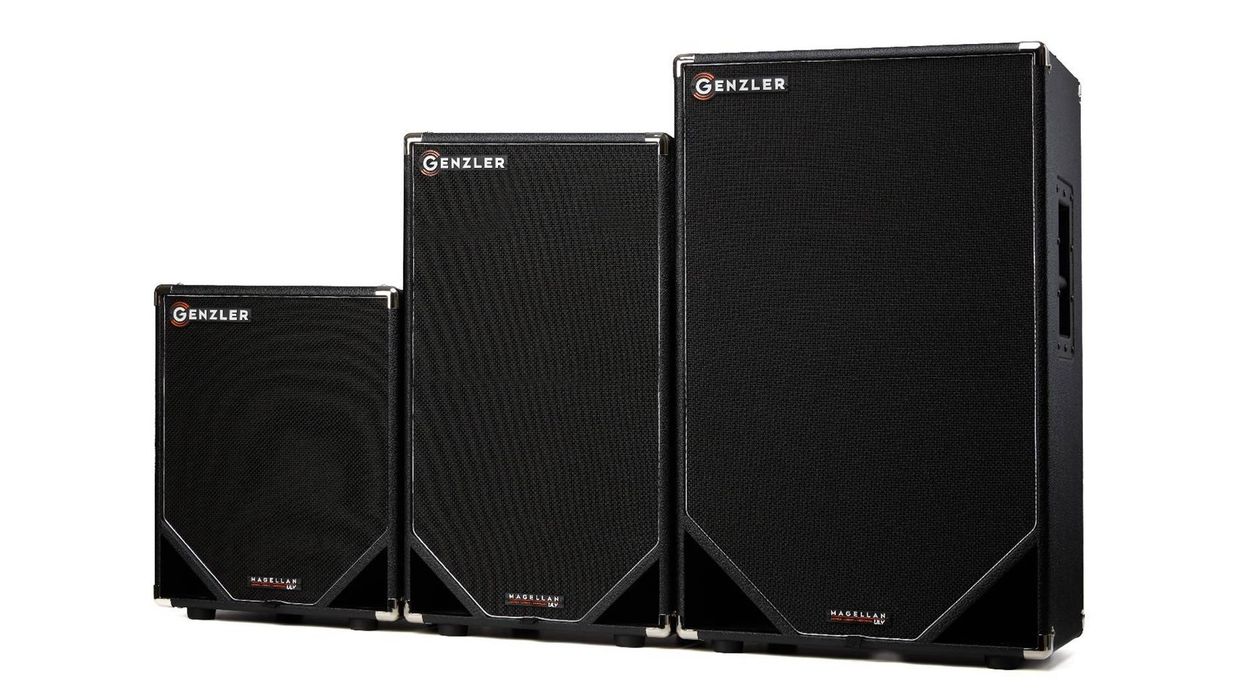
Genzler® Amplification is proud to announce the new MAGELLAN®ULV series of ULTRA * LIGHT * VERTICAL bass cabinet designs. With decades of cabinet design and build expertise, these new models are by far the lightest, most compact bass cabinets Jeff Genzler has ever offered.
These great sounding cabinets are tuned and ported to reproduce the depth and clarity of any bass instrument, with tight low-end support, vocal, mid-range definition, and available top-end shimmer.
The MG-ULV cabs are all vertical designs, with a minimal stage footprint, and are constructed from a new ultra-light, multi-layer, poplar plywood, for its warmth, density and strength, and all cabinets feature full internal acoustic dampening.
The MG-ULV series features:
- **All vertical cabinet designs, front ported for better projection and depth
- **High-powered Neodymium speakers and tweeters
- **Ultra-light, multi-layer, poplar plywood construction
- **Small, compact stage footprints
- **Full, internal acoustic dampening
- **12dB/octave crossover with Tweeter Level control
The series consists of 3 models with exceptional
weight to performance ratios.
MG-ULV-112T
- NEO—1X12” w/Tweeter, 350W, 8 ohm
- WT: 19.5 LBS
- DIMENSIONS: 18 1/8”H x 14 ¼”W x 14”D
- USA MAP: $1,099.99
MG-ULV-210T
- NEO-2X10” w/Tweeter, 600W, 8 ohm
- WT: 25 LBS
- DIMENSIONS: 26 1/8”H x 14 ¼”W x 14”D
- USA MAP: $1,359.99
MG-ULV-212T
- NEO-2X12” w/Tweeter, 700W, 4 ohm
- WT: 35.5 LBS
- DIMENSIONS: 29 ¾”H x 14 ¼”W x 14”D
- USA MAP: $1,599.99
GENZLER AMPLIFICATION staying in tune with the player community has responded with the new MAGELLAN® ULV series; addressing player’s needs for the lightest weight, most compact bass cabinets possible, without sacrifice in tone, power, warmth, and durability.
PRODUCTION SHIPPING---EARLY FEBRUARY 2026.
Ask the Expert: Fretboard Radius—What It Is, How It Works, and Who Should Care

Dave Mustaine says he won’t have ex-members on Megadeth’s final tour because some have been “saying bad things in the press”: “Why would I want to play with those guys?”

Dave Mustaine has further explained why he doesn’t want former members of Megadeth to join them on their final tour.
In an interview shared earlier this January, Mustaine said doing so would be a “huge undertaking” and that he didn’t want their gigs to come off as a puppet show. The band released their self-titled, final album last week, and will be retiring for good following its supporting global tour.
Further expanding on his comments in a new interview with NME, Mustaine also says that he wouldn’t want any previous members to join them, as some have said negative things about him in the press.
“If we were to look at doing that, then you’ve got some members that are deceased. You’ve got some members that I’m friends with, but they can’t play anymore like Chuck [Behler, drummer from 1987-1989]. And then you’ve got a couple guys that are saying very bad things about me in the press. So why would I want to play with those guys?” he quizzes.
“We did this before with Marty [Friedman, guitarist from 1990-2000], and I’m sure that if the opportunity presented itself and the timing was right, I would reconsider having one of the guys from the band’s alumni play with us. But if it was something that didn’t end very well, why would I? There’s not a valid reason to do something like that, especially when we have limited time on stage anyway.”
On the band’s final album, Megadeth have also recorded their own rendition of Ride The Lightning, a track that Mustaine worked on during his time in Metallica. Though originally believed by many fans to be somewhat of a flip off to the metal giants due to Mustaine’s firing from the group and tense relations with its members thereafter, he’s clarified that the track is actually a nod of respect.
He told Record Collector, “The idea just felt good, so I agreed. I wanted to close the circle and pay my respects to James [Hetfield, Metallica frontman] and Lars [Ulrich, Metallica drummer]. I personally have always thought James was an excellent guitarist, so I think it was the right thing to do.
“Panic [Mustaine’s first band] was never solidified as a real band, so my first real band was Metallica. Now that I’m going into retirement, I think it’s the right way to pay my respects,” he explained.
Megadeth’s final album is out now. You can find a full list of their scheduled tour dates via the official Megadeth website.
The post Dave Mustaine says he won’t have ex-members on Megadeth’s final tour because some have been “saying bad things in the press”: “Why would I want to play with those guys?” appeared first on Guitar.com | All Things Guitar.
“Practising is boring”: Geese guitarist thinks the best way to learn guitar is by playing gigs, not woodshedding technique

Guitarists often have wildly differing approaches to practice. Virtuoso Steve Vai, for example, last year recounted the crazy schedule he developed as a “neurotic” teenager, which found him happy if he managed to get in nine hours of practice a day.
Others, like Geese guitarist Emily Green, find dedicated guitar practice to be tiresome – she even calls it “boring” in a new interview with Guitar World – and prefer to hone their chops on the road and on stage.
It should be noted, in fairness, that Steve Vai also keeps his skills sharp on stage, and has performed hundreds – if not thousands – of shows over the course of his near-five-decade career. But Emily Green isn’t convinced by dedicated practice sessions.
“Practising is boring,” she says. “Getting better at guitar by playing in a band with people is much more interesting [and] the best way to learn how to play guitar. The scales and stuff just feel very dry to me.
“I don’t really know practical theory. It’s like I’m in a room with the lights off, and I know how to find my way around because I’ve been in that room my whole life. I know where everything is, but wouldn’t it be so much easier if the lights were turned on?”
The extent to which guitarists should know theory has long been a source of debate in the guitar community.
Last year, jazz-funk maestro Cory Wong made waves when he said guitarists should be able to point at every single note on the fretboard.
Unsurprisingly, virtuoso – and Steve Vai’s old teacher – Joe Satriani agreed with Wong, but other prominent guitarists expressed their opinion that a comprehensive grasp of the fretboard is not all that important.
Jack White responded hilariously, writing: “Ok it’s a deal; I’ll find the C, but I’m not learning all those other notes.”
Guitarists all over weighed in on the debate at the time, with one writing in disagreement: “I’ve been playing guitar for 40 years and I couldn’t [name every note on the fretboard]. But I can write a good song. That’s all I care about.”
Another agreed with Wong, writing: “Only other guitarists would be so pressed over a professionally working guitarist saying you need to know the basics of your instrument. Sure, you technically don’t need to know squat for your original project but when you start working with true pros, you’ll be glad you worked out the basics of music theory.”
Check out all of Geese’s upcoming tour dates via their official website.
The post “Practising is boring”: Geese guitarist thinks the best way to learn guitar is by playing gigs, not woodshedding technique appeared first on Guitar.com | All Things Guitar.
Pages
