
Music is the universal language
“Glory to God in the highest heaven, and on earth peace to those on whom his favor rests.” - Luke 2:14
General Interest
“A bold evolution of Valvetronix”: VOX pairs new amp modelling technology with the “authentic feel of classic tubes” in the new VT20X and VT40X

VOX is marking the 25th anniversary of its Valvetronix series with the launch of two new hybrid guitar amplifiers: the VT20X and VT40X.
Described as a “bold evolution of the Valvetronix concept”, the new models are aimed at players who want the “authentic feel of classic tube amps” and the flexibility of modern digital modelling.
- READ MORE: NAMM 2026 Live: The latest guitar launches and news from the biggest music gear event on the planet
At the core of both amps is a redesigned hybrid architecture that pairs new modelling technology with a multi-stage tube preamp circuit. According to VOX, its new modelling algorithm goes beyond static tonal snapshots, instead recreating the analogue circuitry of some of the world’s most coveted tube amps at a “circuit level”.
This deep level of modelling allows players to adjust gain structure, switch between Class A and Class AB operation, and fine-tune amplifier bias in real time – resulting in more nuanced tonal shifts and a more realistic response under the fingers.
A 12AX7 tube is integrated further into the signal path than in previous Valvetronix generations, contributing warmth, natural compression, and that elusive “edge of breakup” sensitivity that responds directly to player touch and guitar volume. VOX says the result is smoother clean-to-crunch transitions and overdrive tones with the sag, bloom, and bite typically associated with vintage tube amplifiers.
Beyond amp modelling, the VT20X and VT40X include a selection of built-in effects inspired by classic stompboxes, allowing players to build complete rigs without relying on external pedals. Both amps are housed in sealed cabinets featuring VOX’s bass-reflex design, intended to deliver fuller low-end response and better projection despite their compact size.
As you’d expect, the amps are well equipped for modern use. Both feature USB connectivity, a built-in tuner, AUX input, and a headphone output for silent practice. The VT20X delivers 20 watts through an 8-inch speaker, while the VT40X ups the power to 40 watts and a 10-inch speaker for additional headroom. Both are finished in the series’ Classic Blue livery, complete with a split-front design and blue grille cloth as a nod to VOX heritage.
“With deeper tube integration, refined circuit-based modeling, expressive tonal flexibility, and practical player-focused features, the new VT20X and VT40X reimagine the hybrid amp experience for a new generation while staying true to the musical feel that made Valvetronix a favorite among guitarists worldwide,” says Vox.
The VT20X and VT40X are available now, priced at $279.79 and $399.99 respectively.
Learn more at VOX amps.
The post “A bold evolution of Valvetronix”: VOX pairs new amp modelling technology with the “authentic feel of classic tubes” in the new VT20X and VT40X appeared first on Guitar.com | All Things Guitar.
Unprocessed’s Manuel Gardner Fernandes names the viral shredders you need to watch in 2026

“People always like to compare,” Manuel Gardner Fernandes says with an exasperated tone. “I can’t help but wonder if people will think that this record is better than the last one.”
The frontman of German tech-metal favourites Unprocessed insists that isn’t why the band’s new album is presented in a polar-opposite way to the previous one, but it’s clearly something that’s on his mind. The new album is called Angel and comes packaged with a lush blue cover. Put that side-by-side with the last one, …And Everything in Between, and it’s pretty stark. It had a fiery red cover. There was also a song on it called Hell. That’s pretty night-and-day, lads.
That sense of difference extends to the music. …And Everything in Between was hyper-aggressive and riff-based, whereas Fernandes says the new stuff is “song-based”. But, beyond that, Unprocessed are still Unprocessed. They’re still the same mind-bogglingly talented firebrands who’ve racked up millions of social media hits, almost definitely made you feel insecure about your guitar playing at least once, and long since figured their way around a snacky chorus.
“This album isn’t something that turned out super different [to the previous one],” says Fernandes over video call. “…And Everything in Between was, like, very evil. Just, evil packed into nine short songs. This one, it’s a little bit more of a journey. It has a lot of variety and there are more breaks.”
 Image: Press
Angel is a smooth-as-silk convergence of tech-metal, prog and R&B. Opener 111 may kick off with a thudding riff and a cathartic scream from Fernandes, but it soon expands into a sensitive, silken chorus, laced with synth. On Beyond’s Heaven Gate, the band kick off with a Polyphia-like prog jam. ‘Far away, far away – we leave only angel dust,’ their singer/guitarist gently croons during the chorus. ‘Far away, far away – we can try, heal your wounds.’ That sense of Unprocessed exploring diversity even extends to the guest stars: Marc “Zelli” Zellweger of deathcore up-and-comers Paleface Swiss snarls his lungs out for Solara, whereas Jason Aalon Butler of Letlive and Fever 333 brings a confrontational rap to Head in the Clouds.
“I still haven’t met Jason personally,” Fernandes admits. “We just know each other online. He actually wanted to do something for …And Everything in Between, but, because of time, he couldn’t do it. I uploaded a clip to Instagram: this heavy, emotional, eight-string riff. He was like, ‘Wow, this is super sick! Let’s do something with it.’ He shared my vision for the whole song.”
In an interview earlier this year, Unprocessed’s drummer, Leon Pfeifer, called Angel a natural “next step” after …And Everything in Between. However, Fernandes disagrees.
 Unprocessed and Zelli. Image: Press
“…And Everything in Between had this more shocking factor,” he explains. “We introduced a very thrash metal thing with a song like Thrash, and it had this very viral moment. I was not trying to do something completely different or mind-blowing on this record. My focus on this record was just having nice songs.”
The frontman reveals that that ferocity was inspired by anger over a record label deal gone sour. …And Everything in Between was Unprocessed’s first self-released effort, its 2022 predecessor Gold having come out via Spinefarm.
“Gold took us three years to release,” he explains, “but not because we weren’t ready. And as we got rid of our connection with the label, I just immediately hit my studio and was writing. It turned out to be super heavy.”
Outside of Unprocessed, Fernandes is a social media superstar. In 2019 and 2020, the player gained widespread attention through Instagram, with footage of him playing his instrument at seemingly inhuman speeds going viral. However, it seemed that for every floored fan Fernandes picked up using social media, there was another person insisting that he was faking his chops (he wasn’t). Even though they had no evidence to support their claims apart from the camera-phone footage being a bit fuzzy, they made their protestations very, very public.
 Manuel Gardner Fernandes (right) and Zelli (left). Image: Press
“I had a journey with social media,” Fernandes reflects, “and it was kind of compressed into one year of ups and downs. I was just uploading my clips and they were skyrocketing all over social media. But, after that, immediately, I was caught in the middle of a shit storm. After that whole controversy, I was like, ‘Do I even want to be that bedroom guitarist, that social media guitarist? Or, do I want to step back and get my band to where I was as an individual guitar player?’”
In 2023, Fernandes admitted to Guitar that he was scared of being “cancelled” due to all the controversy. As a result, even though he has 311,000 Instagram followers right now, he barely posts videos of himself playing guitar at home anymore. Combine that with the fact that Unprocessed spent plenty of time on the road between …And Everything in Between and Angel, playing shows with the likes of Tesseract and the Callous Daoboys, and it’s clear which route he ended up taking. It makes sense when he explains that he always wanted to be a player in a band anyway.
Fernandes first picked up a guitar when he was three years old. His granddad had been a touring guitarist and, at the time, his dad was a bassist in a thrash band. “He introduced me to Metallica and Iron Maiden,” he remembers. “I’ve been a metal fan since I was born, basically.”
When he was a teenager, he also fell in love with dark electronic music, and he lists Massive Attack and Depeche Mode among his favourite bands of all time. That combo of influences – lightspeed, intricate metal alongside dark, synthy atmospherics – is extremely tangible throughout Angel, with the song Your Dress casting throbbing bass against industrial beats. He started playing in bands at school, and he formed Unprocessed aged 16 with co-guitarist Christoph Schultz, after they both auditioned for a spot in a cover band.
In 2025, that childhood project has flourished into an independent business, putting out albums and touring all over the world. However, Fernandes still finds the same joy in creation and production that has always been there. He also clearly relishes the kind of collaboration that only a band can give, as opposed to being a social media player out there by himself.
“My favourite thing to do still is sitting in my studio and producing music,” he says. “That joy hasn’t changed since the beginning of Unprocessed. The feeling of me bouncing a version of a song to the boys, or showing it to friends and family, that really gives me joy.”
Fernandes may not be hugely active on social media anymore, but he’s still plugged in to what’s going on there, especially what new guitarists are blowing up. So, when we asked him to name the viral players blowing his mind right now, he quickly rattled off a list of names. These are the online virtuosos you should be watching in 2026:
Ando San
“I’ve never seen a guy rapping and thumping at the same time! It’s super sick.”
RJ Pasin
“He’s done incredible things with guitar production. The majority of guitarists probably wouldn’t call him a guitarist in the first place. You can argue he is or not, but this guy is doing something fresh in the music scene. His style is all about production. He’s more a producer than a guitarist, in a way. He’s still doing all these sounds with the guitar that make it special.”
Spiro Dussias
“I don’t know what he’s doing! I don’t know how he is doing that! I came across him on Instagram.”
Ichika Nito
“In the beginning, what made him stand out for me was his melodies. His compositions, I felt that they were almost soundtrack-ish, and I wanted to do that as well. I just love the classy DI sound with a lot of reverb on it.”
Tim Henson, Polyphia
“When Polyphia first came up, I can’t remember the name of the first video I saw, but there was more solo shredding [in their music] back then. Since then, I’ve always checked out what Polyphia are doing. Tim started following me on Instagram, and the first stuff that we did together was the In The Cut video that Tim uploaded to his channel. After that, we did our song Real together with him and [Polyphia bassist] Clay Gober. After that, we went on several world tours and did Die on the Cross of the Martyr, which is probably the biggest thing we’ve done together.”
Marcin
“In 2019, 2020, something like that, he wrote me a message saying, ‘Oh, my hands glitch too [referring to Fernandes’ “sped-up footage” controversy].’ [laughs] Since then, we started doing videos. The stuff that’s super fascinating about him is just his way of using his instruments as a percussive element, which I love. He sounds the same live as he does in his clips, and I love that, as well. He has millions of followers, but he’s also pulling a lot of people live, which is really nice to see. He transferred it the right way, to the live audience.”
The post Unprocessed’s Manuel Gardner Fernandes names the viral shredders you need to watch in 2026 appeared first on Guitar.com | All Things Guitar.
Wizard of Odd: An Ode to Hot Rods and Seymour Duncan
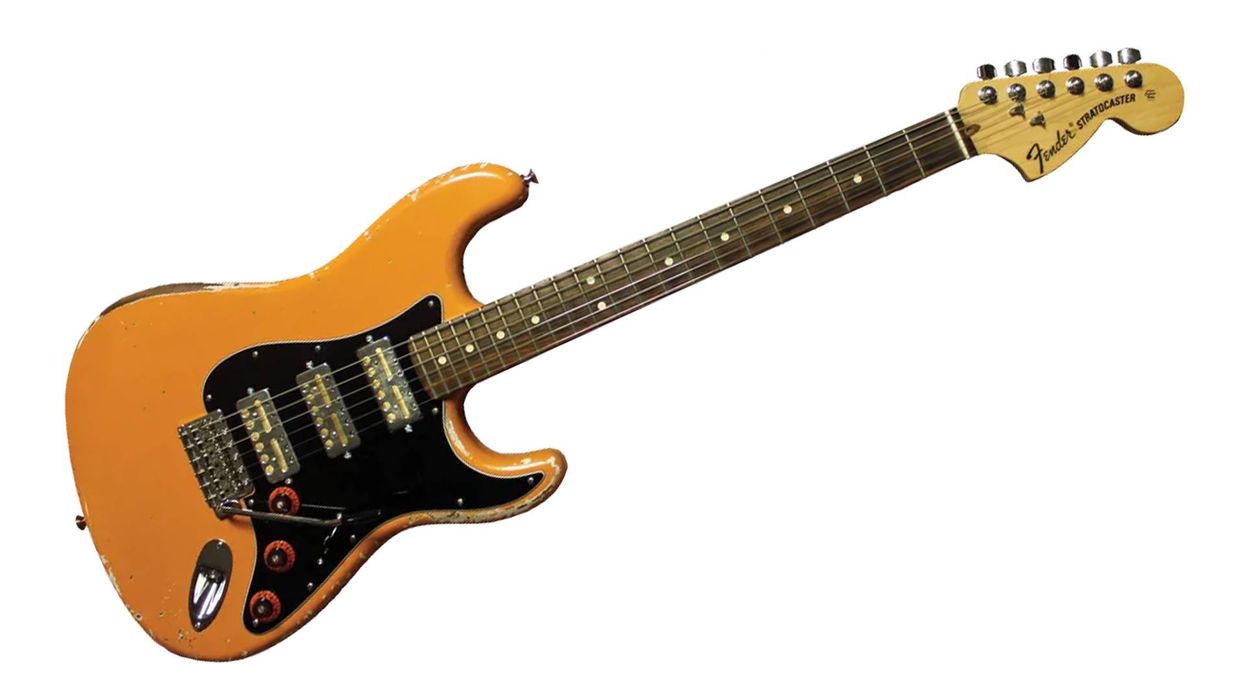
Many years ago, before I had inklings of writing about and researching guitars, I had an eye for the unique—weird, strange, and odd artistic flair that I seemed to find in random things. Vintage car parts held my attention for a while, and even though I had only rudimentary knowledge, I still enjoyed designs and how I could fit them together. Like early hot rods or motorcycle choppers, I saw an intoxicating beauty in what some folks would call “outsider” art.
Additionally, I grew up near Nazareth, Pennsylvania, home of Martin guitars and the Andretti family! Interestingly, there were a few racetracks (often called speedways) around, which were like oval dirt tracks where all sorts of cars raced around and turned the attendees into mudballs! At the time, my parents had an AMC Gremlin and, with tons of modifications, many of those cars were transformed into racers. It was like I drove around in a hot rod with no seat belts! Good times.
“What’s the big deal if this pickup was supposed to be in the bridge position, or that pickup was wired out-of-phase?”
Of course, as my attention turned towards electric guitars, I saw the opportunity for hot-rodding and modifying these instruments. Why? Because the guitars I found were often unplayable, and sometimes had dead pickups. I mean, what’s the big deal if this pickup was supposed to be in the bridge position, or that pickup was wired out-of-phase? These details meant nothing to my obsessive mind. I just wanted to create guitars and make noise.
Now, much earlier than my fiddlings, there was a fellow from South Jersey (also near me) that was already repairing pickups and experimenting with wire, winding, and construction techniques. This gentle soul, one of the nicest guys I’ve ever met, is the amazing Seymour Duncan! I don’t have to list all of his accomplishments and accolades. He’s a true living legend, and has had a massive impact on music, repair work, and guitar tone. But I would argue that Seymour is one of the earliest practitioners of hot-rodding guitars. Think about it: Back in the day, when a pickup failed, it was simply replaced with another factory part. But Seymour actually repaired pickups and noticed all sorts of differences. I’m sure it also helped that he’s an excellent player with a good ear for tone—whereas me, I didn’t have an ear at all.
So what can a kid do when there aren’t any repair spots nearby, and he hasn’t the ability to differentiate between good tones or bad ones? Well, you just go nuts like I did, and listen to hundreds of guitars and pickups! The good, bad, and ugly of 6-strings all passed through my hands, and eventually I developed a certain “type” of ear. Not Seymour-level, but maybe like, empty-beer-can level? I started to listen for pickups that had a presence and zing. I dug aggressive sounds, but I also enjoyed hearing a touch of echo. Eventually, I settled on pickups that were constantly on the verge of losing it, exploding without your palm grounding the electronics, constantly on the edge of feedback! For me, it was akin to driving a car with a manual transmission. I felt more in tune with a guitar if it was giving me input, dig?
Out of all the pickups I’ve heard, among my favorites are the earliest gold-foil ones made by Teisco. There are tons of gold-foil variants hailing from 1960s Japan, but the very first ones, produced between 1963 and 1965, are the best to my ears. It’s probably why older players would hot-rod guitars with these units. So for this month, I’m giving you a glimpse of one of my hot rods with my gold-foils. This guitar, dubbed the “Pumpkin,” is one of the easier builds you can do. Vintage and many reissue gold-foils were surface-mount, so you can easily adapt a tried-and-true template like a Fender Stratocaster. It’s like using the old Ford Model A, because you have a solid base, and don’t have to modify too much. Everything on mine here is mostly genuine Fender, except for the electronics.
Another easy way to mess around is with the guitar’s pot values, but then again, I’m getting a bit out of my pay grade. For those kinds of questions, you’d have to check with Seymour!
Roland adds three more treasured Boss pedals to its Effects Pedals plugin

Roland has added a further three pedals to its Boss Effects Pedals plugin – the software library available exclusively through the Roland Cloud.
Roland had slowly been releasing more digital versions of Boss’ range of treasured pedals over 2025, with eight arriving back in May last year. The library is now home to a total of 19 of the most well-loved Boss pedals, including the latest three additions – the DM-2, the OD-2, and the DC-2.
The Boss Effects Pedals plugin brings its compact pedal experience to the world of computer music production, delivering “premium processing” for guitar, bass, keyboards, vocals, and more. And this isn’t the end of it, as Roland has confirmed that this core library will continue to be populated with an ever-expanding selection of models derived from historic Boss hardware.
This trio of new additions brings longtime favourites to the range – the DM-2 was the first Boss analogue delay in the compact pedal lineup, and its retro BBD circuit produces delays that become more saturated with each repeat.
The OD-2 TURBO OverDrive is now onboard, offering two distinctly different overdrive sounds. Its standard mode produces a mild, well-defined overdrive, but switching on Turbo mode will crank things up by activating an independent drive circuit with higher gain and increased presence for heavy riffs and solos.
Completing the flurry of new arrivals is the DC-2 Dimension C pedal, which according to Roland itself, was born by adapting the rack-based Roland SDD-320 Dimension D into a condensed pedal for guitars and other mono instruments. It’s capable of adding depth and spaciousness like a chorus pedal, but its Dimension effect produces minimal modulation to create 3D character while preserving natural tone.
The Boss Effects Pedals plugin is available with a Roland Cloud Ultimate membership, which users can try for free with a 30-day all-access trial. Find out more via Roland.
The post Roland adds three more treasured Boss pedals to its Effects Pedals plugin appeared first on Guitar.com | All Things Guitar.
Guild Debuts American-Made F-412 Standard Jumbo12-String
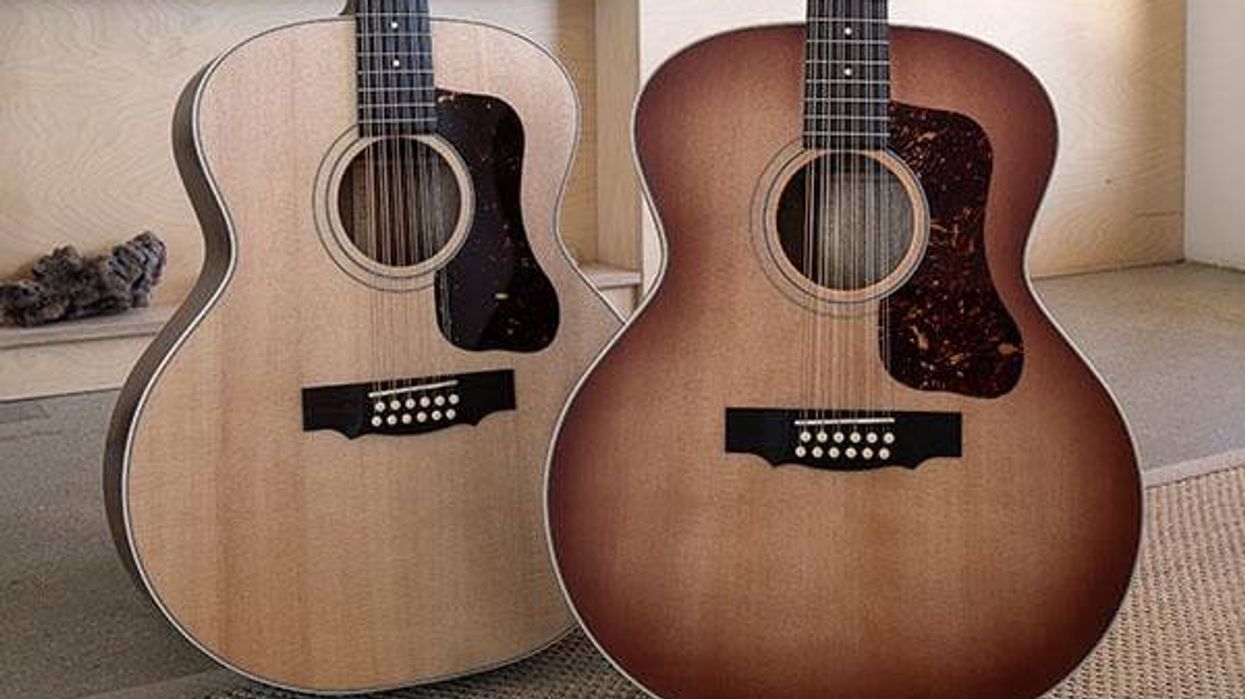
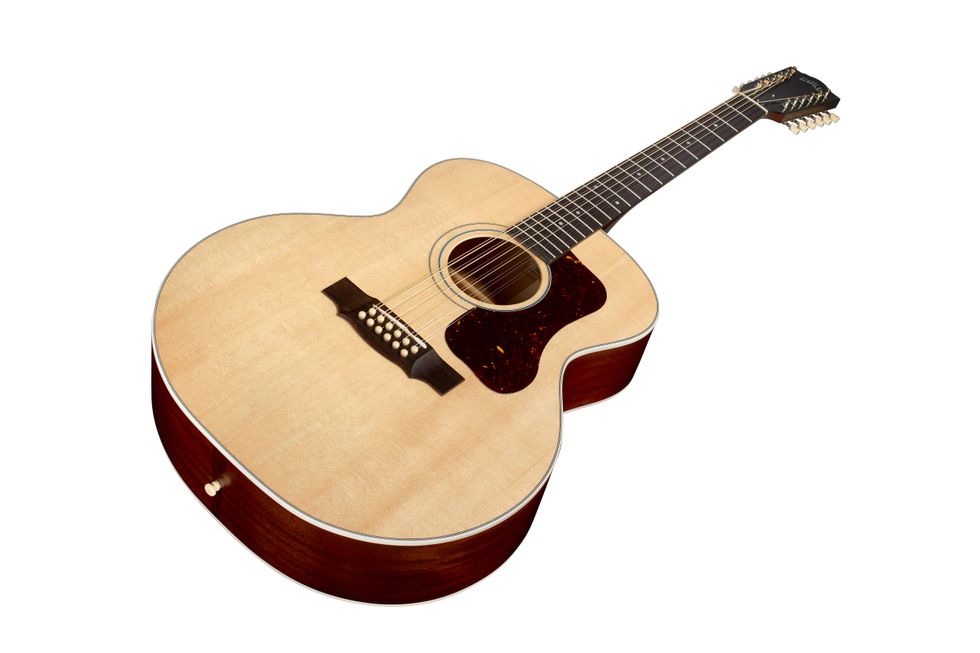
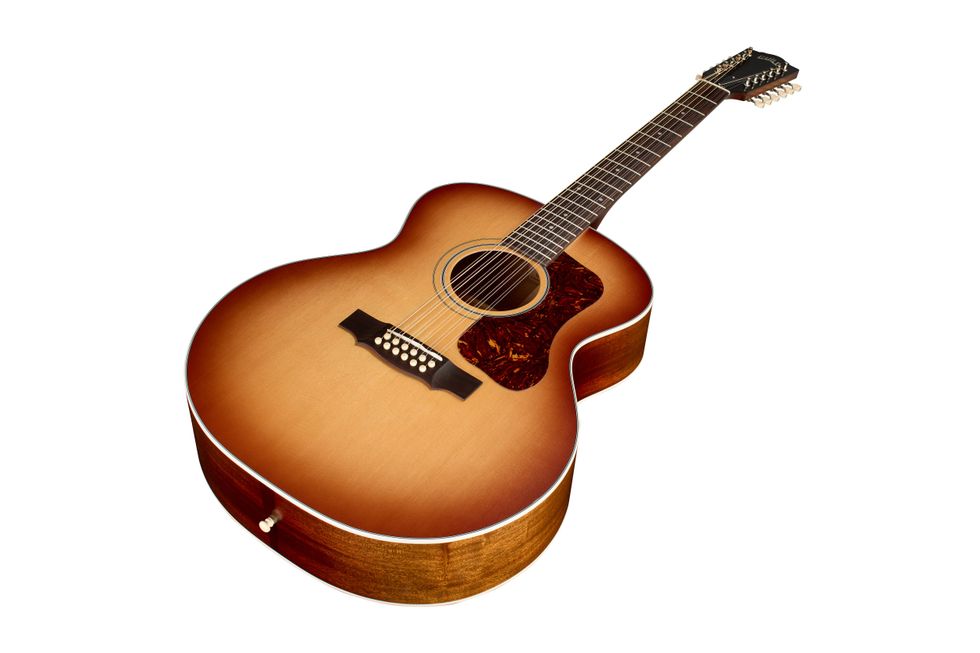
Guild® Guitars today introduced the F-412 Standard Natural and F-412 Standard Pacific Sunset Burst jumbo-sized 12-string acoustic guitars. Meticulously crafted in the USA*, these premium instruments differ only in their finishes, and both are also available with L.R. Baggs® Element VTC pickup systems.

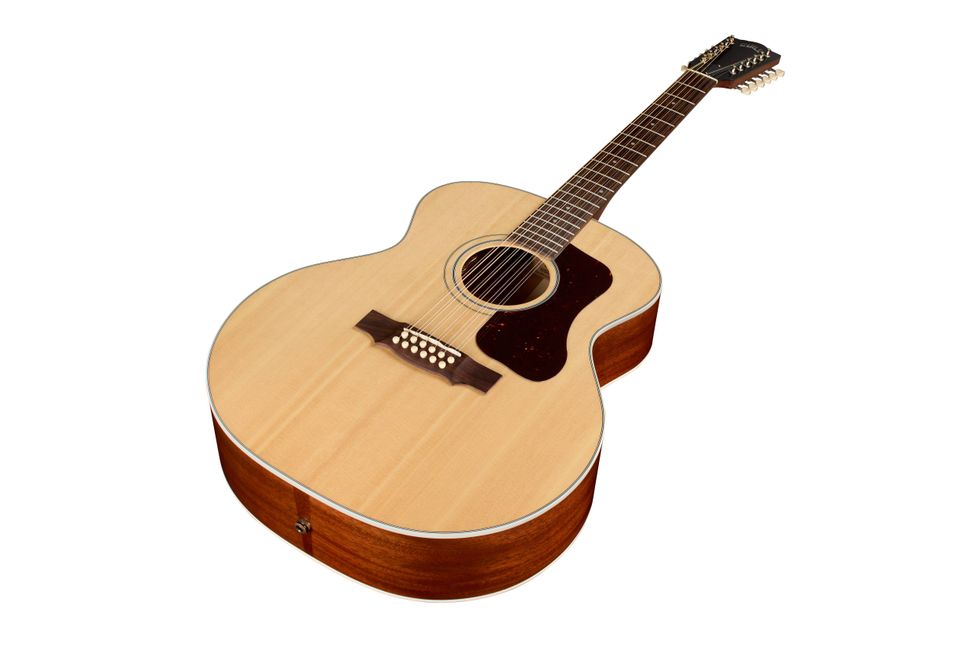
“The new F-412 Standard guitars are the first American-made mahogany body 12-strings that Guild has offered in many years,” said Nick Beach, Product Manager, Fretted Instruments. “These professional-quality guitars are also more accessible than our top-of-the-line 12-strings, putting them well within reach of working guitarists.”
F-412 Standard Natural and F-412 Standard Pacific Sunset Burst guitars boast solid African mahogany backs and sides that provide rich warmth, while their solid Sitka spruce tops add brightness—resulting in a lush, wide, symphonic sound with deep lows, vibrant mids, and characteristic Guild 12-string sparkle and shimmer.
The guitars also feature comfortable C-Shape mahogany necks topped with Indian rosewood fingerboards, tortoiseshell pickguards, white body binding, pearloid Guild Peak logo headstock inlays, and Deluxe Vintage open-gear tuners with cream oval buttons.
The F-412E Standard Natural and F-412E Standard Pacific Sunset Burst guitars include L.R. Baggs Element VTC active pickup systems with Volume and Tone controls that faithfully reproduce the guitars’ acoustic sound when amplified or recorded.
All F-412 Standard guitars come with a Guild Deluxe humidified hardshell case and a Certificate of Authenticity.
Pricing & Availability
F-412 Standard Natural $2,799.99 USD (MSRP)
F-412E Standard Natural $2,999.99 USD (MSRP)
F-412 Standard Pacific Sunset Burst $2,899.99 USD (MSRP)
F-412E Standard Pacific Sunset Burst $3,099.99 USD (MSRP)
Available now
Learn More
https://my.guildguitars.com/guild-usa/f-412-standard-natural
https://my.guildguitars.com/guild-usa/f-412-standard-natural/#naturalE
https://my.guildguitars.com/guild-usa/f-412-standard-pacific-sunset-burst
https://my.guildguitars.com/guild-usa/f-412-standard-pacific-sunset-burst/#pacificsunsetburstE
Who's No. 1? Let the Debate Begin!
PG's video crew discuss & debate what band has rocked the U.S. music scene the most in the last 75 years.
D’Addario Introduces the Micro-Fiber Polishing Mitt
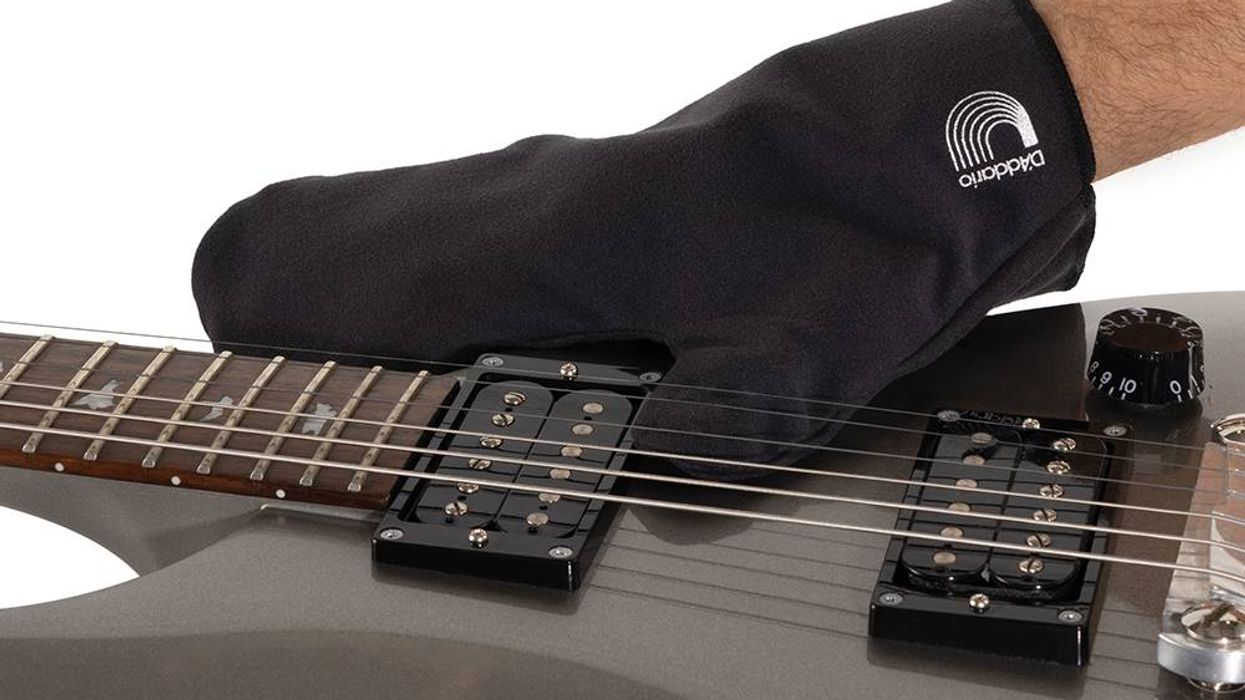
D’Addario announces the Micro-Fiber Polishing Mitt: a reusable, chemical-free cleaning tool that keeps instruments looking and sounding their best. Made with ultrafine microscopic fibers, the mitt removes dust, dirt, oils, and smudges, offering a fast, safe alternative to traditional cloths and harsh polishes.
Designed for Precision Cleaning
The wearable mitt design fits right over the hand, giving players maximum control when cleaning tricky areas like under strings, around hardware and tuning pegs, or inside cutaways. It’s also ideal for gently wiping down strings to help extend lifespan and preserve tone. The Micro-Fiber Polishing Mitt is durable, machine washable, and designed to last.

Key Features
- Chemical-Free Cleaning: Removes dust, dirt, and oils without sprays or polishes.
- Wearable, Precision Design: Fits over the hand to reach tight spots with ease.
- Safe for All Instruments: Ideal for guitars, basses, keyboards, drums, and more.
- Supports String Longevity: Gently cleans strings to help maintain tone.
- Reusable & Washable: Built for long-term use; cleans easily with soap and water.
Availability & Price
The Micro-Fiber Polishing Mitt is available now through daddario.com and authorized retailers. Street price: $7.99.
For more information, visit: https://bit.ly/polishmitt-pr
PRS Guitars Announces SE Ed Sheeran “Cosmic Splash” Limited Edition
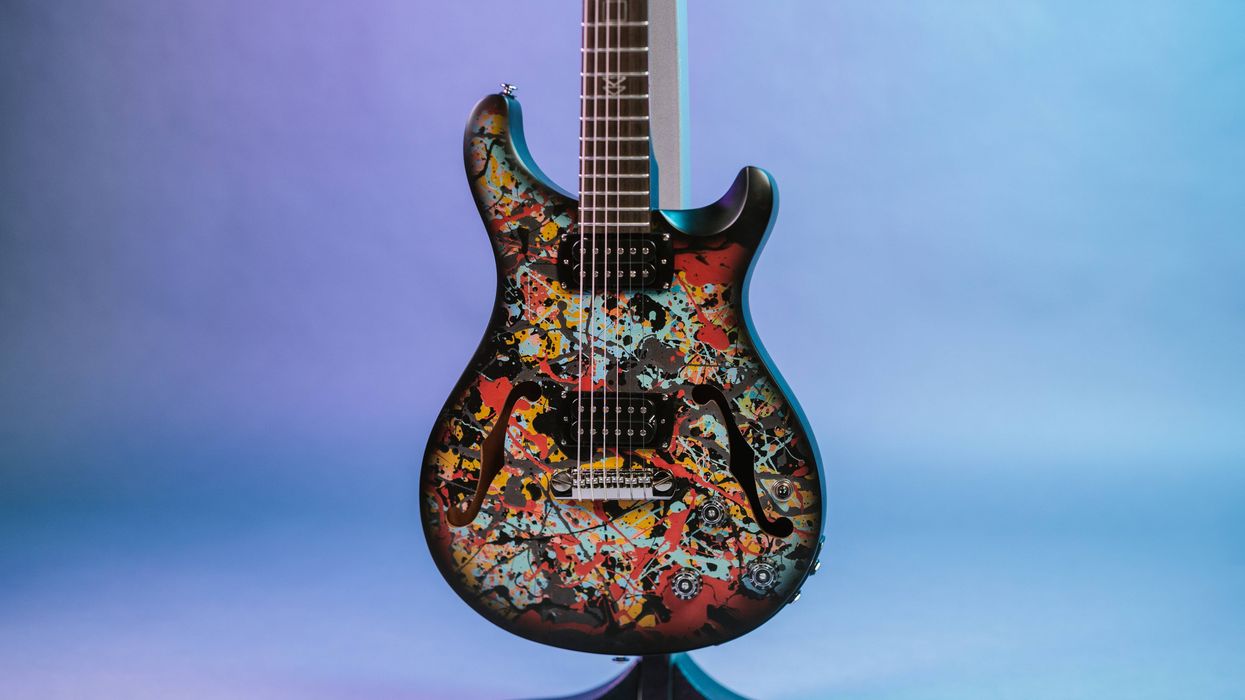
PRS Guitars today announced the SE Ed Sheeran “Cosmic Splash” Limited Edition guitar. Designed in collaboration with Ed Sheeran, this SE Hollowbody I Piezo Baritone model marries Sheeran’s passion for songwriting with his offstage love of painting. The SE “Cosmic Splash” model features the exact design from one of Sheeran’s 2025 Cosmic Carpark paintings, a series of original artworks he sold last year to raise funds for the Ed Sheeran Foundation. As an added bonus, every guitar will ship with an 8” x 8” print of the same Cosmic Carpark painting that is on the guitar body, hand signed by Ed Sheeran. Only 1,000 pieces will be available worldwide. This is the first PRS collaboration with Sheeran that is available for purchase. It is also the first-ever hollowbody baritone in the PRS catalog.

The fretboard inlay is a nod to the musician’s new “Stereo” album series– Play, Pause, Rewind, Fast-Forward, and Stop – with the Play icon also featured on the truss rod cover.
"I started painting as a way to stay creative when I am off the road,” said Ed Sheeran. “I often say ‘keep the faucet running’ when it comes to songwriting – it’s so important to stay in a creative headspace to get to the really good stuff. My hope is that people find this instrument as inspiring as I do. To have my artwork on it as well is such a treat.”
The SE Hollowbody I guitar features the PRS/LR Baggs Piezo system, 85/15 “S” pickups, and a 27.7” baritone scale length. Players can isolate or blend the piezo’s acoustic voice with electric power for myriad creative options. The slimmer, contoured “flatback” design of the Hollowbody I melds the back design of an electric guitar with the rich, open tone and airy acoustic depth of a hollowbody. The full rundown of specs is available on prsguitars.com.
This is not the first time PRS has worked with Sheeran to create a unique guitar. Last summer, the collaboration led to a one-off SE Hollowbody Baritone custom painted and featured in the video for Sheeran’s song “Drive,” written exclusively for the soundtrack to the Apple Original Films’ blockbuster “F1: The Movie.” Sheeran has been playing PRS for his choice of electric guitars since 2018. He currently has a Hollowbody II in a Prism Dragon’s Breath finish with bing cherries on the fretboard, a one-off purple Silver Sky gifted to him by John Mayer, and a stock Custom 22.
For all of the latest news, click www.prsguitars.com and follow @prsguitars on Instagram, Tik Tok, Facebook, X, and YouTube.
SYNERGY Amps Releases the All New SYN-20IR 1x12 All-Tube 20 Watt Combo
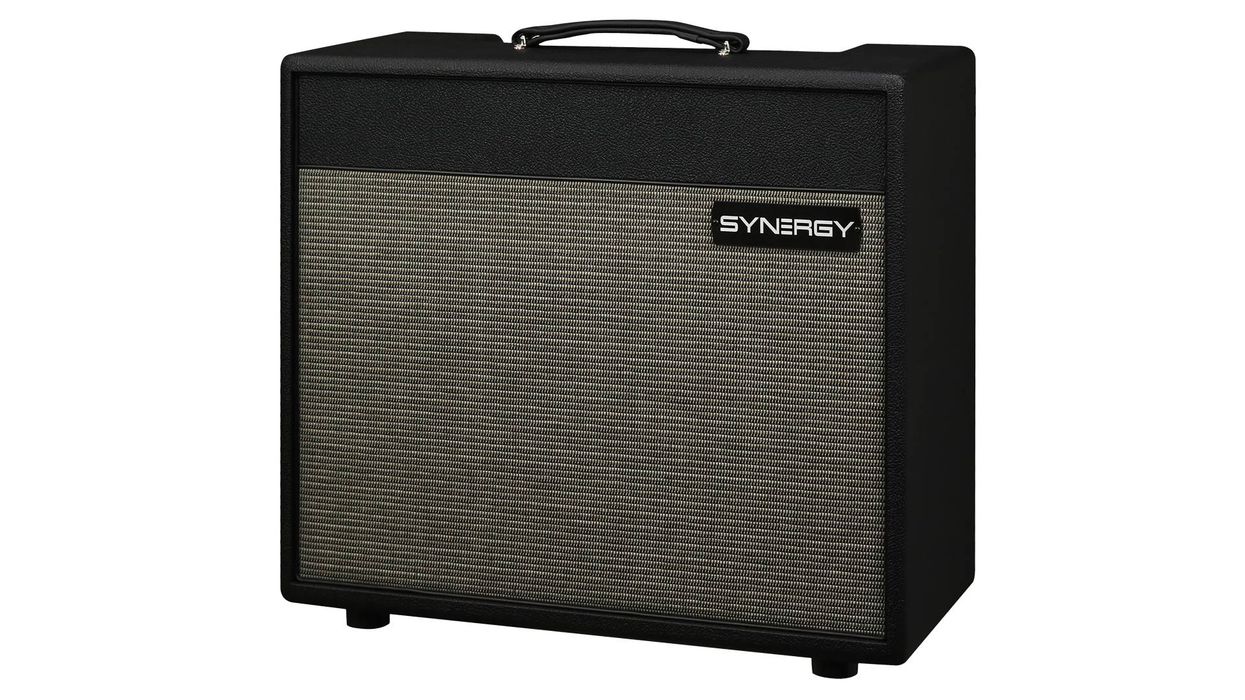
Synergy Amps proudly announces the SYN-20IR 1x12” Combo Amp, a compact, USA-built powerhouse that delivers a full collection of iconic amplifier tones in one versatile design. In a milestone first for the company, Synergy also introduces the SYN-20IR Combo Custom Shop, offering players custom-finished options that pair world-class tone with personalized aesthetics.
Designed and built in Commerce, California, the SYN-20IR Combo combines Synergy’s modular all-tube platform with a Celestion Vintage 30, delivering authoritative tone, dynamic response, and unmistakable feel. At the heart of the amp is Synergy’s acclaimed swappable preamp module system, allowing players to access an expanding lineup of legendary amp voices—without replacing their amplifier.
Engineered for modern players, the SYN-20IR features selectable power-amp modes, low-latency onboard IRs, silent play capability, and full MIDI control, making it equally at home on stage, in the studio, or in a quiet practice environment. The result is uncompromising tube tone with the flexibility today’s sessions and performances demand.
With the introduction of the SYN-20IR Combo Custom Shop, Synergy brings a new level of individuality to the platform. Players can now choose custom finishes that reflect their personal style while retaining the boutique craftsmanship, USA-built quality, and stage-ready versatility that define Synergy Amps. It’s a distinctive new chapter for the SYN-20IR—where iconic tone meets custom expression.
About Synergy Amps
Synergy Amps is the leader in modular tube amplifier technology, bringing together iconic amp designs from the world’s most respected builders. Handcrafted in the USA, Synergy products empower guitarists with unmatched tonal flexibility, authentic tube feel, and uncompromising sound quality.
For more information, visit synergyamps.com or contact Synergy Amps, Commerce, California.
The Joy of Using a Spokeshave That You Made
“Traditional methods endure because they always have worked and they always will.”
Roy Underhill, The Woodwright’s Eclectic Workshop, 1991

There was a day several years ago, when I pulled out two blanks of wood from my wood cache, one was California laurel and the other was black cherry. I had two small Hock tool spokeshave blades, I made the laurel blank into a flat sole shave, the cherry blank got a rounded sole. Both have an East Indian rosewood wear plate and both use set screws to adjust the blade’s depth of cut.
I used both shaves to refine the heel on a neck for a steel string acoustic guitar that I am making, the above photo shows the laurel shave in action on the neck shaft, the cherry shave is on the bench next to a carving knife with an extra long handle. That knife I also use to shape the heel of the neck.
It’s pretty fun to use a tool that you made, and that it really works!
So, take time today to get out into your shop and make that hand tool you have always wanted!
Cort Guitars Introduces the Space G6TR Headless Electric Guitar
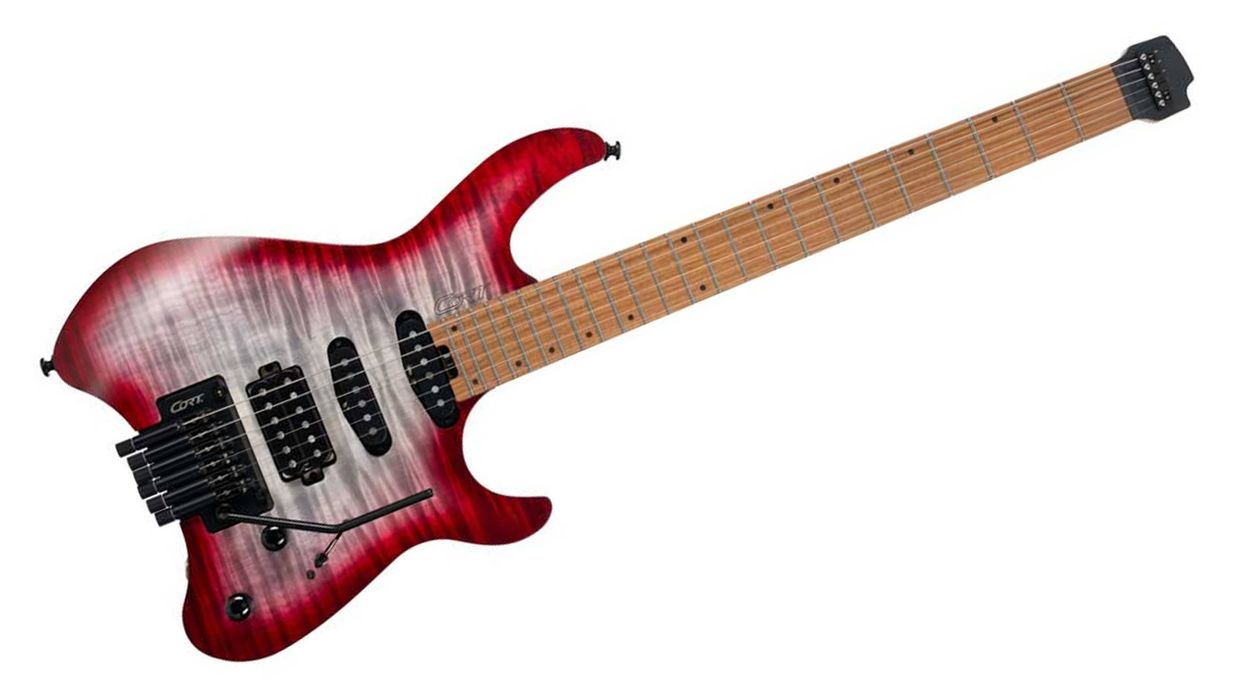
Cort Guitars announces the launch of the new Space G6TR, a headless electric guitar created for players who demand light weight, perfect balance, fast playability, and modern tonal flexibility. Built for real-world performance situations and crafted with custom hardware developed specifically for its design, the Space G6TR delivers stability, travel-friendly practicality, and confident tuning control. Available now worldwide through local retailers and online, it brings players an advanced instrument designed to inspire, with the goal of combining expressive feel, sonic range, and stage-ready reliability.
The Space G6TR features an okoume body topped with a flamed maple veneer, presenting a striking look paired with resonant tone. Its bolt-on, five-piece roasted maple and walnut neck is built for strength and stability while keeping a comfortable feel, paired with an ergonomic Ergo V neck profile that measures 21 mm at the first fret and 23 mm at the twelfth fret. A 25.5-inch (648 mm) scale length ensures familiar tension and response, while the roasted maple fingerboard with a 12–15.75-inch compound radius supports fast, accurate playing across all 24 stainless steel tall medium-jumbo frets. Black dot inlays are complemented by luminous side dots for visibility in dark performance environments. The guitar includes a PPS nut measuring 42 mm (1 21/32”) in width, a matte neck finish, and is available in Semi-Gloss Lava and Semi-Gloss Lagoon finishes.
Electronics are centered around an HSS configuration designed to deliver range and clarity. The Cort Voiced Tone VTS63 and VTH77 pickup set works with a five-way selector to provide access to a wide spectrum of tones, from smooth cleans to powerful leads. Simple, intuitive control is supported through a single volume and single tone layout, keeping the focus on musical expression while offering tonal versatility suitable for multiple genres and playing styles.
Hardware has been purpose-built for this model, with specially designed headless tuning hardware and a custom headless tremolo system created to provide expressive pitch control while keeping tuning stability and reliability under aggressive playing. A proprietary headpiece and tailpiece system enhances long-term performance, while a two-way adjustable truss rod with spoke-nut access supports easy setup adjustments. The guitar ships with D’Addario EXL110 strings, features black hardware, matte neck finish, and includes a gig bag.
For additional details and images of the new Cort Space G6TR, please visit NAMM Booth #6810 or online at www.cortguitars.com.
Street Price: $879.99 USD
NAMM 2026 Live: The latest guitar launches and news from the biggest music gear event on the planet

The NAMM Show 2026 is one of the hottest events in the music industry calendar, as thousands of brands descend upon the Anaheim Convention Center in California to showcase their latest products and innovations. And the big week has finally arrived…
The Guitar.com team is pleased to report that we’ve traded the grey skies of England for the warm Anaheim sun, as we head to NAMM to cover all the biggest guitar gear launches and announcements you need to know about.
The show floor officially opened on Tuesday, 20 January, and we’ll be here until Saturday when doors close trying to visit as many booths and nerd out on as much new gear as humanly possible. While also keeping you in the loop, of course…
And with that, we welcome you warmly to the official Guitar.com Live Blog, which will be updated regularly over the coming days with all the latest news from NAMM 2026 as it happens. Let’s go.
[live_timeline tag=”namm-2026″ first=”15″]
The post NAMM 2026 Live: The latest guitar launches and news from the biggest music gear event on the planet appeared first on Guitar.com | All Things Guitar.
This headless Space G6TR from Cort launched ahead of NAMM has got the prog lovers on the Guitar.com team salivating

Cort Guitars has released a new headless model, the Space G6TR, which it created with playability and tonal flexibility in mind.
The new model is lightweight, offers “confident tuning control”, and unlike the majority of headless guitars, its electronics are centred around a HSS configuration designed for a wider range of playing styles.
Headless guitars are a prominent focus of attention right now, with Ibanez unveiling its brand-new headless Alpha series earlier this month. Cort’s Space G6TR joins a number of other headless models in its catalogue, but is catered for more ease of use and versatility.
It has an okoume body topped with a flamed maple veneer, and has a bolt-on, five-piece roasted maple and walnut neck paired with an ergonomic Ergo V neck profile, measuring 21 mm at the first fret and 23 mm at the twelfth fret.
A 25.5-inch scale length offers familiar tension and response, while its roasted maple fingerboard with a 12–15.75-inch compound radius supports fast playing. The guitar also hosts a PPS nut measuring 42 mm (1 21/32”) in width, a matte neck finish, and is available in Semi-Gloss Lava and Semi-Gloss Lagoon finishes.
The Cort Voiced Tone VTS63 and VTH77 pickup set works with a five-way selector for switching between smooth cleans and powerful leads. Helping to keep things single is also a single volume and single tone layout, and its headless tuning hardware and custom headless tremolo system help to retain tuning stability under aggressive playing, so you can bend and dive as you please.
The Space G6TR is available now for $879.99 USD. You can find out more by stopping by at NAMM Booth #6810, or visiting Cort Guitars online.
The post This headless Space G6TR from Cort launched ahead of NAMM has got the prog lovers on the Guitar.com team salivating appeared first on Guitar.com | All Things Guitar.
Struggling to nail Metallica’s punishing riffing? Don’t worry, even James Hetfield admits he finds it tricky at times

If you’ve ever found yourself frustrated when trying to learn a Metallica riff, don’t beat yourself up. James Hetfield has shared that there are two of their own songs he still gets nervous to play, and that each member has their own list of songs they find most tricky.
Metallica are often honest about not always getting things perfect, especially when they’re out playing live and juggling differing setlists. Their colossal M72 world tour, which will resume in May this year, often sees them play two nights with two individual set lists in each city they attend.
Hetfield tells The Metallica Report (via Ultimate Guitar), “We all have our own certain songs that are a little difficult. Moth Into Flame, Master of Puppets, those are two that are, ‘Wow, those are a little difficult.’ I’m sure Lars [Ulrich, drummer] has his list; we all have our list. But we push through, and we help each other with it,” he explains.
On a previous appearance on the same podcast, Hetfield was also open and honest about how they accept and handle any mistakes they make while on the road. “It’s not a mistake, really,” he said. “That word is kind of ridiculous. It’s just a unique way of playing it that night. Everyone gets to enjoy whatever happens right then.
“Frankly, I think it’s a challenge when a song falls apart. It could be devastating to other bands, for us it’s just, ‘Okay, we fucked up! Let’s start it again! Let’s take it from here!’”
Mistakes or no mistakes, even Dave Mustaine, who famously has a fraught relationship with the band, has complimented Hetfield on his playing a number of times over recent years. As a final hurrah before they retire this year, Megadeth released their own cover of Metallica’s Ride The Lightning, and upon confirming the track, Mustaine said he wanted to do it out of respect.
In an interview with Rolling Stone, he called Hetfield a “fucking powerhouse” and said he’d “always respected him” as a player: “I wanted to do something to close the circle on my career right now, since it started off with [Mustaine’s band before Metallica] Panic and several of the songs that ended up in the Metallica repertoire, I wanted to do something that I felt would be a good song,” he said.
To find out where you can catch Metallica on tour, head to their official website.
The post Struggling to nail Metallica’s punishing riffing? Don’t worry, even James Hetfield admits he finds it tricky at times appeared first on Guitar.com | All Things Guitar.
VOX Introduces New Valvetronix VT20X and VT40X Amplifiers
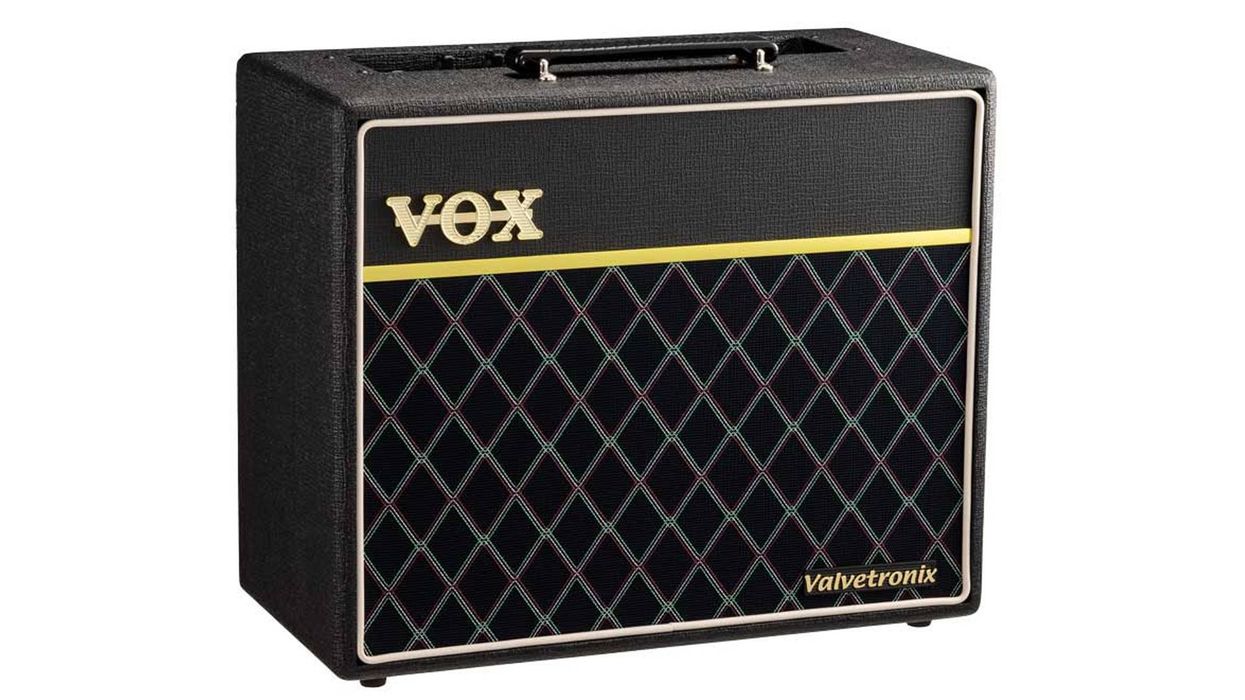
Celebrating the 25th Anniversary of its renowned Valvetronix series, VOX announces the worldwide release of the new VT20X and VT40X guitar amplifiers. Available now through local retailers and online, these amplifiers are designed for players who want the authentic feel of classic tube amps with the flexibility and precision of advanced digital design. By combining sophisticated new modeling technology with a multi-stage tube preamp circuit, VOX set out to answer the need for an amplifier that delivers the distinctive distortion, touch sensitivity, and dynamic response of treasured vintage tube designs, while offering modern control and versatility for today’s guitarists.
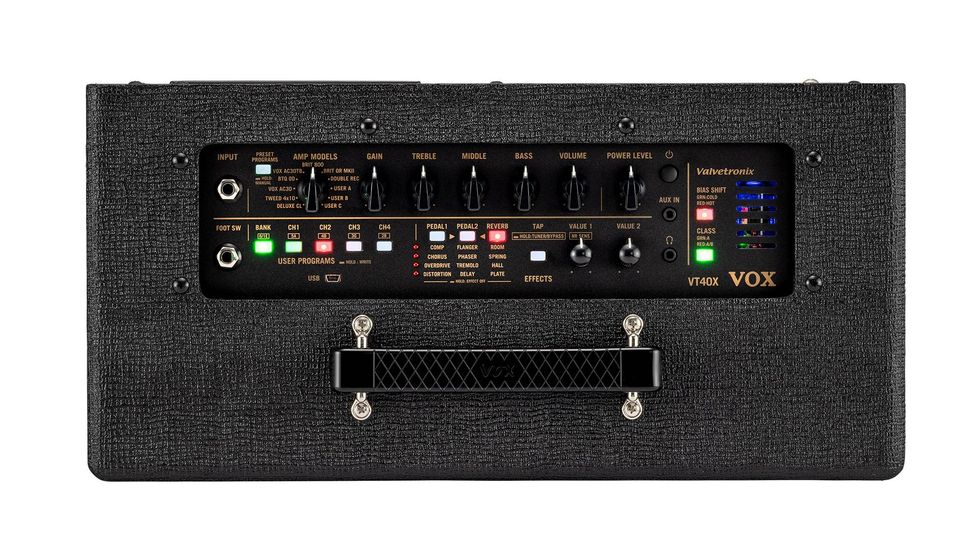
The VT20X and VT40X Classic Blue models are a bold evolution of the Valvetronix concept. Their all-new modeling algorithm recreates the analog circuits of some of the world’s most coveted tube amplifiers at a circuit level rather than relying on simple tonal snapshots. This deep level of modeling allows musicians to adjust gain structure, switch between Class A and Class AB operation, and fine-tune the amplifier bias in real time, producing subtle tonal shifts and responsive interaction that behave like genuine tube circuitry. At the heart of the design is a 12AX7 tube integrated further into the signal path than in earlier generations, delivering enhanced warmth, natural compression, and the kind of “edge of breakup” sensitivity that responds directly to player touch and guitar volume control.
The refined balance between DSP and tube architecture results in harmonically rich tones with smooth clean-to-crunch transitions and expressive overdrive characteristics. Whether dialed back for shimmering clarity or pushed harder for dynamic drive, the amps respond musically, with the kind of sag, bloom, and bite traditionally associated with classic tube amplifiers. This tube-forward approach is complemented by VOX’s advanced VET+ technology, delivering tube realism that feels authentic under the fingers and translates naturally across playing styles.
Beyond their core amp tone, the VT20X and VT40X also offer a comprehensive sonic toolkit for modern guitarists. Players can pair realistic amplifier models with classic effects inspired by iconic stompboxes, creating polished, performance-ready sounds without the need for a large pedalboard. Each amplifier is housed in a tightly sealed cabinet featuring VOX’s proprietary bass-reflex design for extended low-frequency depth and projection, ensuring the amps sound full, controlled, and present in a range of environments.
Thoughtful practicality rounds out the design, making the VT20X and VT40X Classic Blue amplifiers equally at home in rehearsal, recording, or performance settings. Both models feature a USB port for direct connectivity, a built-in tuner, an AUX input for external audio sources, and a headphone output for silent practice. The VT20X delivers 20 watts of power through an 8-inch speaker, offering compact portability with impressive responsiveness, while the VT40X provides 40 watts through a 10-inch speaker for greater headroom and stage capability. As an homage to the original series launched in 2001, each carries the striking Classic Blue aesthetic, featuring a bold split-front design with vintage-inspired blue grille cloth that recalls VOX heritage while presenting a confident modern presence.
With deeper tube integration, refined circuit-based modeling, expressive tonal flexibility, and practical player-focused features, the new VT20X and VT40X reimagine the hybrid amp experience for a new generation while staying true to the musical feel that made Valvetronix a favorite among guitarists worldwide.
For more details and full specifications on the VT20X and VT40X amplifiers, please visit NAMM Booth #6802 or online at www.voxamps.com
Street price:
VT20X $279.79 USD
VT40X $399.99 USD
Esoterica Electrica: On Our Way to the Top
It’s a long way to the top if you want to rock ’n’ roll—or so the saying goes. On the surface, that sounds like a blunt, self-evident truth. But the longer I think about it, the more I suspect it’s not just incomplete, but misleading. That idea—that there is a clearly defined “top,” and that reaching it is the point—has quietly infected far more than music. It colors how we measure success in almost everything we do.
In sports or business, the metrics are tidy. You win or you lose. You’re ranked, valued, traded, promoted, or cut. The scoreboard doesn’t lie, even when it’s cruel. But music isn’t a ladder, and it isn’t a tournament. So why do we keep pretending it should be judged like one? Does being a musician really require a podium?
Most of us will never be inducted into the Rock & Roll Hall of Fame, and I doubt that possibility crosses anyone’s mind when they first pick up an instrument. That kind of recognition might be a pleasant side effect of a life in music, but making it the goal feels like the opposite of what art is meant to be. History bears this out.
“Playing in a band is inherently collaborative, cognitively demanding, and demonstrably good for your brain.”
Consider the Beatles—arguably the most successful and influential band in popular music. They didn’t set out to conquer the world. They wanted to write songs, make records, and play shows. Early on, they joked about reaching the “topper-most of the popper-most,” a phrase that sounded aspirational but probably felt abstract at the time. In practice, that ambition looked like four musicians—and their roadie, Neil Aspinall—crammed into a cold, smelly van, hauling gear through grim northern English towns, grinding out one-night stands. But that was the life of a rock ’n’ roll musician.
Which raises an interesting question: What does “the top” mean for the rest of us? An album credit? A few good club gigs? A song that lands with someone at the right moment? Music has never guaranteed financial success, and our education system seems to understand that all too well. As schools increasingly resemble business pipelines, music programs struggle for survival while sports budgets grow practically unchecked.
I’ve watched from the sidelines as stick-and-ball sports have exploded in K-12 education. Competitive athletics have existed in schools for more than a century, originally emerging from physical-education programs designed to improve general fitness—especially after World War I exposed how unprepared many young Americans were. But sports weren’t always industrialized the way they are now. Today, despite near-lottery odds of making a living as an athlete, parents and institutions often behave as if success is just a scholarship or draft pick away.
The incentives are revealing. DePaul University can lay off more than a hundred employees while planning a $42 million sports center, justified as a student recruitment tool. Team building and collaboration are the stated virtues, but let’s be honest—we worship individual stars. Music, meanwhile, is treated like a luxury.
That’s odd, because music delivers many of the same benefits, without the head injuries. Anyone who has stood in a crowd at a concert knows the tribal electricity is no different from a packed sports stadium, except everyone goes home a winner. Playing in a band is inherently collaborative, cognitively demanding, and demonstrably good for your brain. Yet music education is often marginalized or eliminated entirely. I’m not suggesting everyone should become a musician, but teaching respect for art, and how to listen to it, is valuable for everyone.
For more than half a century, musicians have driven fashion, shaped advertising, defined film soundtracks, and filled the spaces we inhabit—from cars to elevators to restaurants. You can escape sports coverage if you want to, but you can’t escape music. It sets an emotional tone, reflects social mood, and quietly binds communities together. Playing music isn’t decorative; it’s functional, social, and deeply human.
Twenty-five years after those freezing van rides, two of the three surviving Beatles stood onstage in 1998 as the band was inducted into the Rock & Roll Hall of Fame, then only in its third annual ceremony. I’m guessing it wasn’t as much fun as a real gig. Watching artists of that stature squirm through acceptance speeches suggests the honor itself was never the destination. Music was.
That’s the thing: when you’re infected with the boogie-woogie, the reward isn’t a trophy—it’s the playing. In that sense, we’re already in the Hall. If we share the joy, value the process, and savor every note we play or hear, maybe it turns out it isn’t such a long way to the top after all.
Orange Amps OR60 UK-Built All-Valve Guitar Amp
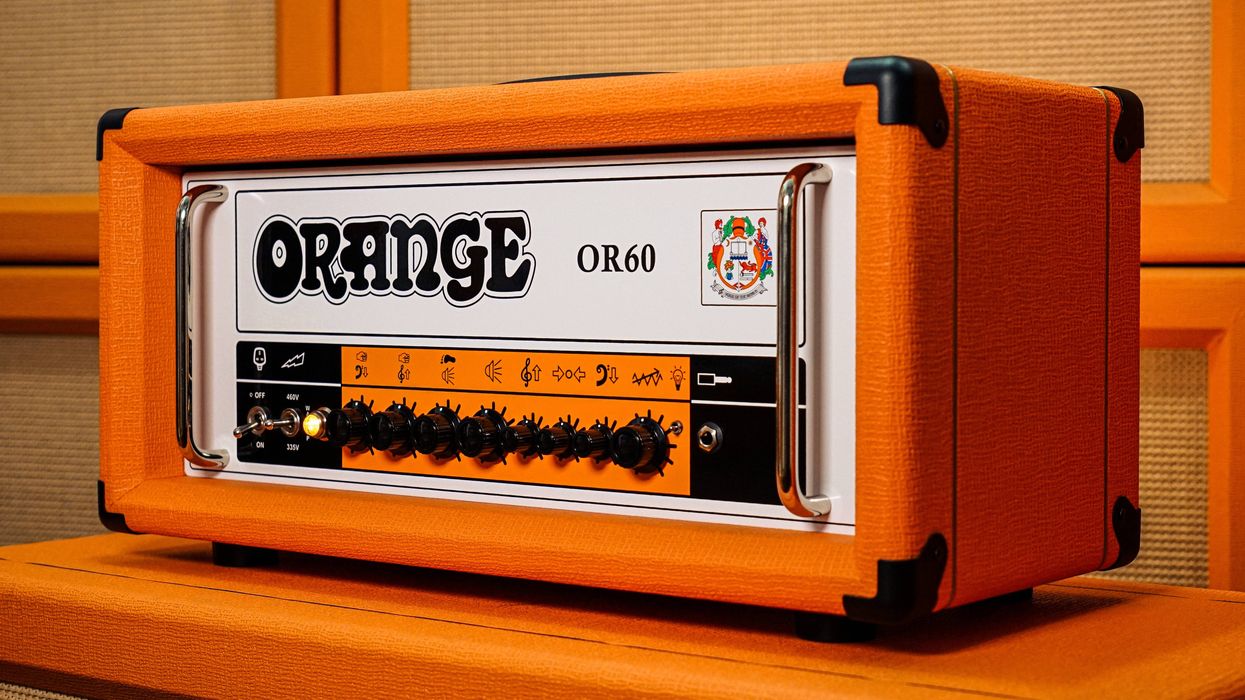
Orange Amps is pleased to introduce its latest, UK-built, all-valve guitar amp head, the vintage inspired single channel OR60. The 60-Watt amp delivers focused, harmonically rich valve tone with a modern edge. It is generous in clarity, tight in the lows and voiced to take boosts beautifully. It’s modern Orange tone, designed to go hard!
Designed and made in the UK with premium components, the OR60 is driven by a pair of 6L6 power valves which give the head extensive headroom and depth, especially with a boost pedal in front. A second footswitchable volume control provides effortless solo cut-through or rhythm / lead switching without touching the gain. Because the gain is not touched, the core tone remains consistent, simply louder or softer as needed. Plus, the switchable 460V / 335V (60W / 30W) output allows guitarists to push the amp harder at lower volumes. This versatility, with zero tone compromise, is a powerful feature for live guitarists or studio setups, making the OR60 incredibly playable, whatever the style.
The dedicated Presence and Resonance controls offer customisable tone-shaping and fine tuning, allowing players to shape the high and low-end power amp stage to suit any cab or room. The Presence control adjusts high-end response for consistent clarity and harmonic definition helping a guitar cut through the mix. The Resonance control allows users to dial in low-end response and tailor the amp’s feel and depth to their playing style, whether it’s percussive tightness for modern metal or more classic booming bottom end.
The three position Bright switch adds two flavours of bite and definition to darker pick-ups, and brings extra snap and sparkle to clean tones. It allows players to sculpt the amp’s top-end voicing without affecting the overall gain character. When engaged, it lifts the treble response giving extra clarity and presence, which is particularly useful with humbuckers or darker-voiced guitars. When it is switched off (middle position) the tone is smoother, warmer and rounder. This small tweak has a big impact when players move between guitars or genres mid-set.
The amp's simple design is its key: just the straight-up, high-voltage voice of a masterfully designed single-channel amp, ready to be played raw or augmented with the valve-buffered FX loop. Simple, solid, and seriously loud. The bold design of the OR60 is instantly recognisable with its classic pics-only controls and signature orange Tolex finish. Built to perform and for a lifetime on the road or in the studio it is tour-tough and gig-ready.
The OR60 is the most versatile single-channel amp Orange Amps has ever built. With serious power and exceptional responsiveness, it moves effortlessly from glassy chime to classic crunch and well beyond, all delivered with Orange’s iconic British tone.
To find out more please go to www.orangeamps.com.
VOX Introduces the VTB-1 Treble Booster Pedal
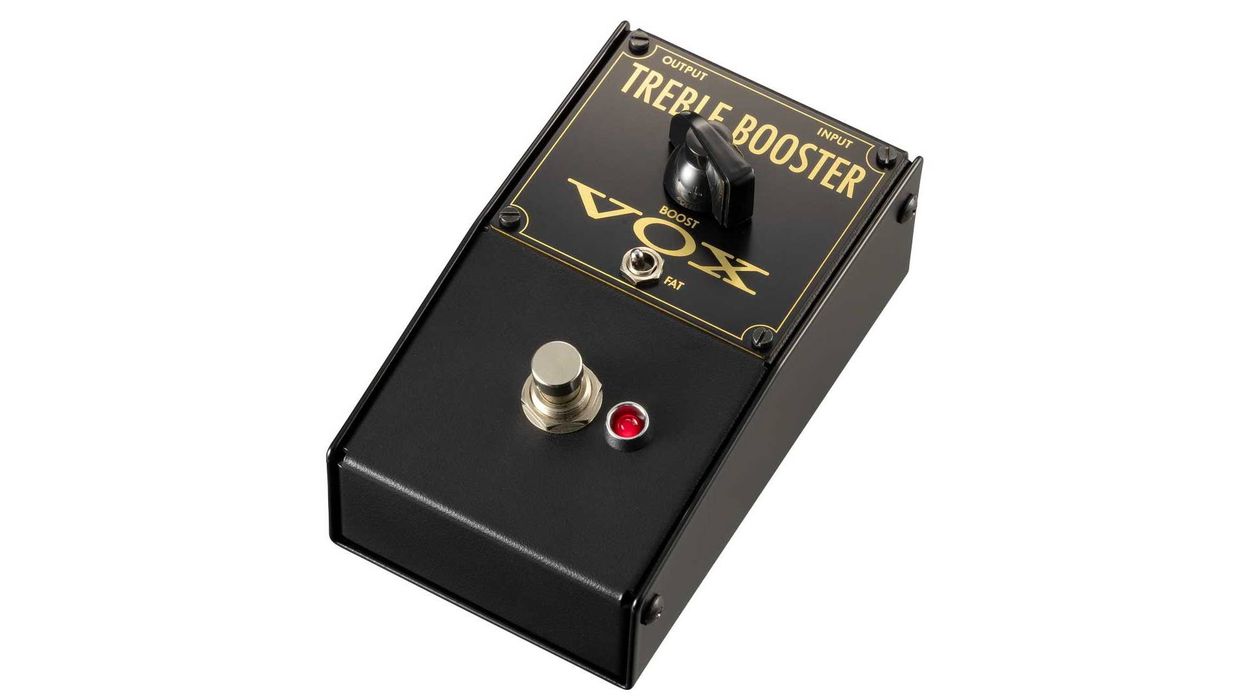
VOX announces the VTB-1 Treble Booster, a new effects pedal designed to faithfully recreate the unmistakable voice of classic British treble boosters while introducing the stability, predictability, and reliability required by modern players. Available worldwide through local retailers and online, the VTB-1 answers the demand for authentic vintage tone by preserving the musical response, touch sensitivity, and expressive drive associated with historic designs, while eliminating the temperature sensitivity, noise issues, and performance inconsistencies that defined early Germanium-based pedals.
The VTB-1 revisits one of rock guitar’s most defining sonic relationships: the energetic, harmonically rich overdrive achieved when a treble booster pushes an amplifier into its sweet spot. Traditional treble boosters achieved their character through Germanium transistors, celebrated for their nonlinear behavior but infamous for fluctuating performance. VOX engineers approached this challenge from a purely tonal and technical standpoint, performing detailed analysis of multiple original units and spending months modeling their characteristics to authentically capture the wide nonlinear operating zone that players value without relying on outdated technology.
Central to this design is a carefully biased single-transistor gain stage, built around a hand-selected Silver Can BC108 Silicon transistor chosen specifically for its consistency, low noise, and convincingly vintage playing feel. Rather than narrowing the sounding range, VOX engineered the VTB-1 to expand the pedal’s sweet spot, ensuring a broad and expressive “edge-of-breakup” region that responds naturally to player touch. This delivers the smooth, progressive onset of drive, singing harmonic content, and exceptional cleanup via the guitar’s volume control that defines great treble booster tones. Supporting components, including modern thin-film resistors, further contribute to the pedal’s exceptionally low-noise performance, helping it remain remarkably quiet compared to period designs.
In operation, the VTB-1 stays intentionally simple yet musically flexible. Players can roll back their guitar’s volume for sparkling, chiming cleans with clarity and articulation or increase the Boost control to drive their amplifier into harmonically saturated overdrive with focused presence and impressive headroom. A thoughtfully implemented Fat Switch widens the boosted frequency range when desired, allowing the pedal’s voice to move from crisp, cutting vintage articulation to a fuller, more powerful tonal footprint tailored to different instruments and playing styles.
The VTB-1 is designed as both a homage and a modern tool. It keeps the spirit and immediacy of traditional single-transistor boosters yet delivers predictable, stable performance, integration with modern pedalboard power supplies, and flexible placement within the signal chain. Housed in a compact, rugged enclosure with a subtle vintage aesthetic, it is built for studio use, stage reliability, and long-term durability. When paired with VOX amplifiers, the VTB-1 unlocks the dynamic, touch-sensitive, harmonically rich overdrive that helped shape the golden age of British rock tone, now presented with a level of refinement suited for today’s players.
With vintage treble boosters historically rare, costly, and often sonically unpredictable, the VOX VTB-1 brings their expressive sound and unmistakable presence back within reach, delivering an authentic yet modernized interpretation designed to live confidently on contemporary pedalboards.
For more information on the VOX VTB-1 Treble Booster, please visit NAMM Booth #6802 or online at www.voxamps.com.
Street Price: $149.99 USD
Bourgeois Guitars’ limited-edition Luke Bryan signature line is made with Black Walnut hand-selected from his own farm

Bourgeois Guitars has teamed up with country artist Luke Bryan to release two new limited-edition models, including an ultra-limited version made with Black Walnut selected from Bryan’s own farm land.
There are just 30 Luke Bryan Signature Limited Edition models available worldwide, and just 100 of the more affordable (but still high-end) Luke Bryan Touchstone Edition – this version is inspired directly by the Lewiston-built original and is crafted with specially selected tonewoods.
The origins of this collaboration goes back quite a while ago, as Bryan reached out to Dana Bourgeois (the founder and master luthier behind the guitar brand) more than a decade ago. You may be wondering what took them so long to get to this point, but the long process was intentional.
 Credit: Bourgeois Guitars
The journey of making this model was a long labour of love. Work began when Bryan invited Bourgeois to his Tennessee property, Flint Rock Farm, where a ridge above the land is lined with mature Eastern Black Walnut. The pair started tagging trees across the ridge, and later selected choice boards at the sawmill where Bryan’s timber was being processed. Those boards were then cured in Bourgeois’ workshop for a whole decade.
All 30 of the Luke Bryan Signature Limited Edition models have been numbered and signed by Bryan himself. This guitar is a short-scale Slope Shoulder Dreadnought handcrafted by Bourgeois in Lewiston, Maine. Each guitar is a one-of-a-kind, and is of course, built from the specially selected Eastern Black Walnut harvested from the farm all those years ago.
 Credit: Bourgeois Guitars
A torrefied Maine Adirondack spruce top complements the walnut back and sides, and the fingerboard features a custom mother-of-pearl antler inlay. A matching Flint Rock Farm emblem is featured on the headstock, in honour of the early origins of this collaboration.
The Luke Bryan Signature Limited Edition model is available now for $8,999, with the Luke Bryan Touchstone Edition coming in at $3,879. Find out more over at Bourgeois Guitars.
The post Bourgeois Guitars’ limited-edition Luke Bryan signature line is made with Black Walnut hand-selected from his own farm appeared first on Guitar.com | All Things Guitar.
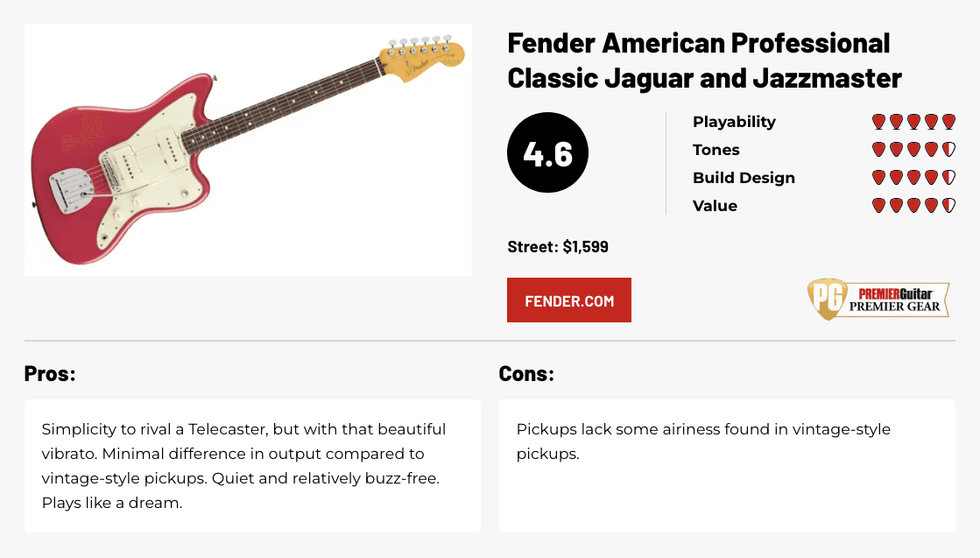
Fender American Professional Classic Jaguar and Jazzmaster Review
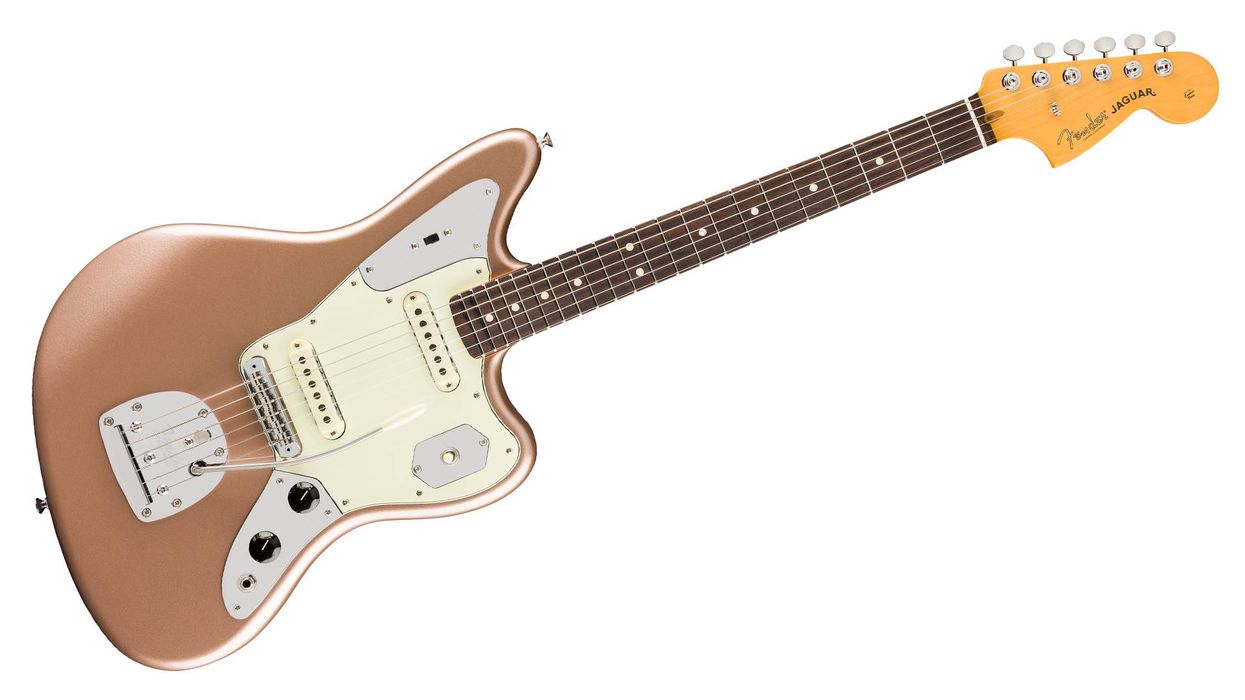
When I was young, I thought guitarists that considered Jazzmasters and Jaguars junk were stodgy, stuck-in-the-mud grumps. In retrospect—and after many decades of Jaguar and Jazzmaster wrestling—I can concede that some of their arguments had merit. Original Jaguar and Jazzmaster vibratos are indeed idiosyncratic things. The rhythm circuits can bleed tone energy. But to the extent such arguments might be true, I still consider these limitations potential strengths, depending on one’s approach.
In many ways, the American Professional Classic Jaguar and Jazzmaster could be compromises designed to appease my contrary young self and all the guitar shop owners that insisted I needed a Stratocaster instead. Both guitars eliminate the rhythm circuit. Each substitutes a Mustang-style bridge for the sometimes cranky, clattery Jazzmaster unit. And both boast features that reflect contemporary shifts in guitar-design trends. The pickups are overwound relative to vintage spec and use Alnico 5 magnets, giving each guitar a meatier voice at most settings. Fretboards are a flatter 9.5", with medium-jumbo frets. But outwardly, each guitar exudes an early ’60s design spirit. The changes will be obvious to seasoned, vintage-oriented Jazzmaster and Jaguar heads, some of whom will cry foul. But they could be very appealing to those who have yet to give the offset twins a shot.
Of Colors and Cost Strategies
Cruising Fender’s website these days is a lot like taking a trip to the candy store: colorful and brimming with temptation. In practical terms, though, Fender’s abundance of choices can make for a complex decision matrix—and that’s before you consider the many appealing Squier offerings. On the Fender-branded Jaguar side, the new American Professional Classic fills an obvious hole between the Mexico-made Player II ($869) the ’70s spec Mexico-made Vintera II ($1,569) and the U.S.-made Johnny Marr Jaguar ($2,699). Fender’s Jazzmaster options are more extensive. The American Professional II Jazzmaster offers modernizing enhancements like the Panorama vibrato and V-Mod pickups for just less than $2K. The ’50s and ’60s spec Mexico-made Vintera II’s are about $1,300. And then there’s the American Vintage II 1966 Jazzmaster at $2,729.
Curiously, at the time of this writing, there are no U.S.-made Jaguars or Jazzmasters built to late ’50s or early ’60s specification outside Custom Shop offerings. Obviously, the new American Professional Classic Jaguar and Jazzmaster aren’t vintage-correct options either (there’s even a maple neck and a black pickguard in the mix to further confuse matters). But if these instruments lack vintage electronics, there’s little arguing their vintage-cool good looks, especially in faded firemist gold, faded sherwood green metallic, and faded dakota red finishes. These guitars might be simpler versions of their vintage predecessors, but leaning against an amp they still can yank at the heartstrings of a vintage-inclined Fender aesthete.
Killer Kitty
Even now, decades into its return to the limelight, the Jaguar remains an odd fit for some players. It was passed over when Fender issued the American Vintage II line—a shame given what a great guitar the original American Vintage Jaguar is. The move suggested the model might be waning in popularity for a second time. But while this Jaguar still might not win over players that won’t mess with the short 24" scale and the guitar’s unique tone signature (punchier and thicker than a Stratocaster, but more focused than a Jazzmaster), those that are less rigid about such things could find much to love.
Switching between 25 1/2" and 24" scales isn’t completely effortless. If your playing style is based on refined technique developed over years on a longer-length scale, it can be problematic. But as a player who moves regularly between Jaguars, Jazzmasters, and Telecasters, I can attest that it is a surmountable problem, and can even be a source of inspiration. (If you don’t believe me, ask Marc Ribot or Mike Campbell).
“Vibrato, which can be less than totally stable on some models, is a star on the American Professional Classic.”
That sense of possibility is compounded by this Jaguar’s inviting playability. The modern “c” neck profile, as Fender calls it, feels a lot like other Jaguars of recent vintage. It isn’t chunky, but it also doesn’t feel too slight, the way some old Jaguars and Mustangs can. The satin neck is fast, and the medium-jumbo frets and short scale conspire to make string bending and vibrato feel natural and effortless. If your mind and muscle memory can overcome the short scale obstacle, you’ll find the American Professional Classic Jaguar a cool and comfortable alternative vehicle for exploring leads and jazzy chord extensions. Additionally, the vibrato, which can be less than totally stable on some models, is a star on the American Professional Classic. It stays where you left it, doesn’t rattle, and is butter smooth.
Growl, Howl, and Purr
The Jaguar’s Coastline pickups are discernibly hotter than vintage Jaguar pickups and vintage-spec replacements. For players that find a classic Jaguar’s voice too thin, this will be a welcome change. These pickups are louder and throw more weight around in the low-mid zone—a potential boon for folks that like a Jaguar’s fast feel but crave more body. The Coastline pickups retain that profile when distortion and fuzz enter the mix, too. More vintage-minded tone chasers might be less charmed. Vintage and vintage-style Jaguar pickups may seem thin by some standards, but they leave a lot of room for additional voices in a band or song arrangement, have a bell-like purity, and bloom beautifully when you add spring reverb—or any time or modulation effect—in copious quantities. But when you play an old-school Jag side-by-side with the American Professional Classic you’ll hear the difference, and it would be wise to check out both guitars at a shop if you can to see where your tastes fall.
If the Coastline Jaguar pickups don’t nail classic Jag sounds, the way they work with the guitar’s simplified controls could make the American Professional Classic Jaguar more versatile for many players. With the onboard Greasebucket tone circuit (which preserves low-end clarity as you roll back treble) and the bass-cut “strangle” switch, which Fender wisely preserved and positioned on the upper bout control plate, you can reshape this Jag’s output in many ways without turning it to mud. The sounds may be slightly different from those of a vintage Jag, but there are many to explore.Jazzmaster Made Simple
If the American Professional Classic Jaguar is a simpler evolution of its predecessor, the Jazzmaster entry in the series is the kind of offset that could make a Telecaster or Esquire fan cheer. Apart from the Greasebucket tone circuit control and the volume, there’s not much to this very straight-ahead instrument. And in the absence of any controls on the upper bout section of the pickguard, the American Professional Classic Jazzmaster presents a bit like a no-frills Chevrolet to a vintage model’s bells-and-whistles Cadillac. But even as one of those sickos that likes and uses the rhythm circuit on a Jazzmaster, I found the economy of design here very appealing.
“The Greasebucket tone control is a perfect fit for this instrument.”
With so few variables in the mix—the lovely vibrato is about the only other thing to distract you—there isn’t much to consider outside what is coming out of your amplifier speaker at the moment, and in the case of the American Professional Classic Jazzmaster it’s satisfying stuff. For starters, the Coastline ’65 versions of the Jazzmaster pickup are very quiet compared to vintage Jazzmaster models—which are, famously, not very quiet at all. You can park this Jazzmaster in the bridge- or neck-only pickup positions without fear of rendering your clean tone a sea of buzz. But unlike the Jaguar, the difference between the Coastline ’65 pickups and the pickups in the American Vintage II ’66 Jazzmaster is much less pronounced. Like the Jaguar’s Coastline pickups, the Jazzmaster’s are a little less airy in the top end and more focused in the midrange, resulting in a slightly less expansive tone profile. But there’s much less difference in output. In fact, in some situations the American Vintage II Jazzmaster used for comparison seemed louder.
The Greasebucket tone control, meanwhile, is a perfect fit for this instrument. It’s especially effective in bridge pickup settings, which can be pretty piercing at full tone and volume settings, and its mellowing effects yield copious subtle but effective color shifts in all three pickup positions that are conducive to dynamic moves within a tune.
Playability on our review specimen might be even nicer than that on the Jaguar, which is saying a lot. The modern-c profile seems like an especially nice fit for the 25 1/2" scale and the medium-jumbo frets lend a balanced, effortless feel to the instrument. It’s a joy to play.
The Verdict
Even dyed-in-the-wool vintage Jaguar and Jazzmaster players will have a hard time arguing with the charms of these two guitars. Both are a delight to play, are tuning stable—even when you get loony with the vibrato—and are well-crafted, high-quality instruments. They compel you to play as well—even if that faded Dakota red looks a bit more like coral pink mixed with a light tomato cream sauce.
There are other aesthetic gripes than vintage-minded Fender-philes could reasonably submit: The black pickguard on the sunburst models results in an odd mashup of ’60s and ’70s design elements, and I’m sure more than a few folks would rather see the lake placid blue model with a rosewood neck. A small minority of players will miss the rhythm circuit switching, and a greater number will prefer that a more old-school pickup voicing was on offer—particularly on the Jaguar. But in terms of bringing practical, performance-oriented changes to two beloved models with dedicated cult followings, Fender threaded the needle gracefully here. And at $1,599 each, they’ve managed a fair price for a couple of beautiful, reliable, Corona, California-made instruments.
Pages
