
Music is the universal language
“Glory to God in the highest heaven, and on earth peace to those on whom his favor rests.” - Luke 2:14
General Interest
Use Pedals As Plugins In Your DAW
RhPf Electronics Introduces Shodhana Overdrive
RhPf Electronics has released the Shodhana pedal, a balanced overdrive designed for players who value clarity, dynamics, and intuitive control. Its original dual-path architecture lets gain and voicing evolve together without tone stacks or switches, delivering a seamless transition from transparent boost to mid-focused drive with strong touch response and natural mix presence. This original circuit continuously morphs from a transparent, organic MOSFET boost into a focused, articulate overdrive using a single Drive control.
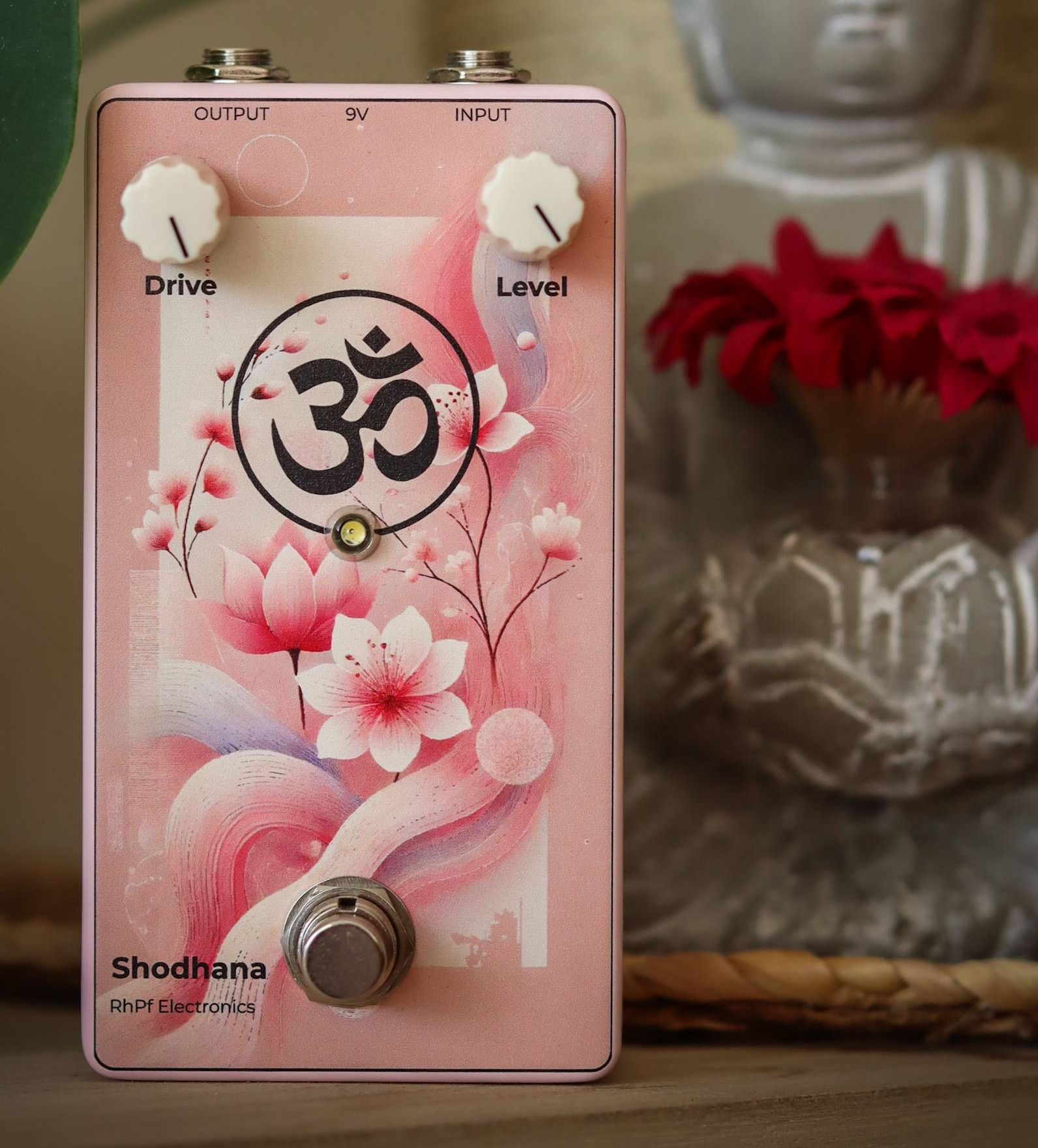
Shodhana features include:
• Dual-path gain architecture: Parallel MOSFET boost and overdrive circuits blend dynamically as Drive increases.
• Single Drive control: Simultaneously adjusts gain and voicing without the need for a separate tone control.
• High-mid focused snap: Strong upper-mid bite and fast attack deliver clear mix presence as gain increases.
• High headroom and wide output range: Suitable for pushing amps, stacking pedals, or maintaining clean dynamics.
• Minimal two-knob layout: Drive and Level only for fast, intuitive operation.
• True bypass switching and standard 9V DC operation
• Top-mounted input and output jacks
Shodhana encourages players to work their instrument rather than fight the pedal. As the upper-mid snap builds with Drive, the guitar’s tone control becomes an intuitive way to dial in exactly how much edge and bite you want, whether using it as a wide-open boost or a focused drive.
Like all RhPf Electronics creations, Shodhana is not a clone, mod, or tweak, but a fully original circuit built from the ground up.
Carrying a street price of $179 USD, Shodhana is available at select retailers and can also be purchased directly from the RhPf Electronics online store at rhpfelectronics.com.
DSM/Humboldt Introduces Dumblifier Overdrive Special
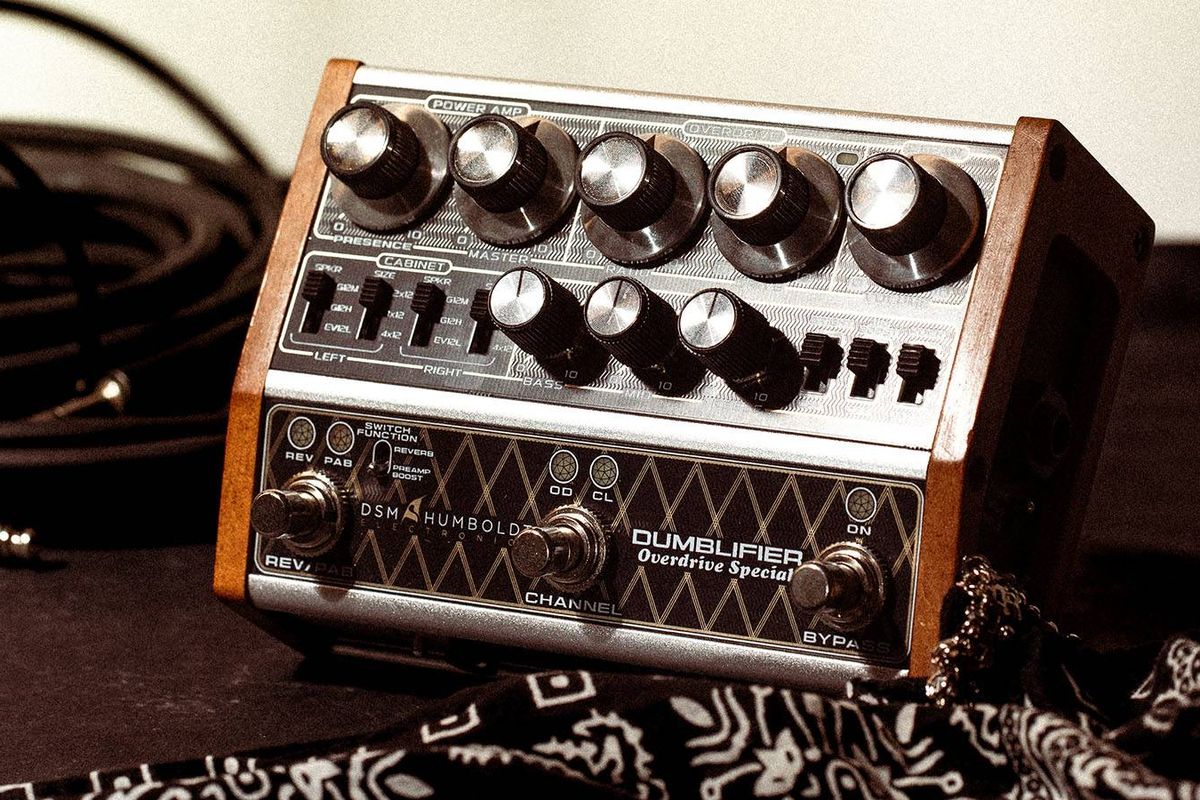
DSM/Humboldt Electronics has announced the introduction of its new Dumblifier Overdrive Special delivering the experience of playing a D-Style amp as it really feels.
For decades, guitarists around the world have dreamed of capturing the magic of the mythical Dumble Overdrive Special. Until now, the only way to approximate this experience has been through digital modeling — solutions that may reproduce the sound but always fall short of replicating what truly makes these amps legendary: the feel under your fingers.
The Dumblifier Overdrive Special breaks that barrier. By using their proven analog amplifier modeling technology, DSM/Humboldt has not only recreated the tone but also the unique compression and touch response that makes every note bloom, sustain, and sing — just like on the original amps.
The Dumblifier offers the following benefits:
Analog accuracy: Unlike digital processors, the Dumblifier responds organically to your playing dynamics, delivering the unmistakable “punchy compression” and smooth sustain that Dumbles are known for.
Beyond boutique limitations: Until now, the few available alternatives were extremely expensive and produced only in limited, made-to-order quantities, never intended for mass availability.
True versatility: Other so-called “Dumble-style” pedals are meant to run in front of amplifiers, so the final tone depends mostly on the amp itself. The Dumblifier, however, goes further — it can operate as a complete analog amp replacement with cab-sim and stereo features, or as a two-channel overdrive pedal in front of any rig. Its TRS outputs with cab-sim bypass make it extraordinarily flexible.All-in-one solution: With stereo FX loop, stereo reverb, cabinet simulation, and DI outputs, the Dumblifier is equally at home on stage, in the studio, or in your practice setup.
The Dumblifier is the first true analog solution that captures both the sound and the feel of a Dumble. Packed into a pedal format, it offers all the features gigging and recording musicians demand — without the cost or fragility of a boutique tube amp.
Guitarists everywhere crave the legendary Dumble sound. By making it accessible, reliable, and portable, the Dumblifier unlocks that dream for players worldwide.
Dumblifier is available at an MSRP or $599 ($549 MAP). More information is available at: https://www.dsmhumboldt.com.
Pat Metheny Returns With First New Major Studio Album In Six Years
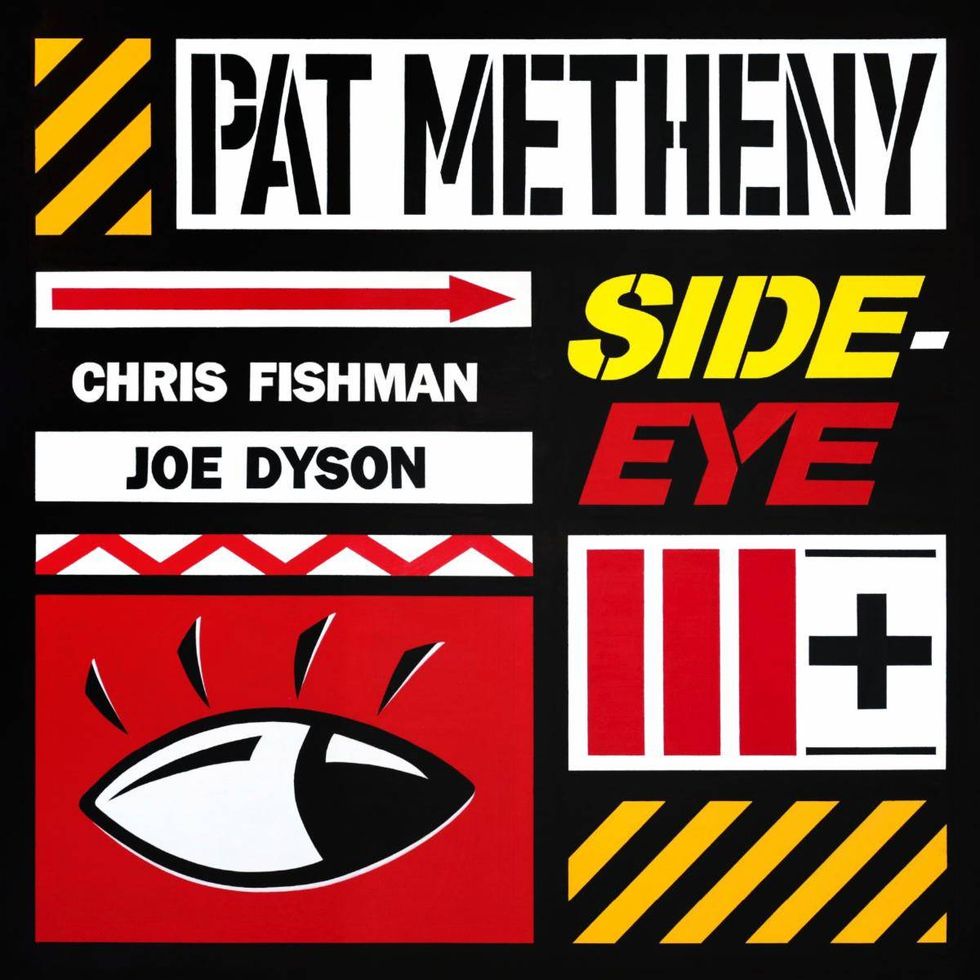
Acclaimed guitarist and composer Pat Metheny has announced the launch of his new record label, Uniquity Music, alongside the release of his first major studio album in six years, Side-Eye III+. The record marks the first title on the new label, created in partnership with Primary Wave, the parent company of Green Hill Music under the Sun Label Group umbrella, which will also serve as home to reissues of Metheny's entire catalog since 1984 and all future releases.
"My dream for years has been to have a place where all of my work, past and future, could live under a single umbrella - a label of my own," says Metheny. "With the creation of Uniquity Music, that dream has now become a reality. In many ways, I feel like I am just beginning, and I expect the next period to represent the best of where music has led me so far. The new label will feature re-releases of every record I have made since Song X in 1984."
Along with the label's debut comes the February 27th release of Side-Eye III+, the latest evolution of Metheny's Side-Eye project - a concept he first introduced to showcase the next generation of exceptional young musicians who have come onto his radar in recent years. The album features Metheny alongside Chris Fishman on keyboards and Joe Dyson on drums, the trio at the heart of the Side-Eye ensemble that has toured extensively worldwide.
Metheny explains, "Once I got in the studio with the guys, I realized that while the trio concept was perfect for us as a live ensemble, the music I had written was asking for something bigger. That is where the '+' in Side-Eye III+ comes in. I ended up adding fifteen other musicians to the trio — expanding the sonic world of the record far beyond what we had done before."
Recorded in the studio, Side-Eye III+ brings together an additional cast of musicians including bassist Daryl Johns, harpist Brandee Younger, percussionist Luis Conte, and a vocal ensemble led by Mark Kibble of Take 6, creating a richly layered and expansive musical landscape.
“He brought in an incredible group of singers,” Metheny said of Kibble, “and together, we found a sound that has a relationship to the Gospel tradition but I think most people will hear the kinds of harmonies and melodies that identify it as mine right away.”

“Being part of the launch of Uniquity Music while helping usher in SIDE-EYE III+ makes this a special moment for Green Hill,” said Blake Davis, General Manager, Green Hill. “The album showcases Pat’s commitment to collaboration and discovery, and it reflects exactly the kind of thoughtful artistry we’re proud to support. Uniquity creates a home for that spirit to thrive, and we’re thrilled to begin this journey with him.”
Metheny adds, "Musicians often say their new record is their best, and I will take that risk here — this is one of the best records I have ever made.
"Metheny and the Side-Eye III+ band will embark on an extensive world tour throughout 2026.
"There is almost no way to replicate exactly what is on the record with just the trio, nor will that be the explicit goal on this next round,” Metheny says. “But the material on the record can be played a lot of different ways, which is always a good sign. I am already thinking ahead to the next stage of the Side-Eye thing, and the broader palette of this record plus my thoughts about what’s next gave me the idea of bringing in an incredible young bassist from California, Jermaine Paul, and the percussionist and vocalist Leonard Patton, who is a musician I have wanted to include in my thing for years. But the core of the band will remain Chris, Joe, and me — continuing what we have been working on together on the bandstand and in the studio during this really interesting musical time we have shared together."
PAT METHENY: SIDE-EYE III+ WORLDWIDE TOUR DATES
3/2–3 – Jackson, MS – Duling Hall
3/5 – San Antonio, TX – The Charline McCombs Empire Theatre
3/6 – Austin, TX – The Paramount Theatre
3/7 – Houston, TX – Lillie and Roy Cullen Theater at Wortham Theater Center
3/8 – New Orleans, LA – Orpheum Theatre
3/10 – Orlando, FL – The Plaza Live
3/12-13 – Fort Lauderdale, FL – The Parker Playhouse
3/14 – Stuart, FL – The Lyric Theatre
3/15 – Naples, FL – Artis—Naples
3/16 – Clearwater, FL – The Capitol Theatre
3/17 – Jacksonville, FL – Florida Theatre
3/19 – Charlottesville, VA – The Paramount Theater
3/20 – Richmond, VA – The National
3/22 – Nashville, TN – Ryman Auditorium
3/23 – Atlanta, GA – Atlanta Symphony Hall
3/24 – Charlotte, NC – Blumenthal Performing Arts Knight Theater
3/25 – Lexington, KY – Lexington Opera House
3/26 – Knoxville, TN – Big Ears Festival @ Tennessee Theatre
3/27 – Savannah, GA – Savannah Music Festival @ Lucas Theatre
3/29 – Memphis, TN – Minglewood Hall
3/30 – Little Rock, AR – Robinson Center
3/31 – Tulsa, OK – Tulsa Performing Arts Center
4/1 – Dallas, TX – The Majestic Theatre
4/3 – St. Louis, MO – The Sheldon Concert Hall
4/4 – Kansas City, MO – Kauffman Center for the Performing Arts
4/7 – Boulder, CO – Boulder Theater
4/8 – Omaha, NE – Kiewit Concert Hall
4/9 – Madison, WI – Wisconsin Union Theater
4/10 – Indianapolis, IN – Clowes Memorial Hall of Butler University
4/11 – Cincinnati, OH – Taft Theatre
4/12 – Milwaukee, WI – Pabst Theater
4/14 – Royal Oak, MI – Royal Oak Music Theatre
4/15 – Newark, OH – Midland Theatre
4/16 – Columbia, MO – Missouri Theatre
4/17 – Chicago, IL – Symphony Center
4/18–19 – Minneapolis, MN – Dakota
4/21 – Ketchum, ID – Argyros Performing Arts Center
4/23–26 – Seattle, WA – Dimitriou’s Jazz Alley
4/27 – Vancouver, BC, Canada – The Centre in Vancouver For Performing Arts
4/28 – Portland, OR – Newmark Theater
4/29 – Eugene, OR – The John G. Shedd Institute For The Arts
5/1 – San Francisco, CA – The Masonic
5/2 – Sacramento, CA – Crest Theatre
5/3 – Santa Cruz, CA – Rio Theatre
5/4 – Los Angeles, CA – Walt Disney Concert Hall
5/5 – Santa Barbara, CA – Lobero Theatre
5/7 – Irvine, CA – Irvine Barclay Theatre
5/8 – San Diego, CA – Humphrey’s Concerts By The Bay
5/9 – Chandler, AZ – Chandler Center for the Arts
6/6 – Flensburg, Germany – Deutsches Haus
6/7 – Lübeck, Germany – Musik-und Kongresshalle Lübeck
6/8 – Hamburg, Germany – Laeiszhalle
6/9 – Wroclaw, Poland – National Music Forum
6/12 – Katowice, Poland – National Polish Radio Symphony Orchestra
6/13 – Warsaw, Poland – Palladium
6/15 – Berlin, Germany – Admiralspalast
6/17 – Munich, Germany – Isarphilharmonie
6/18 – Dortmund, Germany – Konzerhaus Dortmund
6/19 – Freiburg, Germany – Konzerthaus Freidburg
6/20 – Nuremberg, Germany – Serenadenhof
6/21 – Frankfurt, Germany – Jahrhunderthalle Kuppelsaal
6/24 – Zürich, Switzerland – Volkshaus
6/29 – Wien, Austria – Wiener Konzerthaus
7/2 – Udine, Italy – Castello di Udine
7/5 – Rome, Italy – Cavea Auditorium Ennio Morricone
7/6 – Pompei, Italy – Anfiteatro degli scavi
7/7 – Giulianova, Italy – Arena del Porto Turstico
7/9 – Milano, Italy – Teatro degli Arcimboldi
7/18–19 – London, UK – Barbican
7/25 – Donostia, Spain – Kursaal
Hot from the oven: this polishing mitt from D’Addario is the guitar accessory you didn’t know you needed

On this week’s episode of ‘guitar accessory or kitchen utensil’, we have a new guitar polishing mitt from D’Addario that wouldn’t look out of place among your finest collection of oven gloves.
As a guitarist, you’ll know the dust and other muck that can accumulate on your guitar with moderate to heavy use. And sure, a conventional cloth is usually enough to tidy up your instrument, but if you’re anything like us, you’ll have wished your whole life for a mitt you could wear to do the job instead.
The Micro-Fiber Polishing Mitt is a reusable, chemical-free cleaning tool you can wear on your hand to remove dust, dirt, oils and smudges from your guitar.
Made using ultra-fine microscopic fibres, the mitt is designed to give guitarists “maximum control” when cleaning hard to reach areas like under strings, around hardware and tuning pegs, or inside cutaways. It can also be used to wipe down strings to extend their lifespan and preserve tone.
 Credit: D’Addario
Of course, it’s essentially just a cleaning cloth in the form of a glove, so can also be used to wipe down other instruments including keyboards and even drum kits.
And the best part? It’s both reusable and machine washable, so you can say goodbye to filthy guitars for good.
We’d recommend, perhaps, keeping the Micro-Fibre Polishing Mitt away from your oven glove collection, as a mixup may end up proving painful…
The Micro-Fiber Polishing Mitt is available now, priced at just $7.99.
For more information, head to D’Addario.
The post Hot from the oven: this polishing mitt from D’Addario is the guitar accessory you didn’t know you needed appeared first on Guitar.com | All Things Guitar.
We rated Universal Audio’s Paradise Guitar Studio plugin 8/10 – get it now at 25% off for today only

Today is your final chance to grab Universal Audio’s Paradise Guitar Studio plugin with 25% off.
Available from Plugin Boutique for £132 while the offer lasts, Paradise works with the DAW of your choice and was described by Universal Audio at its launch as “the most complete ‘end‑to‑end’ virtual experience we’ve ever built”.
[deals ids=”5PFwrayUX2f1KDJoSA5850″]
Given that the plugin arrived in December 2025, it’s still relatively new, meaning a deal like this one isn’t so common. We reviewed Paradise Guitar Studio following its launch, and gave it an 8/10 as it nailed all the basics.
We said that it offered a simple interface, top-quality amplifier sounds, and included all major effect types. We did, however, not recommend it for the high-gain guitarists out there, and noted that its simplicity means there are limited tweaking options.
- READ MORE: Victory sends blind guitarist custom braille amp in the most wholesome moment of 2026 so far
The plugin was essentially made to be a gateway to the studio of your dreams, offering everything you need for a pro guitar recording chain, including its acclaimed UAD guitar amp emulations along with classic cabinets and mics, pedals, and studio effects – all built upon its analogue modelling.
Inside, you get 11 hand-picked vintage and modified tube amps, over 300 presets – spanning genres such as rock, blues, indie, funk, and pop – as well as a generous range of effects like 1176 compression, vintage tape echo, and more.
Find out more in the video below:
Today is your last chance to shop this deal. Head over to Plugin Boutique to find out more.
The post We rated Universal Audio’s Paradise Guitar Studio plugin 8/10 – get it now at 25% off for today only appeared first on Guitar.com | All Things Guitar.
Sound System: is this up-and-coming next-gen game set to be the next Guitar Hero?

For a decade, the Guitar Hero franchise reigned supreme, before fading into the shadows after the release of 2015’s Guitar Hero Live. Now, some of the Guitar Hero team are back with next-gen rhythm game Sound System – and its free.
With plans to drop this spring, Sound System will pick up where Guitar Hero left off. Developed by the Echo Foundry Interactive team, the game revitalises the original franchise’s arcade-inspired roots, with the core Sound System experience available to play without paying a dime.
While the game is currently in its pre-alpha phase, the trailer already showcases some familiar Guitar Hero-like gameplay. The clip shows someone jamming out to Drist’s Decontrol, a track that was on the first Guitar Hero game back in 2005, notes racing down the iconic 5-string note highway.
The game is is also promising support for guitar, bass and vocals, as well as offering a mass of customisability. Users will be able to personalise their experience, with multiple themes and backgrounds to choose from.
There’s also the ability to flick between Classic and Pro modes to suit your personal playing style; Classic mode will allow a more relaxed playing experience, with “no-fail” states and more forgiving note timing, while the Pro option will suit those seeking a challenge.
The customisation even extends to the music and songs you’ll be performing. Creator Tools will allow users to create their own note charts and upload their own tracks. In fact, the ability to upload your own tracks will play a central role in Sound System, with the game heavily focusing on “free music” and “community-driven gameplay”.
Its an aspect that has already caused some waves amongst Guitar Hero fans. While the original franchise has always allowed normal people to feel like a rockstar, letting you jam out to classic rock bangers from the comfort of your own home, the focus on “free music” removes that appeal.
Of course, premium tracks can be accessed at a price; a Complete Edition of the game will include 60 launch tracks at a cost of $34.99, with other tracks available as DLC. However, Redditors are already voicing their concerns; “Seems kinda soulless to me… the game being built around copyright free music is missing the point of why we all loved Guitar Hero,” one user notes.
Its still early days, so there’s no saying how Sound System may advance prior to its release. When it does, its set to be available on PC first, with PlayStation, Nintendo Switch and Xbox versions also in development for the future.
The Sound System team is also working on adding drum pad and keyboard support later down the line.
But, for now, its worth digging out your old Guitar Hero controllers… or, if you’re wanting something fresh, Drakong’s latest InfinaKore Telecaster Edition dropped last year, almost like it knew a new rhythm game was in the works. The Fender collaborative controller is also fully modular, which falls perfectly in line with Sound System’s love of customisation.
For more information, head to Sound System.
The post Sound System: is this up-and-coming next-gen game set to be the next Guitar Hero? appeared first on Guitar.com | All Things Guitar.
Will McFarlane: Muscle Shoals’ Living Guitar Legend
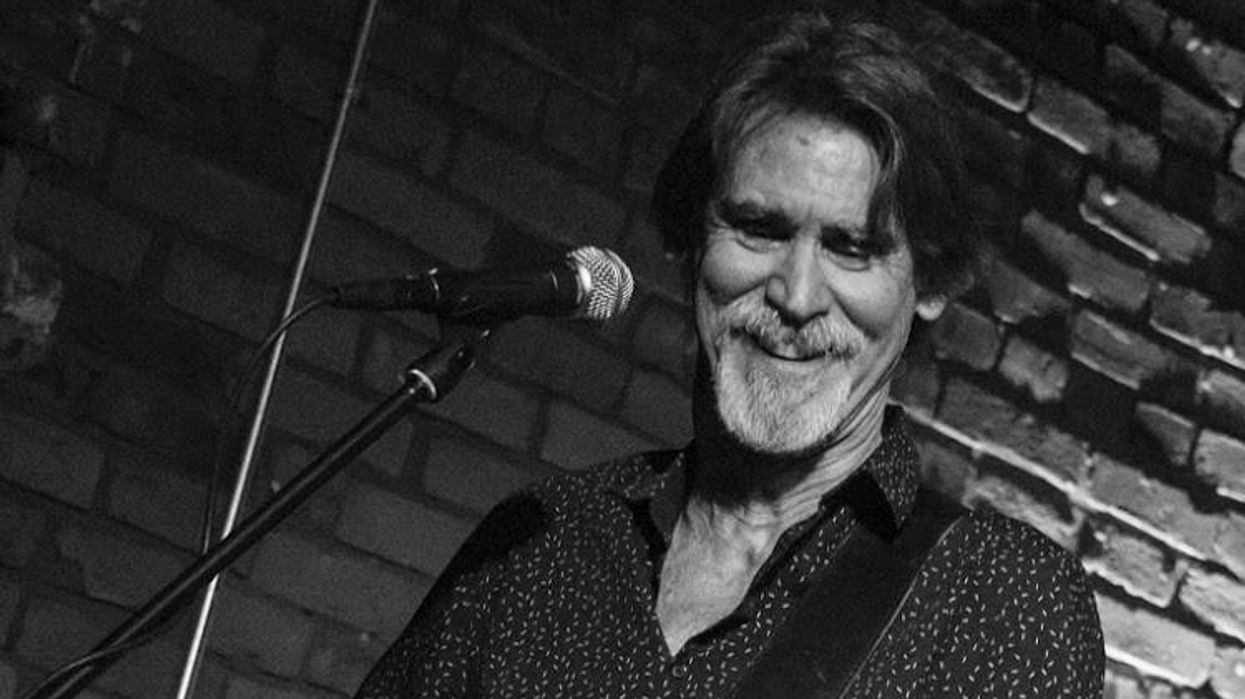
If the Grammys had a Best Supporting Player category, Will McFarlane would have a collection of little gold icons on his mantle. For more than 40 years, the lean, lanky 6-stringer has been an essential part of the Muscle Shoals recording scene, carrying the torch lit by the famed group of session players called the Swampers, who recorded classics with Aretha Franklin, the Rolling Stones, the Staple Singers, Bob Seger, Cher, Wilson Pickett, and Paul Simon, and set the die for the sound of many of the greatest American-flavored roots-based hits and albums of the ’60s and ’70s.
McFarlane has been a primary author of the chapters that followed. “After arriving and becoming embedded in the scene, Will became the central lead guitarist for the Muscle Shoals sound,” attests music historian and journalist Rob Bowman, whose Land of a Thousand Sessions: The Complete Muscle Shoals Story 1951–1985 has just been published. And so, McFarlane has recorded and played live with such legends as Bob Dylan, Bobby “Blue” Bland, Pops Staples, Little Milton, Candi Staton, Etta James, Johnny Taylor, and even Toby Keith. His work at the area’s tracking houses for the Jackson, Mississippi-based Malaco label helped define the sound of Southern-tradition-based blues, soul, r&b, and gospel from the ’80s to the early 2000s. And today, among the 6-string cognoscenti, McFarlane is a legend himself.
McFarlane’s days in the Shoals began after he met famed Swampers guitarist Jimmy Johnson at the Troubadour in West Hollywood. He recalls, “A friend, Duncan Cameron, who’d just done an album that Jimmy produced in Muscle Shoals with the Amazing Rhythm Aces, introduced us, and we were in Jimmy’s hotel room. Jimmy said, ‘Well, play me something.’ I had brought a guitar and I played a song I’d written called ‘A Secret Side of You,’ and then he said, ‘Play me something I don’t like.’ We hit it right off, and he asked me if he could fly me to Muscle Shoals to demo that song in a couple weeks.”
The band Johnson assembled for the session was essentially a subset of the Swampers that included bassist David Hood, drummer Roger Hawkins, and keyboardist Clayton Ivey. McFarlane continues, “I played the song for Clayton, and he did a quick numbers chart, which I had never seen, but I totally got it. We played it down quick, Jimmy hit the red light, and we played it through. Afterwards, Jimmy asked, ‘Any confessions?’ I turned to David and said, ‘Do y’all keep first takes around here?’ And he said, ‘All the time.’”
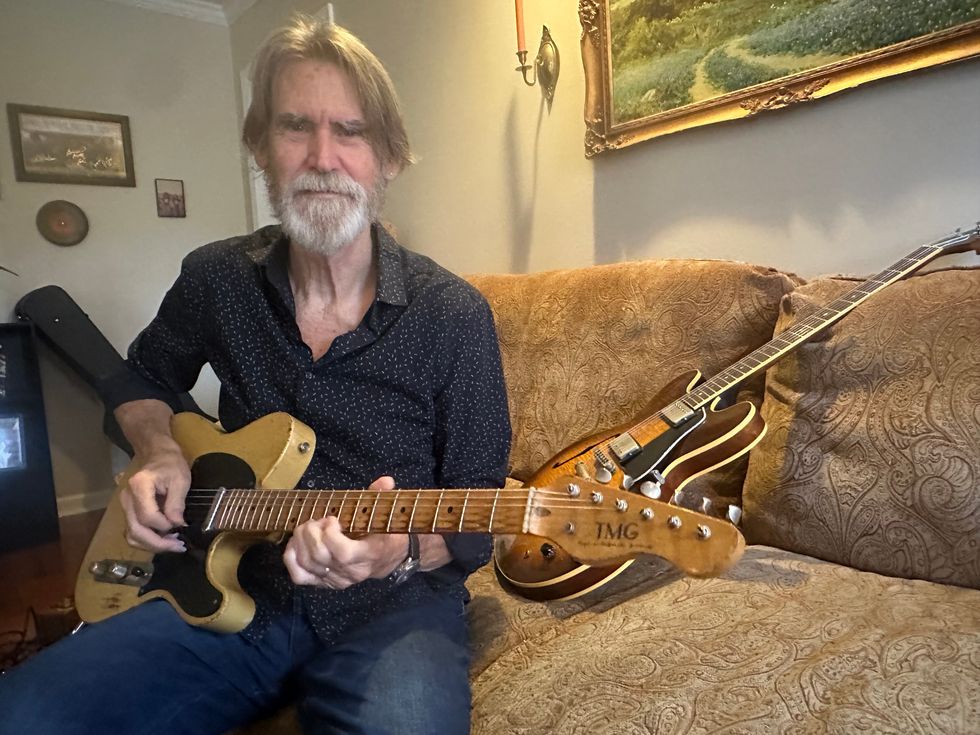
Will McFarlane’s Gear
GUITARS
- 1954 Fender Stratocaster (white refin)
- 1963 Fender Stratocaster (sunburst)
- Gibson ES-335
- Gibson Les Paul Classic
- Reverend Rick Vito Soulshaker
- Strat-style Danocaster
- TMG Custom Relic Tele-style
AMPS
- 1958 Fender Champ
- 1964 Fender Princeton
- 1969 Fender Princeton
- Carr Sportsman
- Carr Rambler
- Tyler 20-20
EFFECTS
- Strymon Flint
- JHS Panther Cub
- JHS Pulp ’N’ Peel
- JHS Moonshine
- JHS Morning Glory
- JHS The Milkman
- JHS Flight Delay
- JHS Phaser
- Harby Centauri
- Keeley C-2 Compressor
- FX Engineering RAF Mirage
- Boss RC-20
- Bad Cat Siamese Drive
- EHX Deluxe Memory Man
- Dunlop Cry Baby
- Ernie Ball Volume Pedal
STRINGS, PICKS, & SLIDES
- D’Addario NYXL (.010s–.046)
- Dunlop Ultex 1.0s
- Jimmy Johnson’s Custom “Swampers” Picks
- Coricidin bottles
- Dunlop Moonshine Ceramic
- Furious Slides Titanium
As luck had it, Roger McGuinn and Chris Hillman were making an album in the next studio at Cypress Moon, one of Muscle Shoals’ three historic studios along with Muscle Shoal Sound and FAME (and yes, you can tour all three). They heard the tune and cut it for the LP they were working on, 1980’s McGuinn-Hillman.
“I thought, ‘Wow, this is easy,’” McFarlane says. “I’d worked with [producer] Paul Rothschild on Bonnie Raitt records. Paul was into splicing tape. So we’d take 20 takes of a song sometimes. And I’d come back the next morning and there’d be a pile of two-inch tape on the floor. I went back to LA and I gave everybody notice.”
“I turned to David Hood and said, ‘Do y’all keep first takes around here?’ And he said, ’All the time.’”
Relocating to Muscle Shoals ended McFarlane’s 1974-to-1980 stint in Raitt’s band, but the route he traveled began earlier—perhaps even at birth, in 1952, on a Naval base in Coronado, California. “My mom, who died when I was 5, had perfect pitch and studied music at the University of Texas,” he says. “Apparently, she could turn her back on a piano and if you hit a chord she could tell you all the notes in the chord. So, she left the DNA with me.”
McFarlane comes from a family of military men, but like many musicians of his age, his destiny was changed by the Beatles’ first appearance on The Ed Sullivan Show. His first guitar was a plywood Regal acoustic, which was soon replaced by a Teisco-style electric, with light-switch pickup selectors, gold-foils, and a baseball-bat neck. The need to upgrade was compelling when he began playing in a band.
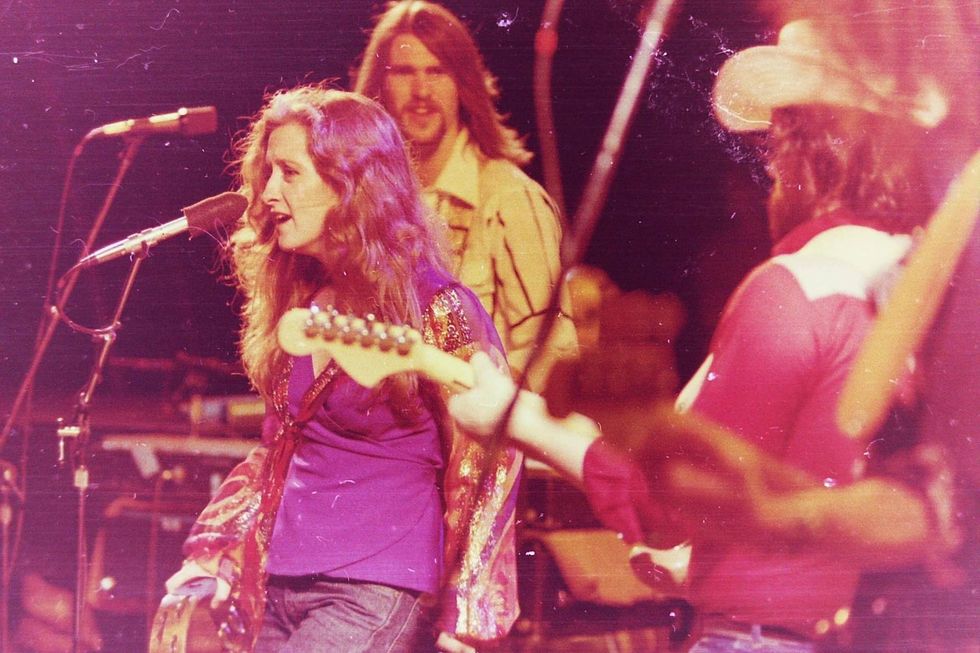
“There was an ad in the paper that just said, ‘Gibson guitar and amp, $150.’ I begged my dad to please, please get me this guitar. So we went out to a poacher's cabin in the woods, in the swamp. There were beer cans all over, and alligator jaws. He had a white SG with three gold humbuckers, a teak bridge, and mother-of-pearl inlays, and it said Les Paul Anniversary on the truss rod cover. The amp was a Gibson Falcon.” Unfortunately the Falcon could not compete with drums, so after his father was reassigned to New York, McFarlane eventually replaced it with a black-panel piggyback Bassman.
His chops developed around his love for r&b and Motown, and then blues and soul. And he joined an ambitious band that chased their collective dreams to the West Coast, Colorado, D.C., and Cambridge, Massachusetts. That where’s Dick Waterman, who managed Raitt as well as Son House, John Hurt, Buddy Guy and Junior Wells, Fred McDowell, Skip James, and other blues legends, discovered McFarlane playing a small club called Jack’s on Massachusetts Avenue.
“It’s amazing! You’re making 10 bucks a night and all the beer you can drink, and the next thing you know you’re on a sound stage in L.A. with Jackson Brown and David Lindley, and Linda Ronstadt is stopping by to say ‘hi.’”
McFarlane knew who Waterman was and had spotted him sitting at the back of the room over a string of his band’s weekly gigs. One night, Waterman brought Bonnie Raitt along and sat at a front table. By closing time, McFarlane was hired. “It’s amazing,” he recalls. “You’re making 10 bucks a night and all the beer you can drink, and the next thing you know you’re on a sound stage in L.A. with Jackson Brown and David Lindley, and Linda Ronstadt is stopping by to say ‘hi.’”
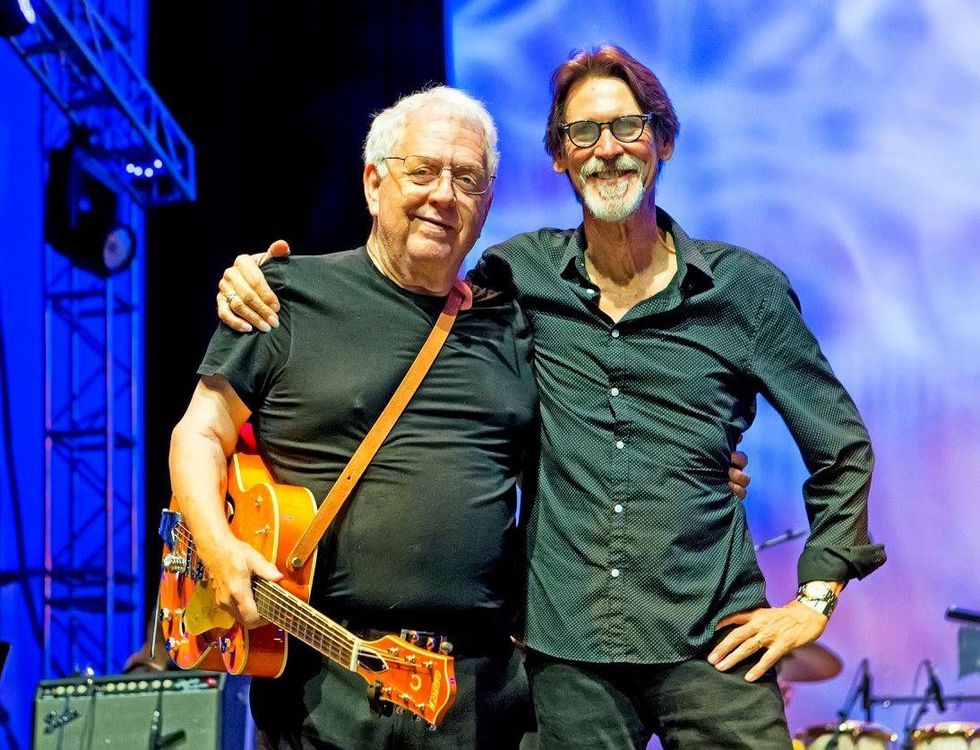
With the experience of recording and touring with Raitt, and the influence of his heroes Cornell Dupree, Reggie Young, Jessie Ed Davis, and Steve Cropper deep in his trick bag, McFarlane was a snug fit for the Muscle Shoals scene, where that intangible yet palpable quality called “soul” is as central to the region’s music and culture as the Tennessee River.
Just sitting on a couch in his home as we talk, the buttery midrange of the’54 Strat he’s fiddling with sings with a blend of clarity and light hair, emitting a poem of elegant notes that comes effortlessly. It’s this seemingly innate, almost telekinetic ability paired with intention, expertise, and warm positivity that’s made him an MVP.
“After I got here, Jimmy Johnson started to include me in everything,” says McFarlane, who describes himself as a stream-of-consciousness player. “Normally, you can’t just move in and get a lot of work, but Jimmy really was just great. Even when the Swampers were inducted into the Musicians Hall of Fame, Jimmy said, ‘We couldn’t have done it without our friends.’” So McFarlane was included in the induction, along with keyboardists Spooner Oldham and Clayton Ivey, and guitarist Pete Carr.
“Once, I was asked to do a guide vocal for Little Milton. That was intimidating.”
In particular, McFarlane became a favorite of the old-school blues, soul, and gospel performers signed to Malaco Records, an indie-label powerhouse that sold millions of albums—mostly to a middle-aged-and-up Black audience—in the ’80s and ’90s. Bobby Bland, Little Milton, Denise LaSalle, Shirley Brown, Johnnie Taylor, and many others “greeted me with their arms wide open,” says McFarlane. “I have so many great memories, from making music to shooting pool with Milton and Bobby. Bobby would turn to me before a take and say, ‘Give me those love licks!’ I’m always up for anything in the studio. Once, I was asked to do a guide vocal for Little Milton. That was intimidating.”
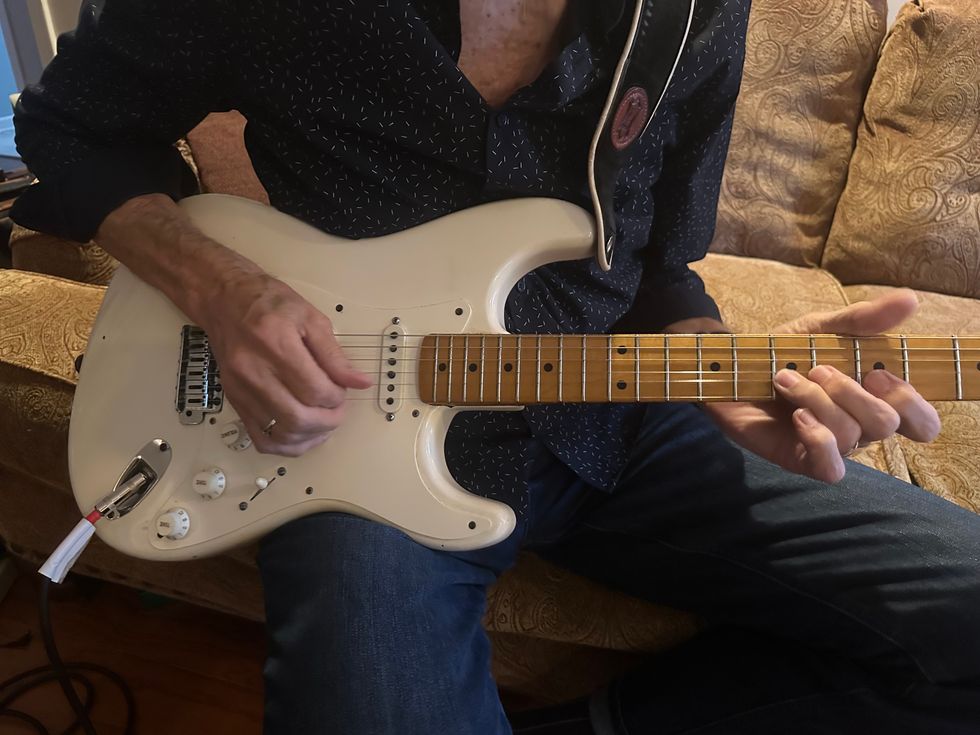
The caliber of those artists and their recordings should never be underestimated. “Cutting ‘Last Two Dollars’ with Johnnie Taylor, I thought I was just going to play a rhythm track, but I was the only guitar player when they went, ‘kick us off,’” McFarlane recounts. “I only had my Telecaster plugged straight into the amp, so I flipped it to the front pickup. When you listen to the track, where there’s a rhythm part going, there’s no fills, and no fills where there’s rhythm. It was just one pass, because you could tell when Johnnie was singing that ‘this is the take.’”
He continues, “Listening to Johnnie Taylor in headphones was like listening to Sam Cooke. I don’t think he ever punched in a vocal. Matter of fact, at one point, he got to a session late. We’d already cut three tracks for him. And the producer went, ‘Hey, Johnny, would you go out there and give me a scratch vocal?’” McFarlane laughs. “He just turned around and goes, ‘I don't do scratch vocals.’”
While the pace of recording in Muscle Shoals has slowed today, the legacy of the music made there and of the people who made it remains undimmed. Nashville’s Country Music Hall of Fame and Museum has just inaugurated the comprehensive exhibit Muscle Shoals: Low Rhythm Rising, devoted to the art that emerged from what might otherwise be considered an Alabama backwater, compared to other recording capitals. In addition to the sonic results that came from the Shoals, it’s also important to remember that the studios’ foundational work was done in the face of segregation, and, like Stax and Motown recordings and artists, this played an important role in breaking down racial barriers. (You can visit the Country Music Hall of Fame website to eyeball some of Low Rhythm Rising’s artifacts, including Duane Allman’s 1964 Strat and Pop Staples’ 1970 Tele, which he played in the Band’s historic concert film, The Last Waltz.)
McFarlane was the music director for a Nashville concert celebrating the three-year-long exhibit’s debut in November. The show found him onstage with the great soul songwriter Dan Penn (“Do Right Woman, Do Right Man,” “I’m Your Puppet’), Spooner Oldham, Bettye LaVette, Candi Staton, Jimmy Hall, John Paul White, and his old friend Clayton Ivey, among others.
McFarlane regularly performs with Hall, the frontman of ’70s soul-rock hitmakers Wet Willie and a touring vocalist with Jeff Beck. The guitarist also co-leads Big Shoes, a Little Feat-inspired band. And he’s recorded about a dozen faith-based albums and singles under his own name. Of course, more sessions are always on the table.
“At this point, I don’t have any delusions of stardom,” McFarlane observes. “But I do have a life full of camaraderie and making great music that I love with my friends and heroes, and being in a rhythm section. I’m grateful for all that.”
Take a Deep Dive into the Shoals
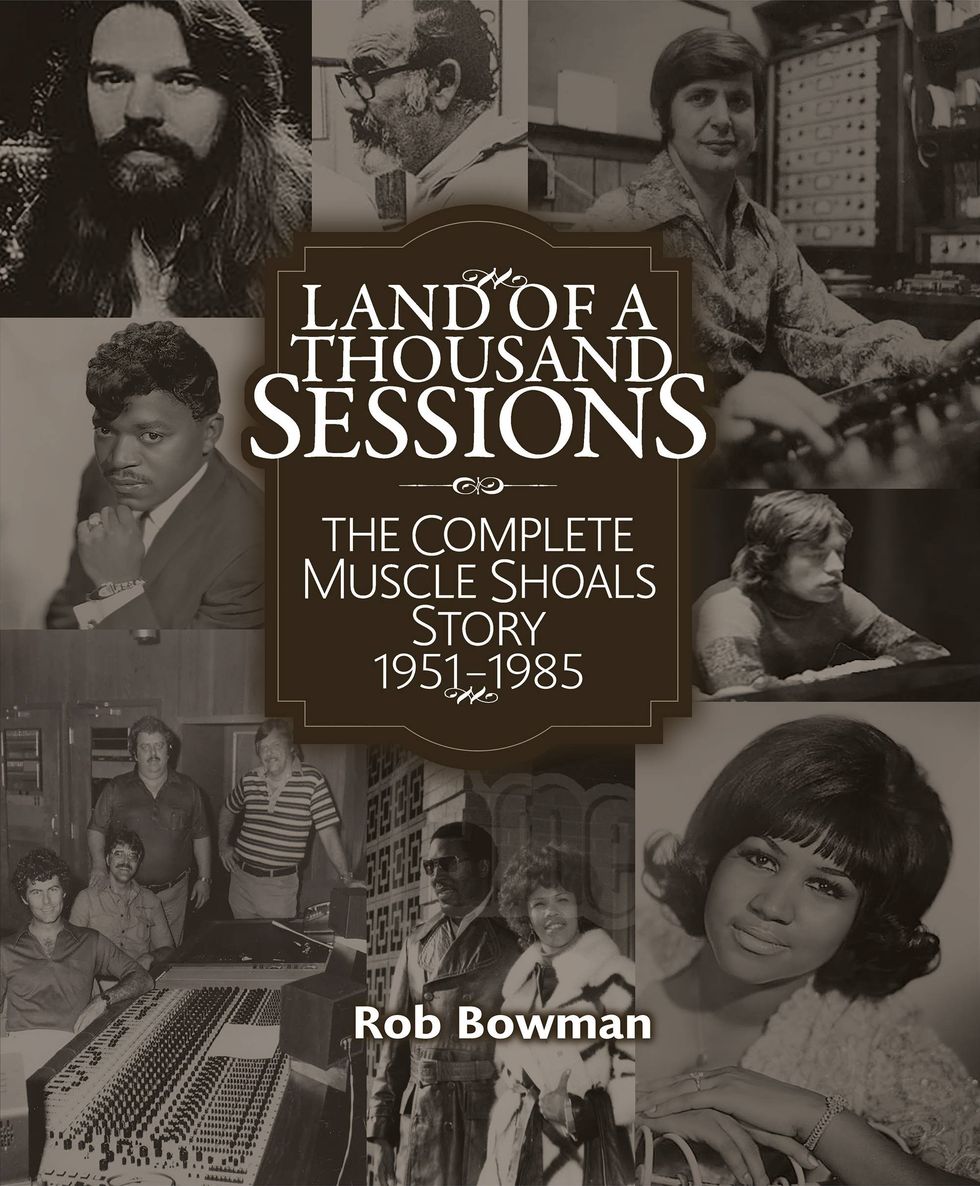
For a definitive look at the formative history of the Muscle Shoals Studio scene and its defining music, look to Rob Bowman’s new book, Land of a Thousand Sessions: The Complete Muscle Shoals Story 1951-1985. At 750 pages, the six-time-Grammy-nominated music journalist and historian spares no details.
The book was a six-year passion project for Bowman, and is buoyed by interviews with nearly 100 key figures, including Jimmy Johnson and Mick Jagger. He also dives into what most would consider the off-brand sessions that happened in the 10 studios covered in the volume’s 34-year span, from prog rock to psychedelic blues. And, of course, the racial climate in which Black and white musicians united in harmony to make some of the finest recordings of all time.
Will McFarlane: Muscle Shoals’ Living Guitar Legend
If the Grammys had a Best Supporting Player category, Will McFarlane would have a collection of little gold icons on his mantle. For more than 40 years, the lean, lanky 6-stringer has been an essential part of the Muscle Shoals recording scene, carrying the torch lit by the famed group of session players called the Swampers, who recorded classics with Aretha Franklin, the Rolling Stones, the Staple Singers, Bob Seger, Cher, Wilson Pickett, and Paul Simon, and set the die for the sound of many of the greatest American-flavored roots-based hits and albums of the ’60s and ’70s.
McFarlane has been a primary author of the chapters that followed. “After arriving and becoming embedded in the scene, Will became the central lead guitarist for the Muscle Shoals sound,” attests music historian and journalist Rob Bowman, whose Land of a Thousand Sessions: The Complete Muscle Shoals Story 1951–1985 has just been published. And so, McFarlane has recorded and played live with such legends as Bob Dylan, Bobby “Blue” Bland, Pops Staples, Little Milton, Candi Staton, Etta James, Johnny Taylor, and even Toby Keith. His work at the area’s tracking houses for the Jackson, Mississippi-based Malaco label helped define the sound of Southern-tradition-based blues, soul, r&b, and gospel from the ’80s to the early 2000s. And today, among the 6-string cognoscenti, McFarlane is a legend himself.
McFarlane’s days in the Shoals began after he met famed Swampers guitarist Jimmy Johnson at the Troubadour in West Hollywood. He recalls, “A friend, Duncan Cameron, who’d just done an album that Jimmy produced in Muscle Shoals with the Amazing Rhythm Aces, introduced us, and we were in Jimmy’s hotel room. Jimmy said, ‘Well, play me something.’ I had brought a guitar and I played a song I’d written called ‘A Secret Side of You,’ and then he said, ‘Play me something I don’t like.’ We hit it right off, and he asked me if he could fly me to Muscle Shoals to demo that song in a couple weeks.”
The band Johnson assembled for the session was essentially a subset of the Swampers that included bassist David Hood, drummer Roger Hawkins, and keyboardist Clayton Ivey. McFarlane continues, “I played the song for Clayton, and he did a quick numbers chart, which I had never seen, but I totally got it. We played it down quick, Jimmy hit the red light, and we played it through. Afterwards, Jimmy asked, ‘Any confessions?’ I turned to David and said, ‘Do y’all keep first takes around here?’ And he said, ‘All the time.’”
Will McFarlane’s Gear
GUITARS
- 1954 Fender Stratocaster (white refin)
- 1963 Fender Stratocaster (sunburst)
- Gibson ES-335
- Gibson Les Paul Classic
- Reverend Rick Vito Soulshaker
- Strat-style Danocaster
- TMG Custom Relic Tele-style
AMPS
- 1958 Fender Champ
- 1964 Fender Princeton
- 1969 Fender Princeton
- Carr Sportsman
- Carr Rambler
- Tyler 20-20
EFFECTS
- Strymon Flint
- JHS Panther Cub
- JHS Pulp ’N’ Peel
- JHS Moonshine
- JHS Morning Glory
- JHS The Milkman
- JHS Flight Delay
- JHS Phaser
- Harby Centauri
- Keeley C-2 Compressor
- FX Engineering RAF Mirage
- Boss RC-20
- Bad Cat Siamese Drive
- EHX Deluxe Memory Man
- Dunlop Cry Baby
- Ernie Ball Volume Pedal
STRINGS, PICKS, & SLIDES
- D’Addario NYXL (.010s–.046)
- Dunlop Ultex 1.0s
- Jimmy Johnson’s Custom “Swampers” Picks
- Coricidin bottles
- Dunlop Moonshine Ceramic
- Furious Slides Titanium
As luck had it, Roger McGuinn and Chris Hillman were making an album in the next studio at Cypress Moon, one of Muscle Shoals’ three historic studios along with Muscle Shoal Sound and FAME (and yes, you can tour all three). They heard the tune and cut it for the LP they were working on, 1980’s McGuinn-Hillman.
“I thought, ‘Wow, this is easy,’” McFarlane says. “I’d worked with [producer] Paul Rothschild on Bonnie Raitt records. Paul was into splicing tape. So we’d take 20 takes of a song sometimes. And I’d come back the next morning and there’d be a pile of two-inch tape on the floor. I went back to LA and I gave everybody notice.”
“I turned to David Hood and said, ‘Do y’all keep first takes around here?’ And he said, ’All the time.’”
Relocating to Muscle Shoals ended McFarlane’s 1974-to-1980 stint in Raitt’s band, but the route he traveled began earlier—perhaps even at birth, in 1952, on a Naval base in Coronado, California. “My mom, who died when I was 5, had perfect pitch and studied music at the University of Texas,” he says. “Apparently, she could turn her back on a piano and if you hit a chord she could tell you all the notes in the chord. So, she left the DNA with me.”
McFarlane comes from a family of military men, but like many musicians of his age, his destiny was changed by the Beatles’ first appearance on The Ed Sullivan Show. His first guitar was a plywood Regal acoustic, which was soon replaced by a Teisco-style electric, with light-switch pickup selectors, gold-foils, and a baseball-bat neck. The need to upgrade was compelling when he began playing in a band.
“There was an ad in the paper that just said, ‘Gibson guitar and amp, $150.’ I begged my dad to please, please get me this guitar. So we went out to a poacher's cabin in the woods, in the swamp. There were beer cans all over, and alligator jaws. He had a white SG with three gold humbuckers, a teak bridge, and mother-of-pearl inlays, and it said Les Paul Anniversary on the truss rod cover. The amp was a Gibson Falcon.” Unfortunately the Falcon could not compete with drums, so after his father was reassigned to New York, McFarlane eventually replaced it with a black-panel piggyback Bassman.
His chops developed around his love for r&b and Motown, and then blues and soul. And he joined an ambitious band that chased their collective dreams to the West Coast, Colorado, D.C., and Cambridge, Massachusetts. That where’s Dick Waterman, who managed Raitt as well as Son House, John Hurt, Buddy Guy and Junior Wells, Fred McDowell, Skip James, and other blues legends, discovered McFarlane playing a small club called Jack’s on Massachusetts Avenue.
“It’s amazing! You’re making 10 bucks a night and all the beer you can drink, and the next thing you know you’re on a sound stage in L.A. with Jackson Brown and David Lindley, and Linda Ronstadt is stopping by to say ‘hi.’”
McFarlane knew who Waterman was and had spotted him sitting at the back of the room over a string of his band’s weekly gigs. One night, Waterman brought Bonnie Raitt along and sat at a front table. By closing time, McFarlane was hired. “It’s amazing,” he recalls. “You’re making 10 bucks a night and all the beer you can drink, and the next thing you know you’re on a sound stage in L.A. with Jackson Brown and David Lindley, and Linda Ronstadt is stopping by to say ‘hi.’”
With the experience of recording and touring with Raitt, and the influence of his heroes Cornell Dupree, Reggie Young, Jessie Ed Davis, and Steve Cropper deep in his trick bag, McFarlane was a snug fit for the Muscle Shoals scene, where that intangible yet palpable quality called “soul” is as central to the region’s music and culture as the Tennessee River.
Just sitting on a couch in his home as we talk, the buttery midrange of the’54 Strat he’s fiddling with sings with a blend of clarity and light hair, emitting a poem of elegant notes that comes effortlessly. It’s this seemingly innate, almost telekinetic ability paired with intention, expertise, and warm positivity that’s made him an MVP.
“After I got here, Jimmy Johnson started to include me in everything,” says McFarlane, who describes himself as a stream-of-consciousness player. “Normally, you can’t just move in and get a lot of work, but Jimmy really was just great. Even when the Swampers were inducted into the Musicians Hall of Fame, Jimmy said, ‘We couldn’t have done it without our friends.’” So McFarlane was included in the induction, along with keyboardists Spooner Oldham and Clayton Ivey, and guitarist Pete Carr.
“Once, I was asked to do a guide vocal for Little Milton. That was intimidating.”
In particular, McFarlane became a favorite of the old-school blues, soul, and gospel performers signed to Malaco Records, an indie-label powerhouse that sold millions of albums—mostly to a middle-aged-and-up Black audience—in the ’80s and ’90s. Bobby Bland, Little Milton, Denise LaSalle, Shirley Brown, Johnnie Taylor, and many others “greeted me with their arms wide open,” says McFarlane. “I have so many great memories, from making music to shooting pool with Milton and Bobby. Bobby would turn to me before a take and say, ‘Give me those love licks!’ I’m always up for anything in the studio. Once, I was asked to do a guide vocal for Little Milton. That was intimidating.”
The caliber of those artists and their recordings should never be underestimated. “Cutting ‘Last Two Dollars’ with Johnnie Taylor, I thought I was just going to play a rhythm track, but I was the only guitar player when they went, ‘kick us off,’” McFarlane recounts. “I only had my Telecaster plugged straight into the amp, so I flipped it to the front pickup. When you listen to the track, where there’s a rhythm part going, there’s no fills, and no fills where there’s rhythm. It was just one pass, because you could tell when Johnnie was singing that ‘this is the take.’”
He continues, “Listening to Johnnie Taylor in headphones was like listening to Sam Cooke. I don’t think he ever punched in a vocal. Matter of fact, at one point, he got to a session late. We’d already cut three tracks for him. And the producer went, ‘Hey, Johnny, would you go out there and give me a scratch vocal?’” McFarlane laughs. “He just turned around and goes, ‘I don't do scratch vocals.’”
While the pace of recording in Muscle Shoals has slowed today, the legacy of the music made there and of the people who made it remains undimmed. Nashville’s Country Music Hall of Fame and Museum has just inaugurated the comprehensive exhibit Muscle Shoals: Low Rhythm Rising, devoted to the art that emerged from what might otherwise be considered an Alabama backwater, compared to other recording capitals. In addition to the sonic results that came from the Shoals, it’s also important to remember that the studios’ foundational work was done in the face of segregation, and, like Stax and Motown recordings and artists, this played an important role in breaking down racial barriers. (You can visit the Country Music Hall of Fame website to eyeball some of Low Rhythm Rising’s artifacts, including Duane Allman’s 1964 Strat and Pop Staples’ 1970 Tele, which he played in the Band’s historic concert film, The Last Waltz.)
McFarlane was the music director for a Nashville concert celebrating the three-year-long exhibit’s debut in November. The show found him onstage with the great soul songwriter Dan Penn (“Do Right Woman, Do Right Man,” “I’m Your Puppet’), Spooner Oldham, Bettye LaVette, Candi Staton, Jimmy Hall, John Paul White, and his old friend Clayton Ivey, among others.
McFarlane regularly performs with Hall, the frontman of ’70s soul-rock hitmakers Wet Willie and a touring vocalist with Jeff Beck. The guitarist also co-leads Big Shoes, a Little Feat-inspired band. And he’s recorded about a dozen faith-based albums and singles under his own name. Of course, more sessions are always on the table.
“At this point, I don’t have any delusions of stardom,” McFarlane observes. “But I do have a life full of camaraderie and making great music that I love with my friends and heroes, and being in a rhythm section. I’m grateful for all that.”
Take a Deep Dive into the Shoals
For a definitive look at the formative history of the Muscle Shoals Studio scene and its defining music, look to Rob Bowman’s new book, Land of a Thousand Sessions: The Complete Muscle Shoals Story 1951-1985. At 750 pages, the six-time-Grammy-nominated music journalist and historian spares no details.
The book was a six-year passion project for Bowman, and is buoyed by interviews with nearly 100 key figures, including Jimmy Johnson and Mick Jagger. He also dives into what most would consider the off-brand sessions that happened in the 10 studios covered in the volume’s 34-year span, from prog rock to psychedelic blues. And, of course, the racial climate in which Black and white musicians united in harmony to make some of the finest recordings of all time.
You can save over $1,000 on a PRS McCarty 594 10-Top with these huge deals at Sweetwater

If you’ve ever dreamed of owning a PRS McCarty model then now might be the best time to get your hands on one – Sweetwater has some pretty huge deals on, saving you over $1,000 on a number of McCarty models.
The models on offer right now are single-cut 594s with PRS’ revered 10 Top status, meaning each one has a clearly defined figure across the entire top. They’re now reduced to $4,399, saving you over $1,000.
[deals ids=”3MDcVjYN6V9Pg1QPWAIxlU”]
The 594 McCarty gets its name from its 24.594-inch scale length. Named after the late Ted McCarty, these guitars have a maple-capped mahogany body, two 58/15 LT pickups, a full yet comfortable Pattern Vintage neck profile, and much more. Across the sale, finishes on offer include Black Gold Burst, Charcoal Burst, Faded Blue Jean, Fire Red, and Grey Black.
In more PRS McCarty news, the brand has teased that something related to the McCarty name will be unveiled later this month, just in time for the NAMM show. Although no details have yet been confirmed, it looks like either a new product or possibly a documentary exploring the life and legacy of Ted McCarty will be landing on 22 January.
In a video shared by PRS on Instagram, a video recaps how the original McCarty model first released in 1994 was unveiled at the NAMM show, and features footage of McCarty discussing how the guitar came to be. He says, “One day, Paul met me at the trade show in New York. We talked about guitars and he said, ‘how about if we make a Ted McCarty guitar?’
“I said, ‘well, perhaps it would be fine. And I would be very thrilled and honoured to have one of your guitars with my name on it, but who’s gonna buy it? Because I’m not a musician, I don’t go around and play guitars.’ Paul said that he didn’t think I knew quite the reputation that I had.”
Shop all PRS McCarty deals over at Sweetwater.
The post You can save over $1,000 on a PRS McCarty 594 10-Top with these huge deals at Sweetwater appeared first on Guitar.com | All Things Guitar.
Johnny Marr reveals “mind-blowing” experience of playing with Paul McCartney – and the unique thing that sets him apart from other bass players
![[L-R] Johnny Marr and Paul McCartney](https://guitar.com/wp-content/uploads/2026/01/Johnny-Marr-Paul-McCartney@2000x1500.jpg)
Johnny Marr has recalled the “mind-blowing” experience he had playing with Paul McCartney when he was younger, waxing lyrical on the Beatles legend in a new interview on The Overlap podcast.
The Smiths guitarist says McCartney’s genius is such that “he’s like having your 12th man” when playing alongside him.
- READ MORE: Grateful Dead guitarist Bob Weir dies aged 78 – the guitar world reacts to the passing of a legend
“If you take a band like the Beatles – they always come to mind because they’re the yardstick everyone thinks about, you know. Ringo is so important to the sound. If it was anyone else it would be a completely different band,” Marr says. “But, pretty lowkey, George Harrison – speaking as a guitar player – [he was] one of the greatest guitar players ever.
“Paul McCartney on the other hand – and speaking as a musician – I had a mind-blowing experience playing with Paul McCartney when I was younger. He’s like having your 12th man.
“In a band he really is like having two guys. Because he’s so melodic, he’s so attitude-y, and just [has] amazing musicality.”
Marr adds that due to his massive fame beyond his time in the Beatles, it’s easy to forget about his prowess as one of the best bass players in the world.
“He’s so famous and has become such a cultural person now – there’s quite a lot of people like this in the culture, I think, not just musicians,” he goes on.
“You forget, actually, about what their craft is. And Paul McCartney reinvented a way of playing the bass. You think of him as a songwriter and a singer really, but as a bass guitar player, it’s next-level, really.
“I think that was really deliberate. I think he took great pride in being – he wanted to be the best bass player in the world.”
Last month, it was revealed that Höfner – the maker of Paul McCartney’s legendary violin bass – had filed for bankruptcy. In a tribute post on social media, Macca wrote:
“It is very sad to see Höfner go out of business. They have been making instruments for over 100 years, and I bought my first Höfner bass in the ‘60s. I have loved it ever since. It’s a wonderful instrument to play: lightweight, and it encourages me to play quite freely. It also offers pleasing variations in tone that I enjoy.”
The post Johnny Marr reveals “mind-blowing” experience of playing with Paul McCartney – and the unique thing that sets him apart from other bass players appeared first on Guitar.com | All Things Guitar.
Source Audio Encounter review: “one of the most sonically adventurous pedals I’ve ever played”

$399/£369, sourceaudio.com
Let’s just get this out of the way up top: I’m typically not a fan of pedals that combine both delay and reverb. Sure, there are exceptions – the most famous being some of the many variants of the Roland RE-201 Space Echo – but the exception is not the rule.
Many companies have attempted this approach with varying degrees of success, and more often than not in my experience, the trade-offs outweigh the savings in cost and real estate.
That said, I am a huge fan of lush, ambient sounds and expansive textures. Pedals like the Walrus Audio Slö or the Chase Bliss MOOD have long been staples in my ambient arsenal. Despite my general reservations about the concept then, Source Audio’s latest hybrid offering – the Encounter – certainly piqued my interest.
Part of this is because Source’s previous attempt to fuse delay and reverb – the superlative Collider – was an ambient guitarist’s dream. Can it be two in a row?
 Image: Press
Source Audio Encounter – what is it?
Ostensibly the Encounter is a very similar experience to the Collider – it has the same basic format of two footswitchable sides for reverb and delay, and a centralised rotary that selects which delay and reverb algorithm you’re currently using.
While the Collider was a fusion of the usual suspects of delay and reverb however, the Encounter is exclusively dealing in the most ambient and weird sounds you can find – there’s no room, spring, tape or the like here.
Instead you’ll find the likes of Hypersphere, Kaleidoscope, Trem Verb and Noise Tape – quite what those actually mean, well – you’ll need to take a look at the manual. The delay and reverb sections can be combined or run independently of the other, and the dry signal is routed around the signal processor for applications that demand unaffected tones via parallel routing. There’s also a 100 per cent wet/dry control for those effect-loop junkies.
Other highlights include onboard expression compatibility with depth and direction control, as well as complete MIDI functionality via 5-pin MIDI DIN input and thru jacks. The pedal offers eight onboard presets, with access to a total of 128 presets via MIDI.
If you want to unlock even more tweakability however, you can pair the pedal with Source Audio’s Neuro 3 smartphone app. This enables deep effect editing, MIDI control, interchangeable algorithms, preset sharing, and a wealth of other features – many of which are crucial for anyone looking to truly harness the full potential of this pedal.
 Image: Press
Source Audio Encounter – usability and sounds
So, enough of the Star Trek technobabble – how does this thing actually sound? And is it too atmospheric for the normie who just wants a really good time-based pedal? To answer that hypothetical question, I grabbed a Jazzmaster and plugged it straight into a Vox AC15 to put it through its paces.
Before exploring the fusion food element of this particular meal, I decided to test each side on its own. I found the results to be both immediate and delightfully head-scratching.
For instance, one of my favorite delays – the Kaleidoscope – proved to be distinct from any kind of echo I’ve encountered before, but quite hard to describe. The best way I can think of is to imagine that your repeats have been chopped up and then sent down a giant helter skelter. It sounds strange, I know, but it’s immensely rewarding and enjoyable in practice.
Another standout delay is the expertly crafted Noise Tape, which is based on the tape delay section of the aforementioned Space Echo. I found this Space Echo emulation to be both dynamic and nearly identical to my actual 1984 RE-201. With a bit of modulation dialed in, I found myself channeling my inner Kid A almost by default – I would wager it’s the sound that the majority of us would use most frequently.
If the delays are fun and weird, the reverbs take things to a whole new level. The Hypersphere algorithm, for example, might be the closest we’ll ever get to hearing what the natural reverb of the universe sounds like. A wonderfully blooming effect that expands in all directions at once.
As you’d expect from an atmospheric pedal, there’s a fair helping of varied shimmer algorithms. These don’t necessarily reinvent the shimmer formula, but they’re tonally distinct enough to satisfy either the hardcore Sigur Rós enthusiast or those simply looking to add a slightly pitched, angelic voice to their Sunday service.
The Encounter’s greatest strength truly reveals itself when you combine delay and reverb to create richly atmospheric, creatively inspiring textures that ebb and flow between luscious sound pads and almost sequence-like lo-fi patterns.
One of my favorite pairings is the Drum Delay coupled with the Lo-Fi Reverb. This combination is perhaps the best starting point for ambient newcomers: you still get a touch of that ambient warble, but the drum delay remains straightforward enough to be usable in virtually any musical context.
When it comes to editing and saving presets, Source Audio has taken a refreshingly straightforward approach, offering both onboard editing and deep control via the Neuro 3 app. I found Neuro 3 to be especially intuitive in its design – the GUI is visually pleasing, easy to navigate, and thoughtfully laid out. In a world of overly-complicated app-based solutions, it’s nice to use something that doesn’t require a doctorate to get to grips with.
 Image: Press
Source Audio Encounter – usability and sounds
So, did the Encounter change my mind about dual delay/reverb pedals? Certainly in this case, absolutely. It’s a pedal that builds upon the original concept of the Collider and takes it in a far more adventurous, sonically lush direction.
While there’s usually some sort of compromise in these sorts of pedals, by making it squarely focused on creating ambient textures does negate that impressively – as an all-in-one ambient unit, it might be the only one most of us ever need.
The flipside of this is that it’s certainly not cheap – at very nearly $400 you can definitely ask yourself whether that money would be better spent on two independent pedals, especially if your needs aren’t as esoteric as what’s on offer here.
But for its intended soundscape-y, textural audience, it’s one of the most sonically adventurous pedals you can get – and that’s well worth the price of entry.
While I initially had my apprehensions, Source Audio more than delivered, creating a pedal that could very well be the only ambient unit most players will ever need.
At $400, it’s certainly a significant ask for those simply looking for a straightforward delay/reverb combo. However, for the audience the Encounter is clearly aimed at, it stands as one of the most sonically adventurous pedals I’ve ever played – and that alone more than justifies the asking price.
 Image: Press
Like this? Try these
- Del-Verb Ambience Companion by Universal Audio
- Qi Etherealizer by Walrus Audio
- M309 Joshua Ambient Echo by MXR
The post Source Audio Encounter review: “one of the most sonically adventurous pedals I’ve ever played” appeared first on Guitar.com | All Things Guitar.
Podcast 531: Author John Stubbings
On this week’s podcast, UK-based author and guitar fanatic John Stubbings returns to tell us all about his new book, ‘The Guitar Detective.’ The follow-up to his monumental ‘The Devil Is In It’ publishing project, ‘The Guitar Detective’ is a “non-fiction novel” based around a riveting guitar mystery.
We discuss the format John chose for this book, his inspiration for the story, and so much more.
Order ‘The Guitar Detective’ here: https://orpharionpress.com/
Our next Fretboard Summit takes place August 20-22, 2026, at the Old Town School of Folk Music in Chicago. https://fretboardsummit.org
Our 58th issue of the Fretboard Journal is now mailing. Subscribe here to get it.
We are brought to you by Peghead Nation: https://www.pegheadnation.com (Get your first month free or $20 off any annual subscription with the promo code FRETBOARD at checkout).
Stringjoy Strings: https://stringjoy.com


The post Podcast 531: Author John Stubbings first appeared on Fretboard Journal.
Esoterica Electrica: Will AI Make Guitarists Irrelevant?
The constant drumbeat of AI reporting, of which this column is ironically a part, vacillates between heaven and hell, utopia and dystopia, and everything in between. For those guitarists and songwriters who choose to ignore this important subject, I recommend watching Rick Beato’s YouTube video titled “I'm Sorry...This New Artist Completely Sucks” for a quick overview on where things stand in this last quarter of 2025. While the current state-of-the-art capabilities are advancing at an incredible pace, I can’t help but look backwards for clues as to how instructive or destructive this whole thing might be. The question at hand is not only whether this technology will bury us in crap music, but what it means to be a musician or a songwriter.
The most knee-jerk fear is that AI music will eliminate the need for musicians and instruments—or, for that matter, recording studios as we know them. Naysayers point to the growing percentage of computer generated music now flooding streaming platforms and predict that this content will eventually drown out practicing musicians. It’s already hard enough to get your music noticed, and even harder to generate a living wage by monetizing your output. This isn’t a new trend for bands, who have seen recording sales drop. At the same time, streaming income is so low that live gigs and merch are their biggest sources of revenue. The worry is that AI supercharges this slide into bankruptcy by creating a flooded zone of music that propagates at a magnitude beyond what “real” musicians can offer. In this scenario, a rising tide doesn’t float all boats.
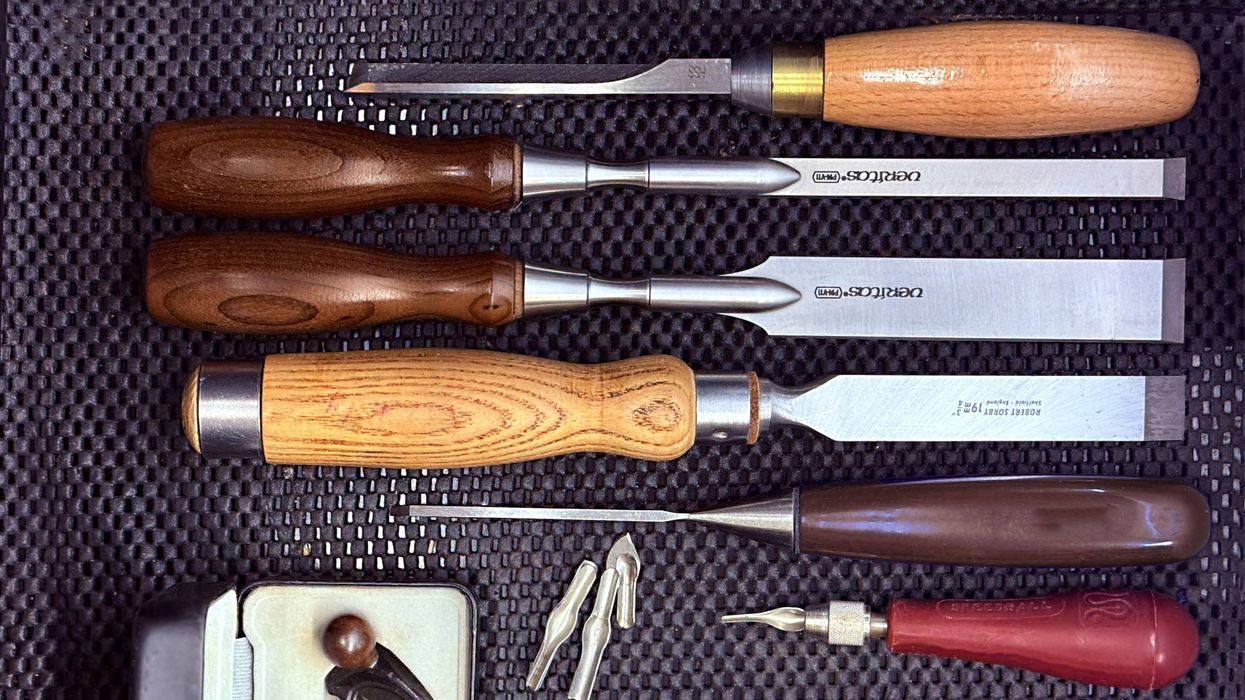
Alongside my romantic relationship with the past, I have long embraced technology in a lot of areas of my life and work. I don’t see that CNC woodworking equipment can’t exist peacefully right beside my chisels and gouges. I enjoy my FLAC files as much as my vinyl. A digital device allows me to program bass and drums accompaniments on the fly to play along with. Guitarists that I admire for their creativity and sound routinely employ emulation electronics to provide an enormous palette of vintage and modern tones. Their music doesn’t suffer for bypassing the tweed Harvard and properly placed ribbon mic. So, in a way, I see the AI music tools as progeny to my first fuzz pedal, or digital recording software.
“What if music became so easy to make—and so ubiquitous—that most people lost interest in creating it?”
Still, this new frontier feels different. No knowledge of music or poetic word-craft is in order. Barely a reason to express human emotion or thought need be involved—only prompts. If musicians alone had access to this new software for making music, we might not fear the reaper. The difference now is that the democratization of creation is the Trojan horse in our musical Troy.
So what are the next steps? Despite the fact that huge crowds are content to pay money to be bombarded with sound generated by a DJ with a laptop, live gigs are still a viable outlet for musicians. Although it’s hard to break even, let alone profit, on ticket sales for small- and medium-sized gigs, the connection to a fanbase along with merch sales is still essential. It will be some time before AI generated “artists” can routinely be holograms on a concert stage, but I see this as a possibility. If you think that audience acceptance of this is fantasy, read up on the current rise of AI romantic relationships—weird stuff.
The thought occurred that maybe a reset is in order, and this is the cycle at work. What if music became so easy to make—and so ubiquitous—that most people lost interest in creating it? If you can’t make money or become famous due to the sheer enormity of competing content, what would be the incentive? Would people dabbling with AI music move on to the next influencer fad and leave the playing field barren? Could we return to a place where only those of us who have to play music are left? Or are we doomed to be engulfed in a kind of algorithmic elevator music dressed up as the next big thing?
My hope is that musicians who are compelled to create art will survive because it’s in their blood, and real music will triumph in the end. The visceral feeling of a guitar vibrating against your body will endure. Maybe this is all wishful thinking from an irrelevant geezer guitarist, but at least we can dream—which is the whole point, isn’t it?
Grateful Dead guitarist Bob Weir dies aged 78 – the guitar world reacts to the passing of a legend

Legendary Grateful Dead founding member and guitarist Bob Weir has died, his family has announced. He was 78, and had been undergoing treatment for cancer since last year.
In a statement posted to Instagram, Weir’s family paid tribute to the hugely influential musician, stating: “It is with profound sadness that we share the passing of Bobby Weir. He transitioned peacefully, surrounded by loved ones, after courageously beating cancer as only Bobby could. Unfortunately, he succumbed to underlying lung issues.”
Weir co-founded the Grateful Dead in 1965 alongside fellow guitarist Jerry Garcia. The Dead would become a hugely influential and enduring musical force that transcended the San Francisco counterculture they grew out of. They would go on to become the greatest jam band of them all, with a songbook of timeless classics and an army of devoted fans – Deadheads – that continued to grow and diversify with each passing generation.
The Grateful Dead were a remarkable anachronism in American music. They had just one Top 40 hit in their entire career (1987’s Touch of Grey). But were one of the most popular and enduring touring acts in the country, emphasising the remarkable power of the Dead’s live experience and the unique community it fostered.
The Grateful Dead proper ended with the untimely passing of Jerry Garcia in 1995, but Weir and other surviving members of the band continued to tour and keep the music alive – first as The Other Ones and then, from 2010, teaming up with John Mayer to form Dead & Co.
Dead & Co would bring the magic of the Greatful Dead’s music to a whole new generation, leading to sold-out tours until 2022, a remarkable Las Vegas Sphere residency in 2024 and finally, a three-day hometown run at San Francisco’s Golden Gate Park in July 2025 that marked 60 years of The Dead, and would be an unplanned but fitting coda to Weir’s incredible legacy.
Unsurprisingly given the huge impact he had on American music, the guitar world united from all corners to pay tribute to Weir as news of his passing broke.
“He was always ready to ‘Kick up a fuss’,” wrote bluegrass phenom Billy Strings on Instagram. “He always had boundless time and knowledge to share with everyone and was truly one of the kindest people I’ve ever known. The world is a better place because of him. I’m extremely grateful to have crossed paths with him in this life.”
“This guy was such a hero,” wrote Heart’s Nancy Wilson. “The world is a sadder place without him in it. He spread a lifetime of magic around and always had that twinkle of good nature in his eyes. His good vibrations will never end. He gave such a gift to us all.”
Phish’s Trey Anastasio paid heartfelt tribute to Weir in a lengthy post on Instagram, but was keen to highlight his modesty and self-depracating sense of humour: “Bobby was completely allergic to compliments in the most endearing way. I’d say, ‘Man, that guitar riff you were doing on that song sounded really killer’ and he’d respond, ‘Well, I’m sure I’ll fuck it up next time.’ I loved that about him.”
Don Was, who played with Weir in the Wolf Bros highlighted the power Weir as a live musician, “Night after night, he taught us how to approach music with fearlessness and unbridled soul – pushing us beyond what we thought was musically possible,” he wrote. “Every show was a transcendent adventure into the unknown. Every note he played and every word he sang was designed to bring comfort and joy to our audiences.”
Maggie Rogers was another paying tribute to Weir’s embracing of young musicians: “This man showed me so much kindness so early in my career,” she wrote. “And welcomed me into a spirit of making music that has everything to do with community and connection and soul, and always with a twinkling of perfect mischief at the edges.”
Joe Satriani simply and poignantly posted, “It was an honour to know you and share the stage with you.”
Weir’s passing follows on from the death of bassist Phil Lesh in 2024, and leaves drummer Bill Kreutzmann as the only surviving founding member of the band. Regardless, Weir’s family believes that it was his dream and wish that the band’s music carried on long after him.
“There is no final curtain here, not really,” wrote the family’s statement on Instagram. “Only the sense of someone setting off again. He often spoke of a three-hundred-year legacy, determined to ensure the songbook would endure long after him. May that dream live on through future generations of Dead Heads. And so we send him off the way he sent so many of us on our way: with a farewell that isn’t an ending, but a blessing. A reward for a life worth livin’.”
The post Grateful Dead guitarist Bob Weir dies aged 78 – the guitar world reacts to the passing of a legend appeared first on Guitar.com | All Things Guitar.
Bob Weir, Grateful Dead Co-Founder and Rhythm Guitar Icon, Dies at 78
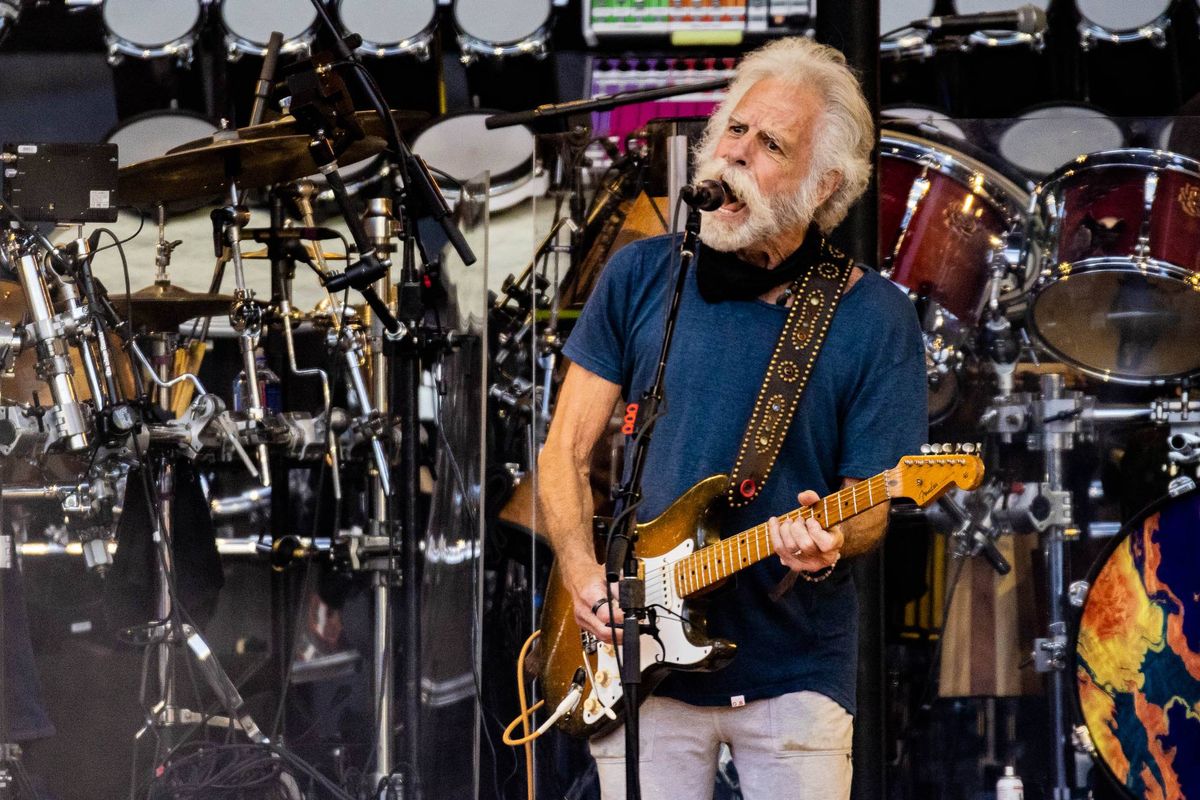
Bob Weir, the guitarist and singer who co-founded the Grateful Dead and spent more than half a century carrying forward the band's improvisational spirit, died Saturday after battling cancer and underlying lung issues. He was 78.
Weir's family confirmed his death in a statement posted to social media, revealing that he had been diagnosed with cancer in July and began treatment just weeks before Dead & Company performed three nights at San Francisco's Golden Gate Park—shows that marked 60 years since the Grateful Dead's formation and became Weir's final performances.
"He transitioned peacefully, surrounded by loved ones, after courageously beating cancer as only Bobby could," the statement read. "Unfortunately, he succumbed to underlying lung issues."
Born in San Francisco in 1947, Weir crossed paths with banjo player Jerry Garcia as a teenager at Dana Morgan's Music Store, an encounter that led to the formation of the Grateful Dead. For three decades, his rhythm guitar work and songwriting helped define the band's sound and improvisational approach. After Garcia's death in 1995, Weir kept the Dead's legacy alive through groups including the Other Ones, Furthur, and Dead & Company, the latter featuring guitarist John Mayer.
Weir remained an evolving artist to the end. When I spoke with him last year just prior to Dead & Company's second Sphere residency, he described himself as perpetually changing. "I always do that," he said. "I wake up in the morning and I'm kind of different. You take all those mornings that I woke up kind of different and you add 'em together, and after a while, you start amounting to a different guy."
For the same story, Mayer, reflecting on a decade of performing alongside Weir, spoke of the profound impact of his musical approach. "The thing I've learned from Bob is to let it breathe," he said. "And that's changed my playing a lot."
"Bobby's final months reflected the same spirit that defined his life," his family wrote on social media. "Those [Golden Gate Park] performances, emotional, soulful, and full of light, were not farewells, but gifts. Another act of resilience."
Riffin’ with Dyads
In this lesson, Shawn Persinger shows us how to understand the essential elements of chords and use them to build riffs.
Electro-Harmonix Introduces The Pico Intelligent Harmony Machine
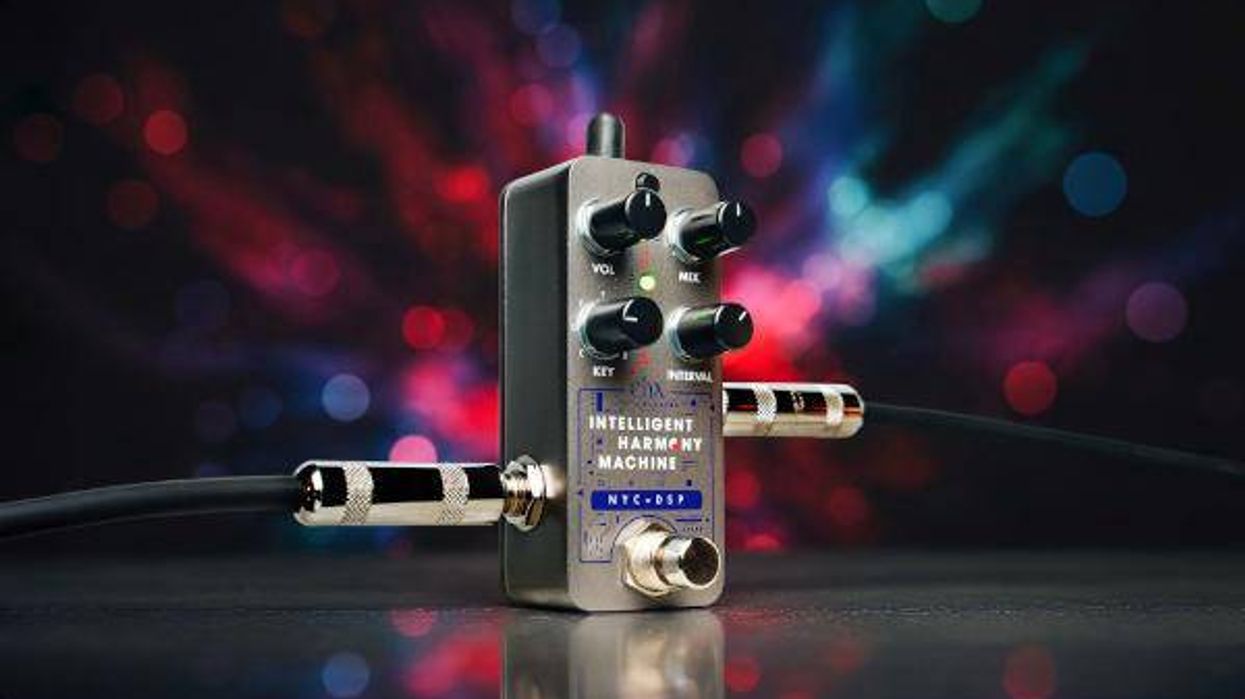
Expanding their line of powerful Pico-sized pedals, Electro-Harmonix has released the Pico Intelligent Harmony Machine. Like its full-sized counterpart, the Pico IHM follows your single note melodies to create multi-voiced diatonic harmonies. Set the pedal to any key to produce rich 2- and 3-part harmonies with ease.
Housed in the space-saving EHX Pico chassis, the Pico Intelligent Harmony Machine brings harmony to any pedalboard and boasts a simple control layout. The KEY knob and # button set the harmonic key while the INTERVAL knob selects from 10 different harmony interval modes. DUAL mode adds a second voice to the harmony producing lush 3-part harmonies. MIX and VOL knobs adjust wet/dry blend and overall output volume respectively. Just like all Electro-Harmonix pitch shifters and harmony machines, the Pico IHM features lightning-fast tracking that stays tight even with the speediest of licks.
The Pico Intelligent Harmony Machine ships with standard EHX 9V power supply and is available now with a U.S. Street Price of $149.00.
Treaty Oak Revival’s Family Tree
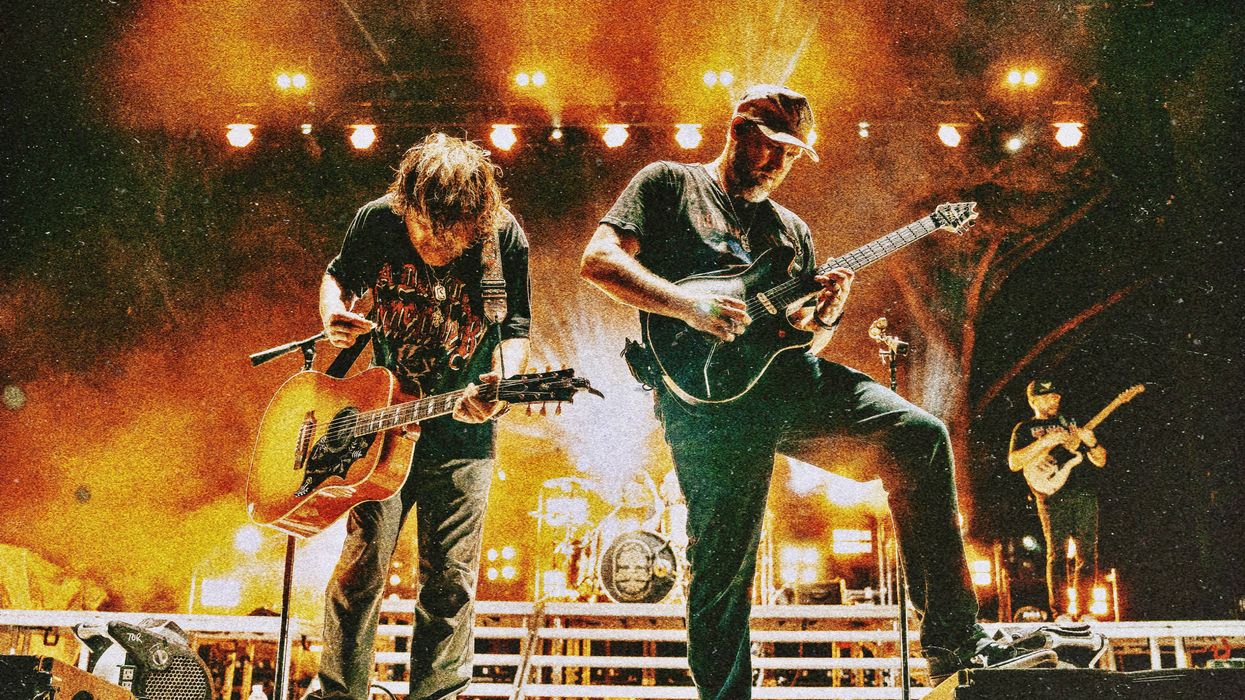
By all accounts, Treaty Oak Revival is doing a lot of things right. Over the past five years, the Odessa, Texas-based “rock band with a country accent” has issued two self-released, Gold-certified albums (2021’s No Vacancy and 2023’s Have a Nice Day), a host of Gold and Platinum singles, racked up over 1.4 billion global streams, and have played both the Grand Ole Opry and Lollapalooza.
Last October, the band made its first trip outside the United States on their four-stop “Treaty Oak Revival Takes Australia” headline run of dates Down Under. But what lead guitarist Jeremiah Vanley wants to talk about isn’t how the group sold out Melbourne’s 5,000-seat Hordern Pavilion; instead, he’s psyched about the time they played for 30 people in a Sydney bar.
“It was this girl’s birthday, and as it turned out, everybody in the place was a big fan of ours,” Jeremiah says. “They had a drum set and a sound system, so we just said, ‘Okay, we’ll get our guitars and play.’ It turned into our first pop-up show, and it was great. More and more we’re playing big places, but I still love a good club feel.”
Before he set foot on any kind of stage, Jeremiah was perfectly happy jamming with his buddies—bassist Andrew Carey and drummer Cody Holloway—in the back room of an Odessa vacuum cleaner repair shop. They called themselves Free Spirit, and on Tuesday and Wednesday nights they’d get together to drink Fireball Whisky and cut loose on classic rock covers. Eventually, they were joined on guitar by Jeremiah’s nephew Lance, who had just graduated from music school and was looking for something to do.
“They had about 10 cover tunes together,” Lance recalls. “It was kind of a crazy jam band—they did everything from ‘Free Bird’ to Fleetwood Mac to Van Halen. Jeremiah can shred on that stuff. It’s funny, ’cause the two of us never played together that much while I was growing up, but it felt really natural when we played in the vacuum shop.”
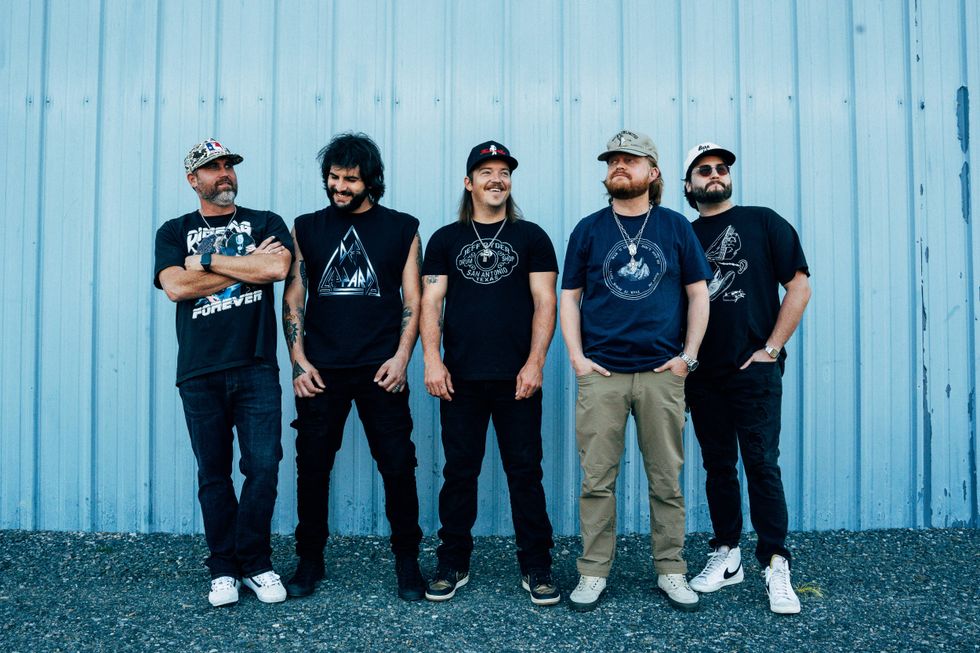
Jeremiah Vanley’s Gear
Guitars
- Gibson Les Paul Standard
- EVH Wolfgang USA
Amp
- Neural DSP Quad Cortex (Brit Plexi 50 model)
Effects
- Ibanez TS808 Tube Screamer
- MXR EVH Phase 90
- Morley Bad Horsie Wah
Strings, Picks and Cables
- D’Addario NYXL or Ernie Ball (.010–.050)
- Dunlop Flow 1.5 mm picks
- “Whatever cables we have”
The two Vanleys couldn’t be more different. While Lance started playing guitar at age nine and studied music theory in college, Jeremiah, older by 10 years, didn’t pick up the guitar until he was 18—and never took so much as one lesson. Lance grew up listening to rock, jazz, hip-hop and R&B; he calls John Mayer one of his biggest influences. “I love his rhythm playing and the way he builds songs,” he says.
Jeremiah, on the other hand, cites Metallica, Pantera, and Van Halen as his prime inspirations. “I still listen to Eddie Van Halen and have my mind blown,” he says. “It’s like, ‘How did he come up with all that amazing stuff?’” Interestingly, it’s self-taught Jeremiah who shoulders lead guitar duties in the band, while Lance is content to play in-the-pocket rhythm. “Jeremiah’s a shredder—he can just rip all night long,” Lance says. “I don’t mind playing rhythm guitar. A good band needs a solid rhythm guy. It’s really important.”
“More and more we're playing big places, but I still love a good club feel.”—Jeremiah Vanley
Shortly after Lance joined Free Spirit, singer Sam Canty came by the vacuum shop, and that’s when things got serious. “Sam had a cool stage presence about him, and he could sing really well, but we were like, ‘Wow, he’s pretty country,’” Jeremiah says. “We did some covers with him, and then he pulled out his original tunes. He played ‘Boomtown,’ and we were knocked out. We looked at each other and said, ‘We could do something with this.’ So we became more of a Texas country-rock band.”
Originally, both Vanleys played Telecasters through Fender amps, but that changed when Canty suggested that the band—rechristened Treaty Oak Revival in honor of the Treaty Oak in Austin—should forge a heavier sound. Jeremiah required no arm twisting. “I already had a Les Paul, so I went out and bought a Marshall amp,” he says. “Once I plugged that in, we got a grungier rock sound.”
“It made a huge difference,” Lance says. “With Jeremiah on the Les Paul, everything started to fall into place.”
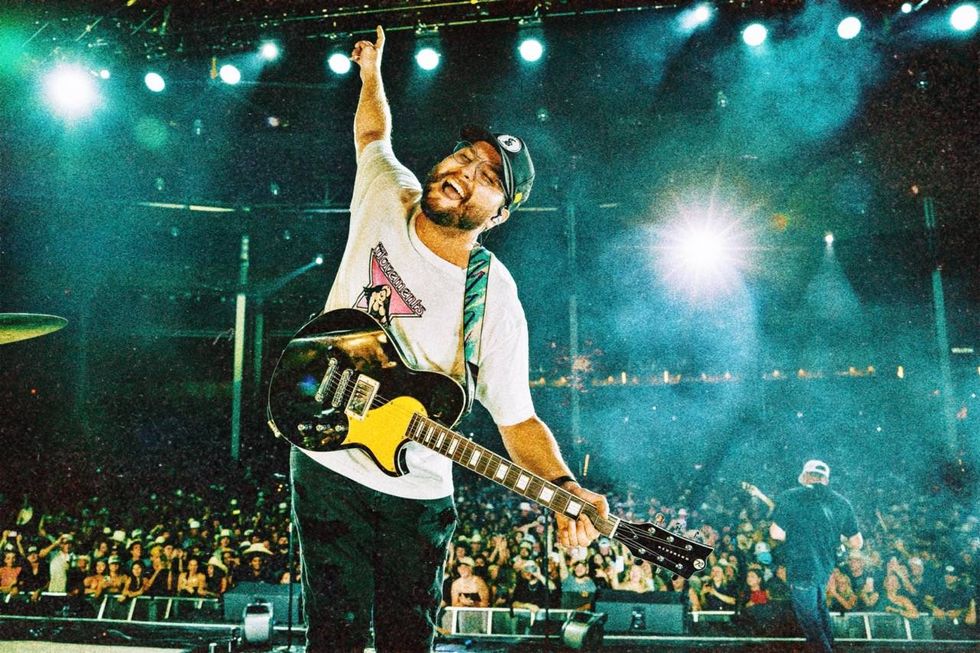
Lance Vanley’s Gear
Guitar
- Reverend Stacey Dee Signature
- Reverend Charger Jr.
Amp
- Morgan AC20 Kemper Profile
Effects
- “All of my effects are in the Kemper”
Strings, Picks and Cables
- D’Addario NYXL (.011–.049)
- Dunlop Tortex 0.71 mm picks
- “We have a mix of cables—D’Addario and potentially Ernie Ball.”
The group started playing live, and their sound got tougher still—walls of bone-rattling power chords and flame-broiled riffs that provided turbulent canvases for Canty’s richly detailed narratives. The combination of revamped post-grunge and red-dirt Americana worked like a charm on TOR’s first two albums; songs like “Missed Call” and “See You in Court” went down like musical comfort food. Fifty-somethings could revel in rip-roaring ’90s nostalgia, while their kids could claim the band as their own without embarrassment.
Treaty Oak Revival’s newest album, West Texas Degenerate, is their grittiest, grungiest effort yet—at times, Canty’s twangy vocals are the only country element to be heard. The mean-spirited “Shit Heel” packs the guitar wallop of Everything Zen-era Bush, and the bruising title track could have fit alongside Pearl Jam, STP, or Everclear on any 1995 alternative radio playlist. The tone and style shift on “Bad State of Mind”—it’s a decidedly modern country affair, but even here its gloomy main riff owes more to the Pacific Northwest than, say, Music Row. “I came up with that opening bit,” Lance says. “I tend to be more of the riff guy. If there’s something that continues throughout a track, that’s usually me.”
“Jeremiah’s a shredder—he can just rip all night long. I don't mind playing rhythm guitar. A good band needs a solid rhythm guy.”—Lance Vanley
Jeremiah, meanwhile, snarls and snorts throughout the record. He’s like a “greatest hits” of classic rock, metal, and alt-rock licks and solos—there’s a pinch of Zakk here, a touch of VH there, a smidgen of Joe Walsh over there, and a sprinkle of Mike McCready for good measure—but he’s incorporated it all into his playing in an authentic and personal manner. Onstage, he’s a great showman (there’s a theatrical flair to his playing that would be absurd were he not so damn confident), and when he lets loose with a bracing, arena-ready solo on “Port A,” he’s letting you in on the excitement he feels.
“There’s a lot of improv going on in my solos, and it can take me anywhere from three to 15 takes to get something down, depending on how difficult it is,” Jeremiah says. “We go through the takes and pick out parts that sound good. It can’t be just some melodic, weird thing—it’s got to fit the song. I think everything we’ve done collectively fits well on this record. It’s worth listening to more than once.”
Collision Devices Unveils New Snack Series Pedals
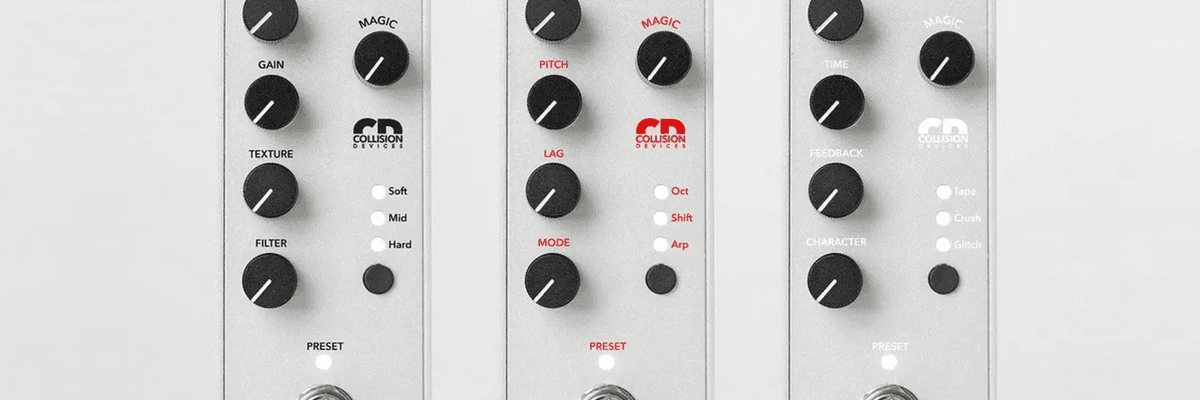
Collision Devices has introduced a new line of pedals designed to be fun, tiny and useful while also being accessible: the Snack Series Fuzz, Pitcher and Delay are the first three effects in the new collection.
Snack Series is connected to the Collision Devices’ story which started with the Black Hole Symmetry first. This story of a space travel kept going with the following devices like Nocturnal, TARS DLX and Crushturnal. Now, Snack Series pedals are seen as little snacks people can take from their pockets when doing space travels. Each one has been designed with a specific purpose, Snack Fuzz as an energy boost. Snack Delay to reduce the effect of time while travelling, and Snack Pitcher to get through huge space distances.
Each Snack Series pedal has the following features:
- A new original enclosure designed to fit any pedalboard (130mm x 50mm x 60mm)
- Three presets to make it easy to save and load your preferences
- Expression pedal you can assign to any control
- A “magic” knob introducing some variations and glitches in the audio effects
The Snack Fuzz comes with these three presets :
- SOFT (analog style distortion)
- MID (dephased parallel fuzz)
- HARD (bit fuzzer)
- The Snack Delay comes with these three presets :
- TAPE (tape modulated delay)
- CRUSH (digital delay with bit crusher)
- GLITCH (glitched delay with pitch shifted feedback)
The Snack Pitcher comes with these three presets :
- OCT (octave pitch shifter)
- SHIFT (pitch drifter)
- ARP (pitch sequencer)
Each of the three Collision Devices Snack Series pedals carries a $190 street price and all three are available at collisiondevices.com.
Pages
