
Music is the universal language
“Glory to God in the highest heaven, and on earth peace to those on whom his favor rests.” - Luke 2:14
Classical
D.C.’s Masterful Guitarist, Ken Avis, of Veronneau Talks Music, Business, Success And The Joy Of Living
By: Rick Landers
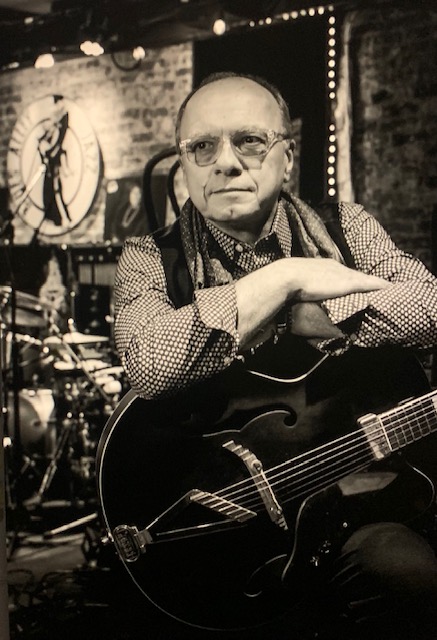
Ken Avis – photo credit: Bill Crandall
The Washington, D.C. area has a very robust music community where musicians weave their ambitions and altruism into a basket of working strategies in order to build an audience of followers, a fan base. One of the most prolific and successful musicians in the D.C., Virginia, and Maryland area is Ken Avis, who has set the standard for developing a music career over a lifetime.
Ken’s multi-faceted approach to build an audience is more philosophically based than “strictly business,” as you’ll discover in our interview. And it sounds relatively simple, however, it demands a strong work ethic, a passion for music, and a desire to live an adventurous life, that’s ultimately and intentionally well-balanced.
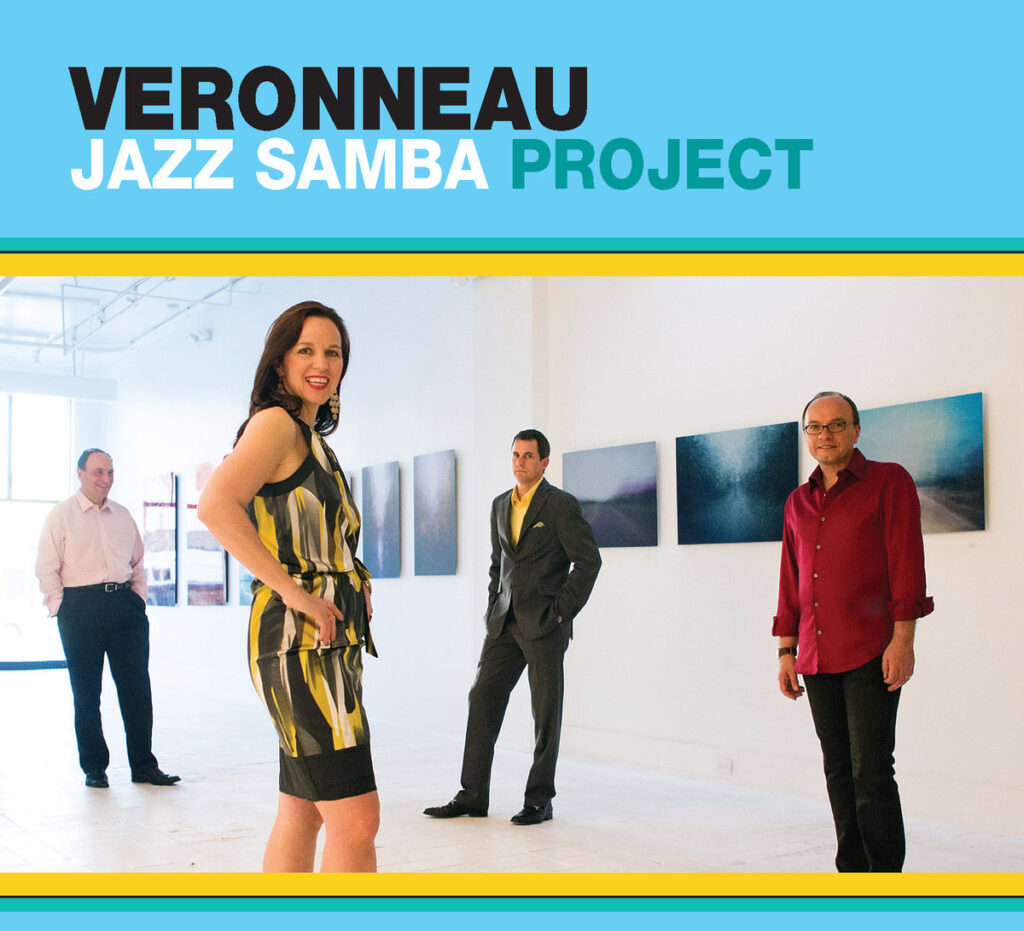
Ken Avis, is singer-songwriter, a guitarist, composer, and a music curator with a passion for breaking down cultural boundaries between many spheres or genres of music. He and his French-Canadian wife, Lynn Veronneau, have developed and nurtured their own duo, Veronneau, that allows them the flexibility to run solo, as well as assemble some of the finest musicians in the area to join them for performances.
“The kind of thoughtful artistry one can expect from masters of the music.” – Washingtonian Magazine
In the nation’s capital and surrounding area, they’ve performed at an array of venues that include elementary schools, senior communities, nightclubs, house concerts, as well as internationally acclaimed places like D.C.’s legendary Blues Alley, the Creative Cauldron, The Strathmore Music Center, and The Kennedy Center. And Veronneau can count coup adorning the stages of the DC Jazz Festival, the Takoma Park Jazz Festival in addition to the U.K.’s Beat-Herder festival.
By establishing their own independent Antidote label, they have championed folk, blues, jazz and world music, creating a a work and promotional space for highly talented artists, whose own work and ambitions might otherwise not be fully appreciated and realized in a competitive and commercially-driven industry.
“Alchemists of cool jazz, bossa nova, and folk” – Capital Bop
Hailing from the English Midlands, Ken performed in earnest when his family moved to England’s music-centric, Blackpool, where he played in local hotels, bars, as well as when he ventured about northern England to perform. He joined in with some known artists as Dave Ball (Soft Cell) and Chris Lowe of the Pet Shop Boys and more before pursuing a formal education at Sussex University and the prestigious London School of Economics.
Still, he didn’t leave music behind and found himself in a number of bands, as well as working with London’s now legendary Otis Grand’s Big Band, a WC Handy Blues Award winning group. But Ken also had a more traditional career in mind and he got on track to work in jobs in the world of international development. He would find himself in Paris, Geneva, and finally land in Washington, D.C., working for the World Bank.
“Inspiring & joyful…excellent performers” – Washington Post
Ken and Lynn would soon release their debut album, “Joie De Vivre” (“Joy of Living”), that included their hit “La Mer,” that nailed down over a million views on Spotify, followed up by four Top 10 studio albums, two live albums and the duo worked with others releasing a number of singles. As Veronneau the couple has satisfied their love of travel, adventure and music by touring the U.K., France, Canada, Portugal, Spain, Switzerland, Sweden, and have appeared on BBC radio, international festivals and won seven Washington Area Music Awards with their original songs, as well as won many songwriting awards.
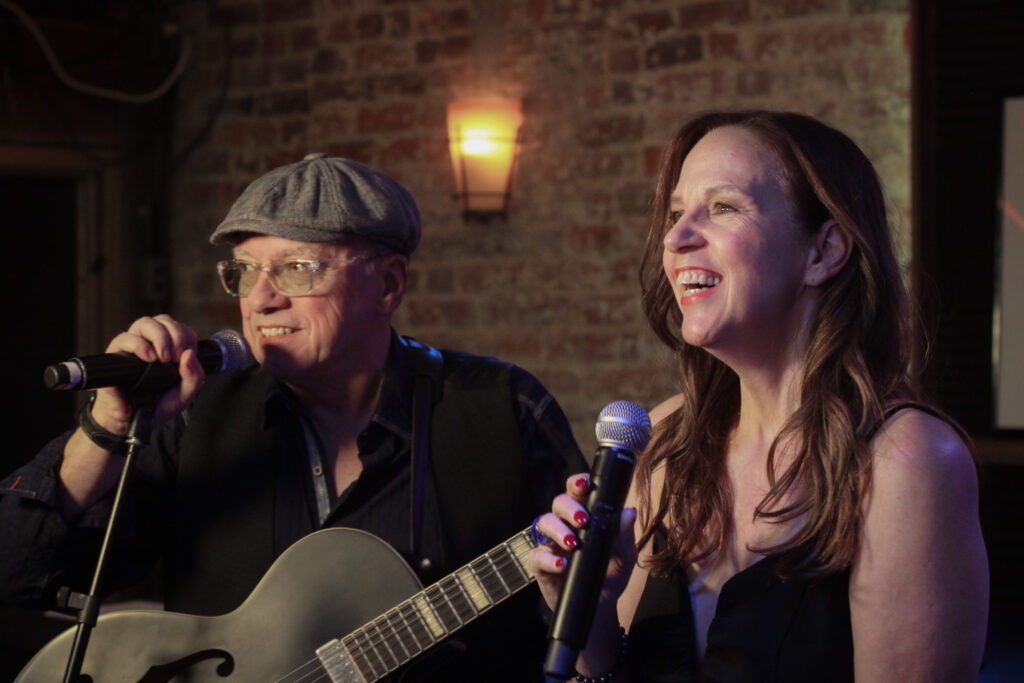
Ken Avis & Lynn Veronneau – photo credit: Bill Crandall
In his interview with Guitar International, Ken discusses his journey navigating the worlds of blues, jazz, and world music; the philosophy behind Antidote Records and what it means to champion artistic diversity, as well as what he’s learned from performing across such an eclectic spectrum of venues and audiences. It’s a conversation about artistry, community, and the quietly radical act of making music that matters. As what sometimes happens, our interview began with a technical glitch that we soon figured out and we carried on from there…
******
Ken Avis: That reminds me of one of my favorite guitar stories, actually. Dominic Miller, who’s been playing guitar for Sting for, like 25 years. He was an unknown, went for his first audition with Sting, and couldn’t get any sound out of his guitar, and there were techs all over the stage, messing with the amp, changing cables, doing all these things. For like 10 minutes, he says, “I was absolutely dying. I was sweating. I was so embarrassed. I’m thinking, “Sting’s never gonna hire me.'” And he said that the techs had tried everything and couldn’t make it work, and then Sting walked over to him, turned up the volume on his guitar, and that was it. He had the volume button on his guitar down.
Rick: Oh, yeah. All those techs in the room.
Ken Avis: He said, that kind of endeared him to Sting. Yeah, he said Sting laughed so much. He said, you know, he still didn’t think he had the job, but it turns out he did.
Rick: That’s kind of typical, I think, the small things that sometimes affect you, and you don’t realize it. So, yeah, that’s a good story. We’ve only met a couple times, and always briefly, so let’s go through some basics, then move into different things like your label Antidote.
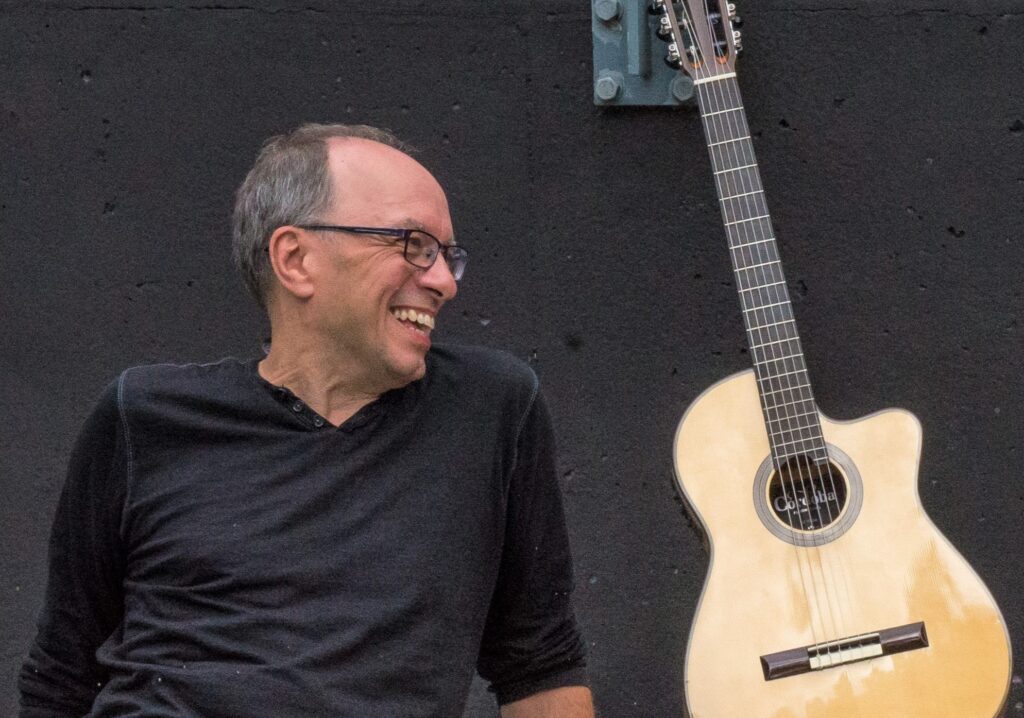
Ken Avis – Photo credit: Lynn Veronneau
Ken Avis: It’s the record label and the events organization. We do a lot through Antidote. Started off as a radio series.
Rick: Oh, really? How about we start out with what it was like for you growing up in England?
Ken Avis: I grew up in the north of England. I was born in a little town right between Manchester and Liverpool, called Wigan, which was at one of those classic coal mining towns like you’ve got in America. Died in the 1960s. So, we moved to a local holiday resort on the Irish Sea called Blackpool, a very special and unusual place. It’s like at the top of the deprivation index for the U.K. at the moment, in every measure. And it was pretty bad even then, but it was a holiday town for a few months of the year, and so we had so much music and so many shows going on there that there was opportunities for me to be playing from the age of 10 or 11. I was in talent contests on the end of the pier and things like that.
Rick: So, you must have started playing guitar when you were pretty young.
Ken Avis: Yeah, very much inspired by The Beatles because as a northern English guy they were everything, you know? It was more than just music. It was politics and culture. To have people with an accent like me being on the TV was rare, unless they were being laughed at. And so we all wanted to be Beatles, and I got a guitar when I was about 10. Take lessons. Again, because Blackpool was a show town there were musicians there who played in the pit orchestras of summer theaters. And so I had lessons with a jazz player, when I was about 11 ’til the age of 14.
Rick: Oh, that’s a good way to start.
Ken Avis: It was a good way. I should’ve kept going, you know? It’s kind of only afterwards you realize how much you were learning and how much was still left to learn.
Rick: There’s always more.
Ken Avis: Yeah, of course, I wanted an electric guitar, and I wanted to play rock and roll, so I quit the lessons.
Rick: So what was your first guitar then?
Ken Avis: Well, it was an acoustic guitar, I think probably made in Germany, very inexpensive. My brother had a guitar before me and never touched it, so my parents were unwilling to spend any serious money on a guitar. And my very first lesson with that guitar teacher, I never touched the guitar. He just made it playable. He got his tools out and shaved down the bridge and things ’cause the strings were about an inch and a half off the neck, you know? It was a disaster.
Rick: It was typical too, back then.
Ken Avis: You can’t get a bad guitar anymore. It was some kind of a Strat copy. We did a tour in England earlier this year, and we played back in Blackpool, and somebody gave me some photographs from when I was about 14 or 15 playing this guitar. I put them up on Facebook and Graham Drew, who was a luthier and guitar repairer based in the area said, “Oh, I know exactly what that is. It came out of Italy.” And they weren’t bad guitars, you know, they were okay copies of Strats. But he said, he’d seen a lot of those in the U.K. during his youth, and practiced his art on them,
Rick: Yeah. I guess everybody wanted Hank Marvin’s red Strat.
Ken Avis: Yeah. And it’s funny ’cause I moved up from all of that. I loved acoustic guitar, so I bought a Yamaha acoustic which was a good guitar. And then the first good electric that I got was I went into the local guitar store, and there was a guy there who used to go to America every year, buy guitars in America, like Guild and Gibsons and Fenders, which were cheap in America in those days, fill a trailer, put it on a ship, bring it back to the U.K. and sell the guitars. Apparently, he also had cocaine in the tires of the wheels, so he went out of business after a while.
Rick: Back in the day!
Ken Avis: Back in the day. But, I walked into his shop and I said, “You know, I’d like a, an electric guitar. I have, like, £100.” And he says, “The best thing you can buy in this shop is that Guild Starfire,” like an old-fashioned looking thin line semi-acoustic. “No, well, I had in mind a Telecaster or a Strat or something.” So I hesitated, and the next time I went in the shop it was sold. So it took me a while, to find one of those when I came to America. I paid a lot more for it when I came to America. You know, things change. That would’ve been around 1978, something like that.
Click here to view the embedded video.
Rick: So, what kind of amp were you playing?
Ken Avis: Oh, I’ve always played solid state amps, so I’m used to that sound and I like that. And there was a brand in Britain called H&H, and they did PAs. And so the first amp that I was using on stage was, it was actually a vocal monitor from a PA system. Super clean sound. And, like 100 watts, easy to carry around and so on. Before that I had a valve amp, which I’d bought for £15 in a secondhand store, which probably dated back to about 1960. And, it was probably about 10 watts. And the strange story with that is a friend of mine at the time, we were at school together and we used to play music together at our houses, was Dave Ball, who became the synth player in Soft Cell. So he did songs like “Tainted Love”, and he borrowed that amp one day and I never got it back. And he died about a year ago , so I’m never gonna get it back. Like a little suitcase it was.
Rick: I know that you play a lot of the blues. How did you get into the blues arena?
Ken Avis: That’s what I’ve always liked. So, while Dave Ball was playing synth-pop, and that was the music that was happening in Britain at the time, you know, first punk and then the synth-pop, neither of which I was interested in, I was getting deeper and deeper into acoustic American blues from the 1920s and ’30s. I was listening to Stefan Grossman doing his interpretations and doing the albums with the the tab inside.
I was listening to that and then Muddy Waters and other people. So blues was my thing, and then when I was about 20, I moved to London and found myself in a great band there called, Otis Grand and the Dance Kings, who were pretty big in Europe. After I left them, they became pretty big. Maybe, I was holding them back.
But, Otis Grand was this amazing Lebanese guitar player who’d fled Lebanon to live in L.A. and then came back to London. But when he was in L.A. he really got into people like Robert Cray, Duke Robillard. And in contrast, Bob Wills and his Texas Playboys. So the first time I went for an audition with this band, I mean, first of all, I was English, I was very, you know, basic English. I’d never met anyone from Lebanon. I couldn’t have pointed to it on a map in those days. They were all Mexicans ’cause they had American accents and big beards. And they were doing this Bob Wills and his Texas Playboys music with pedal steels and fiddles and a horn section.
Rick: Oh, great music, yeah.
Ken Avis: Great. I loved it. And so for about five years I was playing all around the clubs of London with that band, so getting more into blues, contemporary for the time, Crikey, that was, that was 40 years ago! And it’s not changed that much. It’s still the same sound. Robert Cray’s still out there doing it in the same way.
Rick: You were playing the blues. So the music that you were listening to when you were growing up, I would guess you were listening to people like Slade.
Ken Avis: Oh!
Rick: Slade was great. You know, David Bowie back in ’71, ’72. You would’ve been fairly young at that point. And who else was playing? All the Beatles and then I’ll call them northern British folk musicians, like, John Martyn, Nick Drake, Roy Harper, those folks.
Ken Avis: You’ve just absolutely nailed it. That’s exactly who I was listening to. You know, when I was 14, 15, I was listening to Slade, Mott the Hoople, bands like that. But then John Martyn was one of the major influences on me. I absolutely loved John Martyn. To this day, I probably play John Martyn albums more than any other.
Rick: He started out, I think, with the Yamaha, and then he moved to a D-28. What a great musician.
Ken Avis: Yeah. I mean, I bought the Gibson SG a few years ago just because that was the electric guitar that John Martyn used. I love what he does, absolutely love what he does. That’s one of the things I say, when I retire I’m gonna really study John Martyn and his tunings and how he does it, but the voice that he sang in as well, you know, the songwriting is actually really, really simple. But what he does within it, a lot of it is blues-based, as well.
Rick: Also doing things like, “I’d Rather Be the Devil,” which his a phenomenal Echoplex driven guitar style. And, on his early stuff it was so simple, like, “May You Never”.
Ken Avis: Totally clean, absolutely beautiful folk song. And then he would be doing the stuff off the later albums with the Echoplex, which is just… What’s it called? In the Silent Hours, In the Still Hours?
Rick: “Small Hours?”
Ken Avis: “Small Hours,” yeah.
Click here to view the embedded video.
Rick: So, if you’ve been to the Midlands.
Ken Avis: Yeah. When I think back to the bands that I went to see in those days as well, and they were smallish venues. They weren’t arenas. People didn’t go to arenas in those days. It was universities. I would go to Lancaster University Preston Guild Hall, Manchester Free Trade Hall all within an hour of where I lived. And I would see bands like Yes, Genesis, Pink Floyd, Supertramp. Tim Buckley, I think was opening for Supertramp, if I remember rightly. And we were all sitting cross-legged on the floor. Which I thought was a very British thing, and then I saw a video of Roy Buchanan playing at Georgetown University, and everyone’s sitting cross-legged on the floor, so it was universal.
Rick: Yeah, I used to go to Grande Ballroom in Detroit, and the stage was probably, like, three feet tall, and you’d see Cream, Vanilla Fudge, the MC5.
Ken Avis: Music was everything in those days. You know, you were waiting for the next album. You and somebody would buy it and say, “Have you heard it yet?” And then you’d get the new Musical Express on a Thursday afternoon and read the reviews. I think we’re hearing more music than we ever heard. It’s in shopping malls and everywhere else. But, it’s so splintered now, and you don’t really follow music in the same way. And people are busy going to gyms and playing video games and watching Netflix. So, it’s interesting how it’s changed. For me, I stopped listening to those bands. In Britain, all of that died when punk came along. Punk took over everything. And, it’s maybe five years ago, I was walking the dog and thought “Oh, I wonder what Genesis sound like.”
And I went to Spotify and put on, “What was the big Genesis album that I like so much?” [Selling England By The Pound] Like, “I Know What I Like (In Your Wardrobe)”and all that. And I listened to it and I thought, “Actually, this is really good.” And then I read about them on Wikipedia, ’cause we’re very modern and I went, “Oh, they were, like, 22 when they did this music. How were they so musically competent?” And the songwriting was so advanced and progressive.
Rick: Do you miss what we had before, when we had, like, maybe three or four stations that were playing music?
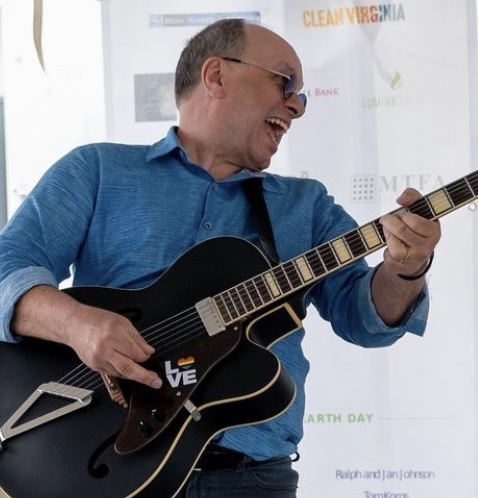
Ken Avis – photo credit: Lynn Veronneau
Ken Avis: I refer to it as the democratization of music, and I think that’s great. I think there should be lots of citizen musicians. We’ve been working full-time as musicians for 15 years, Lynn and I, 15 years. And so we have a different perspective and a different approach to people who are just, citizen musicians, who might play once a month in a band with friends at a small venue for friends. But I think it’s fantastic that that’s going on. I think it’s great that everybody has access to doing that. So on the one hand, I think that access that people have got is fantastic.
On the other hand, I think that the lack of a focus on music, for me, and possibly for our generations, ’cause there’s a few generations where music was everything, we feel we’ve lost something. We feel that it’s hard to track what’s going on because everything’s so splintered. And when my kids play music and I go, “God, I really like that. Where did you hear that?” Cause I can’t understand where they’ve heard it, how they came across it, and, you know, it’s usually something on TikTok, and they know one song. They don’t know an entire album and things like that. So, it’s hard to keep track.
I genuinely try to keep track, partly because we used to have a radio program, a weekly radio program. And I wanted it to be relevant. I knew there was good music out there. And we present music as well now, so I’m always looking in this local area or where’s the new talent, where’s the new ability, and there’s loads of it. They’re fantastic.
So I don’t for a second say music’s dead, but there’s something about the accessibility as a listener and the culture around music which is so splintered, you know? I think the fact that people can pick up a guitar, relatively cheap, and it doesn’t need to have the bridge shaved down and be made playable and then they can go to YouTube and learn anything they wanna learn.
Rick: That’s incredible.
Ken Avis: I think amazing. I think that’s great. And they’ll always be better musicians than me or you or anybody else, because there are some people who, that’s their thing. And they might not even go out and perform. They might just do it in their bedrooms, and that’s great.
Rick: Go going back to your splintering idea, Joni Mitchell once wrote a song, I think it was on her Court and Spark album. I think it was called “Just Like This Train.” And talked about going crazy because there’s too much choice, and I think that’s probably from the listener’s perspective, it’s splintered. But then you listen to it and you’ve got so much choice, sometimes you just don’t listen to anything.
Ken Avis: Yeah. And the algorithms don’t help, because the algorithms make you listen to more of what you’re already listening to. So, that’s a strange aspect of it. But, you know, I’m so engaged in music, it’s 24 hours a day, not just playing, but listening and finding out what’s going on. And I look at the list of who’s playing at, say, The 9:30 Club, and I’ll recognize one. Like, I’ve just finished a book. I’m not plugging the book, I just finished a book about the history of popular music in Northern Virginia. And in the preface to the book, I said, “I’m stopping this at the year 2000. I’m gonna leave it to a future generation to write the history since 2000.” And I make the point there, I say, “And good luck to them, because I don’t think it’s gonna be an easy job.” I think it’s gonna be super challenging, because I’m writing about people from Northern Virginia like Roberta Flack, people who made a national and international impact.
Rick: Tim Buckley. Tim Buckley was born in D.C.
Ken Avis: I didn’t know that. So, that’s the next book, is the D.C. one.
Rick: When you talk about it being so difficult, we’ve got AI now, which is another interesting phenomena that we’re dealing with right now. And you’ll probably have a book written by AI, which can readily grab all that information from the worldwide web, as we used to call it, and come up with a book, you know pretty instantly, I would guess.
Ken Avis: But then the challenge for the future generation is who’s the household name anymore? I mean, how do you define national and international impact? There was just a thing about a single by some people in the U.K., which has broken the record for the most weeks at number one, and they did a poll in the street, and 98% of the people have never heard the song and never heard of the artists.
America’s in a worse situation than England in this sense because there’s virtually no music on the TV in America. In terms of live performance. You get one artist on the Jimmy Kimmel show at 11:00 at night, maybe.Whereas in England, even to this day, Channel 4, we only have four national channels in Britain. And Channel 4 is all music from 5:00 until midnight every Friday. And it’s mainly live music, documentaries about music, all of this stuff. So at a national level, people have got a shared experience around what’s going on, and it’s not all old Led Zeppelin films, you know? It’s bang up-to-date stuff, as well.
But in America, this vast, massive country, I was gonna use a very English phrase there. There’s bugger all local radio playing local music. There’s bugger all music on the TV. So, there’s no national conversation around it anymore. The only national conversation is old blokes like you and me, talking about how good Van Morrison was in the day. The whole thing about vinyl, people buying vinyl, 80% of the vinyl is the old records by Led Zeppelin, Cat Stevens, Joni Mitchell. It’s not new.
Rick: A lot of kids are starting to listen to the singer-songwriters back in the ’60s and ’70s.
Ken Avis: Yeah, yeah.
Click here to view the embedded video.
Rick: I think there’s a resurgence in this, this new generation, that they’re going back and, and listening to them just like maybe you listened to old blues players after you discovered the blues, I guess through, you know, the Brits who really promoted it, and then everybody started listening to Muddy Waters and guitar player, Magic Sam, and a bunch of others.
Ken Avis: You’re absolutely right. You know, my youngest son is listening to music and I’m going, “Where did you hear that?” He’s listening to Labi Siffre from 1972, a British artist from Nigeria. And he’s hearing this music, and so they do have access to everything. There is democratization in that sense. And to be honest with you, his friends think he’s really weird ’cause he listens to gypsy jazz and Labi Siffre and things like that, so.
Rick: Yeah. So we did have opportunities if we would go and search stuff. But you mentioned algorithms, and so we’re fed stuff.
Ken Avis: Another thing similar to that is Alan Lomax, the famous musicologist, who lived in Arlington (Virginia), created a massive library of old recordings from all around the world which is at the Library of Congress, and they’ve put that onto a website now, which has also got a globe so you can actually go and identify which part of the world he, he recorded it in. So it’s global music.
To me right now, I’d say right now, for the past 10 years, the most interesting music for me is the music that falls between the cracks, the music which merges. like there’s a kora player who’s been doing a series of albums with a Welsh harp player.And the kora is considered like an African harp. And the two of them interweaving is, it’s a sound like you’ve never heard before. And that to me is the interesting thing, when you’re mixing, Celtic music with salsa, so you mix those two musical styles, and I’ve not heard that before. That’s cool. And, the local band, just ’cause it’s a thing I haven’t heard often is, The Guitar Renegades, five guitars, no bass, no drums.
Rick: Really? Don’t know ’em.
Ken Avis: It sounds awesome and they do everything from the Brandenburg Concerto to “Smells Like Teen Spirit, with Simon and Garfunkel and The Beatles in between.
Rick: I’ll have to check ’em out. You mentioned Alan Lomax. I wanna show you something. This guitar it’s a 1950, it was actually made in 1949, but it’s a 1950 first year of the, Gibson CF-100. Are you familiar with them?
Ken Avis: Not at all. Beautiful guitar, though.
Rick: Yeah, it’s, it’s a great guitar. Anyway, I bought this from a fella named Mark Lundy Randolph, and it turns out that his great-grandfather was interviewed by the Lomaxes back in 1941. I know that you’ve written some songs and you’ve won some awards. Can you talk about the songs and your songwriting process.
Ken Avis: I think from a starting point, I have certain philosophies. A collection of philosophies. One of them, I stole from Paul McCartney. Paul McCartney once said, you know, the thing he’s most proud of about The Beatles, when they were The Beatles, was they never really wrote negative songs. It was always positive. No matter even if they did a thing like “Blackbird”, which was about segregation and so on. You had to know it to work out that that was what it was about. And there was a positive beauty to it. So in the current times, with the current politics, I felt I’d like songs that I write to be relevant. They don’t all have to be heavy.
Click here to view the embedded video.
Some of them are ditties, but I wanted to do some relevant stuff. I wanted to take a string from Paul McCartney and make them positive. And so if I find myself falling into the moaning and complaining mode, I stop myself and rip that one up and start it again. So the song that has had the biggest impact at the moment is, make the world a better place, which is a very political song, but people, it’s political with a small P. And, it’s still positive, you know what I mean? It’s about making the world a better place. Sure, I critique the problems, and then make the world a better place. So for me, more often than not, I need to have an idea before I start the song. I need to think that there’s a point to this.
I don’t write many songs. So, I want there to be a point to the song. Even if it’s a love song, I want there to be something new and original that I can put in there or super honest. So I come up with tunes pretty easily on the guitar, noodling around and they sound passable, but like, what’s the point if the song doesn’t have a point? And so that slows me down a little bit and, and hopefully improves the quality of what I do.
The next bit of the process is once I’ve actually come up with the song, I give it to Lynn, my wife, Lynn Verreaneau, who is a great vocalist. And honestly, eight times out of 10 she’ll say, “Hmm, it’s good, but it’s un-singable for a normal singer. There’s too many words in there.” And so she actually just chops out words without changing the sense, and she edits the songs and makes them more singable. And, the more you take out the words, the more people can sing it.
Rick: What about the range? What about the vocal range? Do you try to keep it so people can sing it?
Ken Avis: Yeah, ’cause a lot of the songs that I’ve written, Lynn sings. And she tends to like keys around the key of B. I tend to sing in the key of E, which doesn’t sound that far away, but I’m in a much lower register and things like that. It’s a pity we’re not both in the same key. Occasionally we can do it, but I play solo sometimes as well, sing and play solo, and it’s only one tone away from what I would sing it in naturally.
But, like all guitar players, I find E’s, A’s, G’s nice keys to play and I can leave open strings. I can play that while I’m doing it. So, at the end of the day, I don’t strum either. That’s the thing. I hardly ever strum the guitar. I’m constantly fingerpicking. And so that allows me to kind of put the bass, the chords, and a little bit of a lead riff in there all at the same time. So, I want the guitar to have something interesting going on. And, if I’ve got those things going, it’s okay. I also write short songs and because I haven’t one idea per song, I can only restate it so many times. But then when we get to performing it live, I leave space there for somebody like Dave Kline (violinist).
Rick: Oh, that’s a good idea.
Ken Avis: An entire verse or so. So a song like that, a two and a half (minute) song on a recording becomes a five to six minutes live.
Rick: Yeah. I was reading that today, now some songs are only a minute long. I’m reading this songwriting book, if you’ve heard of him, by Steve Gillette. And he talks about, keeping vocals in a certain range so your audience can sing along with you. And Jimmy Webb wrote a really good book about songwriting, called Tunesmith. They both get into music theory, beyond my knowledge base.
Ken Avis: You know, the thing about music theory as well is I did a TED Talk once about improvisation in jazz. And I used that phrase at the beginning of our talk today about democratization. That was my message, is I want music to be as democratized as possible. I want everybody to have access to enjoying playing the way I enjoy playing and you enjoy playing.
It makes life better and a couple of the points I said, there’s some myths about jazz and about improvisation. One of the myths is that you’ve gotta know everything. You’ve gotta know all the theory, all the scales, all the modes and all of that kind of stuff. And honestly, it’s interesting because that went up onto YouTube and I said that there’s a bunch of people who hate what I said, and there’s a bunch of people who love it. I’d say the comments are 50/50, which I took very personally initially, but I decided not to respond.
Rick: It’s hard not to…
Ken Avis: Which was wise. It’s hard, but I sat there. And, the people who hated it were the ones who know the theory and who believe you can’t do it unless you’ve got the theory. And I was saying, like one of the greatest guitar players in the world, Django Reinhardt, couldn’t even write his own name, couldn’t read. You know, he learned to do his signature. Stephane Grappelli taught him to sign his name. He didn’t know any theory whatsoever, and was so creative and so on. But, I did also make the point all the way through this, that if you do know that stuff, fantastic. You know?
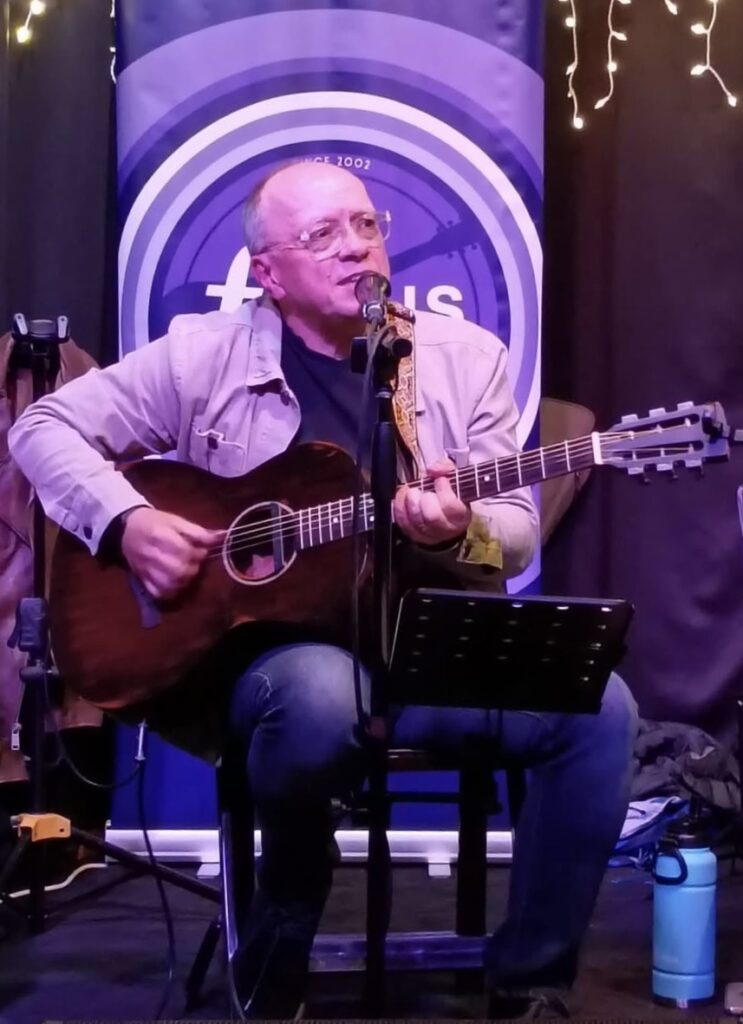
Ken Avis – photo credit: Lynn Veronneau
Maybe it gives you access to things that I don’t know, and for sure there are guitar gigs that I won’t take because the person wants to put a chart in front of me. I can read a chart, but I can’t sight read. I can’t sit there with an audience and play it perfectly, unless it’s just chords. I need a week to sit at home and work through where I’m gonna play that and all of those things. So if you’re a guitar player, like locally, a Cristian Perez, a Jan Knutson, a John Lee, all of these people who’ve been to university and know that stuff, they can play those gigs. Pete Kennedy, and they can do more besides. So, I’m not anti-theory and anti-education, but I hate that to be a stumbling block stopping people. Some people are dyslexic, and the idea of dots on train lines it’s impossible for them, you know? So ease up.
Rick: I like what you said about accessibility. I use that with the folks in my band. I said, “I want the songs to be accessible, so people will wanna listen to them, wanna be able to sing them, and other musicians will wanna do them as well. John Martyn didn’t know how to read music and he was asked about that, and he says, “I don’t wanna know that.” He said “Danny Thompson (bassist) can do that for me. If I have a question, I can ask Danny Thompson, because I don’t wanna be limited by that structure.” And he wanted to be able to imagine whatever sound he wanted to do. He was gonna figure it out on his guitar.” I’m paraphrasing what he said. So, I think there’s some value in not knowing it. I think there’s a lot of value as well to know it.
I don’t know it. I write the songs. My band knows it, and then I’ll say, “I’m on the third fret,” and they’ll go, “Oh, that’s a,” whatever it is. I go, “Okay, well play it.”
Ken Avis: Yeah, I just agree with you so totally on that. I wish I knew it, you know? It’s a little embarrassing, or I used to feel embarrassing. You know, thanks for inviting me to come and do that. I’m not that kind of guitar player. I’m at ease with saying that now. You need Christian, if you want here’s his phone number. Pay him.
Rick: Well, that’s how we can be generous to other people, because we know that they can do something we can’t. But generosity, I help people and get them gigs or whatever that I can’t do, or opening acts. I’ve been getting opening acts and helping talented folks get some stage time.
Ken Avis: And you’ve had Dave Kline playing violin on your recordings, as well, and Dave’s a guy who, you know, when he was don’t at senior school he was playing violin, and he learnt what the notes were on the stave. But Dave amazing as he is, admired by Chick Corea and and all the rest of it, he’s not a guy who would be comfortable, I’m sure he won’t mind me saying this, with sheet music in front of him and saying, “Great, go Dave.” It’s not been his priority. You know, he’d been making efforts somewhere along the line to improve in that area, but not to the extent of, you know, just so that he could communicate it to other musicians, really, what he was doing.
Rick: Yeah. When He and I got together for him to play on the album, I went to his house a couple times, and I think we spent probably five hours on… It ended up being two songs. I think he mentioned that he really didn’t know music theory and all that, that he plays kind of organically. And he’s just absolutely brilliant. So, the last time I saw him at Blues Alley, I turned to my friend, Ron Goad, and said, “You know, we’re watching history right here. This guy’s like Stephane Grappelli back in France back in the 1940s.” I said, “We’re here now. This, in the future they’re gonna be looking at that guy, and go “THAT’S the guy.”
Ken Avis: Even Stephane Grappelli, I don’t know what his knowledge of theory was, but his mother died early. His father brought him up and left him in a brothel because, he had to sleep somewhere. So I’m not sure his theory was that great. But Dave tells a story of Yehudi Menuhin playing with Stephane Grappelli ’cause they did a lot of shows together at one point, and and Yehudi Menuhin, the ultimate classical violinist was in awe of Stephane Grappelli. He said, “How do you do that? How do you make things up like that? You know, I can’t make things up. I need music in front of me.”
Rick: .What guitars do you have now? Do you have a certain guitar that you noodle on, one that you go to the studio in, or do you have, like a Trigger…Willie Nelson, you got one guitar that people kind of relate to you?
Ken Avis: A bit of… I have way too many guitars. If I count ukuleles and lap steels and Weissenborns, I did count them, and there were 38, which is ridiculous. Nobody needs 38 guitars, or do they? So the main guitar that I play live on stage with Verreaneua is a Korean copy of a 1942 Gretsch Symphonic.
It’s a Gretsch, but it’s a Korean-made Gretsch. One pickup, and it just sounds great. Big bodied guitar. And, and I love that. And I paid, I think, $250 for it on Craigslist during COVID. I plug that straight into a $250 50-watt, Bose Katana combo which is an awesome amp. No pedals, just that. And that’s plenty. And, we’re playing with Dave Kline so much, he fell in love with that, and that’s what he puts his violin through as well. He’s bought the Bose Katana. We’ve both got more expensive amps at home, which we never use.
Rick: Well, the older ones are too heavy.
Ken Avis: Yeah. The truth, and particularly Dave, he’s got these really boutique-y ones. So that’s the main one. And then acoustically, gosh, $200 is my sweet spot for guitars. I picked up a guitar that I found in the dump. I refer to it as my dumpster guitar. It was by the side of the road. And there’s not a single indication of where it was built. It doesn’t say Made in America, Made in China. There’s nothing on it at all. It’s beaten up to hell. I just cleaned it up, put new strings on it, bunged in a pickup, and that’s been my main acoustic guitar. But then we’ve been traveling a lot in the past two years.
We’ve toured in Spain, Portugal, Switzerland, France, Sweden, Scotland, the U.K., Florida twice, Canada. And so getting on planes, I couldn’t stand that anxiety of “Will they let me put it on the plane or won’t they?” And so I bought one of these carbon fiber guitars that you take the neck off and it all fits into an Aviation Authority approved backpack. And standing in line as we’re about to board, seeing other people with guitars and feeling very smug … knowing how much anxiety they’re going through and I know mine’s gonna get on there.
And it’s not the most amazingly great guitar to play. But it’s pretty damn good, and it stays in tune perfectly, and it’s indestructible. I can use it as a weapon if necessary. So it’s good. It’s by a company called Journey. They come out of Texas.
I actually had a slightly bigger version of it, a wooden version of it which I sold to Pete Kennedy and his wife Maura. And they love it. They wrote to me the other day and said, “We’re still playing that guitar you sold us. It is an awesome guitar.” They make good guitars. And I’m able to take off the neck and put it on in a minute, 60 seconds.
Rick: Yeah, that’s amazing.
Ken Avis: It’s so handy.
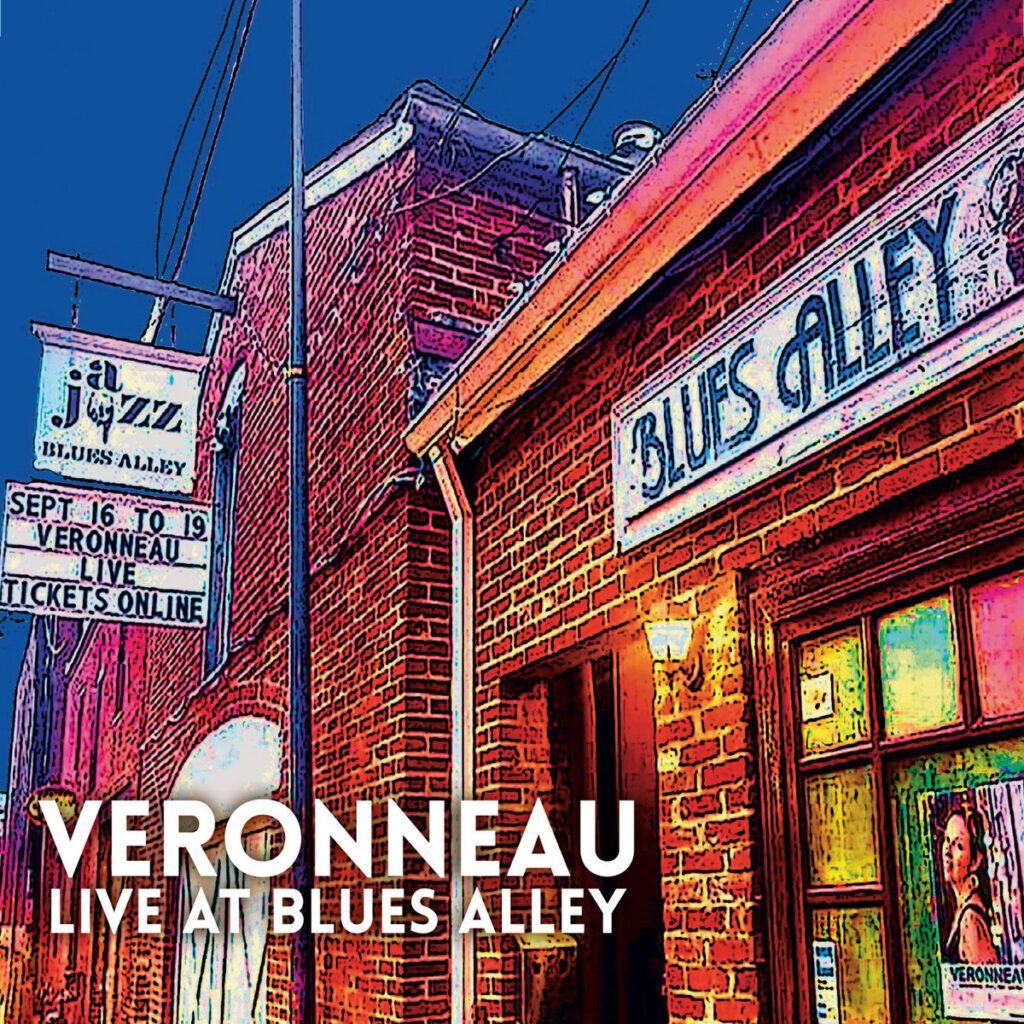
Rick: I’ll check them out. Do you find that you end up going back to some of the same people that you listened to back when you were in your 20’s or 30’s, and they still sound good?
Ken Avis: Yeah. I mean, John Martyn, as I mentioned is something I’ll put on. I’ve always been a big fan of Van Morrison. I mean, everything he does has got my stamp of approval. I love the It’s Too Late to Stop Now double live album which I probably heard when I was about 15. Ella Fitzgerald and Joe Pass, “Take Love Easy,” just guitar, just vocal. Love that album, one of my favorites. When I put on The Beatles, which is not as often as I should do, every single time, I’m amazed. Every single time I go, “I should be hearing this more often.”
And I don’t go to see tribute bands very often, but we were just up in Quebec, and there was a Supertramp tribute band. Supertramp is one of Lynn’s favorite bands from when she was a teenager. They were massive in Quebec, specifically Quebec. Not all of Canada, but specifically Quebec. And so we found ourselves in this theater holding about, I don’t know, 400 people, all French Canadian, all French first language. They were singing every word of Supertramp. It was a great evening. But some of those albums from bands I used to listen, 10CC, I used to think that they were a great band, and their albums have dated. You know, some of them, the ones who were trying to be clever and modern, kind of seem to date a little bit.
Rick: What about grunge bands? Were you listening to grunge?
Ken Avis: No, here’s my situation, so I was listening to the blues stuff. I was listening to James Taylor. Always loved James Taylor from the age of 16, I illegally held an employment agency’s license with a friend, and we created a music agency. And we were doing pretty good ‘cause we were promoting all of those. We had a couple of venues that we brought bands into. We had a few bands that we sold onto tours and things. We were making decent money. When I quit school at the age of 18, senior school, I didn’t go to university. I was making money. I had my own business. And about a year later, when I was 19, that all ended ‘cause punk happened. And as I say, punk killed everything.
I didn’t get it. Just didn’t get it. I didn’t understand it. It made no sense to me. I couldn’t see the appeal. And we actually booked the Sex Pistols, put the Sex Pistols on one time. I put The Stranglers on. I didn’t even go down to listen to the music. You know, my ears were attuned to acoustic guitars and things like that. I turned my back on the whole thing and we dropped the agency because we couldn’t catch it cold. You know? We couldn’t make any money and that’s when I went to university at that point, because in England I was facing the alternative of go to university, the government will pay for it and give me a grant to live on or go on the dole, ’cause unemployment was running at about 15%, 16% and higher in the North. And the dole was less than the money they would give me to go to university, so I made a good economic decision.
Rick: Well, it worked out, didn’t it?
Ken Avis: I moved to the south side. I moved all the way down to the south coast of Brighton.
Rick: So you also started your own record label, Antidote. How did that come about? Why did you decide to start your own label?
Ken Avis: There was a little journey that happened. We became very connected to Strathmore Music Center and they invited us to become mentors to the Artist in Residence program. Very prestigious program. They take six local area young artists who are really good musicians and wanna be professional musicians. And as a mentor, my job was not to critique their music as such. I mean, my first mentoring role was with a string quartet, and I know nothing about that. But to talk to them about how to become a professional musician how to make money, how to get a gig, how to record a CD. All of those things that I knew about.
So that connected me over a series of years with these young upcoming musicians who were great. And as an old bloke I wasn’t as old, but I’m still old compared to them. It was awesome to be able to reach into the generations and befriend these people. It was fantastic. And then around the same time, we were asked to curate the music series at the Creative Cauldron, the Passport to the World Music Festival. And so I had to put my feelers out into the community as well to find not just who was good, but who was good and could sell 80 tickets at $25. And so that kind of built us into the community.
And then we started the radio program in, say, 2016 on local radio, Antidote, every week, and we mixed local music with national. So we had guests like Steve Earle who was a guest. The next week we’d have Bobby Thompson or Griefcat or Yasmin Williams, all of these people. Before they became big, we had them in the studio. So I had the radio, the mentoring, the the Creative Cauldron presentation of music all of these different things, in addition to performing. And it became a thing for Lynn and I that we’re saying, “You know, we really enjoy what we’re doing and building this community together.” And so we said, “Why don’t we release a record?” And we were kind of more linked into the jazz world than anything at that point, so we created a, a compilation album, called Capital Jazz.
And we simply approached a dozen of our favorite jazzy, jazz-related, jazz-adjacent artists and said, “We wanna do this compilation. We’ve got no money. If you’ll give us a track, and you own the track, and we don’t make a penny off this, we’ll put you on the compilation album.”
Rick: Oh, nice. Yeah.
Ken Avis: “And we’ll pay for it too… And if we all put in, like, $100, we’ll print this up, and you can all have 100 copies of the CD each. Sell at your shows or to package with your other CD sales. And, the DC Jazz Festival’s already said they want 200 copies, and they’ll pay us for those to give away to their VIP guests.” And all of a sudden we were a record label. And it was fun to do it, and again, it built community. We created two live events around that record release, as well. We nearly got sued in the process. But, that’s another story. I had fun with that, but it’s a long story.
And then we said, “Look, if there’s bands that we really believe in, who we think are great, why don’t we release their records? And because they don’t know how to do that.” And we’d already released five CDs. We’d had three or four of them in the top 10 of the world charts or the jazz chart. And so we had these conversations and said, “Look, here’s the deal. We think you’re great. We’d love to produce a record. We’ll, basically, offer you mentoring and knowledge, and you’ll have what we refer to as the bullshit value of our own, a record label. And what do you pay us? Nothing. What do we take in royalties? Nothing. What do we give you? Nothing financially.” So, a couple of people thought, “That’s too good to be true.” And kind of shied away from us, but we released Project:Locrea. We’ve only released about a dozen albums so far of other artists.
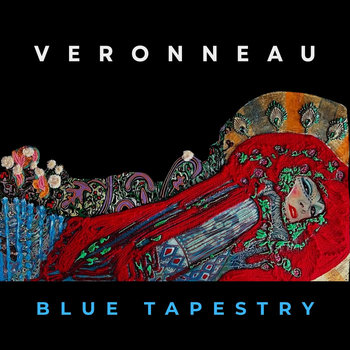
Rick: Good for you. That’s great.
Ken Avis: But all the genres were really jazzy, jazz, jazz people. Irene Lalenti, a great jazz singer from Baltimore, got a four-star review in DownBeat for the album. Valeria Stewart’s just had her album at number one for three months on the World Music Chart.
Rick: Yeah, she’s wonderful.
Ken Avis: Yeah, we got the Spanish acoustic, Spanish language acoustic music of Valeria. We’ve got the classical folk traditions of Project:Locrea. We’ve got the jazz, all these different styles. You know, we’re not kinda saying we’re only doing blues or anything like that.
Rick: Diverse, yeah.
Ken Avis: And it’s fun. It’s work. It’s a lot of work, but it’s nice to be involved and to be involved in the community and you kinda quietly get recognition for that. That’s all that you get, but that’s enough.
Rick: Yeah. So how do you manage your time in between performing, trying to find the time to write, which can take some time, working with all these other musicians, and you’re traveling a lot. Well, I guess you’re on tour, so how do you balance that and maintain a normal life, in quotes?
Ken Avis: My wife, Lynn, would say I don’t balance it, but honestly, there’s nothing I would rather be doing. And so it really isn’t work to me. You know, promoting shows is the thing which probably takes more time than anything, marketing the shows that we do, and that’s the bit that is a little bit tedious, but it’s gotta be done. You know? If you don’t market the show, nobody’s gonna come. If nobody comes, you don’t get rebooked.
It’s not necessarily about money, it’s about building audiences in order to be able to sell out places where you do make the money. But that’s another…Talking about venues and making money and so on, we’ve been 15 years doing this full time. This is our 15-year anniversary year. And we’ve never been ripped off. No venues have ever treated us badly. The worst that we’ve ever been treated is venues who don’t do any promotion, and you’re thinking, “Really? Why are you paying us if you don’t tell anybody we’re playing?” You know, at least put a poster up in your window.” That’s the worst treatment. And they’re busy. You know, the reason is they’re busy doing other things. They’ve not thought about it. They don’t know what they don’t know. We work on the basis that most venues are probably not gonna promote, and so we better do it.
Rick: That’s a good point, ’cause, I think a lot of people, musicians expect that the venue’s gonna do something, but you’re right, it’s usually just something in the window, or on their website, and that’s about it. So, people have to actually find it rather than trying to do a public outreach in some fashion.
Ken Avis: Yeah. The worst one for me is when a venue says, “Live music!” I mean, if I see the words live music, I think, uh-oh. The daddy’s daughter or something. That doesn’t attract me, that chases me away.
Rick: How did you assemble your ensemble, Veronneau?
Ken Avis: It came together by accidently, I mean, me and Lynn are married. And that came about through music. We were both living in Switzerland at the time. And we both got a phone call from a promoter one day. To cut a long story very short, he told us, “I don’t want your band, I just want you.” And he put us together to perform at a festival. And the rest is history. That was 32 years ago.
Rick: Wow.
Ken Avis: So, I gave her the Joe Pass and Ella Fitzgerald album. I think we could do something like this. Not as well as them, but something like this.
Rick: Very romantic.
Ken Avis: Very romantic. It was a global romance. A French Canadian woman and a Liverpudlian, in Switzerland. After that, we were doing duo stuff, very much folky, not jazzy. But Lynn had this aspiration to do jazz. And one day I met a guitar player, well, I used to work at the World Bank, and people would say to me, “Oh, do you know David Rosenblatt? He’s apparently a very good guitar player. You should play with David Rosenblatt.”
And I’m thinking, “I don’t think so. You know, he probably only plays Eric Clapton songs or something.” And I went to his house and played with him one night. Phenomenal. Phenomenal. Brazilian jazz player. And so David and I were the band for a while. We both played nylon strings, finger style. So I was kind of covering the bass and the rhythm. He was doing the rhythm and the lead, and that was the trio. And we got into that jazz which Lynn always wanted to get into. And then a drummer came along, inserted himself in, and he was a very quiet drummer, so we liked him. You know, we didn’t want a drummer because of the noise. He was into brushes and things. So he came in, and we worked without a bass player for five years. We never had bass because we were covering it with our thumb and it sounded fine. People liking it. And that was another mouth to feed, you know?
Rick: Yeah.
Ken Avis: You gotta feed all those mouths.
Rick: It’s true.
Ken Avis: There’s a lot of gigs you have to turn down. Then when COVID came along, both the drummer and David, we stopped playing together. It was just the COVID thing. And they got involved in other stuff. Not music, but just life. And we found that during COVID Lynn and I were working as a duo again, but doing the same jazz and bossa novas, and acoustic stuff and blues, doing outdoor shows, doing live streaming to the U.K., and festivals, and all kinds of stuff. And we went, “Damn, this works.” So the only person who’s been a constant throughout that was Dave Kline (violinist). And the way we met Dave Kline was, remember we had an acoustic duo in the pre-jazz days?
We played a Focus show in D.C., and I won a CD. I knew it was a CD. It was wrapped, but it was that square shape. I thought, “That’s a CD.” And I opened it when I got home, ’cause I never win anything, and I was excited, and I went, “Oh, bloody hell. The only thing I’ve ever won, and it’s a bloody violin player’s CD.” And I never listened to it for, like, six months, and I was about to throw it in the bin one day. I thought, “You know, out of respect I ought to listen to it before I throw it away.”
And it was awesome. It was absolutely fine and good. And then I looked him up and discovered he lives five miles down the road. And he’s English.
Rick: Serendipity!
Ken Avis: So I said, “Hey, you know, we’re trying to put a jazz thing together, and we’re thinking we might record an album just so we can get as a demo to get gigs at wineries and breweries.” That was my ambition and to say we’re still working. And I said, “If you’re interested, I’d love you to play on a track or two in the studio.” And he did on that first album. We did the first album six months after we formed the band. We wanted those wineries, and we’ve only ever played at one winery. So that was bad career planning. You know, we went on to other things. Dave’s been with us, but he’s not part of the band, you know? He’s always been independent ’cause he has his own thing. He’s been a special guest for 15 years now. And we’re special guests in his band as well, and it works out beautifully.
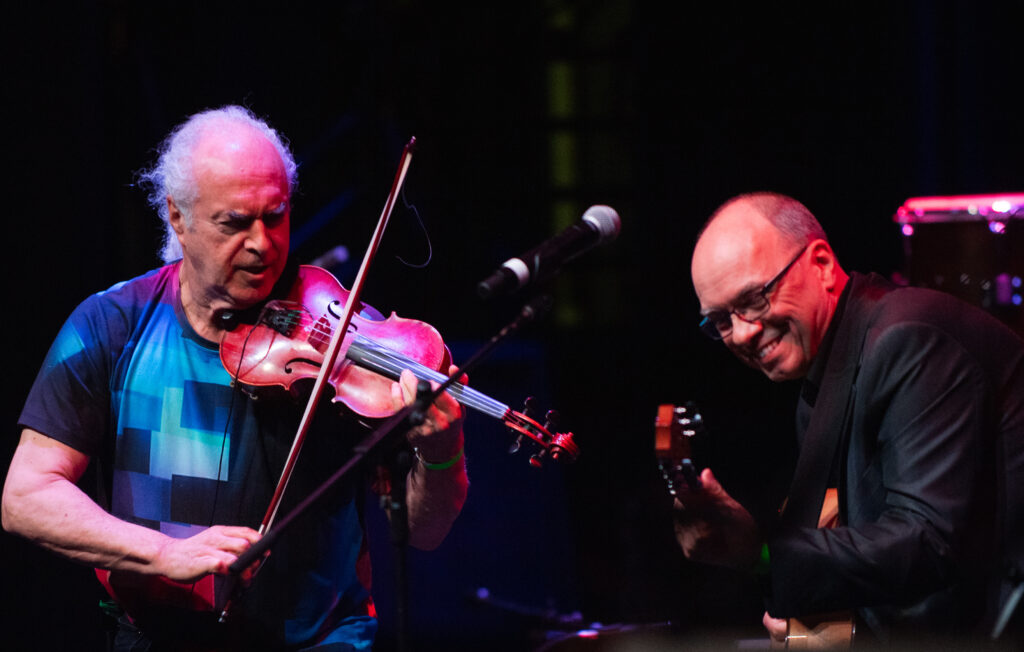
Dave Kline and Ken Avis at the Washington Area Music Awards – photo credit: Lynn Veronneau
Rick: Yeah, he’s a great guy, and he’s played with us. He dropped into JVs and played two or three songs with us. What projects do you have going at the moment and are they ready for prime time? Do you know when you’re gonna launch them? And can you even talk about them?
Ken Avis: Yeah. The project right now, I’ve been doing these history talks. I’ve been talking about the history of music in Washington, D.C., the greater Washington, D.C. area for 10 years now. I’ve done it for the Smithsonian, I’ve done it for George Mason University, for American University. I’ve done it in breweries, libraries, all over the place. And, Fairfax County had me during COVID doing on-line live streaming, 12-part series. There’s that much history, 12 90-minute sessions, and subdivided into genres, eras, topics like guitars or women in D.C. And it’s been a lot of research and putting together. What’s spun off from that is I also do guided walking tours of Black Broadway, of U Street, explaining the history of U Street music, and Georgetown, as well. So, the upshot of all of that is I was asked to write a book covering all of this, and honestly, I really don’t wanna write a book. Books have been written, fine books have been written about the local music scene of D.C., and they’re that thick.
And I’ve never got from start to finish, so I feel guilty I’ve even bought them ’cause I never finish them. I’m writing a 100-page book maximum, full of photographs. And I’ve written it about Northern Virginia first, so it’ll be the first of a series of books. And the whole point is accessibility. Again, I’m not writing these for historians and experts, I’m writing these so that people can go, “Oh, I’ve just moved to Arlington or Alexandria or Reston, that looks like it might be interesting. Is there a music history of Reston?”
I’m for the inquisitive music lover. I’m writing these to kind of excite them and make them go, “Oh my God, I never knew.” And so, that’s what I’m putting out in October. So, and there’ll be more talks lining up to promote that side. That kind of brings that research to a close ultimately when I’ve done what I think is gonna be four or five books in total. I’m excited about that. And then the other thing is Lynn and I have been touring more and more, and we like it.
You can only play so much locally, before you as Harry Schnipper (owner) at Blues Alley calls it cannibalizing your own audience. So, that’s one of the reasons we’ve been touring more. I’m gonna be looking into tours of countries I wanna visit. We don’t make a lot of money doing this. If you break even and call it a working holiday you’re winning. I’ve never been to Japan. I wanna do a tour in Japan. I wanna do Germany. Which I find a fascinating country. Most of us think of Germany and we instantly think of war, the Second World War and the First World War. There’s a lot more to German history.
Rick: Very artsy.
Ken Avis: Yeah. And then all of the places we’ve played are asking us to go back as well, so we’ll do that. And then sometimes it makes really good strategic sense, like we are booked up to do another Florida tour in March when the snow might be falling here. So, we’ll be in the Keys, thinking fondly of you all breaking up the snow drifts. So those are the plan. In terms of new recordings, a lot of ideas at the back of my mind, and honestly that’s a thing of Lynn and I coming together to say, “We both like this idea,” or, “We don’t like this idea.”
There are things I wanna do. I’d like to do a solo album, ’cause I’m doing more and more solo stuff. I just wanna be playing all the time. I love it. And, there are gigs I can take solo, which we couldn’t take as Veronneau, because if you’re selling tickets at $35 and then you’re playing for $5…you devalue what you’re doing and, and some venues are not interested in doing it that way. So, I can play for $5 under my name. But we got the 20, 30, 35, 50 dollar tickets for Veronneau. Luckily we’ve reached that stage. But I still feel guilty about it because tickets are crazy expensive. And I’d like everybody to have access to the music, so we still do some shows for charity and things like that. Three or four times a year we’ll do a fundraiser.
Rick: And we’ve started doing, senior communities, and we really enjoy them. Have you done those?
Ken Avis: We do. Yeah. You know, they pay quite well. And, and so that’s very much a Lynn and Ken duo thing, that we’ll show up and do some of those. Again, we don’t do a lot and we do them through an agency, so I think there’s grant money involved and things like that. I gotta confess, the first time I did… And there’s all kinds of senior communities, you know, there are really active seniors and there are people who, they’re on their last legs. And the very first time I did it, I felt pretty awkward about it. I felt, “You know, I don’t know if they’re listening or not.”
And then what I realized is yeah, I’ve used the word accessibility more with you than I ever do. But, I’m talking about accessibility. These people can’t go to Blues Alley. And so, in my mind it’s important that people get entertained and get exposure to music and to culture, and if I’ve gotta go to a place like that and play to them, that’s great, you know? Maybe some of them won’t get anything out of it, but some of them do, and they don’t have an alternative.
And so, my attitude to it totally changed after doing it the first time. And occasionally the agency also put us into schools, like elementary and, and junior school, what do they call, middle schools. And it was the same thing. “Why am I playing to five-year-olds and six-year-olds? I’m a rock star.” And then you actually discover that these are the best audiences you can possibly play to. There is no filter. And you go, “Who in the audience can sing?” And every hand goes up.
Rick: That’s great.
Ken Avis: You do that in Blues Alley and two people will put their hand up, you know?
Rick: As far as accessibility, have you thought about going to individual rooms, “Okay, I’ll do 10 rooms of people who can’t get out of their rooms, and you pay me the same amount of money and I’ll do that.” For, I don’t know, an hour or two”?
Ken Avis: Never thought about that. Never crossed my mind. We did sort of do something like that one time. It was very, very special. We got invited to go and perform a solo show for Roberta Flack. And we got on the bus. This was, like a year or two before she died, and she was in her own apartment, with a nurse, but really stuck in bed. We got on the bus on a cold snowy day, and went all the way up to Manhattan, walked from the bus stop. The tip of Manhattan where she had this beautiful high-rise overlooking the whole bay and water. And we performed for about, 30, 40 minutes. And, and she had, I think it’s called ALS, which is paralyzed to some extent.
Rick: Yeah. My grandfather had that.
Ken Avis: But there were certain songs on the way there I discovered that she loved, the music of Carole King, and that she’d recorded lots of Carole King songs. And of course, we’d just done an album which included Carole King songs. So, the second we started to sing “You’ve Got a Friend” she lit up. She absolutely lit up, and it was a very moving thing to do it and to be involved in that. And, that was it. But the school thing as well, this has become a little bit of a mission, you know, with AI. You can’t AI a live performance yet.
Rick: True.
Ken Avis: Even if they do the holograms, it’s not gonna be the same. So, I actually feel really good about going into schools where kids have never witnessed live music and giving them a show. And we tailor it a little bit in the way we present and the way we talk, but we’ll be playing the same songs to those kids that we play at Blues Alley.
Rick: Oh, really?
Ken Avis: And we’ll talk to them about, ‘cause our music is multilingual and songs in English and Spanish, Portuguese. Even sang in Wolof [West African] once. We talk to them about the cultures and what the songs are about, and we try to pick songs where they can join in and sing along. We did “Mas Que Nada” once, which is that pure samba thing, and Lynn invited this room of 200, I don’t know, five to 10-year-olds to dance. You should have seen the looks. The teachers looked terrified. They knew this was a bad idea. And once we did it that first time, we knew it was a bad idea, as well. So, we’re careful about that kind of thing.
Click here to view the embedded video.
Rick: I’m still surprised how robust the music community is in D.C. Have you find that it’s grown a lot since you’ve been playing here?
Ken Avis: Hmm. I’m not sure it’s grown. I think it gets renewed. I mean, I think the path into music is very different now for a lot of people than it was for us, because a lot of people now are going to university to study music. Which I think is great in terms of the training it gives them. I think it’s terrible in terms of value for money for the investment. But that’s where I see the renewal happening. And maybe that’s just the microcosm of music that I’m involved in, because I think there are different micro-climates of music in D.C. I’m sure there’s a whole Indie scene going on that I know next to nothing about and that’s a thing that’s going on. But the growth, I don’t know. And there are fewer venues, so that doesn’t help in order to see it. Maybe people are playing more at home.
But, I’ve mentioned Blues Alley a few times. Blues Alley is virtually the only full-time five-day-a-week jazz club in D.C. now. Slims is gone. Bohemian Caverns is gone. People tell me the JoJo Bar on U Street, but I don’t think they put jazz on every night, and it is more of a kind of an eating and drinking place with jazz. Rather than the kind of the jazz place approach of Blues Alley, where thou shalt not speak in there. It’s all about listening. So less venues. And I’ve spoken to people like Victor Dvoskin, the bass player who plays at the Tabard Inn, and has done for 30 years. If you’ve never been there…
Rick: I haven’t.
Ken Avis: Oh, we’ve gotta go. I’ve gotta look into it and invite you to go. There’s this beautiful little room, tiny audience, but the best quality of music. Two days, like Sunday and Monday, they’re usually a duo or a trio. And Victor once said to me, “Oh my, when I first came to this country from Russia, I would be doing two, three gigs a day.”
Rick: Wow.
Ken Avis: “There was so much here,” in the ’80s, and he says, “You know, now I’m lucky if I do two or three a month.” So, it has all changed. Is there a new growth? I’m not seeing it. I’m seeing different things, things like SoFar Sounds has opened up, and venues come and go as well, and the house concert scene I think is probably healthier than it’s ever been.
Rick: Yeah. I used to host them.
Ken Avis: We’re playing a house concert in I think March, out in Herndon, which we booked last February, and he said, “The first date I’ve got available is next March.”
Rick: And wineries are busy, so yeah.
Ken Avis: An excellent point. When I look at Facebook, there’s a couple of Margarets who every day put up the list of what’s going on in DC, and it’s amazing. Margaret Pierce is one of them, and Virginia, 90% of the gigs are wineries and breweries.
Rick: Have you played the Barns At Hamilton Station? We just played there, great venue!
Ken Avis: We have played there. Yeah, we’re doing another Barns in Purcellville in October or something like that. We’ve got a lot of different things that we’ve now got. For the first time, we’ve got the Virginia Commonwealth Touring Artist Grant which encourages us to go out deeper into Virginia. You’ve gotta be at least 50 miles away from your home base, and it’s encouraging you to go and play; we’re down in Suffolk, which is near Norfolk. So we’re gonna be playing all the way down there, a couple of shows.
And the other areas that are opening up are libraries. That’s awesome. Libraries are trying to become more, relevant, and so they’re putting a little bit of a grant money into having a live music performance. So, the ultimate listening room, a library. So, Falls Church has been doing it. Loudoun County’s doing a beautiful job on that. You talk about balancing time. For years, Lynn and I’ve been saying we ought to start a house concert series, and we’ve just not got around to it ’cause we don’t have the time. But it doesn’t need much to do a house concert, you don’t need a lot of space.
Rick: We had them here at my place for probably three years, and I’ve been able to host great artists, like the legendary Johnny Farina from Santo & Johnny. Then Craig Bickhardt, Tim Grimm and during COVID we hosted driveway concerts.
Ken Avis: Yeah. But that’s it, you know, creating our own shows is the way music used to be, isn’t it? Beethoven used to go and play in people’s living rooms.
Rick: And that’s an old blues thing, as well. Besides juke joints, you know, they’d go to somebody’s house and, and just jam and dance.
Ken Avis: Yeah. Yeah. It’s funny, when you mention, Johnny Farina and “Sleepwalk’, the other thing that we do, again, because Veronneau can’t play all of the gigs, is me and Dave do a duo, the Ken and Dave Duo. Me and Dave Kline. And it gives us total freedom to do anything. So, I’ll say to Dave, “Hey, you remember that Sleepwalk song?” And so we did a guitar and violin version of “Sleepwalk”. We only ever did it once. It didn’t work out brilliantly. But we do all kinds of stuff. We’ve done Pink Floyd songs just with guitar and violin and vocal.
Rick: Ah. Oh, that’s great.
Ken Avis: … and lots of storytelling in between. When we tour, by the way, that’s the other thing, is we take battery-powered amps with us. And you can fit two of them into a suitcase that goes into the cargo. And, fingers crossed, it gets there in one piece, but so far they always have. So we actually have a PA. In one large suitcase we have two Bose S1 speakers. We take a microphone stand in pieces so that fits in, ’cause otherwise it’s too long. Then a bunch of cables. So we dedicate one suitcase to the gear, the carbon fiber guitar in the backpack in the overhead, all of our clothes and belongings and everything else we need in the other suitcase, and that’s how we tour Portugal and Spain for a month.
Rick: Sounds like a lot. But it sounds like it’s all compressed so that you can get it on the plane and you’re not paying too much for it.
Ken Avis: The Bose S1 Pro is about quarter of an inch too big in one dimension to be guaranteed to go in the overhead locker. They need to fix that in the next design.
Rick: You’ve found more than one revenue stream in your life to be able to be a working musician. It’s difficult to not have other revenue streams, but is sounds like you’ve been successful and driven to be able to figure out where you can gather more income to keep moving forward.
Ken Avis: Yeah. When you express it like that, it sounds a little bit like there’s a plan. Somebody once asked me, “What’s your business plan around all these things?”And I said, “There isn’t one.” I said, “The first thing is, does it sound like fun?” That’s my first business plan. Even if it’s gonna make no money, but if it sounds like fun and worthwhile, I’ll do it. But then what I realized is it builds audience. If I’m talking to 100 people and talking about music, of course I’m gonna tell them that I am a musician and that my band and at the end I’ll go, “Oh, by the way, if you wanna come and see the band, we’re playing at The Creative Cauldron next Friday.” And it’s amazing the number of people who come up to us in shows, all kinds of shows, and say, “You probably don’t remember me, but I was in the talk that you gave at George Mason University.”
There’s different values to everything. And I think our biggest challenge as musicians is not do we know the theory, it’s not can we play fast, but can we connect with people and build audience?
Ken Avis: So, everything I do, in a way I’m thinking, most things that I do, I’m thinking about building audience. Will this build audience? I did a diagram one time of overlapping circles, and I’m sure I didn’t invent this, about the reasons whether you accept a gig or don’t accept a gig. Number one, it’s a good hang. You like the people. Number two, the money. Number three, the quality of the music and the place where you’re playing the music. And if any two of those three overlap, it’s worth doing the gig. So, the money might not matter, you know? Or if you’re playing in a crappy place, then yeah, you want to be playing with nice people and getting paid.
Rick: Well, that’s good. I’m working with a group that’s revitalizing an old folk society that was established in 1913 and thought you might be interested in joining a proposed board of advisors. I doubt it would pay anything.
Ken Avis: Wow. Let me apply my three circles to it. Is it gonna pay? No. Is it gonna be with nice people? Sounds like it. So that’s gonna be fun and worthwhile, so is it gonna be in a decent place, a place that interests me, a topic that interests me? Yeah. So two of the circles overlap. I’m in. Does it build audience? Potentially, yeah. You might want me to come and do a talk one day, or some of those folks might come to my talk. I’m so analytical.
Rick: But, you didn’t mention the money part.
Ken Avis: Yeah. That’s the third circle. I’m intrigued because the history of folk music in America is so fascinating. And D.C., because of the Lomaxes and the Library of Congress, and Tom Paxton, Pete Seeger,Peggy Seeger, Mike Seeger, Woody Guthrie’s linkage to those people. I mean, it’s Big Bill Broonzy was here in Rosslyn, Virginia. Hank Williams was living in Falls Church for a little while. And where folk ends and begins, and hillbilly music ends and begins, there’s another overlap with all of that. So it’s a fascinating subject.
Click here to view the embedded video.
Rick: What advice would you give musicians who are trying to move forward in their careers, especially young people, I suppose. Lessons learned, what have you learned, and how can they keep a balanced life, and how can they be happy becoming musicians, whether they’re successful in the traditional sense or not. What, you know, kind of what is success? Is it writing the song, coming up with a phrase, or is it making money? Is it having an audience that you enjoy? That’s a lot of stuff in one question!
Ken Avis: It is, it is…Making money is a low-ish priority. You know, Lynn and I are full-time musicians. We make a living, but we’d paid off our mortgage already long ago. And our kids have gone to university and we’ve covered all those costs. So, we don’t need a lot of money. And we have a tiny little wee pension from the World Bank, but if you’re young, you don’t have those things. So there’s so much to do on the money side. My son, by the way, my eldest son, who’s 39, is a full-time musician and a music publicist, so he makes his living at music, as well. So it can be done.
On the one hand it can be done. On the other hand, it’s not a safe bet, so have a plan B. But then the competition is so stiff. The opportunities are there, particularly in this area. We are really well-served in this area with venues. Even though I’ve said there are fewer than there used to be, there are still a lot of opportunities to play here. And, let’s not complain about that because we’re way luckier than a lot of other places in that regard.
And you can create your own gigs. Be connected, build audience, promote, market, if you’ve got any aspirations whatsoever to building a career, whether it’s money related or just playing more regularly and doing better gigs. I can’t market you for a gig if I don’t have a website. If I don’t have a good video, and good video is hard to do, but live video. I’m not talking about you go to AI and feed in a song and a few instructions and it creates, you know, crashing waves and stuff. A live video.
I need to see a live video. I need a story to tell, which, please God, not another story about how difficult life is for you and your anxiety that you’ve overcome. That’s been done to death for the past 10 years, you know? Just who you are, what you’re about, and something positive ideally. Where you’ve played, all of those things. I need that to market you. Otherwise, no matter how good you are, I can’t do it. The audience, focus on the audience. It’s all about the audience.
Unless you’re happy to be playing avant-garde music with three friends, you’ve got to pay attention to them. You’ve gotta be nice to them. You’ve gotta talk to them, before and after the show. Don’t be the first musician to leave and the last one to arrive, ’cause you want them to come back again. That’s the only way to build audiences is for them to accidentally hear you or be intrigued enough to come and accidentally hear you, and then to come back and for them to bring friends. And that’s, in a way, that’s the ultimate success.
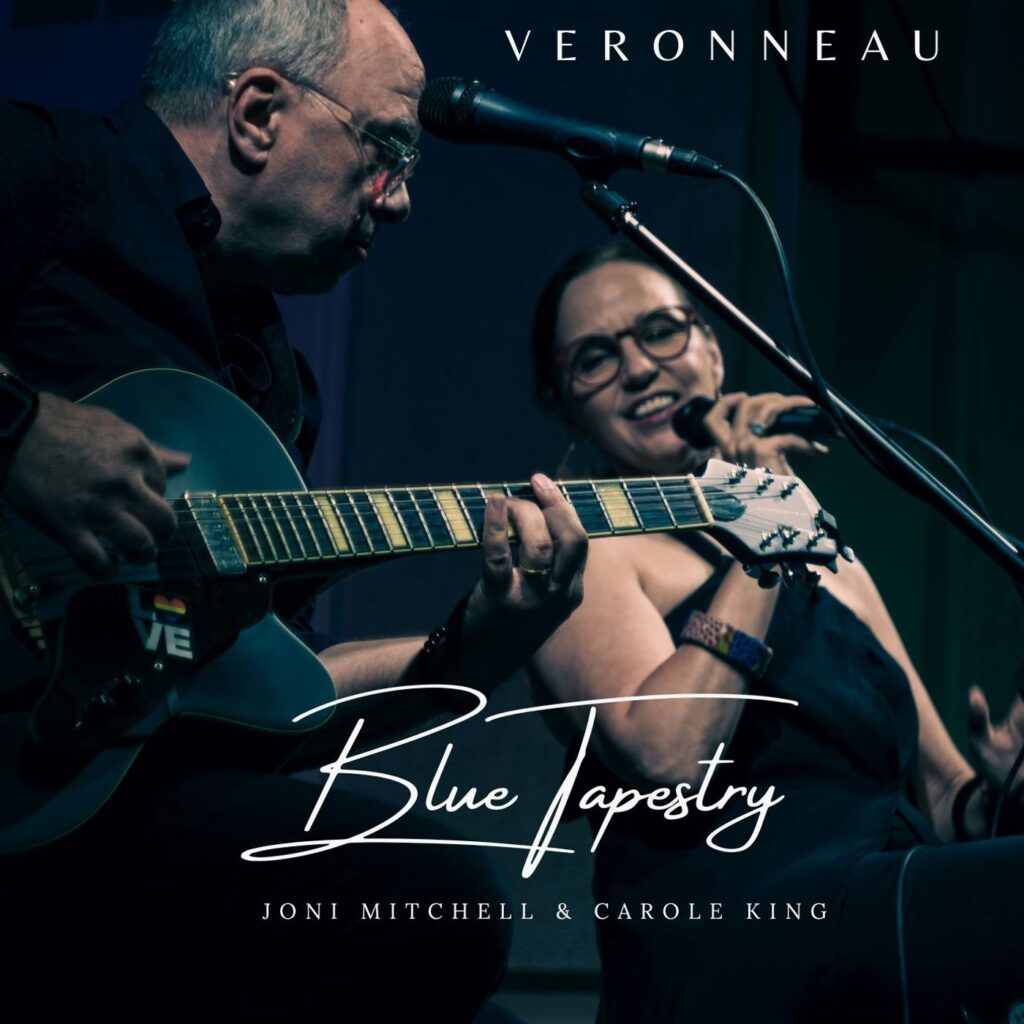
We did two shows in Bristol, England in May, the Blue Tapestry show. But the shows went really well, and in the second show there was a couple who came back and they’d brought four friends with them to see it again. They’d rushed out and said, “You’ve gotta come and see this.” I was over the moon. To me, that was success.
You need a website, you need photos, you need video, you need a short story. Oh, the biggest thing of all, and I say this as a presenter…read your bloody emails, respond to your emails. The biggest problem I have is people who will send me a message on text, on email, on Facebook Messenger, you know, on multiple things, and… Well, the biggest one is the ones who don’t respond. After a while I don’t even contact those people anymore, no matter how much I wanna put them on.
Be business-like about and professional about how you communicate, what you communicate, but above all, communicate. And communicate doesn’t mean just tell, it means listen…then tell. It means read your email and respond to the email. That’s not just about music, that’s about professionalism in every job you can imagine. Even if you’re a plumber.
Rick: And, everything, everything you mentioned is the undercurrent of accessibility. Your music needs to be accessible. You need to be accessible.
Ken Avis: I think we’ve come up with something today. Accessibility in music. Why is accessibility important and how is it important? That’s a whole talk.
2026-2027 Schedule!
Boys Noize Announces New Album 7LLUSION Release Nov. 6, 2026 Via Ones & VIA ONES and ZEP
Press Release
Source: Gold Atlas
 Many have said, Boys Noize is on a “generational run,” but this is inaccurate. Yes, there was a world tour with Nine Inch Nails last year, Boys Noize’s co-production of the TRON: Ares soundtrack, and the top-billed, critically exalted Coachella debut of the artists’ collaborative project Nine Inch Noize before the drop of their self-titled LP. That was in April. Then came a summer of non-stop Boys Noize performances in clubs and festival main stages on multiple continents.
What’s next, however, complicates things.
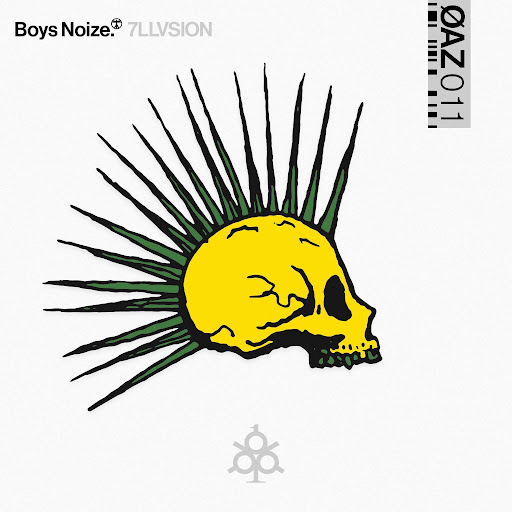
Boys Noize will release 7LLVSION – his first solo album in five years – this fall, with the ZEP-fronted single “1+1+1” announcing its arrival. Expect the full 7LLVSION album track listing to come shortly, but besides ZEP, other artist features include Brutalismus 3000, Taichu, Maya Alkhatari, Abra etc..The track “1+1+1” drives an intimidating, key-shifting EBM bassline over a hyperactive new wave backbeat, a sound both positively fresh and decidedly analogue, occupying an uncanny valley between raw and processed, past and future. Rather than being the default metronome, four-on-the-floor kicks arrive to signal the transition from mosh pit to dancefloor with electrifying results.
After exploding out of Rotterdam’s underground scene, Dutch artist and multi-instrumentalist ZEP has built a rapidly expanding world of precision-tuned chaos. Here, ZEP is the industrial ringmaster, the tone of his voice shifting with unpredictable urgency as he snarls, wails, and shouts. The lyrics allude to a guest list gone wild, but “1+1+1” also suggests the duo is greater than the sum of their parts. Add it up, and you get a track that sounds like no one – and nothing – else.
With “1+1+1” offering a taste of what the 7LLVSION LP will bring, it’s clear that Boys Noize is on a multi-generational run. Then again, hasn’t he always?
ABOUT BOYS NOIZE:
Boys Noize (Alex Ridha) is a singular figure in 21st-century electronic music culture. The German-Iraqi artist, DJ, producer, and composer embraces and transcends contradictions—a cross-genre bridge-builder respected by techno purists, and a global headliner who never left the underground. Ridha is masterful on the decks and inimitable in the studio, crafting songs for strikingly diverse talents including A$AP Rocky, Bon Iver, Frank Ocean, Arca, Virgil Abloh, Lady Gaga, and Brutalismus 3000. He has been featured alongside Keinemusik, Shygirl, Kelsey Lu, Rico Nasty, and VTSS; remixed Daft Punk, Depeche Mode, Miley Cyrus, Tame Impala, The Chemical Brothers, and A.G. Cook; and scored the hit German hacker film Who Am I (2014), Oliver Stone’s Snowden (2016), and the forthcoming Replacer, starring Halsey. He co-founded the duo Octave Minds with Chilly Gonzales, and actively produces and performs with Skrillex as Dog Blood.
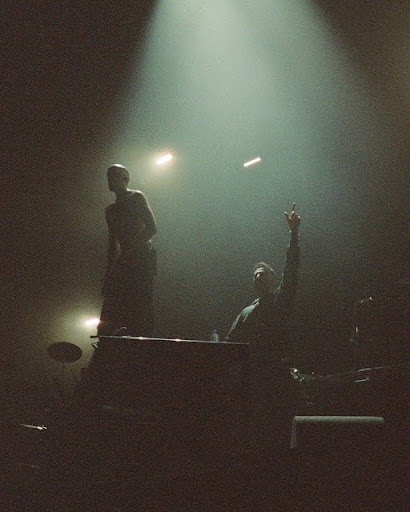
ZEP & Boys Noize
For Ridha, this long, accomplished career was merely the foundation for something bigger. In 2025 and 2026, Boys Noize performed alongside Trent Reznor and Atticus Ross throughout Nine Inch Nails’ Peel It Back tour, and co-produced the near-entirety of the TRON:Ares soundtrack, including the GRAMMY® Award-winning single “As Alive As You Need Me To Be.” The trio’s collaboration was formalized with the announcement of Nine Inch Noize, debuting with a top-billed, viral Coachella set that SF Gate called “one of the festival’s greatest performances of all time.” The Nine Inch Noize LP was released the same week to critical acclaim. Perhaps Pitchfork’s review said it best: “Every song on the album slaps.”
As a solo artist, Boys Noize continues to be an active presence in the culture, with his eighth solo album 7LLVSION arriving in the fall of 2026. Throughout his rise from clubs to festivals to stadiums, Ridha has ceaselessly supported the underground through his labels Boysnoize Records and the recently launched ONES and ZEROS, focusing on a new generation of global talent from the Global North and South alike. His punk ethos has kept him fully independent, raw talent keeps him in-demand, and obsession keeps him future-proof. No other artist traverses musical worlds like Boys Noize, and while his sound cannot be replicated, his formula is simple: embrace everything, compromise nothing.
ABOUT ZEP:
ZEP is a Dutch artist, producer, and multi-instrumentalist known for his raw energy, boundary-pushing sound, and uncompromising DIY ethos. Emerging from Rotterdam’s underground rave scene, where he built a devoted following through his independently organized “FUGAZZI” parties, the drummer, DJ, and producer turned singer-songwriter has developed a singular style that fuses rap, punk, hardcore, techno, and R&B into something entirely his own. Fully hands-on across both his music and visuals, ZEP writes, produces, co-directs, and edits much of his creative output, pairing high-impact sonics with a distinctly self-made visual identity. On his latest project, NO ENEMIES, released via PULSE Records, ZEP balances fierce individuality with a broader message of connection, self-awareness, and togetherness.
BOYS NOIZE ON TOUR
September 26 – San Francisco, USA @ PORTOLA – DOG BLOOD (= BN + Skrillex)
September 26 – San Francisco, USA @ PORTOLA AFTER PARTY
September 27 – San Diego, USA @ CRSSD FEST
September 27 – San Diego, USA @ CRSSD AFTER DARK
October 02 – Porto, PT @ SWITCH CLUB
October 03 – London, UK @ THE CAUSE – OAZ TAKEOVER
October 09 – Bologna, IT @ ROBOT FESTIVAL
October 10 – Malaga, ES @ BRUNCH ELECTRONIK
October 16 – Paris, FR @ MIA MAO – OAZ TAKEOVER
October 23 – Barcelona, ES @ NITSA – OAZ TAKEOVER
October 24 – Amsterdam, NL @ MELKWEG – OAZ TAKEOVER
October 30 – Alameda, USA @ GOLD BAR HANGAR
November 06 – Phoenix, USA @ OBSIDIAN
November 07 – Mexico City, MX @ ULTRA MUSIC FESTIVAL
November 08 – Orlando, USA @ EDC ORLANDO
November 14 – Miami, USA @ FACTORY TOWN
November 28 – Zhuhai, CN @ VAC FESTIVAL
December 28 – Perth, AU @ RADAR FESTIVAL
December 30 – Hesse, AU @ BEYOND THE VALLEY
December 31 – Sydney, AU @ ABERCROMBIE (TBC UNDER EMBARGO – till?)
January 01 – Sydney, AU @ FIELD DAY
January 01 – Melbourne, AU @ LET THEM EAT CAKE
January 02 – Brisbane, AU @ RADAR FESTIVAL
LINKS:
https://instagram.com/boysnoize
https://www.instagram.com/whatszep
https://www.tiktok.com/@whatszep
https://www.youtube.com/@whatszep
Daniel Bachman’s New Full Length Documentary Film/Album “The Witness Tree” To Be Released October 2, 2026
Press Release
Source: DB PR
Witness trees are living beings who have experienced incredible historical events beyond the lifespan of any living person. Over the course of two years, Bachman interviewed/collaborated with 16 of these remarkable trees in Virginia using a biodata sonification device and his guitar.
Self-recorded in the field over the span of nearly two years (11/13/24 – 06/24/26), The Witness Tree is Bachman’s latest effort in multimedia storytelling. The result is a nearly two-hour long album, and documentary film, that takes the participant through intersections of history, power, people, and place. From the eroding beaches of the Chesapeake Bay and its former plantation grounds, through the Civil War battlefields, old growth groves, and river bottoms of the Piedmont, to the peaks of the Appalachian Mountains, the trees speak for themselves.

The Witness Tree
When site visits were in isolated private settings, such as in “Dogwood Mountain Valley Pipeline Blast Zone” or “American Boxwood Barboursville Ruins”, Bachman tuned his guitar and played along to the biodata coming from each tree. When this was not an option, pre-recorded material was played for the tree and later used in assembling the music.
While environmental audio of each location and the witness tree living in that space make up the core of each track, many non-musical samples find their way into this sylvan soundscape, such as text to binary code to MIDI synthesis of history texts, and a visual to auditory translator that transforms digital images of each location or tree. Processed, and at times heavily abstracted YouTube videos, and other miscellaneous A/V material related to each location can also be heard throughout the entire project, as well as Bachman’s stylized guitar playing/digital editing and renditions of obscure site-specific folk tunes.
The Witness Tree has as much to do with public history, folklore, and documentary work as it does with modern American experimental music and fingerstyle guitar, with the liner notes, film, and album, all saying things each individual piece could not on its own.
Truly all trees bear witness. As they live and grow alongside us, they experience the everyday experience of human and non-human life, as well as our most cataclysmic moments in history. The Witness Tree attempts to include not only the lesser-known historic narratives but also acknowledge the effects of climate breakdown currently accelerating on Earth and the trees that are living through these defining experiences of our time.
ABOUT – Daniel Bachman is an artist, musician, and independent scholar primarily interested in the folk histories of Virginia. Bachman has released 14 full length records since 2011, and toured extensively internationally and throughout the U.S., garnering wide acclaim. Daniel’s unique perspectives and his music that fuses with the Virginia ecosystem was recently featured in The Smithsonian Magazine. His latest record, The Witness Tree, is out Oct. 2, 2026.
Daniel Bachman
LINKS
McCoy Tyner Interview: A Life in Jazz (Classic GI Interview from 2009)
This is a classic Guitar International interview from October 21, 2009.
by Dr. Matthew Warnock
McCoy Tyner – photo credit: John Abbott
The year 1960 found two of jazz’s rising stars in a moment of flux. After finding world-wide recognition for his contribution to the classic Miles Davis quintets of the late 1950s, and experimenting with different lineups for his own group, saxophonist John Coltrane was in search of a new quartet to help propel his music into a new and ground-breaking direction.
At the same time, pianist McCoy Tyner, then a member of Benny Golson and Art Farmer’s famous Jazztet, was also looking for a new group of musicians to help him explore the post Kind of Blue music that was drawing his attention as a composer and improviser.
When these two jazz giants came together, alongside bassist Jimmy Garrison and drummer Elvin Jones, both legends in their own right, the results were other worldly. Over the next five years these four musicians would change the way people thought about jazz, about improvisation and about music itself. Opening what was to become the first chapter in the long and successful career of one of jazz’s brightest stars, pianist McCoy Tyner.
Known simply as “The Quartet,” these four musicians recorded some of the most enduring and game-changing jazz albums of the 20th century. Exploring the new modal sounds that had been brought to light in Miles Davis’ tune “So What”.
The Coltrane Quartet pushed the limits of chord substitution, reharmonization and modal harmony on such albums as My Favorite Things, Crescent, Live at the Village Vanguard and the album which many consider to be the groups magnum opus, A Love Supreme.
Throughout these recordings, and the extensive touring the group embarked on between 1960 and 1965, Tyner began to quietly revolutionize the way people thought about, played and heard the piano in a jazz context. His extensive use of fourth voicings, modal planning, lightning-fast chops and heightened sense of communication within the group opened the doors for the later explorations by pianists such as Chick Corea, Keith Jarrett and Brad Mehldau.
Though Tyner was open to experimentation within the context of the quartet, and the modern-modal music they were exploring, when Coltrane began expanding the group by adding extra percussionists, while at the same time pushing the boundaries of modal jazz to the point where it began to evolve into free jazz, Tyner felt it was the right time to leave the ensemble and strike out on his own. In 1965 he left The Quartet and embarked on one of the most successful solo careers in jazz history.
Teaming up with many of the eras top players, including Joe Henderson, Ron Carter, Lee Morgan, Joe Chambers and Billy Cobham, Tyner’s solo albums during his post-Coltrane years have consistently met with acclaim from critics and fans alike. Beginning with his highly influential album The Real McCoy (Blue Note 1967), Tyner continued to develop his own personal approach to jazz composition and improvisation. An approach that would lead him to experiment with many styles of music, most notably the music of Africa, on such albums as his 1972 release Sahara, which features Tyner playing a Koto, as well as piano, flute and percussion. Since leaving the Coltrane quartet in 1965, Tyner has consistently produced new recordings of his music at a rate of almost one album per year from 1967 to the present day. A remarkable feat that continued with his 2008 release Guitars.
Click here to view the embedded video.
Tyner’s second release for the McCoy Tyner Music Label, Guitars features a wide array of today’s finest pickers performing alongside Tyner’s trio of Ron Carter, bass, and Jack DeJohnette, drums. The guitarists that Tyner has chosen to perform with on this release represent a variety of musical styles and approaches. Featuring modern jazzers John Scofield and Bill Frisell, avant-garde picker Marc Ribot, banjoist Bela Fleck and slide guitar virtuoso Derek Trucks, the album showcases Tyner’s diverse music tastes, as well as his ability to blend perfectly with musicians from different backgrounds and musical styles. The album marks Tyner’s first major collaboration with the guitar, and upon hearing the results the only question that lingers is “when will he do it again?”
Tyner recently sat down with Guitar International magazine’s Good Life section to reflect on his long and successful career, give his thoughts on the current state of jazz, and discuss his latest album, Guitars.
******
Matt Warnock: Historically, you have not recorded with guitarists as part of your ensemble. Why did your latest release, Guitars, feel like the right time to bring that instrument into your compositions and ensemble?
McCoy Tyner: Well, it was an idea that I discussed with the producer of the album, and we felt that since I hadn’t done a lot with guitars before this would be a good opportunity. They all have something different to bring to the table which made the album really unique, I feel.
Matt: The guitarists you chose for your new album reflect a wide variety of backgrounds and musical approaches. Did playing alongside guitarists as distinct as John Scofield and Derek Trucks, as well as others, cause you to approach the music from different angles in response to their musical diversity?
McCoy: No, I don’t think I changed my approach, but I made sure that my ears and mind were open enough to allow my style to meet with theirs somewhere in the middle. I allowed the guitar players to choose some of my music, or theirs, that they felt would mesh well with my musical style, and I think that helped to bridge the gap.
Matt: When playing with a second harmonic instrument (guitar) on your new album, did you make any adjustments in your comping and soloing to fit the guitar/piano format?
McCoy: It’s all about listening. You have to listen to what someone is doing and help them get to where they want to go, musically speaking. I play a supporting role if someone else is soloing, and a guitarist will do the same for me while I am soloing.
Matt: What was the inspiration behind offering the behind-the-scenes portion of the Guitars DVD?
McCoy: Well, I think it was nice to be able to see how a record is put together in a studio. After listening to a recording, someone might ask, “How was this all put together?” Here you get to see some of the process.
Matt: Now that you have done a recording with guitarists, do you have plans to do other similar projects with other instruments such as different singers, saxophonist or trombonists for example?
McCoy: I would like to do something like that. I really do enjoy accompanying people – it’s a challenge and a joy when you get it right. I look forward to doing more of that and I’ll just try to keep my mind open to whatever comes my way.
Matt: Can you talk about your first musical experience with the John Coltrane Quartet? Did it immediately have a musical spark to it, or did it take some time to feel each other out before things began to really gel?
McCoy: Well, John used to come over my house. We had mutual friends. I remember when he was working on different chordal progressions, like “Giant Steps,” he would come over to my house and show me what he was doing. I was really young at the time, but I think he knew even then that he wanted me to be in his band eventually. I would try to internalize the concepts he was working on, and by the time he hired me for his band, I was ready.
Matt: During the time you spent with Coltrane you were exploring various pentatonic scales, advanced harmonic substitution and advanced rhythmic concepts. Did these concepts develop from a study of the music from a theoretical standpoint, or were you hearing these sounds in your head and then leaving it up to the academics to figure out what labels they fit under?
McCoy: I think John chose Elvin, Jimmy and I because when combined, the way we played naturally created the sound he envisioned. It was more about the overall sound and less about the theory. It was about listening and playing together.
Matt: When you joined Trane’s quartet you were already an accomplished musician in your own right. What did you feel Coltrane took from you as far as musical inspiration is concerned?
McCoy: I think we all inspired each other. John was the leader of the group, but he was a very humble person. Being in that band was an incredible experience.
Matt: How did you approach comping with Elvin Jones? Did you focus on locking in with what he was doing rhythmically or did you try and find counter ideas to compliment his style or was it a combination of both?
McCoy: Elvin was a force. He used to play so loud – sometimes I would just drop out and let him go with John. With Elvin, you had to play loud or else you weren’t going to be heard. He was such a keen listener too – just a great, great drummer.
Matt: How do you feel that playing in Coltrane’s quartet changed your approach to music, both as a composer and as an improviser?
McCoy: John was like a big brother to me. He was such a kind and humble person. His music was so strong, melodically, harmonically, spiritually, it taught me so much.
Matt: After playing with Coltrane during one of his most productive and creative periods, as well as being one of the most famous and important groups in jazz history, how difficult was it for you to move on to play with new musicians and develop your own identity apart from his quartet?
McCoy: Well, I think it was a natural step to start recording my own music. I was with John by the time Bob Thiele approached me about recording for Impulse, and John was very supportive of that. Because I had been recording already, by the time I left John’s band, it was a smooth transition for me.
Click here to view the embedded video.
Matt: On your album, Trident, you play the harpsichord and celeste, which were rarely used outside of the classical genre, and even until today are rarely heard. What was the inspiration behind bringing these two instruments to your music at the time of this recording?
McCoy: Using those instruments just allowed me to express myself in a different way. Sometimes it’s nice to try different instruments because they have a different sound to offer and therefore your approach changes a little bit. But, I always come back to the piano. The piano is like an orchestra – I’m very fortunate that I chose it as my instrument.
Matt: In the late ’80s and early ’90s, you recorded three solo piano albums for the Blue Note label. Why did that time feel right for you as the moment in your career to produce a solo collection, and what were some of the musical challenges and benefits you found playing solo as compared to playing in an ensemble? Were there things you wanted to accomplish that you felt you couldn’t do as a member of someone else’s band?
McCoy: Well, playing solo is difficult because you have to keep the momentum yourself. You have to continue to create and develop, so it forces you to stretch in a variety of ways.
Matt: Your improvisations have a very organic and natural feel to them and have been this way right from your earliest recordings. How much of what you play when you are soloing is thought through on the spot and how much is just letting go and having the music flow through you?
McCoy: I try to play what comes naturally at the moment and let it happen.
Matt: What is your favorite album that you’ve played on and what makes it stand out to you compared to the others in your catalogue?
McCoy: It’s hard to say. I try not to look back too much, but sometimes it’s nice to reflect. One album I enjoyed making was The Real McCoy. I think that one came out well.
Matt: You have been at the top of the jazz world for almost fifty years as both a leader and a sideman. How do you see jazz’s role in society changing over that time and where do you see it headed in the near future?
McCoy: Well, I think that as long as young people are playing jazz and learning about this music, its future is secure. I’ve been playing quite a bit with some young people lately. Over the last few years I’ve done some concerts with a young people and I know there are plenty of others out there who play at a very high level.
Click here to view the embedded video.
Matt: Sonny Rollins has said that he feels an hour on the bandstand is worth a month in the practice room. How much of your musical development would you say was formed in the practice room and how much would you say was formed on the bandstand?
McCoy: With all the travelling and performing I’ve been doing, it’s hard to find time to practice! But seriously, I probably did most of my practicing when I was younger. I remember coming home from school – I couldn’t wait to get to the piano so I could play and practice. I really love the piano and I feel very fortunate that I am able to play and travel all over the world as my career.
Matt: As a performer you have appeared in small jazz clubs, concert halls and festival stages across the world. Do you have a venue preference when you are performing? Do you like the intimacy of a small club or the energy from a large festival crowd, or do you find all of these venues have something unique to offer your music?
McCoy: Every performance is different, but I try to approach them in the same way and give it my all.
Related Sites
McCoy Tyner
John Coltrane
McCoy Tyner Guitars (CD/DVD) on Amazon

Danny Garwood Hits The Mark With “50/Fifty” And Gigs With Blues Icons
By: Rick Landers
Danny Garwood
Hailing out of Music City USA (Nashville, Tennessee), there’s a young guitar slinger, Danny Garwood, rolling out some heavy hitter blues, getting stage time with the likes of the legendary Buddy Guy, Christone “Kingfish” Ingram, and other world-class artists.
While checking out Danny’s video that captured the scene with Mr. Guy, I was reminded of an older video with a young Joe Bonamassa being invited to show his chops alongside the great Danny Gatton. It seems each new generation produces newcomers to the world of guitar that sometimes get to count coup with their guitar heroes, and gain some early career traction.
Kenny Wayne Shepherd and Lang are others come to mind. The power and magic of music can merge generational gaps, fusing young and older musicians together in ways that honor the elders, and inspire the passion of talented and driven young axe masters.
Enter, Danny Garwood, who took a turn in 2022 at the Dallas International Guitar Festival’s ’10 Under 20′ festival where he impressed and met Ally Venable who pulled him on stage, and has since invited him to open for her several times. In keeping with generational power shifts, Ally’s own professional entry to the music scene happened when she released her first EP at 14 years old, and since then has gone on to become an internationally acclaimed touring artist.
Inspired by those who came before, that include Jimi Hendrix, Stevie Ray Vaughan, John Mayer and Jeff Healey, Danny’s blues licks are nuanced by his guitar idols’ good works. And his new EP, 50/Fifty, hits the bulls-eye offering us skilled grit and passion, with the releases only short-coming being leaving us wanting for more, much more. Without a doubt, Garwood has plenty more in his quiver to send our way.
Guitar International is pleased and honored to present, Danny “Guitarwood’ Garwood, to our pages and we look forward to much more from this very special world-class artist.
******
Rick Landers: Some of my friends spent countless hours alone learning and trying to master the guitar, and I wonder at what cost to their social lives, schooling and relationships? Did you or do you still find a total immersion necessary to develop your talent; what have the joys and challenges been so far for you?
Danny Garwood: I can totally see how that can happen, music being a time consumer, but I’ve been very lucky to have a family that supports balance. I go to public school and ensure that I have enough time for friends and being a kid. Which is something that’s super important to my parents and management.
First starting out it was a total challenge, so I spent tons of time in my room practicing. Eventually I just kept on going and it got to a point where I was having so much fun I didn’t realize how long and often I was practicing. At this point I practice daily and honestly can’t even walk into the living room without picking up an acoustic.
Danny Garwood
Rick: Your EP, 50 Fifty, is a catchy honking guitar album, tell us how you chose the songs that you covered, and the kinds of songwriting processes you use to come up with your own tunes?
Danny Garwood: It all came together in a very neat way. In June of 2024 I made the trip to Sweetwater Studios in Fort Wayne, Indiana and cut a handful of songs, which led to me releasing a single months later in October called “Two Wrongs.” I returned back to Sweetwater in November of 2025 and redid vocals and guitar parts on the tunes. My voice had changed and I wanted to enhance the guitar parts a bit.
As for the decision making on covers, let’s start with “Them Changes” originally done by the late great Buddy Miles. I was in the car and my dad had Eric Clapton’s and Steve Winwood’s Live At Madison Square Garden on. Their cover of “Them Changes” came on.
As soon as I heard that riff I was immediately hooked. I found the original done by Buddy and it blew my mind, not only because of how amazing the music sounded, but that the person who was singing was also playing drums. I looked him up some more and found out he was the drummer on the Band of Gypsy’s album, which is now one of my personal favorites. The influence the song had, inspired me to do something with it, and I knew this would be one that I would cut.
The other cover, “As the Years Go Passing By,” originally done by Albert King, I discovered from Jeff Healey’s version. I’ve always been a huge fan of slow blues songs, but this one just had a different feel. Healey has always been a huge inspiration to me and that was one of the songs that introduced me to him as well as his role in the movie “Roadhouse.” It was a song that made its spot on my setlist and I loved it so much I wanted to record it.
Now, for the originals: “50/Fifty,” “Up Your Sleeve,” and “387 Delta”. “50/Fifty” and “Up Your Sleeve” were written in a very natural way that was made to sort of fit the theme of the instrumentals, but “387 Delta” goes deeper than that. I wrote that song about one of my favorite venues, “Ground Zero Blues Club,” in Clarksdale, Mississippi. There’s some sort of energy there that I don’t think I’ve found any place else.
I’ve been playing there ever since I was around 13, and I’ve met so many great people. I couldn’t resist writing a song about it. I needed to figure out a title, and I originally intended it to be called “Ground Zero,” but that just felt a little too basic. I gave it some more thought, and someone suggested I look up the address and “387 Delta Avenue” came up. Something about 387 Delta just had a ring to it, so that’s when I knew I had my title.
Click here to view the embedded video.
Rick: What’s your rig for performing – guitar, amp, effects – who are some of the guitarists that have inspired you, and what sounds draw you in by them that you incorporate into your own playing?
Danny Garwood: I get pretty versatile with my collection, but I’m totally a Stratocaster guy at heart. For amps I’m running a Category 5, which is a company out of Texas. I’m playing through the TBR-35 model, and it sounds excellent.
In terms of pedals, I’m always running a Tube Screamer and an MXR pedal called, Timmy Overdrive, for extra grit. On occasion I’ll turn on a chorus or a smidge of delay. And for certain songs I use a wah or an octave pedal.
To name a few influences I definitely incorporate a lot of Jimi Hendrix, John Mayer, and Kenny Wayne Shepherd licks into my playing. I do venture off a bit though, Steely Dan has become a huge inspiration for me, more specifically both albums, The Royal Scam, and Aja gave me a whole different lens towards music.
An incredible drummer I work with, Dale Myers, introduced me to drummer, Jeff Porcaro, and gave me a book about him to read called, The Man and His Music, which had so much valuable information and taught me a lot of things about the music industry. Even though Porcaro is a drummer, as a musician and a person he’s a huge influence on me and this sparked a deep connection to his music and a lot of songs from Toto’s discography.
Rick: Along the way, musicians who get traction tend to have supporters who help move their passion forward into a professional career path. Who’s been on your side and what have they brought to you, to help keep things moving ahead and/or helping you keep your life well balanced?
Danny Garwood
Danny Garwood: Too many to list. To start, my parents, and especially my Dad, have been here for everything. I wouldn’t have gotten to places I’ve been, let alone meet my management, Curation, who are also nothing but amazing towards me.
To name another, this incredible keyboard player and even more amazing human, Eric Robert, I’ve had the privilege of working with. I met him shortly after moving to Tennessee and he’s supported and inspired me both on and off stage. Not to mention he gifted me the sickest watch. I always sport it on stage.
Rick: The arena of business in the music industry has a a few potholes to be aware of and to try to avoid. Are you cautious to not jump the gun when it feels that your ambitions might lead the way to decisions that end up with disagreeable results?
Danny Garwood: I’ve got an amazing support system, and we always really think through decisions. For example, I cut those tracks at Sweetwater intending for an album, but I discussed with management on what to do and decided on holding off for an album until I was a little older.
After that recording process, tons of people would come to shows asking if we had CDs or music they could stream. Further down the road this prompted me to piece together my EP. It’s important for me to do things right and not fast.
Rick: Tell us about the production of your album, the recording, engineering and packaging of it. Were you hands on or were there others you relied on heavily to pull it all together?
Danny Garwood: Sweetwater is one of the coolest places I’ve ever been. And if you haven’t been, figure out how to get to Ft. Wayne, Indiana. I had a great first experience recording with producer, Shawn Dealey, and his studio partner Jason Peets.
My first experience with them in 2024 was nothing but amazing. I made the choice to hold off, and returned when my voice changed a little over a year after. I redid the parts to sound more up-to-date. Shawn pulled some really awesome things out of me just by talking to me and honed in on a lot.
Rick: A career in music can be tough and some have what many would call a “normal” job or career, often to be able to pay the rent. Are you also pursuing an education or another career that might be a more traditional path to your idea of success?
Danny Garwood: I will do whatever it takes to continue on this path, I can’t see myself doing anything else. I love connecting with other people through music, and the stage just feels like home to me.
Rick: Have you found other musicians competitive or helpful to give you ideas, get gigs, or offer up lessons learned for you to reach your potential?
Danny Garwood: It’s definitely a competitive market, but I feel like you can find that in any path. There have been so many people that are extremely helpful, whether it’s mentors or people I’ve shared the stage with. To name one, Mr. G, my very first mentor. This was when I was living in Illinois, where I am originally from.
I showed up to a jam in a small town in Wisconsin, called Zenda. I was around 10 years old at the time and had never experienced an open jam before. The host “Mr. G” had let me come up and play with the house band for a few. This experience ignited my passion even more, and he ended up taking me under his wing as his very first guitar student. He taught me stage etiquette, and to always let others shine, which I think is key when playing onstage.
Click here to view the embedded video.
Rick: How did you end up on stage with Ally Venable at the Dallas International Guitar Festival in 2022, and do you consider it a milestone in your career so far?
Danny Garwood: I saw Ally perform in early 2022 opening for Kenny Wayne Shepherd in Chattanooga, Tennessee. Needless to say, I was absolutely floored. A few months later I found out that I was going to be going to Dallas to compete in the Dallas International Guitar Festival “10 under 20” competition. The day of our arrival we went to go see Ally perform.
After the show I introduced myself and took a picture with her. That very next day, she had another slot performing. Before we left to go to the festival I almost didn’t bring my guitar. But, my dad just had this gut instinct and told me to bring it, just in case. So I did.
When we went to go see Ally play, we received a message from her Dad through Facebook asking if we were still there and if I had my guitar. Luckily, yes. I rushed to the front of the stage and before I knew it 13 year old me was up there jamming on Freddie King’s “I’m Going Down” which was a song I did not know at the time.
Ever since, Ally and her crew have been so good to us. I’ve had the privilege of opening for her and spending time with them on numerous occasions. And I’m beyond grateful for that. Not to mention there was a woman in the audience, Natasha Cornblatt, who is a videographer. She filmed the performance and posted it on YouTube and it is now standing at 8.6 million views.
Rick: Sharing the stage with the legendary Buddy Guy and Christine “Kingfish” Ingram, at the Ryman no less, must have been a dream come true. How were you able to corral that opportunity, what was that experience like, and has it led to even more opportunities?
Danny Garwood: Around mid-February, 2023, we had tickets to go see Buddy Guy in Evansville, Indiana. Ally Venable and Eric Gales were opening for him which they were fantastic per usual. Near the end of the show, Buddy did his signature crowd walk, and eventually came up to me.
I was wearing this very vibrant blue suit jacket, with shiny silver polka dots. Buddy handed me a pick and let me strum his guitar. There’s a picture of it, and a video from my point of view, it’s always fun to go back and watch on occasion. Buddy asked if I played guitar, of course I said, “Yes”. He asked if I wanted to jam on stage at the end of the show, but it never happened, that night at least.
Danny Garwood
I was working with an outstanding drummer at the time, Paige O’Rourke, from Chicago, Illinois. She had jammed with Buddy before, and happened to know Buddy’s guitar tech, Connor Korte. Connor had spoken to Buddy and he said he had remembered me from the Evansville show, and he was informed that we’d be seeing him in late March at the Ryman Auditorium here in my hometown, Nashville, Tennessee. We weren’t entirely sure on whether I was going to jam with Buddy, but either way I was excited to see him live and I wore that blue jacket again.
Christone “Kingfish” Ingram was playing the opening set who I had previously met before. When we were waiting in line, we saw his van, and his bass player at the time, Paul Rodgers, recognized me. He invited me in the van and I got to chat with Christone for a bit.
This meant the absolute world to me. When it came time for the show, we still weren’t sure on whether or not I’d be jamming with Buddy. When he did his crowd walk, he didn’t walk up to me, so I had a feeling it wouldn’t happen. Near the end, I see Connor. He’s pointing at me to head backstage. My mom came with me, as well.
It was funny when Connor handed me a guitar, we couldn’t adjust the strap height to fit me because I was so much smaller at the time. Then before I knew it I was on stage with Buddy Guy, Kingfish, and all the other incredible musicians on stage. It didn’t really hit me till afterwards what had just happened. I couldn’t believe it.
This experience opened the door for opportunities to play with Buddy yet another time, jam with Kingfish again at Ground Zero, and play at Buddy’s blues club in Chicago, Illinois, “Legends.”
Click here to view the embedded video.
Rick: Are you winging it or have you developed a career strategy, with goals and objectives, that you check off, then once interim goals have been reached, do you update your plans with more things you want to experience and accomplish?
Danny Garwood: I’m definitely a go with the flow type of person. A lot of things have just sort of came to me, and I let the universe do its thing. Not to say it isn’t important to have a plan or strategy. After I finish my senior year of high school, I’m planning to record my debut album. It’s been a goal of mine for a while, create a killer debut album and tour and I’m really excited to see what the future has in store.
Rick: Giving back is always a good thing to do and I see that you’ve helped other musicians starting and facilitating the Youth Blues Jam at the Ground Zero Blues Club in Memphis. What was that like and are you still involved in that annual event? Have you plans to do any more “giving back” ventures?
Danny Garwood: Being able to start, and host the Youth Jam at Ground Zero was such a treat. My last time hosting this year was very bittersweet, but it felt amazing to pass the torch and let other young artists experience what it’s like to be in that spot. I’m no longer involved in that event since I’ll be 18 soon, but I’m excited to see what the future holds for it.
Giving back always feels good, and I am 100% open to doing it as much as I can. Gary Hoey had Ally Venable sit in on “Going Down” when she was younger, and she paid it forward to me. So, I know one day, I’ll find someone young that I see potential in and do the same.
Rick: What’s next on your “to do” platter and what can your fans expect for the rest of this year and in 2027?
Danny Garwood: My biggest focus is to enhance my writing skills. So, definitely expect more original music, as well as more shows, so you can catch the new material live, further down the road!
Paul Reed Smith To Be Inducted Into The Guitar Center Rockwell
Press Release
Source: PRS Guitars
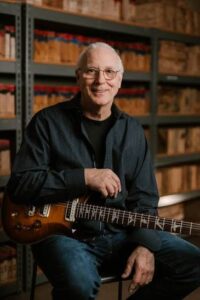
Paul Reed Smith – image courtesy of PRS Guitars
PRS Guitars and Guitar Center today announced that the national retailer is inducting Paul Reed Smith into the Hollywood Rockwalk, the handprint-and-signature tribute outside Guitar Center’s flagship Hollywood store on Sunset Boulevard. This pedestrian path and industry-recognized music landmark is dedicated to honoring the musicians and industry pioneers who have made significant and lasting contributions to the growth and evolution of music, through an exceptional level of talent, outstanding innovation and creative ingenuity.
John Mayer will give the induction speech to honor Smith. The handprint ceremony will take place September 26th at the Dell West Plaza Rockwalk Stage at the Moody Center during the Crossroads Guitar Festival in Austin, Texas. The completed handprint will later be installed at Rockwalk outside Guitar Center’s flagship Hollywood store.
“The first time I saw a Rockwalk induction, Ted McCarty was getting inducted and Eddie Van Halen was one of the people in attendance to witness it. I was very pleased for Ted. That I’ll be in the middle of another induction is an honor and leaves me without words. I look forward to seeing everyone,” said Paul Reed Smith, Managing General Partner of PRS Guitars.
“There are very few people in the history of the electric guitar who have pushed the design and perfection of the instrument forward more than Paul,” said Gabe Dalporto, CEO of Guitar Center. “He has inspired generations of musicians and instrument makers and is a living legend in our industry.”
Since its founding in 1985, Rockwalk has celebrated some of the most recognized names in rock, blues, soul and popular music through signature and handprint ceremonies outside the Guitar Center Hollywood. More than 150 artists and innovators have been inducted, including gear pioneers Jim Marshall, Robert Moog and Les Paul, as well as music icons including Eric Clapton, John Lennon, Stevie Wonder, Aerosmith, Janis Joplin, Jimi Hendrix, Alanis Morissette, Black Sabbath, The Ramones, Elvis Presley and Johnny Cash. Located at the entrance of Guitar Center’s flagship Hollywood store on Sunset Boulevard, Rockwalk is a permanent public destination where fans and musicians connect with music history year-round.
For all of the latest news, visit www.prsguitars.com and follow @prsguitars on Instagram, TikTok, Facebook, X, and YouTube.
About PRS Guitars:
PRS Guitars is a leading manufacturer of high-quality instruments in Stevensville, Maryland and has provided some of the world’s most renowned musicians with instruments since 1985. The PRS team of highly skilled craftspeople design and build a wide variety of musical instruments and gear for worldwide distribution, including electric and acoustic guitars as well as boutique-style guitar amplifiers and effects pedals. The PRS SE Series complements the Maryland-made PRS line by offering highly approachable and more affordable electric and acoustic guitars. David Grissom, Jimmy Herring, Mark Holcomb, Myles Kennedy, Mark Lettieri, John Mayer, Orianthi, Carlos Santana, Ed Sheeran, Rhonda Smith, Mark Tremonti and Keith Urban are among the artists currently playing PRS instruments and/or amplifiers.
About Guitar Center:
Guitar Center is the leading retailer of musical instruments, lessons, repairs and rentals in the U.S. With more than 300 stores nationwide and one of the top direct sales websites in the industry, Guitar Center has helped people make music for more than 60 years. Guitar Center provides a range of musician-based services, including Guitar Center Lessons for players of all ages and skill levels, GC Repairs, an on-site maintenance and repair service, and GC Rentals, offering easy access to instruments and gear. Guitar Center’s family of brands includes Music & Arts, which operates more than 250 stores specializing in band and orchestral instruments for sale and rental, serving teachers, band directors, college professors, parents and students, and Musician’s Friend, a leading direct marketer of musical instruments in the United States. Guitar Center Business Solutions is the company’s commercial division, delivering professional audio, video, lighting and integrated technology solutions for businesses, institutions and creators nationwide through a portfolio of brands including AVDG (Audio Visual Design Group), GC Pro and Custom House at Guitar Center. The Guitar Center Music Foundation is a national nonprofit that expands access to music through instrument donations and support for communities in need.
Review: Audeze LCD-S20 review: Planar Magnetic Technology Headphones For The Recording Studio
By: Carlos Martin Schwab
Launched in April 2025, these headphones were designed primarily as a closed-back circumaural model for Audeze’s professional studio line—with a particular focus on tracking monitoring—introducing the brand’s planar magnetic technology to a more affordable pair of closed-back headphones.
The construction of the Audeze LCD-S20 headphones stands out for its distinctly professional and industrial design, based on a robust chassis that combines aluminum forks, magnesium parts, steel spring arches, and glass-reinforced nylon components. They feature closed-back ear cups with internal acoustic damping and 90-mm planar magnetic transducers, complemented by a headband with a suspension strap that distributes pressure and incorporates a magnetic system for easily swapping out the gel-filled ear pads.
Audeze’s patented SLAM (Symmetric Linear Acoustic Modulator) technology integrates precision-engineered channels into the coupling ring between the ear cups and its 90 mm planar-magnetic transducers to manage internal air pressures, tuning the low frequencies to deliver an extremely impactful, deep, and distortion-free bass response.
By balancing airflow dynamics in a closed-back design, SLAM dramatically improves instrumental separation and delivers outstanding stereo imaging. Among its pros are the exceptional durability of its metal components, excellent passive isolation (ideal for studio recording without sound leakage), ease of maintenance thanks to its replaceable components, and the great functional versatility of its interchangeable cable input, which allows it to be connected to either ear cup.


On the downside, the closed-back design and planar driver system bring the total weight up to 550 grams, making them a fairly heavy model that can cause some fatigue due to weight or pressure after very long sessions. Additionally, the headphones aren’t foldable, and no hard case or carrying pouch is included, which makes them less practical for taking them outside a fixed location. In other words, forget about using them in different recording studios or for field recordings. In this regard, Audeze cut corners where it shouldn’t have.
The Audeze LCD-S20 has a dark sound profile. The bass is deep, fast, and punchy, without interfering with the midrange thanks to SLAM-controlled airflow, maintaining impact without distortion. The mids are clean, direct, and natural, with a wide, three-dimensional stereo image. In the treble, the response is somewhat subdued, characterized by an intentional roll-off at the highest frequencies; this gradual roll-off softens harshness and sibilance, ensuring fatigue-free listening (check the blue line at the graphic below).
One misleading feature is their low impedance (18 Ω), which, according to Audeze, allows them to be used with laptops and portable players. When I first started using them, I realized I needed to adjust the monitoring output on my audio interface to nearly the same level as my 250 Ω Beyerdynamic DT 770 Pro or DT 1990 Pro headphones. Here’s why: to determine a headphone’s volume performance, you need to consider both impedance and sensitivity. The Audeze LCD-S20 has relatively low sensitivity (93 dB/1 mW), while the 250 Ω Beyerdynamic DT 770 Pro and DT 1990 Pro have 96 dB/1 mW.
For a headphone to be “easy to drive,” it requires low impedance (electrical resistance) and high sensitivity (efficiency in converting milliwatts into actual volume). Even if you can achieve a high volume with a portable player, the headphones will lack dynamic headroom: the bass loses impact, and the stereo soundstage becomes narrower. In other words, they fall short in dynamic performance if they don’t receive enough current. Since the LCD-S20 are planar and have low sensitivity, they require a lot of electrical current (milliamps). In conclusion, these headphones require a dedicated amplifier or a high-quality audio interface to deliver the sound they’re capable of.
There’s something audiophiles need to understand about recording studios: 1) despite the risk of listener fatigue, we prefer to listen with full detail in the midrange and high frequencies because we protect ourselves from listener fatigue by taking silent breaks, and 2) both hardware and software are work tools where it’s far more important for the user to understand their sound and limitations in detail than their quality, and that there are specific tools for specific tasks.
And that’s why there are many cases where, in numerous studios, you’ll find equipment that has become an industry standard, such as the Sony MDR 7506 headphones for tracking and the 250 Ω Beyerdynamic 1990 Pro headphones for mixing. In my recording studio, I always make the tracking using headphones. For this task, my go-to headphones are the Sony MDR 7506, which are a standard in tracking monitoring because their boost in the 2–10 kHz range acts like a magnifying glass for imperfections, bringing unwanted noise to light: lip smacks, harsh sibilance (annoying “S” sounds), background noise, out-of-tune notes, or editing clicks. Considering that the Audeze LCD-S20 has a dark sound profile—the opposite of the Sony MDR 7506—I don’t recommend them for studio tracking.
In large recording studios, tracking headphones have always followed two simple rules, regardless of their sound: 1) they must be quickly and easily adjustable for any user, and 2) the cable enters the left earcup. Given the difficulty in adjusting the Audeze LCD-S20, they are intended for use in small recording studios where the interchangeable cable input is a useful feature.
The width of the stereo image in closed-back headphones is determined primarily by the internal acoustics of the ear cup, the orientation and size of the transducer, and the frequency response tuning. Because this is a sealed design that traps air and reflects sound waves within the chamber, the width depends on the headphone’s ability to manage internal sound pressure and control resonance. The angled placement of the drivers mimics the natural arrival of sound at the outer ear, while damping technologies and fine-tuned equalization in the treble and upper-midrange create the spatial illusion of separation and stereo imaging. In this regard, the Audeze headphones are unrivaled in my studio.

I don’t like to mix using headphones, but I always check my mixes with my Beyerdynamic 770 Pro and DT 1990 Pro—both 250 Ω models—to review the details, especially positioning within the stereo image, and keeping in mind that many people listen to music using headphones. For years now, it’s been common to use headphone calibration systems to flatten their frequency response curve, especially when using headphones for mixing. The most popular ones are Sonarworks SoundID Reference (software-based) and IK Multimedia ARC ON-EAR (hardware + software).
I use the latter because its hardware allows me to work with zero latency. The ARC ON-EAR correction enhances the Audeze LCD-S20 to such a high standard that they have replaced the 770 Pro in my closed-back headphone mix checks. In the graph, shown above, the blue curve shows the frequency response of the Audeze LCD-S20, and the orange line shows the response corrected by the ARC ON-EAR system.
David Lindley Interview
March 20, 2007
David Lindley Interview
By Joerg Kliewe.
 |
| David Lindley playing Weissenborn slide guitar. Photo by Joerg Kliewe. |
Guitarist David Lindley is a pioneer of international music who led one of the first world music rock groups during the ’60s called Kaleidoscope. He would later work with singer-songwriter Jackson Browne starting in 1971 and his staggering solos can be heard ripping through such hits as Jackson’s classic “Running on Empty”.
Whether playing switchbacks on his lap steels, hot rodding through six-string riffs, or grooving on his collection of Middle Eastern stringed axes, David’s extraordinary cauldron of musical talent captivates musicians and fans around the globe.
David Lindley’s show at the Alladin Theater in Portland, Oregon, was the perfect spot to get out of a cold winter rain. Stepping inside the theater, I caught Lindley’s sound check while he tweaked his gear to fit the old vaudeville house’s acoustics. I was caught by surprise and stopped in my tracks when he unleashed an exquisite rendition of the late Warren Zevon’s “The Indifference of Heaven”.
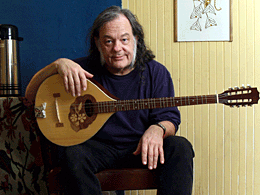 |
| David Lindley backstage with a bouzouki. Photo by Joerg Kliewe. |
A short while later, I found myself sitting across from David as he answered questions between sips of hot coffee and talked about his amazing instrument collection, songwriting, and the world of independent music production.
Although, we now know Lindley as a gifted multi-instrumentalist and for his classic licks on some of the best music produced during the past 40 years, he began his music journey as a banjo player. As a teen he was a five time winner of California’s Topanga Banjo – Fiddle Contest.
A musician’s musician, David can be found ripping it up on tracks with such formidable talents as Ry Cooder, Bob Dylan, Rod Stewart, Terry Reid, Rory Block, James Taylor, David Blue, Linda Ronstadt, Crosby and Nash, Iggy Pop, Little Feat, Linda Thompson, Warren Zevon, and a long impressive list of fellow artists.
 |
| El Rayo-X |
Lindley’s eccentric spirit has led him to classic Danelectros, Tiesco Del Reys, Kays, Nationals, as well as a grouping of exotic instruments with names like oud (Middle Eastern), bouzouki (Greek) and saz (Turkish).
After releasing his solo album El Rayo-X, he formed a band of the same name with Bernie Larsen (guitar), Jorge Calderon (bass), Ian Wallace (drums), and Ras “Baboo” (percussion), who interwove traditional American roots music, world beat, and reggae.
In 1991, Lindley landed in Antanarivo, Madagascar, with avant-garde guitarist and innovator Henry Kaiser that resulted in a durable collaboration based on a series of field recordings. The visit to the island nation yielded six albums of Malagasy music, including an award winning two-volume set A World Out of Time. Later, the two would head to Norway where they pulled together two more CDs, Sweet Sunny North (Vol. 1 and 2).
 |
| David Lindley on stage at the Alladin with his Weissenborn. Photo by Joerg Kliewe. |
When Lindley stepped out on stage at the Alladin the audience was rewarded with the flash of his very “Mr Dave” outfit that included a flamboyantly hep ‘70s shirt, a pair of funky polyester pants, and “soft like buttah” blue alligator shoes. His set roamed the earth with tunes from all over the planet that began with a short warm up on his bouzouki. He later switched to a Weissenborn guitar to deliver Zevon’s “Seminole Bingo”. The sound he conjured was as wide as a semi-trailer with a thick bass chop that had us thinking that there were two players on stage.
He ventured into performing highlights from his three Twango Bango albums mixed with traditional tunes on the oud and later on some songs he recorded during the ‘90s with Jordanian percussionist Hani Nasser.
Lindley’s Alladin show was a retrospective of over 40 years of playing by one of America’s finest players of stringed instruments. The honesty of his performance and his quirky humor illustrate that he is, indeed, a giant in American music and entertainment.
It’s good to see you back on the West Coast. The last time we met you were performing with Wally (Ingram) in Cologne, Germany, during an extensive European tour.
 |
| David Lindley backstage. Photo by Joerg Kliewe. |
David Lindley: Yeah, the last German tour has already been a while ago. Anyway, we had serious problems with the promoter during that tour and didn’t go back since. But yes, I have many friends abroad and I would love to play in Europe again.
Are the current dates that you’ve played the start of another world tour?
DL: No, no, no, the U.S. dates will, however, continue until the summer and even into the summer. In between I will finish the new album.
What will be on it? More covers or your own songs?
DL: Ha ha, nice try! I’ll only say this much, everyone will love it! I just finished the basic recordings and I’ll take those to Jackson’s [Browne] studio for the final production.
Is Jackson a part of the project too?
DL: We’re using his studio only, which includes absolutely the best gear you could imagine. I think lending me his studio for free is being involved.
Did you record using microphones or amplify the instruments first?
 |
| David Lindley backstage with 12-string Guild. Photo by Joerg Kliewe. |
DL: No, by microphone. We were using ProTools and I was catching the signal by four mics on four tracks at the same time to give it more room and depth. The sound will blow you away!
Your concert program is a well balanced set of your own songs and tunes written by other great artists, like Warren Zevon and J. J. Cale, and they blend together just fine. Where and how do you find these songs or do they find you?
DL: Warren’s stuff is great music that I just love and have to play, man. Anyway, I get songs from all over. Often my daughter finds me tunes and if If I don’t find the kind of song I’m looking for I write them myself. It’s actually pretty easy.
You seem to hold close control over the management side of things. Isn’t it still quite difficult to produce and market your music independently in the US?
DL: Yeah, no record company involved other than myself! Actually it isn’t difficult and marketing my music by myself works pretty well for me. I sell my records directly, especially to smaller stores, more the mom and pop kind of stores. And I even sell them in Canada, Europe and Japan .
Not only are you a multi-instrumentalist but you are also known for your huge collection of guitars and stringed instruments. Add any new treasures to your collection recently?
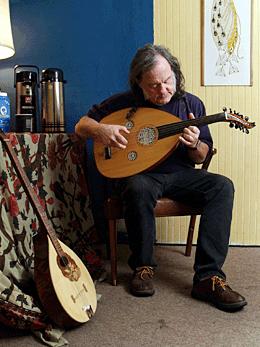 |
| David Lindley backstage with an oud. Photo by Joerg Kliewe. |
DL: I became totally devoted to my ouds and I can’t get enough of them! I already keep thinking of what I’m going to buy to reward myself [for touring] when I get back home. Hmmm, maybe another oud?
During a visit to Turkey I noticed that the oud players were pretty obsessed by their instruments.
DL: I really love these instruments. Maybe because they are so challenging. They are tuned in quarts [fourths] and the traditional music that has been conserved is written for them and includes a special phrase for almost every note. Oud players like Necati Celik Üsta from Turkey started playing when they were kids. These players achieve their title of “Master of The Oud“ from many years of hard practice and play.
You play John Lee Hooker kind of riffs on the oud.
DL: You can play everything on an oud! Isn’t that great? I remember when I received my flat back oud made by Viken Najarian, I plugged it into an amplifier, turned the volume to 10, what is sometimes a good thing to do, and it sounded like [pauses] crap. So, I called Ry Cooder who I knew was working at a studio downtown. I played it to him over the telephone. Ry asked, “Shit. What is this thing? You better get down here with it right away!”
When I got there Ry checked it out and said, “Hmmm, whatever it is, it sounds really good. Can I borrow it for a while?” After a couple of weeks I called him and said: “Ry, I want my oud back.”
You see, this is what these instruments do to you!
What other instruments are you going to play during the concert?
DL: I brought two Weissenborn guitars made by Paddy Burgin in New Zealand, which are mind blowing! The quality is just incredible. I’m also going to play an oud made by Dimitris Rapakousios and, of course, I brought my Guild 12-string. Guild actually had it measured recently because they didn’’t have records on these instruments any more.
Your website shows a respectable part of your collection. And you also own quite a few vintage instruments. How do you feel about the current market situation when it comes to vintage guitars?
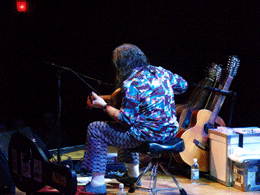 |
| David Lindley in concert. Photo by Joerg Kliewe. |
DL: Look what the ’60s Strats are selling for these days, $30,000 and over! It’s unbelievable! Actually, I have a ’60s Strat and the pickups had even gotten rewound by Doc Kaufmann. I don’t think I’m gonna sell that one!
Do you know exactly how many instruments you currently own?
DL: I will not tell! They are so many by now that I have to keep them safe at different locations.
Related Links
David Lindley
Paddy Burgin Guitars
Dimitris Rapakousios
Behind the Lens: Photographer Michael G. Stewart
Here’s a vintage Guitar International (6/24/2009) with DC/VA/MD photographer, Michael. G. Stewart – the
formatting was a bit disrupted when migrating to a new host and publishing software. There are dozens upon dozens
more to repair. Stand by for more!
by: Rick Landers
Michael G. Stewart – 2007
Maryland-based photographer and illustrator, Michael G. Stewart, always gets the shot. Whether he’s backstage in dim light with a laconic subject or in the middle of a frenzied crowd of fans at a rock show with blinding stage lights, he nails it.
Artists he’s covered include Les Paul, Neal Schon, Steve Howe, Martin Taylor, Bonnie Raitt, Eric Johnson, Sonny Landreth, Dick Dale, Nokie Edwards, Marshall Crenshaw, Bucky and John Pizzarelli, Doc Watson, Frank Vignola, Cathy Fink and Marcy Marxer, Jimmy Bruno, Deke Dickerson, among a large group of rock, jazz and traditional roots musicians.
Although Stewart didn’t begin his artistic career in photography, it must have been a natural inclination to follow in the footsteps of his father and grandfather who all established themselves as professional image makers in the Washington, D.C. area.
Michael serves as the principal photographer for the National Council for Traditional Arts and has worked with the National Endowment for the Arts. Earlier in his career he was the Chief Photographer for DC’s off-beat magazine Quirks. His work has been featured in the Washington Post, Modern Guitars (Guitar International Magazine), Guitar Player, Vintage Guitar, the Discovery Channel online, Just Jazz Guitar, Chamber Music, Scoot Quarterly, The Classic Motorcyle, and the Strad.
Most of the time, Stewart can be found traipsing along the beaten paths of America in his quest to capture vintage diners, motorcycles, classic cars, guitars and musicians at work and play. He’s covered rock shows, jazz clubs, guitar and music conventions and can occasionally be seen leaning out of hovering helicopters shooting the world below.
His imaginative work as an illustrator can be found in three successful childrens’ books written by author and entertainer Barry Louis Polisar. Michael also illustrated a guide to the Scottish steel string harp and has published a coffee table book on the restoration of St. Mathew’s Cathedral in Washington, D.C. Stewart and his teenage son, Spencer, have gathered enough shots of classic diners and roadside America that they will soon publish an account of their travels and those beloved and vanishing features of the American landscape.
I first met Michael back in 1985 at a party where he was courting his future wife who is a classically trained professional violinist. At the time he and a friend were enthusiastically immersed in a plan to start their own rock band and they had already arrived at an appropriate name, Mid-Life Crisis. Twenty years later, we crossed paths again when Modern Guitars magazine was on the prowl for a photographer in the D.C. area. Bob Shade, president of Hallmark Guitars, and I were discussing the magazine and his guitars when he offhandedly mentioned that he knew a great photographer named Michael Stewart.
I’ve since discovered that Michael’s talents have been embraced by the top jazz musicians on the East Coast, as well as have earned him the respect and admiration of musicians rooted in the traditions of old time Appalachian music. I was able to catch up with Michael between a whirlwind of photo gigs to talk about his career, the art of photography and his love of music and all things guitar.
 |
| Michael G. Stewart in 1980 |
Michael G. Stewart: Actually I started out for a career in art and illustration. My father was a photographer, but died at a very young age, so the direct connection to photography was out of grasp. I came to photography in my early teens and twenties.
Rick: You’re schooled in photography?
Michael G. Stewart: No, I started out pursuing a career in art at the Maryland Institute of Art College Art in Baltimore [Maryland] and I had training as a film maker. Somewhere along the line I took up photography. Most of that was self-taught.
Rick:What type of rig do you use?
Michael G. Stewart: I’ve always been a Canon person. Since the early ‘70s I’ve used Canon equipment and have always found that as a film camera and digital camera they’ve been of outstanding quality. They’re very easy to use, very durable and just very good equipment overall.
It was a big change after using film for 25 years, both 35mm and larger format. It was rather scary diving into the deep water of the digital field. A very different type of technology, but having switched to fully digital over the past three years in terms of shooting in the music and entertainment fields I’ve actually found it a much more versatile medium. It’s much faster to work with covering a much wider range of applications, especially in the print field as well as with applications like CD and cover designs for the web.
Rick: Most artists seem to favor Macs.
Michael G. Stewart: That seems to be true. I work in a pc environment, however, most of the designers I work with use a Mac. I expect to switch pretty soon. The imaging industry is pretty much Mac-based in the professional world. It’s just easier to go to for technology for any image work.
Rick: Do you focus on the entertainment business or do you handle a broader spectrum of assignments?
Michael G. Stewart: During the past 28 years, I’ve made my living as an architectural and aerial photographer. That’s been the focus of the family business that I recently left. Music and roadside America are the things that I truly love. Apart from the aerial portion from my former career, I don’t miss that so much. It would be nice to make entertainment my full-time work. I’m not sure that’s possible. Having come from a lifetime of listening, creating and interacting with the music entertainment business, I really love and enjoy and believe I have a fine feel for it as a photographer making images.
I’ve also been a performer and I’m married to a full-time classical musician. Both have given me contacts and close working relationships in the music world, so I understand and appreciate that world.
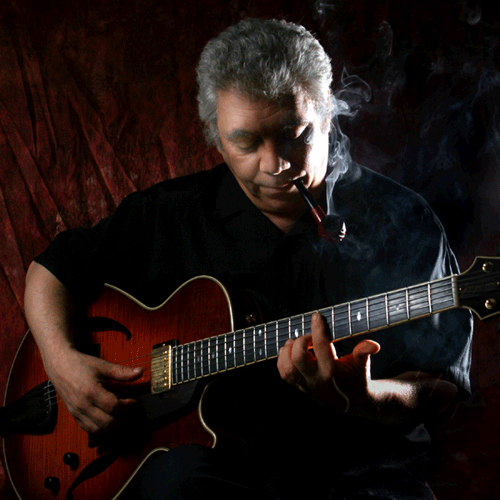 |
| Jimmy Bruno. Photo by Michael G. Stewart. |
Rick: Your website reflects an interest in music, motorcycles and roadside America, specifically diners.
Michael G. Stewart: Yes. My son Spencer actually has a website on roadsideonline.com and he’s probably the youngest acknowledged diner expert in the country. I’ve gone to diners for years and years and have felt that it’s a wonderful piece of vanishing America and a vanishing community. Pretty much independently my son Spencer developed that love and has taken that much further. He’s in contact with every major diner expert and artist in America. So we’ve been on many road trips in search of forgotten diners.
Rick: You met Stevie Ray Vaughan before he exploded on to the music scene.
Michael G. Stewart: Yeah, I met him at a party after he came back from the New Orleans Jazz and Heritage Festival. The first time I’d seen him was before he’d become a known name. But, it was immediately apparent that this was somebody who was going to be well known in a very short time. He was a tremendous talent and a very nice guy. And even though he worked in a very traditional genre of blues and blues rock, he had that personal touch that set him apart. And although there have been many people coming since, in that same vein, he was just someone special that I don’t think anyone since his passing would be where they are musically had it not been for his taking up the torch and carrying it on.
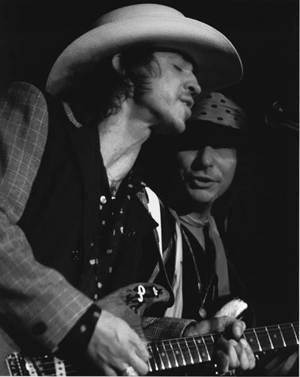 |
| Stevie Ray Vaughan. Photo by Michael G. Stewart. |
Rick: When we’ve been covering a performance you always disappear.
Michael G. Stewart:Yeah, well it’s always good to have a sense of where the performers are going to be when they’re on stage so you’re able to access those areas to get those shots and not be obtrusive to the audience. As a photographer you should be unseen! You don’t want to be a distraction to the performer or the audience. It’s important to get the angles and the views you want to make the performer look his best, but at the same time, you want to be as unobtrusive as humanely possible. Photographers aren’t the focus and they aren’t the event. I’m there to capture the moment and not be part of that moment. You say I disappear and that’s exactly right. I should be someone that no one knows is there.
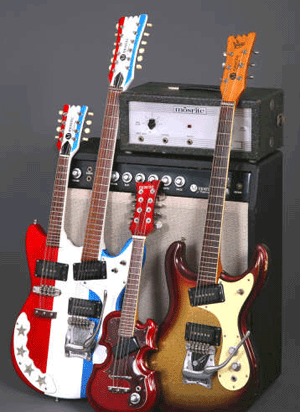 |
| Vintage Mosrite guitars. Photo by Michael G. Stewart. |
Rick: You’re particularly well known for your jazz and folk photography.
Michael G. Stewart: For years and years I was strictly a rock guy doing photos for bands and concerts throughout the ‘70s and ‘80s, but I grew up listening to jazz. Over the years I’ve made some great contacts within the jazz world. I think that love for that music has helped make me the “go to” guy for that type of photography, at least on the East Coast. I’ve made a lot of personal contacts with wonderful players who are also wonderful people.
For the past ten years, I’ve also been affiliated with the National Council for the Traditonal Arts and the National Endowment of the Arts, who put on the National Folk Festival and the Irish Folk Festival and primarily with the folk and traditional arts that run the spectrum classical blues to folk traditions. By folk traditions we’re not talking about Peter, Paul and Mary. We’re talking about old traditional mountain or roots Appalachian, Zydeco and Celtic music. I’ve been able to establish a strong rapport with musicians in those worlds.
And I’ve met some phenomenal guitar players who are lost to the main stream and don’t get the credit they deserve. I get the opportunity to work with those folks and with traditional jazz players, as well as rock and the avant garde world as well.
Rick: Who have been some of the most memorable guitarists you’ve shot?
Michael G. Stewart: Well, certainly Les Paul was a “must remember” moment. He is just the greatest guy in the world, very funny, personable, with loads of stories and even at his advanced age is still a great player and an inspiration to any of us who pick a guitar.
 |
| Les Paul. Photo by Michael G. Stewart. |
I’d have to go back to my younger years and talk about some of my definite favorites from the heyday of the San Francisco sound and psychedelic players. There was Jerry Garcia who everyone knows, but others like Jorma Kaukonen of Hot Tuna who’s always been a favorite guitar player of mine. Lesser known people like Randy Holden of Blue Cheer who has gone on to an interesting career. I also liked John Cippolina from Quicksilver Messenger Service who has been pretty much forgotten. He’s definitely a favorite. I’ve always liked Tony McPhee of The Groundhogs, a British blues band.
Recently, I’ve been hanging out with a lot of superb jazz guitarists including Steve Abshire and Paul Wingo who were both in military bands. Steve was with the Navy’s jazz ensemble, the Commodores, and Paul was with the Army Blues Band. These guys are phenomenal players, just killer guitarists.
I’ve had the opportunity to meet some fabulous folks. One of my favorites was Pop Staples who had phenomenal sound and touch. He was also one of the nicest guys you’d ever want to meet.
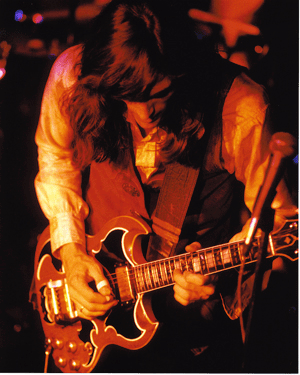 |
| John Cippolina. Photo by Michael G. Stewart. |
Rick: What about fellow Marylander Danny Gatton?
Michael G. Stewart: Danny Gatton was a tragic loss to all of us. I started seeing him in the early ‘70s when he played every week at the Italian Gardens restaurant in Maryland. He kept that up for years. I’m still in touch with members from some of his bands. Danny was the most unassuming guy and he could play anything. Literally play anything. His records don’t do him justice. I’d see him in little bars just wailing away. He could play jazz, hillbilly music, straight away blues and no one could touch him.
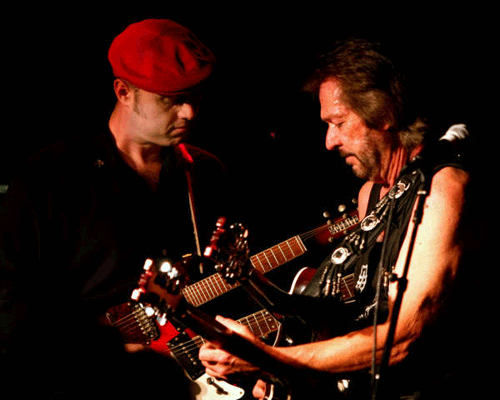 |
| Deke Dickerson (left) and Larry Collins. Photo by Michael G. Stewart. |
The tragedy was that he wasn’t playing one commercial genre, so he really wasn’t given the attention that he deserved. I suppose the hardest thing was that he got so close to recognition, but it was never truly granted to him except from a very narrow group of guitarists. Danny Gatton was a colossal talent who’s sorely missed.
 |
| Jorma Kaukonen. Photo by Michael G. Stewart. |
Rick: Did you know him?
Michael G. Stewart: No, I didn’t know him personally. I wish I had and think we would have had a lot to talk about beyond guitars, especially hot rods. No, I was just another guy in the crowd.
 |
| Kenny Burrell model Bendetto guitar. Photo by Michael G. Stewart. |
Rick: Jazz and folk music seem to have lost their audiences during the past fifty years.
Michael G. Stewart: For what I do, the core definition of folk may be different. My focus has been on traditional roots music. For both jazz and traditional folk artists you’re talking about people who are outside the commercial mainstream. Jazz, at one time, was a huge influence on commercial culture during the ‘30s and ‘40s, but certainly since the dawn of the ‘70s has been a musical form that has not been fully appreciated.
Jazz and traditional artists share the burden of not being able to make a living at it. These are individuals who spend their lives studying and playing who are largely left unappreciated and unrewarded when it comes to sales.
For better or worse the new commercial music outlets available to them are limited to downloads to iPod or MP3 players. Most of these guys are self-produced, not making any money and any recognition they do get tends to be from a very small community. I know a number of hugely talented jazz performers who are big names in the jazz field, but when it comes to supporting that talent, they’re pretty much left out in the cold.
 |
| CD cover by Michael G. Stewart. |
Rick: You’ve been designing music cover art for some time now.
Michael G. Stewart: Yeah, I’ve been doing this for over twenty years as far as album cover design. Most of the work I get is from word of mouth. I’m either asked to do something from artists that I know or from artists who know artists that I know. A lot of this comes from shooting live performances. I get a great deal of satisfaction from live gigs and especially being allied with fabulous musicians.
The creative process depends largely on the individual artist. Some have very specific ideas and some come in with absolutely no idea. In the rock and pop world it is a little easier because there’s usually a manager or promoter involved where we work in concert, no pun intended, to make sure the artist is easily recognized in the marketplace.
Many of the jazz and traditional folk artists, those on small labels, don’t realize that packaging is crucial. Sometimes they’ll arrive and just say “Here take this picture and put it on the cover.” I try to steer away from that and try to complement the music by trying to make the cover say what they’re trying to say with their music.
Some do need to be educated and I try to make that part of working with any artist. I like to make the packaging as wonderful as the music inside. It shouldn’t be skimped upon and I try to work with some really good graphic designers and art directors to ensure that the published package looks professional and reflects the music. It should all be married together. You don’t want a CD or album cover that’s not in keeping with the quality and standards of the music.
Rick: CDs give a much smaller point of sales space to grab buyers.
Michael G. Stewart: In the past you had a large canvas for the art work. You’re right the packaging isn’t what it used to be. You now work with a five inch square rather than a twelve inch square. I use to buy records based solely on covers! Really! I could look at a King Crimson or a BeBop Deluxe album or a Stanley Mouse studios cover and I’d buy the album strictly based on the cover. You don’t see that much in the era of CDs, but that’s one of things that was exciting for me starting out. You had a large canvas that everyone could see and it could be associated with the music.
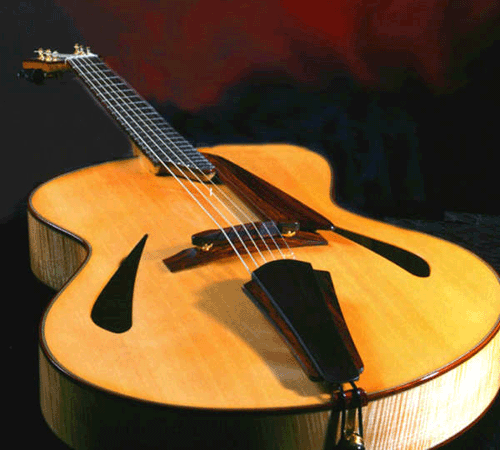 |
| Archtop guitar by Bill Commins. Photo by Michael G. Stewart. |
Rick: With people now downloading their music, do you think CD packaging will go the way of the dinosaur?
Michael G. Stewart: I hope not! I think that you will see some of that happening. But, I think there will always be a place for art to complement the music. For any kind of music marketing you see it tied to some type of visual whether it’s a CD cover or a video or a video cover. It will migrate and turn into different things. Of course, I think with the huge number of opportunities for music distribution on-line that it will change from an in-hand CD, perhaps to images on a website that can be downloaded and disseminated. I think and I hope that there will always be opportunities for imaging even though that’s liable to change in the next five years.
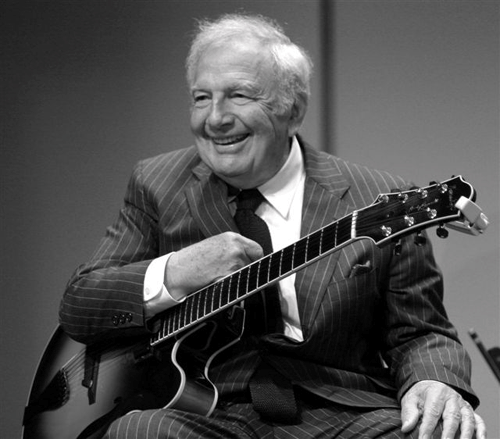 |
| Bucky Pizzarelli. Photo by Michael G. Stewart. |
Rick:How does a professional photographer nail a cover on a music magazine?
Michael G. Stewart: It’s very difficult. I’ve got several and it’s largely by connections at this point. There are a lot of amateurs out there, but knowing when and how to get that great shot is very important. The thinking on intellectual property rights has also changed over the past thirty years.
When I started out anyone could carry a camera into a concert and take pictures. Today, many artists try to keep control of their images. Still people sneak in with point and shooters or camera phones. Still, I don’t think anything can compete with a pro image. Most magazines need a certain level of resolution.
The tough thing for a professional photographer today is the technology leaps ahead making it easier for amateurs to get decent shots. In the long run I think that will hurt the industry. When an amateur turns pro, they find that what they’ve been offering for free will come back to hurt them because their images, in practical terms, no longer belong to them.
 |
| Hallmark Sweptwing guitar. Photo by Michael G. Stewart. |
Rick: What’s been the most challenging part of your career?
Michael G. Stewart: Well, working with this one guy from Modern Guitars has been pretty challenging! [Laughs]
A big challenge is shooting live jazz performances in small clubs because of bad light. It’s hard to get a good image in a club with very low lighting and tungsten lighting. Pros rarely use flash and we like to rely on natural light. It just makes getting good shots a lot harder. Most commercial rock and pop venues have fabulous lighting and it’s hard to get a bad shot! But when working in a crowd of 10,000 or more people getting access to the front of the stage is tough. If you’re on the job and have access then it’s a lot more fun.
I remember back in ’72, a relative of mine was an on again, off again roadie with the Allman Brothers. This was the emergent era of Southern Rock when Wet Willie was the opening act for a guitarist named Jeff Beck! I was trying to get up close to the stage and tried to find someone to give me good access when some guy hauls off and punches me square in the face and knocks me on the ground. That was probably the nastiest occasion I experienced.
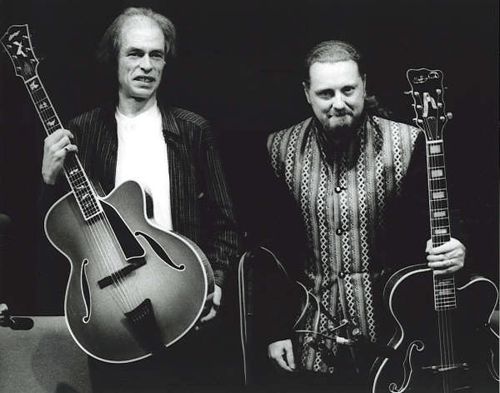 |
| Steve Howe (left) and Martin Taylor. Photo by Michael G. Stewart. |
It’s changed a lot from being a shooter in a crowd to now having to get confirmed access and sometimes a press or photo pass. Smaller jazz and traditional folks gigs aren’t so problematic. But certainly the big name rock acts always require formal access before getting those great shots, as well as typically calling for no flash and limiting the time that you can get shots.
Rick: Ever dealt with a performer who didn’t want to be photographed?
Michael G. Stewart: I’ve covered lots of people like that. It really depends on the individual on how to best address those situations. That’s when it is particularly important to be unobtrusive and to get the shots as quick as possible. They obviously want you there because it’s advantagous for their careers. But they have private lives and want to keep at least a part of them under the radar. It can be difficult. Luckily, most artists are very nice and enjoyable to work with. The important thing is to maintain a professional demeanor and remember that the people on stage are professional, you’re a professional and you’re not there to be a pal and hang out, but to create your art in an environment that allows them to create theirs.
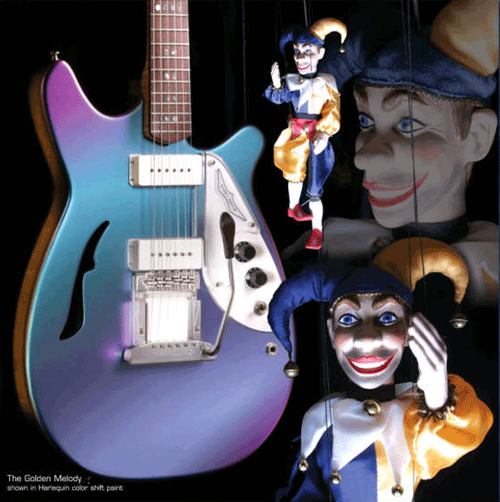 |
| Microfrets Harlequin guitar. Photo by Michael G. Stewart. |
 |
| Microfrets Wanderer guitar. Photo by Michael G. Stewart. |
Rick: Do you approach a live performance much differently than a CD cover?
Michael G. Stewart: The final product drives different demands. If you’re shooting in a journalistic capacity to document a particular situation or performance, then you keep it as straight as possible. In a live setting I think the most important thing is to accurately report or document the performance. When it comes to CD packaging I think the more creative that you can be, the better it is for everyone. If the project dictates straight documentation then that’s appropriate, however, if it allows you latitude to be creative then your creativity as a photographer comes into play. Why not be as creative as you can be? There are two very different situations there between journalism and packaging.
Rick: Do you know how a shot’s going to turn out once you take it?
Michael G. Stewart: As a professional you try to be prepared to create that perfect shot every time. I think that’s truly the definition of a professional photographer. But any photographer who’s been around will tell you that some of your best shots are completely unscripted, completely a surprise. You don’t know what’s going to happen, there are surprises and there are contraditictions, a crap shoot. Some are complete serendipity. But on the onehand you should be ready to make that perfect shot. That sets you apart from the guys who are shooting for the fun of it. Whether you shoot ten or one hundered you shoot for the perfect shot.
CD cover by Michael G. Stewart
Rick: An area we haven’t covered is guitar photography?
Michael G. Stewart: Yeah, I’ve done a lot of that. There are some superb guitar builders out there that are building some incredible guitars of all types.
Rick: Any new CD cover projects in the works?
Michael G. Stewart: Yes, I have a number of guitar CDs coming out soon. Most of them are jazz releases. I have one with the fabulous Philadelphia-based bebop guitarist Jimmy Bruno, as well as one for Gene Bertoncini up in New York who’s coming out with an album with a stringed quartet that should be quite interesting. I’m talking with Frank Vignola about the possibility of some cover work for an album he’s doing with the Gypsy Grass ensemble that, I suspect, will feature some great gypsy, jazz, and possibly bluegrass fusion.
 |
| CD cover art by Michael G. Stewart. |
A couple folk things with some blues people Rick Franklin and Michael Baytop who’ll be covering some work of an old blues guy named Frank Stokes. That should have some nice National steel resonator work on it. I’m working on a concept for the Seldom Scene one of the best bluegrass groups around that will feature their fabulous guitarist Dudley Connell. That’ll be a CD to definitely check out! And I’ve been collaborating with a great rockabilly player Deke Dickerson on some things. I am looking forward to getting some more rock guys in there.
 |
| D’Aquisto guitar. Photo by Michael G. Stewart. |
Rick: We’ve talked a bit about guitarists, but what about the tools of the trade that we all covet so much?
Michael G. Stewart: Yeah, we should touch on the guitars themselves! I do a lot of work with luthiers. We don’t want to forget about the people who build fine guitars. We all can’t wait to get our hands on another guitar. One guitar is never enough is it?
There are so many fabulous builders today and some young guys who are just incredible. The quality of many of these guitars is staggering and prices are really low if you compare them with the cost of high quality violins and the time that goes into building a great guitar. I’ve worked with some of the best including Bob Benedetto, John Buscerino, Roger Sadowsky and Bill Comins. All of them build beautiful archtops. There’s a little known guy from Baltimore named Gary Flowers who’s making a name for himself.
I’ve worked some graphics design and images for Bob Shade over at Hallmark Guitars, a company that resurrected the old designs from the ‘60s that still look cool. A few years back I did some stuff with Paul Reed Smith Guitars and recently I’ve been talking to MicroFrets that has come a gone a couple of times and is getting ready to get back into the business very soon with some of their quirky, bizarre and innovative designs.
I got some photos of guitars built by a young guy named Matt Artinger and ended up buying one of his guitars. His quality is nothing short of phenomenal and he’s a heck of a nice guy. He’s another guy to watch. He was working out of his parents’ basement in this tiny space, but was coming out with some exquisite guitars. Now, he’s building rock guitars, archtops and basses.
Rick: How did you end up working with guitar aficionado and collector Scott Chinery?
Michael G. Stewart: A few years ago, I did some work with Scott. The Smithsonian was running his Blue Guitar exhibit that initially featured some of his vast and awesome collection that dovetailed with the museum’s exhibition on the evolution of the guitar in America. Afterwards he commissioned a group of about twelve of the best luthiers in the world to build some blue archtops.
During that time I shot the first of concerts featuring some of his blue guitars. He saw them and invited me up to New Jersey to see his collection and to cover the Blue Guitar concerts. That was certainly a terrific experience for me, not only to see some of the rarest and finest guitars on the planet, but to meet first hand some of the top luthiers in the world. What a thrill!
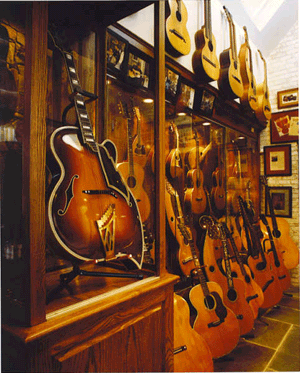 |
| Part of the Scott Chinery guitar collection. Photo by Michael G. Stewart. |
Rick: What advice would you like to offer to young photographers who are just beginning their careers?
Michael G. Stewart: Always be as professional as possible as your conduct reflects on all of us. That’s the reason there are so many restrictions. You have to remember that this is a performance and it’s the audience that counts and the artist’s comfort level. The worst thing in the world is to have a flash going off all the time. It’s a real pain for the audience and it’s a real pain for the musicians. Nobody wants to be blinded every 30 seconds. It’s a very competitive field, so just be as professional as you can.
Pablo Pescatore Released Modern Harmony For Guitar Book!
Press Release
Source: P. Pescatore
In July 2026, the book, Modern Harmony for Guitar, by Argentinian born, Pablo Pescatore, was released. It is a method book that demonstrates the various options available to a musician for arranging or re-harmonizing a song. The book is published by Play Music and distributed across Europe by Hal Leonard.
Pablo Pescatore’s next book, Speed and Precision on Guitar, is scheduled to be released in October and will cover various guitar techniques such as: alternate picking, sweep picking, string skipping, tapping, and more. It features progressive examples designed to help achieve clear, fluid playing.
And if that’s not ambitious enough, Pablo anticipates publishing his tenth book later in 2026.
In addition to his career teaching, he’s busy conducting classes at various institutions and training students in different countries, as well as working on new songs with his producer friend, Sebarock.
Endorsed by several music brands, Pescatore works with several companies that include Skull Strings and Straps Torres.

About Pablo Pescatore: Guitarist/composer Pablo Pescatore was born in Buenos Aires, Argentina in December 1974. He began his musical studies at 14, specializing in electric guitar technique as applied to hard rock and neoclassical metal styles.
Pablo was admitted to the prestigious jazz school, The Academia E.F.I.M.U.S. [School for the Comprehensive Training of Musicians] where for seven years he studied classic guitar, music theory, and harmony with outstanding teachers. He completed his degree requirements and attended clinics and masterclasses on various instruments; he graduated with high honors, obtaining the diploma of “Professor of Guitar, Music Theory and Solfege,” personally awarded by his professors, Hector Lopez Furst and Julio Rocella.
In addition to performing in different bands and completing various solo projects, Pablo is a published author on the subject of learning styles and has taught the classical and electric guitar for more than 20 years. His books are available from Hal Leonard, Mel Bay, Apple, Amazon, Google, Apple and other platforms.
A Conversation with D.C.’s Blues-Rock Icon Linwood Taylor About His Music Journey
By: Rick Landers
 Over the years, blues-rock artist, Linwood Taylor, has forged ahead nailing down gigs, improving his game and building a reputation as an A-list musician in the Washington, D.C. area with a deep music history rarely fully appreciated.
The town and its surrounding areas have been the home of gifted musicians as diverse as: Tim Buckley, Danny Gatton, Roberta Flack, Yasmin Williams, Eva Cassidy, Roy Buchanan, Dave Grohl, the Bad Brains, and as historic as Duke Ellington and John Phillips Sousa.
Linwood performs his own eclectic mix of rock, blues, jazz, and more, inspired by disciplined and talented musicians he heard on local radio, as well as in D.C.’s live music hubs, like The Bayou, Blues Alley, The Birchmere, JV’s, The Twist and Shout, The Wax Museum, The Cellar Door and more. And in his quest to achieve not only success, but credibilty, he would reach out to meet musicians he admired. He’d find himself on stage with the likes of Curtis King, Dave Moore, Luther Allison, Lonnie Mack, the Blues Brothers, and his friend and mentor, Joe Louis Walker.
Albums would follow as he navigated the music business and stamped out recordings of his own, and was featured on those of others. Head to the grindstone, Taylor released: Live At Colonial Seafood, (1991) Take This and Stay Out Of Trouble (1993), Make Room For The Paying Customer (2000), and his more current, Two Sides, while also being featured on GeminiiDRAGON’s latest, Moonlight Movin’ & Groovin’.
“Explosive guitar solos …. With a classic rock feel that sounds familiar, and plenty of twists and turns to keep things fresh ….” – Scott Paddock, Mobtown Music Guide
“One of Washington’s Leading Blues Guitarists” – Washington Post Magazine
I met Linwood at one of the D.C. areas longest running and most ambitious live venues, JV’s Restaurant, that has attracted the attention of legendary musicians since it opened in 1947, including: The Seldom Scene, the Steve Miller Band, Tony Rice, the Country Gentleman, who’ve stopped by to enjoy the entertainment and-or to entertain. He pulled out his two guitars, a vintage ’54 Les Paul Gold Top and a ’58 Les Paul re-issue, opening up our discussion about guitars and anecdotes about musicians he’s worked alongside. Afterward, he stepped on stage to nail down some riveting licks to the pleasure of JV’s crowd. And my first thought was, “This guy’s the real deal”.
Guitar International is honored to feature Linwood Taylor, Jr., a treasured musician not only in his local D.C. haunts, but one who’s made a name for himself while on tour at the Sanremo Festival in Italy; the Czech Republic; Australia; and the private Mustique Island in St. Vincent and the Grenadines.
******
Rick Landers: Let’s start out from the beginning when you were growing up, what kind of music were you listening to? I know that typically we had the Top 40. How does that influence you now, as a musician?
Linwood Taylor: Oh, man. No, it just was whatever was around. I mean, I was a kid. My father was a music fan, I still have his albums, as well as mine. We had big band jazz, you know, that kind of thing. That was in my house, but we also had rock ‘n roll. We also had jazz, like organ jazz, you know, Brother Jack McDuff, Jimmy Smith, and all of that. I can remember Chubby Checker and that kind of thing. “The Twist” and “Hound Dog”…Leiber and Stoller wrote that, but Big Mama Thornton had a hit with it first.
And then I read a book about how Lieber and Stoller had their rights stolen by Johnny Otis and “Diamond Jim” Robey (Founder: Peacock Records).

Linwood Taylor
Rick: Well, you know, rock and rock and roll, you know, music, so…
Linwood Taylor: Because they were in high school, they didn’t know about publishing. And FM started and WPGC and WOL would be playing The Beatles and The Rolling Stones, then they played James Brown and The Temptations…that kind of thing. It was all mixed up.
Rick: Yeah, it was the Top 40, and they just sort of threw in everything before the FM underground stations.
Linwood Taylor: I listened to WHFS once. I guess I was 12 or so, and my parents gave me a cassette recorder and, oh man, I had it on all night. A cool song would come on and it would wake me up.
Rick: That’s funny. So, who do you think actually influenced you the most as far as buying your first guitar?
Linwood Taylor: Let’s put it this way, a 7th grade teacher played guitar, and an 8th grade teacher played guitar and sang. Sadly, he just passed away. He put himself through school playing coffee houses. So, he would play, “House of the Rising Sun,” “Sounds of Silence”. He could play all that stuff and I remember he had a 12-string Martin. The 7th grade teacher was a nun and the 8th grade teacher was Brian Fuller.
There was Top 40, but somehow I would hear about other things, like I heard about Jimi Hendrix when he first came out and that wasn’t Top 40. There was also a Baltimore television show called The Kirby Scott Show, and they had everything, the Count Five, “Psychotic Reaction,” Los Lobos, psychedelic stuff came in. You know, ’67.
Rick: I’m from the Detroit area, so there were venues to go to, there was also the Ed Sullivan Show. People today don’t realize how prolific he was in pulling in The Beatles, the Stones, the Doors.
Linwood Taylor: Oh, yeah, I’m acutely aware of Mr. Sullivan, everybody watched Ed Sullivan.
Rick: Today, basically we have music from everywhere. So, now we’ve got access to not only Mali, but Japan, Brazil, where you get beautiful music.
Do you listen to music from all over the world, or do you explore to see what else is going on?
Linwood Taylor: I listen to a lot of different things, but my time is rather limited, um, especially for me, because I’m having to learn other peoples’ repertoire. So, I gotta invest time in that. Then I gotta play my own stuff.
Rick: So, when you’re learning a new band’s original music…
Linwood Taylor: It’s originals. That’s the whole point, you know? The retention is the most difficult thing at this point. It used to be a lot easier. And the thing is this, I can remember it and the hand memory coordination. Takes a moment, you know?
Rick: I have a new keyboard player and he plays our originals hundreds of times, so they’re embedded, so the muscle memory goes with the mental memory.
Linwood Taylor: Absolutely.
Rick: That’s why I would find it very daunting. I’m not a trained musician. Did you take lessons, or did you learn on your own,?
Linwood Taylor: I’m mainly self-taught. I’ve taken a lesson here and there, just to get some basic theory. I even took a music class. The professor told me, “You did A work, but I’m giving you a B. You shouldn’t be in music. What I’ve learned through my lifetime and I’ve heard the expression from the past, “Those who can play, play. Those who can’t, teach.”
Rick: I think that may be true.
Linwood Taylor: Really and truly.
Rick: We met a short time ago and you had, I think, a vintage ’54 Les Paul and a ’58 reissue.
Linwood Taylor: Yeah, yes, yes I did. That was the maple top.
Rick: How’d you find the ’54?
Linwood Taylor: Oh, that’s another story! I used to work at Wheaton Music.
Rick: I remember it, yeah, yeah.
Linwood Taylor: And a guy came in, December 1990, with this Les Paul. The store owner didn’t want it, because the neck had a wonky repair. The next guy didn’t want it for the same reason. I picked the guitar up, I flexed the neck and went, “This is not going anywhere. This would be great to take out and play it. Sold. So, I bought it. Little did I know, the next day a fellow said, “Did a guy come in here?” And they all went, “Yeah”. I bought it and he was furious. I played it like that for 16 years. And by that time I had a Gibson endorsement.
So, I went to the Gibson factory in Nashville and they restored it to complete original. I have the neck with the wonky repair, but they put a new neck on it. They put on the original serial number, and they refinished the back and sides, because it’s an all-gold Les Paul. But it’s not just a gold top, the back and sides are gold, too.
Rick: Oh, I didn’t notice that. There are very few of those.
Linwood Taylor: Yeah, only 5%. So, that’s a super rare one. I’m fortunate to have it, but it’s not so much of a collectible that I can’t take it out and enjoy it.
Forty one years ago, I bought a ’61 SG Les Paul. Okay? It was somebody’s player. But, for me it was clean. I couldn’t play it. I learned my lesson at that point. It’s too clean. Don’t buy it, and it probably wasn’t that good, because nobody played it.
Rick: That’s true, too.
Linwood Taylor: Everything I have is a player. More or less, or something’s been done to it to devalue it. I can take it out and feel comfortable with it, but…I’m still not comfortable half the time, you know?
Rick: Yeah, I know how that is. What about acoustics? What are you playing acoustically? Do you play 12-strings, or mostly 6-strings?
Linwood Taylor: Uh, no, I have no 12s. I play a (Gibson) J-160E, that’s a reissue. That’s mainly what I use, but then I also have a resonator. It’s actually a Dobro, it’s wooden, not a metal one. And it’s a round neck, so it’s not like one of those squares that I have to lay it down. I can play normal guitar on it. I tune it to open D, and away I go, Elmore James, for days!
You know, I’m an electric guy, I just started doing acoustic because I was turning down too much work. Thirty years ago, my first acoustic gig was opening for the Brian Setzer Orchestra. It was one of those deals and I hated being alone like that. I prefer to work a duo, because we work off of each other. You know, as opposed to just me, for lack of a better expression, “Kumbaya!” It’s just not my thing.
Click here to view the embedded video.
Rick: Who was the first artist that you were impressed with?
Linwood Taylor: That was Muddy Waters, when I was 18.
Rick: Was Electric Mud around that time, right?
Linwood Taylor: No, Bob Margolin had just joined the band. This is about six months after Bob joined the band, so this is 51 years ago. The Nighthawks were back there backstage, we’re all backstage hanging out.
Rick: How much fun. I never went backstage. It just wasn’t in my mind to think that I could possibly go backstage and meet somebody.
Linwood Taylor: I also had a good friend who sadly is gone, but who also hipped me to a lot of, um, vintage gear. I actually bought that SG Les Paul from him. He was a world famous amplifier technician. He worked with everyone…I mean everyone! Cesar Diaz. I met Stevie Ray Vaughan backstage. And nobody knew who Stevie Ray was except real blues aficionados. And Stevie told us, “Yeah, my album is coming out, and I’m on the new David Bowie album.” He was on the album, but he quit right before the tour.
He did Let’s Dance. He did that whole album, Let’s Dance.
Rick: I did have a chance to meet him when I was working , but I didn’t go…he was playing at D.C.’s Wax Museum.
Linwood Taylor: Yeah. That’s where I met him, like the first time he played there, before he played at, I wanna say Desperados right on M Street. Gradually, I met a lot of guys, blues guys. I met all the way up to, like Roger Daltry, Paul Rogers. David Bowie I met several years later, because I was doing a deal with Peter Frampton and Peter was David’s guitar player. I met Robert Plant twice. I was there there the night of the famous fight at The Bayou with Robert Plant. And then, about eight-years ago in Australia in the green room. I meet a lot of guys, and then last year I met Mick Jagger.
Rick: Have you met anyBeatles?
Linwood Taylor: No, no.
Rick: I’ve never met any of them.I met Les Paul a couple times, and a few others.
Linwood Taylor: I met Les. In fact, Cesar Diaz and I, and one of his friends, we went to see Les at the Iridium. And then, the December before my friend passed, Cesar passed, I walked into his hospital room, and Les is in the hospital room.
Rick: Oh, how nice of him to show up. So how’d you find Les? I thought he was funny.
Linwood Taylor: Oh, yeah, he was a riot! He was a total cut-up. If you didn’t know he was a cut-up, you might be offended. But, I’d been a musician for so long, it’s like, “Okay, buddy, your funny,” you know?
Rick: So, have you been on tour often?
Linwood Taylor: Enough to know that it can be a grind. But not enough to discourage me.
Rick: What was the good, the bad, and the ugly of touring?
Linwood Taylor: Well, the only bad thing…to me, was that I got trapped in Hong Kong, behind 9-11. I had to stay an extra ten days. To me, it was that I got trapped in Hong Kong. I couldn’t get home, but I was able to reach my mother, and I was able to reach my girlfriend, who’s now my wife. The club was like, the act can’t come in, so the room was booked and I stayed, because I had no place to go. But, I had to buy my own meals, which was fine.
Rick: Well, I imagine you had fun.
Linwood Taylor: Well, you know, yeah. I mean, I made friends and whatever, people would show me around, and I really got to explore the city. All I can say is Hong Kong was like New York on steroids. And the thing is, the Chinese had not cracked down at that point. It had just changed over and they realized there was a lot of money there. I mean a lot of money. I mean, in Italy, I had never seen a Lamborghini dealership. But in Hong Kong, I saw a Lamborghini dealership with five different colored Lamborghinis in the showroom. That was like “Wow!” The bass player was driving a big Mercedes. If you ever see that movie, Die Another Day, a James Bond film with Halle Berry in it, where Moore gets out of the water at the Hong Kong Yacht Club, that’s where I played.
Rick: What a great experience. So, it really opens up your mind when you travel around the world. You get a different perspective about our country.
Linwood Taylor: Oh, yeah, absolutely. You know there are some things that are really cool and you know that we could do better.
Rick: How does it differ now than when you first went into a studio to record?
Linwood Taylor: Well, I had a friend that had a home studio back in the ’70s, so I did that, but the first time I was in the studio I was in a band. And we were submitting, recording original music to DC 101 for the home tapes contest. We were actually runners up. We wound up going to a big-time studio in Philly, The Warehouse. But to me, it was just one of those things. I just play, you know? Since that time, I played on the H.R. solo album, he was the lead singer for the Bad Brains.
Yeah, I’ve got a consent by them somewhere. I guess they had broken up by this point. This is 1990 and the album came out called, Charge. I recorded in, like, 89, and the album came out in 1990. They misspelled my name, but I’m still there. I’m on Joe Louis Walker’s live album, Blues Conspiracies: Live On The Legendary Rhythm & Blues Cruise.
I’m actually on a cut (“It’s A Shame”) with Johnny Winter, so technically, I recorded with Johnny Winter. Joe Louis (Walker) introduced me to Johnny. I met Joe in 1989 at the Twist and Shout. I opened for them at the 8×10. Joe got me in as his guest for the Kennedy Center Honors for B.B. King!
Rick: Cool.
Linwood Taylor: So, I’m hanging out in the green room with everybody,. It was one of those things. I wanted to take pictures, and I realized, “No, you can’t take pictures.” And, I left my camera in the car. I just said, “You can’t take pictures because, if you take pictures, you don’t belong there.” By this time, I’d met Bonnie Raitt, Steve Martin, Steve Cropper. In fact, I was hanging with Steve Cropper because this was the second time I’d met him. Ed Bradley, Walter Cronkite, Lou Gossett, Jr., Bill Clinton. It was all there, man, it was a total happening.
Rick: I interviewed Cropper a while ago and saw him with Booker T. and The MG’s decades ago.
Linwood Taylor: Which was my favorite band until the Jimi Hendrix Experience came out. They actually had a lot of hits, “Time is Tight,” “Hip Hugger,” “Soul Limbo”. I’m sure a lot of people don’t know that. On Albert King’s “Born Under A Bad Sign” that was Booker T. and The MG’S backing him up.
Rick: I didn’t know that. Cool.
Linwood Taylor: Oh yeah, Booker T and almost everybody at Stax, Booker T. and the MGs backed them up.
Rick: They were kind of the session players for Stax, right?
Linwood Taylor: Yeah. They were the house band, pretty much.
Click here to view the embedded video.
Rick: What projects are you working on now?
Linwood Taylor: I’m getting ready, preparing to do some touring next year with the woman, Geminii Dragon, and her husband. They just released an album, Midnight Movin’ and Groovin’, Featuring Linwood Taylor. They have some physical copies, but mostly it’s gonna be on Bandcamp. It’s better than Spotify. People are pulling their stuff off Spotify. Between the guy being kind of right wing and the pay rate. If you want to support an artist, buy the physical copy of the album. Two or three purchases of the physical copy get more than you’ll get for 20,000 streams of a particular song.
Rick: That’s right. They pay about, I think it’s, like.003 cents.
Linwood Taylor: Yeah. This is ridiculous.
Rick: Incredible. And the songwriters don’t get hardly anything.
Linwood Taylor: The technology got ahead of their business. And unfortunately now it’s gonna be next to impossible to get ahead of the laws with the advent of artificial intelligence, that’s even making things worse. People are being recreated, and it’s not even them.
Rick: Yeah, and that may occur in some other countries, so you don’t have much access to sue anybody.
Linwood Taylor: Exactly. I mean, it’s always been kind of a rip-off, and everyone got ripped off. And you just kind of tough it out. You kept working, and hopefully you retained your fame so that down the road, when you had the money to hire a good attorney and sue them to get some back royalties.
Rick: Follow the money.
Linwood Taylor: Well, look, you know Sly Stone? He got, like, $5 million, like, 20 years ago. For all the music that they were making in the late ’60s and so forth, you know? Sly, partially it was his own fault. But at the same time he got ripped off badly, and I think that hurt him too.
Rick: Oh, yeah, yeah, he had some hard times. I think at some time… at one point, he was sleeping in his car.
 Linwood Taylor: Joe Louis and his original bass player, they’re all from the Bay Area. They knew Sly. I spoke to Henry, he said, “Yeah, man, I passed him walking on the street, said, “Hey, man, what’s up? He says, ‘Hey, Sylvester, what’s up, man?’ And he said, “Sly kept on walking.” And then he turned… Sly turned around and said, “Hey, man, I’m sorry, I can’t do you that way, you know?” But it was like, they know.
Rick: Yeah, yeah, what a shame, what a shame. Tell me about some of your most favorite times that you’ve had on stage, like stand-up performances, or when something funny happened, uh, or something you weren’t expecting.
Linwood Taylor: For me to hit all the right notes. With one of them, when I played in the Blues Brothers for the Capitol’s 4th, so it was on national TV, right down on the Mall; that was pretty cool. I got to play, “Soul Man,” with Sam Moore. He was cool.
So, this is on national TV, right down here in the mall, and that was pretty cool. There’s a video of me where I’m playing with Ronnie Earle, he comes to sit with us up in Massachusetts. Joe is playing harmonica and Ronnie’s playing guitar through Joe’s amp and Ronnie’s on my guitar. The next day Joe comes to see me and goes, “Why did you cut Ronnie Earle?”
I’m like, “What are you talking about?” And he said,” Man, you totally cut him!”
I said, “No I didn’t!” And in my mind, I’m not cutting anyone, I’m just playing. And it’s like, “Okay, he did that. I have to do something different!” So I did something different. I mean, appropriate, but…you know, I don’t think like that; cut throat in a competitive way. I think in a creative way. And it’s like, “Okay, he’s done that, I need to do this.”
Rick: Well, and you’re playing for the audience.
Linwood Taylor: Right.
Rick: You know, you gotta get away from the competition idea; we should be collaborating with each other, and I think that what you did was fine, so…and appropriate, you want to give the audience your best.
Linwood Taylor: Well, but the thing is this, Joe said that to me. And I showed my buddy a while later, and he goes, “Yeah, dude, you totally cut him.” I mean, everyone I’ve showed that video to on YouTube, it’s like, “eah, you totally cut him, man.” He said, “When he turns around and starts fiddling with his amp, when you start playing, that’s like you cut him.” I said, “Really?” And I said, “Oops, sorry!”
Rick: What are you most proud of? You’re looking over your music career, what are you most proud of, how you’ve handled the changes in music, new technologies, experiences? Maybe how you’ve handled, like most of us, dry spells. You’ve reached a plateau, and you’ve got to kind of reinvent yourself somehow.

Linwood Taylor
Linwood Taylor: I will say this, I have been fortunate that whenever I’ve reached the plateau, something out of the blue came my way and elevated me, is the only way I could say it. I keep plugging along, and I keep trying to get better, and sometimes it’s a matter of playing with some different people, or playing with some people who think in a different way than some of the people you play with.
Sometimes I have to readjust my thinking, and I’m saying this as it’s coming out of my mouth, and what I’m thinking it’s like you have to go for and recognize an opportunity that comes your way. You know, like all of us, we’re human. Set in our ways, this and that, but then I realized, you gotta open yourself up to something when it comes your way, because if you’re out there and you’re good, and you’re open enough, things will come your way.
And when you’re unique enough sometimes things will come your way because this is a copycat business, and when you’re are really unique you’re gonna be turned down a bazillion times, until where somebody gets it,. And all of the greats have been turned down. I mean, you think about The Beatles, they got turned down by five different record companies, including the one that signed them, they got turned down twice by them, Decca Records turned him down, then Capitol picked them up, and they just…
Rick: Took off at that point.
Linwood Taylor: Yeah. Well, a lot of people got turned down, multiple times. For whatever reason. Even Prince got turned down, but then he managed to get Warner Brothers to let him produce his own thing at first. Right from the jump, as a teenager.
Rick: That’s amazing. So, what else do you play besides guitar and dobro?
Linwood Taylor: The radio.
Rick: We’ll leave it at that. So, let’s say you’re with a band and you like each other, you mentioned opportunities. When you’re offered an opportunity to go somewhere else, how do you manage the loyalty aspect of leaving friends and going off to some project where you have the dynamic of where you feel, “I’ll stick with these guys. I won’t go for the opportunity, even though it might be better?”
Linwood Taylor: I’m getting more money on this gig.
Rick: Well, I guess we all understand that, so…
Linwood Taylor: If they don’t, too bad. You’re in the wrong business. Everyone I know who has been elevated at some point, if they’re able, they sometimes you just gotta realize you might just be better.
Rick: Yeah, well, that’s true too.
Linwood Taylor: And that’s why you’re being elevated. You know, or maybe you put yourself out there. Which is, frankly, something I have done for my entire career, if you will. If some blues guy was coming to town and I wasn’t working, I would go see them. I’d meet them and say, “Hello.” And I was always very polite and respectful. And eventually, I wound up playing with 80% of them. That’s how… and I would learn something. That’s how I elevate. Bait myself. Even to this day, I still play that game. That’s how Ron Holloway (saxophone) and I met. And I said, “Man, so how’d you get that gig with Dizzy (Gillespie)?” Well, it turns out his plan was my plan.
That’s how I played with Joe Louis Walker, that’s how I played with Albert Collins, Johnny Copeland, Johnny Rawls. It’s just… I just go and see them and say, “Hey, how’s it going, man?”
Rick: At what point in your career did you decide or did you always want to be a guitar player, a musician, or was there some other alternative path that you could have, where you vectored off to become a musician rather than being a doctor or something.
Linwood Taylor: Basically, I always wanted to be a musician. I always wanted to be a guitarist. But, I went to school for business and accounting. I transferred to a different school and was told bad information. My credits wouldn’t transfer, so I went fro being one class away from being a junior to starting all over again. It took the wind out of my academic sails. And even doing that, I made a couple of friends, and I played down in North Carolina. I worked at that profession that I studied for a friend of mine’s parents’ company. But then, when corporate took over. I went over to Coca-Cola for 9 months and said, “This sucks. I can’t… I can’t see myself…I don’t want to be an old man and go, I wish I tried.” This is right before I turned 28. I just I quit and never looked back.
Rick: Was that a hard decision?
Linwood Taylor: I come from a pretty conservative family, they really didn’t understand me. But fortunately, they let me be. You know, my neighbor, who is a world-class, keyboard player, he said, “I used to hear you practicing your stuff out the window.” And I was being an obnoxious kid. I had a 100-watt Marshall, and I’m blasting with the windows open.
Rick: That’ll shatter windows.
Linwood Taylor: Oh, and of course, I’m blasting stuff that was not typically heard in this neighborhood. It wasn’t James Brown, it was Jimi Hendrix. My neighbor, Herb of Peaches and Herb. I knew him when he was a singer the first time, and then when he became a police officer. And then, he had the resurgence when they reunited with the the shake and groove thing and all that. And then we opened for Funkadelic for homecoming and this is before Parliament had their big hit, Mothership Connection (1975). They had one, get off your ass and jam.
Rick: Yeah, do you ever regret not going to places that you wish you’d gone to when you were younger?
Linwood Taylor: No, I don’t have that issue. I went everywhere that I could. Basically, I’ve went to clubs in D.C. since I was 16 years old with a fake ID.
Rick: What are you looking forward to in 2026?
Linwood Taylor: Hopefully, hopefully making it out alive! Making it make it to my next birthday!

Linwood Taylor
Rick: How about any shout outs to people who’ve helped you, pushed your career along, or motivated you, or inspired you to move forward with your career and your life, I guess?
Linwood Taylor: Well, I mean, Joe Louis Walker, for one, he really got me out of D.C.. I really started traveling with him. I got introduced. He was always the big bit of a prankster. In that, when he introduced me to famous people, this is Bob Dylan’s favorite guitar player.
Rick: That’s great.
Linwood Taylor: Because he knew I met Bob. My friend Cesar Diaz and I both met Bob together at the old Twist and Shout.
Rick: Was Bob playing?
Linwood Taylor: No, ee all were there to see the Sun Rhythm section. Paul Burleson, who was from the Johnny Burnette’s rock and roll trio, DJ Fontana, you know, all the guys who backed up Elvis during the sun sessions, we were there to see them and Bob was in town playing at RFK Stadium, he was doing a split bill with the Grateful Dead. But at the time, Bob Dylan’s backup band, get this…Tom Petty and the Heartbreakers.
Rick: Really? I didn’t know that. That’s pretty cool. Was Scotty Moore there with the Sun group?
Linwood Taylor: No, he wasn’t there, but I met Scotty Moore at the Gibson factory in Nashville.
Rick: Okay, I met him just outside of Nashville at his house. He had his own home studio.
Linwood Taylor: And Scotty played on one of Joe Louis’s albums, and in fact, Joe had The Jordanaires singing backup on his album, and that was the second time I met Scotty, because I’d met Scotty about six years earlier in Memphis. We had dinner together. Basically, we were backstage at a theater in Memphis. I was sitting at a table. He and his wife came and sat down with me, so that was pretty cool.
Rick: Yeah, talk about a legend.
Linwood Taylor: Oh, absolutely!
Rick: When I… when I talk to him he said when he first saw Elvis come into the studio, he said, he thought to himself. “That’s the prettiest man I’ve ever seen.”
Linwood Taylor: Oh, jeez!
Rick: Do you have anything coming out, like an album or anything that you’d like to talk about?
Linwood Taylor: I’m still talking about Two Sides, I’m still pushing that one. As I say, I have some things noodling…noodling around in my head as to what I want to play coming up and how I’m going to approach it.
Right now, I’m gonna concentrate on the GeminiiDragon thing. They want me to do another album. I’m more than game. I’m just working on some things, trying to come up with some different song ideas that I’m gonna use.
BONUS VIDEO!
Click here to view the embedded video.
MoMojo Records Set To Release Precious Company Sept. 18th
Press Release
Source: Nick Loss-Eaton PR
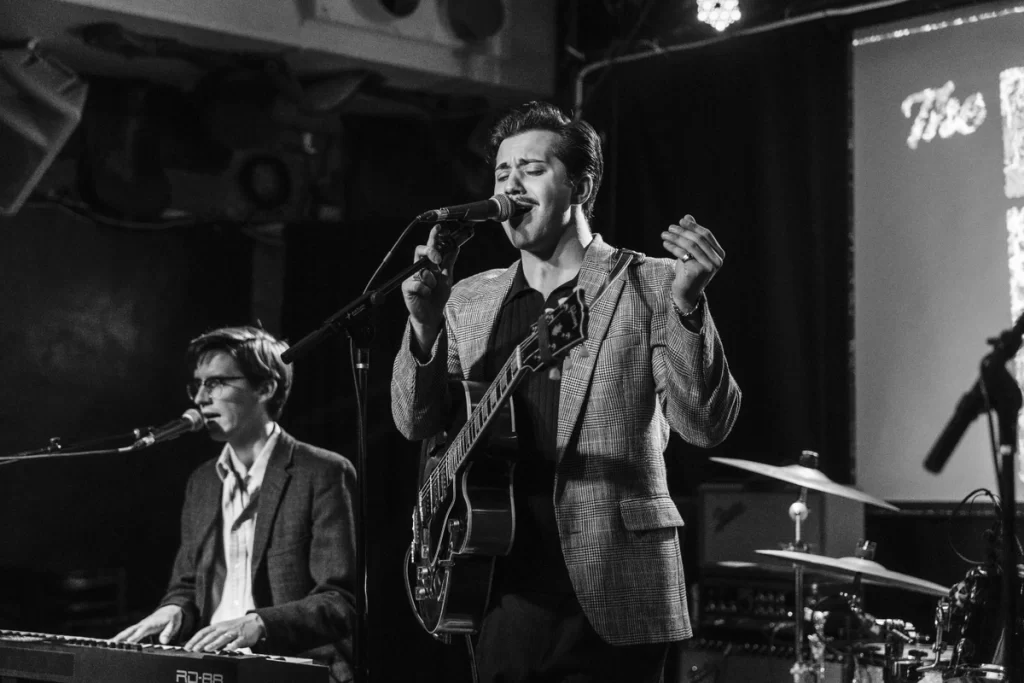
Jad Tariq
Precious Company slated for September release Memphis-based guitarist, vocalist, and songwriter Jad Tariq made an unforgettable first impression in early 2025 with his debut release, Jad Tariq Sings.
Effortlessly blending feel-good swing with the raw emotional power of the blues, the album quickly captured the attention of audiences and critics alike.
As one reviewer observed, “Jad Tariq leaves no doubt that he has arrived, and that we will be enjoying his artistry for years to come.”
That prediction has proven remarkably accurate. For his highly anticipated sophomore release, Precious Company, Tariq has crafted ten compelling original songs that showcase both his growth as a songwriter and his musical maturity.
Throughout the album, Tariq delivers his well-crafted lyrics and melodies with a rich tone, and his electric guitar dazzles as his playing moves between intimacy and intensity. Backed by some of Memphis’ finest players, Precious Company captures an artist fully stepping into his own, delivering a sound that is both timeless and unmistakably original.
Originally from Trumbull, Connecticut, Tariq began performing professionally at just twelve years old, honing his craft in bars and clubs throughout the tri-state area. At eighteen, he relocated to Memphis, immersing himself in the city’s rich blues tradition.
Since then, he has become a fixture on the Memphis musicscene, performing regularly with his own band while also serving as a sought-after sideman for many of the city’s most respected artists.
Jad has garnered national attention through collaborations with multiple Blues Music Award-winner, John Németh, renowned musician Tony Holiday, and legendary harmonica master Charlie Musselwhite.
Click here to view the embedded video.
Most recently, he earned the prestigious honor of being invited to join Bob Dylan’s touring band for a series of dates. One writer noted: “His instant chemistry with his new bandmates rendered a familiar setlist into something novel and exhilarating. It was easily one of the best Dylan shows I’ve seen over the last 20 years” – fitting praise for one of the most exciting young artists to emerge from today’s blues scene.
“It’s a blessing to see such a talented young artist establish himself and flourish in such a short time,” says MoMojo label manager Debra Clark. “Jad is the complete package. His musicianship speaks for itself, but what impresses me just as much is his professional-ism, humility, and work ethic. Those qualities have earned him the respect of everyone around him and are the basis for what I believe will be a long and remarkable career.”
Jad adds, “I’m so excited to share these 10 new tunes with you all! We recorded these tunes live in my living room studio right here in Memphis. The songs are raw and honest, and I hope you enjoy listening to this record as much as I enjoyed making it!”
Pre-orders will begin August 21; two singles will be released (August 21, September 4) prior to the release date of September 18, 2026.
Yngwie Malmsteen To Release His Mesmerizing New Album Hell Or High Water November 3!
Press Release
Source: SKH Music
 One of the world’s most captivating guitarists, Yngwie Malmsteen has announced his new studio album, Hell or High Water, which will be released on November 13 via Music Theories Recordings / Artone Label Group. To whet your appetite, he has also revealed the first single from the album, ‘Now or Never,’ which you can listen to HERE.
When we think of the greatest guitar players of all-time, specifically the crème de la crème musicians who invented a whole new style and sound on the instrument, Yngwie J. Malmsteen is a name that sits comfortably alongside game-changers like Jimi Hendrix, Jimmy Page and Edward Van Halen.
The nine tracks that make up his latest triumph were crafted meticulously and purposefully, away from the distractions that stall the creative process in the modern age. This is something he first tried with 2021’s Parabellum – mainly because of the state of the world at that time – and the results were so strong, he decided to stick with this as his modus operandi moving forward.
Pre-Order/Stream HERE.
“When I started making records, I would just take the songs I had lying around,” he admits. “Later on, I fell into a schedule – make a record, tour the record and then write the next record. Over the pandemic, I realised it was better to focus completely uninterrupted, so I stayed at home to write this album over the course of eight months. I had around 80 or 90 tracks finished, and then I had to decide which ones were the strongest.”
For a man born with a gift to conjure up overtures “out of nowhere”, the science behind writing a song is something that’s hard to explain. But, in any case, he’s grateful for the abundance of gold-standard ideas that do arrive – the kind that would take other musicians months or even years to realise into actuality. For Yngwie J. Malmsteen, this is simply what he was born to do.
Click here to view the embedded video.
“Even without a guitar in my hands, the music just comes to me,” he reasons. “It’s like that movie Amadeus. Mozart was getting music given to him in complete form. I understand the building blocks and can therefore build you anything you like. If you asked me to write you a death metal song, call me back in five minutes, and I’d have it ready for you. You want country and western or reggae? No problem. I can give you whatever you want. The language of music is simple. There are certain notes that belong together in whatever stylistic direction and sound pleasant to the ear. The ideas don’t come all the time, but when they do, it’s like an avalanche. The pieces I choose for my records are like gifts that I capture because they amaze me. I’m very lucky in that sense.”
Lead single ‘Now Or Never’ is a perfect storm of palm-muted riffing, baroque counterpart melodies, soaring vocals and mind-blowing dexterity. If you’re looking for Yngwie in a nutshell, this is very much it, and similar things could be said of the second track and instrumental pièce de résistance ‘Am Caprice/Hell Or High Water.’
‘(On The) Battlefield’ and ‘Eye For An Eye’ feature some of the singer/guitarist’s strongest vocal performances to date, alongside the stunning instrumentals ‘Antikythera’ and ‘Beyond Zeta Reticuli’ – which were both named after important scientific breakthroughs and discoveries.
Hell Or High Water is an album that’s bursting with emotion from all corners, but the closing track ‘Father’ is undoubtedly the most spirited of them all, written in tribute to the guitar legend’s dad, who passed away last year.
“He was an amazing man,” remembers Yngwie. “I was proud to have him as a father, and I loved him. I wanted to dedicate all of this to him, and that one particular track is for him. I wanted others to feel what I felt when they hear it. Nicola Paganini once said, ‘One must feel strongly in order to make others feel strongly’. It’s one thing to be a typewriter and another thing to be someone who writes stories that can touch people. That was always the point.”
All these years on, Yngwie J. Malmsteen looks and sounds more determined than ever. If the music feels good to him, that’s enough – anyone else liking it is a bonus. And this is precisely the creative fortitude and single-mindedness that turned him into a household name among the guitar community. There is no such thing as half measures or compromise in his world. Here is an artist who will be forever bound to authenticity and creative honesty.
Tour Dates
Tickets available HERE
September 4 – Beijing, China @ East Third Live House
September 6 – Shanghai, China @ Phase Live House
September 11 – Tokyo, Japan @ Toyosu Pit
September 13 – Yokohama, Japan @ Pacifico Yokohama
Yngwie Malmsteen Online
https://www.yngwiemalmsteen.com/
www.facebook.com/officialyngwiemalmsteen
www.instagram.com/yngwiemalmsteen_official
/www.tiktok.com/@yngwiemalmsteen_official
https://www.youtube.com/@officialyngwiemalmsteen622
Bruce Cockburn’s New Album “The Blood of Others” out October 16th on Sunset Boulevard Records
Press Release
Source: Hello Wendy PR
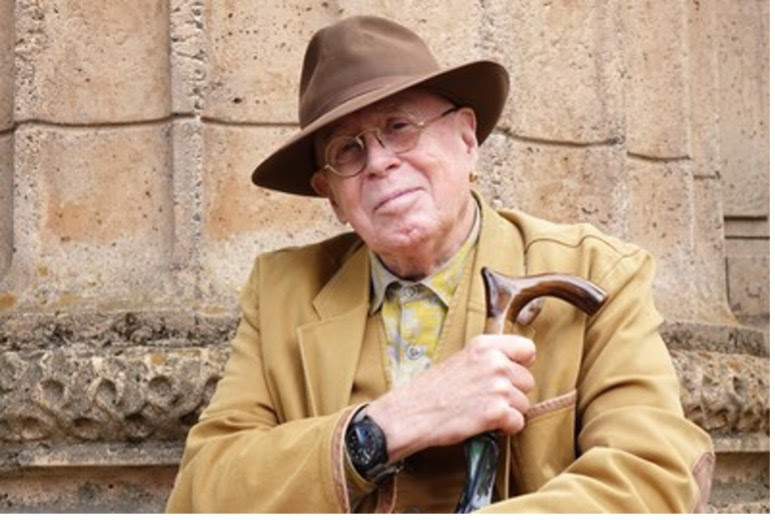
Bruce Cockburn – Image by Daniel Keebler
Bruce Cockburn has spent more than five decades writing some of the most enduring songs in Canadian music, and on his new album, The Blood of Others, released October 16ththrough Sunset Boulevard Records, he turns his attention to the songs that shaped him long before he wrote a single lyric of his own.
The album gathers material written by others, tracing a musical lineage that stretches from the gospel and blues records he heard as a child in Ottawa to the folk clubs and coffeehouses where he first found his voice. “What began back in the eighties as a vague notion grew over time into a strong desire to put together a collection of material, written by others, that I found sticking to the edges of my musical landscape,” Cockburn explains. “The accumulation of these songs started in the sixties, before I’d even begun to try to create my own.”
The album’s title comes from an unexpected literary source, Simone de Beauvoir’s novel of the same name, written during the Nazi occupation of France. “Among other things it deals with personal responsibility in the face of scary oppression, and the kinds of choices people make,” he says. “I have borrowed the title because it seems perfect for an album of songs I didn’t write.”
The Blood of Others opens with “Wish I Was in Heaven Sitting Down,” a Robert Wilkins gospel number Cockburn first encountered on an early ‘70s compilation. “Wilkins’ powerful bottle neck guitar and passionate singing made this conversation with God instantly memorable,” he says, noting he reworked the arrangement using the angular harmonies of his DADGAD tuning. From there, the album moves into “As Time Goes By,” the Herman Hupfeld standard forever tied to the Casablanca film. “Who doesn’t love the scene in Casablanca in which Dooley Wilson plays this song, Ingrid Bergman at his side?” Cockburn says. “I thought I should include the original preamble, which gives the familiar part of the song a context, but it seemed to want an update. Hopefully Herman approves.”
The album also traces Cockburn’s early fascination with jazz and ragtime through “Buddy Bolden’s Blues,” a song he learned not from a record but from a book. “My friends were singing country blues and old timey music,” he recalls. “I was drawn to the somewhat more sophisticated style of ragtime and early jazz.” That thread continues on “You Belong to Me,” a song Jo Stafford’s voice carried into his childhood home. “Jo Stafford’s gorgeously true voice was all over the radio with this when I was five,” Cockburn says. “The geographical references were exciting, awakening the travel bug in me years before “On the Road” lit a fire under it.”
Elvis Presley’s influence looms large on The Blood of Others as well, most directly on “That’s Alright.” “Elvis Presley hit the radio in Ottawa right when I was hitting adolescence,” Cockburn says. “He was captivatingly charismatic of course, but the guitar. Scotty Moore’s leads, by turns raucous and tender, bred a burning desire to play the instrument.” Cockburn notes his own version leans closer to Arthur Crudup’s original recording than to Presley’s.
A hometown connection surfaces on “Four Strong Winds,” the youngest song on the record. Cockburn credits Le Hibou, the Ottawa coffeehouse he calls his spiritual home, for introducing him to the song’s writers, Ian and Sylvia, who played the venue regularly through the sixties. “We were all very excited when their song showed up on the radio,” he says.
The album’s emotional core runs through several songs tied to formative personal memories. “God Bless the Child,” the Billie Holiday and Arthur Herzog standard, dates back to a record Cockburn bought with his Sunday collection money as a teen. “A couple of years later I got to hear Billie Holiday’s original version,” he says. “Theologically a bit off base, but a deeply moving expression of disappointment with the human species.” “Louis Collins,” the Mississippi John Hurt classic, arrived through an afternoon Cockburn still remembers in vivid detail. “Barbie Luther invited me to her parents’ house to listen to music,” he recalls. “She opened a bottle of Mateus wine and put on Mississippi John Hurt’s rediscovery album. I was blown away by the sweetness, the idiosyncratic phrasing and the way he put voice and fingerpicked guitar together.”
Cockburn also revisits “Yellow Dog Blues,” a song he first heard on a Bessie Smith collection as a youth boy. “Right away I fell in love with the lyrics,” he says, tracing the song’s origins to WC Handy’s time in Clarksdale, Mississippi. “Fare Thee Well” carries its own full circle story, one that connects Cockburn’s earliest musical memories to a career highlight decades later. “It came back to mind when I got to perform it with the McGarrigle sisters at Pete Seeger’s ninetieth birthday event in NYC,” he says.
Few songs on the record carry the personal resonance of “I’ll Be Seeing You.” Cockburn describes hearing a version on the radio in the nineties, in the aftermath of what he calls “a brief but heart opening relationship,” and mishearing a lyric that reshaped how he understood the song. “I thought that version ended with the line, I’ll be looking at someone, but I’ll be seeing you,” he says. “That’s not in the original lyrics. They only refer to the moon, but it hit me in a powerful way.” That memory led him to give the song a rhythmic treatment inspired by “I Only Have Eyes for You.”
The album also carries a story about the road not taken. Cockburn recounts a night in Ottawa when he and friends dressed up to see blues guitarist Lonnie Johnson, whose 1964 Paris recordings had captivated him years earlier, and requested “Laplegged Drunk Again” from the stage. “He shook his head and smiled, and said, Oh, I can’t play that song in a place like this,” Cockburn remembers. The record closes out its story arc with “One for My Baby,” a Johnny Mercer and Harold Arlen standard Cockburn traces to Frank Sinatra’s 1958 recording, “Les Feuilles Mortes,” the French original of “Autumn Leaves” that Cockburn discovered through the poetry of Jacques Prévert, and “Peace in the Valley,” a Thomas A. Dorsey gospel song Cockburn first heard through Elvis Presley.
The Blood of Others marks Cockburn’s 39th album, a milestone that speaks to the remarkable consistency of a career that began in 1970. Along the way, he has earned 13 Juno Awards, been inducted into the Canadian Music Hall of Fame and the Canadian Songwriters Hall of Fame, received the Governor General’s Performing Arts Award for Lifetime Artistic Achievement, named an Officer of the Order of Canada, and awarded 9 Honorary Doctorates including the Berklee School of Music. His songs, including “Lovers in a Dangerous Time,” “Wondering Where the Lions Are,” and “If I Had a Rocket Launcher,” remain touchstones of Canadian songwriting, covered by artists from the Barenaked Ladies to Jimmy Buffett to Jerry Garcia.
That legacy was still growing as recently as his previous studio release, O Sun O Moon, recorded in Nashville with longtime producer Colin Linden. “Time takes its toll, but in my soul I’m on a roll,” Cockburn sang on that album’s opening track, a line that could just as easily describe the restless curiosity behind The Blood of Others. Speaking about his songwriting at the time, Cockburn put it simply: “I just don’t want to ever keep doing the same thing.” With this new record, he proves that philosophy extends even to the songs he didn’t write himself, each one chosen and reshaped with the same care and instinct that has defined his catalogue since 1970.
Cockburn will bring these songs to audiences across North America on an extensive run of tour dates.
TOUR DATES:
Aug 7 — Los Angeles, CA — Ford Theatre **
Aug 26 — Iowa City, IA — Englert Theatre **
Aug 27 — Des Moines, IA — Hoyt Sherman Place **
Sep 8 — Omaha, NE — Astro Theater **
Sep 9 — Lawrence, KS — Liberty Hall **
Oct 3 — Eugene, OR — McDonald Theatre **
Oct 15 — Kitchener, ON — Centre in the Square
Oct 16 — Ottawa, ON — National Arts Centre
Oct 17 — Toronto, ON — Massey Hall
Oct 18 — Montréal, QC — Gesù Salle
Oct 20 — Plymouth, NH — Flying Monkey&
Oct 21 — Portland, ME — State Theatre&
Oct 23 — Boston, MA — Chevalier Theatre&
Oct 24 — New York, NY — Town Hall&
Oct 25 — Philadelphia, PA — Keswick Theatre&
Oct 27 — Washington, DC — Warner Theatre&
Oct 29 — Durham, NC — Fletcher Hall&
Oct 30 — Charlotte, NC — Carolina Theatre&
Nov 1 — Nashville, TN — CMA Theatre&
Nov 2 — Knoxville, TN — Bijou Theatre&
Nov 4 — Atlanta, GA — Variety Playhouse&
Nov 6 — Ponte Vedra, FL — Ponte Vedra Concert Hall&
Nov 7 — Fort Lauderdale, FL — Amaturo Theatre&
Nov 8 — Key West, FL — Key West Theatre&
** With Judy Collins
& With Livingston Taylor
Adrian Belew-Steve Vai-Tony Levin- Terry Bozzio AKA Beat Tour (USA) Later 2026
Press Release
Source: SKH Music
Coast To Coast Run of Forty Confirmed Appearances Begins on October 9 in Santa Cruz with
The Final Performance To Be Staged in Riverside on December 3
 Adrian Belew and Tony Levin, alongside Steve Vai and Terry Bozzio approach the next chapter of BEAT. The quartet has announced a tour of the U.S. that will stage 40 appearances.
The general on-sale is set for Friday, August 7 at 10 AM local time. Tickets and VIP experiences will be available here: https://beat-official.com/tour. The artist pre-sale goes live on Tuesday, August 4 at Noon Eastern time with the password BEATTOUR. Fans can access the ticketing page and simply enter the code at checkout. All pre-sales will end at 10am local time Thursday, August 6.
Adrian Belew shares, “For those of you who’ve seen BEAT live, it’s important to note we’ll be adding some material from ‘90s Crim to our U.S. tour. Along with the addition of superman drummer Terry Bozzio, we feel this will result in a new experience for our audience. We’re very excited to play for you again. Don’t miss it!”
The global audience has celebrated the existence of BEAT, responding to the music, chemistry, spirit and respect this collective of esteemed musicians has brought to one of the most remarkable catalogs in progressive rock. BEAT continues to evolve whole remaining true to the music and the spirit that inspired it.
As Adrian, Tony and Steve approach the band’s upcoming activity, Terry Bozzio enters the fold behind the kit. Danny Carey remains an important part of the BEAT family, and simply his Tool commitments prevent him from being available for this upcoming run in the Fall. Steve Vai offers, “Terry is one of the truly legendary drummers of our time, whose remarkable career and unique musical voice make him the perfect artist to join us for this tour. He brings his own extraordinary artistry to BEAT, and that’s something worth celebrating.”
Adrian Belew shares, “Our deepest appreciation goes to our brother Danny Carey—a true BEAT-Poet. His extraordinary musicianship, generosity, humor, and explosive creativity helped establish BEAT as something far beyond a tribute. He helped create its identity. While Tool commitments keep him from joining us this fall, he remains an essential part of our family.

When the ensemble’s existence was first made public on April 2, 2024, the vision was simply to present a creative reinterpretation of the three iconic ’80s King Crimson albums – Discipline, Beat, and Three Of A Perfect Pair. Just over forty appearances were announced across the U.S., triggering a majority of those planned appearances reaching sold-out status in days. Additional performances were added, creating an inaugural run which staged 65 concerts across the U.S. Appearances in Mexico, South America and Tokyo’s legendary Budokan followed, most recently staging an extensive run of the U.K. and Europe performing in 31 cities this year.
When the band heads back out in the Fall, fans should anticipate some exciting additions to the repertoire being performed, with several songs rotating out while other classic King Crimson pieces emerging in to the set. Those details will come to light once the tour begins.
The itinerary kicks off on October 9 at the Quarry Amphitheater in Santa Cruz, CA, with a final appearance planned in at Riverside, CA’s Municipal Auditorium on December 3.
In front of the 2024 tour, guitarist Adrian Belew reflected, “The 1981 through 1984 King Crimson created a music all its own. Timeless. Beautiful. Complex. Fierce. For the fans who lived through it then, and the ones who never got to witness it, our aim is to bring it to life again. A monumental task but we’re going for it! There are not enough exclamation points to express my excitement!”
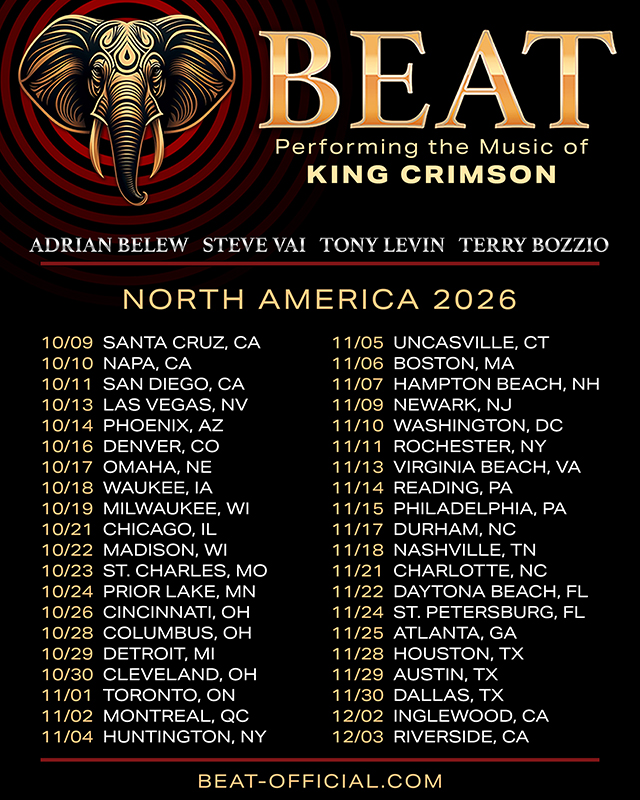
Guitarist Steve Vai stated, “Being a part of this ensemble is an extraordinary privilege and opportunity to perform some of the most beloved, timeless, and monumental music of the 80’s (and beyond) with truly inspired musicians. This music resonates deeply with me. Father Robert Fripp is one of our historical geniuses. His highly specific and exceptionally brilliant guitar technique is studied and revered. His contribution to the quality of my musical life, and so many others is supreme.”
Bassist Tony Levin offered, “Revisiting some of my favorite music is a treat in itself. It’s also great that we’re not just playing a few shows, we’re hitting it hard. So, Road Dogs are coming to your area soon.”
Drummer Terry Bozzio shares, “All of these guys are my friends and excellent musicians who l’ve played with before! When l was asked to join this tour, l was honored & very grateful to do it!”An exclusive meet & greet with Adrian Belew, Steve Vai, Tony Levin and Terry Bozzio will be staged at each appearance planned. There are three tiers available with limited availability. First, the “BEAT On-stage Experience” features one premium reserved ticket, the rare opportunity to watch the show from an exclusive on-stage VIP viewing area, early entry in to the venue, a pre-show meet & greet and a group photo opportunity with all four members of the band, access to a pre-show soundcheck, a limited edition autographed BEAT tour poster, commemorative BEAT ticket magnet, a specially designed BEAT record bag, an exclusive VIP merchandise item, and an official side-stage laminate and lanyard. This top tier has very limited availability. The second tier is the “BEAT Meet & Greet / Soundcheck Experience.”
It features one premium reserved ticket located in the first five rows, early entry in to the venue, a pre-show meet & greet and group photo opportunity with all four members of the band, access to a pre-show soundcheck, a limited-edition autographed BEAT tour poster, commemorative BEAT ticket magnet, a specially designed BEAT record bag, an exclusive VIP merchandise item, and a Meet & Greet laminate and lanyard. The final tier is the “BEAT VIP Tour Package.” It features one premium reserved ticket located in the first 15 rows, a limited-edition autographed BEAT tour poster, commemorative BEAT ticket magnet, a specially designed BEAT record bag, an exclusive VIP merchandise item, and a commemorative laminate and lanyard. There is limited availability for each of these packages, which are available for purchase at https://beat-official.com/tour.
Tour Dates (confirmed):
10/09 Santa Cruz, CA Quarry Amphitheater
10/10 Napa, CA Blue Note Napa Summer Sessions at Meritage Resort
10/11 San Diego, CA Civic Theatre
10/13 Las Vegas, NV Theater at Virgin Hotel
10/14 Phoenix, AZ Celebrity Theatre
10/16 Denver, CO Bellco Theatre
10/17 Omaha, NE Orpheum Theater
10/18 Waukee, IA Vibrant Music Hall
10/19 Milwaukee, WI The Riverside Theater
10/21 Chicago, IL Copernicus Center
10/22 Madison, WI Orpheum Theater
10/23 Saint Charles, MO The Family Arena
10/24 Prior Lake, MN Mystic Lake Casino Showroom
10/26 Cincinnati, OH Taft Theatre
10/28 Columbus, OH Palace Theatre
10/29 Detroit, MI Masonic Temple Theatre
10/30 Cleveland, OH Agora Theatre
11/01 Toronto, ON The Theatre at Great Canadian Toronto
11/02 Montreal, QC Theatre St-Denis
11/04 Huntington, NY The Paramount
11/05 Uncasville, CT Mohegan Sun Arena
11/06 Boston, MA Boch Center Wang Theatre
11/07 Hampton Beach, NH Hampton Beach Casino Ballroom
11/09 Newark, NJ Prudential Hall at NJPAC
11/10 Washington, DC MGM National Harbor
11/11 Rochester, NY Kodak Center
11/13 Virginia Beach, VA Sandler Center
11/14 Reading, PA Santander Performing Arts Center
11/15 Philadelphia, PA Academy of Music
11/17 Durham, NC DPAC
11/18 Nashville, TN Grand Ole Opry House
11/21 Charlotte, NC Ovens Auditorium
11/22 Daytona Beach, FL Peabody Auditorium
11/24 St. Petersburg, FL Mahaffey Theater
11/25 Atlanta, GA Cobb Energy Center
11/28 Houston, TX 713 Music Hall
11/29 Austin, TX ACL Live
11/30 Dallas, TX Music Hall at Fair Park
12/02 Inglewood, CA YouTube Theater
12/03 Riverside, CA Riverside Municipal Auditorium
Nashville’s Stacy Hogan Launches His Newest Creative Chapter With Gallows West
Press Release
Source: Gallows West PR
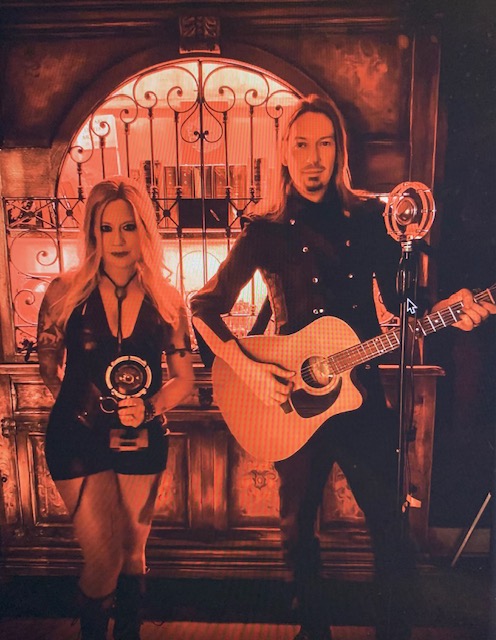
Gallows West – Lauren & Stacy Hogan
Stacy Hogan  is a Nashville-based producer, mixer, songwriter, and artist with more than 20 years of experience in the music industry. As the founder and owner of A Writer’s Paradise, Hogan has built a career helping artists develop songs from the ground up — from writing and production to mixing, mastering, release strategy, promotion, and sync placement.
As an artist, Hogan is best known for Sin Shake Sin, a politically charged alternative rock project that has earned more than 300 million streams, a #1 Amazon single with “Misinformation,” and placements across more than 100 film, television, sports, and video game projects.
Stacy’s music and production work have been connected to major platforms and shows including Cobra Kai, The Voice, American Idol, Call of Duty, The Vampire Diaries, The Daily Show, NFL programming, WWE, Locke & Key, and more. Hogan’s work has also received coverage or recognition from outlets and organizations including: SPIN, Loudwire, Guitar World, BMI, and MUSO.AI, where he has ranked among the top percentage of producers and songwriters.
In addition to his artist career, Hogan has spent years producing and developing independent artists through A Writer’s Paradise, helping clients shape songs, records, branding, and release campaigns with a full-service Nashville-based approach. His work has crossed rock, country, pop, Christian, Americana, cinematic, and alternative genres, with an emphasis on songs that feel emotionally direct, commercially usable, and sonically finished.
His newest creative chapter is Gallows West, a vocal duo featuring Hogan and his wife, Lauren Hogan. The project grew out of a unique intersection between music, fiction, and cinematic storytelling.
Gallows West is shaped by a their creative partnership. Stacy produces and builds the musical world, while Lauren brings that world to life visually as the director and editor of the project’s videos. She also contributes background vocals and plays a central on-screen role, helping define the project’s visual identity and giving its cinematic world a recognizable presence.
Gallows West began during the creation of music connected to the novel, Cadillac Wheels, by Scott Saxberg. The project was originally developed as the musical identity behind the book’s fictional world and characters, especially the character Tanner Banks. Hogan created a collection of songs that could feel like they existed inside that story — songs with an old-soul, western, haunted Americana quality, but still shaped with the weight and production instincts of modern alternative rock.
That creative experiment eventually became something larger than a book companion. Gallows West developed into its own full artistic world: part dusty outlaw folk, part gothic western, part cinematic alt-rock, and part ghost story. The sound leans into imagery of desert highways, blood-red rivers, old sins, forgotten towns, worn leather, and voices from another century — but with the polish, impact, and atmosphere of a modern record.
The first official Gallows West single is “Where the River Turns Red.” While Gallows West was born from the Cadillac Wheels universe and the project is tied to that larger creative world, “Where the River Turns Red” stands as the first proper public statement from the band.
Where the River Turns Red Video!
Click here to view the embedded video.
The song captures the tone Hogan is building around Gallows West: dark, visual, and cinematic, with a sense of American folklore and old-west mythology filtered through modern production. It feels like a story you can hear — murder ballad energy, frontier imagery, and a haunted atmosphere, but with enough rock weight and melodic focus to sit naturally beside Hogan’s broader catalog.
For Hogan, Gallows West also represents a creative shift. After years of writing politically charged music with Sin Shake Sin, Gallows West offers a different kind of expression — less about the daily fight of modern culture and more about timeless stories, atmosphere, character, place, and myth. It allows him to build a world instead of simply react to one.
The project also gives Hogan a way to connect several parts of his career: songwriting, production, sync-minded storytelling, artist development, visual branding, and literary collaboration. Gallows West is not just a band name; it is a world with a sound, a setting, and a mythology.
At its core, Gallows West is Stacy and Lauren Hogan stepping into a darker, more cinematic version of Americana — one that carries the grit of the Old West, the shadow of southern gothic storytelling, and the scale of modern alternative rock.
A Writer’s Paradise Studios – Nashville, TN
www.AWritersParadise.com
GALLOWS WEST PHOTO GALLERY
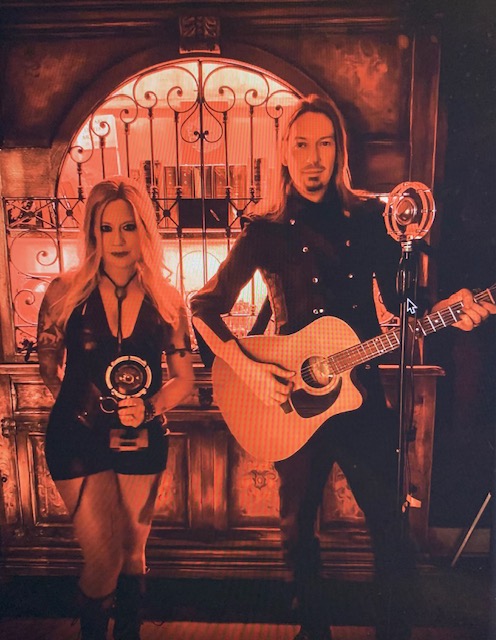
World Class Violinist Dave Kline Talks About His Music, Performing and Songwriting
By: Rick Landers

Dave Kline
Dave Kline, four strings, plucking and a bow; electrified. These are the ingredients that Kline brings to the stage and into the studio. Pull in some more world-class musicians and they stir a cauldron of some of the best music you’ll ever hear.
Moving to the States from his native England in the Seventies, Dave brought with him experiences he gathered at music gatherings where artists, now legendary, influenced and inspired him.
Rather than mention them here and now, it’s better to hear the story behind the names directly from him.
As a multi-instrumentalist, Mr.Kline rolls out stunning riffs on his violins, guitars and piano. And “stunning” isn’t limited to his musical fireworks, but includes some of the most emotionally stirring instrumentals in his songwriting quiver. And, at times, he occasionally reaches back to songs composed by some of his music heroes.
Besides being the bandleader of his own Dave Kline Band, Dave’s weighed in with others, including: Veronneau, Chick Corea, Dwight Yoakam and more.
“Great music man! Great tunes and such warm renditions. I love your musical universe … it’s so fresh and creative …And keep the music fires burning bright. You know why? Simply because you can! And do it so well.” Chick Corea
In the studio, along with adding session work on others albums, Dave’s rolled out several of his own releases, including: Eclectricity, Life’s Little Mysteries, and Shifting Borders. And, he’s got a stack of more compositions he’s written that his fans can anticipate hearing on future albums.
Now home-based in Northern Virginia, he lays down tracks in his own studio and has played at some of the finest music venues in the area, including the legendary Blues Alley, The Music Center at Strathmore, the Creative Cauldron, Earp’s Ordinary, Gypsy Sally’s, along with other venues and festivals.
Whether Dave’s punching our fiery licks on his violin or venturing into some of the most refined, polished romantic tunes you’ll ever hear, he’ll tug on your heartstrings or get you revved up in a most perfect way.
Guitar International is honored to present violinist extraordinaire, Dave Kline, to our readers.
******

Dave Kline
Rick Landers: Occasionally, we’ll interview people who aren’t specifically known as guitarists. But, I know you also play guitar.
Dave Kline: Well, I’m actually, if I say so myself, a pretty good fingerpicking guitarist. In fact, on most of my albums, I play all the acoustic guitar on them.
Rick: Oh, really? Okay.
Dave Kline: Yeah. And every now and again, I’ll pull out a guitar and play a guitar piece. In fact, I’m playing a guitar piece next week; a piece that I just recently wrote, and I grew up in that English folk, rock folk blues tradition of guitarists. I’m sure you’re familiar.
Rick: Sure. Davy Graham and others.
Dave Kline: My first live appearance on stage as a musician was with guitar, as a matter of fact. And I played at an open mic that was run by David Bowie. David Bowie had an open mic night that he did once a week down at the Three Tons pub in Beckenham, Kent. And it was the first time I ever got up on stage, and I played a tune written by Davy Graham, a fingerpicking tune called “Angie”.
Rick: I know it.
Dave Kline: Okay. Took me freaking forever to learn how to play that, because its got this synchopated part where you’re playing a baseline, and then you’ve the lick on top of it. I must’ve put a hundred hours into that thing, but I actually learned how to play it.
Rick: David. Bowie, that’s wild. Yeah, I guess he wasn’t famous at that point.
Dave Kline: He was just on the cusp. I don’t think his first album had been released yet. It’s funny, I seem to hook up with these guys who were just about making it, and then they make it, and I’m not around, but the pub probably had 300 people in it.
Rick: Packed?
Dave Kline: To the gills, so he was seriously popular, and he got up there and he did his own tunes, as well.
Rick: What year was that?
Dave Kline: That was 1966.
Rick: Oh, so it was well before he came out with Hunky Dory and stuff like that. In the early Seventies when I first heard him, I was living in England, and when I came back home, nobody knew who he was. Yeah, ’74.
Dave Kline: Well, he was big in Beckenham, Kent.
Rick: I bet he was a character. So what came first? You’re saying you played guitar. Did you learn that first, before violin?
Dave Kline: No, violin was first. Actually, piano was first.
Rick: Oh, well, let’s talk about all three of those then.
Dave Kline: Okay. So in 1955, when I was five, my brother and I and my mom all went to the same school. She was a teacher. That was a horror story, but she was my teacher at one point.
Click here to view the embedded video.
Rick: Oh boy…
Dave Kline: Heaven help me! And my brother and I went to the same school and down the road from the school was a piano teacher. And my mom hooked us up, and we both did a piano lesson at the same time. I really wanted to do the lesson. My brother couldn’t care less, or so it seemed, and we fought like cats and dogs anyway, and he just baited me .Well, I probably baited him just as much. So, the piano teacher put up with it for about a year, and then she said, “I can’t do this anymore.”
And quit on us. So, I learned the basics of piano, and I know how to write on piano. I come up with some very creative stuff on piano, but it’s not a performance instrument for me. The instrument I really wanted to learn was violin. And when I was a kid, my mom had a classical music long playing record collection, some of them 78’s, actually.
She had several records by a Russian violinist named, David Oistrakh, who’s considered by many in the top 10 ever violinists. And when I was between the age of two and four, I did nothing but listen to those albums. I was glued to those albums. So, I wanted to learn violin, and they picked me up a half-size violin when I was seven.
And unfortunately, the lessons were incredibly disappointing to me because I wanted to learn Mendelssohn’s violin concerto. And the teacher wanted me to learn, “Twinkle Little Star” and it just did not go over well. And she was not friendly in the least.
Anyway, I hated the lessons and I refused to practice, which I regret that because I consider myself pretty good today. And if I had put the work in that I needed to, I could have ended up playing Mendelssohn’s violin concert, but partly I was too lazy and partly just a rejection of the way it was taught.
Rick: What about guitar?
Dave Kline: Guitar, okay. So, then I learned violin and I took lessons from one teacher or another. I was in the school orchestra in the second violins, and then when I was 12, my brother, my parents bought my brother a guitar, a real cheap, terrible guitar. And I’m the one who started playing it.
He played a little bit, but not much. And then my parents decided to buy me one, and they actually bought me a nice little Oscar Teller, German nylon string guitar, which I have to this day, as a matter of fact. Great little guitars. And I got that when I was 15.
I just spent a lot of time playing and learning and teaching myself how to play fingerpicking style. And I was really into Bert Jansch. And I used to go see Bert Jansch and John Renbourn in Pentangle playing at a hotel on Tottenham Court Road in London on Sunday nights. They played in this hotel. I used to go out there regularly, and there was nobody in there. There’d be half a dozen people in the audience. The band was amazing
Rick: Yeah, I’ve seen them. I saw ’em in Warwickshire. Was Danny Thompson with them?
Dave Kline: Danny Thompson was on Upright Bass. Yeah. Danny Thompson. They had the gal, Sandy Denny singing, and then John Renbourn and Bert Jansch.
I sort of emulated their style of playing as much as I could. I had actually taken one year of classical guitar lessons, which was very good for technique and that gave me the facility on the right hand, I think, to be able to play fingerstyle. Yeah, I was into those guys.
I was also into flamenco. There was a flamenco guitarist named Manitas De Plata. I don’t know if you’re familiar.You’ve got to listen to Manitas De Plata. He, in my opinion, no invalidation of Paco de Lucía, but Manitas De Plata was just amazing.
If you can actually get some long playing records of his, absolutely amazing. My parents took me to see him playing live in Royal Festival Hall in London, and he came on stage. He didn’t have a guitar strap, he just held the guitar like this, and he played nonstop for an hour playing flamenco, the most incredible thing you ever heard.
And he had no mic, and you could hear him clear as a bell. It was just amazing. So I’m a huge fan of Manitas De Plata, from the Camargue, which is an area in southern France. A lot of gypsy guitarists are from that area. In fact, his nephew was the lead singer for the Gypsy Kings. Came from the same area.
Rick: So, did you listen to folks like John Martyn and Nick Drake back in the late Sixties, early Seventies?
Dave Kline: Not a lot, A little bit. John Martyn, a little bit. Nick Drake. I didn’t really know. No, I did listen to folks like Rory Gallagher, the great Irish guitarist, saw him at the Marquee, and I listened to a lot of American rock, the West Coast rock, Airplane, all that sort of stuff. The Doors, Janis Joplin…
Rick: San Francisco. Great stuff. Yeah. Scott McKenzie…
Dave Kline: Actually ended up there in 1971, ’72 in San Francisco.
Rick: Let’s move to violin. And when you were playing violin, what were kind of the challenges? I think its probably more complex than playing guitar, from what I can tell.

Dave Kline
Dave Kline: Well, the challenge with playing violin is you’ve got to get over that initial hump, when it sounds like a cat being killed.
But once you get past that point, you’re not driving everybody nuts.
It is not that difficult an instrument to play, but it’s a difficult instrument to play really well. And what it takes is it takes a lot of dedication and practice. And like I said, I didn’t do that.
The top classical solo violinists practice 10 hours a day for 15, 20 years, and then they get to the point where they almost don’t need to do that anymore.
But, that’s the level of intensity of playing. It’s like an Olympic gymnast type thing. You have to just do it and do it, and do it and do it. And it’s just tremendous amount of work. I didn’t go that route. But, what I did do was when I went up to college, I had to quit it.
The final straw for me was the school orchestra and the most boring pieces of music on the entire planet. I love classical music, but this guy chose the worst pieces, and it just was utterly boring. I just couldn’t take it anymore.
And that’s the point where I started taking up guitar. So, I went up to college, and I decided within a few weeks that the subject I was studying at college was absolutely useless. So, I didn’t even bother to do it anymore. And instead, I spent hours a day jamming on guitar, probably somewhere between five and eight hours a day, jamming the second semester.
I said, “Why don’t I bring up the violin and see what happens with that?” There were 20 guitarists and nobody else. So, I brought the fiddle up there, and I soon basically taught myself again from scratch, but with just figuring out how to improvise. And that’s where I got my chops. I spent three years playing violin for probably five hours a day, jamming. And that was the source of my abilities on the instrument.
Rick: Did you focus then on violin and just set aside the guitar? Or were you just sort of playing with whatever song came up? You decided to play one or the other?
Dave Kline: No, I was still playing guitar, and I was writing on guitar, but I would say I was primarily playing violin. I got a real resurgence on playing it of my goal to play it. And so I concentrated on that and everybody loved it.
Rick: Were you playing mostly open mics, and were you getting gigs, paid gigs when you were in England, or?
Dave Kline: No, I just jammed around and I stayed in college because in England, the government pays for your college, and once you are in, it’s hard for them to get you out, and you basically got guaranteed for three years. And so that’s what I did. And I just jammed around at the college and played there, but I didn’t really do too much in the way of open mics, but I saw a lot of guys playing.
I was also really into a cat named Stefan Grossman, ragtime stuff, and he played at a little place called Bunjies (Coffee House & Folk Cellar), which was a little folk club coffee house in a basement off of Tottenham Court. And so I used to see him a whole bunch, and I kind of figured out some of what he was doing, and I can play ragtime style guitar, as well.

Dave Kline
Rick: Before you get on stage, do you do exercises ahead of time to warm up your wrist and your fingers? I would think that your wrist, you’re moving that around a little bit more on a violin than a guitar. Plus you’ve got the bow that you’ve got to deal with.
Dave Kline: Yeah. No, I don’t really do any warmup. I probably should. I mean, well I do a little warmup usually because we do a soundcheck. Sometimes we need to do a rehearsal before a gig. But I don’t specifically do warmup exercises.
I rarely practice scales. I definitely don’t go the normal route. Which, it’s funny because there’s holes in my musical education; I can read, but I’m not a sight reader. There’s cats that can come on stage. They’ve never heard the music. They’ve never seen the music. They come on stage and they just start playing Coltrane off a chart.
And I’m like, “screw you”. It’s like, I can’t do that. I can’t even hardly write charts and things like that are sort of, they’re a little bit of a hole. And some of my musical theory, sometimes I’ll be with some musicians, they’re really into the niceties of this chord, is, it’s a G6 + 13/11th going to….I’m like, I don’t know what the hell you’re talking about.
Rick: That’s where I’m at too.
Dave Kline: And there was a point where a good friend of mine, sax player, his uncle is actually the musical director for the Bolshoi Ballet, and he’s really up there in theory, actually learned saxophone as a classical instrument, but also plays jazz. And I said to him, “I want you to teach me, fill it in for me. All the things that I don’t understand on music.” He says, “You don’t want to do that.” It was interesting. He says, “You don’t want to do that. I said, “Why not?” He says, “You’ll lose what you have.”
Rick: I agree.
Click here to view the embedded video.
Dave Kline: And which brings up another interesting story, which I don’t know if I’ve told this, but Yehudi Menuhin, he’s a British violinist, top of the league, top of the heap, was very famous back in the Sixties, Seventies, Eighties. And he actually did a couple of albums with Stéphane Grappelli.
Rick: Wow.
Dave Kline: Where they did duets. But Stéphane had to write out every word, every note that Yehudi played. And I heard an interview with Yehudi the way he was being asked about this, and he said the biggest regret he had as a musician was that he could not improvise. He simply couldn’t do it.
And that’s what classical music, classical musicians, there’s maybe one in 500 or a thousand that can improvise because you are taught to not play anything unless you see it written on the page. It’s a very stultifying method of teaching. And luckily, because I was so undisciplined as a kid, I didn’t have that problem. And so I never ran into that barrier. And my friend was saying, you’ll lose your spontaneity as a musician.
Rick: And I think some musicians that are terrific musicians don’t know how to read music. And John Martyn, who was one of my favorite guitar players, and I think he was absolutely brilliant, was asked in an interview if he read music and if knew the circle of fifths and all that. He said, I don’t want to know that stuff. But, he was absolutely brilliant. I think working outside the lines is what some do, because they don’t know any better. You don’t…
Dave Kline: Know any better. That’s right. It works.
Rick: But it works.
Dave Kline: But it works, exactly.Yeah. I mean, Béla Fleck doesn’t know how to read music.
Rick: And friends are saying, I wasn’t expecting you to go there, but it works. And so I think there’s a certain creativity that you feel, when you’re not bound by that structure or that paradigm.

Dave Kline
Dave Kline: And I heard, and I’m not sure if this is true or not, that Segovia didn’t know how to read music.
Rick: I think that’s true. I think I read that recently. I was reading last night about violins, and how those made by Stradivarius are the Holy Grail. Have you ever played anything like a Stradivarius?
Dave Kline: I have not. And, in fact, there was a point where I almost was able to borrow a Stradivarius for an album, but it didn’t work out, unfortunately. And we have a friend that has access to one, but somehow we just never hooked up.
And that’s a good reminder. I need to do that. ‘Cause I really want to get to play that. And I know they also have some, I believe, at the Library of Congress. Yeah. One of these days I’m going to try to get myself in to play one of those.
Rick: Get in there and grab one.
Dave Kline: Yeah, I remember when I was a kid, about 12, 13 years old, my violin teacher sold it to another student, a Stradivarius violin for the grand sum of 1000 pounds Sterling.
Rick: A lot of money back then.
Dave Kline: But oh my God, now you can’t get one for less than three million,
Rick: I would think it’s like the old ’58, ’59 Les Pauls that were 200 bucks back in the Seventies, they were just old used guitars, and now they’re like half a million bucks. They’ve gone up and down a little bit. They’re right around half a million bucks, plus. So what are you playing now?
Dave Kline: I’ve got a couple of violins. The main instrument that I have was actually made by a local maker, McCluskey. And I like it. I think it’s a decent violin. It’s not high level, but I didn’t pay a high level price for it. But the prices on violins are insane. I also have another violin, which is an 1890 Bailly violin, which is a well-known French maker. And that’s a higher level violin. Nowhere up there near a Strad, but it’s a nice violin.
Rick: And so how many do you have?
Dave Kline: Well, okay, I’ve got those two violins. I’ve got two electrics. I’ve got another couple of acoustic violins, cheap ones, old ones, or one that I had since the Seventies, late Seventies. But, I grew accustomed to it. I can make it sound good, but I wouldn’t say it’s any great shakes as a violin.
Rick: What do you look for when you’re buying a violin? Or has it been a while since you bought any?
Dave Kline: Yeah, just the sound really. I really don’t know enough to really make a very educated decision on ’em. But the one I got to buy, I wasn’t really interested in the fact that it was a well-known maker. I just wanted the sound, but the value of that violin has increased considerably since I bought it, which is just a perk.
Rick: You’ve played with a lot of groups, and I know you played with Chick Corea and Dwight Yoakam, but what about the Dave Kline Band? Tell me about the group, how it got pulled together, and a little bit about the members and what they bring, not just the instrumentation they bring, but what they bring as far as personality traits that really help you congeal, as a group.
Dave Kline: Alright, so the first instrument that I wrote music on was actually guitar. And I did quite a bit of guitar writing of one kind or another, and actually recorded an album on cassette, believe it or not, in about 1989. And that was all guitar music.
And then I had a collaboration that I created an album with a guy in about 1995, mostly his stuff, but some of it I wrote. And that was my first writing of music in my current style. And then in around 2000, I started writing prolifically and decided to do an album.
In fact, I did the album at BIAS Recording Studios (Springfield, Virginia). Bob Dawson was the engineer. And since then, I’ve had various iterations of musicians that I play with, but I’m really, really happy with the current band. Are you going to have a chance to come and see any of the shows at Blues Alley this month?
Rick: I’m going to try. I did see you when you got your most recent bass player. That was his first night I think he played with you. He was brilliant.
 Dave Kline: Brilliant. C.J. Turman. Yeah. Yeah. Okay. If you get a chance, and I’m happy to put you on the guest list, Rick, for this coming Tuesday, if you can make it. We’ll have Buddy Spier. Do you know Buddy?
Rick: I know the name, but I don’t know him offhand.
Dave Kline: Buddy Spier owns a studio called, I think three-nineteen something. It’s right in the same complex that Q Recording is in Falls Church (Virginia). He’s a producer and he splits his time between here and Nashville, and he does a lot of recording sessions.
He is a phenomenal guitarist, and he and I are just a really, really in sync. So we play off one another, and it’s a real juggernaut that gets created. I’d been wanting to play with Buddy for ages, and I finally roped him into a gig with me, which he loved, down at that barbecue joint in Northeast, D.C..
Anyway, I played there with him, and one lady in the audience just came rushing up towards the stage and she was like, just freaking out, like having a religious experience. It really was that kind of, just out there. So the band, this coming Tuesday is going to be Buddy,T.J. on bass, Olaolu Ajibade on drums, who you saw playing also. And then there’s a keyboard player named Dan Paul, who used to be in this area. And I played with him a few times.
He moved up to New Jersey, but he’s coming down for a couple of these gigs with me. He’s great. I love him. He’s excellent, excellent keyboard player. So, we’re going to do a lot of originals, some stuff that we’ve rarely played because it’s on the more difficult end of things, and some brand new material. So, really thrilled with what’s going to happen there.
Last week I played with D.D. Jackson, who’s a New York Emmy winning composer and keyboard player. And David Murray, who was founder, co-founder of the World Saxophone Quartet. And so we played a gig, some of D.D.’s material and a bunch of mine, and we had a two minute standing ovation. It was just amazing. Incredible. Completely blew the place apart. Yeah, that’s true.
Many people saying, “That was my all time favorite gig ever.” That best show ever that they’ve been to. Yeah. Cool. So really, really happy. And a lot of what made that gig is the rhythm section of Olaolu and T.J., and Buddy was basically playing a rhythm guitar on that gig. So, that rhythm section was just amazing. And it allowed me and D.D. and David Murray just to wail. So now we’re going to do all of my material and seldom heard or never heard material of mine this coming Tuesday.

Ken Avis, Lynn Veronneau and Dave Kline
Rick: Blues Alley. Right?
Dave Kline: Blues Alley. And I also have Lynn Veronneau and Ken Avis. My band generally includes Ken, who is also excellent on guitar and vocals, Lynn on vocals, Olaolu, and T.J. or another bass player, essentially and myself. But for these gigs, Ken and Lynn are going to be special guests for it on top of those guys. So it’s going to be amazing. And then the 21st, I’m doing a violin summit with Zach Brock from Snarky Puppy.
He’s the violinist with, I don’t know how familiar you are with Snarky Puppy.
Rick: I’ve heard the name. That’s about it. I’ll look ’em up.
Dave Kline: Yeah, check him out. They’re really a great funk, jazz band, and they sell out the Anthem. It’s a 5,000 seat venue, very, very, very popular. So excited to do the violin summit with Zach. And then later, we are going to team up with Senator Tim Kaine on harmonica and vocals.
Rick: Yeah, I’ve seen him.
Dave Kline: And we’re going to do a Western swing, Eastern jazz night. So we’re going to do a whole bunch of Western swing tunes, which Ken’s going to sing a bunch of ’em. Tim’s going to sing some. Lynn will sing some stuff. And we’ve got Susan Alcorn. I don’t know if you know her. She’s an out there pedal steel player, but she used to play with Asleep At The Wheel.
So she’s done a lot of Western swing, so that should be a really fun gig too. So I’m just really thrilled with where it’s going. Pretty much sold it out last week. I think the last show is going to be sold out for sure. It’s going to be less filled for the other two shows. And Harry Schnipper at Blues Alley is really pushing me a lot of power. He loves what I do, and he’s really trying to help me move forward and hook up with different collaborators and get a name.
It’s a tough business. It is. You’ve got to keep banging your head against that wall, man, and don’t stop. You can’t say it hurts. You just have to keep banging the head and you bust through the wall. So, that’s the name of the game.
Rick: Yeah, there’s some serendipity to it. And even though it’s collaborative, it’s also kind of a competitive arena too.
Dave Kline: Look. The Beatles played for three years in dives in Hamburg, Germany, playing cover tunes, nothing, and the Bee Gees were together for 15 years before they made any kind of impact.
Rick: Yeah, they were little kids.
Click here to view the embedded video.
Dave Kline: I saw a documentary on Stevie Ray (Vaughan). He was playing dives in Austin, Texas, an audience of 60 people, just spinning wheels. And finally, somebody walked in there who had a connection to the Monterey Jazz Festival.
And talked the Monterey Jazz Festival on giving him a shot, and they put him on a minor stage somewhere.
Rick: I thought he played with David Bowie at Montreux Jazz Festival…
Dave Kline: Maybe he was playing there and he got him to sit in with him. I don’t know. But, that was what broke things open for him. You’ve got to be playing the right music at the right time and have the right guy see you, and you got that combination. Then it happens. I’ve had some of these sorts of connections happen from time to time, but they’re never the one to where they completely broke through. So it’s a little bit like when I used to do door to door sales, believe it or not.
Very uncharacteristic for me. But there was a famous saying, which is “Every time you got the door shoved in your face, you were one step closer to a sale.” And if you had that attitude, you would make sales because you didn’t take it as a failure. You have to just keep your eye on the mountain and just keep going.
Rick: Yeah. Do the next gig. Just do the next gig. Just keep doing them.
Dave Kline: And my motto is, “Every gig has to be better than the last”.
Rick: That’s a good one. Well, I saw you a couple of times at venues and actually in the studio, where you were terrific. I really want to thank you again.
When you kept going, I said, oh, we just kept going and Ron (Goad)) said, “Some people say, stop.” I said, “No, no, we were having fun and you were just cranking it out.” So then when I heard the recording, I thought I need a four and a half minute song, so we’ll make two. We’ll do an extended version. So that was pretty terrific. So anyway, I forgot the point that I was trying to make. But yeah, you just keep playing it. Eventually something breaks through, although there are some really fine musicians, and they just never quite get those three elements together and others just pop out of it all. Good for them.
Dave Kline: Yeah, yeah, yeah. It’s a combination of things, you have to work on yourself. I’m not a good schmoozer particularly, but the more you can schmooze, the better you’re going to do. I’ve learned how to put on a show and talk to the audience and I’m very relaxed and comfortable doing that now. But you need to be able to do that off stage too, and schmooze with people that you need to schmooze with.
But I was always a tremendous introvert, tremendously introspective. And there’s an element to that that helps you as an artist, but at the same time, you have to be willing to push through that as an individual in order to make connections, in order to recognize it is a business. You do have to sell.
You have to sell to a market. And musicians, and I’ve had this, an attitude on that. It’s like, I don’t do hype. Well, no, don’t do hype, but that doesn’t mean that you can’t sell a market and make yourself known and promote what you are and what you do. And if you don’t do that, it is like you build a better mousetrap. Nobody’s going to come unless you go, I got a mousetrap, here it is.

Rick: I guess there’s a fine line between bragging and marketing, but part of it is one of the same.
Dave Kline: Yeah, and to be frank with you about areas that I’m lacking in. But at the same time, those somehow are sort of a strength, as well. And I know what my strengths are, and it’s like when I write music, I don’t sit down trying to write something that’s different. I just write. But I bring together all the different influences that I have and my own imagination, my own creativity, and I just write, and it comes out with my own unique voice.
Rick: You can say it’s your own signature,
Dave Kline: And that’s one of the things that you have to have as an artist, f you’re going to get somewhere. You certainly have to have your own voice and not try to sound like anyone else. Now, there’s nothing wrong with learning other people’s stuff. Now, I always resisted that. I never wanted to play anybody else’s stuff, really.
But there’s nothing wrong with that. But what is wrong is if you do that because you want to try to sound like them, as opposed to you’re going to assimilate by osmosis, what is it they’re doing? And then you add that to your own brew.
There’s nothing wrong with that, but it’s your own voice that counts. It’s your own creativity. That’s important, because that’s what inspires people. I mean, it’s all about, to me, inspiring other people by giving them something that’s aesthetic, creative and innovating, exhilarating and inspiring them to themselves, increase their own imagination and creativity. That’s what I want to do with people.
Rick: Just to sing along.
Dave Kline: Yes, sing along. I mean, I always say the audience is the most important part of the show because not only are they there, and if they’re not there, if a tree falls in the forest, no one’s there. Right? Yeah. But it’s also if an audience is sitting there and they’re listening too and they’re getting your music, they are creating your music with you.
Rick: That’s true.
Dave Kline: They are themselves creating at that point in time. And I always like to remind the audience of that, because they don’t necessarily think of themselves as musicians, but actually they are. If they’re in an audience and they’re being at a show with musicians, they are being musicians in their own way. They’re being creators in their own way.
And to me, that’s what it’s about. Because there’s so much about this world which creates things for you or forces you into being created by something else. Life’s running you. And if you can inspire people to start running more of their own life by just enhancing their creativity or their own imagination, then you make a better world. And that’s where it’s at for me.
Rick: Good. You’ve played a lot of different venues, but you also play on the street and you busk, and I’ve seen at least one video of you busking, and you’re having a great time. And so tell me about some of your favorite venues, and then what do you get when you’re out there and you’ve got passersby coming, listening, some of them ignoring you, others stopping and being wowed by you?
Dave Kline: Yeah. Well, I’ve done several of those types of gigs recently. They have, actually, none of ’em have been strictly busking, not putting the mug out there for the money type thing. They’ve all been paid in one way or another, but they’ve been that type of a gig.
We just did a gig in Georgetown. They had some three stores open on the street, so the local people put on a little show, and they hired Veronneau. And I was playing with them to perform that thing you probably saw with me and Ken Avis, which looked like busking on the street, but was actually a paid gig, but we were doing it right on the street.
And yeah, it’s great because people will just walk by and they get it, and you are giving ’em something they don’t normally get, and it actually changes their life. It makes ’em think about things. It makes ’em look at things. It makes ’em stop for a second and not just continue on with the mundane, but go beyond that. And I love that. So I love doing those types of venues.
I love playing places like Blues Alley. I prefer to play in intimate clubs with about 150 people in them because you’ve got a great good size audience, but it’s intimate enough where you feel that you are really communicating with the audience.
I told the sound guy to not turn the lights all the way down at the gig the other night, because I like to see the audience and engage with them. You might feel safer with all the lights down, you can’t see anyone. But that’s not the purpose; to feel safe for the artist. It’s to engage. And so I really like the intimate type venues.
Rick: So, more that they’re listening rooms, rather than a loud bar.
Dave Kline: If I know that it’s going to be a bar situation or a background music situation, most of the time I will refuse to do it. I will not take the gig, because to me, what’s the point? You might as well put your jukebox on.
Rick: I was going to say, you might as well be a jukebox, especially straight cover songs. You’re better off with a jukebox. It’s actually probably cheaper for the venue. Like you say, even if it’s a cover, you can change covers enough so people can figure out it’s a cover, but it’s got a different angle or various angles come into it.
Dave Kline: Yeah, that’s right.
Rick: Do you have any albums coming out, or do you have one recently that you can you talk about how that came together?
 Dave Kline: Well, the last album, Shifting Borders, was 2017, which by the way, went to the top of the Roots music charts. Both the fusion and the jazz charts, and stayed there for 16 weeks. So, I was really happy about that.
But I keep threatening to bring out another album. I’ve recorded several things at Blues Alley gigs, but there’s always, and I’ve worked at them, to mix ’em, but it is very difficult to mix live music because you get so much bleed on the tracks. I’m hoping that this last gig was recorded, which if that comes out good, that will be a fantastic album with D.D. Jackson and David Murray on it.
I think that’s something that will be really worth releasing. But yeah, I’m planning on doing some recording with the current band with Buddy Spiers and T.J. and Olaolu, and probably doing it over at Buddy’s studio. And then we can, Dan Paul has a fantastic full size grand piano up in where he is, so he can do tracks remotely and we can mix ’em in.
I want do some recording there and do some tracks also with Ken and Lynn. So yeah, I’ve got a bunch of material that has not been recorded that I want to record. So, definitely looking to do that and to produce it a little bit differently to really make it just have a certain impact by production.
I usually produce my own albums, and it’s a little hard to do that actually. I want to get input from the guys, particularly Buddy on the next album. I think we can take it somewhere really great.
Rick: So when you’re on stage, what are some of the key elements that for you, makes a gig exciting? And I don’t mean exciting like rah rah, but maybe internally. It’s so satisfying. Those elements come together and it’s almost like a perfect gig.
Dave Kline: It’s funny. As I said, I tend to be quite introverted in many ways, but when I’m on stage, a really great gig starts with me being completely extroverted. And most of the time I am, and I start out with the attitude of just, I’m just going to, I almost have the attitude of a prize fighter, and I’m going to knock the audience out, and by the impact of the music.
What I found is if you can do that with the first tune, that from there on out, the audience is with you. They’re no longer spectators, but they’re involved. And it’s that interaction between the audience and the band. And if the band is doing the same within the band, if you have that connection within the band where the players are at a level musically and energy wise, where they’re playing off of one another, then that creates a juggernaut. So you get this juggernaut going inside the band, and then you get a juggernaut going between the band and the audience. And if you get that happening and the music’s good, you have a complete blowout gig.
Rick: I’m sure you’ve had a lot of wonderful experiences while you’ve been on stage performing. Is there a gig that you’ve played recently that always brings a smile to you? Or maybe one, maybe years ago, but you did talk about working with Spiers in that last gig, and it sounds like that was one of ’em. Are there?
Dave Kline: That was like, “Oh my God, this is where it’s at.!” Because he and I, we were actually playing a blues tune, and it was just, the synergy was just amazing. And when you get that happening, it’s like Gestalt theory. The whole is greater than the sum of the parts. And that’s what happens.
That’s what happened there. It was like boom, the music took on a life of its own. And I guess that in a way, not meaning to sound arrogant at all here, but what you’re doing, what are you doing when you create music, really, you’re creating life, aren’t you? And that’s what’s satisfying,
I think, because you are creating life in a way; that’s right here, right now. It’s never been created quite like that before and will never be created quite like that again. And if you get that synergy and that explosion happening inside the band and with the audience, everybody in that room is creating life at the same time.

Dave Kline
Rick: So are those the moments when you get that synergy in the audience, how would you value that compared to when you’re sitting there and you come up with some lyrics and you go, “Whoa, where’d that come from? It’s perfect.”
Dave Kline: Well, that’s a good point. They’re two completely different experiences. One is the composition, the joy of composition, and the other is the joy of performance. And they are two different things. Because what happens with me is generally the stuff that I write almost writes itself.
And I don’t spend a lot of time, I’m notorious behind a console, I will tweak forever, but when I’m writing, I write the piece, it’s done. And I might rearrange it if I come up with a better idea on arrangement, later for live performance, but the actual piece is done, and I’ll write a piece in half hour. And that’s the way it is. It’ll be like that from then on.
The satisfaction on that is partly the satisfaction of knowing that you’ve just created something that’s outside of the material universe. I think that’s what you’re doing. So, I get the personal satisfaction of knowing that I am being, that I am doing that, and I am creating that. And with that also, there’s a sense of, I hear how it could be. Sometimes I’ll play an idea of a tune or a tune I’ve written for somebody else, and they don’t get it because they’re not envisioning what it’s going to be, like with the band. And I do, and I can see how that’s going to transfer over to that live performance concept.
Rick: Are you writing songs with lyrics, or are you doing mostly instrumental?
Dave Kline: I do write songs with lyrics. I’m a bit closed mouth on that.
Rick: I’ve got to hear some of them. Well, that’s what I’ve got, is there anything we’ve missed?
Dave Kline: That was a really thorough, I didn’t know I had all that in me. Thank you.
Joe Bonamassa Releases Live Album “The Spirit Of Rory Live From Cork” And Concert Film
Press Release
Source: Prospect PR
 Joe Bonamassa has officially released The Spirit Of Rory Live From Cork, a powerful live album and concert film celebrating the music and enduring legacy of Irish guitar legend Rory Gallagher. Available now via J&R Adventures, the project captures Bonamassa’s sold-out tribute performances in Cork, Ireland, where Gallagher’s influence remains woven into the fabric of the city itself. Alongside the album release, Bonamassa has also unveiled the epic live performance video for the project’s emotional centerpiece, “A Million Miles Away (Live).”
Recorded with the blessing of Gallagher’s family and performed before passionate hometown audiences, The Spirit Of Rory Live From Corkdocuments what many in attendance described as a once-in-a-lifetime musical event. A lifelong admirer of Gallagher, Bonamassa approached the material with deep reverence, bringing together a band capable of honoring the fire, spontaneity, and emotional honesty that defined Gallagher’s work while allowing the performances to breathe with their own energy.
Rory Gallagher remains one of Ireland’s most beloved musical figures, revered worldwide for a style that fused traditional electric blues with hard rock intensity, Celtic influences, and fearless improvisation. His distinctive guitar tone, expressive slide work, and deeply emotional performances inspired generations of players, including Bonamassa himself. Together, the album and film capture both the scale of Gallagher’s influence and the deep personal connection his music continues to inspire among musicians and fans around the world.
Click here to view the embedded video.
At the heart of the release is “A Million Miles Away,” one of Gallagher’s most beloved and emotionally resonant compositions. Originally released on 1973’s Tattoo and a legendary extended rendition on his Irish Tour ‘74, the song captures themes of loneliness, longing, and emotional distance, pairing poetic imagery with one of Gallagher’s most vulnerable vocal performances. Joe’s DVD bonus features include a special interview with Rory’s brother, Donal, who recounts the story behind the song’s creation and visits the dramatic Irish cliffs whose rugged beauty helped inspire its emotional power.
Bonamassa’s interpretation embraces that emotional core. Filmed in front of a packed Cork audience, the performance unfolds with patience and restraint before building into a soaring guitar statement that reflects both Gallagher’s influence and Bonamassa’s own musical voice. The result serves as a fitting centerpiece for a project built on admiration, respect, and a shared love of the blues.
What began as a single tribute concert ultimately grew into a three-night sold-out run in Gallagher’s hometown, with fans traveling from around the world to celebrate the music. The atmosphere throughout the performances was electric, creating what Bonamassa describes as one of the most meaningful experiences of his career.
Early praise has already begun to reflect the significance of the project. Guitarist Magazine praised the release, writing, “Joe does his hero proud…a very fitting affectionate tribute to one of the most notable blues guitarists of our age.” Blues Matters hailed The Spirit Of Rory “one of the finest live albums ever produced,” while Powerplay awarded the project a perfect 10/10, writing that “Bonamassa has captured Gallagher’s genre-defining influence and honored it with flawless perfection.”
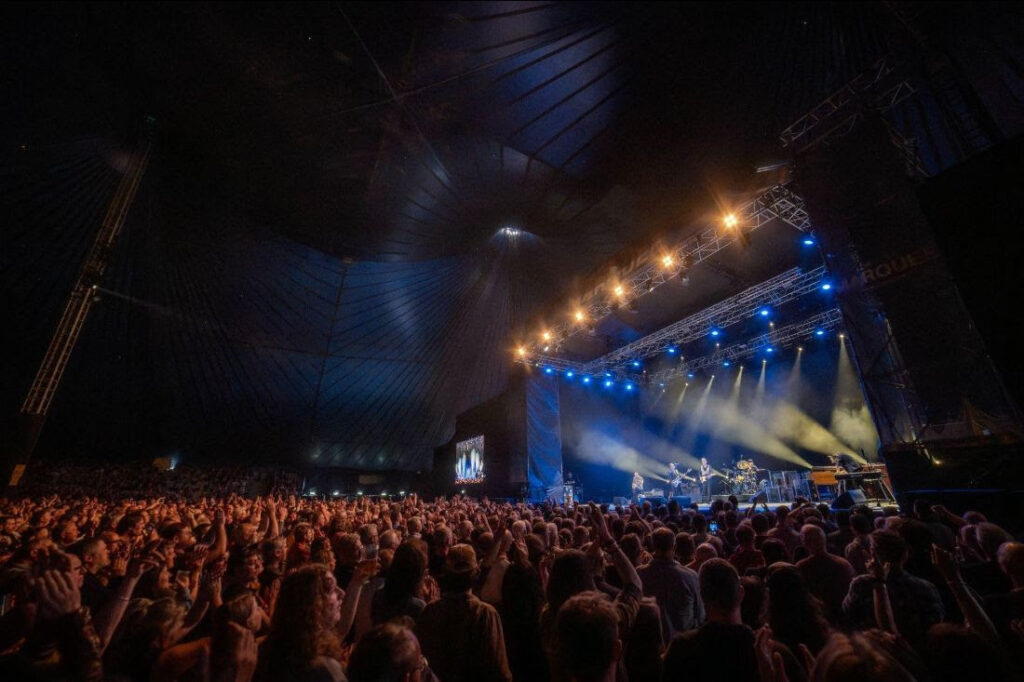
Joe Performing at Live At The Marquee – Photo Credit: Marcus Bird
Across fourteen carefully selected songs, The Spirit Of Rory Live From Corkexplores the full breadth of Gallagher’s catalog, from explosive live staples like “Walk On Hot Coals,” “Bullfrog Blues,” and “Bad Penny” to deeply personal performances including “Tattoo’d Lady” and “I Fall Apart.” The broader setlist was also inspired in part by the spirit of Gallagher’s legendary Irish Tour ‘74 era, which first introduced many listeners, including Bonamassa, to Gallagher’s singular live power.
The project also includes several moments of special historical significance, including Bonamassa’s performance of “As The Crow Flies” on Gallagher’s own 1930 National Triolian resonator guitar, generously loaned by the Cork Public Museum. Additional DVD and Blu-ray bonus features include The Inspiration of Rory, featuring conversations with Brian May and Slash, along with Rory’sAcoustic Guitar and Ballycotton – A Million Miles Away.
In celebration of the album’s release, European fans can now enter a special raffle benefiting the Keeping The Blues Alive Foundation, with the chance to win a one-of-a-kind signed Rory tribute guitar.
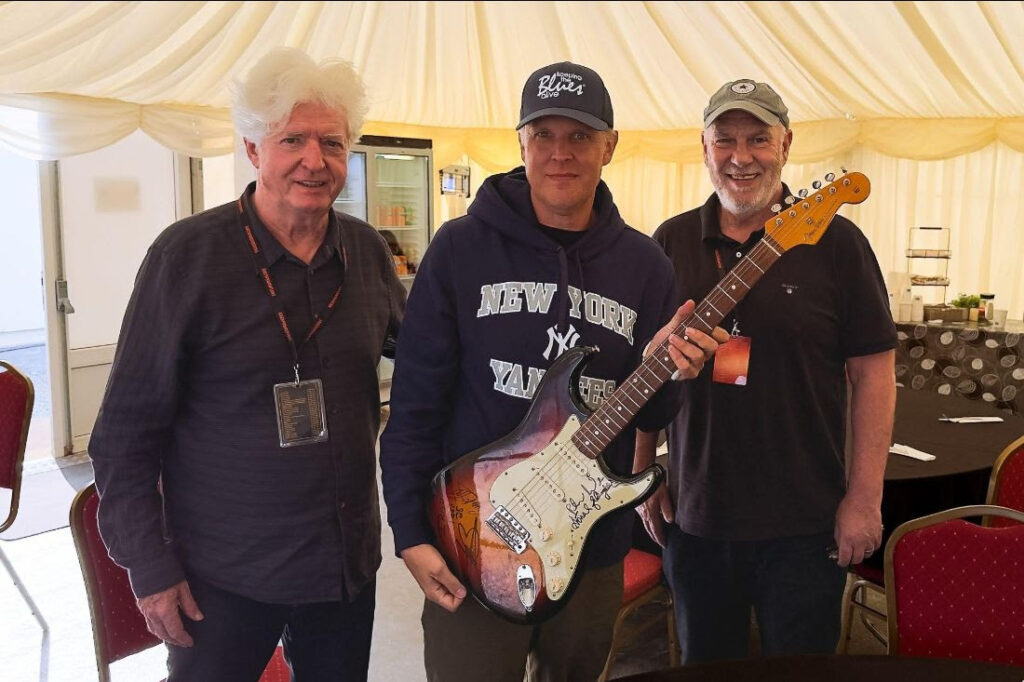
Joe Bonamassa with Rory’s brother Donal Gallagher and Irish Promoter Peter Aiken
The raffle runs from June 19th through July 20th, with donations supporting KTBA’s ongoing mission of funding music education and assisting musicians in need. The centerpiece of the raffle is a Classic Series ‘60s Fender Stratocaster personally purchased by Bonamassa at Cork’s legendary Crowley’s Music Centre and was subsequently signed backstage by Bonamassa, members of the band, Rory Gallagher’s family and others involved in the historic event. The prize package also includes a Joe signed copy of the Red Marble Double Vinyl, a CD/DVD or CD/Blu-ray package, and a $100 merchandise credit to the Joe Bonamassa online store.
Ultimately, The Spirit Of Rory Live From Cork stands as both a celebration and a thank-you letter – from one guitarist to another, from one generation of blues musicians to the next, and from a devoted fan to an artist whose influence continues to resonate decades after his passing.
As Bonamassa wrote in the project’s liner notes: “What you hear on these recordings is our best effort to pay tribute to Rory Gallagher, a man I never met, but admire so deeply. His music is part of me and I’m grateful that we were able to contribute in some small way to his ongoing legacy.”
CD Track Listing
1. Cradle Rock (Live)
2. Walk On Hot Coals (Live)
3. Tattoo’d Lady (Live)
4. I Wonder Who (Live)
5. Calling Card (Live)
6. Who’s That Coming? (Live)
7. Messin’ With The Kid (Live)
8. Bullfrog Blues (Live)
9. Treat Her Right (Live)
10. Bad Penny (Live)
11. I Fall Apart (Live)
12. A Million Miles Away (Live)
13. As The Crow Flies (Live)
14. Back On My Stompin’ Ground (Live)
DVD / Blu-Ray
1. The Spirit Of Rory (Opening Scene)
2. Cradle Rock
3. Walk On Hot Coals
4. Tattoo’d Lady
5. I Wonder Who
6. Calling Card
7. Who’s That Coming?
8. Messin’ With The Kid
9. Band Introductions
10. Bullfrog Blues
11. Treat Her Right
12. Bad Penny
13. I Fall Apart
14. A Million Miles Away
15. As The Crow Flies
16. Back On My Stompin’ Ground
17. Ballycotton (End Credits)
DVD / Blu-Ray Bonus Features:
- Ballycotton – A Million Miles Away
- Rory’s Acoustic Guitar
- The Inspiration of Rory (A Conversation with Brian May & Slash)
Vinyl (180 gram Red Marble Double LP)
Side A
1. Cradle Rock (Live)
2. Walk On Hot Coals (Live)
3. Tattoo’d Lady (Live)
4. I Wonder Who (Live)
Side B
5. Calling Card (Live)
6. Who’s That Coming? (Live)
7. Messin’ With The Kid (Live)
8. Bullfrog Blues (Live)
Side C
9. Treat Her Right (Live)
10. Bad Penny (Live)
11. I Fall Apart (Live)
Side D
12. A Million Miles Away (Live)
13. As The Crow Flies (Live)
14. Back On My Stompin’ Ground (Live)
U.S. SUMMER TOUR 2026
June 26 – Bethel, NY – Bethel Woods Center for the Arts w/ JJ Grey & Mofro & D.K. Harrell
June 27 – Atlantic City, NJ – Ocean Casino Resort
June 28 – Newark, NJ – New Jersey Performing Arts Center
July 4 – Sioux City, IA – Saturday in the Park
July 29 – Vienna, VA – Wolf Trap w/ Gov’t Mule
July 31 – Bangor, ME – Maine Savings Amphitheater w/ Gov’t Mule
August 1 – Gilford, NH – BankNH Pavilion w/ Gov’t Mule
August 3 – Hyannis, MA – Cape Cod Melody Tent
August 5 – Bridgeport, CT – Hartford HealthCare Amphitheater w/ JJ Grey & Mofro
August 7 – Selbyville, DE – Freeman Arts Pavilion
August 8 – Baltimore, MD – Pier Six Pavilion w/ Gov’t Mule
August 9 – Youngstown, OH – The Youngstown Foundation Amphitheatre w/ Gov’t Mule
August 11 – Huber Heights, OH – Rose Music Center at The Heights
August 12 – Highland Park, IL – Ravinia Festival
August 14 – Interlochen, MI – Kresge Auditorium w/ Gov’t Mule
August 15 – Welch, MN – Treasure Island Resort & Casino w/ Gov’t Mule
August 16 – Lincoln, NE – Pinewood Bowl Theater w/ Gov’t Mule
August 19 – Cheyenne, WY – Cheyenne Civic Center
August 20 – Salt Lake City, UT – Eccles Theater
August 22 – Albuquerque, NM – Sandia Resort & Casino
August 23 – Morrison, CO – Red Rocks Amphitheatre
September 26-27 – Austin, TX – Eric Clapton’s Crossroads Guitar Festival @ Moody Center
EU FALL TOUR 2026
October 21 – Helsinki, FL – Veikkaus Arena
October 23 – Stockholm, SE – Stockholm Avicii Arena
October 24 – Oslo, NO – Oslo Spektrum
October 25 – Gothenburg, SE – Göteborg Partille Arena
October 27 – Copenhagen, DK – K.B. Hallen København
October 29 – Rostock, DE – Stadthalle Rostock
October 30 – Berlin, DE – Uber Arena
October 31 – Dortmund, DE – Westfalenhalle
November 4 – Milan, IT – Unipol Forum
November 6 – Toulouse,FR – Zenith Toulouse Metropole
November 7 – Barcelona, ES – Barcelona Sant Jordi Club
November 8 – Madrid, ES – Madrid Palacio Vistalegre
November 11 – Wroclaw, Poland – Ethno Festival
ABOUT JOE BONAMASSA
Blues-rock superstar Joe Bonamassa is one of the most celebrated performing musicians of his generation. A five-time GRAMMY-nominated artist and 15-time Blues Music Award nominee – with four wins – he recently notched his 30th No. 1 album on the Billboard Blues Chart with B.B. King’s Blues Summit 100, extending his record for the most No. 1 albums in the chart’s history. With more than 50 releases spanning studio and live recordings, he has built a far-reaching, multi-genre catalog.
Beyond performing, Bonamassa plays a central role in today’s blues landscape as a producer and curator. Working closely with Josh Smith, he has produced albums for artists including Joanne Shaw Taylor, Marc Broussard, Larry McCray, and Jimmy Hall through his Journeyman and KTBA labels. He also curates and headlines sold-out destination events like Keeping the Blues Alive at Sea and Sound Wave Beach Weekend, while his Keeping the Blues Alive Foundation has funded hundreds of music education projects across the country.
A dedicated student of the instrument, Bonamassa is also known as one of the world’s leading guitar collectors and historians, with a deep connection to the lineage of blues and rock. For more information, visit http://www.jbonamassa.com.
PART 3 – Rod MacDonald Talks About Songwriting, Performing, and Memorable Performance Moments
By: Rick Landers
Guitar International and the masterful singer-songwriter, producer, author and music historian-presenter, Rod MacDonald, continue our conversation about Rod’s music career, including challenges, songwriting, memorable performances, and the quiet times of creating and situational flexibility to change to meet audience dynamics.
If you missed the beginning of our conversation, please go to PART 1 HERE! and PART 2 HERE!
“A keen sense of humor, an ingratiating way with romantic songs, and just enough recklessness to keep an audience wondering.”
Buffalo Daily News
“Rod MacDonald is a brilliant folk singer and composer. His melodic songs possess words that go straight into your heart and soul.” Atlantic City
(NJ) Press
“One of the most highly regarded singer-songwriters working in North America today”
Fast Folk Musical Magazine
CHECK OUT ROD’S 2026 CALENDAR!
Rod MacDonald
Rick: It seems to me that based on what you’ve done, the amount of things that you’ve done, it takes a certain amount of discipline and some resilience not only to start a project, which is always kind of fun, but getting to be the finish line seems to be probably the last 5% of a project is the hardest part of the project. So, it sounds like you’re a finisher, you like to get things done and you do that last 5% and get it right.
Rod MacDonald: I do like to get things done. I’ll even do things that I know I’m not going use just to finish them and then put ’em aside and say, “Well, okay, but at least this is done if I ever want to come back to it.”
That’s definitely part of my personality, no doubt about it. I like to finish things and I like to finish them to the degree that I think that they’re where they belong, that they’re as good as they can be. I don’t like to leave things unfinished very much, unless I feel like every once in a while you come to a place where you think, “Well, I don’t think this is going to get any better no matter what I do, but I still don’t think it’s good enough to release.”
Andt then you have to let go of it. The song will occasionally end up that way. And then sometimes I’ll put it on my website as an archival recording later on and say, “Because it’s the only recording of this song. And every once in a while somebody will write me a letter or an email or say, “Hey, have you ever recorded such and such a song? I heard you do it at a gig and I loved it and I’d love to get a copy of it.” And then that’s what I’ll send them, that kind of thing.
But, yes, I am definitely a finisher.
Dan and I work very well together. I’d have to give Mark a lot of credit as leading me through a lot of the processes of recording and finishing work, but I’m finicky about the details. I’ll send a mix back and have him correct it just because I hear something going in the background at some point in the mix, I’ll make run, another one without that in it, that kind of thing. I’m very finicky about details, but I do finished work.
Rick: When you’re writing your songs, other than with Mark writing your own books, when you write your workshop stuff and your seminar stuff, that’s kind of a loner type of a world. And then you go out and you perform, which is more of an extrovert situation. So, how would you define yourself?
Rod MacDonald: I’m a little bit of both. I don’t think I’m naturally an ebullient person. I’ve come across artists who say,”The stage is my home.” I definitely don’t feel that way. I have to get up on stage and work my way through it.
I even had a woman once offered to pay for me to take lessons and how to smile more on stage. And I asked a friend of mine who’s in theater who teaches acting to teach me how to smile more on stage. And he’s a guy that’s come to a lot of my shows and he thought about it for a second and he said, “No, I won’t do it.”
“I said, really? Why not?” And he said, “Because, one of the things I like about watching you perform is watching you wrestle with it. And I don’t want to teach you how to be slick. I don’t want to see you be slick.”
And so I guess that’s a good analysis of the fact that I do have to wrestle with it a little bit. Years ago, back in the 1990s, I was traveling in the Midwest and I was holed up for a couple of days between shows and this woman who was affiliated with the club that I was there to play, very nice lady, asked me if I would like her to read my horoscope chart.
I said, “Well, I dunno, that’s kind of a personal thing.” And she said, “I’m really quite good at it and I rely on real material, real fixed material. I don’t just make it up. So, we had an afternoon hanging around, we were drinking coffee, and I said, “Okay, go for it.”
And one of the things that she said to me, I’m not sure if I have this exactly right, was that because I’m a Leo as a sun sign, but my moon sign or my birth sign rising sign, one of those is in Saturn. She said that I’m an unusual combination of a person who has both the ability to jump to the forefront of a situation and really be a leader of it, or alternately sit at the back of the room and very quietly observe everybody else. She said, there are very few people who have this dual ability, but you do. I absolutely understood what she meant right off the top. I had no problem. I didn’t at all go “Really? I never thought of that.”
I had never thought of it consciously, but I instinctively knew that it was true. I do have those two abilities. I often get put in leadership situations. In fact, almost every situation I’ve ever been involved in, people have put me in a leadership position without my even asking them to.
And then I sort of direct traffic. I think that one of the reasons that I’m good at it is that I don’t do it from a very egotistical point of view. I don’t sit there and go like, “Oh, I’m so important or anything like that. I kind of do it from a very pragmatic point of view, where I try to get the best out of everybody involved and let everybody do what they want to do and somehow make it make sense.
I’ve been the band leader of almost every band I’ve ever been in, even though I’m almost never the best musician in the band. In fact, I don’t even want to be the best musician in the band. I like to surround myself with better musicians than myself and then kind of direct traffic and get everybody to maximize what they do, without them having to think about telling everybody else what to do. So that is one reason why I think I’ve worked well with other musicians, probably a personality thing.
And then at the same time, I do have the ability to sit at the back of the room and listen and just kind of take it all in. And maybe this has allowed me to be a bit of a producer of my own recordings, but also of other people. I’ve produced a few recordings for people. I’ve directed a little bit of traffic. Sometimes people have invited me to their sessions and they’ll ask me what I think and I’ll diplomatically tell them and they’ll sometimes even do what I suggest. So I think that’s true. That’s something I can do both ways. So, I do find that the introspective part of it can be very rewarding.
When I feel really tuned into the writing, which isn’t always but does happen, and that’s when I write, is when I feel connected to it. And it’s an irregular thing. It’s something I can cultivate, but it’s also something that just kind of springs on me sometimes when I feel connected to the writing. It feels great when you have something that comes through and you are able to get it down in such a way that you feel makes sense. I really love that feeling. And it’s a solitary thing, absolutely.
It’s just you and the bull and you end up working your way through it. And sometimes it can be draining. I’ve burst into tears, fortunately, nobody else is around to see me feel like I’m embarrassing myself when that happens. But I’ve had that feeling in the writing process, and then you have to kind of try to take that out to the public.
The funny thing is that I didn’t understand that dynamic when I was young. I think I actually learned it from the process, specifically. This isn’t the only time it’s happened. When I was younger, I used to write songs that I think I thought people would like; happy, upbeat, kind of funny type stuff. And people liked them, okay, but they weren’t the songs that they were blown away by. They weren’t the memorable songs for people.
When I wrote “Cross Country Waltz”, which is one of my earliest songs on the White Buffalo album, and when I wrote American Jerusalem in 1978 or so, I played it for a songwriting workshop that I was going to with my peers in the Village. And everybody listened to it, and nobody said a word after I played it. Nobody said a word to me except my roommate, Tom Inandi, who was a former English teacher in high school who had become a singer-songwriter in the Village. And he was my roommate. And he was a great influence to be around because he didn’t really write words himself, but he really understood lyric writing on a listener level. And he looked at me after that song and he said, “I’m going to learn that.

And then Shawn Colvin said, “Can you teach me that song?” She learned it away right after I wrote it. Didn’t record it until 2015 or something, but she learned it right away and sang it all these years. And then I was playing a gig at Folk City one night and I was opening for somebody and I was playing some, what I thought the audience favorites were supposed to be.
Lucy Lansky, who’s a pretty good singer and writer herself, was the bartender. And she yelled from behind the bar, “Aren’t you going to play American Jerusalem?” And then everybody in the crowd who’d never heard the song kind of went, “What’s that?” And so I played it, and of course, it’s six minutes long and it’s very quiet, it’s very personal, and they really loved it. And everybody started asking me to play this song.
And somewhere in that process I realized that it’s okay to really externalize your inner self in song, that that’s to a great extent, what people actually most want from you.
So, if you can get to that place where you’re really kind of expressing your most inner feelings about things, and that’s what people are mostly going to remember, most of those songs come about spontaneously. They might get triggered by hearing a phrase or thinking, “I’d like to address this kind of situation,” or whatever it is. But most of those songs as songwriters often say, they kind of write themselves. It’s like they’re passing by and they choose you to download. And that’s often the most memorable songs in your repertoire. I think for most songwriters,
Rick: Well, maybe they resonate because they align more closely with your core values.
Rod MacDonald: Well, and maybe they also resonate because that’s probably true, even if you’re expressing them poetically. And I think also it’s probably true that when people see you sing those songs, they think that’s the real you. Oh, this is the real guy here.
Rick: True.
Rod MacDonald: This isn’t the guy who’s put on some happy mask. For my sake, this is the real guy. And people are drawn to that. I mean, we all loved The Beatles, and John Lennon said he never wrote a song that meant a thing to him until “In My Life”, which is what, their fourth or fifth album. So there is a place in music, especially popular music for well constructed songs, you might say. But I think that at the end of the day, what people really want is the real deal, and that’s you, something that you have to work at, but it’s kind of a gift when it comes to you.
Rick: Yeah. So do you have a favorite setting where you maybe prefer to perform? Concerts, small venues, festivals, and do you have any favorite or humorous performance moments?
Rod MacDonald: Oh, geeze. Well, everybody who’s done as many gigs as I have has humorous performance moments. But I don’t know. I like a lot of it. When I moved to Florida was playing in bars. I’d never done much of that when I was living in the village. I never really liked it because I didn’t like subjecting my own songs to the noise.
But I found that playing in the Irish Trio in West Palm Beach on weekends, for years, that I became a much better musician. And I got a lot of satisfaction out of that. And in fact, a friend of mine who’s maybe my oldest real good musician friend came down and visited me during that time. He’s in the traditional music world, he’s a mandolinist. And he sat in with us and he said, “You’re really getting better. This is a good thing for you to be doing. You’re going to become a much better guitar player from doing this on a regular basis.”
So I like that. I like anything that I feel is a fun experience and I of course love any fun experience when the audience really responds and gets it, that’s great. And they get it a lot of the time in almost any real listening situation. I think audiences like my songwriting and singing, and I play a fair amount of gigs where they’re unfamiliar with me because frankly, I’ve not been marketed by anybody.
So, I can show up in a city somewhere in another part of the country that I’ve never been before. And the audience that’s there is largely going to be, you might say, speculative. They’re going to be there because the promoter of the gig told them, “Hey, this guy’s really good. You should check him out.” Or there’s an article in the newspaper, or they heard one song on the local folk radio station and they’re deciding, “Okay, I like that song. I’ll go see this guy. I like this series. I am a regular member of this series, so I guess I’ll go see this guy.”
Click here to view the embedded video.
I play a fair amount of shows like that, and they’re usually very good. I think that I do well with those audiences. I like those kind of shows. I like the challenge. And then there are some places that I play. I play The People’s Voice Cafe in New York City every February. And the Turning Point in Piermont, I do that almost every year. And in fact, I’ve done the People’s Voice Cafe now for 15 years in a row. Really the same weekend every year. And a lot of those people that come are my long, loyal, longtime fans, and they could tell you or probably request songs that I do that I haven’t played in years.
And I’ll try to accommodate one or two of those requests. I like to challenge myself almost every show. I do one song that I haven’t played in a while, that I haven’t played for an audience so that each audience gets something special and unique out of me.
I love festivals. I just played Falcon Ridge this past summer, and that was really great. That was fun. I was on the main stage twice. One of the times was solo, and one of the times was with Joe Jenks and Pete and Maura Kennedy, and those were really fun. I do some Dylan Fests where everybody plays Bob Dylan songs. I’ve done a lot of those with Pete and Maura. Those are really fun. I suppose my least favorite gig is places where people really aren’t there for the music. They’re just okay. I mean, you do your best with those, but they’re not as much fun as playing for a crowd that’s really there to hear your music.
Rick: Like listening rooms are pretty good.
Rod MacDonald: But okay, let me off the top of my head, let me see if I can free associate some memorable, bizarre situations.
I played in Zagreb, Croatia, twice, once in about 1997 and once in 2024 for the same promoter both times. And the first time we went there, the first gig was in a gymnasium that would’ve easily held 5,000 people. And we were on the stage at one end of it and about a hundred feet away, collected in the middle of the basketball floor were about a hundred chairs where people were sitting when we started to play.
I could not make a thing out on stage. I mean, we had monitors, but the volume that it took to project out to the audience and the emptiness of the room created so much echo that it was like that psych experiment where they put your headphones on you and then delay your voice while you talk until you can’t talk anymore , because you just can’t separate the reflection from the real thing. And it was so weird. And we played one song and we finished the song and it was just total soup on stage. We played one song and the entire audience stood up and started cheering and clapping, and we kind of looked at each other and went, “I guess it sounds okay to them.”
So we just slugged our way through it, and they absolutely loved it. They thought it was a brilliant concert. So there’s an example of where you really have to know what you’re doing on stage. You have to be able to execute your music even when the situation that you’re listening to is just awful.
Then the very next night, we played a huge dance club for about a thousand people, and there were actually a thousand people in the club. And the speakers, they had these subwoofers under the stage because they were blasting disco music in between. And every note that Mark hit on the bass made my teeth rattle. I mean, it was unbelievably loud on stage, and I couldn’t function, and we didn’t get to do a soundcheck. They put us up in front of a thousand people with no soundcheck. So I plugged in my guitar and he plugged in his bass, and the next thing I know, it’s like, “Oh God, this is painful.” And the sound man doesn’t speak any English. So I’m pointing at the bass and to the floor. And he thinks I’m meaning, turn it up, turn up what’s underneath me. And I’m going like, “No, please turn it down, turn it down.”
And finally somebody went over to the guy and I guess understood English and said to him, “He means turn the bass down.”
And we finally got it down to where it was possible to stand on stage and play. And so we started off with a song of mine called “The Aliens Came in Business Suits”, which is from White Buffalo back in 1986 or so. And it’s the very first song that I wrote that was a spoken word piece, but it’s a real guitar extravaganza. There’s a lot of instrumental work in it.
Click here to view the embedded video.
And they were yelling and dancing and jumping around like crazy, all right in front of the stage, like a big rock arena type show. And we’re cranked up and we’re just acoustic guitar and bass. And we got through it and they went nuts. And so I turned to Mark and I said, “We’re just going to play all of my loudest and fastest songs here. That’s what we’re going to do.” And so that’s what we did, and we ended up having a pretty fun time with the crowd loving it and stuff. But I mean, you have to be able to react to the moment sometimes, particularly because we’re not one of those acts that arrives in a bus with our own sound crew. We’re getting up and playing.
You have to be able to tell the sound guys what you need, and you have to know what that is in each situation. And then on the same tour in rural Italy, at one of those places that’s like on a farm somewhere where they make all their own salami and wine and bread and cheese, and they’re hoping that people from the town will drive out.
And so we are in this restaurant with about 20 people in the audience and the sound system and a kind of a vacuum cleaner. It’s like this hose that you put in front of you and you sing into, and it sounds like you have to force your vocal into this tunnel. And then it comes out the other end of this device that’s sitting next to you on the stage going so loud that it’s drowning out everything you’re doing.
And I looked at the guy that was, and he was very proud of his P.A. I said, “We can’t use that.” And he goes, “What do you mean? And I got him to shut the thing off, and we just sang and played. Fortunately, I can play and sing loud enough into a small room, they can hear it. So we just did the concert with no sound at all. So again, it’s a situation where you have to be prepared. I remember talking about this recently, I was playing Easter Sunday at Folk City with a five piece band.
My piano player, a guy named Bernie Shanahan, who was a very good rock and roll piano player and a good guy…was kind of religious, Catholic. And we were playing on Easter Sunday, and he wanted to watch Jesus of Nazareth, which was being broadcast as a special on some TV network. So we watched Jesus of Nazareth before going over to do the gig, and then we got there and he said, “We shouldn’t do this show.” I said, “Why is that?” And he said, “It’s sacrilegious to be playing our music on a night after watching something like that.” I said, “There’s nothing sacrilegious about our show.”
Well, we did have one song called “All of the Same Old Saviors” that was kind of a not very religious type song. And so we got up on stage and I was playing electric guitar and Folk City in those days had a pretty primitive P.A., probably had the same P.A. he’d had for 25 years. And we started into the first song and the sound man flipped the ground switch like 30 seconds into the first song and sent a bolt of lightning through the microphone into my nose!
Knocked me flat backwards into the drum set, knocked over the drums, and of course the music came to a grinding stop and the audience was horrified. Well, we had done a soundcheck, and then he flipped the ground switch during the first actual song. So we got back up and Bernie looks at me and he goes, “I told you, I told you.”
And then the sound man waves at me. And he goes, “It’s okay. I got it fixed. But I did the rest of that night, really keeping my distance from the microphone, which of course is pretty tough to do because you’re singing in front of a band and it’s loud on stage. I mean, there are those things, and then there are other things. Sometimes stuff happens that’s just, I don’t know, kind of crazy. And sometimes it’s a happy accident when something happens.
Click here to view the embedded video.
I was playing one time at the Florida Folk Festival. There’s this pavilion down by the Suwanee River that’s kind of a legendary venue run by a longtime guy who’s no longer with us. And they didn’t use a P.A. It was like a gazebo on the river, and there’d be 50 people there and you’d just sing to ’em.
And there was a Chinese couple and they had their little daughter with them. And she was very young, very, very pretty little girl, two, three years old, whatever it was. And I started singing a song called “I’m Your Dad,” that I wrote for my daughter when she was first born. And this little girl wearing this really pretty little blue dress, started dancing around in front of me, holding her arms up to the sky. She was creating wings for herself and just dancing around in a circle. And she danced around in front of me for the whole song. And the audience was just spellbound, me included. I mean, could barely, it was so beautiful. I almost forgot where I was several times in the song. And it was just a really beautiful moment. And then when it was over, she went back and sat with her parents for the rest of the set, and I just went on.
Afterwards everybody came up to me and said, “Oh God, that was so incredible!” And it really was, was just a beautiful thing. But then on the other hand, here’s another one. When my rock and roll band was playing in Hartford back in the late Seventies, we used to play a song called, “I Don’t Believe You Don’t Want To Dance”. I never released it commercially, but it’s actually on this USB drive that I just released this past year. It’s an older song and it’s a very uptempo song, a real dance number. And there was a dance floor at the club that we were playing, and people got up and danced a lot if we played anything that was fun to dance to.
And so we started playing that song, and I think it was the end of the night. It was the very last song of the night. And we started playing that song. There was this guy who was kind of short and there was this very tall six foot blonde woman, very slender, very pretty, and for some reason they ended up on the dance floor together. I don’t know if they were a couple. And he started dancing really vigorously trying to get her attention.
And she just looked at him like, who are you? And he didn’t quit. He did this for the entire song. He danced, rings around her, he just chugged around her in this circle. And then everybody else on the dance floor backed off and started clapping and watching him. And this guy put on this amazing show dancing in a circle around this girl who clearly didn’t want anything to do with him, but didn’t know what to do. And she was kind of looking out across the crowd for one of her friends to come bail her out. And wherever her friends were, they were probably clapping along for this too and maybe didn’t realize, but we could see from the stage that she was really not very comfortable with this. We kept playing this song, and one of the members of my band was a woman, Peggy Atwood, and she kind of looked at me, raised her eyebrows, “Are you going to wrap this song up to this Poor girl Can get away?” But the song had a real fixed arrangement, and there was a lengthy guitar solo that was part of the arrangement, and we weren’t going to tell the guitar player that he couldn’t play his solo. So we played the entire song, and this went on for five full minutes of this guy dancing in rings around this girl. And finally we ended this song and the lights came on, I think while we were still playing the song, which the restaurant had a very strict policy when the lights came on, stop playing, get it over with. So we were done and the girl walked away and just turned her back on the guy, and everybody walked away and everybody kind of applauded for the guy what he’d just done. He’d really done this amazing dance.
Was like a meeting dance. I couldn’t describe it any other way, but it obviously didn’t work. And then in that same club on another night, we were playing, I think in about 19, the spring of 1980, and it was right after the Iranian hostages had been released,
And somebody walked up to me while we were on stage and said, “Do you know that there’s one of the Iranian hostages is in the audience? And I said, “No kidding. Ask him if he’d like to come up and say a few words. And we played another song and the guy came back up to me and he said, “Yeah” that he would be glad to do that. So I said, “Okay”.
Well, we got a couple more songs to do this set and then I’ll invite him up. So we did. And then I said, and the audience, it was a big dance club, and so there were people drinking and partying, and it wasn’t like a quiet crowd, but it was a responsive crowd. They would clap and cheer at the end of songs, a noisy crowd. I walked up to the mic and I said, we have one of the hostages recently back from Iran here tonight, and it was the most amazing transformation. Everybody jumped to their feet and started cheering and clapping. Up until that moment, I wouldn’t have believed that everybody was paying that much attention to anything I said.
But they jumped to their feet and started cheering and clapping immediately, like everybody in the place all the way to the far end of the room had heard what I said. I thought, “Holy smoke!” And then they clapped and the guy walked up through the crowd and he got up on the crowd to the microphone and we stepped back, and I guess I stayed on stage. I didn’t want to abandon him up there. Well, I figured what I would do would be when he was done that there’d be a big round of applause, and we’d say, “We’re going to take a break. We’ll be right back.” We stayed on stage and he said to the crowd, “Thank you for that welcome.” And then he paused for a moment and he said, “I have to tell you that for quite some time, we thought that people had completely forgotten about us. And the mood in the room suddenly turned unbelievably ugly. I looked out at the crowd and I thought they were going to walk up on stage and beat us all to a pulp. Really, you could see the anger rising in people. And I thought, “Oh my God.”
I remember the lead guitar player Bill turning to me with his eyes wide, we got to get out of here. And then the guy said, “But you’ve just shown me that that wasn’t true. Thank you so very much.”
And he walked off the stage and then there was this kind of half-hearted applause, but everybody chilled. And I said, “Okay, thanks everybody. We’ll be right back.” And we got the hell out of there as fast as we could. And you learn a basic lesson from that, that if you do that, you better be prepared for whatever reaction you might get.
I mean, those are some of the magic moments I’ve been thinking lately about a song of mine called,”The Minstrel Boy” that I want to record that I’ve wrote 30 or 40 years ago and recorded a couple of times, but never released.
And it has a line in there. “You sat out on the highway looking for a living, trying to remember the people are listening with an ear or two though they may sleep through your finest lines. You walk along the shore, you sleep out in the dirt, you used to know the score, but now you’re really searching to one night they’re quiet and you feel it all light up before your eyes. It makes the man a minstrel boy.”
And I was trying to remember the first time that really happened. I think that it was probably me at Folk City in the 1970s that I had really been yearning to really get over to an audience that I was really motivated to play and sing my songs, but that I really kind of needed to have that happen. I know that it happened at Folk City one time I was playing.
Click here to view the embedded video.
I played two of my quietest and longest songs, “American Jerusalem” and “Sandcastles” at the end of my set back to back and got this really amazing encore from the audience, and it was like a really beautiful moment. And then I went back up on stage and played another song and everybody really loved it. And I just thought, “Wow, it was really magical. But I was the opening act and the headlining act, instead of taking a break, rushed up on stage and said to the crowd, “Thank you for staying through all of that.” What? A couple people booed her.
Rick: Wow.
Rod MacDonald: A couple people booed her for her lack of grace. It was kind of weird.
Rick: Yeah, it was weird. Jealous. Sounds like it’s jealousy,
Rod MacDonald: Insecurity, insecurity.
Rick: Your competition.
Rod MacDonald: You can’t think of opening acts that way. I’ve opened for a lot of people and the best of them always walk up and say something nice about you, even if you didn’t have that great a set. They’re just smart enough to say that and move on. I remember opening for Tom Rush and having a really great set once and getting an encore, and he walked up on stage and he goes, “How about that Rod McDonald?” That’s all he did. Everybody gets to clap a little more. And he goes “Okay! And then he goes into his thing and I thought, “Class act.” Exactly the way you want it handled. Really nice man and a gracious person. It’s part of his DNA and that’s a good thing.
I mean that’s something actually that I strive to emulate when you witness something like that, you think I want to be like that. I have guys open for me all the time too, guys and women in groups and whoever, and you always want to say something nice about ’em.
Rick: Yeah, it’s honorable to do that as well, I think.
Rod MacDonald: It’s honorable, but it’s also that everybody who gets up on stage is putting themselves on the line. It takes a certain amount of courage, even if you’re naive, even if you’re blind, even if you’re a maniac, it still takes a certain amount of courage to get up there and do that.
But anyway, when I sang those two really quiet songs and realized the most personal stuff sometimes is the most magical thing, and the people just lit up before my eyes. It’s what happens. And that’s kind of what you want to have. And as you get better and better, that happens more and more as you get more, I mean, I started out without a lot of experience doing this. Some people start playing when they’re 12 years old, but I did not, I never really faced an audience with a guitar in my hands till I was in my twenties. So, I had to really kind of figure it out.
BONUS VIDEO!
Click here to view the embedded video.
Roger McGuinn Interview: The Byrds, Martin Guitars and Home Recording
Here’s a classic Guitar International interview from Feb 16, 2006.
Roger McGuinn Interview
by Rick Landers
 During the mid-60s, the US music scene was overwhelmed with rock groups from England, to the point where the phrase “British invasion” entered the American lexicon. In response, one homegrown U.S. group emerged to fill the airwaves with a new and unique sound that became known as folk rock.
The Byrds.
The Bryds were fronted by Roger McGuinn on vocals and his chimey 12-string Rickenbacker. The group laid down the gauntlet with a string of singles with McGuinn’s signature “jingle jangle” guitar work shining through with strong melodic undercurrents.
Although, Roger was certainly the hub of the group, David Crosby, Gene Clark, Chris Hillman and Michael Clark were equals when their mix of personalities, musical influences and individual talents sparked, igniting hits like “Mr. Tambourine Man,” “Turn, Turn, Turn,” “So You Wanna Be a Rock ‘n Roll Star,” and “Eight Miles High.” All of the songs are enduring classics that conjure up the phantasmagorical subculture of the Haight-Ashbury and Carnaby Street scenes, where the air was filled with flower power, peace, love, music, incense and other sweet smells of the moment.
Late in their career, the Byrds settled into their Sweethearts of the Rodeo album that would inspire the Eagles, the Flying Burrito Brothers and others into yet another style called Country Rock. The group disbanded in 1973 and Roger moved on to a solo career.
By 1978, Roger, Gene Clark and Chris Hillman got back together and signed a six album deal with Capitol Records and released their first LP McGuinn, Clark & Hillman (Capitol Records — 1979). Unfortunately, the group didn’t capture the magic or success of their previous collaboration and eventually moved on. There were more fitful starts and stops and by the 1980s, Roger’s solo career again made sense.
Born James Joseph McGuinn III in Chicago on July 13, 1942, by the time Roger reached his teens, he was inspired by such songs as “Abilene,” “Well, Well, Well,” and “You Can Tell The World” and their co-writer, folk legend Bob Gibson.
Before forming the Byrds, McGuinn toured with the Limeliters, the Chad Mitchell Trio and backed up the inimitable Bobby Darin as a guitarist and banjo player.
A folk singer at heart, McGuinn has maintained the storytelling tradition of that genre in his songs for his entire career. This coupled with his sense of musical composition and other talents have blessed him with not only a long career, but one where the name Roger McGuinn is well respected and recognized around the world.
In 1991, McGuinn, along with the Byrds, was inducted into the Rock n’ Roll Hall of Fame. That same year he released his superb Back From Rio CD that included a cast of luminaries like Elvis Costello, Tom Petty and the Heartbreakers, David Crosby, Chris Hillman, John Jorgensen and Michael Penn.
Always a traditionalist, McGuinn again journeyed back to his roots in 2002 when he released Treasures From the Folk Den with a series of duets that include Pete Seeger, Odetta, Josh White Jr., Joan Baez, and Judy Collins. This highly acclaimed CD was nominated in 2002 for a Grammy in the Best Traditional Folk Album category.
As an early adopter of new technologies, Roger has gained expertise in the area of home recording and in 2004 issued the DVD Roger McGuinn’s Guide to Home Recording on a Computer. The DVD is an instructional course that takes viewers through editing, fading, and mixing a recording as he lays down songs track by track. At one point, he makes a mistake, then takes the time to show his “students” how to fix it.
McGuinn has two other DVDs available, one that gives instruction on twelve-string guitar (The 12-String Guitar of Roger McGuinn) and another on how to play folk guitar (Roger McGuinn’s Basic Folk Guitar).
This year McGuinn released The Folk Den Project 1995 — 2005, a four CD edition that compiles 100 of his favorite folk tunes. The Folk Den effort started out as a way for Roger to help preserve the folk music tradition of handing down music to the next generation and this new set pulls together the best of the best doing just that.
Modern Guitars (Guitar International) met with Roger before he went on stage at the Melodee Music auditorium in Sterling, Virginia, where he sang and talked to the audience about his career, his interests in music, and some of the guitar techniques he’s employed to get that signature McGuinn sound.
******
 Many people claim that you first discovered the 12-string guitar after seeing George Harrison play his Rickenbacker?
Roger McGuinn: The first 12-string guitar I bought was probably around 1957. I was influenced by Leadbelly, Pete Seeger, Bob Gibson and a lot of the folk singers. In the late 50s, I was in Chicago and went to the Old Town School of Folk Music. That’s where I learned about Leadbelly. Leadbelly’s guitar is in the Rock n’ Roll Hall of Fame.
I went to the south side of Chicago and got what I thought was a Stella, but it had a spruce top. It was a nice sounding guitar. I got a 12-string very early on and it wasn’t my main instrument, but something that was certainly part of my repertoire.
On your Limited Edition CD, you pay tribute to George. Was he a friend?
RM: Yes, we were friends. He was very reserved. A really sweet guy, he loved his music, loved his family. Not much to say. We went to his house in Hyde Park and he was kind enough to show us around. He let me play his Rickenbacker that he played on A Hard Day’s Night. Showed us around his studio and we all went out to dinner. Early on the Byrds went to see A Hard Day’s Night, a kind of reconnaissance trip. And we took notes on what the Beatles were playing and bought instruments like they had. We got a Gretsch Country Gentleman and the Rick.
You recorded “Turn, Turn, Turn” before forming the Byrds?
RM: I was sort of a sideman. I was a studio musician in New York. I did quite a few sessions with Elecktra Records. And around 1963, Judy Collins was doing a session at the time. So, Jac Holzman (Founder, Elektra Records) had me recording on a Judy Collins album and I started playing on that track. I ended up coming up with a lot of ideas and by the end of it she gave me a nice, very generous, credit as Musical Director.
What songwriters have influenced you or you’ve enjoyed over the years?
RM: Songwriters, hmm. Let’s see, I loved Lennon and McCartney, Pete Seeger, love his work. Bob Dylan, loved his songwriting. You mentioned Fred Neil earlier, I like his work too. People like Leonard Cohen and Joni Mitchell.
How did the instantly recognizable Byrds sound come about?
 RM: The sound actually was formed in New York before I flew out to California. Well, not the 12-string Rickenbacker part, but the part about mixing folk and rock.
I was working as a songwriter in Bobby Darin’s publishing company in the Brill Building. My job was to listen to the radio and write songs like ones that came over on the radio.
The Beatles came out about that time and I got really jazzed by the Beatles. I loved what they were doing and they were doing a lot of passing chords. Like instead of just going like G, C, D, they’d go G, Bm, Em, C, Am, to D. So, the minor and passing chords I liked and, I thought these are really folk music chord changes. I kind of got it from what they were doing, I guess because they’d been a skiffle band.
I imagined that they were more folk oriented than they really were. I thought they were probably more a folk band that could play bluegrass banjo and mandolin, but they chose to do pop music because it was more commercial.
Turned out not to be the case. But in my imagination this whole thing developed and I started mixing up old folk songs with the Beatles beat and taking them down to Greenwich Village and playing them for the people there. To the point where a guy put out a sign outside that said, “Beatle Imitations.” I was kind of put off by that.
What pulled you to California?
RM: An opportunity came up right after that to fly out to California to play in Doug Weston’s Troubadour. I opened for Roger Miller and Hoyt Axton and took that repertoire out there, the folk music with the Beatles’ beat and the folk purists had kind of a mixed reaction. But that’s not all that were there.
One guy in the audience got it.
Gene Clark came up after the show and said, “I like what you’re doing, let’s write some songs together.” We had the same vision. So that was the nucleus of the Byrds. But the idea of mixing the folk and the rock act came ready-made from New York.
I always got a kick out of it when they called it the California Sound because it really came out of Liverpool and Greenwich Village. [Smiles]
Did Bob Dylan ever say anything about your renditions of his music?
RM: Yeah, in fact he was at our rehearsal hall when we were working up the song “Mr. Tambourine Man.” Not only that song, but we did quite a few of his other songs.
And I remember playing, I think it was “All I Really Want to Do” and he asked, “What was that?” I told him it was one of his songs. And he said, “Ah ha!” He didn’t recognize it. Bobby Neuwirth was there and said, “You can dance to it, that’s pretty cool!”
And they were very supportive of what we were doing with Bob’s music. So, we recorded “Mr. Tamborine Man,” and Albert Grossman tried to stop it. Bob was behind it, but his manager wasn’t. But, it had already gained enough momentum that Columbia couldn’t stop it.
What guitars are on your favorites list?
RM: Well, I guess that early 12 string. The first Martin I bought. I bought it around 1957 with money I earned as a janitor assistant. I bought brand new. I still have that. A five string banjo, a Vega long neck. I traded that for my first Rickenbacker and the first Rick was one of my favorite guitars.
Then, I guess, the Country Gentleman. I liked that a lot. And some of my other Martins. I have a D-12-35. I bought it new in 1967 or 68. I have from around the same time period a Martin D-12-45 which is really pretty. They didn’t make that many of them. I don’t really collect guitars. I like my Rick Signature 12-string model. I like that a lot. I like the Martin Signature 12-sting that Martin made in 1999.
What about the newest Roger McGuinn 7-string by Martin Guitar?
RM: Of course, the HD-7 I’m happy how that came out.
I went to Dick Boak (Director of Artist Relations & Publicity, Martin Guitar Company) and told him we we’re planning a European tour and Air France had broken my D-12-42RM. Dick was able to repair it, but it still had scars and cracks. I didn’t want that to happen again.
I wanted a guitar and thought it would be great if I could get one that had that jingle jangle thing on the G string and be able to bend like a six-string. So, I told Dick about my vision for a composite and he worked out a little design at the tail piece.
We talked about where to put the four strings as opposed to the, you know, three below and four on top. And I wanted D-45 inlays on it and we kept the herringbone. It’s basically a D-28. It’s Indian Rosewood. Brazilian would have kicked the price up. But this one has quite a punch to it! And this is number 7, HD-7. Dick’s idea. So those are the guitars in my life!
Please, tell us about your teaching DVDs.
RM: Okay, Happy Trail approached me I guess about 5 years ago to do one. The first one was a 12-string Rickenbacker oriented DVD where I actually show you how to adjust the tension rods in the neck by taking the plate off and how to change strings. Also, how to change the battery because it has a built in compressor circuit.
The sound we got with the Byrds uses two compressors run into each other. I had the compressor built in to the guitar and it sounds very much like it.
So, I do that and I play a couple of songs and demonstrate how it works. That’s basically the first one.
The second one is a more simplified folky one. I play a couple basic folks songs and break them down. I did that on a six string. I can’t recall all the songs on it. There’s some finger picking on it. Somebody actually complained on Amazon.com saying “This is NOT basic guitar! He’s finger picking and flat picking, so many beats per minute!” [Laughs] It does have that, but it also has some slowed down parts, so you can learn them.
And the third one, probably my favorite, is the DVD on how to record on a computer.
I heard you’re quite the gear head?
RM: I am! That’s my favorite subject because it really levels the playing field for artists these days. You don’t have to sell out to the record company. You don’t have to get a five hundred thousand dollars, or whatever, and pay them back for the rest of your life to record a record.
Now, you can just get a laptop, get some software, put a microphone on it and make a record. You have to know how to do it. It does help if you’ve had 35 or 40 years of experience in the studio. But, it still levels the playing field so artists can record their own stuff.
Your CDs are recorded at home?
RM: Yeah, that’s how we did my latest Limited Edition CD. One track was recorded in a studio in Nashville and the other twelve were recorded on a laptop, a Dell laptop. And that’s why I did it. Specifically for that purpose. To prove a point. To show that you could record an entire CD on a laptop.
When writing songs do you first start with a chord progression?
RM: Yes, basically, like you said, I’ll work out a chord pattern and work out the lyrics over that. Once in a while and really the exception, will be when I have an idea, then I’ll write a poem first and then write a tune to the poem.
Have some new chord patterns sitting around waiting for poems?
FM: Yeah, I do have a couple sitting around. Once I’ve written a song, I sometimes refine them. There’s one on the recording DVD, a poem from Ireland, “May the Road Rise to Meet You.” I think I had just put some on some new strings and I went in the powder room in my house and wondered if anyone had ever made up a tune to go with it. I had to revise the words a bit to make them rhyme.
So, I came up with a tune for that and kind of reworked the words so it would rhyme. And then I showed it to my wife, Carmella, when she came home and the two of us wrote down some verses. She’s been helping me since 1978. It was the exception to the rule though to come up with the chords and make up the melody.
Do you think the folk tradition of passing down songs from person to person has died?
RM: No, I don’t think so. I think with the advent of the Internet it’s still a one-on-one experience. When you’re sitting in front of a computer like my folk tune project, you can listen to it in MP3 and see the lyrics and the chords and story about the song. You can listen to it and learn it right off the DVD. It’s still a one-on-one experience for the person who’s watching it. Because you can reach so many more people now, it’s the oral tradition amplified.
Do you prefer smaller venues?
 RM: I love the intimate surrounding. Where it gets to be less enjoyable is when the audience claps and there’s a time delay. So, it has to be a certain number of feet that the sound can travel and still be in the same number of milliseconds, so it will still be acceptable in that meter.
Otherwise, it gets too far away and when they clap there’s a time delay. If it’s like a thousand feet away, then it’s off. It’s off the beat. I like it to stay within the same sonic frame.
What else beside music occupies your time?
RM: Well I love music and it’s what I do for a living. We love traveling. I get to do concerts and travel with my wife, like Charles Kuralt. I have his book and it’s fun reading about his life. And I’m into electronics and computers.
While on stage, how do you weave the old tunes with your newer music?
RM: I do the songs that people want to hear usually at the end of the set. I start out with maybe one, maybe two songs from solos CDs, folks tunes. And then come up with the end of the set with from solo CD and then “Mr. Tambourine Man”, “Turn, Turn, Turn” and “Eight miles High.”
Let’s roll through some quick questions of your favorite things.
Book? The Bible.
Beverage? Water
Song? “Turn, Turn, Turn”
Album? If we’re talking about mine, then it’s the Limited Edition. Others? I like Pet Sounds and Meet the Beatles. My overall favorite is probably a Beatles album. Not Sergeant Peppers, maybe Revolver.
Car? I love my Ford van. I love it! Everything you need, a little house!
Guitars? I like my Martin acoustics and Rickenbacker electrics. Various models.
Quote? “To everything, turn, turn, turn. There is a season, turn, turn, turn. And a time for every purpose under heaven.”
Guitarist? Andre Segovia. Clapton.
Do you have a special concert moment that you cherish?
RM: When I was at a festival and I started singing “The Ballad of Easy Rider” and Odetta joined me on stage. It choked me up. She liked the song and she’d recorded it. It was a real honor.
Do you have any sage advice for musicians who have just had their first hit?
RM: Well, if they already have a hit song, it’s too late to get your deal together. Try to get all of your publishing in your name from now on, so it’s yours. And watch out for your manager. You can’t trust your manager or business manager to keep on eye on your best interests. You want to trust them, but it’s a luxury you can’t afford.
Tell us about your latest Limited Edition CD.
 RM: The latest the one was a response to fans, people on the Internet, e-mails asking me to record another Rickenbacker electric album. My previous two had been acoustic, Treasures from the Photan and Life on Mars. So, I dusted off the old Rickenbacker and did the jingle jangle album. We started it off with the George Harrison tribute “If I Needed Someone,” which was a song we recorded in Nashville.
This is a funny story. When we got to Nashville, I expected to use a 24-track and a board. When we got there we found hundreds of thousands of dollars worth of equipment sitting in a corner and they’re recording with a mouse! And this little computer! I said, “Wait a minute! I can do this at home!”
We recorded the rest at home on a laptop and really just to prove a point. We recorded it in the family room. I did hired musicians and they’d come in and we paid them. It was a real recording session. But it just happened that instead of using the computer in the studio, we recorded it in our house. And studio time was free. It was a much more relaxed atmosphere.
Just how do you get that jingle jangle sound?
RM: The sound is a combination of several things. It’s compressed. I have to credit Ray Gerhard. He’s an engineer at Columbia Records. He came up with the idea because without compression the Rick kind of falls off. It doesn’t sustain a long time. And he compressed that into another, a serial compression.
The other thing is the arpeggio style I play comes more from a 5-string banjo. And then a lot of the folky stuff, like the Travis picking behind the lead break. Underneath it I’m playing (Plays), rolling. So, I’m overdubbing the lead break and doing the rolling underneath it.
I guess that’s the sound. Banjo picking, compression and some other little folk techniques I picked up along the way.
Do you foresee a Byrds reunion concert?
RM: I don’t think so. I’d like to leave it as a good memory. It’s hard to reheat a souffle as Paul (McCartney) said one time. We really couldn’t live up to it. It would be a sentimental thing, people would go, “Nice to see them together!”, but would it be better? I don’t know.
Pages
