
Music is the universal language
“Glory to God in the highest heaven, and on earth peace to those on whom his favor rests.” - Luke 2:14
Norse Guitar Feeds
HeadRush FRFR-12 and FRFR-8 Cab review: “looks and feels like a real guitar amp”

$399 & $499/£279 & £366, headrushfx.com
You have to give HeadRush credit where it’s due; the company realised very early in the game that the rise and rise of high-end modelling was going to necessitate something through which people were going to want something that you could plug it into in order to make some noise.
Being early to the party has made HeadRush synonymous with the full range, flat response cabinets that many players favour for attempting to recreate the experience of actually moving air in a live setting. The original FRFR 112 and 108 Cabs were a hit, without a doubt, but they were quite a difficult sell for a lot of guitar players.
A big part of this was probably down to their looks and form factor. While there was something sensible about the original FRFR Cabs being shaped like a monitor wedge, and for having the same rugged plastic build and vibe of a PA speaker (no doubt informed by the experience of parent company InMusic, which owns a bunch of DJ- and producer-adjacent brands like M-Audio and ION), it looked a little out of place on stage for a guitar player.
In the last year or two, perhaps driven by the entry of Fender’s Tone Master FR-12 into the market with its classic Fender combo amp looks, FRFR cabs have been getting a lot more amp-like. A perfect moment then, for HeadRush to enter with its brand-new and overhauled FRFR Cab range of two models – which have a much more classic look.
What Is It?
While HeadRush still sells the original wedge-shaped FRFR cabs, this new version comes in two similarly spec’d solid-state flavours – a 750-watt version with a 12-inch main speaker, and a 480-watt with an 8-inch main speaker. Both have the same 1-inch compression driver, and 90° conical horn, and while the FRFR 12 Cab pushes out a whopping 130dB-SPL, the FRFR 8 Cab is no slouch either, rating at 125dB-SPL.
Unlike the previous generation of HeadRush cabs, these new models sport closed-back wooden cabinets with amp-style tolex coverings and a classic Marshall Bluesbreaker-style split tolex/cloth speaker grille.
The top-mounted controls are similarly Bletchley-flavoured, with a black brushed metal control panel paired with classic gold amp knobs, plus a chunky rubber handle and two rack bumper guards at either end of the panel to protect your knobs in transit – a nice touch. The control panel is identical across both amps, and sports an XLR combi input, plus EQ controls for treble, middle and bass, plus a separate hi-cut control.
The other controls on top are for a master volume and a separate volume for Bluetooth audio – you can of course pair your phone or other device with the FRFR Cab and use it as a powerful wireless speaker, or to run backing tracks, etc.
Round the back, you’ll find an XLR line out so you can run directly into the desk/PA if you’re just using your cab for monitoring/stage volume purposes, and there’s a ground lift if you’re getting any unwanted hum. Power is provided by a standard three-pin IEC kettle lead.
 HeadRush FRFR-12 Cab. Image: Adam Gasson
Build Quality and Usability
The original FRFR Cabs were notable for their rugged and uncompromising build quality, and that has been fully transferred over to these new wood-cabineted versions.
In both 12 and 8 formats, the general feeling is that they’re built for the heavy potential wear of stage life – the tolex is well-applied and feels hard-wearing, the wood of the cabinets dense and unyielding. Combined with the bumper guards to protect the top panel and chunky rubber feet on the bottom, I have no doubt that this thing could take a hard life on the road in its stride.
That tank-like build has a downside, however, and that’s unfortunately tank-like weight. FRFR cabs are rarely light things, but these push the boundaries of acceptability somewhat. While HeadRush rather optimistically describes these as “lightweight”, in reality they tip the scales at 24.2lbs (11kg) for the eight-incher, and a whopping 40.79 (18.5kg) for the 12-inch version
That is a lot, frankly – the FRFR Cab 12 weighs barely 2lbs less than a Fender Deluxe Reverb tube amp, so if you’re thinking that these cabs will streamline your load-in, think again. It looks even worse when you put it alongside the hugely popular Fender FR-12, which weighs 25.6lbs (12.5kg) – why does it weigh barely 2lbs more than a cab that’s half the size, and nearly 40 per cent less than its 12-inch equivalent?
Such is the weight, you might think twice about using the Fender-style tilt-back legs on either side to angle it towards your head, but in practice these things are very sturdy and reliable – they do the job very well and add real utility.
Some players are put off the powered cab thing because they’re worried that it will be fiddly or tricky to use, but the FRFR Cab makes it as streamlined as possible. Simply turn off your cab sim/IR on your modeller or ITB amp sim of choice, plug into it using either jack or combi lead, and then tweak your tone to taste using the onboard controls.
Bluetooth pairing is fast and stable, and the ability to balance volume with the guitar sound at the twist of a knob is really handy. Less reassuring is the carry handle, which despite looking robust, doesn’t feel it in practice – it feels unbalanced when you carry it, and only adds to the sense that these cabs weigh too much.
 HeadRush FRFR-12 Cab. Image: Adam Gasson
Sounds
Given that these things are designed to provide a flat frequency response for your modeller’s IRs, the ‘sounds’ aspect of an FRFR cab review is always a tricky one to get to grips with, but we’ve found there is definitely quite a difference between the models on the market in this department, and there are some things to be aware of here.
Both cabs do a really good job of delivering a clear and faithful recreation of the sound of the modeller I was plugging into it – whether that was Headrush’s own Flex Prime or a more high end Neural DSP Quad Cortex.
There was a time when it seemed FRFR cabs were often aimed at heavier styles of music, and you can see a little bit of that genealogy here in the overall sound. While there’s plenty of overall bass response, it’s tight and focused – presumably designed to keep things from getting too messy when paired with high-gain sounds and extended range instruments.
The flipside of that is that the cabs lack a bit of fatness to the bottom end, and both can get a little boxy as you turn the bass up to compensate – though that’s to be expected when you’re dealing with compact, closed-back cabs like this.
The midrange is a real standout here, and you can tell that it’s been voiced to reflect the wider range of guitarists now using these cabs for all kinds of musical styles. It’s clear and strident, while the hi-cut provides the ability to tame any excesses easily.
No physical speaker can truly be a ‘blank canvas’ no matter how much they might say that it does, but the colourisation of the sound here is broadly minimal and enhancing – which is what we all really want.
 HeadRush FRFR-8 Cab. Image: Adam Gasson
Should I Buy One?
The FRFR cabinet world is clearly changing to become more mainstream than it was when HeadRush first entered this sphere, and it’s a very sensible move to revamp the range to reflect what guitar players want – which is a cab that looks and feels like a real guitar amp.
It has done this without losing much of what made the original FRFR Cabs so popular – they sound really good, they’re built very well indeed, and they’re very simple to use. There are some downsides, most notably the sheer weight of these things in comparison to some of the competition and the disappointing carry handle.
But otherwise, it’s clear that HeadRush has learned a lot of lessons by being one of the first names in the game with full-range, flat response amps. It’s keenly priced compared to its competition, and looks great – and in the world of sometimes ugly FRFR cabs, that’s a huge bonus.
 HeadRush FRFR-8 Cab. Image: Adam Gasson
Alternatives
The current king of the castle in the ‘powered cab that looks like an amp’ stakes is the Fender Tone Master FR-12 ($699), which even comes in classic tweed covering for the ultimate stealth FRFR experience. Blackstar’s FR Artist ($469) offers a similar stripped-down amp experience, but only delivers 100w and has no compression driver. IK Multimedia’s TONEX Cab ($799) has a very similar look and feel to the HeadRush, but lets you swap out the speaker grilles to change up the look. Finally, Positive Grid’s Spark Cab ($279) is well-priced, not just designed for Spark products but all modellers, and offers a lot of onboard tweaking.
The post HeadRush FRFR-12 and FRFR-8 Cab review: “looks and feels like a real guitar amp” appeared first on Guitar.com | All Things Guitar.
The Truth About Vintage Amps, Ep. 172
It’s the 172nd episode of the Truth About Vintage Amps Podcast, the call-in show where amp tech Skip Simmons fields your questions about tube amplification…and life.
Thank you to our sponsors: Grez Guitars; Emerald City Guitars; and Amplified Parts.
Some of the topics discussed this week:
1:53 What’s on Skip’s Bench: A Silverface Vibro-Champ with all-new parts; the importance of capacitors, even for tremolo; a Gibson Falcon with no reverb
8:25 How many people fix amps thanks to this show?
11:33 Jason goes for a neighborhood stroll and spots some free tube gear
14:57 Garnet amp book nuggets (order the Garnet book here); schematic art; Jason’s Land Cruiser; Skip’s boots, redux; managing expectations
21:48 Barn finds: A Sunn PA head; an Ampeg V4B bass amp; a guitarron; and more!
24:56 Skipapalooza update
29:30 Ampeg: The Story Behind the Sound by Gregg Hopkins & Bill Moore (order it here); the Ampeg R12RT
33:57 Bill Krinard and the new Divided by 13 BW 1969 amp (six position rotary switch that changes the gain of the pre-amp)
40:02 What should I do with my 1973 Traynor YRM-1?
50:44 Purslane and a Hammond homebrew amp
59:39 Martinelli’s Sparkling Cider
1:00:40 Selling or keeping a 1962 Brownface Princeton? Why would a power transformer need to be replaced?
1:04:50 An AI apology; keyboard monitors; boneless chicken; an RCA MI-38480
1:13:16 Amp tech tips: Speaker spade connectors and #11 / #12 switchcraft jacks; simple tofu
1:15:58 A vintage Silverface Vibro-Champ in a head cabinet; a Harmony 303 and more
1:22:12 A mystery Tweed Deluxe
Want to be a part of the show? Join us by sending your voice memo or written questions to podcast@fretboardjournal.com! Include a photo, too.
Hosted by amp tech Skip Simmons and co-hosted/produced by Jason Verlinde of the Fretboard Journal.
Above pic: Jeff Scicchitano’s RCA MI-38480.
Hosted by amp tech Skip Simmons and co-hosted/produced by Jason Verlinde of the Fretboard Journal.
Above: Listener Bernie’s Bogen Pacemaker PM10.


The post The Truth About Vintage Amps, Ep. 172 first appeared on Fretboard Journal.
Mark Knopfler, The C Family of Chords, And Why Over The Rainbow Needs Them
October 23rd. One week from Halloween. And Mark Knopfler has completely taken over. It started with Brothers In Arms last week and somehow expanded into his solo catalog – Golden Heart, Get Lucky, Privateering, Sailing to Philadelphia. The more I listen the more I realize there is no shortage of fabulous tunes and fabulous guitar […]
The post Mark Knopfler, The C Family of Chords, And Why Over The Rainbow Needs Them appeared first on On The Beat with Totally Guitars.
“Her tune changed very quickly”: Even Josh Kiszka’s vocal coach was dubious about Greta Van Fleet – until she saw them live

Love them or loathe them, Greta Van Fleet are here to stay. After sparking break-up rumours in May, the band returned in full-force this month, dropping their new album Palace For The People. Haters may brand them as “derivative” rock ‘n’ roll, but they’re taking rock ‘n’ roll seriously – so seriously that frontman Josh Kiszka has even had to work to win over his own vocal coach to prove that the band aren’t fooling around.
At first, many rock ‘n’ roll fans were dubious of Greta Van Fleet. People shrugged them off as a Led Zeppelin tribute. In fact, in a new interview with Classic Rock, frontman Josh Kiszka admits that even his vocal coach used to hate Greta Van Fleet for meddling with rock ‘n’ roll – until she saw them live.
“I had a vocal coach come to our show in New York…” Kiszka recalls. “She saw the show, then told me backstage she was one of those people who once thought, ‘How dare they!’ But [after seeing us perform], she said: ‘You deserve everything that is coming to you, and thank you for carrying the torch.’ So her tune changed very quickly.”
Nowadays, Kiszka isn’t surprised when he encounters a naysayer. In his words, some people act like rock ‘n’ roll is a “religious temple”, and their involvement alone is like an act of blasphemy. “When we came along, I think people were so concerned we were going to penetrate their hallowed rock ‘n’ roll world,” the frontman says.
“[Rock ‘n’ roll was] their religious temple, [and this] bunch of snot-nosed kids [wanted] to change things up,” he continues. “But it was quite the antithesis. It was our respect for the genre. We just wanted to do something new, to move things along.”
While the hate still stings, Greta Van Fleet just try to avoid as much of it as possible.“I stopped reading [the hate comments],” he admits. “I’m fairly sensitive, so I thought, ‘This is weighing on my consciousness.’ I don’t even know the name of the publication, but someone said we were a bunch of talentless musicians who don’t know how to write a song or perform it. Things like that stab you where you’re tender. Some of that I carry. But I don’t believe it.”
As the old saying goes: what doesn’t kill you makes you stronger. With the release of Palace For The People and their Into The Beginning tour set to kick off next February, the band are simply focusing on what really matters – good ol’ rock ‘n’ roll.
For tickets to the Into The Beginning tour, head to Greta Van Fleet’s website.
The post “Her tune changed very quickly”: Even Josh Kiszka’s vocal coach was dubious about Greta Van Fleet – until she saw them live appeared first on Guitar.com | All Things Guitar.
“There are no layoffs and employees will return in the new year”: Fender says WARN notice ahead of Corona factory closure is part of “normal operating procedure”

Fender has clarified its position following the news that a WARN notice had been issued to 533 employees notifying them of the temporary closure of its Corona, California factory during “holiday inventory quiet weeks” at the end of the year.
In the US, a WARN notice (Worker Adjustment and Retraining Notification) informs employees in advance of a large-scale plant closure or mass layoffs. An employer must issue one if more than 500 workers are affected at a single site.
Following speculative chatter across guitar industry forums in the past week – alongside a relatively turbulent time for the company amid its widely criticised Stratocaster cease and desist campaign – Fender has contacted Guitar.com to clarify the specifics of the WARN notice, and how employees at the Corona factory will be affected.
The company says the notice relates to the temporary closure of its Corona factory between 14 and 31 December, 2026. However, a WARN notice in this context is unusual, as US employers generally do not issue WARNs for temporary layoff periods of less than six months.
In a statement given to Guitar.com, Fender reassures those concerned that there are “no layoffs associated with these quiet weeks”, and that affected employees will “return in the new year”.
As Fender explains, end-of-year shutdowns are part of its “normal annual operations and are not a new practice”. That said, this marks the first time Fender has issued a WARN notice alongside a factory shutdown.
“As part of our ongoing efforts to strengthen internal processes and improve transparency, we have taken an evolved and more proactive approach to formal notifications this year,” the firm writes. “There has been no fundamental change in our annual operation practices.”
It adds that “employees may have the option to work” during this shutdown period between 14 – 31 December, and that the WARN notice is “simply intended to provide employees with advance visibility so they can plan accordingly”.
It’s been a tumultuous year for Fender, which has faced heavy backlash from the guitar community after serving cease and desist orders to a number of brands making guitars similar to the Stratocaster. Boutique builders like California-based LsL Instruments have been hit, as well as some of the industry’s biggest players including PRS, Yamaha, and Thomann.
Recently, CEO Edward “Bud” Cole sought to clarify the brand’s position, saying that while it had no plans to halt its legal actions against other companies over the Stratocaster, it was pursuing “respectful discussions” over lawsuits.
2026 hasn’t been totally stormy for Fender, however, with significant product launches coming in the way of a revamped American Professional line, a potentially game-changing new pickup silencing system, the first signature Tone Master amp with blues ace and new digital modelling convert Joe Bonamassa, and a slew of mouth-watering signature instruments for Mark Hoppus, Johnny Marr and Lee Sklar.
Also recently, the company relaunched its website, now featuring an AI chatbot that helps you find your perfect guitar, as well as integrated sound demos to hear gear before you buy.
The post “There are no layoffs and employees will return in the new year”: Fender says WARN notice ahead of Corona factory closure is part of “normal operating procedure” appeared first on Guitar.com | All Things Guitar.
Want to be a part of Mammoth history? Wolfgang Van Halen’s upcoming London show will be filmed – and you can be there

While Wolfgang Van Halen’s chops are impressive on record, the pure might of his talent is best enjoyed live; when he’s in his element on stage, it’s blazingly clear that Eddie Van Halen’s blood flows through his son’s veins. It’s truly a sight to behold – but, if you’ve not had the pleasure of seeing it in the flesh, Wolfgang is set to film a full live concert film with his band Mammoth this November.
Five years on from the release of Mammoth’s first (and only) official live music video for Don’t Back Down, Wolfgang will be filming the entirety of his O2 Shepherd’s Bush Empire later this year. The show will take place on 24th November – and, while the show has been sold out for some time, a final round of production hold tickets have just been released to the public.
The live concert recording will be a way of honouring Mammoth’s 2025 record, The End. The record saw Wolfgang pushing himself to a whole new level creatively, writing and performing every vocal and instrumental track himself. While he hasn’t quite worked out the technology to clone himself to perform everything, as depicted in the ridiculous video for Another Celebration at the End of the World, his band are sure to do a fabulous job bringing The End tracks to life.
In the lead up to the gig, Mammoth will be preparing for the big O2 Shepherd’s Bush show on their support run with Iron Maiden at the start of November, and then Deep Purple. In the UK, the band will be opening for Deep Purple from 18th until 22nd November, kicking off in Newcastle’s Utilita Arena and ending in Manchester’s AO Arena.
If you can’t make it to Mammoth’s London gig, don’t worry. And we don’t just mean because the gig will be preserved forevermore in its recorded form – Mammoth will also be visiting Ireland in December, with shows in Dublin on 15th December and Belfast on 16th December. The gigs were specifically rescheduled from June, and will be a great chance to catch Mammoth before the end of the year.
To check for any remaining tickets for 24th November, head to Mammoth’s website.
The post Want to be a part of Mammoth history? Wolfgang Van Halen’s upcoming London show will be filmed – and you can be there appeared first on Guitar.com | All Things Guitar.
Robert Fripp and Toyah’s Sunday Lunch Halloween special is the most unsettling thing we’ve seen all year

Must be the season of the witch, because Toyah Willcox has joined a coven. At least, that’s what the latest episode of Sunday Lunch suggests; appearing alongside her husband, King Crimson’s Robert Fripp, the pair have recorded a bewitching new performance of Donovan‘s Season Of The Witch to get into the Halloween spirit.
From the offset, the pair are fully kitted out for the imminent spooky season. As they cruise through the 1966 tune, Willcox sparkles in her head-to-toe sequined witchy gear, wiggling her fingers as if she’s casting a hex on the audience. By her side, we can only assume Fripp is her cursed henchman, because his face is hidden behind a rather unsightly, disfigured mask.
Whether it’s a nod to Slipknot, the infamous online phenomenon ‘Momo’, or the antagonist of 2012’s critically panned horror, Smiley, we cannot confirm. Regardless, Fripp looks straight out of a nightmare in this Sunday Lunch instalment. It’s like he’s a sentient orange peel that’s had a Chelsea grin smile and two ominous eyes carved into it.
Unsettling looks aside, the performance is fittingly Halloweenie. And it ends with (what seems to be) a seasonal warning from Fripp, trying his hardest to get his words through his thick mask. “Beeeeeware the nasty witchy person… today and every season of the year, here at Toyah and Robert’s Sunday Lunch!” he slurs.
This might come as a fright in and of itself, but, outside of their ghoulish Sunday Lunch antics, Willcox is already looking forward to the next seasonal highlight of the year. That’s right, Willcox already has Christmas on the mind; the singer is set to release a massive 24-CD box set, fittingly names Twenty-Four From Toyah, on 4 December.
The mega bundle box set will include every single Willcox released between the years of 1979 and 1987. It’s a comprehensive collection of singles, EPs and even additional bonus tracks, rare outtakes and live sessions from the era. In fact, 21 of the total 197 tracks included are previously unreleased.
Twenty-Four From Toyah also features a 56-page booklet including background information on each single, as well as artwork and extra trivia about each era. The collection is available to pre-order now for £114.99.
To celebrate the release, Toyah will also be hosting four Christmas Party shows. The singer will be swinging by Liverpool on 4 December, as well as Sunderland, London and a final show in Birmingham on 7 December to round things off.
You can pre-order Twenty-Four From Toyah now. If you hope to attend her Christmas Party, head to her website for more information.
The post Robert Fripp and Toyah’s Sunday Lunch Halloween special is the most unsettling thing we’ve seen all year appeared first on Guitar.com | All Things Guitar.
Hudson Freeman wants to soundtrack the end of America. All he needs is a nylon-string guitar

“Something about playing rock music on an acoustic guitar really got me,” Hudson Freeman affirms, enthusiastic yet brittle, over the chattering of crockery in a busy Hackney cafe.
After immediately expressing his woe over the mean bout of flu that ruled him out of End of the Road festival – and very nearly this cover story – our conversation meandered onto how Nirvana’s seismic MTV Unplugged session subconsciously impacted him as a budding songwriter. There’s no end to the list of artists that feted, candle-lit show inspired. In Freeman’s case, an idea fomented that everything he needed as a musician was within the acoustic guitar.
 Hudson Freeman on the Guitar.com Cover. Image: Joseph Bishop for Guitar.com
“I’ve always had an allergy to thinking about tone, pedals, amps and all those decisions around electric guitar,” he insists. “It has always been acoustic guitar for me. I think tuning and the strings you use are the whole toolkit.” This insistence on maxing out the capabilities of his acoustic guitar helped him create a very deliberate guitar language, which has set Hudson Freeman apart. Bending de-tuned nylon-strings as a compositional device catalysed a guitar riff that made a B-side into the centrepiece of the viral video which transformed his career.
Anybody dialled into alternative music scrolling on Instagram and TikTok towards the tail end of last year would have likely stumbled upon a video of Freeman strumming the gloriously lo-fi demo version of If You Know Me. In an era where there’s a natural suspicion about the humanity behind anything that’s too polished, it’s not hard to see why the sound of Freeman summoning the song’s slackly-tuned slowcore riff in a South Indiana cornfield – complete with chirping insect accompaniment – quickly caught people’s attention.
 Image: Joseph Bishop for Guitar.com
What wasn’t predictable, however, was how the song would catch fire on social media – becoming the plaintive soundtrack to hundreds of thousands of TikToks and Instagram reels, and sending his follower counts skyrocketing into six figures.
It’s the sort of viral success that most young artists can only dream of, except it wasn’t really. Freeman was no fledgling upstart: he was an overnight success over ten years in the making, and one that is determined to make music on his own terms.
“Something about playing rock music on an acoustic guitar really got me”
Hero Worship
At the age of just seven, Hudson was gifted a Squier stratocaster from his parents. “My family is musical and involved in church: my mum was a worship leader and my dad was, and still is, a pastor. That was the route into it, though I didn’t really learn anything at first.”
The gentle nudge towards writing Christian songs didn’t appeal to Freeman initially. His interest in rock music ignited after playing Guitar Hero, which provided a rite of passage onto an actual guitar. The first song he learned was the acoustic version of Foo Fighters’ Everlong. “I’ve been totally infatuated with the guitar since then.”
As Evangelical Christian missionaries, his parents lived a nomadic existence, moving from Texas, where Freeman was born, to the Kingdom of Eswatini when he was just 13. Uprooted and isolated due to being homeschooled, his guitar became foundational – or as he puts it, “My guitar was my best friend.”
 Image: Joseph Bishop for Guitar.com
That isolation was lessened somewhat by the internet. Freeman has been sharing his music online since he was just 14 years old. “I got on to YouTube and started a channel with the help of my dad,” he explains. “I started writing songs around the time I moved to Africa. They were all cringey Christian songs.”
As a teenager, he began questioning the moral absolutism his parents instilled in him, and later rejected his faith altogether. He then moved to Springfield, Missouri for college, and now resides in Brooklyn. His family are still in Eswatini. While their love for him is unwavering and unconditional, Freeman admits that his break with religion can make the relationship tough going.
“It’s kinda hard,” he says. “I’m the only member of my family that’s not an Evangelical Christian anymore. I feel isolated from them in that way. But they’re very supportive. We talk all the time. We just don’t have a lot in common anymore.”
 Image: Joseph Bishop for Guitar.com
Fittingly for an artist who deals with big subjects through a folk-tinged lens, Freeman cites Sufjan Stevens as his greatest inspiration. “He’s an artist that’s also tied up with religion,” he explains. “He wants to explore religion aesthetically but also philosophically. It interested me in the cinematic scope of indie rock music.”
From a technical perspective, singer-songwriter Andy Shauf’s penchant for obscure melody and tunings fascinated him, while My Bloody Valentine’s glide guitar mechanics compelled Freeman to explore similar possibilities on nylon-strings, which became his signature.
“I realised having nylon-strings, and them being so stretchy, I could always be moving my left hand on the fret. The idea with using nylon-strings was to make it sound kinda shoegaze-y. I just started doing it whenever I played chords.”
“I’m not going to be the new Noah Kahan. I’m explicitly not trying to find the biggest fanbase”
Know Yourself
It was this unconventional approach that would lead to Freeman’s signature guitar moment. He had been playing around with a dramatic G-string bend on the third fret throughout the writing and recording of his 2025 album, Is A Folk Artist, where he’d used the technique in more subtle ways in the songs Guilty Running and We Should Eat.
But what if he could write a whole song based around it? “I just thought it’d make a sick hook,” he reflects. “I’d been doing the de-tuning thing for a while and started to get a real bend because the strings were so loose. I posted it as more of a technique thing, really. To me it sounded like a B-side.”
In an age of screen media where people don’t know what’s real and what isn’t, Freeman’s view is that people are starting to respond more to things that are less polished. “Lo-fi music is insistent on under-producing,” he observes. “Which makes people feel like they can trust it.”
 Image: Joseph Bishop for Guitar.com
The riff is also, it has to be said, an absolute belter. Striking that rare balance between sounding fresh, while having a timeless universality, it worms its way into your brain. If you’re a guitar player, chances are it makes you want to pick up an acoustic and work it out for yourself – which is exactly what happened with John Mayer, who posted his attempt to Instagram.
“I have a lot of respect for him being a major artist who co-signs younger, unknown artists,” Freeman says of Mayer. “It doesn’t feel like a lot of legacy artists go out of their way to do that. Most people know who John Mayer is. He’s probably the last seriously palatable guitarist on a mainstream scale, so for him to co-sign If You Know Me was cool.” That said, Freeman says he’s happy to stay in his lane, and probably “wouldn’t make a song with him” even if the opportunity arose, appreciative as he is of Mayer’s support.
The thing that bears repeating about the If You Know Me that went viral is that it was just a demo. When Freeman recorded the song how he originally envisioned and released the results, he got a crash course in the less fun side of parasocial media, seeing the lines between fan participation and entitlement blur firsthand.
“When I released the official recording, people had this irrational anger towards it being produced in any way,” he says. “Like it was sacrilege. I found that bizarre. I released the demo because I thought it was special, and you can buy or stream it as it is. But I thought it’d be cooler adding drums, and making it sound the way I truly wanted it to sound. It’s got just as many streams as the demo, though, which is justification.”
“It has always been acoustic guitar for me. I think tuning and the strings you use are the whole toolkit”
Tuning It Out
With the increased visibility that came hand-in-hand with his viral triumph, Freeman was snatched up by both Kings Of Leon and Mumford & Sons to support them on their respective arena tours earlier this year. He was both enamoured and daunted by the experience. Not only was he highly exposed playing alone to huge audiences in cavernous venues, but the pitfalls of his unique guitar approach and sticking with his trusty Córdoba C7 guitar became quickly apparent.
“I’ve been doing all these alternative tunings, and playing the fuck out of it so much, that it keeps going out of tune. I’m re-tuning constantly,” he shrugs, in exasperation. “I’m spending about 20 minutes per show re-tuning.” Freeman candidly admits it doesn’t help to sharpen his stage banter either. “I’m terrible with banter. I need to get a lot better filling that time. It’s excruciating.”
Plenty of other artists would have a rack of backup guitars in different tunings to speed things up, but that sort of rock star excess doesn’t vibe with Freeman’s defiantly DIY approach to making music. He’s an artist that is committed to his vision, refusing numerous offers to sign to a major label on the back of his viral success, instead sticking with indies: he was with Mendel Records between 2019 and 2025 and has signed to Mom + Pop (home of Courtney Barnett, Tom Morello and Beach Bunny) for his forthcoming album, Doom Country.
 Image: Joseph Bishop for Guitar.com
Doom Country, as you might get from its title, is an album that doesn’t shy away from the current state of America, while still keeping things true to his lo-fi ethos.
“It’s the most cohesive thing I’ve ever made,” he explains. “It’s inspired by Sufjan Stevens insofar that it’s a concept album. The backdrop of AI, being in America right now. People have commented that it sounds like a series of post-apocalyptic songs, and that the lo-fi aspect makes it feel like The Last Of Us. I just took that and ran with it, conceptually.”
Wrestling with big subjects is something Freeman clearly doesn’t shrink from, even when they hit very close to the bone.
“There’s a very personal quality to the record,” he explains. “Growing up as an Evangelical Christian, the idea of the apocalypse, the Rapture, the idea of being left behind is pervasive. When Jesus takes all of the Christians to heaven, I had this fear that my parents would be taken, and I’d be left behind. Everything feels kind of apocalyptic now. Political institutions are falling apart, all these various ways where society is collapsing. I really did imagine that I’d be left behind. There’s this quality to living in America right now, where it’s not just bad. It’s stupid. It’s a tragedy.
“I really want to make an album about the fallout of the Rapture, but it’s farcical. It’s not so much that the world is ending, but more than American hegemony is ending. It’s been this superpower, economically and culturally. Now it’s fading, and it feels like the end of the world.”
“The idea with using nylon-strings was to make it sound kinda shoegaze-y”
Suffice to say, it’s not the next move you’d expect from a viral star, but it’s entirely in-keeping with Hudson’s determination to do things his way. Far from bowing to the pressure to build on his success, he almost seems to be trying to distance himself from it (“If You Know Me is not on the album,” he notes) and from the “next folk star” narrative he finds himself burdened with.
“I was repeatedly telling labels that I’m not going to be the new Noah Kahan,” he insists. “I’m explicitly not trying to find the biggest fanbase. The real pressure is finding the people who really understand what I’m doing.” With Doom Country, he just might.
Doom Country is out 6 November on Mom + Pop Records. Hudson Freeman will tour Europe and the UK from February 2027.
Words: Tom Curtis-Horsfall
Photography: Joe Bishop
The post Hudson Freeman wants to soundtrack the end of America. All he needs is a nylon-string guitar appeared first on Guitar.com | All Things Guitar.
Vintage Vault: Abomination or Masterpiece?

Place a 1937 and 1979 Martin D-28 side by side—which is the true heirloom-quality instrument? The obvious answer, you would think, is the prized 1937 D-28. But… maybe the 1979 D-28 was dad’s beloved guitar, and it brings back memories of him picking “After the Gold Rush” or “Blackberry Blossom.” Maybe dad refinished the top and glued on his name and a new pickguard. Maybe those modifications are what make it so special.
In the 1970s, vintage guitars started circulating among a handful of folks with an appreciation for great used instruments. George Gruhn, Norman Harris, Stan Jay and “Hap” Kuffner, Fred Oster, Matt Umanov, Stan Werbin, Harry West, and others hunted for clean, original examples and did the hands-on research that laid the groundwork for where we are today. This coincided with a not-so-golden era of guitar manufacturing, when established American brands worked to increase revenue by quickly pumping out as many instruments as possible—in turn decreasing the overall quality and appeal of the finished products. This was the era of pancake bodies, three-bolt necks, active electronics, large and goofy pegheads, Indian instead of Brazilian rosewood, Rotomatic tuners installed on anything with strings, bullet truss rods, thick plastic finishes, and bridges glued in the wrong spot.
Before we opened our shop, we both worked at Gruhn Guitars in Nashville. George seems to have mellowed with age, much like a fine vintage instrument settling into excellent, mostly all-original condition, but earlier models of the Gruhn didn't mince words about pretty much any guitar made in the 1970s, or about his true nemesis: modifications to pre-1970 vintage instruments. Here are a few things we've heard him say about modified guitars:
“It’s ruined!”
“It’s an abomination!"
And the classic: “Your grandfather was an idiot!”
Lucky for George, he has always employed a small army of luthiers who spend countless hours bringing instruments back to their former glory respectfully.
It’s safe to assume some of today’s vintage buyers have shifted away from George’s opinions—our shop has found new homes for a lot of player-grade and bizarre vintage gear, as well as droves of great ’70s guitars. But his opinion still informs ours. If it’s vintage and original, do your best to preserve it. But if you’re eyeballing a guitar from the ’70s, don't be afraid to make it your own. It might become your number one until you’re vintage.
“In the 1970s, vintage guitars started getting traded around by a handful of folks with an appreciation for great used instruments.”
Guitar companies (and shop owners) have also long expressed sincere fears that people are going to fall out of love with guitars and replace them with something more modern. In the late 1970s, amid the rise of synths, Gibson worked directly with the king of them, Bob Moog, since his company was also part of the Norlin Corporation.
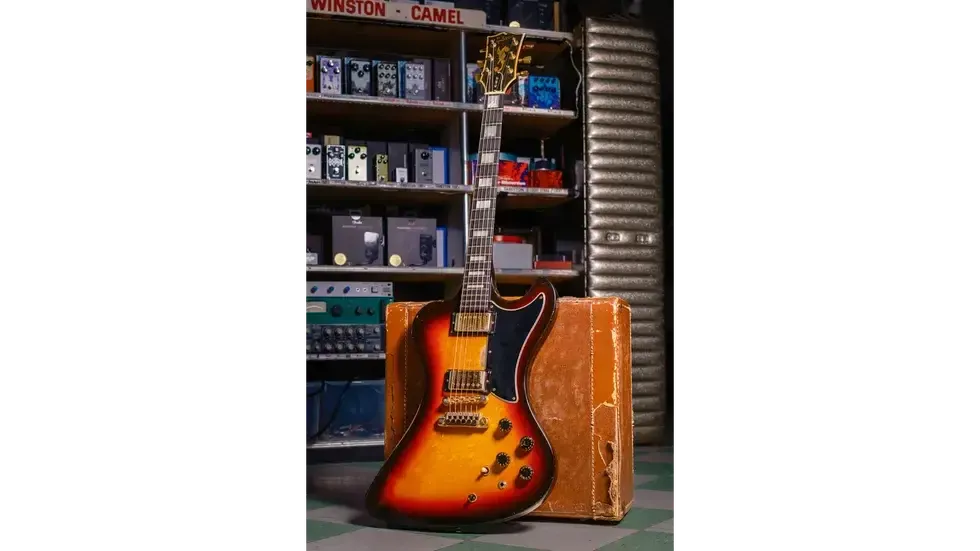
The model name RD is decidedly corporate in origin—it’s an abbreviation for Research and Development. Gibson researched, developed, and then briefly offered three RD models from 1977 to 1979: the RD Artist, with Moog-designed electronics and fancy bindings/inlays; the RD Custom, with less complex electronics/appointments; and the RD Standard, with passive electronics and dot inlays. People describe all three versions as either unique and underrated or undesirable and ugly. A guitar’s beauty and functionality is clearly in the eye of the beholder.
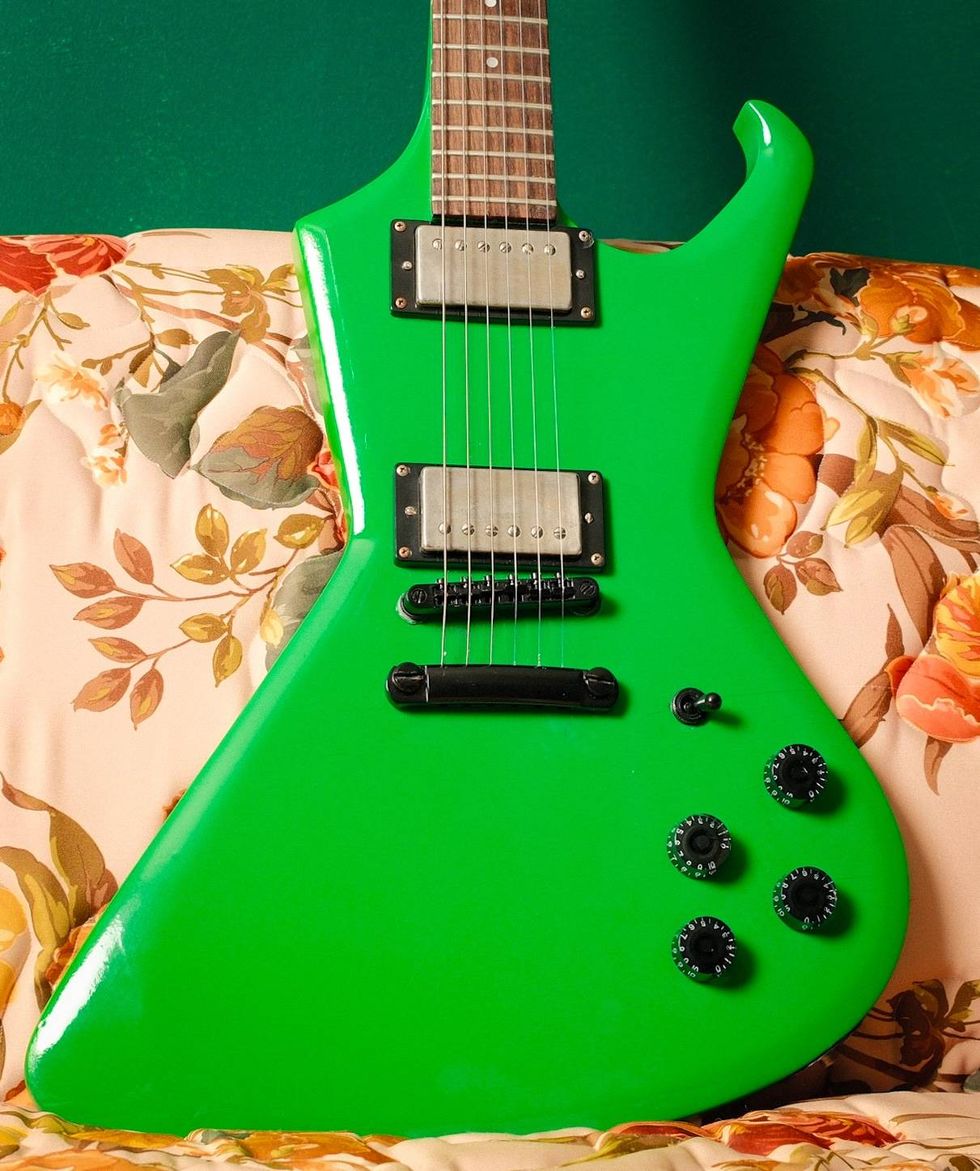
A 1978 RD Artist has been at our shop for a while. The Fireburst finish and winged-F pearl headstock inlay stand out in a crowd. It’s cool. Customers play it, talk about it, and then leave without it. Recently, we had a 1977 RD Standard for sale for just 24 hours. The neck and body were reshaped and refinished in a color we named Slime Green. We removed the active pickups and installed two Dunable Direwolf humbuckers. It was shipped out with a nice woody growl that rips through a high-gain amplifier.
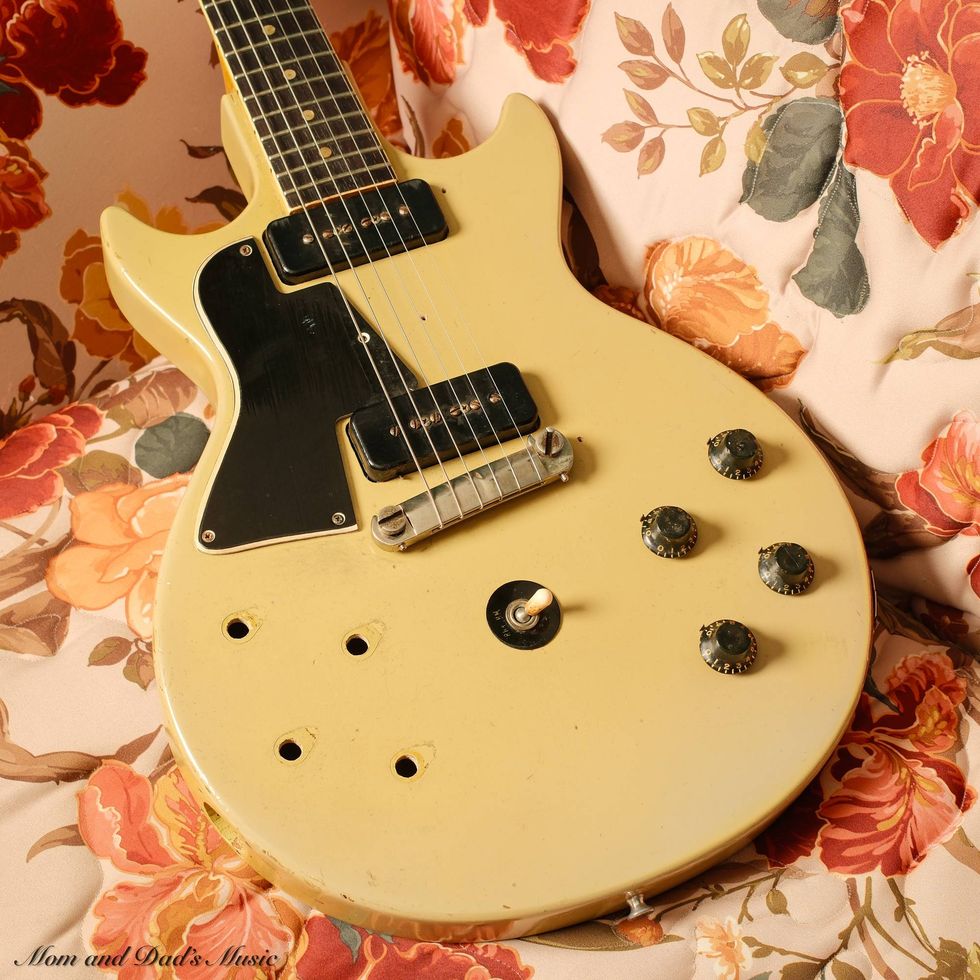
We also have a wild 1956 Gibson Les Paul Special next to two Les Paul Juniors—a mostly original sunburst single-cutaway from 1956, and a refinished/reworked cherry-red double-cutaway from 1958. Someone converted the Les Paul Special to a lefty model by modifying it to an asymmetrical double-cutaway shape, and relocating the wiring harness to the other side of the body and the toggle switch to the center (!!!). The body was sprayed over in an off-yellow color, but the neck retains its original Limed Mahogany “TV Yellow” finish. Then it was switched back to right-handed. Empty holes are still in the body, and the list of mods is longer, but we suspect this quirky Les Paul will sell before the other two vintage Lesters.
With all due respect to the folks who got us all here, in 2026 we’re honestly happy to appreciate these vintage instruments for what they are. One question remains, though: Once you take something this far, how do you know when to stop? Should we leave the holes in the top of the Les Paul Special’s body open in case someone wants to switch it back to left-handed… again? Our best guess is this guitar sounds so good because the body was weight-relieved long before Gibson decided to offer that feature. Though it has been devalued, it sounds like a million bucks!
As for the RD Standard, we replaced the replacement pickups in the guitar, and to us it sounded better as a result. Now that this abomination of an RD has found a new home, what will someone do to it—or with it—next?
The Musical Magic of the Ken Avis-Dave Kline Duo & More!
By: Rick Landers
More than a little musical magic erupted at Northern Virginia’s Reston Coffee House steps away from the waters of Lake Anne, with the Ken Avis–Dave Kline Duo performing several sets of originals and cover tunes sparked by Ken’s stylish guitar work and Dave’s spins with his formidable violin action. The two mixed it up splendidly engaging the audience with clever and humorous banter between tunes drawing out smiles, laughter and appreciation from a full house of fans – some new!
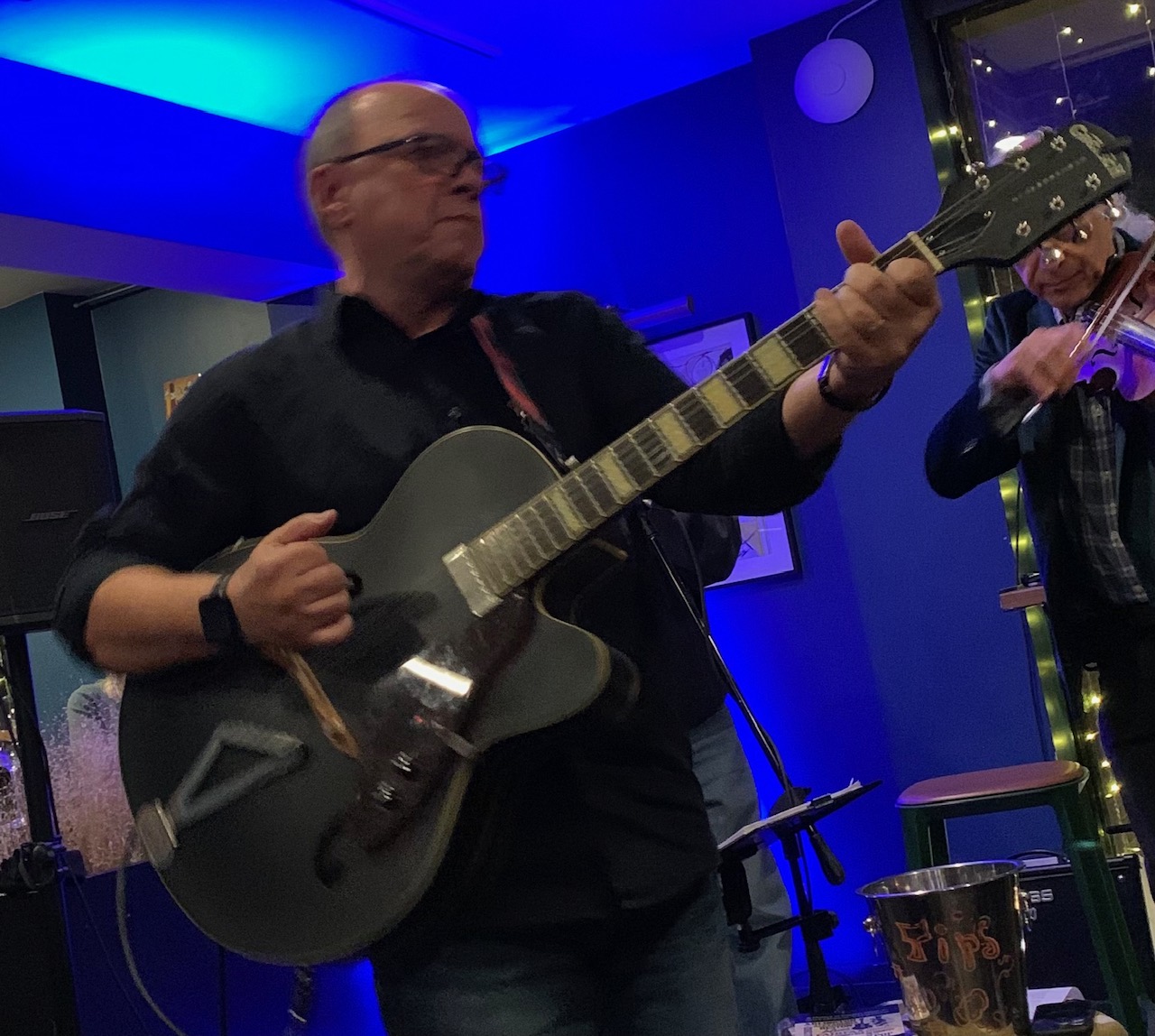
Ken Avis – photo credit: Rick Landers
The two Brits were joined by Ken’s muse, Lynn Veronneau, who was there to hang out, but agreed to dive into the potent trio rolling out a few songs to the delight of the crowd with spot on vocals, with such tunes as, “Sweet Dreams” by the Eurythmics and “What A Wonderful World,” that recalled the legendary Louis Armstrong.
In the audience was one of the D.C. area’s A-List harmonicats, Larry Tapper, who met Ken and Dave for the first time at the gig. With his always on hand case of harps and with some persuasion from another member of the audience, the duo graciously asked him to join them on several songs. That can be a bit risky. But Tapper rolled in with top notch riffs of his own, with Ken and Dave smiling, as the three fused their styles remarkably well. Pure magic!
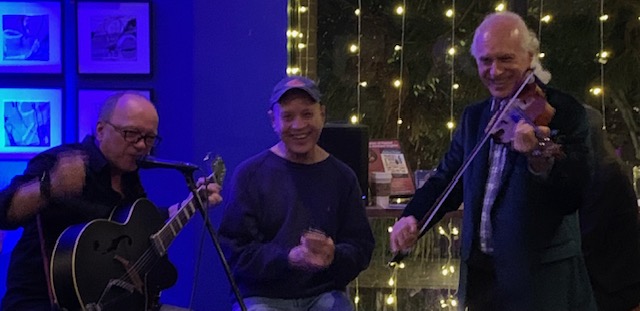
Ken Avis – Larry Tapper – Dave Kline – photo credit: Rick Landers
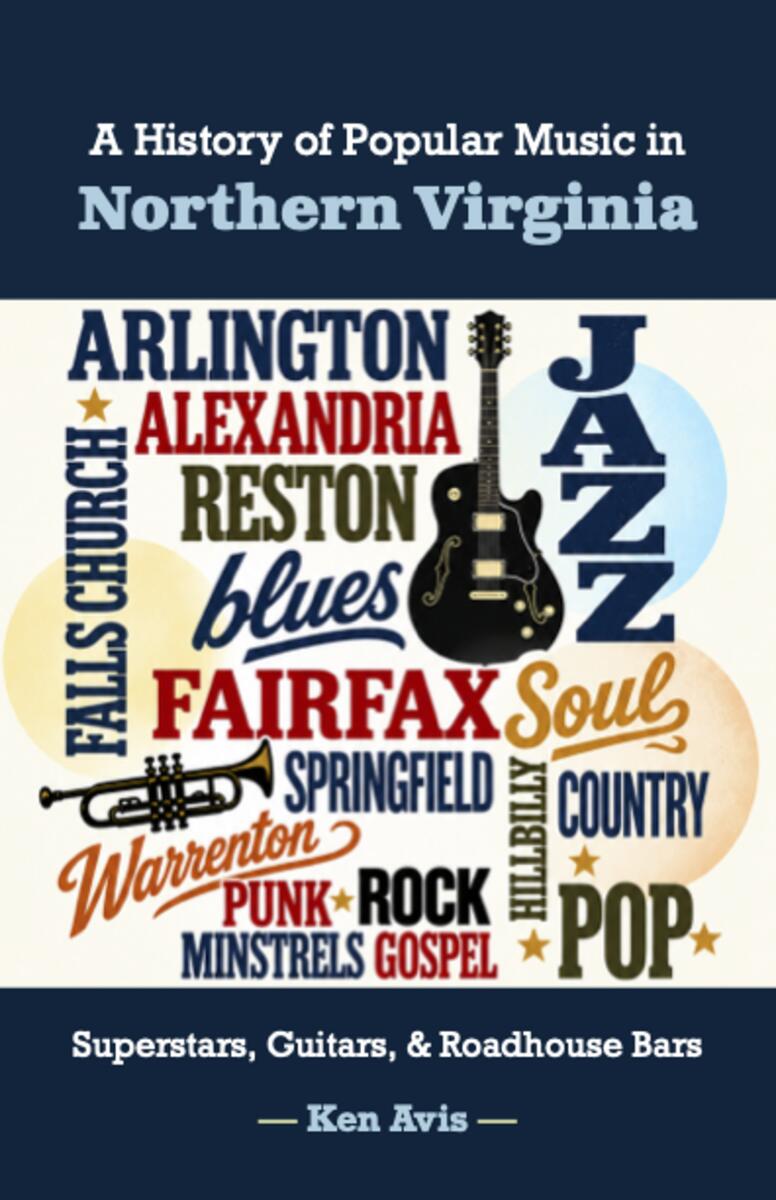
French Canadian Lynn and Ken, tour internationally as Veronneau and have entertained folks in the U.S., the U.K., Europe and recently Canada. Catch them if you can; you won’t regret it one iota. And, Dave is the leader of his own Dave Kline Band. During the performance Ken had everyone smiling when he humorously plugged his newly published book, A History of Popular Music in Northern Virginia.

Lynn Veronneau and Dave Kline – photo credit: Rick Landers
The coffee house is a staple of the Reston, Virginia music scene, as well as offers a great menu of food and drink, and with its view of on the Lake Anne it’s become a hot spot for locals and visitors to the D.C. area. And tonight, the dueling duo of Ken Avis and Dave Kline offered up an exceptional show, and the inclusion of Lynn Veronneau and Larry Tapper added to the musical spectrum, as surprise guests who helped make the evening one for the ages!

Ken Avis – Larry Tapper – Dave Kline – photo credit: Rick Landers
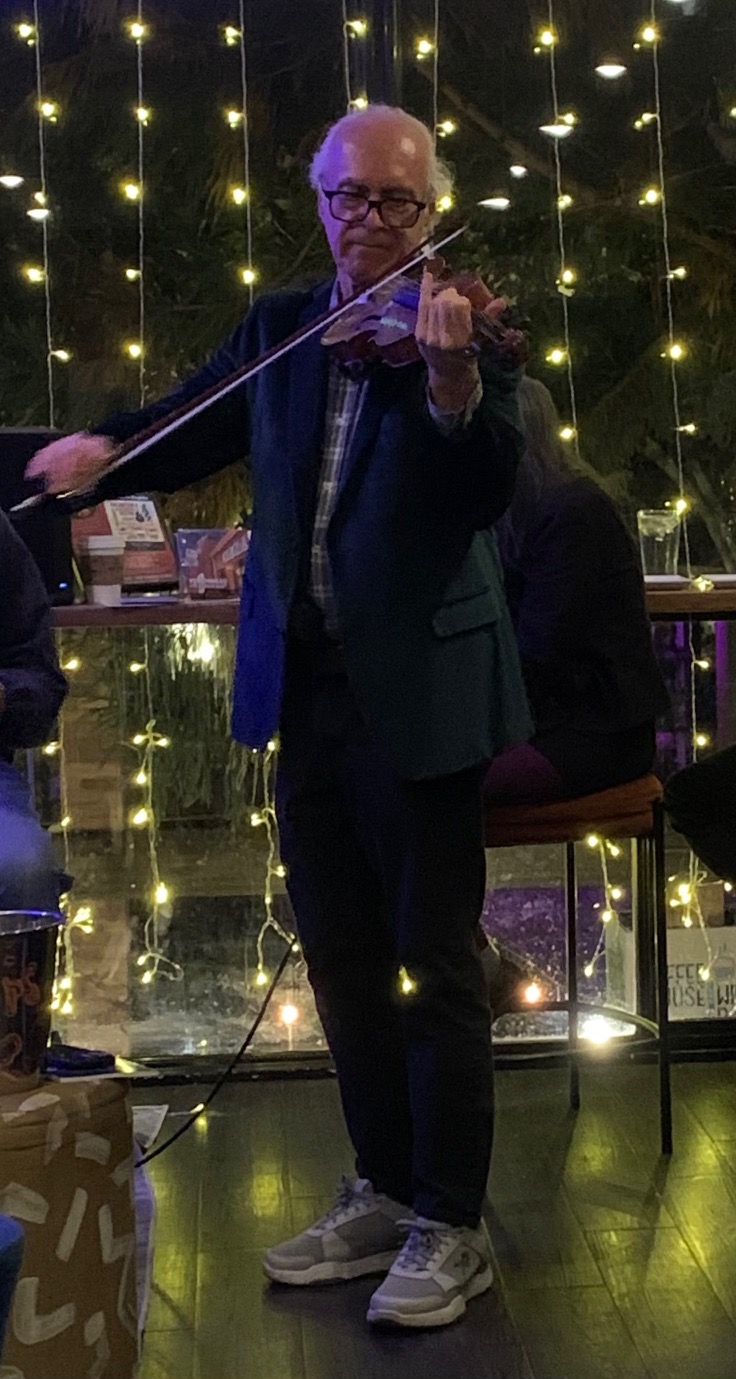
Dave Kline – photo credit: Rick Landers
Wizard of Odd: A Sudden Flash
On the immediate, unshakable feeling that hits when a guitar chooses you.
Once upon a time, I knew this woman who had an incredible story. She claimed to be the only person to have ever been hit by lightning while driving in a moving car! Now, I don’t know if that’s even possible, but once you got to know her, she would tell the tale. Man, everyone knew her story about being hit with a lightning bolt, and she told the story with such conviction that she was believable. She might’ve even been struck twice? I dunno…
This leads me to tell you all that I have a long-standing theory about such sudden flashes. I call it the “Thunderbolt” theory, basically because it sounds cooler than “lightning bolt” and it pays homage to the old Supro Thunderbolt amps, which I adore. By definition, a thunderbolt is a “single flash of lightning accompanied by a loud crash of thunder, or metaphorically, a sudden, shocking, and unexpected event.” So, have you ever been hit by a thunderbolt? Once? Twice? Many times? It could be a first love, or a new car. But man, when that thunderbolt hits you, based on my theory, you just need to heed its call. A thunderbolt is going to make you forget all else and just love on that person or thing because somehow, everything clicked, and now you’re smitten. And it’s an instant feeling. A sudden flash!
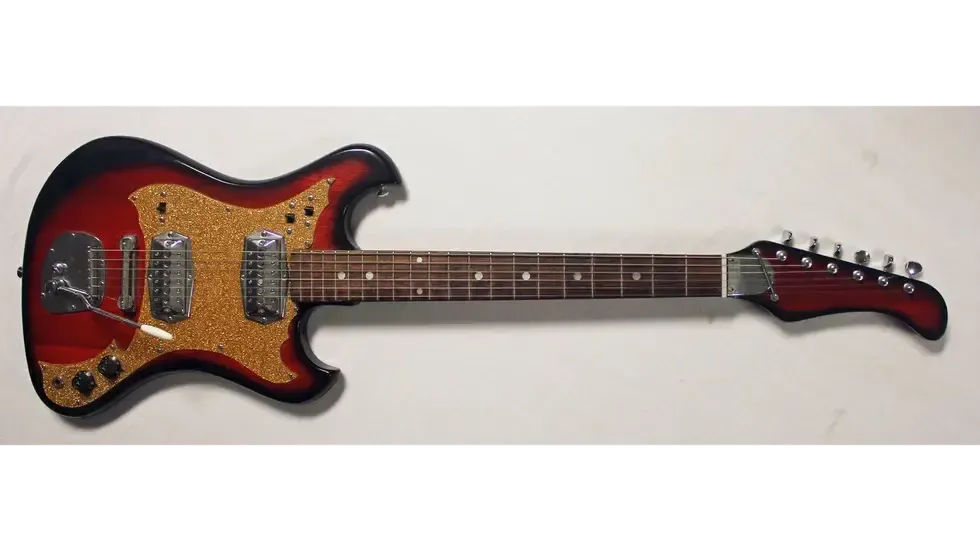
I’ve been hit by the guitar bolt a few times, and I remember each one vividly. Like my first Jag-Stang, which I thought (at the time) was the finest guitar I’d ever held. Or the time I missed out on buying a rare Supro Tri Tone, an experience that had me feeling ill for a day or two. Over time there have been guitars and people who have moved me to feel a certain way, but it’s nothing like the thunderbolt. Let me explain, good people.
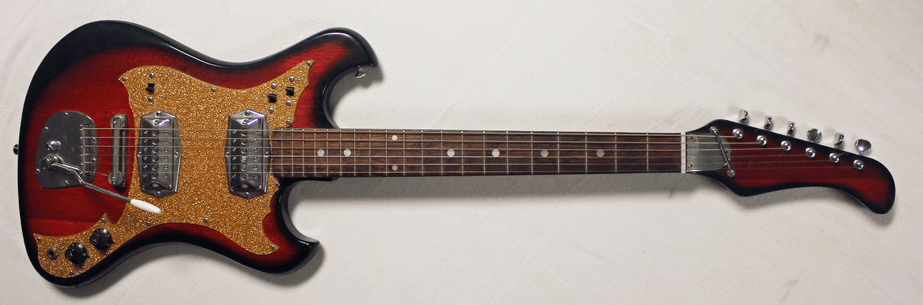
Last summer, when I was resetting my health and trying to live clean and simply, I happened upon this little guitar that was hidden among stock in a music store in North Carolina. I was walking around and noticed this gold glittery thing, and every time I glanced over, I became a little more interested. The details of it screamed out to me, but since I’m not buying many guitars anymore, I just ignored it in the moment. But the next morning, this guitar was still on my mind. First thing! I kept thinking about the offset lines and the gold/redburst combination finish. So, a few days later, I made the trek back down south to buy this oddity. I had no choice, really. I was hit by the thunderbolt!
Who made this guitar? Who knows? It stands within a super-bizarre family of guitars that often featured strange-looking pickups, carved aluminum pickguards, and loco headstock designs. Similar guitars were obviously made at the same factory in Japan, circa 1966, but I could never figure it out. Sometimes that’s okay because it adds to the intrigue.
The tremolo is a copy of a copy. The odd slide switches work fine but can begin sliding—even if you don’t bump them! The pickups are incredible, even though the guitar is sort of clunky and not well balanced. Of course, being hit by the thunderbolt has you overlooking flaws because you’re simply in love. And you know what? I’m still smitten by this instrument.
“Being hit by the thunderbolt has you overlooking flaws because you're simply in love.”
In the end, I was able to get a Supro Tri Tone, but I sold it because the feeling didn’t last. It just wasn’t the same as the first time I saw one. I also sold my Jag-Stang, and then, miraculously, I found it again and bought it back! As for this strange guitar, it’s still with me, because, you know, the thunderbolt!
Podcast 567: Noah C. Lekas
This week, we’re talking to Noah C. Lekas, one of the Fretboard Journal’s longstanding contributors.
Over the years, Noah has profiled a variety of subjects for our magazine, from blues legend Hubert Sumlin to luthier Matt Eich of Mule Resophonics. Today, we’re sharing this Colorado-based writer/musician’s own journey: His near-fatal illness, the psychedelic therapy that helped save him, and the album that he just released to document the ordeal, ‘Flowers of Perennial Dissent.’ The spoken word and guitar project features guests such as Luther Dickinson (North Mississippi Allstars) and folk artist Charlie Parr.
All told, it’s a deep chat about the human condition, finding your why, gratitude, and so much more. We hope you like it.
Follow Noah here. Get the record here: https://www.blindowlrecords.com/products/noah-c-lekas-flowers-of-perennial-dissent
Subscribe to the Fretboard Journal’s quarterly print magazine. Issue 61 is about to be mailed to all subscribers: https://shop.fretboardjournal.com/products/fretboard-journal-annual-subscription
We are brought to you by Peghead Nation: https://www.pegheadnation.com
(Get your first month free or $20 off any annual subscription with the promo code FRETBOARD at checkout).
We are also brought to you by Mike & Mike’s Guitar Bar: https://mmguitarbar.com, located in Seattle, Washington.


The post Podcast 567: Noah C. Lekas first appeared on Fretboard Journal.
NUX C-58RC, C-7, and B-8S Wireless Demo | PG Plays
Wireless has reached the point where most players can’t hear the difference, so the more interesting question is what else the box can do while it’s working. PG contributor Tom Butwin details three new solutions from NUX: the C-58RC instrument system, the C-7 stereo in-ear monitor rig, and the B-8S, a beltpack-and-pedal setup that doubles as a DI, tuner, boost, and effects loop. Each offers automatic and manual pairing and ships in a charging case or charges magnetically through its receiver.
The C-58RC covers guitar and bass with active and passive modes, a cable-tone setting, one-touch reconnect, and a built-in tuner with mute and a flippable screen. Its case delivers roughly three full recharges. The C-7 turns wired earphones into a stereo monitoring rig with five EQ presets, one-touch frequency hopping, support for multiple receivers off a single transmitter, and 18 hours of total runtime.
The B-8S uses 1 MHz narrowband transmission for more usable channels in a crowded room, and its pedal receiver charges the beltpack while handling balanced DI, send and return, buffer, boost, and a 2.4" color screen that rotates for different board layouts. A ground lift and a 1/4" input on the side mean it still works wired if the connection ever drops.
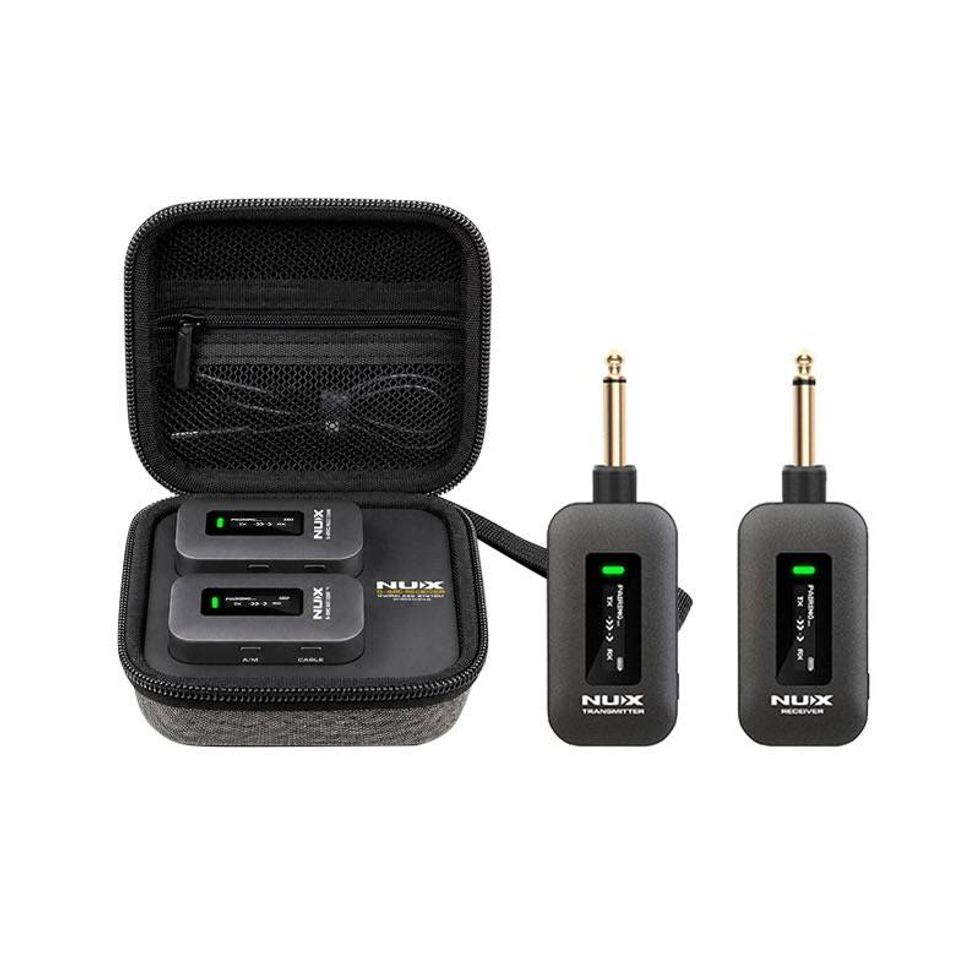
NUX C-58RC Wireless System
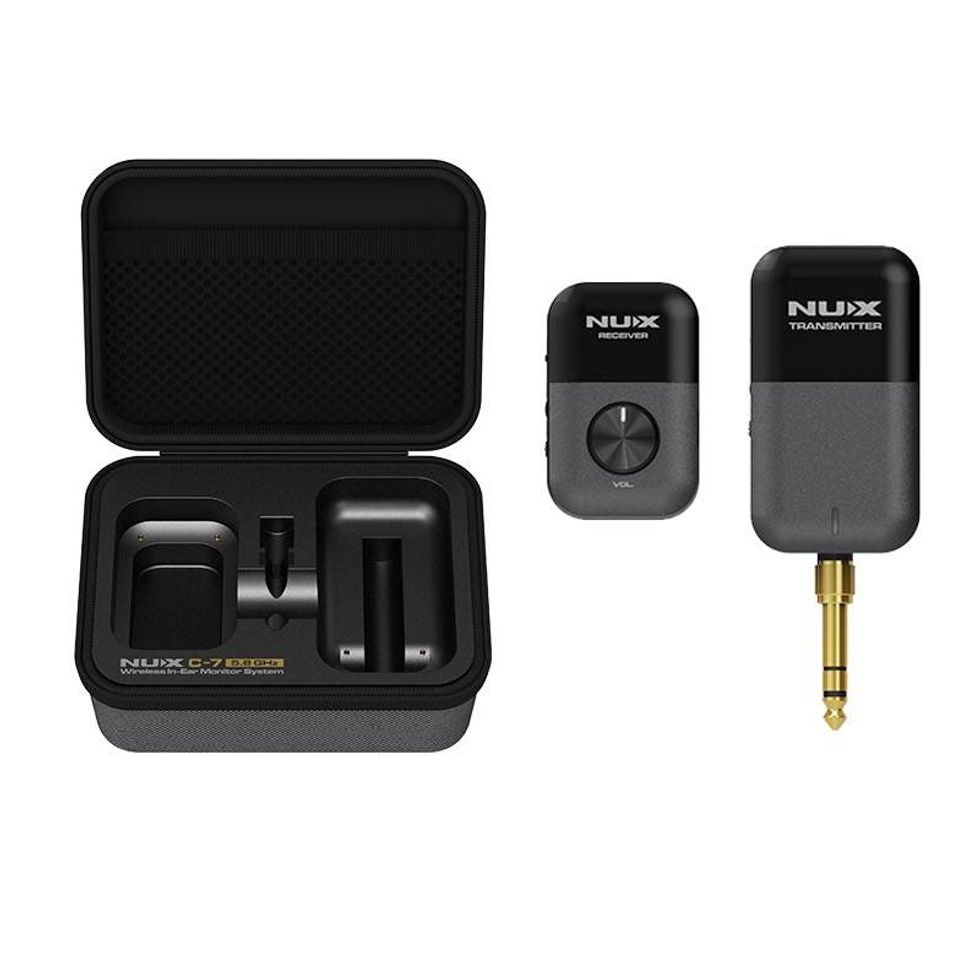
NUX C-7 Wireless In-Ear Monitor System
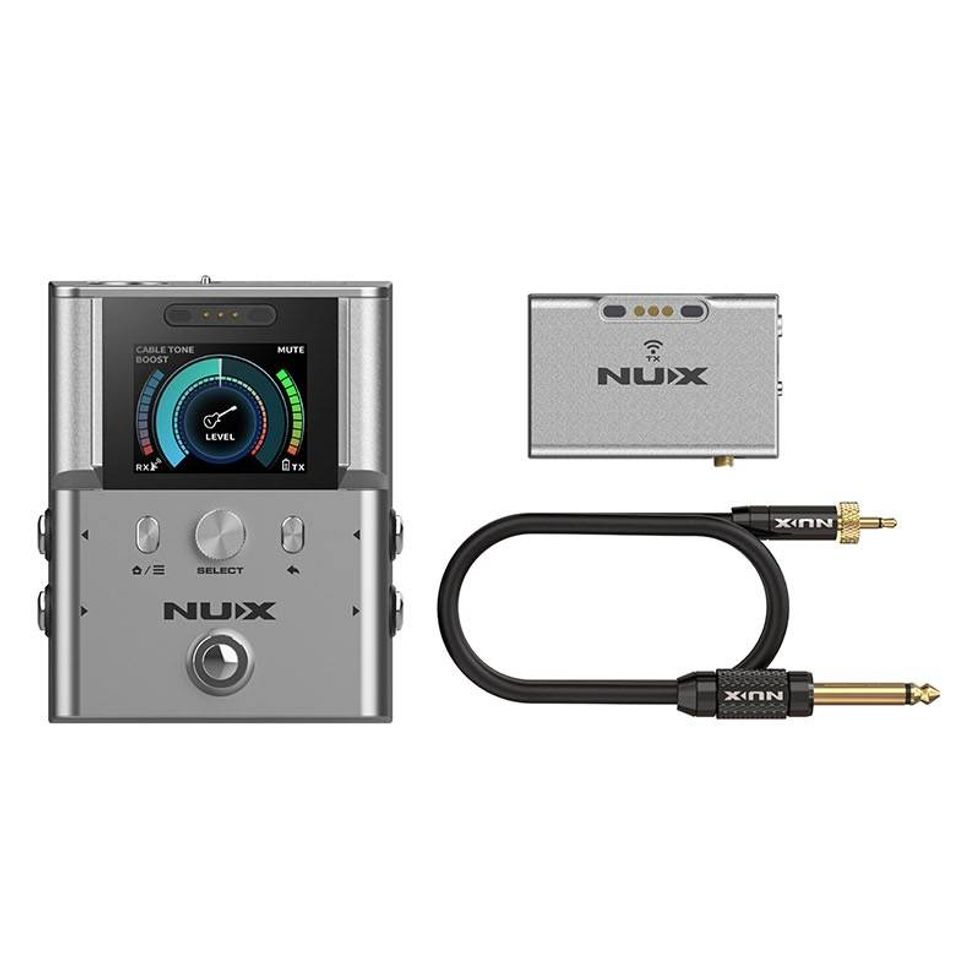
NUX B-8S Wireless Guitar System
Making a cheap guitar into a dream guitar

Ad feature with StewMac
It’s something you’ve probably considered at some point – is it actually worth getting a cheap guitar and upgrading it? Affordable guitars can be pretty inviting, as is the idea of kitting one out with your own choice of electronics and hardware. But, when the hardware and pickups cost a good deal more than the actual guitar they’re going into, is it worth it, or are you doing the guitar equivalent of fitting a rocket engine onto a Toyota Prius?
There is not a straight yes or no answer to that question, really – it depends on your goals, your tastes, and your patience for your own inevitable screwups. But these days, with the quality of affordable instruments only getting better, and places like StewMac providing more access to tools, parts and guides than ever before, there’s perhaps never been a better time to give it a go.
Check out the video above, where I go through the hows and the whys of upgrading an affordable instrument, from replacing the hardware, increasing the reliability of the electronics and changing the sound with a new set of pickups.
All of this was made a lot easier with the tools and guides available at StewMac – find out more at stewmac.com.
The post Making a cheap guitar into a dream guitar appeared first on Guitar.com | All Things Guitar.
Going Deeper: How String Makers Are Evolving for the Extended-Range Era
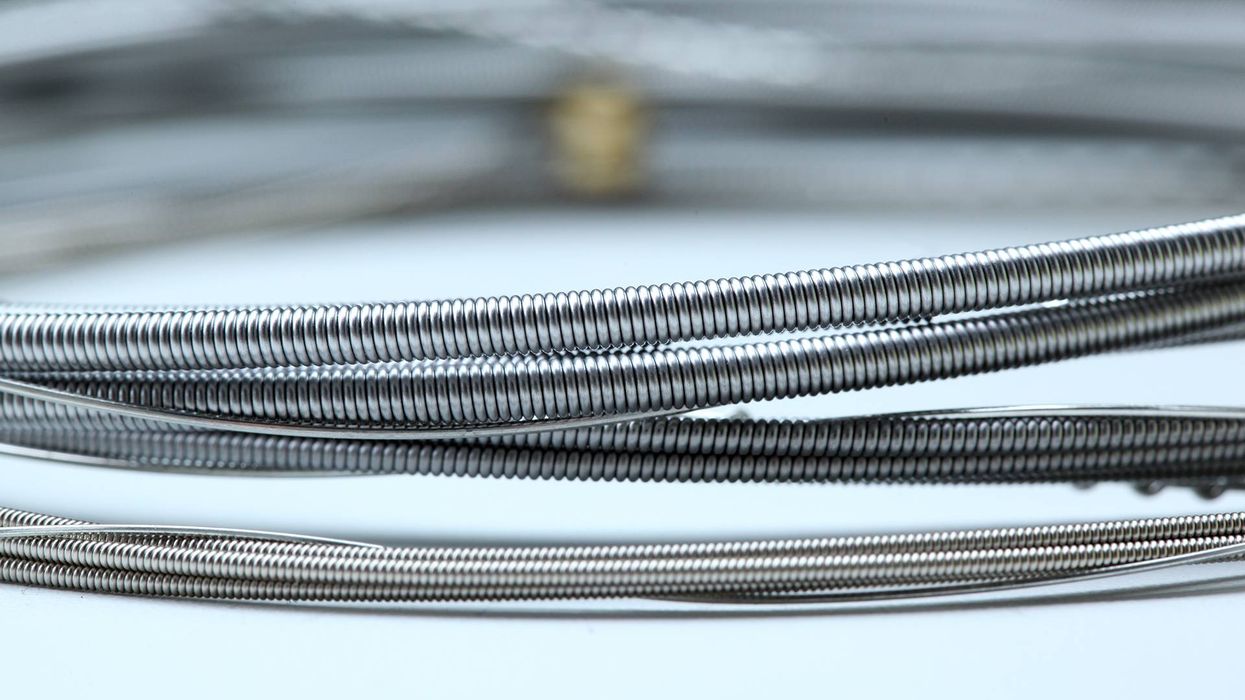
We’re living in a golden age of innovation for extended-range guitar. These days, there are more ways than ever to fine-tune and experiment—whether you’re playing a 7- or 8-string, cranking down to extreme drop tunings, utilizing specialized pickups or multi-scale designs, or chasing the sonic subtleties of particular string brands. We spoke to five top manufacturers for insights into the creation and refinement of their flagship products.
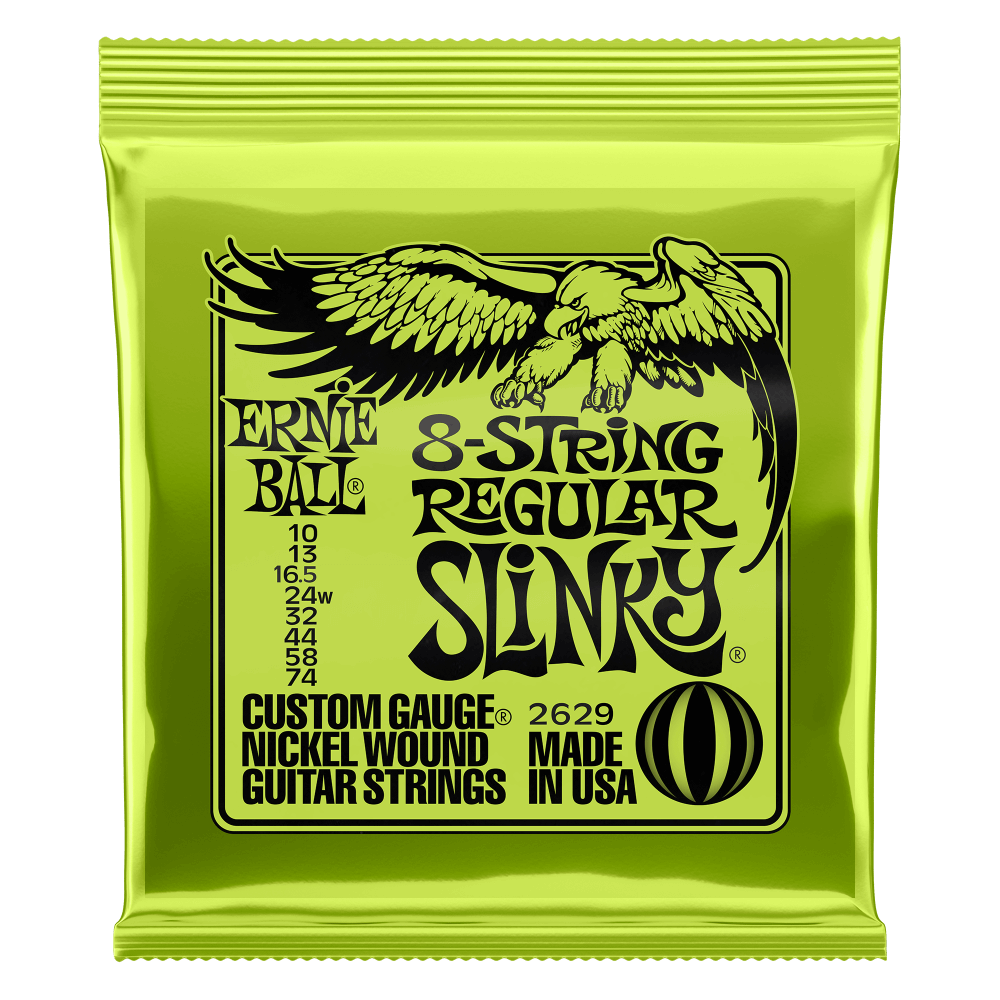
8-String Regular Slinky (P02629)
Ernie Ball’s extended-range history dates back to 1992, when they introduced their first set for 5-string bass. From there, the pace was fairly steady: a 6-string bass set a few years later, the 7-string Slinky guitar sets by 2000, and baritone gauges shortly after. “One clear signpost came in the early 2010s when we saw other manufacturers move quickly from 8-string to 9-string instruments,” says Chris Harrington, director of Operations & Innovation. “[This showed us that] extended range wasn't a passing trend but an accelerating one. We introduced our first 8-string set in 2012, followed by our first 9-string set just two years later.”
Another major turning point came in 2021: The company created a signature Music Man Majesty 8-string model for Dream Theater wizard John Petrucci, paired with a set of Regular Slinky strings (P02629) for optimized performance.
"Because tension alone doesn’t tell the whole story, development involved trial and error, which John validated when confirming the final gauges,” Harrington says. “We also use proprietary methods and tools to evaluate factors beyond tension, ensuring the set feels and sounds consistent across all strings. Lastly, we have the advantage of listening to our large family of artists to understand what matters most to players. Many of our set expansions over the years, including our extended range options, have been directly informed by these relationships and the solutions we’ve generated together.”
Ernie Ball’s philosophy in the extended-range space is to “build with users rather than guess what they want”—a support process that partly involves working through string needs beyond their current sets. “These conversations are often where our insight into future offerings comes from, as we see a need firsthand and develop a solution for it, which at times leads to an eventual product offering,” Harrington says. “Over the past 34 years, we have continued to expand our extended-range offerings, and I don't see that stopping anytime soon.”
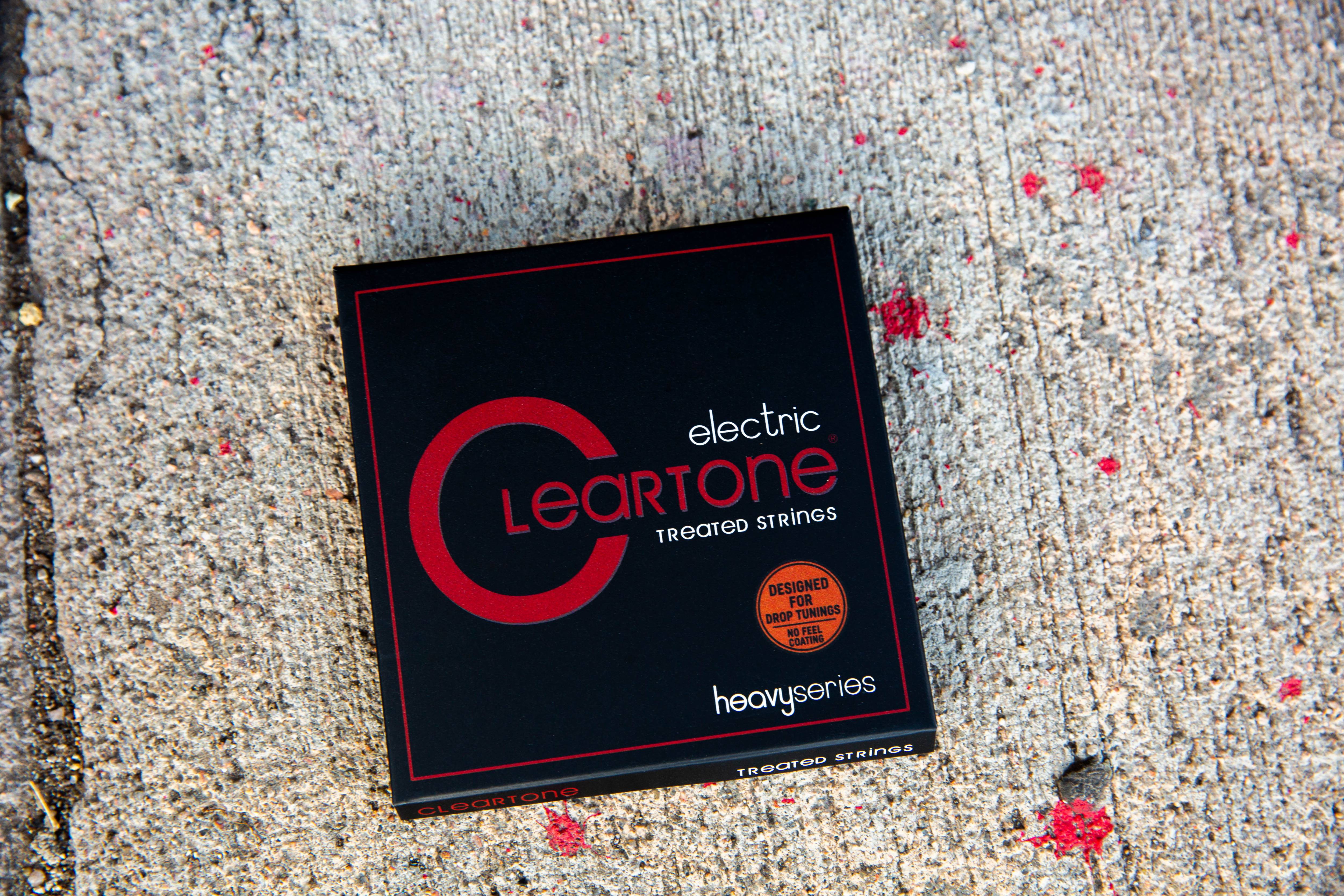
Heavy Series
Cleartone emerged in the early 2000s, just as nu-metal, metalcore, and post-hardcore guitarists were helping reimagine the dynamics of “heavy guitar.” The company recognized these shifts—the lower tunings, the increased string attack, the proliferation of extended-range instruments—and aimed to become part of that creative conversation. “From the beginning, we developed a proprietary manufacturing process called Super High Tension Winding,” company president Mike Loscalzo says. “We also custom-built our winding machines to apply precise, controlled tension as each string is made—an approach that was far from the industry norm at the time. Every wound guitar string contains hundreds of individual wraps, and we believe every one of them matters.” They went one step further with their Heavy Series, which uses a thicker core-to-wrap ratio to increase tension and structural strength, control excess string movement, and improve tuning stability, intonation, and note definition in those monstrous lower tunings.
“We’re constantly blown away by each new generation of guitarists pushing the instrument’s limits—tuning lower, developing more aggressive techniques, and creating sounds that didn’t exist when we began,” says Cleartone vice president Scott Sciacca. “As guitar manufacturers continue to develop more extended-range and longer-scale instruments, we’ve expanded and refined our offerings with more gauge options. We’ve also made baritone-compatible string length standard across all our electric sets, so players don’t need to purchase a custom or specially designed set to accommodate a longer-scale instrument. But at our core, we remain true to the same purpose Cleartone was founded on: making strings that resist breakage, stay in tune, last longer, and keep pace with the evolving demands of today’s players—and the next generation.”
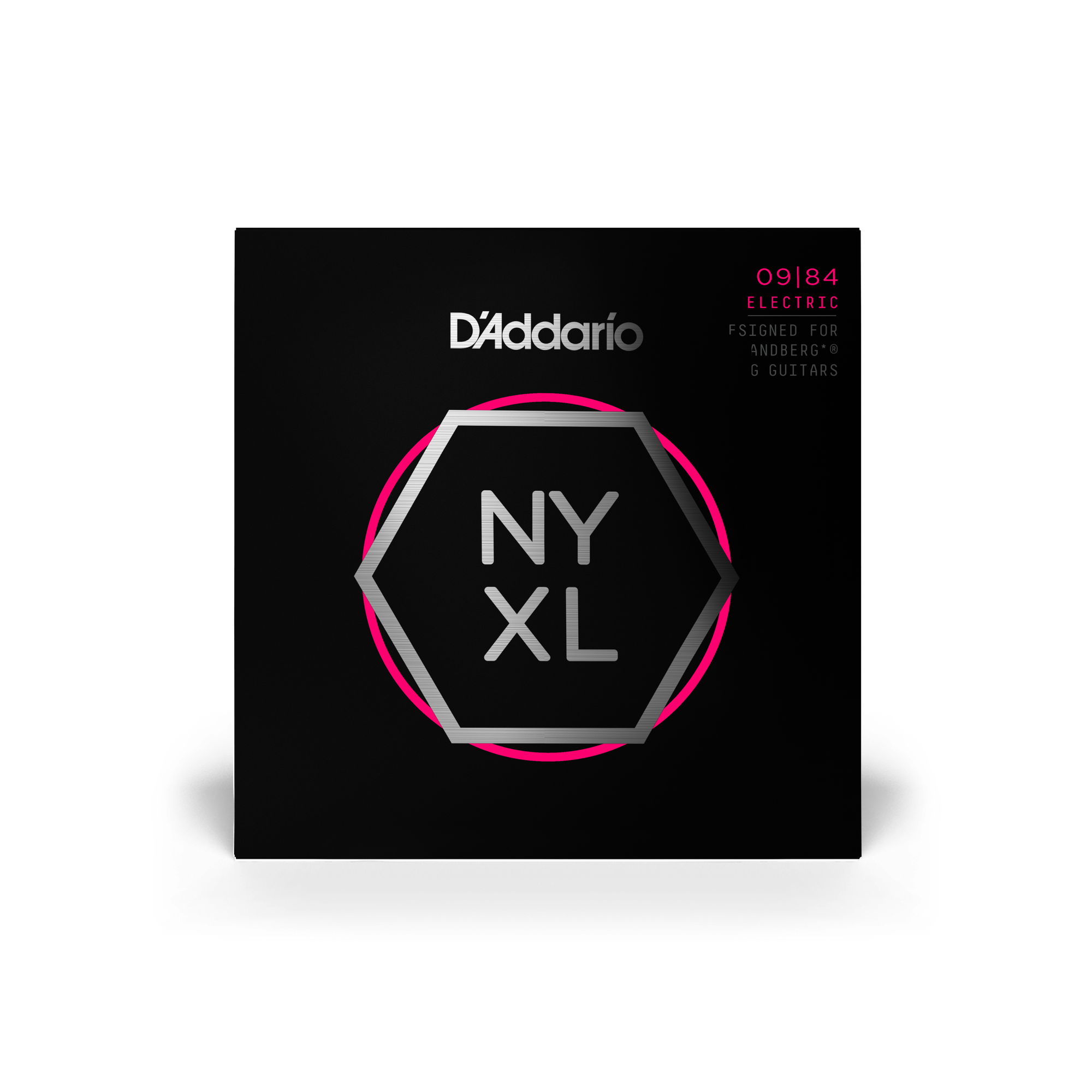
NYHD and XT Series
D’Addario have been around since 1973, through decades of string evolution. As extended-range guitars have become more prominent, they’ve responded by adding heavier-gauge strings to their XL series, introducing their NYXL line, and, in 2025, launching a program that allows players to customize sets for 7-, 8-, and 9-string guitars.
“We were very involved with the rising popularity of genres like djent and prog-metal that were pushing ERG instruments to their limit,” says Gabriel Sebastian, the company’s fretted product manager. “Feedback from the pioneers in that space helped define our first-generation ERG strings, which were sized to accommodate longer scale lengths and lower tunings. From there we continued to work with and learn from major guitar brands that were expanding their portfolios to cover extended range, along with smaller boutique guitar brands finding popularity with these segments.”
Two noteworthy string lines are the NYXL09564SB and NYXL0984SB,part of a joint effort withSwedish guitar/bass manufacturer Strandberg. “[Founder] Ola Strandberg reached out a few years after NYXL was launched,” Sebastian says. “He liked them and wanted to collaborate to offer them on his headless, muti-scale, extended-range guitars. This was a great opportunity to learn from an innovative industry leader.”
Artists have also been crucial to D’Addario’s philosophy and design. “Aaron Marshall from [prog-metal band] Intervals has had an immense effect,” Sebastian notes. “He reached out to us and asked, ‘Can you make a 7-string set that plays like it was meant for guitar, rather than a 6-string set with an extra heavy string?’ He and his contemporaries in the ERG space helped us understand what players were reaching for musically, what they wanted to get out of their instruments, and the string-related problems that needed to be solved.”
Then there’s Pat Metheny: “Yes, the jazz virtuoso,” Sebastian says. “Soon after we made modifications to our NYXL ERG strings, Pat came to us with an even more extreme request: ‘Make me a string for my 25.5" scale 6-string that allows me to tune the low E to E1 (a full octave lower) and has great harmonics, without the string being monstrously huge.’ That felt like an impossible ask. However, we were able to lean on our experience designing strings for cello and extended range electric violins to create a string Pat was happy with.
“These cross-instrument learnings are what make D’Addario a leading innovator,” Sebastian continues. “We can leverage orchestral string technology in fretted string designs, and vice versa. Which leads us to HD strings. We realized that we could take this even further by combining the Metheny experience with Aaron’s insight. That is how these series of High-Density strings came to be. So djent-y 9-string players can thank jazz for these strings.”
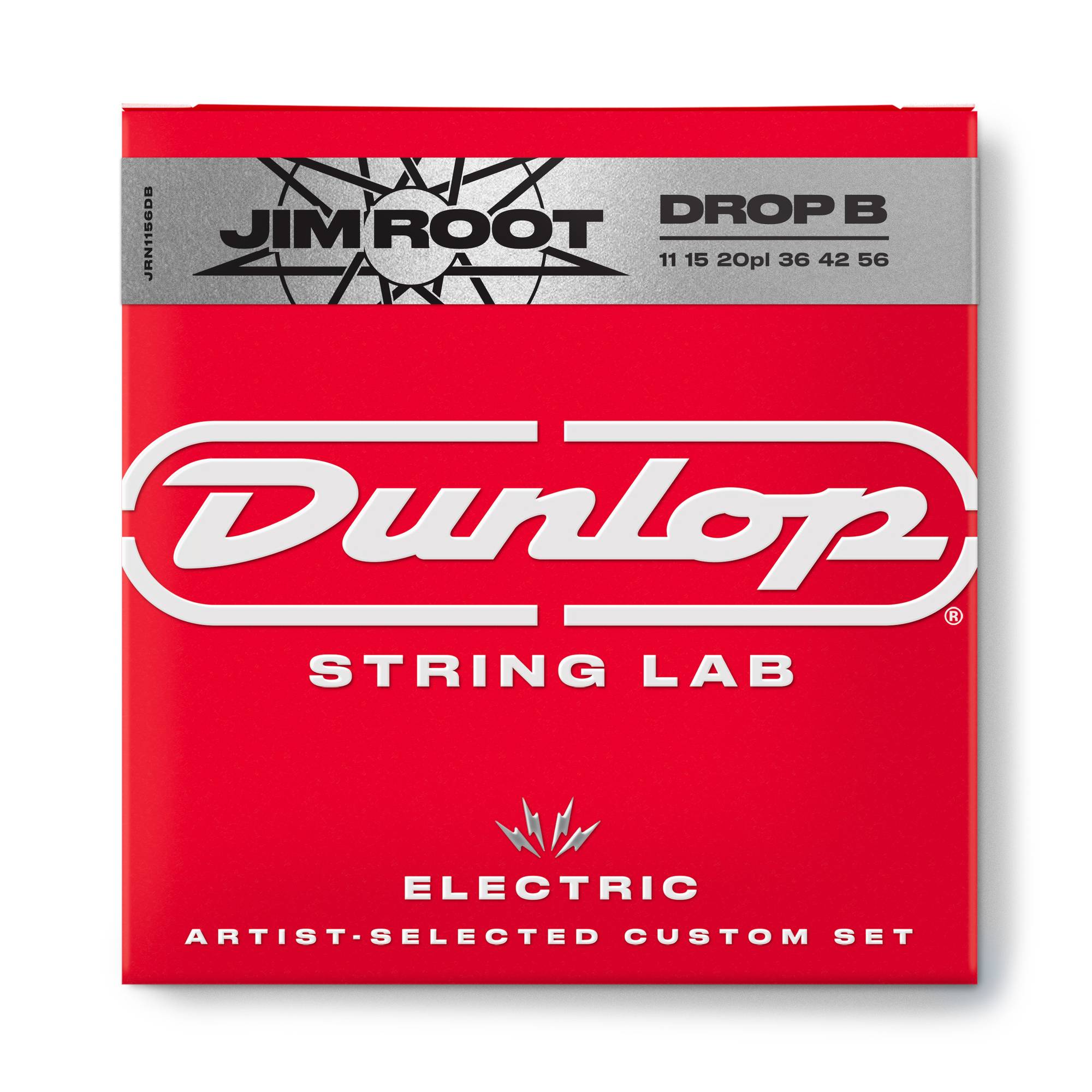
BIG1268 (Drop Bb), DEN1156DC (Drop C), DEN1156DB (Drop B), JRN1156DB (Drop B)
Dunlop is so attuned to the needs of guitarists that employ drop tunings that they’ve collaborated with artists to develop gauge combinations with those specific tunings in mind. They even identify them on the packaging. “We already have signature down-tuned sets from artists like [In Flames’] Björn Gelotte and [Slipknot’s] Jim Root,” says Frank Aresti, the company’s product manager of accessories. “But we’ve also expanded the lineup where we saw gaps, giving players more purpose-built options rather than expecting them to piece together their own sets.”
Their ultimate aim, regardless of gauge, is “true balance,” both under the fingers and in the ears. “I also want to distinguish that concept from the ‘balanced tension’ approach that some of our competitors promote,” Aresti adds. “While balanced tension focuses primarily on the measured pull of each string, our goal is a more holistic playing experience that considers both feel and tonal balance.”
To maintain that direct connection, Dunlop pays close attention to the daily challenges of working guitarists and the customer feedback passed along from dealers. “Those two groups are closely connected, because players often walk into a store looking to recreate the sound or setup of their favorite guitarist,” Aresti says. “Sometimes they’re asking, ‘How can I get the same tone as my favorite player?’ Other times it’s as simple as, ‘What strings should I use for Drop C?’ We've tried to remove the guesswork by offering purpose-built sets and clearly labeling many of them with the tuning they’re designed for, making it much easier for players to choose the right strings with confidence.”
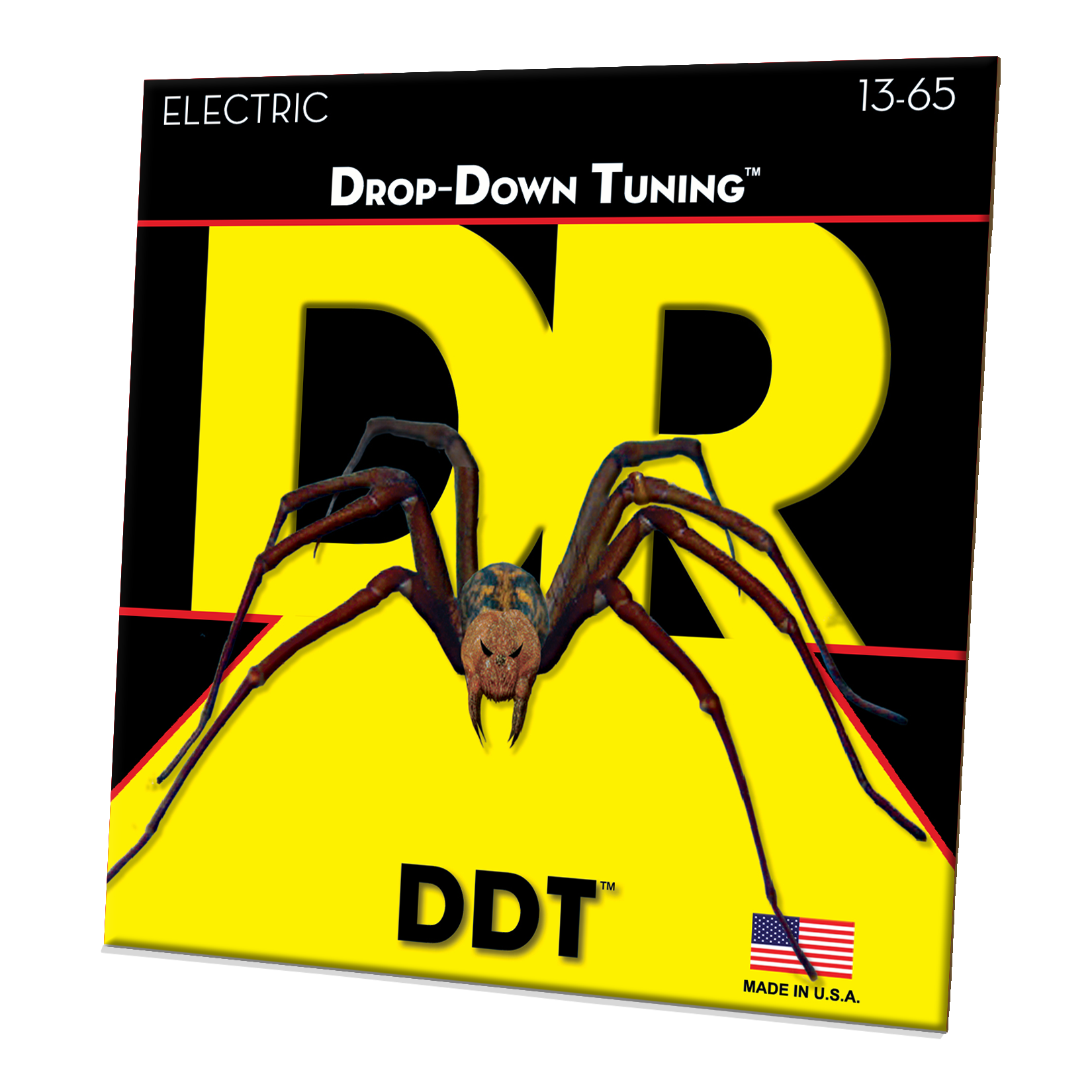
Dragon Skin+, Veritas, and DDT
Founded in 1989, DR have developed into one of the game’s most reputable brands, with their strings used by celebrated guitarists like Derek Trucks, Jared James Nichols, and, before their deaths, Dimebag Darrell and Johnny Winter. But they’ve also become staples among purveyors of heavier music, including Fredrik Thordendal and Mårten Hagström of extreme metal band Meshuggah and John Browne of prog-djent act Monuments. The company’s Vice President, Dave Avenius, highlights three string lines—Dragon Skin+, Veritas, and DDT—built using Accurate Core Technology. ACT primes the core wire to create more dynamic vibrations, improve tuning stability and intonation, reduce breakage, and add extra protection against tone-stifling dirt and sweat. (The company says DDT were the first strings on the market made specifically to support players who use drop tunings.)
“We believe that [they’re] especially great for players who use drop tunings, play extended scale instruments, or use 7- or 8-string guitars,” Avenius says. “Making a string bigger helps, but ACT upgrades the architecture of the strings, so they reproduce the lowest notes of your instrument with great tone and note-to-note definition, so you bring out the most from your guitar. Dragon Skin+ also features our K3 coating. This is a patented process by which we coat the outer wrap wire before we wind it around the core. This approach allows each part of the string to function properly, and the string can ring out pure and true. Everyone at DR is excited by all the players pushing the musical boundaries with drop tunings, extended scales, and 7- or 8-string guitars. We hope these artists will try our strings and hear and feel the benefits for themselves. As we like to say: DR—the Difference is Real."
John Mayer celebrates launch of his own record label with new single, Tom and Jerry

Big things are happening in John Mayer World; after recently announcing a massive residency at the Las Vegas Sphere for 2027, the guitar legend has just released a brand-new single, Tom and Jerry.
The track marks Mayer’s first solo release since 2021, when he released his eighth studio album, Sob Rock.
Produced and written by Mayer alongside Grammy-winning producer Blake Slatkin, recorded at Chaplin Studios in Los Angeles and mixed by veteran engineer Serban Ghenea, Tom and Jerry made its debut on Mayer’s SiriusXM channel Life With John Mayer on Thursday (22 October) before arriving in full today.
You can listen to the new single below:
As Mayer explains, the track’s name, “Tom and Jerry”, comes from the name he gave the voice memo he made when he first had the song idea.
“From that moment on, the adventure began in bringing that feeling to life,” the guitarist writes in an Instagram post. “I’ve said it before, but it bears repeating every time – I get to work with a group of incredibly talented and deeply dedicated artists who will stop at nothing until the sound comes into focus and becomes a picture.”
The single’s release also coincides with the launch of Mayer’s own record label, Sob Rock Records, in partnership with Mercury Records.
“Working with [Mercury Chairman and CEO] Tyler Arnold and the talented team at Mercury Records has already proven to be a great partnership,” Mayer said in a statement [via Rolling Stone].
“The path from creative vision to execution has never been easier or more rewarding. I feel very inspired, and I’m excited for what’s to come.”
“John Mayer is one of the greatest artists of all time, and I couldn’t be prouder to welcome him to Mercury Records,” adds Tyler Arnold.
“We’re excited to be part of his next chapter and to partner with his label, Sob Rock Records, to help bring his creative vision to life.”
That’s not all that’s been happening in a whirlwind few months for John Mayer, though. Last month, the guitarist announced a partnership with PRS and Land Rover Defender to bring a palette of the Defender’s iconic colourways to his signature guitar, the Silver Sky.
The post John Mayer celebrates launch of his own record label with new single, Tom and Jerry appeared first on Guitar.com | All Things Guitar.
Crazy Tube Circuits Triptychon review – this might be the most ambitious dirt pedal ever made

€299/£269/$359, crazytubecircuits.com
A triptych is a painting with three panels, so you might assume the Crazy Tube Circuits Triptychon is some kind of three-in-one pedal. And it is, in a sense – but it’s also a seven-in-one, or possibly a nine-in-one… or even, at times, a nine-in-two.
Yes, those freaky Greek boutique geeks have done their best to confuse us all with this one. But if they really have squeezed all the fuzz, overdrive and boost tones you need into a single standard-sized pedal, who cares?
What is it?
In line with its name (pronounced ‘trip tick on’), the Triptychon’s graphic design suggests some sort of three-panel church altarpiece, but this isn’t the world’s first Gregorian chant simulator – it’s a tribute to the much less godly rocking sounds of the late 1960s. That much is obvious from the four fuzz circuits that form the heart of the pedal: a Fuzz Face and three Tone Benders (Vox, Mk1.5 and MkII), selected via a rotary switch in the centre.
That would have made a pretty interesting pedal by itself, along the lines of CTC’s excellent Cyclone four-mode phaser, but there’s a whole lot more vintage rock noisiness going on here. Firstly, on the left you’ll find controls for an overdrive circuit, designed to recreate the sound and feel of plugging your fuzz box into a cooking amp; and then, on the right, you have a choice between two more old-school noise generators: an octave fuzz and a treble booster, each with two different modes to flip between using the ‘mod’ button.
So that’s four straight fuzzes, one overdrive, two octave fuzzes and two boosters – all in a pedal with just two footswitches? If you think that sounds like a stretch, you’re right – so you might want to consider thinking outside the box (literally) and digging out an extra 50-ish euros/pounds/dollars for the optional XT footswitch.
 Image: Adam Gasson
Build quality and usability
The Triptychon is a weighty little unit, which is no surprise considering how much it’s got going on inside, but the first issue it has to tackle is one of ergonomics: you’re looking at seven knobs, two toggle switches and three push-buttons, and that’s always going to make things cramped. CTC has done well to keep everything reasonably clean and accessible… but there are compromises.
Navigating is actually a lot simpler with the XT footswitch plugged in: now you’ve got a pedal made up of three sections with a switch for each, so you can tap-dance your way in and out of overdrive, fuzz and octave/boost at will. And the layout is intuitive enough that, when you do want to make changes to settings, you won’t struggle.
As well as that four-way mode switch, the fuzz circuit has controls for gain and volume, plus a button to engage a buffer. The overdrive has drive, tone and volume; and the right-hand panel has a gain knob and another buffer switch, plus a toggle for octave or boost mode and the aforementioned mod button.
 XT Switch. Image: Adam Gasson
Nothing too scary there… but without the XT switch, things suddenly start to look more fiddly. The problem is, with three sections but only two footswitches, you have to use a three-way toggle to set what those switches engage: left for fuzz and drive, and right for octave/boost; left for fuzz, and right for drive and octave/boost; or left for fuzz, right for octave/boost, and no drive at all.
If you got lost halfway through reading that sentence, don’t worry, I got lost halfway through writing it. In summary, using the Triptychon without the external switch is a pain in the hole. Mind you, it could be worse: the one other pedal CTC makes in this format, the Sidekick Jr, has a modulation section that can’t be bypassed on the unit itself.
 Image: Adam Gasson
Sounds
We’re told the fuzz uses silicon transistors for a “true germanium tone and feel”, which is stretching the definition of the word ‘true’ somewhat, but it certainly sounds big, warm and fluffy in vintage style. All four options are nicely balanced, with plenty of shunt and no spikiness – which is just as well, as there’s no tone control.
The Fuzz Face and the Bender Mk1.5 sound quite similar, as they should (the circuits are very closely related), while the Vox TB has more midrange bite and the MkII piles on the gain. All sound decent with the guitar’s volume backed off, and the switchable buffer should not be overlooked: it adds a significant amount of pep and clarity, the only pity being that there’s no LED to let you know if it’s on.
I don’t have a lot to say about the overdrive, which is low-key brilliant: just about totally transparent, natural in feel, and perfect for giving those fuzzes an already crunchy base to build on. The octave fuzz is good too, really bringing the gnarl and offering a tidy ‘Hendrix in a box’ option when you run it into the Fuzz Face.
But for me the best non-fuzz bit of this pedal is the booster, which can be set for either a Rangemaster-style lift to the high mids or something reaching a little lower down the frequency spectrum. Both sound ace – and again, the only thing missing is an LED to tell you which mode you’re in.
On the subject of LEDs, I could use this thing every day for a month and not get used to the way the three status lights aren’t aligned with the footswitches – well, how could they be when one of those switches isn’t even on the pedal? – but maybe the answer to that is just to use it for two months. I certainly wouldn’t get sick of how it sounds.
 Image: Adam Gasson
Should I buy one?
The Triptychon doesn’t quite live up to its fantastical space-saving promise, simply because it’s so compromised without the XT footswitch – which is small, yes, but could well take up almost as much room as another pedal depending on how your board is laid out. And that extra 50 notes is not something to take lightly, bearing in mind the serious price of the pedal itself.
Even so, this is an amazing feat of stompbox design, with nine different effects that all sound top-notch and work wonderfully well teamed up in twos and threes. If you can make the practicalities work, the tones on offer here are more than up to the job.
Alternatives
The Triptychon’s closest rival might be the Great Eastern FX Co. Focus Fuzz Deluxe (£299/$349), a consummate master of fuzz, drive and boost complete with footswitchable squawkage. The Walrus Audio Eons ($249.99/£235) has five different fuzz modes with variable voltage, while the Fender The Pelt V2 ($229.99/£159) offers a slightly more affordable mainstream option.
The post Crazy Tube Circuits Triptychon review – this might be the most ambitious dirt pedal ever made appeared first on Guitar.com | All Things Guitar.
IK Multimedia Releases TONEX Free Unlimited
DiMarzio Introduces Chopper T Neck and Cruiser T Neck Pickups
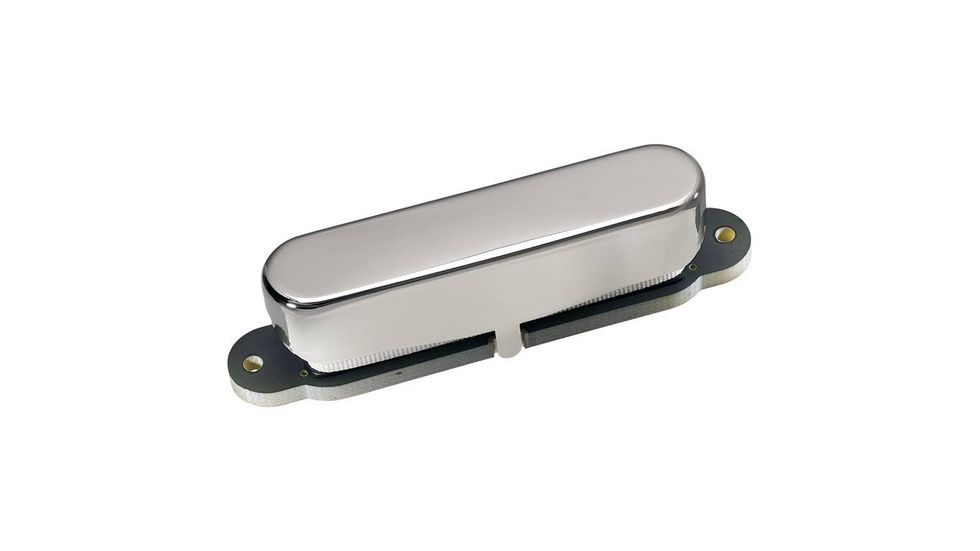
DiMarzio has launched a pair of Tele-style neck pickups: the Chopper T Neck and Cruiser T Neck.
They retain a familiar metal cover that has adorned Telecaster neck pickups for 75 years, but that's where the similarities end.
The new DiMarzio pickups combine neodymium magnets and twin-blade hum-canceling coils. They’re designed to optimize the magnetic field and deliver better string-to-string balance, even when notes are bent. The result? Higher output, faster transients, and a lower noise floor than traditional T-style neck pickups.
The Chopper T Neck has clear highs, and the midrange and lows are punchy without muddiness. It’s an overall balanced tone, and the pickup has an output resistance of 6.52k.
The Cruiser T Neck's harmonic overtones are right where you'd expect them to be from a "true" single coil. The midrange is open and its top end chime offers clarity without harshness. The Cruise T Neck delivers a brighter tone and its output resistance is 3.58k.
Both pickups feature 4-conductor wiring and DiMarzio’s PCB quick-connect baseplates for easy installation with no modifications required.
Both pickups are available in four color options – chrome, unplated nickel, gold and black. For black and chrome finishes you can also choose between a metal cover with the DiMarzio logo or a classic, logo-free look.
Street price for chrome and unplated nickel is $119; street price for black and gold is $126. For more information visit DiMarzio.com.
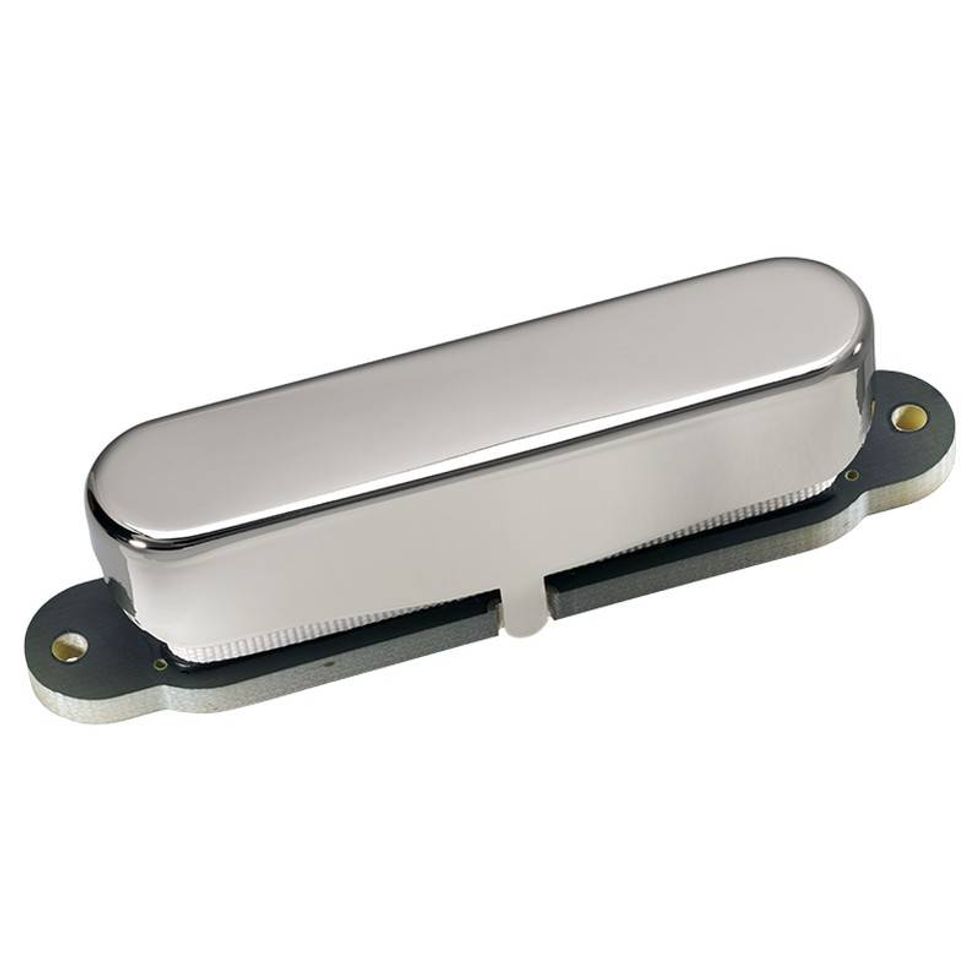
Chopper T Neck and Cruiser T Neck
DiMarzio has launched a pair of Tele-style neck pickups: the Chopper T Neck and Cruiser T Neck.
Wintergrass Sessions: The Jordan Tice Trio
The Jordan Tice Trio – Jordan Tice, Patrick McGonigle, and Alan Mackie – perform three songs at Wintergrass 2026: “Don’t Know Why I’m Going Into Town,” “Matter of Time,” and “Find A Way from Here.”
We also asked the trio about the instruments used on this session.
Register now for Wintergrass 2027. The lineup in 2027 will include Sierra Hull, Jerry Douglas Band, East Nash Grass and other bluegrass favorites.
Video by Brad Wagner, audio by Juan M Soria.
We’ll be sharing more highlights from Wintergrass 2026 on a weekly basis here and on our YouTube channel.
The post Wintergrass Sessions: The Jordan Tice Trio first appeared on Fretboard Journal.
Pages
