
Music is the universal language
“Glory to God in the highest heaven, and on earth peace to those on whom his favor rests.” - Luke 2:14
Norse Guitar Feeds
Rig Rundown: Steel Beans
PG’s John Bohlinger met up with Jeremy DeBardi, a.k.a. Steel Beans, at the Cannery in Nashville. A one-man-band, DeBardi plays guitar and drums at the same time, and does it through a pair of 1965 Silvertones and two vintage amps run in stereo. Have a look at some quick highlights below, and tune into the new Rig Rundown for all the details.
Brought to you by D’Addario.
Cheap Thrills
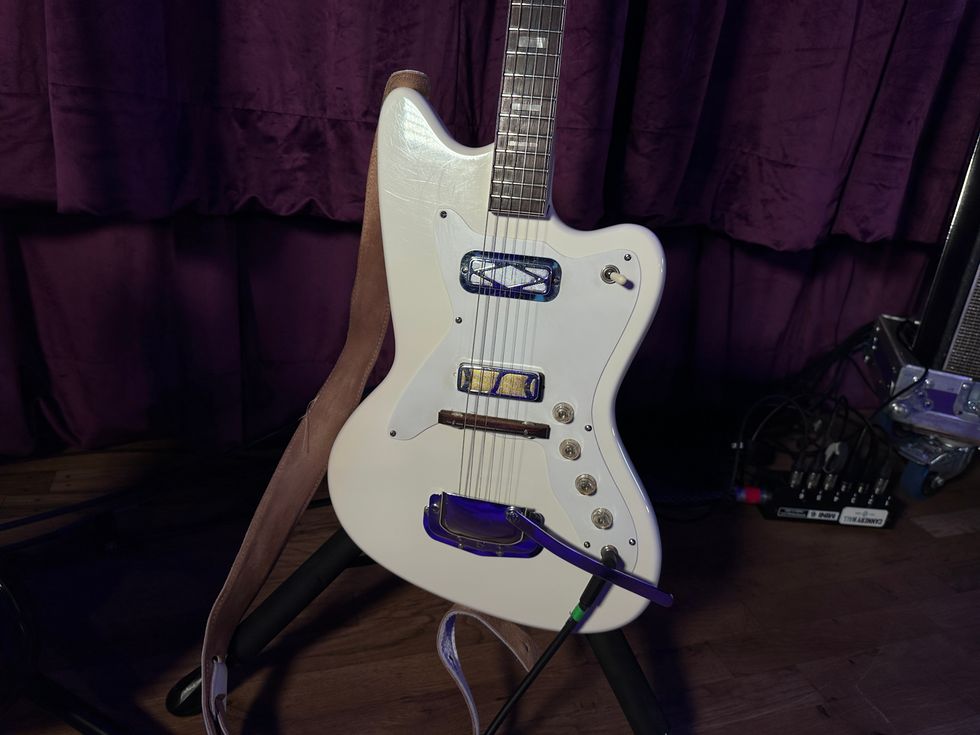
A real Strat or Les Paul was out of reach when he was a teenager, so DeBardi picked up a used 1965 Silvertone at a Guitar Center for under $300 and found it had the sound of every ‘50s and ‘60s record he wanted. He owns five now. The original barely plays—it’s “fretted out”—but he toured with it anyway, carrying it into taco joints and sleeping next to it in hotels. Two of the five have been refinished by a painter in California, including this one in white.
Birthday Present
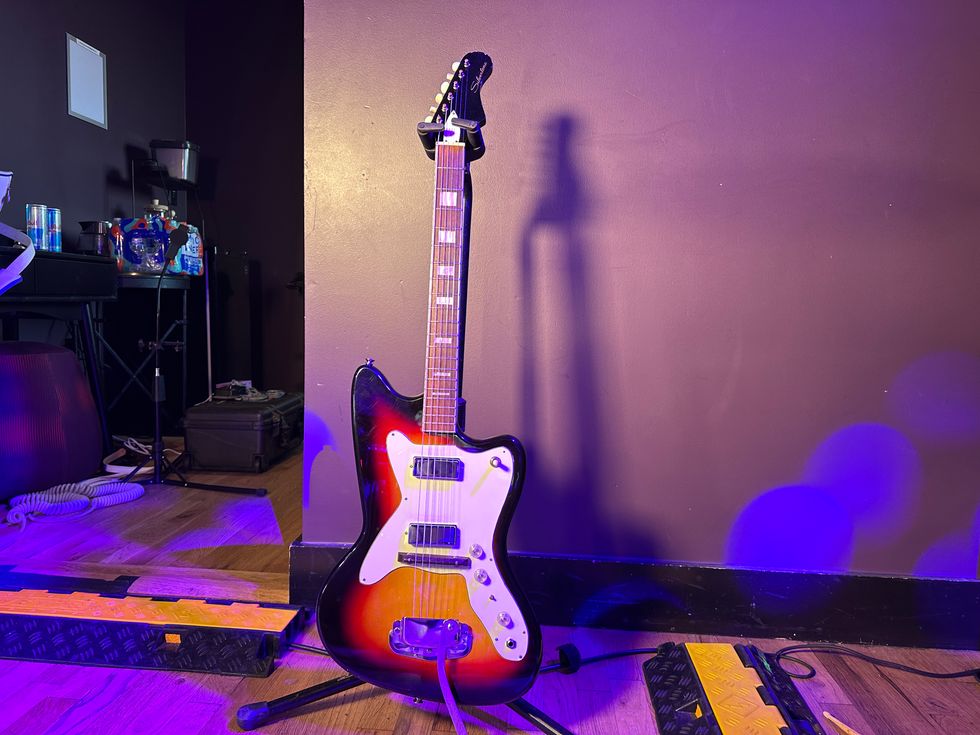
After a show in Boise, a man came up and gave DeBardi this Silvertone, which had been hanging unplayed on his wall at home. At that point DeBardi owned exactly one. Pulling the pickguard to prep it for paint turned up the factory stamp: April 9, 1965, his birthday. It’s also loaded with MojoTone Johnny Winter Firebird pickups.
Bright, Not Shrill
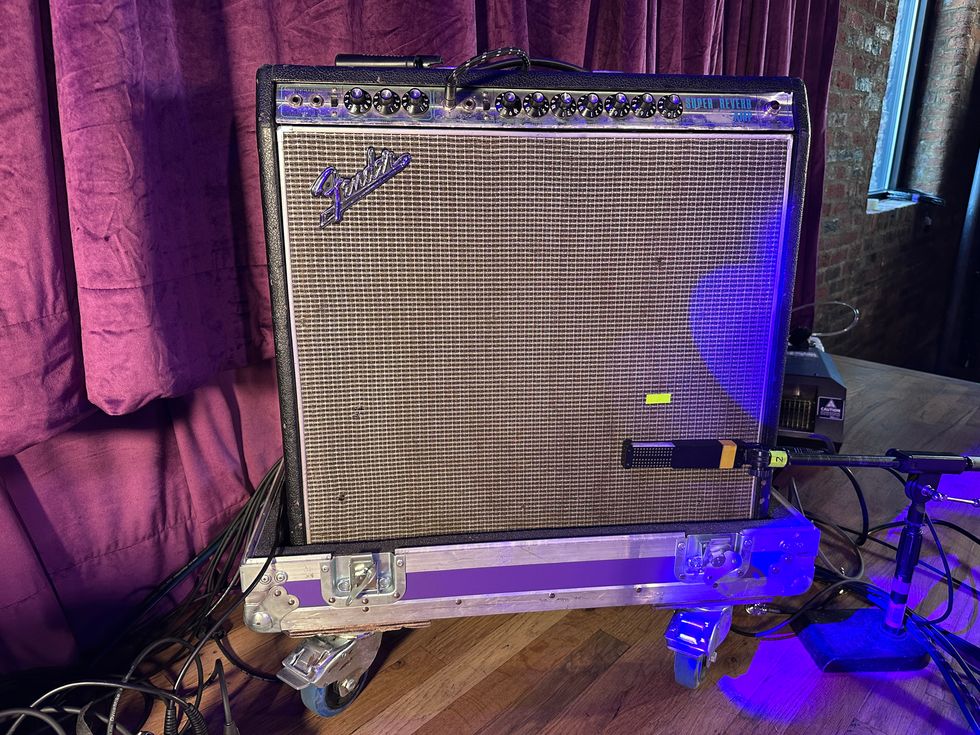
DeBardi played a Twin reissue for a decade and found the bright switch painful with the amp cranked. This 1968 Super Reverb gets bright too, but he calls it bright in a Freddie King way—sharp enough to grab your ear without turning shrill, like an old record.
Sick Trade
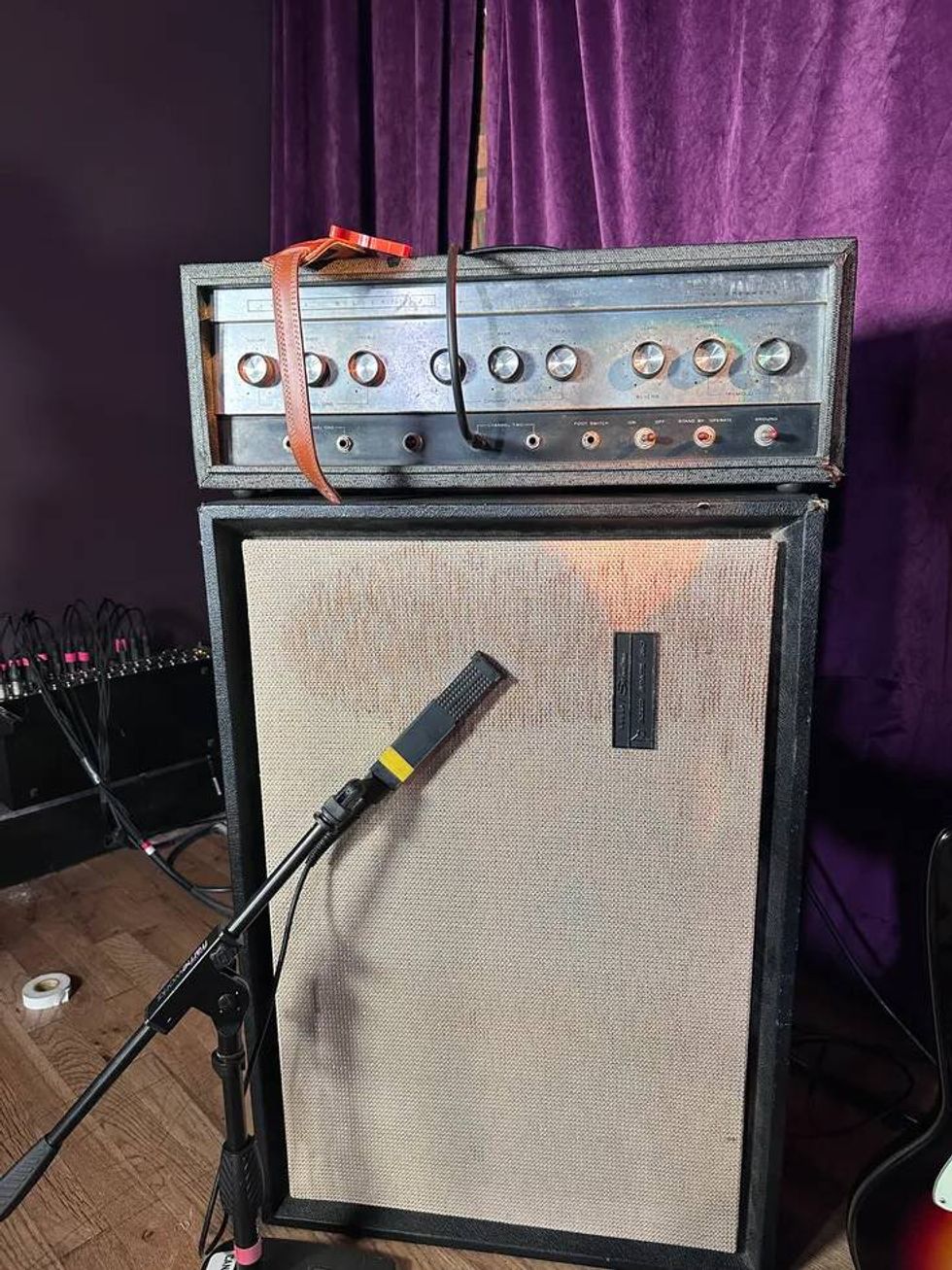
The other half of the stereo pair is a 1965 Silvertone, which DeBardi got by trading away a broken Dual Rectifier that a friend had abandoned in his storage unit after somebody threw up in it. He likes its midrange, and the two amps have been going out together since the Tenacious D tour.
Steel Beans’ Pedalboard
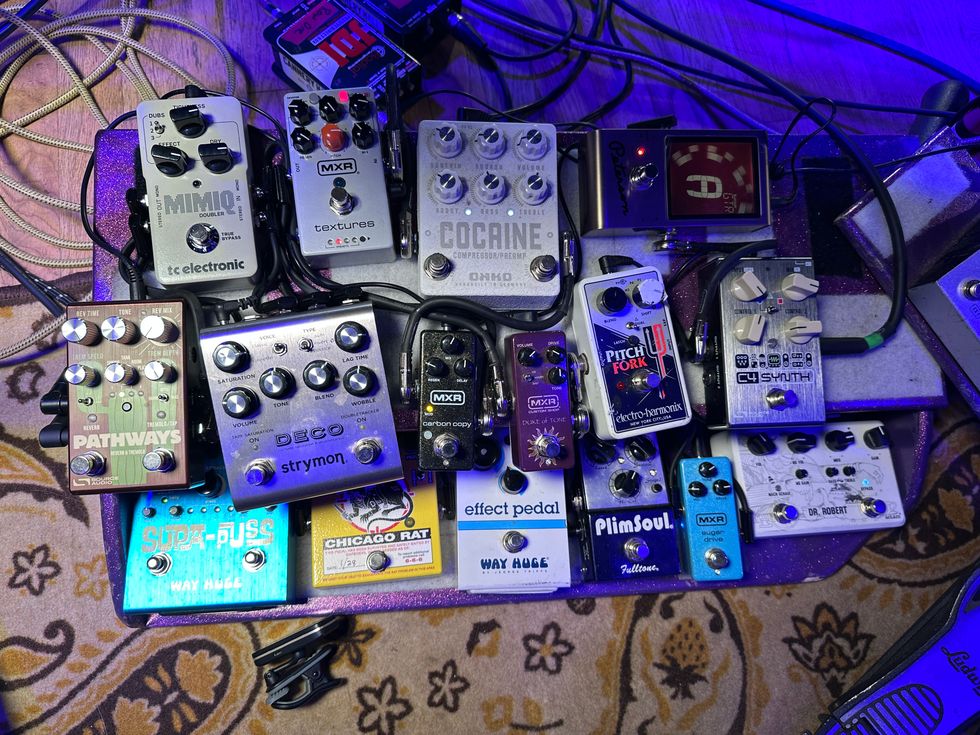
The chain opens with a Source Audio C4 Synth and a Peterson StroboStomp, then an EHX Pitch Fork, MXR Duke of Tone, MXR Carbon Copy, Aclam Dr. Robert, MXR Sugar Drive, and Fulltone PlimSoul. Fuzz comes from a one-off Way Huge pedal Jeorge Tripps sent him—“number 25 or something” of however many exist—and a Daredevil Chicago Rat. A Way Huge Supa-Puss, Source Audio Pathways, TC Electronic Mimiq, MXR Textures, and Okko Cocaine Compressor/Preamp round things out.
Brian May was asked what guitar he’d have used if he hadn’t built the Red Special: the answer may surprise you

Brian May is best known for playing his self-made Red Special, and there’s a reason why he very rarely uses other guitars.
May crafted the original with help from his father as a teenager, but has also been known to play other models from brands like Fender and Gibson; he can even be spotted in the music video for Crazy Little Thing Called Love with a black Telecaster in-hand. Yet, according the Queen guitarist, no other electric models besides his Red Special have ever really felt like the right fit.
In an interview with radio station Planet Rock, May is asked by a listener what guitar he would play as his main instrument if he didn’t have his Red Special, to which he confesses he never found one to have his desired tone.
“Nothing ever really worked for me apart from my own one, it’s odd. I always found the Fenders too thin and scratchy for the sound I was trying to get, and I found the Gibsons a little too much in the other direction, a bit too dark. They didn’t have the crispness and the top end that I wanted.
“My guitar, partly by design and partly by good luck, sits somewhere in the middle. It also has a very wide range of tones because of the way I have hooked it up and wired pickups in series, but in phase and out of phase. So it has a wide range of bright to dark.”
He concludes, “I can only really get my sound with the guitar I created with my dad, or a copy of it. Now we make them, we sell them. I take great pride in the fact that they’re well made and they’re not too expensive… It’s an extension of me and always will be.”
Watch the interview below:
The Red Special might be the perfect fit for May, but other artists who have played it have found its build to be a little peculiar. Namely, Steve Vai recalled getting his hands on the original, and struggling to play it: “The neck is like a bat, it’s got like, what, gauge .08 strings? But it was a miracle to actually have the guitar under my fingers, and he allowed that. And Joe [Satriani] and I have had a great relationship with him since,” he said.
The post Brian May was asked what guitar he’d have used if he hadn’t built the Red Special: the answer may surprise you appeared first on Guitar.com | All Things Guitar.
Fender recreates Lee Sklar’s highly customised P-Bass – but you’ll need to write on it yourself

Fender has made a “faithful recreation” of Lee Sklar’s highly customised Precision Bass, which has accompanied the bassist and session musician throughout his esteemed career.
The Lee Sklar Precision Bass forms part of the Fender Stories Collection and captures the distinctive modifications Sklar made to create a bass that is uniquely his own, minus the sprawling handwriting that covers the original.
The original bass has been used on an estimated 2,000 albums as his “go-to” instrument when in the studio, and is affectionately named Old Frankenstein. The handwriting on its body mostly consists of autographs from other musicians and celebrities.
Sklar’s bass chops have shaped countless recordings from James Taylor and Carole King, to Phil Collins, Toto, Jackson Browne, Linda Ronstadt, Joe Cocker, and Rod Stewart. His P-Bass features on close to an impressive 85 percent of his recorded work.
Sklar transformed the instrument by stripping it down to bare wood. This signature recreation is fitted with a Hipshot BT3 Bass Xtender for “flexible” low-end range changes, dual EMG Active Lee Sklar P pickups, a Badass II Bridge, and a modified Precision Bass neck shaved down to Jazz Bass dimensions and dressed with mandolin frets.
Find out more in the video below:
“It is my go-to instrument when I go in the studio. It’s the first thing I think about when I hear a song. That’s what made this project with Fender and EMG so meaningful to me,” says Lee Sklar.
“We put a lot of time, detail and care into every part of this bass, from the pickups and electronics to the feel and response of the instrument, to make sure it captured what I love about this guitar. At the end of the day, though, the most exciting part is knowing that another player can pick up this bass, make it their own and use it to create some music of their own.”
 Lee Sklar’s original P-Bass. Credit: Fender
Justin Norvell, Chief Product Officer, Guitars, adds: “Whether you know it or not, you’ve heard Sklar’s playing. His ability to weave in and out of different genres, moods and energies is unparalleled and in order to honour such fearless playing, this instrument needed to be crafted with meticulous care.
“Sklar’s P-Bass has been alongside him for an extraordinary portion of that career, so recreating it meant getting the details that make the instrument uniquely his, exactly right. It’s an incredible instrument and a fitting way for Fender to celebrate both Lee’s legacy and 75 years of the Precision Bass.”
The Lee Sklar Precision Bass is priced at $3,499.99 USD/£3,249 GBP. Find out more by visiting Fender.
The post Fender recreates Lee Sklar’s highly customised P-Bass – but you’ll need to write on it yourself appeared first on Guitar.com | All Things Guitar.
Gibson and Baggs tackle muddy live performance sound with the new HiFi DNA acoustic pickup system

Gibson and acoustic amplification company Baggs have partnered together on the new HiFi DNA acoustic pickup system, designed to deliver “the most natural, studio‑grade live tone ever achieved from an acoustic guitar”.
The new HiFi DNA pickup is available on a wide range of Gibson acoustic guitars across its Modern and Original Collections, with a standalone version for individual purchase coming soon that can be installed via a simple peel-and-stick application.
Baggs, formerly known as LR Baggs, changed its name earlier this September as part of its 50th anniversary celebrations, to mark a new, modernised era for the company.
Gibson says the pickup is intended to close the gap between live performance and studio-quality output, marking a “major leap forward” in acoustic amplification.
It works by utilising a dual Class A preamp architecture, which treats two individual sensors as their own independent studio channel. These lighter and larger sensors run through their own custom-voiced Class A preamp before they are blended together, preserving purity and articulation in a unified output.
Overall, the system captures both string detail and body resonance with improved accuracy, meaning it reacts to the guitar as a whole instrument to produce a tone that sounds like “stepping inside the guitar” itself.
Learn more in the videos below:
“HiFi DNA is a big leap forward – dual sensors with their own independently optimised preamps keep each signal pure and deliver unprecedented fidelity with the same gain before feedback as our acclaimed Element Under Saddle Pickup,” says Lloyd R. Baggs, Founder of Baggs.
“The name ‘DNA’ speaks to our character as relentless innovators and to what this new sensor can do. It’s lighter, more flexible, and more responsive. Less mass and stiffness means more life, more breath, more truth from the guitar.”
Baggs goes on to explain, “One of the discoveries that excited me most was bringing dual preamps to market. We’ve known for years how powerful that architecture is, but it was never before feasible at scale. Now, each sensor has its own preamp stage before they’re blended, which keeps both signals pristine. If you combine two mic diaphragms – or two piezos – before amplification, they tug on each other, and the sound can get muddy. Separating them preserves every detail.
“The two sensors work almost like a pair of choir mics: each hears a different part of the instrument, with enough overlap to feel natural and enough focus to stay immediate. You get ambience without losing attack, space without losing touch. It’s a new way of hearing and capturing the acoustic guitar – clear, alive, and deeply connected to the player.”
Robi Johns, Sr. Product Development Manager at Gibson Acoustic, further states: “What we’re able to do now is capture the true timbre and full dynamic range of a real acoustic guitar – so the player’s touch, nuance, and personality finally come through on stage the way they do in the room.
“I’ve been a student of the guitar my entire life, and for decades it’s been a struggle to make an acoustic sound right on stage. In the studio, with a great microphone, you can hear the whole voice of the instrument, but live that colour and character were always compromised. The first time I heard Lloyd’s new HiFi DNA pickup, I was stunned. It felt like I wasn’t listening from a point in space anymore – I was inside the guitar. It was the solution I’d been chasing since the 1970s. For the first time, the individual personality of each guitar comes through in amplified form. It transforms the entire playing experience.”
View the full Gibson x Baggs HiFi DNA collection, or head over to the Baggs website to learn more about the company.
The post Gibson and Baggs tackle muddy live performance sound with the new HiFi DNA acoustic pickup system appeared first on Guitar.com | All Things Guitar.
Learn Some Essential Flatpicking Licks via “Carroll County Blues”

Why Martin’s 16 Series is its most interesting new range in years

Ad feature with Martin Guitar
The iconic shape and look of a natural-finished square-shouldered Martin Dreadnought is so familiar, so legendary, that it’s not just defined the last 100-plus years of Martin, it’s become the thing people who have absolutely no idea about guitars picture when someone tells them to imagine a guitar.
For generations of players, the classic Martin body shapes – be that a Dreadnought, Auditorium or Concert – have become familiar friends, trusted confidants and companions through a lifetime’s musical journey. But Martin didn’t become the most iconic American acoustic guitar brand by resting on its laurels and playing the hits for a century or more – the Pennsylvanian company has forever been pushing the boundaries and trying new things.
That spirit has continued apace over the last few years, whether that’s been through exploring new body shapes like the GPC and the SC, trialling alternative tonewoods in the Inception range, or expanding the visual palette with new finishes like Mezcal Burst, Paisley Ember Burst and Amber Fade Sunburst.
Even by this standard, however, the brand new and reimagined 16 Series is taking Martin’s already big tent, and expanding it for a lot of new guitar players with bold, and unconventional ideas about what a Martin guitar is. In fact, the new 16 Series might be the most interesting new range of guitars the brand has created in a long time – and this is why.
 The Martin DSS-16E guitars. Image: Press
Any Colour You Like
There’s a fun anecdote that Martin’s Mike Dickinson told Guitar.com in our film Perfect Harmony. Back in the 1970s, Johnny Cash asked Martin to build him a guitar, and being The Man In Black, he wanted it to be… well… black. The legend goes that Martin CEO Chris Martin III really wasn’t a fan of painting over the beautiful spruce top of a Martin guitar, and so the Martin team effectively made this guitar in secret, with the company owner not realising it had ever happened until he saw Cash on TV with the guitar, and was delighted.
It’s safe to say that things have changed at Martin in the decades since then, and has expanded the visual palette of its guitars a great deal.
But while signature artists like Cash and Eric Clapton (with his limited run collabs with Hiroshi Fujiwara) have added solid colours to their guitars in the past few decades, it’s safe to say that we’ve seen nothing before like the new 16 Series.
 The Martin DSS-16E in Cherry Cola. Image: Press
Whether its Cherry Cola, Blue Denim, Black Smoke or Cream, the eye-popping new colours that adorn the spruce tops of the 16 Series are as striking as they are appealing – you have to admit, you might never have thought about a bright red Martin guitar before, but now you’ve seen it, it works, right?
These new finish options aren’t just marketing gimmicks either – you don’t have to spend much time looking at stages across the musical spectrum in 2026 to see that plenty of young singer-songwriters are looking to painted-top guitars as a way to stand out on stage – and these new options certainly do that.
Of course, if you’re not a primary colour kind of guitarist, the stunning 1935 Burst gives a modern twist to the shade top look, and there are some natural-finish versions in there, too. What’s more, closer inspection will reveal that while these guitars are bright and colourful, the finish is semi-transparent, allowing you to still see the grain of that beautiful spruce underneath – we’re sure Chris Martin III would appreciate that.
 The Martin 00L-16E in Blue Denim. Image: Press
Shape Sorter
If the finishes were the only departure for the 16 Series, that would still be a big deal, but you’ve probably noticed that this isn’t the biggest change for 2026. While the previous 16 Series guitars were designed to straddle the worlds of traditional and modern acoustic guitars, the new ones do something much more unexpected.
Because in addition to a refreshed take on the modernist GPC platform, the range now comprises three very rarely seen body shapes in the Martin canon – a slope-shouldered Dreadnought, a slope-shouldered 00, and the Jumbo.
Quite aside from the visual point of difference these guitars offer, they also offer a different experience in terms of both playability and sound than the more conventional Martin guitars you might be familiar with.
The DSS-16E Slope-Shouldered Dreadnought offers a punchy midrange, strong treble response, and a focused low end. With a spruce top and mahogany back and sides, it offers a woody, more intimate tone that pairs perfectly with a shorter-than-normal 24.9″ scale length. This gives a more relaxed and comfortable playing feel that complements the DSS’s natural warmth, while forward-shifted scalloped X-bracing enhances both the bass response and resonance.
The Jumbo sized J-16E is another eye-catching entry – this 14-fret spruce/rosewood beast is designed to command a room with a body size that delivers thunderous volume with sparkling top-end response – it’s the perfect Martin guitar for strummers, rhythm players, and anyone who wants to command the stage.
Finally, the smallest guitar in the range, the 00L-16E brings the slope-shouldered style to the classic Martin 00 body style. Compact and intimate, the 00L still has surprising projection for a guitar of its size, with a woody and responsive tonality that’s the perfect pairing for fingerstyle, songwriting, or rhythm work.
 The Martin Grand J-16E 12-string. Image: Press
Martin Magic
These unconventional shapes pair with the striking new finish options to produce some of the most non-traditional Martin guitars ever, while still maintaining that touchstone of heritage and familiarity that players love about the brand.
What’s more, while they may look different to the norm, they remain every bit the Martin guitars that we know and love – just with a slightly different accent.
It goes without saying that these 16 Series guitars aren’t replacing anything – you’ll still be able to buy all the D-18s and 000-28s you want, and these guitars don’t change that at all. What they do instead is create new colours in the crayon box, and new paths for more guitarists than ever to discover the magic of Martin guitars. And that’s something we can all get behind.
Find out more about the Martin 16 Series at martinguitar.com
The post Why Martin’s 16 Series is its most interesting new range in years appeared first on Guitar.com | All Things Guitar.
“Never let a corporation tell you what the rules are”: Former Fender Custom Shop head takes swipe at former employer with pointed S-style build

Earlier this year, Fender shook the guitar industry’s foundations when it sent cease and desist letters to a plethora of small builders demanding they stop making guitars similar in body shape to its iconic Stratocaster design.
Many in the guitar community criticised the move, and significant pushback was mounted by some of the brands targeted, including German retail giant Thomann – which went on the offensive to sue Fender after it was sent a C&D letter, presumably over its S-type Harley Benton guitars – and California-based boutique builder LsL Instruments, which hired the lawyer who successfully beat Fender in a trademark dispute on behalf of a consortium of brands back in 2009.
Now, former Fender Custom Shop head Mike Eldred has apparently made his thoughts about Fender’s legal action clear, with a new S-style build that appears to take aim at his former employer.
Mike Eldred was let go from the Fender Custom Shop a little over a decade ago, after serving as its head for around 17 years. During his time at Fender, he created the Filter’Tron pickup-equipped Cabronita Telecaster, and has continued a similar naming convention since his departure with his line of El Cabron guitars.
His removal made waves at Fender, and was a significant reason why John Mayer left Fender’s artist roster and later joined PRS, where he helped develop the Silver Sky, one of the biggest commercial guitar successes in recent history. Side note: PRS was another brand targeted by Fender’s cease and desist campaign.
Eldred’s new El Cabron Black Corp certainly makes a statement – one which we assume takes aim directly at Fender. Firstly, it’s a S-type guitar at a time Fender is clamping down on Strat copies, and secondly, it features a pointed message across its body: “Never let a corporation tell you what the rules are.”
 Credit: El Cabron
The guitar also features the classic Flower Thrower artwork by UK graffiti artist Banksy, which symbolises the power of peace and love being more powerful than violence and aggression.
We don’t know much in the way of specs, but we do know the guitar features a Gotoh 510TS bridge, and a single humbucker hand-wound by Willy Houston at Rocket Pickups, with voicing designed by Mike Eldred and Grover Jackson.
Perhaps unsurprisingly, the Black Corp guitar has already sold out on Mike Eldred’s El Cabron website, despite its wallet-denting price tag of £5,275…
You can take a closer look at the official El Cabron website.
 Credit: El Cabron
The post “Never let a corporation tell you what the rules are”: Former Fender Custom Shop head takes swipe at former employer with pointed S-style build appeared first on Guitar.com | All Things Guitar.
Gibson unveils two stunning luxury acoustics – a Hummingbird and SJ-200 built using elegant koa wood

Gibson has expanded its Artisan Series with two new acoustic guitars – an SJ-200 and Hummingbird, two of the brand’s most iconic acoustic designs – built using premium koa tonewoods.
Handcrafted by the team at Gibson Acoustic in Bozeman, Montana, both guitars feature a “richly figured” koa back and sides paired with a AAA Sitka spruce top, offering “sparkling high-end clarity that develops greater warmth and complexity with regular play”. A notable aesthetic touch comes by way of a three-rope marquetry strip running across the centre of the back of each guitar.
First up, the new SJ-200 – built on a blueprint introduced in 1937 and that’s come to be widely regarded as the “King of the Flat Tops” – features, alongside its koa back and sides and Sitka spruce top, a rosewood SJ-200 two-bar moustache bridge with abalone bar inlays, a tortoiseshell pickguard with abalone dot inlays and a silver-foil stamp that creates “vivid, shifting iridescence” as the light shifts.
 Credit: Gibson
Elsewhere, the guitar sports a mahogany neck with a Round profile, a bound 20-fret rosewood fingerboard with abalone graduated crown inlays, and a single-ply bound headstock, TUSQ nut and gold-plated Grover Rotomatic tuners.
In terms of electronics, the SJ-200 Elegant Koa is fitted with L.R. Baggs Anthem electronics, which combine an under-saddle Element pickup with an internal mic and preamp to faithfully reproduce the guitar’s unplugged tone.
Meanwhile, the new Hummingbird Elegant Koa features a very similar spec sheet, with the same koa back and sides and Sitka spruce top, Round-profile mahogany neck, 20-fret rosewood fretboard, and TUSQ nut and saddle.
Visually, this one stays true to the design that has made the Hummingbird such a classic, with the familiar artwork on its tortoise pickguard. This art is developed, though, now with gold and silver-foil details that shift as the light changes. This one also features L.R. Baggs electronics, this time a VTC system.
 Credit: Gibson
Premium guitars need premium protection – so each new Elegant Koa acoustic model ships with a Gibson Custom hardshell case.
“The SJ-200 and Hummingbird represent defining chapters in Gibson acoustic history,” says Robi Johns, Gibson Acoustic Senior Product Development Manager.
“With the Elegant Koa models, Gibson Custom honors the character that made these instruments legendary while introducing the beauty, clarity, and evolving warmth of koa. These are guitars designed to form an even deeper connection with players over a lifetime of music.”
These are high-end acoustics, and their price tags reflect that, with the Hummingbird Elegant Koa coming in at $5,199, and the SJ-200 Elegant Koa priced at $6,899. If those figures feel a little outside your budget range, you can check out some of the mouth-watering high-res photos below instead…


These guitars are available now, both at Gibson.com and at the Gibson Garages in Nashville, London and Miami.
The post Gibson unveils two stunning luxury acoustics – a Hummingbird and SJ-200 built using elegant koa wood appeared first on Guitar.com | All Things Guitar.
Adrian Belew Signature Stompbox
Spector Expands Icon Series with New NS Icon Neck-Through Basses
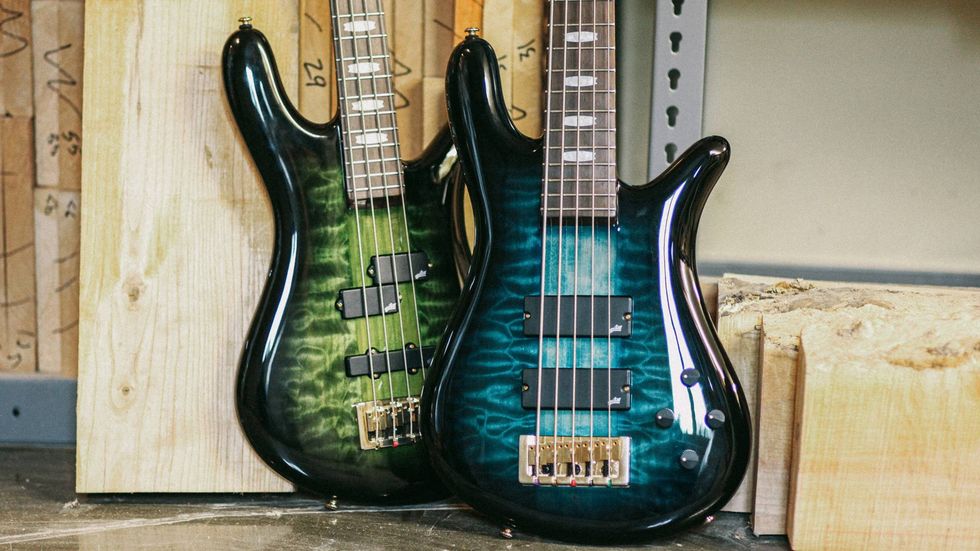
Spector Basses announces launch of the NS Icon Neck-Through series, the latest evolution of the Icon platform designed to bring the brand’s most celebrated construction method to a wider audience. Following the successful Summer 2025 introduction of the NS Icon Bolt-On series, these new models incorporate the "final ingredient" of the Spector legacy - neck-through design - to provide enhanced sustain and resonance. Designed in Woodstock, New York, the series aims to offer modern bassists a refined, high-performance instrument that captures the bold tone and feel that have defined the company for 50 years.
The NS Icon Neck-Through is built using solid alder body wings capped with highly figured quilted maple tops. This combination of tonewoods is selected for a rich, resonant tone and a visual aesthetic inspired by the brand’s custom shop builds. The instruments are finished in four distinct gloss stain options: Black Stain, Haunted Moss, Purple Cherry, and Black and Blue. These materials and finishes work in tandem with the signature curved NS body shape, providing the unmistakable silhouette and ergonomic comfort Spector has been known for since its start.
Central to the instrument’s performance is the 3-piece maple neck-through construction, a design approach popularized by the brand in the 1970s to offer superior stability and tonal balance. The neck features a custom shop carve and is paired with a rosewood fingerboard adorned with classic crown inlays. The 4-string models are built to a 34-inch scale length, while the 5-string models use a 35-inch scale for optimized string tension and clarity. A brass nut ensures consistent vibration transfer and durability at the headstock.
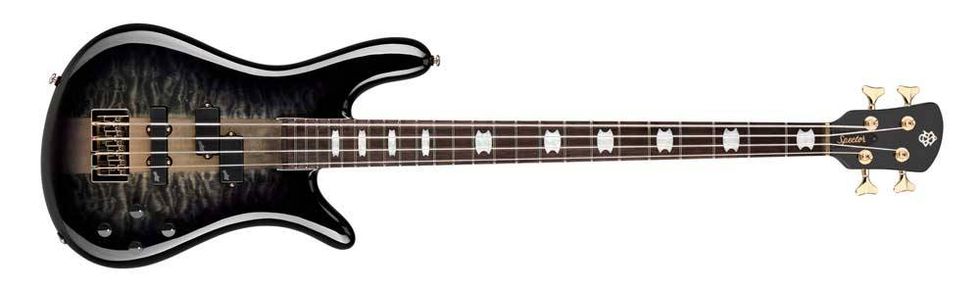
The series features a pro-grade electronics package headlined by custom-voiced Aguilar DCB pickups. On 4-string models, these are arranged in a Reverse P/J configuration, while 5-string models use dual soapbar pickups. The pickups are paired with an Aguilar OBP-2 onboard preamp, designed to deliver deep, punchy lows and articulate, crystal-clear highs. This active electronics setup provides players with a dynamic and versatile musical voice that stays clear and confident in both studio and live environments.
Rounding out the specifications is a suite of gold hardware, including a fully intonating locking bridge and high-precision tuners. Each instrument also features signature control knobs and is shipped with a padded gig bag for protection.
For more information on the NS Icon Neck-Through series and other Spector instruments, please visit www.spectorbass.com.
4 string street price: $1,699.99 USD
5 string street price: $1,799.99 USD
Martin Guitars Unveils Refreshed 16 Series
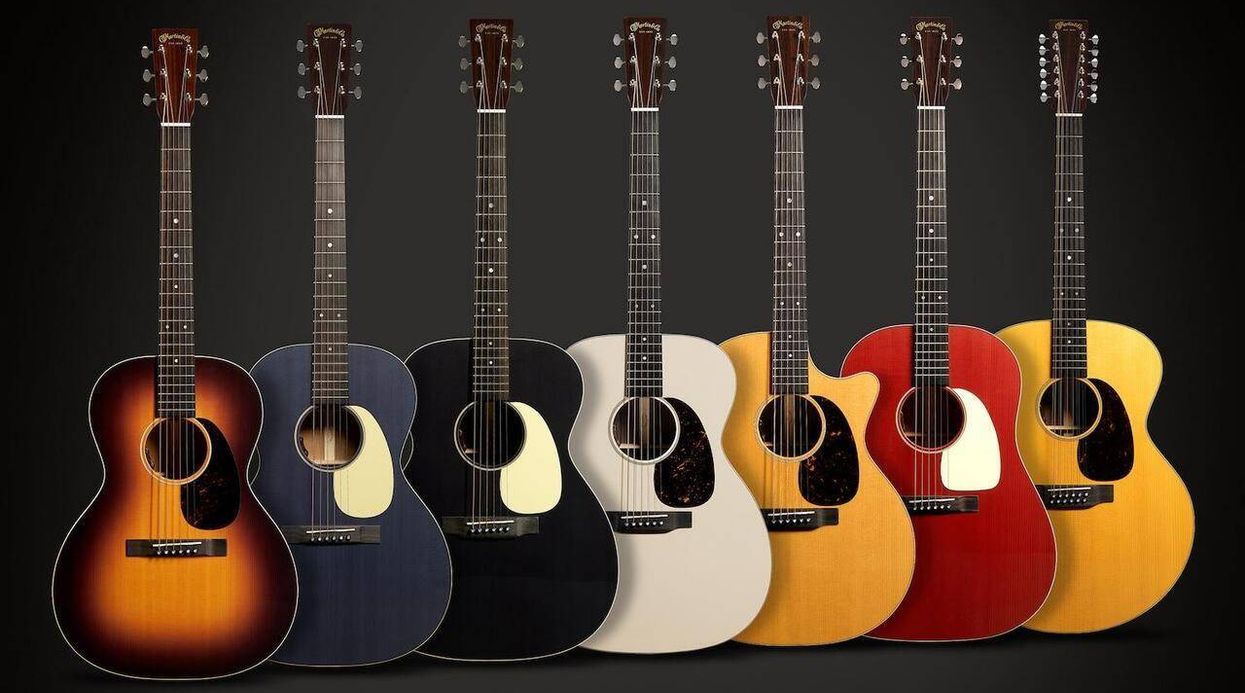
C. F. Martin & Co.® has launched the refreshed Martin 16 Series, a new lineup of all-solid-wood acoustic-electric guitars handcrafted in Nazareth, Pennsylvania.
Designed for players who want Martin tone with a look that reflects their individual style, the refreshed 16 Series pairs eye-grabbing gloss-top finishes with distinctive body shapes and stage-ready electronics.
Made to stand out visually, sonically, and creatively, the 11 new models give players more ways to express their sound, style, and personality. The lineup ranges from intimate, responsive 00Ls and warm, punchy sloped-shoulder Dreadnoughts to powerful Jumbos, a balanced Grand Performance cutaway, and a room-filling Grand Jumbo 12-string.

Across the series, players will find bold gloss-top finish options including Blue Denim, Cherry Cola, Cream, Black Smoke, and 1935 Burst, along with more traditional natural tops with a vintage tint on the GPC and Grand J 12-string.
The new 16 Series expands what players can expect from a Nazareth-made Martin, offering a wide range of body shapes, tones, and visual personalities. A major highlight is the DSS-16E, marking the first time Martin is offering a short-scale sloped-shoulder Dreadnought. With its 24.9" scale length and slope-shoulder body, it delivers a relaxed feel with a warm, woody, and punchy voice.
The compact 00L models bring surprising projection and a focused, intimate tone, while the Jumbo models deliver bold volume, deep bass, and commanding stage presence. The GPC offers balanced tone and comfort with a Grand Performance body and 000 depth, while the Grand J 12-string delivers lush shimmer, rich overtones, and room-filling sound to the lineup.
Every new 16 Series model is built with all-solid wood construction. Select models pair solid spruce tops with satin solid mahogany back and sides for punchy midrange, strong treble response, and controlled lows, while others feature satin solid East Indian rosewood back and sides for deep bass, rich overtones, and articulate highs.
Premium L.R. Baggs® Element™ electronics come standard across the lineup, giving players a natural amplified sound that’s ready for the stage.
Pricing for the new models is as follows:
00L-16E 1935 Burst: Street price $2,499.99
00L-16E Black Smoke: Street price $2,499.99
00L-16E Blue Denim: Street price $2,499.99
DSS-16E 1935 Burst: Street price $2,499.99
DSS-16E Black Smoke: Street price $2,499.99
DSS-16E Cherry Cola: Street price $2,499.99
GPC-16E: Street price $2,599.99
Grand J-16E 12 String: Street price $2,599.99
J-16E 1935: Street price $2,599.99
J-16E Black: Street price $2,599.99
J-16E Cream: Street price $2,599.99
To complement the launch, Martin is also introducing a small run of accessories and lifestyle merchandise inspired by the refreshed 16 Series, including Blue Denim and Cherry Cola steins, a Cherry Cola ringer T-shirt, a Blue Denim corduroy hat, and a Blue Fade leather strap—giving players and fans new ways to connect with the bold visual style behind the series.
For more information, visit martinguitar.com.
Lily Seabird is On Her Way

Lily Seabird’s new record, Lightspheres on Their Way, feels like a post-breakup magic mushroom trip in the woods, one you take when the world ceases to make sense, and you need to organize your pain into something you can make peace with. The third full-length from the Burlington, Vermont-based artist sways in a light psychedelic-folk breeze to begin, with a quiet argument with god by way of six-minute opener “The Pulley”: “I’ll ask you again, what pulls us through? Is it the fantasy of a kiss or the work that we must do? I’m frightened to keep going and even more frightened if I don’t.” “Bindlestiff” is all dusty Americana and folk-rock for a desert night, while “Election Day” and the seven-minute odyssey “Portal to the Past” rattle the walls with Crazy Horse abandon; Seabird’s and Rick Soszynski’s galloping guitars channel the wide-open spirit of Neil Young and Frank Sampedro.
As a collection, Lightspheres possesses a feeling of curiosity and play, in Seabird’s arrangements, her lyrics, and how she delivers them. Her voice shakes and trembles in that good way that has turned singers like Adrienne Lenker into the leaders of a new wave of alternative independent music, and the recordings are marked by the sort of intimacy and imperfection that many listeners crave in the age of algorithms. These qualities were come by honestly: Seabird recorded the album at her friend and co-producer Garrett Linck’s home in rural Maine in January 2026, where a woodstove provided the only warmth.
Seabird grew up between Upper Bucks County, Pennsylvania and California, her time split with her divorced parents. She moved to Burlington when she turned 19, planning to stay just for the summer. Eight years later, at 27, the city feels like a piece of Seabird’s character. Talking with her on a video call from her Burlington home, I perceive a level of friendliness and warmth that’s often sheared down when operating in big cities. “You go to other places, and people are always talking about ‘the music industry’ and who knows who and who’s at this show and blah blah blah,” says Seabird. “For us, it’s more like, ‘This is just something to do, and it’s fun.’” During the pandemic years, and even just during Burlington’s long, cold winters, Seabird and her friends stayed indoors and worked on art projects. She cut her first EP, Beside Myself, on a tape machine while stuck at home in the pandemic.
“I can communicate through the guitar in ways that I can’t exactly communicate through words.”
The new record’s title is a nod to how Seabird learned to process the growing churn of change and pain in her life: by viewing each creature, every discrete phenomenon we experience, as an always-moving essence on its own journey. (The idea is mirrored in how most of the songs came together on the road, in the back of a tour van or on a friend’s porch somewhere on the other side of the continent.) Seabird’s explanation is psychedelic and profound: “We’re all going somewhere,” she says, looking up to the ceiling. “You don’t know where you’re going. The thing that really inspires me most in my writing is how we all perceive time, and how that changes throughout the course of one’s life, but also throughout history, and how loss and change can alter that. It’s like when you think of a childhood memory and you’re sad that it’ll never be that way again.”
She continues. “Do you ever feel like you’re so caught up in the spiral of everyday life, this world we’ve created as human beings, and then you go outside and look up at the sky, and you’re like, ‘I am such a tiny little speck flying through space in an ever-expanding universe?’ As we change and move on and grow older, we’re all just going these different ways. God, I sound like a psycho. But it’s how I’ve come to accept these really hard truths of life. It’s also a way to keep going. It’s a way to have hope.” (Being a highly sensitive person has its ups and downs, Seabird shares later. “It also brings me to the place where I’m at now,” she says.)

Lily Seabird’s Gear
Guitar
Fender Telecaster
Amps
1973 Fender Champ (studio)
1974 Fender Bassman (live)
Effects
DenTone Double Alien Hate Fuzz
Death By Audio Reverberation Machine
Ibanez Tube Screamer
EarthQuaker Devices Plumes
Rick Soszynski’s Gear
Guitars
Parts Telecaster with P-90-style bridge pickup
Parts Telecaster with Firebird pickups
Amps
Vintage Fender Champ
RadioShack Realistic MPS-20 Portable Amplifier
Homemade tweed-style amp
Effects
Strymon Deco
Spaceman Effects Saturn VI Harmonic Booster
EarthQuaker Devices Bit Commander
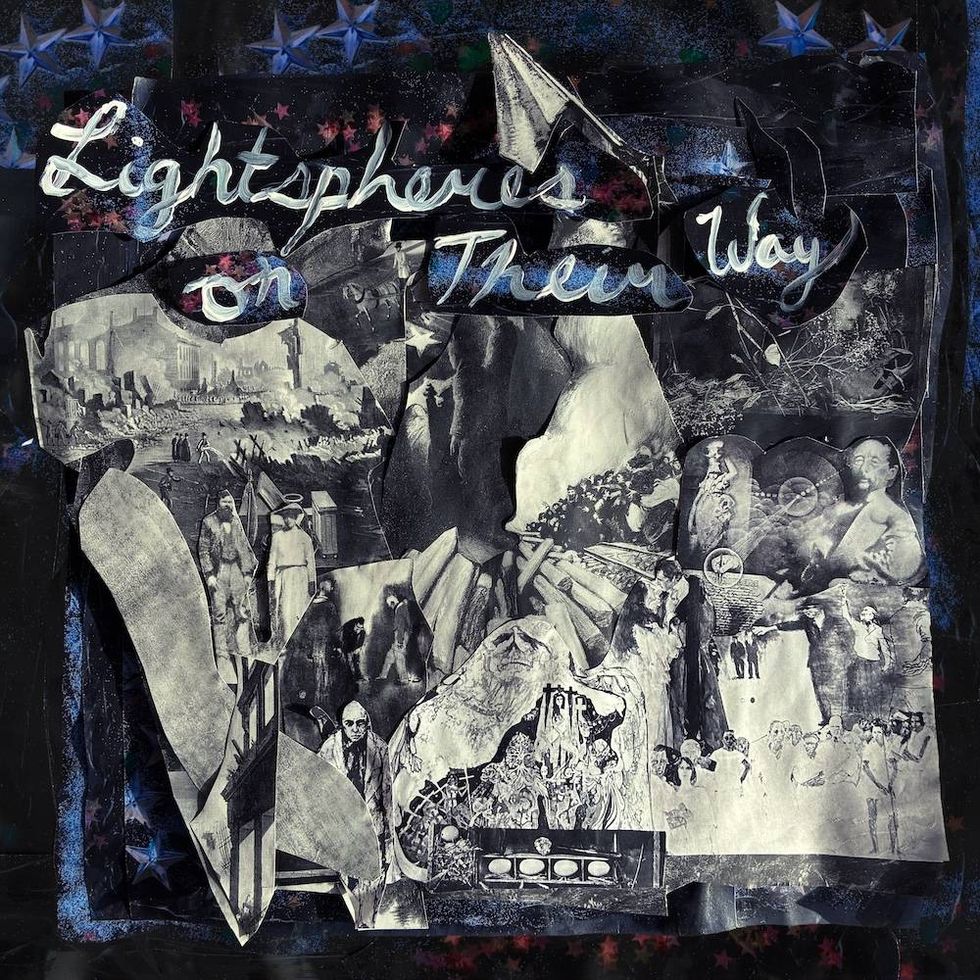
It’s little surprise to learn that the Grateful Dead have shaped Seabird’s approach to not just music, but life in general, and the existential spirit of one of the band’s later-era songs, “Black Muddy River,” hung over the writing of Lightspheres on Their Way. On the chorus, Jerry Garcia offers an interpretation of the afterlife: “I will walk alone by the black muddy river / And sing me a song of my own.”
Chaos and freedom were the two feelings that Seabird channeled while writing and performing her guitar parts for the record. For years, she dealt with the gnaw of impostor syndrome, and the anxiety that men in the guitar world would assume that she doesn’t know how to play the instrument well. Recently, those feelings have dissipated, replaced with the knowledge that, whether in word or sound, Seabird is communing with a guiding creative force. “I can communicate through the guitar in ways that I can’t exactly communicate through words,” she says.
Most of her parts were recorded with her Fender Telecaster and a 1973 Fender Champ that she picked up from Mike’s Music in Cincinnati while on tour; there wasn’t any room in their Toyota Highlander, so Seabird held the amp on her lap. Mike’s Music is also where Seabird found her DenTone Double Alien Hate Fuzz, a Vermont-made boutique pedal with germanium and silicon circuits that can be run independently or together for “armageddon.” With volume levels turned down, radio signals came through on the germanium side—a spiritual and literal embodiment of the record’s driving motifs. The record ends and begins with the same sequence of notes, played by Soszynski, fading into and out of the darkness.
“It sounds like you’re tuning into some distant sonic station from the past, far away,” Seabird says. “You’re turning the radio dial exactly at the right time to be able to get this little glimpse from us, that we made in the middle of nowhere in Maine.”
Your Acoustic Never Sounded Better (Plugged In)
The two innovative brands join forces to build off Baggs' popular pickup system by overhauling its tone genome by increasing the bridge-plate sensors' responsiveness and enhancing signal processing producing even more warmth and clarity. Watch John Bohlinger test drive a L-00 & J-45, while Lloyd Baggs and Gibson's Mat Koehler discuss the product development and partnership.
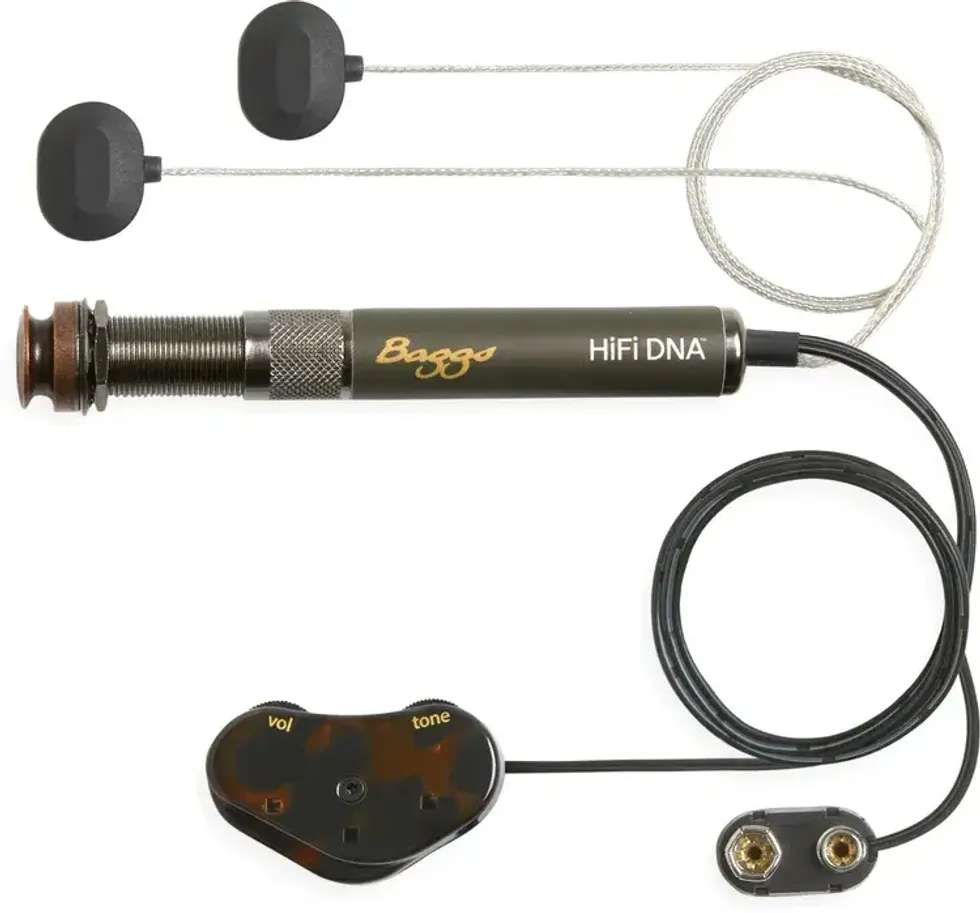
HiFi DNA Advanced Bridge Plate Pickup System
Acoustic Guitar Bridge Plate Pickup with Preamp, 2 Bridge Sensors, Volume/Tone Controls, and Installation Jig
“There’s a couple of ex-girlfriends’ pictures inside”: Billie Joe Armstrong reveals the secrets of his most iconic guitar

Of all the electric guitars in Billie Joe Armstrong‘s collection, his Fernandes S-type – affectionately named “Blue”, and which he’s owned since just 12 years old – is far and away his favourite.
The guitar has been with him for decades, accompanying him during countless live shows, and appearing on many of the band’s now-immortal studio albums, including their breakout album, Dookie (1994), and 1995’s Insomniac.
Blue remains a staple of the Green Day frontman’s live rig to this day, and can be clearly identified during shows thanks to its liberal covering of stickers and other marks of personalisation.
- READ MORE: Green Day serve up Basket Case and a few ice cream cones from the top of a Mister Freezie van
And now, the guitarist has spoken to US music retailer Sweetwater about his beloved Fernandes, diving into detail about some of the stickers that make it uniquely his.
“My mom bought it for me from my guitar teacher back in 1985 or something like that,” Armstrong says. “I just loved it so much. I really wanted a Stratocaster. It’s been part of my life ever since. Through the years I’ve kept it. I felt like it was a sound that I needed to hold onto.”
Explaining some of the stickers, BJA points to a photo on the back of the guitar, which shows himself in the 7th grade doing his “best Mick Mars impression”.
“I just started plastering stickers all over it, putting the “BJ” on it I think there’s a couple of ex-girlfriend’s pictures inside of here, stuff like that,” he says, pointing to the guitar’s lower bout where fresh stickers cover layers that came before.
Armstrong calls it the “ultimate punk rock guitar”…
The way the guitar looks is clearly a big talking point, but Billie Joe Armstrong regards Blue as indispensable to his sound. He goes on to explain its significant role in the recording of Dookie.
“When we went in to record Dookie, I was really adamant about playing Blue because I just felt like it was such a part of my sound for my whole life,” he says. “There was something that was really important to me. I played a lot of Insomniac [with Blue] also. It’s on the first four and a half albums.
“I could have played a different guitar, but there was something about this that just had, at that time, a deep distortion that created something unique.
“A lot of people have a distortion sound, but nothing that comes across as instantly identifiable. I think that’s what my Blue guitar and the Plexi has.”
The Green Day frontman has become somewhat synonymous with that pale shade of blue, and recently launched his signature 1959BJA Marshall stack – road tested at this year’s Super Bowl – which is wrapped in a similar colour.
You can watch the full video below:
The post “There’s a couple of ex-girlfriends’ pictures inside”: Billie Joe Armstrong reveals the secrets of his most iconic guitar appeared first on Guitar.com | All Things Guitar.
Keith Richards, Bruce Springsteen, Andy Summers, Julien Baker featured in Fender's New Telecaster Film
Fender's year-long celebration of 75 years of the Telecaster culminates with the release of The One That Started It All., a new 75-minute documentary film honoring the guitar that helped shape modern music and the artists who continue to redefine what it can sound like.
Featuring exclusive interviews with Keith Richards, Bruce Springsteen, Vince Gill, Sheryl Crow, Andy Summers, Joe Bonamassa, John 5, Julien Baker and more, the film brings together generations of artists who have each made the Telecaster entirely their own -- capturing the remarkable range of sounds and styles that have come from one essential design.
“Jeff Beck played one. Pete Townsend played one. Steve Cropper played one. James Burton played one. That covered everything from rock music to soul music to rockabilly. And it was just the guitar for me,” says Bruce Springsteen in the film.
The film also looks beyond the artists to the people and craftsmanship behind the instrument, including Abigail Ybarra, Fender’s legendary master pickup winder who worked directly with Leo Fender and helped shape the sound of countless iconic instruments.
The One That Started It All. delivers an immersive look at where the Telecaster has been, and the artists who continue to take it somewhere new.
Watch guitar tech mastery in real time as Angine de Poitrine break a string during a live show

Angine de Poitrine suffered a string break that nearly derailed their whole show as a jam session pushed their instruments to the limit.
Guitarist Khn de Poitrine and drummer Klek de Poitrine were performing at Le Poisson Rouge (LPR) in New York on 9 September when they hit an instrumental snag…
While the custom-built guitar and bass rig had not suffered too many major malfunctions at previous shows, the string break on the six-string half of the instrument very nearly saw the show end early.
During a performance of Ababa Hotel, Khn’s guitar needed to be restrung, a complex affair given the custom-built rig has a bass attached underneath.
Despite the near-disaster, the band managed to keep their jam going all while a guitar tech was on hand to fix the broken string. A viral video of the restringing has since been shared to YouTube, where fans of the band hailed the guitar tech for fixing the instrument mid-jam. The crowd in attendance were heard cheering once the restring had been completed.
To this day nobody knows the identity of Khn or Klek, and it’s a choice the duo have spoken about in interviews.
When explaining their decision not to reveal their identities to Cult MTL, the duo confirmed it was nice to live a life off stage without fame impacting them.
“There’s a comfort to feeling, ‘Oh, I’m this on stage,’ but after that, I’m a normal person,” they said. “We can avoid the, ‘Oh, this is the drummer’ talks, where everyone swarms you after a show when I just want to drink my water.”
Angine de Poitrine has enjoyed viral acclaim over the last year, with a performance at Montreal International Jazz Festival drawing a 70,000 strong crowd.
You can watch Angine de Poitrine jam around their instrumental restring below.
The post Watch guitar tech mastery in real time as Angine de Poitrine break a string during a live show appeared first on Guitar.com | All Things Guitar.
Martin overhauls its Nazareth-made 16 Series – here’s what’s new

A Nazareth, Pennsylvania-made Martin is about as prestigious an acoustic guitar as one can get, which has kept players demanding the very best returning to the brand’s 16 Series time and again.
And now, Martin has announced the latest overhaul of the 16 Series, introducing a raft of exciting new specifications and finish options. Handcrafted in Nazareth, these US-made acoustic electrics boast all-solid-wood construction, along with gloss-top finishes and a range of distinctive body shapes to choose from.
These body shapes run the gamut and cater to just about every acoustic player, from “intimate, responsive” 00L models to “warm, punchy” Dreadnoughts, to larger Jumbos. There’s also a Grand Performance cutaway model, and even a “room-filling” Grand Jumbo 12-string.
Each 16 Series model comes fitted with L.R. Baggs Element electronics, with spruce tops complemented by a back and sides of either satin solid mahogany or East Indian rosewood.
A highlight of the series, Martin says, comes with the DSS-16E, which with its 24.9” scale length, marks the first time Martin has built a short-scale sloped-shoulder Dreadnought model.
 Credit: Martin
“The compact 00L models bring surprising projection and a focused, intimate tone, while the Jumbo models deliver bold volume, deep bass, and commanding stage presence,” says Martin.
“The GPC offers balanced tone and comfort with a Grand Performance body and 000 depth, while the Grand J 12-string delivers lush shimmer, rich overtones, and room-filling sound to the lineup.”
Colour options in the refreshed 16 Series lineup include Blue Denim, Cherry Cola, Cream, Black Smoke and 1935 Burst, as well as more traditional natural tops, too.
Coinciding with the launch, Martin is offering a small run of accessories and lifestyle merch inspired by the series, including Blue Denim and Cherry Cola steins, a Cherry Cola ringer T-shirt, Blue Denim corduroy hat, and Blue Fade leather strap.
The refreshed 16 Series and accompanying merch are available now. Learn more at Martin.
The post Martin overhauls its Nazareth-made 16 Series – here’s what’s new appeared first on Guitar.com | All Things Guitar.
Win a 75th Anniversary Fender Player II Precision Bass – here’s how to enter

Fancy winning your very own Fender 75th Anniversary Player II Sparkle Precision Bass? Right now, there’s a way, and we’re about to tell you how…
Fender has just partnered with Music Venue Trust (MVT), which works to support and improve grassroots music venues across the UK. As part of the new partnership, the guitar giant is inviting players and music fans to nominate their favourite local venue, and everyone who makes a nomination is being entered into a prize draw to win a 75th Anniversary Player II bass. Easy, right?
Your nomination could massively help your favourite venue, too, as the three venues which receive the most nominations – one from each of England, Scotland and Wales – will receive a gear bundle packed with equipment from Fender’s portfolio of brands.
This bundle includes a Hot Rod Deluxe IV amplifier (worth £1,119), 5150 Iconic Series 40W EL34 1×12 combo (~£719), Rumble 200 bass amp (£699), Acoustic SFX II amplifier (£739), and a StudioLive SE Digital Console Mixer (£2,839). All in all, this is a bundle worth over £6,000.
“Grassroots music venues are where it all begins, the stages where artists cut their teeth, develop their careers, and the places music fans discover their new favourite acts. Fender has always believed in the power of that connection, and this partnership with Music Venue Trust is our way of putting that belief into action,” said Liam Cunnah, Executive Vice President, EMEA, Fender.
“We’re asking fans across the UK to tell us which venues matter most to them, because nobody knows these spaces better than the communities they serve, and we look forward to getting some fantastic new gear into the rooms where the next generation of artists will make their mark.”
“Grassroots music venues are where artists develop their craft, build audiences and create the foundations of sustainable careers. They are also vital cultural spaces at the heart of their communities,” adds Denzil Thomas, Partnerships Lead at Music Venue Trust.
“This partnership with Fender gives music fans an opportunity to celebrate the venues that matter to them, while helping us highlight the extraordinary work these venues do every day to support live music.”
To vote for your favourite local venue and be in with a chance to win a Fender 75th Anniversary Player II Sparkle Precision Bass, head to Fender.
The post Win a 75th Anniversary Fender Player II Precision Bass – here’s how to enter appeared first on Guitar.com | All Things Guitar.
Recording King Revamps Dirty 30’s Parlor Guitars
Recording King has revamped the company’s Dirty 30’s Parlor guitars, offering five finishes, upgraded construction and electronics options in the beloved parlor line.
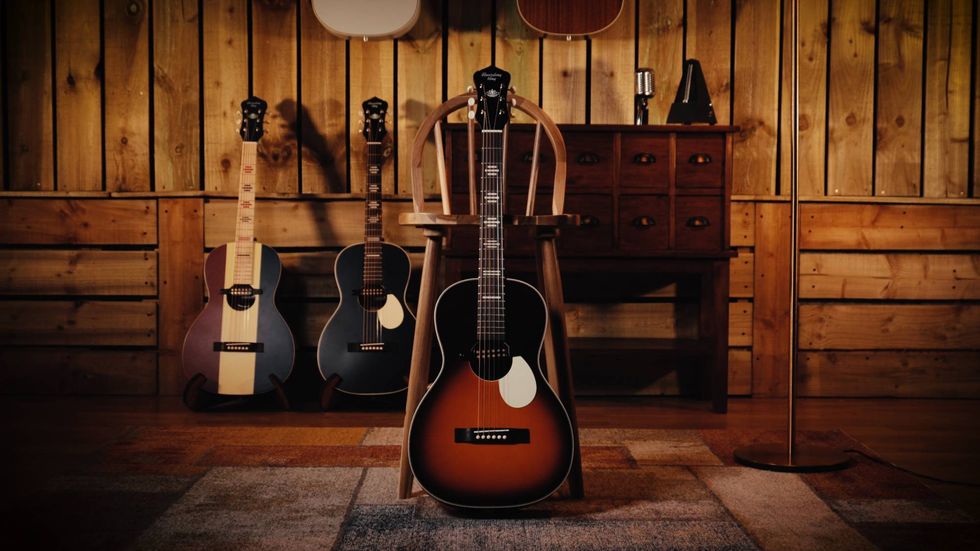
The new 7-Series Dirty 30’s models are the first new instruments from Recording King since the brand was acquired by St. Louis Music earlier in 2026. The new models retain the vintage swagger and adventurous, play-anywhere vibe of the earlier Dirty 30’s parlors, but benefit from elevated materials and construction, such as wood selection, inlays and bracing architecture. Acoustic-electric versions feature the Recording King Gold Foil Pickup for even more classic cool, with a clean and effortless plugged-in tone.
Key features include:
- 5 Unique Finishes: Mahogany, Black, Vintage Burst, Arctic Blue, Red White & Blue
- Spruce, Mahogany and Maple Construction
- Mahogany Neck, 12th Fret Dove Tail Joint
- Vintage Style Tuners with Ivory Buttons
- PPS Saddle, Nut & Bridge Pins
- Acrylic Fingerboard Inlays
- Fully edge bound with Herringbone Purfling (Except R/W/B Color)
- Acoustic-electric models fitted with RK Gold Foil Soundhole Pickup
The revamped Dirty 30’s Parlors serve as the first product introduction for Recording King’s new chapter with St. Louis Music and the company has more launches coming soon.
Recording King’s Dirty 30’s 7-Series Parlors all-acoustic models carry a $239.99 street price; the acoustic-electric models carry a $279.99 street price. For more information visit recordingking.co
“It’s great… but it’s too much. I gotta get this on R&B radio”: What Quincy Jones told Steve Lukather when he first played on Michael Jackson’s Beat It

To this day, Michael Jackson’s Thriller is still the best selling record of all time. Released in 1982, it featured some of Jackson’s most pivotal hits – including Beat It, a timeless, funky rock tune topped off with a grandiose Eddie Van Halen solo. However, if Steve Lukather hadn’t been reigned in, it could have been a distorted metal banger.
In a new interview with Guitar Player, the Toto guitarist recalls having to tone it down a notch while recording riffs for Beat It. The late Quincy Jones was in charge of production, and he thought that Lukather was going a little too hard. “I initially cranked the riff out on a bunch of quadrupled Marshalls,” Lukather admits. “But then Quincy called and said, ‘It’s great… but it’s too much.’”
After all, Jackson experimenting with hard rock and metal, but he was still the King of Pop. “I gotta get this on R&B radio,” Jones apparently told Lukather. “Use a little Fender amp and turn down the distortion.”
Lukather also reflected on Jones’ request to “calm down” his performance in an interview with The Guardian in 2024. “‘It’s too metal, you gotta calm down… I gotta get it on pop radio!’” Lukather recalled Jones saying. “I had played a bunch of really wild guitar parts, because I knew Eddie’s solo was on it.”
Despite getting a small slap on the wrist for his heaviness, it didn’t dampen Lukather’s experience. Elsewhere in his Guitar Player interview, he reveals that working with Jackson was fun – albeit a tad chaotic. “[Jackson] was a real pro, though what did make me laugh was his monkey, Bubbles,” Lukather remembers. “[One time he] ripped apart the vocal booth. That was the weirdest thing I saw. It made me laugh on the floor, of course.”
“[Jackson] was very collaborative – he wanted my input,” he adds. Jones was similar, but always aware of what the mainstream radio stations would want. “With songs like Human Nature, Quincy would go, ‘Make it funky for me, man. I gotta get this on R&B radio!’ I came up with that part on the spot, and that’s what ended up on the radio.”
As for Lukather’s more recent work, he has been co-producing an upcoming Van Halen release with Alex Van Halen. While there were rumours of him stepping into Eddie’s role, he has since put the record straight. “That’s the most ridiculous and humorous thing I’ve ever heard,” he told Guitar Player. “I am no more qualified to try and play like Ed Van Halen than I am to be the first man to tug my dick on the planet. I don’t know how anybody could think that would even be a reality. Honestly, it’s laughable… I don’t play like Ed.”
“I am there 100% to be his co-producer and help him through the technical aspects – I’m not gonna play,” he said. “There’s not gonna be any Lukather or Toto fingerprints on a Van Halen thing. I can fucking promise you that!”
The post “It’s great… but it’s too much. I gotta get this on R&B radio”: What Quincy Jones told Steve Lukather when he first played on Michael Jackson’s Beat It appeared first on Guitar.com | All Things Guitar.
Pages
