
Music is the universal language
“Glory to God in the highest heaven, and on earth peace to those on whom his favor rests.” - Luke 2:14
Norse Guitar Feeds
Strymon Unveils La Brea Analog Tape Drive
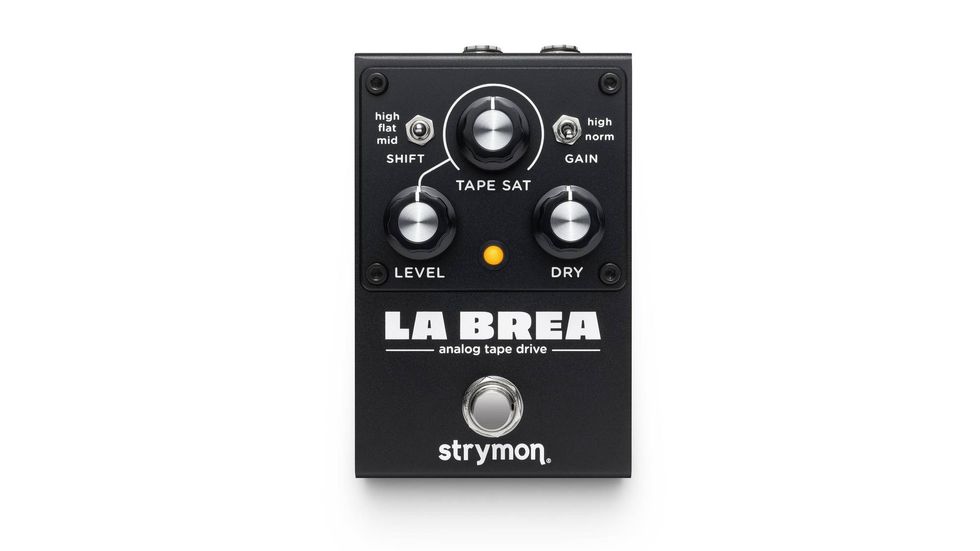
Strymon Engineering (www.strymon.net), has introduced a new analog tape drive pedal called La Brea.
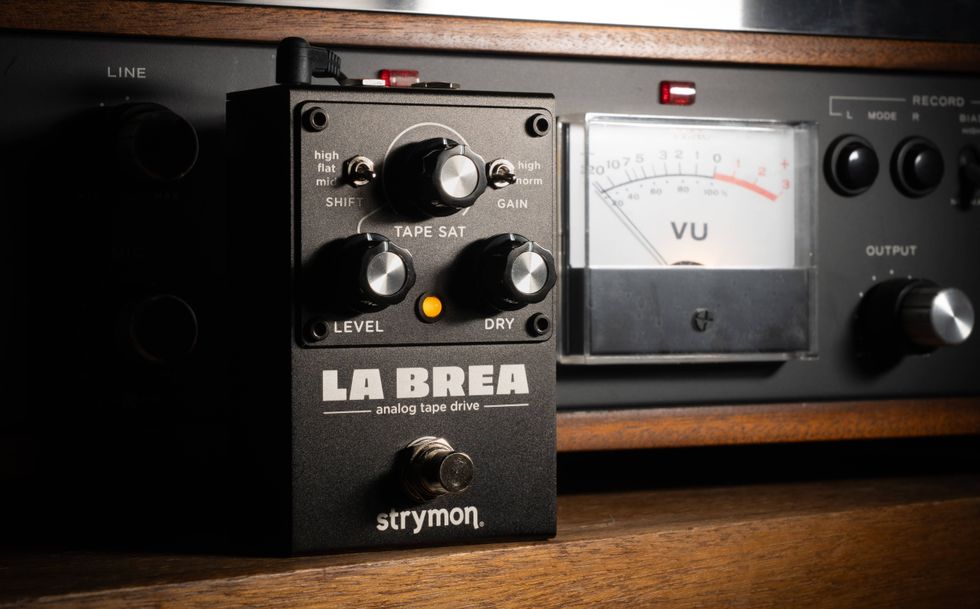
Incorporating multiple stages of analog gain using techniques learned from studying vintage tape machines, La Brea delivers a wide range of saturation from a simple interface. The pedal never sounds harsh even at extreme settings, and piling on the gain just makes things fatter and more saturated without getting crispy or painful to listen to, just like a real mastering tape deck.
Initially inspired by the white paper that co-founder Pete Celi wrote on the development of Strymon’s iconic Deco pedal, analog engineer Josh Forbes aimed for true tape behavior in a fully analog design.
In addition to the tape saturation side, La Brea also features a fully discrete dry path, giving the pedal two distinct personalities that players can use to craft personal sounds. The dry path always stays in phase with the saturated output, meaning you can add a little or a lot with no comb filtering or other artifacts. The discrete operation also means that it can be used as a pure clean boost, or a clean boost that allows you add saturation (as much or as little as desired) to fatten up single notes and chords.
As tape has a tendency to saturate high frequencies first as the gain increases (making them less prevalent), La Brea also features a three-position Shift switch that allows the player to add some of those high frequencies back in to the output. One position concentrates on adding high frequencies only, and the other adds upper midrange frequencies to the high boost to help notes poke though the mix. It’s a powerful tool that can help wake up dark humbuckers, add bite to older strings or make setting up a rig even easier.
“It’s crazy to think that Josh read Pete’s whitepaper on the making of Deco over twelve years ago, which was before he even worked here”, said CEO and chief analog guru Gregg Stock. “He’s been thinking about how to recreate tape behavior purely in the analog domain ever since, so it’s great that we now have the Series A line of analog pedals to showcase these great ideas our guys come up with. La Brea is a drive pedal with a unique voice and response, so it fits really well with the other pedals in Series A.”
“It’s quickly become the favorite drive pedal for a bunch of people at the office”, said Sean Halley, Strymon’s marketing guy. “The fact that it’s based on tape means that it never gets harsh, never gets strident, and mates really well with all different types of amplifiers. I’ve had one on my gigging board since the beginning of the year in disguise, so I’m excited to take the tape off and finally let people see what it is!”
La Brea carries a street price of $199 US. For more information visit Strymon.net.
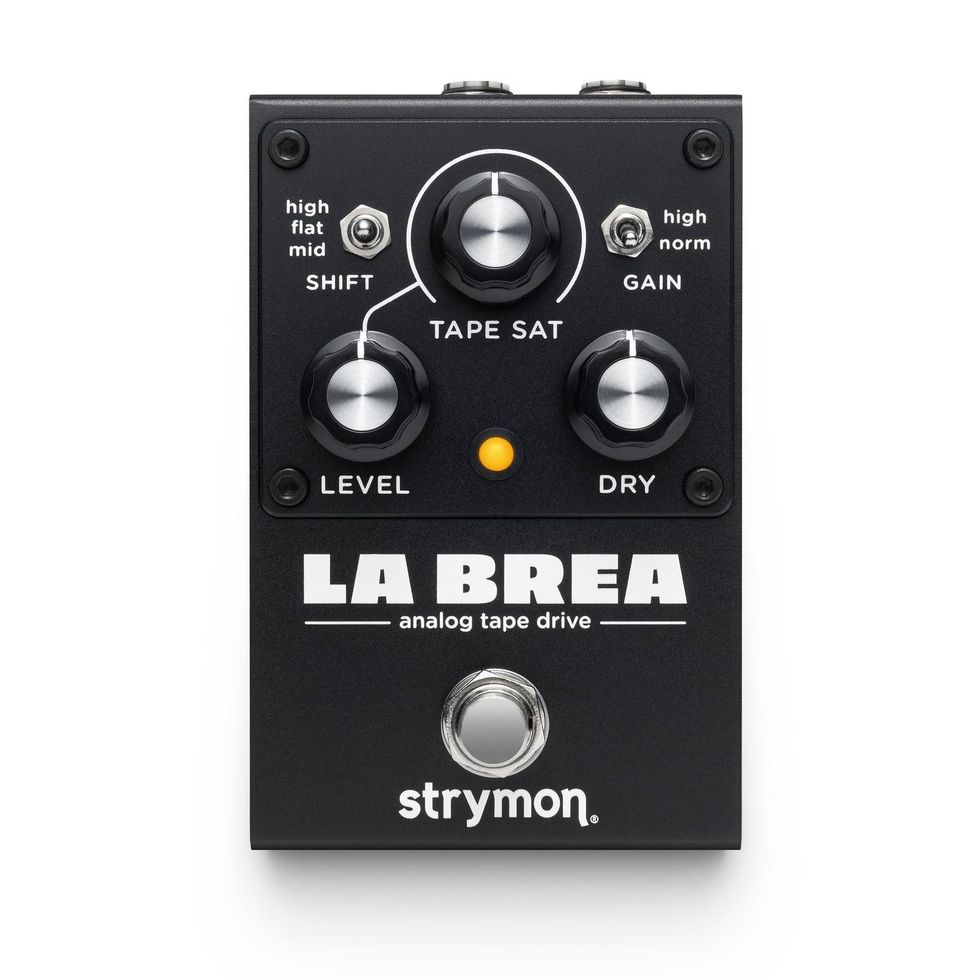
La Brea
Strymon Engineering (www.strymon.net), has introduced a new analog tape drive pedal called La Brea.
Factory Tour: Keeley Electronics
John Bohlinger gets an in-depth tour from founding mod scientist Robert Keeley who peels back the curtain to show how his Oklahoma City facility can turn an idea into a pedal within a week. As you'll discover during the video, Keeley handles the majority of all manufacturing inside their OKC headquarters, including production of enclosures, procuring onsite prototype tests, populating circuit boards, component testing, painting cases and adding custom graphics, overseeing quality control, and conducting repairs. Check out how they shape your guitar tone!
Factory Tour: Keeley Electronics
John Bohlinger gets an in-depth tour from founding mod scientist Robert Keeley who peels back the curtain to show how his Oklahoma City facility can turn an idea into a pedal within a week. As you'll discover during the video, Keeley handles the majority of all manufacturing inside their OKC headquarters, including production of enclosures, procuring onsite prototype tests, populating circuit boards, component testing, painting cases and adding custom graphics, overseeing quality control, and conducting repairs. Check out how they shape your guitar tone!
Podcast 563: Frank Gross of Thunder Road Guitars
Frank Gross, founder of West Seattle’s Thunder Road Guitars, joins us this week.
Thunder Road is a unique brick-and-mortar success story. Thanks to some smart business moves (online and off), Thunder Road has thrived. In fact, Frank recently purchased and renovated a commercial space for the store!
During our chat, we talk about Seattle’s thriving independent guitar stores; Thunder Road’s offerings (they carry big brands like Fender and Gibson alongside consignment instruments); and so much more.
We are brought to you by Peghead Nation: https://www.pegheadnation.com
(Get your first month free or $20 off any annual subscription with the promo code FRETBOARD at checkout).
Mike & Mike’s Guitar Bar: https://mmguitarbar.com


The post Podcast 563: Frank Gross of Thunder Road Guitars first appeared on Fretboard Journal.
D.C.’s Masterful Guitarist, Ken Avis, of Veronneau Talks Music, Business, Success And The Joy Of Living
By: Rick Landers
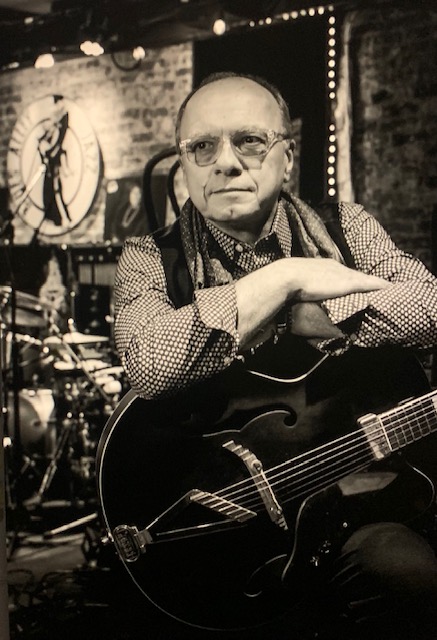
Ken Avis – photo credit: Bill Crandall
The Washington, D.C. area has a very robust music community where musicians weave their ambitions and altruism into a basket of working strategies in order to build an audience of followers, a fan base. One of the most prolific and successful musicians in the D.C., Virginia, and Maryland area is Ken Avis, who has set the standard for developing a music career over a lifetime.
Ken’s multi-faceted approach to build an audience is more philosophically based than “strictly business,” as you’ll discover in our interview. And it sounds relatively simple, however, it demands a strong work ethic, a passion for music, and a desire to live an adventurous life, that’s ultimately and intentionally well-balanced.
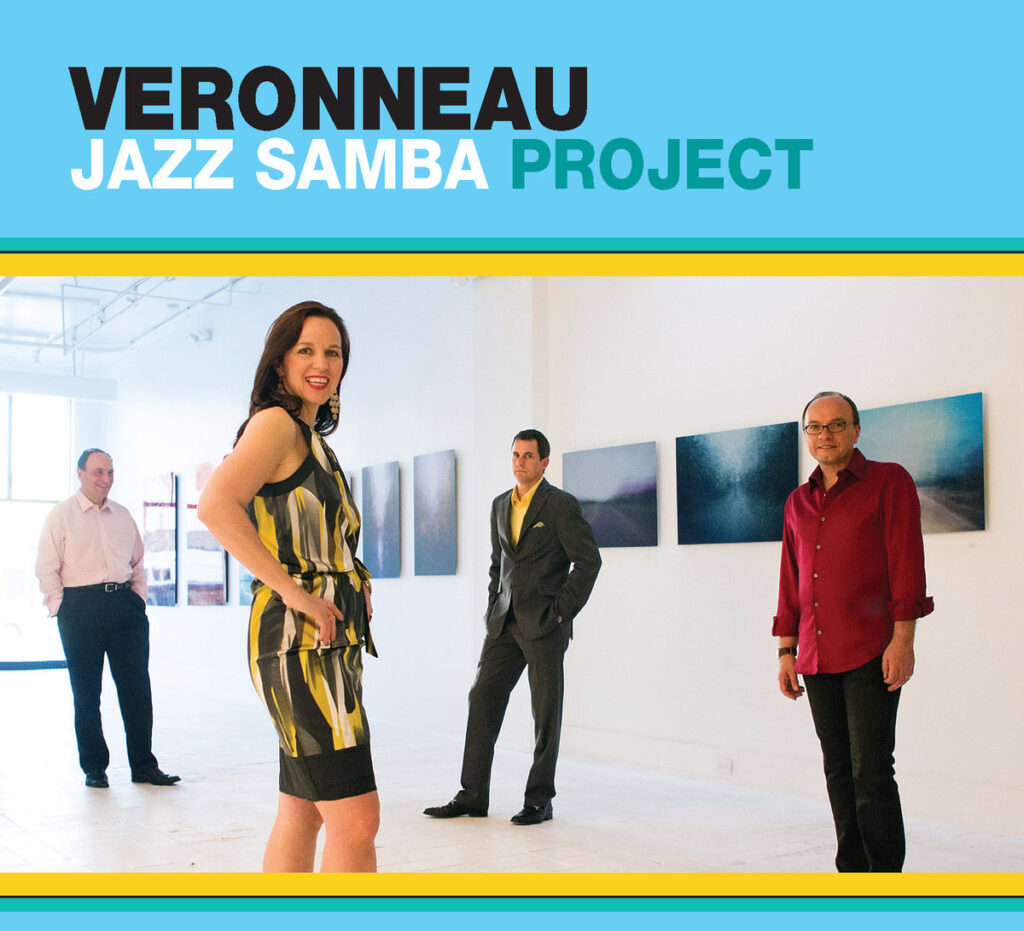
Ken Avis, is singer-songwriter, a guitarist, composer, and a music curator with a passion for breaking down cultural boundaries between many spheres or genres of music. He and his French-Canadian wife, Lynn Veronneau, have developed and nurtured their own duo, Veronneau, that allows them the flexibility to run solo, as well as assemble some of the finest musicians in the area to join them for performances.
“The kind of thoughtful artistry one can expect from masters of the music.” – Washingtonian Magazine
In the nation’s capital and surrounding area, they’ve performed at an array of venues that include elementary schools, senior communities, nightclubs, house concerts, as well as internationally acclaimed places like D.C.’s legendary Blues Alley, the Creative Cauldron, The Strathmore Music Center, and The Kennedy Center. And Veronneau can count coup adorning the stages of the DC Jazz Festival, the Takoma Park Jazz Festival in addition to the U.K.’s Beat-Herder festival.
By establishing their own independent Antidote label, they have championed folk, blues, jazz and world music, creating a a work and promotional space for highly talented artists, whose own work and ambitions might otherwise not be fully appreciated and realized in a competitive and commercially-driven industry.
“Alchemists of cool jazz, bossa nova, and folk” – Capital Bop
Hailing from the English Midlands, Ken performed in earnest when his family moved to England’s music-centric, Blackpool, where he played in local hotels, bars, as well as when he ventured about northern England to perform. He joined in with some known artists as Dave Ball (Soft Cell) and Chris Lowe of the Pet Shop Boys and more before pursuing a formal education at Sussex University and the prestigious London School of Economics.
Still, he didn’t leave music behind and found himself in a number of bands, as well as working with London’s now legendary Otis Grand’s Big Band, a WC Handy Blues Award winning group. But Ken also had a more traditional career in mind and he got on track to work in jobs in the world of international development. He would find himself in Paris, Geneva, and finally land in Washington, D.C., working for the World Bank.
“Inspiring & joyful…excellent performers” – Washington Post
Ken and Lynn would soon release their debut album, “Joie De Vivre” (“Joy of Living”), that included their hit “La Mer,” that nailed down over a million views on Spotify, followed up by four Top 10 studio albums, two live albums and the duo worked with others releasing a number of singles. As Veronneau the couple has satisfied their love of travel, adventure and music by touring the U.K., France, Canada, Portugal, Spain, Switzerland, Sweden, and have appeared on BBC radio, international festivals and won seven Washington Area Music Awards with their original songs, as well as won many songwriting awards.
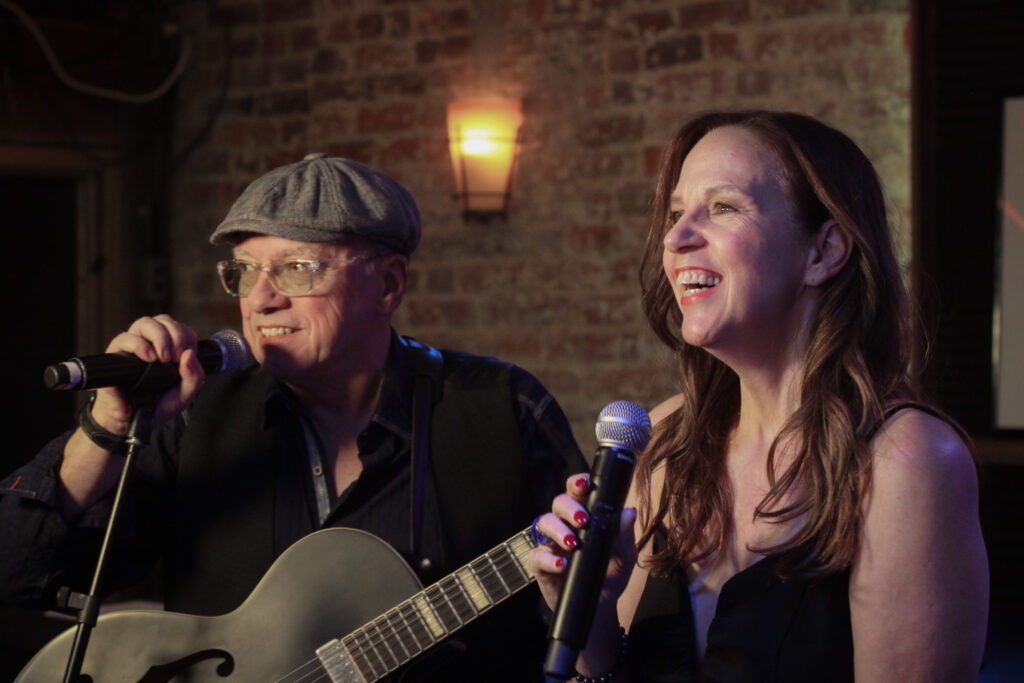
Ken Avis & Lynn Veronneau – photo credit: Bill Crandall
In his interview with Guitar International, Ken discusses his journey navigating the worlds of blues, jazz, and world music; the philosophy behind Antidote Records and what it means to champion artistic diversity, as well as what he’s learned from performing across such an eclectic spectrum of venues and audiences. It’s a conversation about artistry, community, and the quietly radical act of making music that matters. As what sometimes happens, our interview began with a technical glitch that we soon figured out and we carried on from there…
******
Ken Avis: That reminds me of one of my favorite guitar stories, actually. Dominic Miller, who’s been playing guitar for Sting for, like 25 years. He was an unknown, went for his first audition with Sting, and couldn’t get any sound out of his guitar, and there were techs all over the stage, messing with the amp, changing cables, doing all these things. For like 10 minutes, he says, “I was absolutely dying. I was sweating. I was so embarrassed. I’m thinking, “Sting’s never gonna hire me.'” And he said that the techs had tried everything and couldn’t make it work, and then Sting walked over to him, turned up the volume on his guitar, and that was it. He had the volume button on his guitar down.
Rick: Oh, yeah. All those techs in the room.
Ken Avis: He said, that kind of endeared him to Sting. Yeah, he said Sting laughed so much. He said, you know, he still didn’t think he had the job, but it turns out he did.
Rick: That’s kind of typical, I think, the small things that sometimes affect you, and you don’t realize it. So, yeah, that’s a good story. We’ve only met a couple times, and always briefly, so let’s go through some basics, then move into different things like your label Antidote.
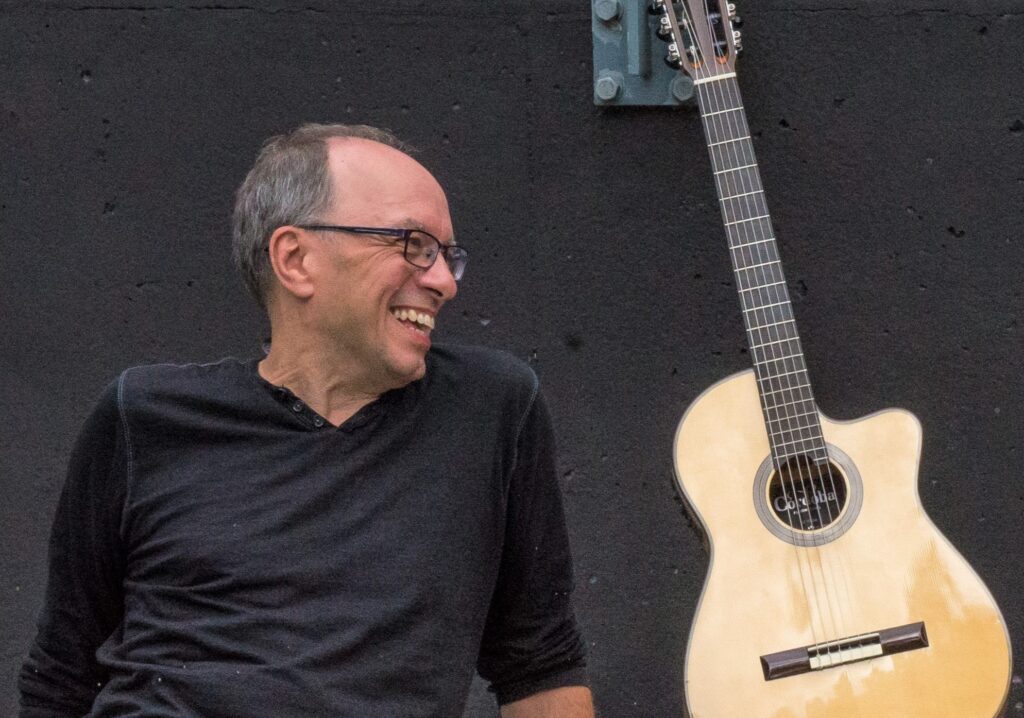
Ken Avis – Photo credit: Lynn Veronneau
Ken Avis: It’s the record label and the events organization. We do a lot through Antidote. Started off as a radio series.
Rick: Oh, really? How about we start out with what it was like for you growing up in England?
Ken Avis: I grew up in the north of England. I was born in a little town right between Manchester and Liverpool, called Wigan, which was at one of those classic coal mining towns like you’ve got in America. Died in the 1960s. So, we moved to a local holiday resort on the Irish Sea called Blackpool, a very special and unusual place. It’s like at the top of the deprivation index for the U.K. at the moment, in every measure. And it was pretty bad even then, but it was a holiday town for a few months of the year, and so we had so much music and so many shows going on there that there was opportunities for me to be playing from the age of 10 or 11. I was in talent contests on the end of the pier and things like that.
Rick: So, you must have started playing guitar when you were pretty young.
Ken Avis: Yeah, very much inspired by The Beatles because as a northern English guy they were everything, you know? It was more than just music. It was politics and culture. To have people with an accent like me being on the TV was rare, unless they were being laughed at. And so we all wanted to be Beatles, and I got a guitar when I was about 10. Take lessons. Again, because Blackpool was a show town there were musicians there who played in the pit orchestras of summer theaters. And so I had lessons with a jazz player, when I was about 11 ’til the age of 14.
Rick: Oh, that’s a good way to start.
Ken Avis: It was a good way. I should’ve kept going, you know? It’s kind of only afterwards you realize how much you were learning and how much was still left to learn.
Rick: There’s always more.
Ken Avis: Yeah, of course, I wanted an electric guitar, and I wanted to play rock and roll, so I quit the lessons.
Rick: So what was your first guitar then?
Ken Avis: Well, it was an acoustic guitar, I think probably made in Germany, very inexpensive. My brother had a guitar before me and never touched it, so my parents were unwilling to spend any serious money on a guitar. And my very first lesson with that guitar teacher, I never touched the guitar. He just made it playable. He got his tools out and shaved down the bridge and things ’cause the strings were about an inch and a half off the neck, you know? It was a disaster.
Rick: It was typical too, back then.
Ken Avis: You can’t get a bad guitar anymore. It was some kind of a Strat copy. We did a tour in England earlier this year, and we played back in Blackpool, and somebody gave me some photographs from when I was about 14 or 15 playing this guitar. I put them up on Facebook and Graham Drew, who was a luthier and guitar repairer based in the area said, “Oh, I know exactly what that is. It came out of Italy.” And they weren’t bad guitars, you know, they were okay copies of Strats. But he said, he’d seen a lot of those in the U.K. during his youth, and practiced his art on them,
Rick: Yeah. I guess everybody wanted Hank Marvin’s red Strat.
Ken Avis: Yeah. And it’s funny ’cause I moved up from all of that. I loved acoustic guitar, so I bought a Yamaha acoustic which was a good guitar. And then the first good electric that I got was I went into the local guitar store, and there was a guy there who used to go to America every year, buy guitars in America, like Guild and Gibsons and Fenders, which were cheap in America in those days, fill a trailer, put it on a ship, bring it back to the U.K. and sell the guitars. Apparently, he also had cocaine in the tires of the wheels, so he went out of business after a while.
Rick: Back in the day!
Ken Avis: Back in the day. But, I walked into his shop and I said, “You know, I’d like a, an electric guitar. I have, like, £100.” And he says, “The best thing you can buy in this shop is that Guild Starfire,” like an old-fashioned looking thin line semi-acoustic. “No, well, I had in mind a Telecaster or a Strat or something.” So I hesitated, and the next time I went in the shop it was sold. So it took me a while, to find one of those when I came to America. I paid a lot more for it when I came to America. You know, things change. That would’ve been around 1978, something like that.
Click here to view the embedded video.
Rick: So, what kind of amp were you playing?
Ken Avis: Oh, I’ve always played solid state amps, so I’m used to that sound and I like that. And there was a brand in Britain called H&H, and they did PAs. And so the first amp that I was using on stage was, it was actually a vocal monitor from a PA system. Super clean sound. And, like 100 watts, easy to carry around and so on. Before that I had a valve amp, which I’d bought for £15 in a secondhand store, which probably dated back to about 1960. And, it was probably about 10 watts. And the strange story with that is a friend of mine at the time, we were at school together and we used to play music together at our houses, was Dave Ball, who became the synth player in Soft Cell. So he did songs like “Tainted Love”, and he borrowed that amp one day and I never got it back. And he died about a year ago , so I’m never gonna get it back. Like a little suitcase it was.
Rick: I know that you play a lot of the blues. How did you get into the blues arena?
Ken Avis: That’s what I’ve always liked. So, while Dave Ball was playing synth-pop, and that was the music that was happening in Britain at the time, you know, first punk and then the synth-pop, neither of which I was interested in, I was getting deeper and deeper into acoustic American blues from the 1920s and ’30s. I was listening to Stefan Grossman doing his interpretations and doing the albums with the the tab inside.
I was listening to that and then Muddy Waters and other people. So blues was my thing, and then when I was about 20, I moved to London and found myself in a great band there called, Otis Grand and the Dance Kings, who were pretty big in Europe. After I left them, they became pretty big. Maybe, I was holding them back.
But, Otis Grand was this amazing Lebanese guitar player who’d fled Lebanon to live in L.A. and then came back to London. But when he was in L.A. he really got into people like Robert Cray, Duke Robillard. And in contrast, Bob Wills and his Texas Playboys. So the first time I went for an audition with this band, I mean, first of all, I was English, I was very, you know, basic English. I’d never met anyone from Lebanon. I couldn’t have pointed to it on a map in those days. They were all Mexicans ’cause they had American accents and big beards. And they were doing this Bob Wills and his Texas Playboys music with pedal steels and fiddles and a horn section.
Rick: Oh, great music, yeah.
Ken Avis: Great. I loved it. And so for about five years I was playing all around the clubs of London with that band, so getting more into blues, contemporary for the time, Crikey, that was, that was 40 years ago! And it’s not changed that much. It’s still the same sound. Robert Cray’s still out there doing it in the same way.
Rick: You were playing the blues. So the music that you were listening to when you were growing up, I would guess you were listening to people like Slade.
Ken Avis: Oh!
Rick: Slade was great. You know, David Bowie back in ’71, ’72. You would’ve been fairly young at that point. And who else was playing? All the Beatles and then I’ll call them northern British folk musicians, like, John Martyn, Nick Drake, Roy Harper, those folks.
Ken Avis: You’ve just absolutely nailed it. That’s exactly who I was listening to. You know, when I was 14, 15, I was listening to Slade, Mott the Hoople, bands like that. But then John Martyn was one of the major influences on me. I absolutely loved John Martyn. To this day, I probably play John Martyn albums more than any other.
Rick: He started out, I think, with the Yamaha, and then he moved to a D-28. What a great musician.
Ken Avis: Yeah. I mean, I bought the Gibson SG a few years ago just because that was the electric guitar that John Martyn used. I love what he does, absolutely love what he does. That’s one of the things I say, when I retire I’m gonna really study John Martyn and his tunings and how he does it, but the voice that he sang in as well, you know, the songwriting is actually really, really simple. But what he does within it, a lot of it is blues-based, as well.
Rick: Also doing things like, “I’d Rather Be the Devil,” which his a phenomenal Echoplex driven guitar style. And, on his early stuff it was so simple, like, “May You Never”.
Ken Avis: Totally clean, absolutely beautiful folk song. And then he would be doing the stuff off the later albums with the Echoplex, which is just… What’s it called? In the Silent Hours, In the Still Hours?
Rick: “Small Hours?”
Ken Avis: “Small Hours,” yeah.
Click here to view the embedded video.
Rick: So, if you’ve been to the Midlands.
Ken Avis: Yeah. When I think back to the bands that I went to see in those days as well, and they were smallish venues. They weren’t arenas. People didn’t go to arenas in those days. It was universities. I would go to Lancaster University Preston Guild Hall, Manchester Free Trade Hall all within an hour of where I lived. And I would see bands like Yes, Genesis, Pink Floyd, Supertramp. Tim Buckley, I think was opening for Supertramp, if I remember rightly. And we were all sitting cross-legged on the floor. Which I thought was a very British thing, and then I saw a video of Roy Buchanan playing at Georgetown University, and everyone’s sitting cross-legged on the floor, so it was universal.
Rick: Yeah, I used to go to Grande Ballroom in Detroit, and the stage was probably, like, three feet tall, and you’d see Cream, Vanilla Fudge, the MC5.
Ken Avis: Music was everything in those days. You know, you were waiting for the next album. You and somebody would buy it and say, “Have you heard it yet?” And then you’d get the new Musical Express on a Thursday afternoon and read the reviews. I think we’re hearing more music than we ever heard. It’s in shopping malls and everywhere else. But, it’s so splintered now, and you don’t really follow music in the same way. And people are busy going to gyms and playing video games and watching Netflix. So, it’s interesting how it’s changed. For me, I stopped listening to those bands. In Britain, all of that died when punk came along. Punk took over everything. And, it’s maybe five years ago, I was walking the dog and thought “Oh, I wonder what Genesis sound like.”
And I went to Spotify and put on, “What was the big Genesis album that I like so much?” [Selling England By The Pound] Like, “I Know What I Like (In Your Wardrobe)”and all that. And I listened to it and I thought, “Actually, this is really good.” And then I read about them on Wikipedia, ’cause we’re very modern and I went, “Oh, they were, like, 22 when they did this music. How were they so musically competent?” And the songwriting was so advanced and progressive.
Rick: Do you miss what we had before, when we had, like, maybe three or four stations that were playing music?
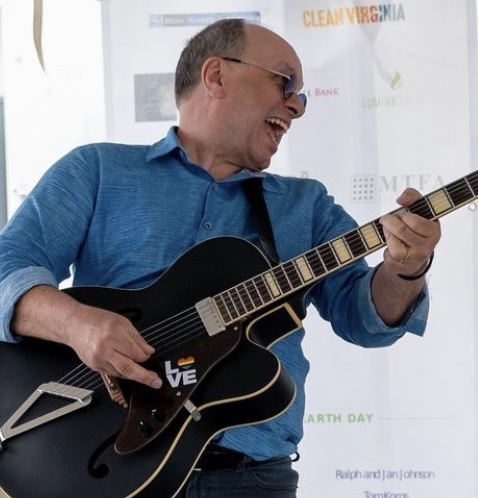
Ken Avis – photo credit: Lynn Veronneau
Ken Avis: I refer to it as the democratization of music, and I think that’s great. I think there should be lots of citizen musicians. We’ve been working full-time as musicians for 15 years, Lynn and I, 15 years. And so we have a different perspective and a different approach to people who are just, citizen musicians, who might play once a month in a band with friends at a small venue for friends. But I think it’s fantastic that that’s going on. I think it’s great that everybody has access to doing that. So on the one hand, I think that access that people have got is fantastic.
On the other hand, I think that the lack of a focus on music, for me, and possibly for our generations, ’cause there’s a few generations where music was everything, we feel we’ve lost something. We feel that it’s hard to track what’s going on because everything’s so splintered. And when my kids play music and I go, “God, I really like that. Where did you hear that?” Cause I can’t understand where they’ve heard it, how they came across it, and, you know, it’s usually something on TikTok, and they know one song. They don’t know an entire album and things like that. So, it’s hard to keep track.
I genuinely try to keep track, partly because we used to have a radio program, a weekly radio program. And I wanted it to be relevant. I knew there was good music out there. And we present music as well now, so I’m always looking in this local area or where’s the new talent, where’s the new ability, and there’s loads of it. They’re fantastic.
So I don’t for a second say music’s dead, but there’s something about the accessibility as a listener and the culture around music which is so splintered, you know? I think the fact that people can pick up a guitar, relatively cheap, and it doesn’t need to have the bridge shaved down and be made playable and then they can go to YouTube and learn anything they wanna learn.
Rick: That’s incredible.
Ken Avis: I think amazing. I think that’s great. And they’ll always be better musicians than me or you or anybody else, because there are some people who, that’s their thing. And they might not even go out and perform. They might just do it in their bedrooms, and that’s great.
Rick: Go going back to your splintering idea, Joni Mitchell once wrote a song, I think it was on her Court and Spark album. I think it was called “Just Like This Train.” And talked about going crazy because there’s too much choice, and I think that’s probably from the listener’s perspective, it’s splintered. But then you listen to it and you’ve got so much choice, sometimes you just don’t listen to anything.
Ken Avis: Yeah. And the algorithms don’t help, because the algorithms make you listen to more of what you’re already listening to. So, that’s a strange aspect of it. But, you know, I’m so engaged in music, it’s 24 hours a day, not just playing, but listening and finding out what’s going on. And I look at the list of who’s playing at, say, The 9:30 Club, and I’ll recognize one. Like, I’ve just finished a book. I’m not plugging the book, I just finished a book about the history of popular music in Northern Virginia. And in the preface to the book, I said, “I’m stopping this at the year 2000. I’m gonna leave it to a future generation to write the history since 2000.” And I make the point there, I say, “And good luck to them, because I don’t think it’s gonna be an easy job.” I think it’s gonna be super challenging, because I’m writing about people from Northern Virginia like Roberta Flack, people who made a national and international impact.
Rick: Tim Buckley. Tim Buckley was born in D.C.
Ken Avis: I didn’t know that. So, that’s the next book, is the D.C. one.
Rick: When you talk about it being so difficult, we’ve got AI now, which is another interesting phenomena that we’re dealing with right now. And you’ll probably have a book written by AI, which can readily grab all that information from the worldwide web, as we used to call it, and come up with a book, you know pretty instantly, I would guess.
Ken Avis: But then the challenge for the future generation is who’s the household name anymore? I mean, how do you define national and international impact? There was just a thing about a single by some people in the U.K., which has broken the record for the most weeks at number one, and they did a poll in the street, and 98% of the people have never heard the song and never heard of the artists.
America’s in a worse situation than England in this sense because there’s virtually no music on the TV in America. In terms of live performance. You get one artist on the Jimmy Kimmel show at 11:00 at night, maybe.Whereas in England, even to this day, Channel 4, we only have four national channels in Britain. And Channel 4 is all music from 5:00 until midnight every Friday. And it’s mainly live music, documentaries about music, all of this stuff. So at a national level, people have got a shared experience around what’s going on, and it’s not all old Led Zeppelin films, you know? It’s bang up-to-date stuff, as well.
But in America, this vast, massive country, I was gonna use a very English phrase there. There’s bugger all local radio playing local music. There’s bugger all music on the TV. So, there’s no national conversation around it anymore. The only national conversation is old blokes like you and me, talking about how good Van Morrison was in the day. The whole thing about vinyl, people buying vinyl, 80% of the vinyl is the old records by Led Zeppelin, Cat Stevens, Joni Mitchell. It’s not new.
Rick: A lot of kids are starting to listen to the singer-songwriters back in the ’60s and ’70s.
Ken Avis: Yeah, yeah.
Click here to view the embedded video.
Rick: I think there’s a resurgence in this, this new generation, that they’re going back and, and listening to them just like maybe you listened to old blues players after you discovered the blues, I guess through, you know, the Brits who really promoted it, and then everybody started listening to Muddy Waters and guitar player, Magic Sam, and a bunch of others.
Ken Avis: You’re absolutely right. You know, my youngest son is listening to music and I’m going, “Where did you hear that?” He’s listening to Labi Siffre from 1972, a British artist from Nigeria. And he’s hearing this music, and so they do have access to everything. There is democratization in that sense. And to be honest with you, his friends think he’s really weird ’cause he listens to gypsy jazz and Labi Siffre and things like that, so.
Rick: Yeah. So we did have opportunities if we would go and search stuff. But you mentioned algorithms, and so we’re fed stuff.
Ken Avis: Another thing similar to that is Alan Lomax, the famous musicologist, who lived in Arlington (Virginia), created a massive library of old recordings from all around the world which is at the Library of Congress, and they’ve put that onto a website now, which has also got a globe so you can actually go and identify which part of the world he, he recorded it in. So it’s global music.
To me right now, I’d say right now, for the past 10 years, the most interesting music for me is the music that falls between the cracks, the music which merges. like there’s a kora player who’s been doing a series of albums with a Welsh harp player.And the kora is considered like an African harp. And the two of them interweaving is, it’s a sound like you’ve never heard before. And that to me is the interesting thing, when you’re mixing, Celtic music with salsa, so you mix those two musical styles, and I’ve not heard that before. That’s cool. And, the local band, just ’cause it’s a thing I haven’t heard often is, The Guitar Renegades, five guitars, no bass, no drums.
Rick: Really? Don’t know ’em.
Ken Avis: It sounds awesome and they do everything from the Brandenburg Concerto to “Smells Like Teen Spirit, with Simon and Garfunkel and The Beatles in between.
Rick: I’ll have to check ’em out. You mentioned Alan Lomax. I wanna show you something. This guitar it’s a 1950, it was actually made in 1949, but it’s a 1950 first year of the, Gibson CF-100. Are you familiar with them?
Ken Avis: Not at all. Beautiful guitar, though.
Rick: Yeah, it’s, it’s a great guitar. Anyway, I bought this from a fella named Mark Lundy Randolph, and it turns out that his great-grandfather was interviewed by the Lomaxes back in 1941. I know that you’ve written some songs and you’ve won some awards. Can you talk about the songs and your songwriting process.
Ken Avis: I think from a starting point, I have certain philosophies. A collection of philosophies. One of them, I stole from Paul McCartney. Paul McCartney once said, you know, the thing he’s most proud of about The Beatles, when they were The Beatles, was they never really wrote negative songs. It was always positive. No matter even if they did a thing like “Blackbird”, which was about segregation and so on. You had to know it to work out that that was what it was about. And there was a positive beauty to it. So in the current times, with the current politics, I felt I’d like songs that I write to be relevant. They don’t all have to be heavy.
Click here to view the embedded video.
Some of them are ditties, but I wanted to do some relevant stuff. I wanted to take a string from Paul McCartney and make them positive. And so if I find myself falling into the moaning and complaining mode, I stop myself and rip that one up and start it again. So the song that has had the biggest impact at the moment is, make the world a better place, which is a very political song, but people, it’s political with a small P. And, it’s still positive, you know what I mean? It’s about making the world a better place. Sure, I critique the problems, and then make the world a better place. So for me, more often than not, I need to have an idea before I start the song. I need to think that there’s a point to this.
I don’t write many songs. So, I want there to be a point to the song. Even if it’s a love song, I want there to be something new and original that I can put in there or super honest. So I come up with tunes pretty easily on the guitar, noodling around and they sound passable, but like, what’s the point if the song doesn’t have a point? And so that slows me down a little bit and, and hopefully improves the quality of what I do.
The next bit of the process is once I’ve actually come up with the song, I give it to Lynn, my wife, Lynn Verreaneau, who is a great vocalist. And honestly, eight times out of 10 she’ll say, “Hmm, it’s good, but it’s un-singable for a normal singer. There’s too many words in there.” And so she actually just chops out words without changing the sense, and she edits the songs and makes them more singable. And, the more you take out the words, the more people can sing it.
Rick: What about the range? What about the vocal range? Do you try to keep it so people can sing it?
Ken Avis: Yeah, ’cause a lot of the songs that I’ve written, Lynn sings. And she tends to like keys around the key of B. I tend to sing in the key of E, which doesn’t sound that far away, but I’m in a much lower register and things like that. It’s a pity we’re not both in the same key. Occasionally we can do it, but I play solo sometimes as well, sing and play solo, and it’s only one tone away from what I would sing it in naturally.
But, like all guitar players, I find E’s, A’s, G’s nice keys to play and I can leave open strings. I can play that while I’m doing it. So, at the end of the day, I don’t strum either. That’s the thing. I hardly ever strum the guitar. I’m constantly fingerpicking. And so that allows me to kind of put the bass, the chords, and a little bit of a lead riff in there all at the same time. So, I want the guitar to have something interesting going on. And, if I’ve got those things going, it’s okay. I also write short songs and because I haven’t one idea per song, I can only restate it so many times. But then when we get to performing it live, I leave space there for somebody like Dave Kline (violinist).
Rick: Oh, that’s a good idea.
Ken Avis: An entire verse or so. So a song like that, a two and a half (minute) song on a recording becomes a five to six minutes live.
Rick: Yeah. I was reading that today, now some songs are only a minute long. I’m reading this songwriting book, if you’ve heard of him, by Steve Gillette. And he talks about, keeping vocals in a certain range so your audience can sing along with you. And Jimmy Webb wrote a really good book about songwriting, called Tunesmith. They both get into music theory, beyond my knowledge base.
Ken Avis: You know, the thing about music theory as well is I did a TED Talk once about improvisation in jazz. And I used that phrase at the beginning of our talk today about democratization. That was my message, is I want music to be as democratized as possible. I want everybody to have access to enjoying playing the way I enjoy playing and you enjoy playing.
It makes life better and a couple of the points I said, there’s some myths about jazz and about improvisation. One of the myths is that you’ve gotta know everything. You’ve gotta know all the theory, all the scales, all the modes and all of that kind of stuff. And honestly, it’s interesting because that went up onto YouTube and I said that there’s a bunch of people who hate what I said, and there’s a bunch of people who love it. I’d say the comments are 50/50, which I took very personally initially, but I decided not to respond.
Rick: It’s hard not to…
Ken Avis: Which was wise. It’s hard, but I sat there. And, the people who hated it were the ones who know the theory and who believe you can’t do it unless you’ve got the theory. And I was saying, like one of the greatest guitar players in the world, Django Reinhardt, couldn’t even write his own name, couldn’t read. You know, he learned to do his signature. Stephane Grappelli taught him to sign his name. He didn’t know any theory whatsoever, and was so creative and so on. But, I did also make the point all the way through this, that if you do know that stuff, fantastic. You know?
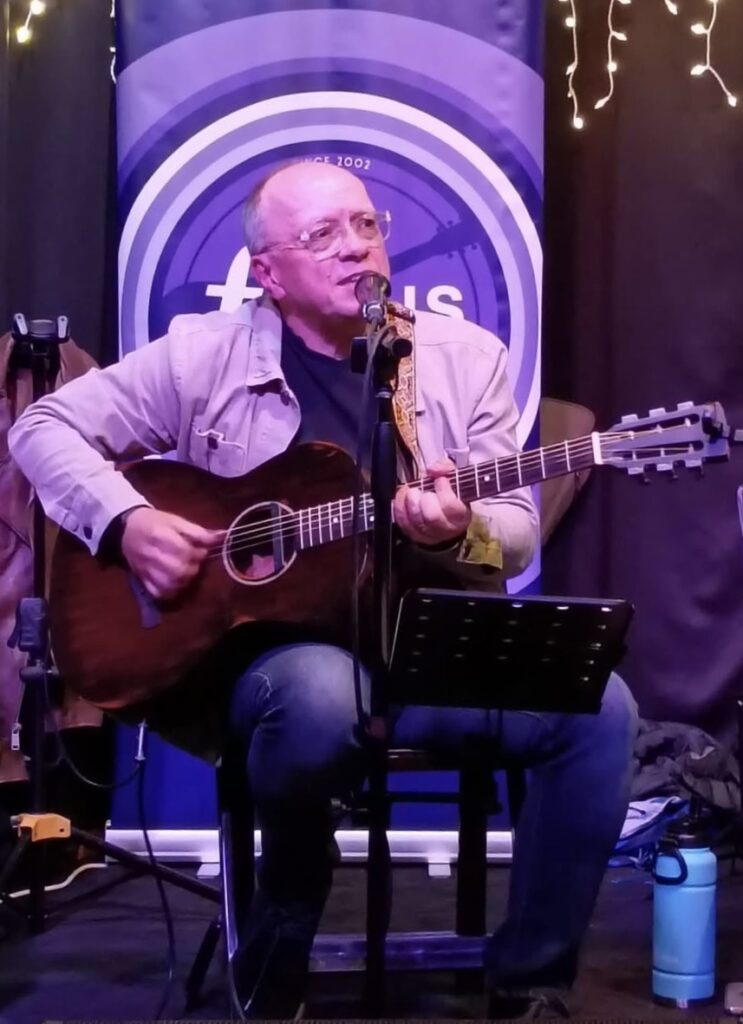
Ken Avis – photo credit: Lynn Veronneau
Maybe it gives you access to things that I don’t know, and for sure there are guitar gigs that I won’t take because the person wants to put a chart in front of me. I can read a chart, but I can’t sight read. I can’t sit there with an audience and play it perfectly, unless it’s just chords. I need a week to sit at home and work through where I’m gonna play that and all of those things. So if you’re a guitar player, like locally, a Cristian Perez, a Jan Knutson, a John Lee, all of these people who’ve been to university and know that stuff, they can play those gigs. Pete Kennedy, and they can do more besides. So, I’m not anti-theory and anti-education, but I hate that to be a stumbling block stopping people. Some people are dyslexic, and the idea of dots on train lines it’s impossible for them, you know? So ease up.
Rick: I like what you said about accessibility. I use that with the folks in my band. I said, “I want the songs to be accessible, so people will wanna listen to them, wanna be able to sing them, and other musicians will wanna do them as well. John Martyn didn’t know how to read music and he was asked about that, and he says, “I don’t wanna know that.” He said “Danny Thompson (bassist) can do that for me. If I have a question, I can ask Danny Thompson, because I don’t wanna be limited by that structure.” And he wanted to be able to imagine whatever sound he wanted to do. He was gonna figure it out on his guitar.” I’m paraphrasing what he said. So, I think there’s some value in not knowing it. I think there’s a lot of value as well to know it.
I don’t know it. I write the songs. My band knows it, and then I’ll say, “I’m on the third fret,” and they’ll go, “Oh, that’s a,” whatever it is. I go, “Okay, well play it.”
Ken Avis: Yeah, I just agree with you so totally on that. I wish I knew it, you know? It’s a little embarrassing, or I used to feel embarrassing. You know, thanks for inviting me to come and do that. I’m not that kind of guitar player. I’m at ease with saying that now. You need Christian, if you want here’s his phone number. Pay him.
Rick: Well, that’s how we can be generous to other people, because we know that they can do something we can’t. But generosity, I help people and get them gigs or whatever that I can’t do, or opening acts. I’ve been getting opening acts and helping talented folks get some stage time.
Ken Avis: And you’ve had Dave Kline playing violin on your recordings, as well, and Dave’s a guy who, you know, when he was don’t at senior school he was playing violin, and he learnt what the notes were on the stave. But Dave amazing as he is, admired by Chick Corea and and all the rest of it, he’s not a guy who would be comfortable, I’m sure he won’t mind me saying this, with sheet music in front of him and saying, “Great, go Dave.” It’s not been his priority. You know, he’d been making efforts somewhere along the line to improve in that area, but not to the extent of, you know, just so that he could communicate it to other musicians, really, what he was doing.
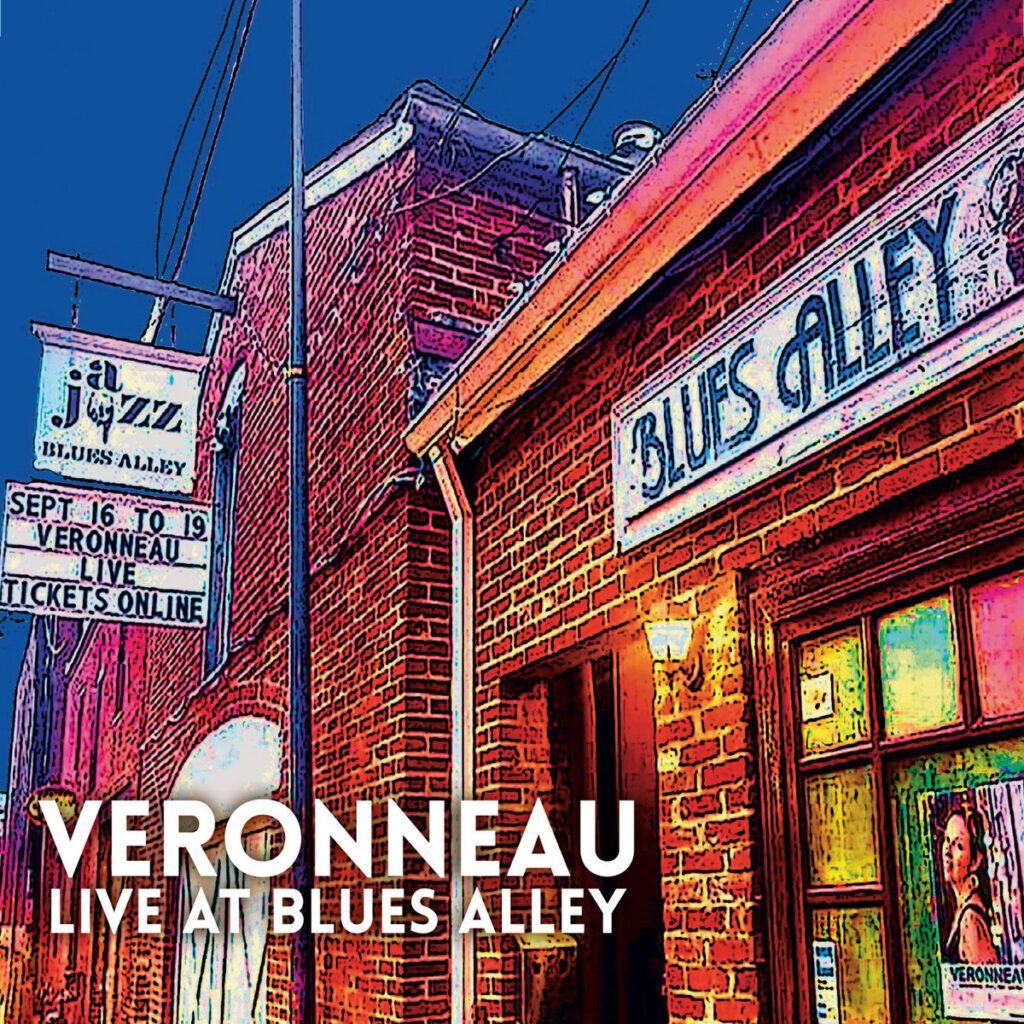
Rick: Yeah. When He and I got together for him to play on the album, I went to his house a couple times, and I think we spent probably five hours on… It ended up being two songs. I think he mentioned that he really didn’t know music theory and all that, that he plays kind of organically. And he’s just absolutely brilliant. So, the last time I saw him at Blues Alley, I turned to my friend, Ron Goad, and said, “You know, we’re watching history right here. This guy’s like Stephane Grappelli back in France back in the 1940s.” I said, “We’re here now. This, in the future they’re gonna be looking at that guy, and go “THAT’S the guy.”
Ken Avis: Even Stephane Grappelli, I don’t know what his knowledge of theory was, but his mother died early. His father brought him up and left him in a brothel because, he had to sleep somewhere. So I’m not sure his theory was that great. But Dave tells a story of Yehudi Menuhin playing with Stephane Grappelli ’cause they did a lot of shows together at one point, and and Yehudi Menuhin, the ultimate classical violinist was in awe of Stephane Grappelli. He said, “How do you do that? How do you make things up like that? You know, I can’t make things up. I need music in front of me.”
Rick: .What guitars do you have now? Do you have a certain guitar that you noodle on, one that you go to the studio in, or do you have, like a Trigger…Willie Nelson, you got one guitar that people kind of relate to you?
Ken Avis: A bit of… I have way too many guitars. If I count ukuleles and lap steels and Weissenborns, I did count them, and there were 38, which is ridiculous. Nobody needs 38 guitars, or do they? So the main guitar that I play live on stage with Verreaneua is a Korean copy of a 1942 Gretsch Symphonic.
It’s a Gretsch, but it’s a Korean-made Gretsch. One pickup, and it just sounds great. Big bodied guitar. And, and I love that. And I paid, I think, $250 for it on Craigslist during COVID. I plug that straight into a $250 50-watt, Bose Katana combo which is an awesome amp. No pedals, just that. And that’s plenty. And, we’re playing with Dave Kline so much, he fell in love with that, and that’s what he puts his violin through as well. He’s bought the Bose Katana. We’ve both got more expensive amps at home, which we never use.
Rick: Well, the older ones are too heavy.
Ken Avis: Yeah. The truth, and particularly Dave, he’s got these really boutique-y ones. So that’s the main one. And then acoustically, gosh, $200 is my sweet spot for guitars. I picked up a guitar that I found in the dump. I refer to it as my dumpster guitar. It was by the side of the road. And there’s not a single indication of where it was built. It doesn’t say Made in America, Made in China. There’s nothing on it at all. It’s beaten up to hell. I just cleaned it up, put new strings on it, bunged in a pickup, and that’s been my main acoustic guitar. But then we’ve been traveling a lot in the past two years.
We’ve toured in Spain, Portugal, Switzerland, France, Sweden, Scotland, the U.K., Florida twice, Canada. And so getting on planes, I couldn’t stand that anxiety of “Will they let me put it on the plane or won’t they?” And so I bought one of these carbon fiber guitars that you take the neck off and it all fits into an Aviation Authority approved backpack. And standing in line as we’re about to board, seeing other people with guitars and feeling very smug … knowing how much anxiety they’re going through and I know mine’s gonna get on there.
And it’s not the most amazingly great guitar to play. But it’s pretty damn good, and it stays in tune perfectly, and it’s indestructible. I can use it as a weapon if necessary. So it’s good. It’s by a company called Journey. They come out of Texas.
I actually had a slightly bigger version of it, a wooden version of it which I sold to Pete Kennedy and his wife Maura. And they love it. They wrote to me the other day and said, “We’re still playing that guitar you sold us. It is an awesome guitar.” They make good guitars. And I’m able to take off the neck and put it on in a minute, 60 seconds.
Rick: Yeah, that’s amazing.
Ken Avis: It’s so handy.
Rick: I’ll check them out. Do you find that you end up going back to some of the same people that you listened to back when you were in your 20’s or 30’s, and they still sound good?
Ken Avis: Yeah. I mean, John Martyn, as I mentioned is something I’ll put on. I’ve always been a big fan of Van Morrison. I mean, everything he does has got my stamp of approval. I love the It’s Too Late to Stop Now double live album which I probably heard when I was about 15. Ella Fitzgerald and Joe Pass, “Take Love Easy,” just guitar, just vocal. Love that album, one of my favorites. When I put on The Beatles, which is not as often as I should do, every single time, I’m amazed. Every single time I go, “I should be hearing this more often.”
And I don’t go to see tribute bands very often, but we were just up in Quebec, and there was a Supertramp tribute band. Supertramp is one of Lynn’s favorite bands from when she was a teenager. They were massive in Quebec, specifically Quebec. Not all of Canada, but specifically Quebec. And so we found ourselves in this theater holding about, I don’t know, 400 people, all French Canadian, all French first language. They were singing every word of Supertramp. It was a great evening. But some of those albums from bands I used to listen, 10CC, I used to think that they were a great band, and their albums have dated. You know, some of them, the ones who were trying to be clever and modern, kind of seem to date a little bit.
Rick: What about grunge bands? Were you listening to grunge?
Ken Avis: No, here’s my situation, so I was listening to the blues stuff. I was listening to James Taylor. Always loved James Taylor from the age of 16, I illegally held an employment agency’s license with a friend, and we created a music agency. And we were doing pretty good ‘cause we were promoting all of those. We had a couple of venues that we brought bands into. We had a few bands that we sold onto tours and things. We were making decent money. When I quit school at the age of 18, senior school, I didn’t go to university. I was making money. I had my own business. And about a year later, when I was 19, that all ended ‘cause punk happened. And as I say, punk killed everything.
I didn’t get it. Just didn’t get it. I didn’t understand it. It made no sense to me. I couldn’t see the appeal. And we actually booked the Sex Pistols, put the Sex Pistols on one time. I put The Stranglers on. I didn’t even go down to listen to the music. You know, my ears were attuned to acoustic guitars and things like that. I turned my back on the whole thing and we dropped the agency because we couldn’t catch it cold. You know? We couldn’t make any money and that’s when I went to university at that point, because in England I was facing the alternative of go to university, the government will pay for it and give me a grant to live on or go on the dole, ’cause unemployment was running at about 15%, 16% and higher in the North. And the dole was less than the money they would give me to go to university, so I made a good economic decision.
Rick: Well, it worked out, didn’t it?
Ken Avis: I moved to the south side. I moved all the way down to the south coast of Brighton.
Rick: So you also started your own record label, Antidote. How did that come about? Why did you decide to start your own label?
Ken Avis: There was a little journey that happened. We became very connected to Strathmore Music Center and they invited us to become mentors to the Artist in Residence program. Very prestigious program. They take six local area young artists who are really good musicians and wanna be professional musicians. And as a mentor, my job was not to critique their music as such. I mean, my first mentoring role was with a string quartet, and I know nothing about that. But to talk to them about how to become a professional musician how to make money, how to get a gig, how to record a CD. All of those things that I knew about.
So that connected me over a series of years with these young upcoming musicians who were great. And as an old bloke I wasn’t as old, but I’m still old compared to them. It was awesome to be able to reach into the generations and befriend these people. It was fantastic. And then around the same time, we were asked to curate the music series at the Creative Cauldron, the Passport to the World Music Festival. And so I had to put my feelers out into the community as well to find not just who was good, but who was good and could sell 80 tickets at $25. And so that kind of built us into the community.
And then we started the radio program in, say, 2016 on local radio, Antidote, every week, and we mixed local music with national. So we had guests like Steve Earle who was a guest. The next week we’d have Bobby Thompson or Griefcat or Yasmin Williams, all of these people. Before they became big, we had them in the studio. So I had the radio, the mentoring, the the Creative Cauldron presentation of music all of these different things, in addition to performing. And it became a thing for Lynn and I that we’re saying, “You know, we really enjoy what we’re doing and building this community together.” And so we said, “Why don’t we release a record?” And we were kind of more linked into the jazz world than anything at that point, so we created a, a compilation album, called Capital Jazz.
And we simply approached a dozen of our favorite jazzy, jazz-related, jazz-adjacent artists and said, “We wanna do this compilation. We’ve got no money. If you’ll give us a track, and you own the track, and we don’t make a penny off this, we’ll put you on the compilation album.”
Rick: Oh, nice. Yeah.
Ken Avis: “And we’ll pay for it too… And if we all put in, like, $100, we’ll print this up, and you can all have 100 copies of the CD each. Sell at your shows or to package with your other CD sales. And, the DC Jazz Festival’s already said they want 200 copies, and they’ll pay us for those to give away to their VIP guests.” And all of a sudden we were a record label. And it was fun to do it, and again, it built community. We created two live events around that record release, as well. We nearly got sued in the process. But, that’s another story. I had fun with that, but it’s a long story.
And then we said, “Look, if there’s bands that we really believe in, who we think are great, why don’t we release their records? And because they don’t know how to do that.” And we’d already released five CDs. We’d had three or four of them in the top 10 of the world charts or the jazz chart. And so we had these conversations and said, “Look, here’s the deal. We think you’re great. We’d love to produce a record. We’ll, basically, offer you mentoring and knowledge, and you’ll have what we refer to as the bullshit value of our own, a record label. And what do you pay us? Nothing. What do we take in royalties? Nothing. What do we give you? Nothing financially.” So, a couple of people thought, “That’s too good to be true.” And kind of shied away from us, but we released Project:Locrea. We’ve only released about a dozen albums so far of other artists.
Rick: Good for you. That’s great.
Ken Avis: But all the genres were really jazzy, jazz, jazz people. Irene Lalenti, a great jazz singer from Baltimore, got a four-star review in DownBeat for the album. Valeria Stewart’s just had her album at number one for three months on the World Music Chart.
Rick: Yeah, she’s wonderful.
Ken Avis: Yeah, we got the Spanish acoustic, Spanish language acoustic music of Valeria. We’ve got the classical folk traditions of Project:Locrea. We’ve got the jazz, all these different styles. You know, we’re not kinda saying we’re only doing blues or anything like that.
Rick: Diverse, yeah.
Ken Avis: And it’s fun. It’s work. It’s a lot of work, but it’s nice to be involved and to be involved in the community and you kinda quietly get recognition for that. That’s all that you get, but that’s enough.
Rick: Yeah. So how do you manage your time in between performing, trying to find the time to write, which can take some time, working with all these other musicians, and you’re traveling a lot. Well, I guess you’re on tour, so how do you balance that and maintain a normal life, in quotes?
Ken Avis: My wife, Lynn, would say I don’t balance it, but honestly, there’s nothing I would rather be doing. And so it really isn’t work to me. You know, promoting shows is the thing which probably takes more time than anything, marketing the shows that we do, and that’s the bit that is a little bit tedious, but it’s gotta be done. You know? If you don’t market the show, nobody’s gonna come. If nobody comes, you don’t get rebooked.
It’s not necessarily about money, it’s about building audiences in order to be able to sell out places where you do make the money. But that’s another…Talking about venues and making money and so on, we’ve been 15 years doing this full time. This is our 15-year anniversary year. And we’ve never been ripped off. No venues have ever treated us badly. The worst that we’ve ever been treated is venues who don’t do any promotion, and you’re thinking, “Really? Why are you paying us if you don’t tell anybody we’re playing?” You know, at least put a poster up in your window.” That’s the worst treatment. And they’re busy. You know, the reason is they’re busy doing other things. They’ve not thought about it. They don’t know what they don’t know. We work on the basis that most venues are probably not gonna promote, and so we better do it.
Rick: That’s a good point, ’cause, I think a lot of people, musicians expect that the venue’s gonna do something, but you’re right, it’s usually just something in the window, or on their website, and that’s about it. So, people have to actually find it rather than trying to do a public outreach in some fashion.
Ken Avis: Yeah. The worst one for me is when a venue says, “Live music!” I mean, if I see the words live music, I think, uh-oh. The daddy’s daughter or something. That doesn’t attract me, that chases me away.
Rick: How did you assemble your ensemble, Veronneau?
Ken Avis: It came together by accidently, I mean, me and Lynn are married. And that came about through music. We were both living in Switzerland at the time. And we both got a phone call from a promoter one day. To cut a long story very short, he told us, “I don’t want your band, I just want you.” And he put us together to perform at a festival. And the rest is history. That was 32 years ago.
Rick: Wow.
Ken Avis: So, I gave her the Joe Pass and Ella Fitzgerald album. I think we could do something like this. Not as well as them, but something like this.
Rick: Very romantic.
Ken Avis: Very romantic. It was a global romance. A French Canadian woman and a Liverpudlian, in Switzerland. After that, we were doing duo stuff, very much folky, not jazzy. But Lynn had this aspiration to do jazz. And one day I met a guitar player, well, I used to work at the World Bank, and people would say to me, “Oh, do you know David Rosenblatt? He’s apparently a very good guitar player. You should play with David Rosenblatt.”
And I’m thinking, “I don’t think so. You know, he probably only plays Eric Clapton songs or something.” And I went to his house and played with him one night. Phenomenal. Phenomenal. Brazilian jazz player. And so David and I were the band for a while. We both played nylon strings, finger style. So I was kind of covering the bass and the rhythm. He was doing the rhythm and the lead, and that was the trio. And we got into that jazz which Lynn always wanted to get into. And then a drummer came along, inserted himself in, and he was a very quiet drummer, so we liked him. You know, we didn’t want a drummer because of the noise. He was into brushes and things. So he came in, and we worked without a bass player for five years. We never had bass because we were covering it with our thumb and it sounded fine. People liking it. And that was another mouth to feed, you know?
Rick: Yeah.
Ken Avis: You gotta feed all those mouths.
Rick: It’s true.
Ken Avis: There’s a lot of gigs you have to turn down. Then when COVID came along, both the drummer and David, we stopped playing together. It was just the COVID thing. And they got involved in other stuff. Not music, but just life. And we found that during COVID Lynn and I were working as a duo again, but doing the same jazz and bossa novas, and acoustic stuff and blues, doing outdoor shows, doing live streaming to the U.K., and festivals, and all kinds of stuff. And we went, “Damn, this works.” So the only person who’s been a constant throughout that was Dave Kline (violinist). And the way we met Dave Kline was, remember we had an acoustic duo in the pre-jazz days?
We played a Focus show in D.C., and I won a CD. I knew it was a CD. It was wrapped, but it was that square shape. I thought, “That’s a CD.” And I opened it when I got home, ’cause I never win anything, and I was excited, and I went, “Oh, bloody hell. The only thing I’ve ever won, and it’s a bloody violin player’s CD.” And I never listened to it for, like, six months, and I was about to throw it in the bin one day. I thought, “You know, out of respect I ought to listen to it before I throw it away.”
And it was awesome. It was absolutely fine and good. And then I looked him up and discovered he lives five miles down the road. And he’s English.
Rick: Serendipity!
Ken Avis: So I said, “Hey, you know, we’re trying to put a jazz thing together, and we’re thinking we might record an album just so we can get as a demo to get gigs at wineries and breweries.” That was my ambition and to say we’re still working. And I said, “If you’re interested, I’d love you to play on a track or two in the studio.” And he did on that first album. We did the first album six months after we formed the band. We wanted those wineries, and we’ve only ever played at one winery. So that was bad career planning. You know, we went on to other things. Dave’s been with us, but he’s not part of the band, you know? He’s always been independent ’cause he has his own thing. He’s been a special guest for 15 years now. And we’re special guests in his band as well, and it works out beautifully.
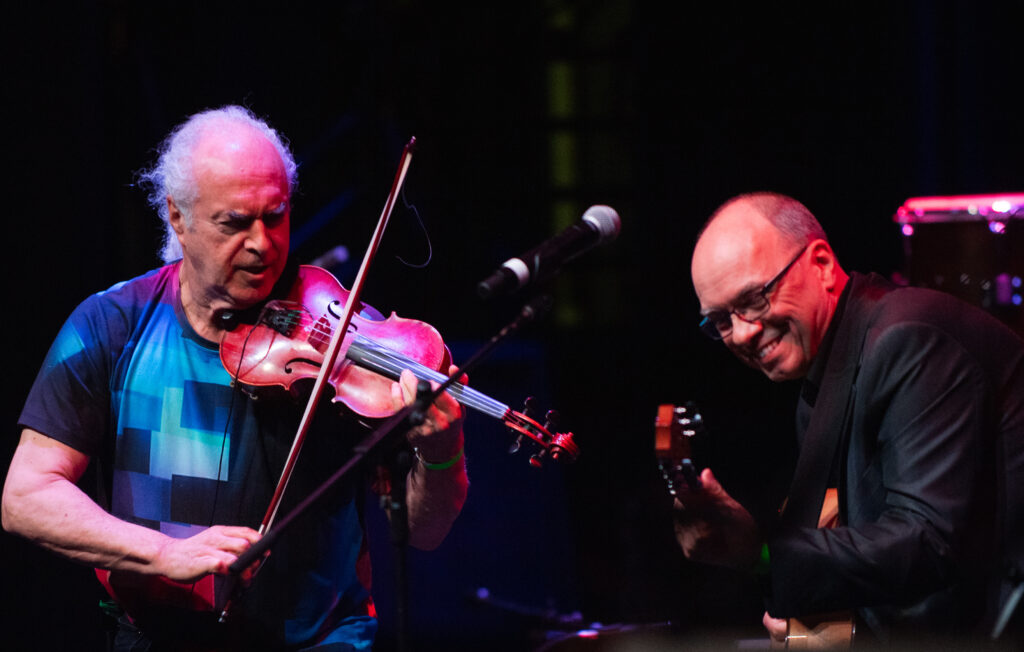
Dave Kline and Ken Avis at the Washington Area Music Awards – photo credit: Lynn Veronneau
Rick: Yeah, he’s a great guy, and he’s played with us. He dropped into JVs and played two or three songs with us. What projects do you have going at the moment and are they ready for prime time? Do you know when you’re gonna launch them? And can you even talk about them?
Ken Avis: Yeah. The project right now, I’ve been doing these history talks. I’ve been talking about the history of music in Washington, D.C., the greater Washington, D.C. area for 10 years now. I’ve done it for the Smithsonian, I’ve done it for George Mason University, for American University. I’ve done it in breweries, libraries, all over the place. And, Fairfax County had me during COVID doing on-line live streaming, 12-part series. There’s that much history, 12 90-minute sessions, and subdivided into genres, eras, topics like guitars or women in D.C. And it’s been a lot of research and putting together. What’s spun off from that is I also do guided walking tours of Black Broadway, of U Street, explaining the history of U Street music, and Georgetown, as well. So, the upshot of all of that is I was asked to write a book covering all of this, and honestly, I really don’t wanna write a book. Books have been written, fine books have been written about the local music scene of D.C., and they’re that thick.
And I’ve never got from start to finish, so I feel guilty I’ve even bought them ’cause I never finish them. I’m writing a 100-page book maximum, full of photographs. And I’ve written it about Northern Virginia first, so it’ll be the first of a series of books. And the whole point is accessibility. Again, I’m not writing these for historians and experts, I’m writing these so that people can go, “Oh, I’ve just moved to Arlington or Alexandria or Reston, that looks like it might be interesting. Is there a music history of Reston?”
I’m for the inquisitive music lover. I’m writing these to kind of excite them and make them go, “Oh my God, I never knew.” And so, that’s what I’m putting out in October. So, and there’ll be more talks lining up to promote that side. That kind of brings that research to a close ultimately when I’ve done what I think is gonna be four or five books in total. I’m excited about that. And then the other thing is Lynn and I have been touring more and more, and we like it.
You can only play so much locally, before you as Harry Schnipper (owner) at Blues Alley calls it cannibalizing your own audience. So, that’s one of the reasons we’ve been touring more. I’m gonna be looking into tours of countries I wanna visit. We don’t make a lot of money doing this. If you break even and call it a working holiday you’re winning. I’ve never been to Japan. I wanna do a tour in Japan. I wanna do Germany. Which I find a fascinating country. Most of us think of Germany and we instantly think of war, the Second World War and the First World War. There’s a lot more to German history.
Rick: Very artsy.
Ken Avis: Yeah. And then all of the places we’ve played are asking us to go back as well, so we’ll do that. And then sometimes it makes really good strategic sense, like we are booked up to do another Florida tour in March when the snow might be falling here. So, we’ll be in the Keys, thinking fondly of you all breaking up the snow drifts. So those are the plan. In terms of new recordings, a lot of ideas at the back of my mind, and honestly that’s a thing of Lynn and I coming together to say, “We both like this idea,” or, “We don’t like this idea.”
There are things I wanna do. I’d like to do a solo album, ’cause I’m doing more and more solo stuff. I just wanna be playing all the time. I love it. And, there are gigs I can take solo, which we couldn’t take as Veronneau, because if you’re selling tickets at $35 and then you’re playing for $5…you devalue what you’re doing and, and some venues are not interested in doing it that way. So, I can play for $5 under my name. But we got the 20, 30, 35, 50 dollar tickets for Veronneau. Luckily we’ve reached that stage. But I still feel guilty about it because tickets are crazy expensive. And I’d like everybody to have access to the music, so we still do some shows for charity and things like that. Three or four times a year we’ll do a fundraiser.
Rick: And we’ve started doing, senior communities, and we really enjoy them. Have you done those?
Ken Avis: We do. Yeah. You know, they pay quite well. And, and so that’s very much a Lynn and Ken duo thing, that we’ll show up and do some of those. Again, we don’t do a lot and we do them through an agency, so I think there’s grant money involved and things like that. I gotta confess, the first time I did… And there’s all kinds of senior communities, you know, there are really active seniors and there are people who, they’re on their last legs. And the very first time I did it, I felt pretty awkward about it. I felt, “You know, I don’t know if they’re listening or not.”
And then what I realized is yeah, I’ve used the word accessibility more with you than I ever do. But, I’m talking about accessibility. These people can’t go to Blues Alley. And so, in my mind it’s important that people get entertained and get exposure to music and to culture, and if I’ve gotta go to a place like that and play to them, that’s great, you know? Maybe some of them won’t get anything out of it, but some of them do, and they don’t have an alternative.
And so, my attitude to it totally changed after doing it the first time. And occasionally the agency also put us into schools, like elementary and, and junior school, what do they call, middle schools. And it was the same thing. “Why am I playing to five-year-olds and six-year-olds? I’m a rock star.” And then you actually discover that these are the best audiences you can possibly play to. There is no filter. And you go, “Who in the audience can sing?” And every hand goes up.
Rick: That’s great.
Ken Avis: You do that in Blues Alley and two people will put their hand up, you know?
Rick: As far as accessibility, have you thought about going to individual rooms, “Okay, I’ll do 10 rooms of people who can’t get out of their rooms, and you pay me the same amount of money and I’ll do that.” For, I don’t know, an hour or two”?
Ken Avis: Never thought about that. Never crossed my mind. We did sort of do something like that one time. It was very, very special. We got invited to go and perform a solo show for Roberta Flack. And we got on the bus. This was, like a year or two before she died, and she was in her own apartment, with a nurse, but really stuck in bed. We got on the bus on a cold snowy day, and went all the way up to Manhattan, walked from the bus stop. The tip of Manhattan where she had this beautiful high-rise overlooking the whole bay and water. And we performed for about, 30, 40 minutes. And, and she had, I think it’s called ALS, which is paralyzed to some extent.
Rick: Yeah. My grandfather had that.
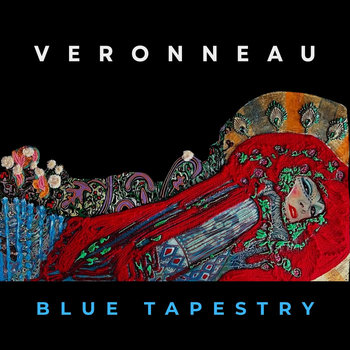
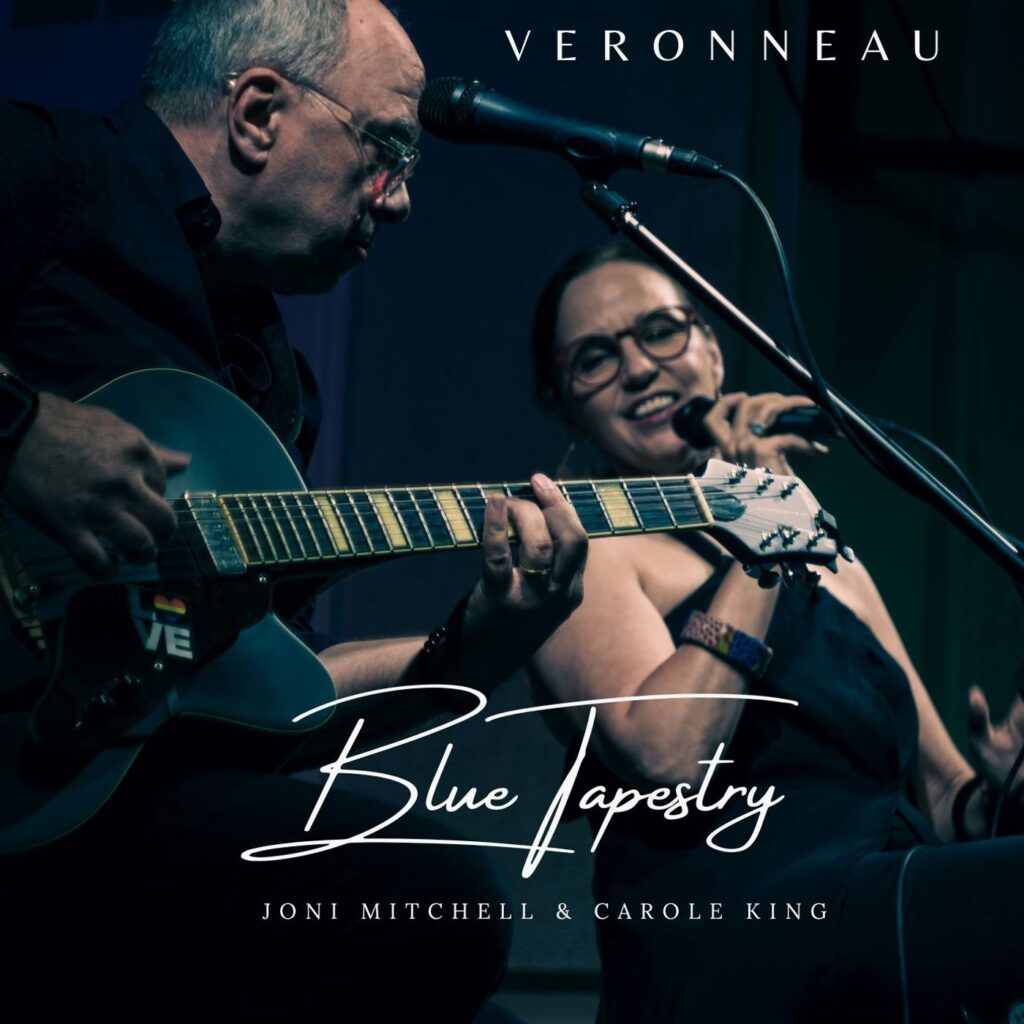
Ken Avis: But there were certain songs on the way there I discovered that she loved, the music of Carole King, and that she’d recorded lots of Carole King songs. And of course, we’d just done an album which included Carole King songs. So, the second we started to sing “You’ve Got a Friend” she lit up. She absolutely lit up, and it was a very moving thing to do it and to be involved in that. And, that was it. But the school thing as well, this has become a little bit of a mission, you know, with AI. You can’t AI a live performance yet.
Rick: True.
Ken Avis: Even if they do the holograms, it’s not gonna be the same. So, I actually feel really good about going into schools where kids have never witnessed live music and giving them a show. And we tailor it a little bit in the way we present and the way we talk, but we’ll be playing the same songs to those kids that we play at Blues Alley.
Rick: Oh, really?
Ken Avis: And we’ll talk to them about, ‘cause our music is multilingual and songs in English and Spanish, Portuguese. Even sang in Wolof [West African] once. We talk to them about the cultures and what the songs are about, and we try to pick songs where they can join in and sing along. We did “Mas Que Nada” once, which is that pure samba thing, and Lynn invited this room of 200, I don’t know, five to 10-year-olds to dance. You should have seen the looks. The teachers looked terrified. They knew this was a bad idea. And once we did it that first time, we knew it was a bad idea, as well. So, we’re careful about that kind of thing.
Click here to view the embedded video.
Rick: I’m still surprised how robust the music community is in D.C. Have you find that it’s grown a lot since you’ve been playing here?
Ken Avis: Hmm. I’m not sure it’s grown. I think it gets renewed. I mean, I think the path into music is very different now for a lot of people than it was for us, because a lot of people now are going to university to study music. Which I think is great in terms of the training it gives them. I think it’s terrible in terms of value for money for the investment. But that’s where I see the renewal happening. And maybe that’s just the microcosm of music that I’m involved in, because I think there are different micro-climates of music in D.C. I’m sure there’s a whole Indie scene going on that I know next to nothing about and that’s a thing that’s going on. But the growth, I don’t know. And there are fewer venues, so that doesn’t help in order to see it. Maybe people are playing more at home.
But, I’ve mentioned Blues Alley a few times. Blues Alley is virtually the only full-time five-day-a-week jazz club in D.C. now. Slims is gone. Bohemian Caverns is gone. People tell me the JoJo Bar on U Street, but I don’t think they put jazz on every night, and it is more of a kind of an eating and drinking place with jazz. Rather than the kind of the jazz place approach of Blues Alley, where thou shalt not speak in there. It’s all about listening. So less venues. And I’ve spoken to people like Victor Dvoskin, the bass player who plays at the Tabard Inn, and has done for 30 years. If you’ve never been there…
Rick: I haven’t.
Ken Avis: Oh, we’ve gotta go. I’ve gotta look into it and invite you to go. There’s this beautiful little room, tiny audience, but the best quality of music. Two days, like Sunday and Monday, they’re usually a duo or a trio. And Victor once said to me, “Oh my, when I first came to this country from Russia, I would be doing two, three gigs a day.”
Rick: Wow.
Ken Avis: “There was so much here,” in the ’80s, and he says, “You know, now I’m lucky if I do two or three a month.” So, it has all changed. Is there a new growth? I’m not seeing it. I’m seeing different things, things like SoFar Sounds has opened up, and venues come and go as well, and the house concert scene I think is probably healthier than it’s ever been.
Rick: Yeah. I used to host them.
Ken Avis: We’re playing a house concert in I think March, out in Herndon, which we booked last February, and he said, “The first date I’ve got available is next March.”
Rick: And wineries are busy, so yeah.
Ken Avis: An excellent point. When I look at Facebook, there’s a couple of Margarets who every day put up the list of what’s going on in DC, and it’s amazing. Margaret Pierce is one of them, and Virginia, 90% of the gigs are wineries and breweries.
Rick: Have you played the Barns At Hamilton Station? We just played there, great venue!
Ken Avis: We have played there. Yeah, we’re doing another Barns in Purcellville in October or something like that. We’ve got a lot of different things that we’ve now got. For the first time, we’ve got the Virginia Commonwealth Touring Artist Grant which encourages us to go out deeper into Virginia. You’ve gotta be at least 50 miles away from your home base, and it’s encouraging you to go and play; we’re down in Suffolk, which is near Norfolk. So we’re gonna be playing all the way down there, a couple of shows.
And the other areas that are opening up are libraries. That’s awesome. Libraries are trying to become more, relevant, and so they’re putting a little bit of a grant money into having a live music performance. So, the ultimate listening room, a library. So, Falls Church has been doing it. Loudoun County’s doing a beautiful job on that. You talk about balancing time. For years, Lynn and I’ve been saying we ought to start a house concert series, and we’ve just not got around to it ’cause we don’t have the time. But it doesn’t need much to do a house concert, you don’t need a lot of space.
Rick: We had them here at my place for probably three years, and I’ve been able to host great artists, like the legendary Johnny Farina from Santo & Johnny. Then Craig Bickhardt, Tim Grimm and during COVID we hosted driveway concerts.
Ken Avis: Yeah. But that’s it, you know, creating our own shows is the way music used to be, isn’t it? Beethoven used to go and play in people’s living rooms.
Rick: And that’s an old blues thing, as well. Besides juke joints, you know, they’d go to somebody’s house and, and just jam and dance.
Ken Avis: Yeah. Yeah. It’s funny, when you mention, Johnny Farina and “Sleepwalk’, the other thing that we do, again, because Veronneau can’t play all of the gigs, is me and Dave do a duo, the Ken and Dave Duo. Me and Dave Kline. And it gives us total freedom to do anything. So, I’ll say to Dave, “Hey, you remember that Sleepwalk song?” And so we did a guitar and violin version of “Sleepwalk”. We only ever did it once. It didn’t work out brilliantly. But we do all kinds of stuff. We’ve done Pink Floyd songs just with guitar and violin and vocal.
Rick: Ah. Oh, that’s great.
Ken Avis: … and lots of storytelling in between. When we tour, by the way, that’s the other thing, is we take battery-powered amps with us. And you can fit two of them into a suitcase that goes into the cargo. And, fingers crossed, it gets there in one piece, but so far they always have. So we actually have a PA. In one large suitcase we have two Bose S1 speakers. We take a microphone stand in pieces so that fits in, ’cause otherwise it’s too long. Then a bunch of cables. So we dedicate one suitcase to the gear, the carbon fiber guitar in the backpack in the overhead, all of our clothes and belongings and everything else we need in the other suitcase, and that’s how we tour Portugal and Spain for a month.
Rick: Sounds like a lot. But it sounds like it’s all compressed so that you can get it on the plane and you’re not paying too much for it.
Ken Avis: The Bose S1 Pro is about quarter of an inch too big in one dimension to be guaranteed to go in the overhead locker. They need to fix that in the next design.
Rick: You’ve found more than one revenue stream in your life to be able to be a working musician. It’s difficult to not have other revenue streams, but is sounds like you’ve been successful and driven to be able to figure out where you can gather more income to keep moving forward.
Ken Avis: Yeah. When you express it like that, it sounds a little bit like there’s a plan. Somebody once asked me, “What’s your business plan around all these things?”And I said, “There isn’t one.” I said, “The first thing is, does it sound like fun?” That’s my first business plan. Even if it’s gonna make no money, but if it sounds like fun and worthwhile, I’ll do it. But then what I realized is it builds audience. If I’m talking to 100 people and talking about music, of course I’m gonna tell them that I am a musician and that my band and at the end I’ll go, “Oh, by the way, if you wanna come and see the band, we’re playing at The Creative Cauldron next Friday.” And it’s amazing the number of people who come up to us in shows, all kinds of shows, and say, “You probably don’t remember me, but I was in the talk that you gave at George Mason University.”
There’s different values to everything. And I think our biggest challenge as musicians is not do we know the theory, it’s not can we play fast, but can we connect with people and build audience?
Ken Avis: So, everything I do, in a way I’m thinking, most things that I do, I’m thinking about building audience. Will this build audience? I did a diagram one time of overlapping circles, and I’m sure I didn’t invent this, about the reasons whether you accept a gig or don’t accept a gig. Number one, it’s a good hang. You like the people. Number two, the money. Number three, the quality of the music and the place where you’re playing the music. And if any two of those three overlap, it’s worth doing the gig. So, the money might not matter, you know? Or if you’re playing in a crappy place, then yeah, you want to be playing with nice people and getting paid.
Rick: Well, that’s good. I’m working with a group that’s revitalizing an old folk society that was established in 1913 and thought you might be interested in joining a proposed board of advisors. I doubt it would pay anything.
Ken Avis: Wow. Let me apply my three circles to it. Is it gonna pay? No. Is it gonna be with nice people? Sounds like it. So that’s gonna be fun and worthwhile, so is it gonna be in a decent place, a place that interests me, a topic that interests me? Yeah. So two of the circles overlap. I’m in. Does it build audience? Potentially, yeah. You might want me to come and do a talk one day, or some of those folks might come to my talk. I’m so analytical.
Rick: But, you didn’t mention the money part.
Ken Avis: Yeah. That’s the third circle. I’m intrigued because the history of folk music in America is so fascinating. And D.C., because of the Lomaxes and the Library of Congress, and Tom Paxton, Pete Seeger,Peggy Seeger, Mike Seeger, Woody Guthrie’s linkage to those people. I mean, it’s Big Bill Broonzy was here in Rosslyn, Virginia. Hank Williams was living in Falls Church for a little while. And where folk ends and begins, and hillbilly music ends and begins, there’s another overlap with all of that. So it’s a fascinating subject.
Click here to view the embedded video.
Rick: What advice would you give musicians who are trying to move forward in their careers, especially young people, I suppose. Lessons learned, what have you learned, and how can they keep a balanced life, and how can they be happy becoming musicians, whether they’re successful in the traditional sense or not. What, you know, kind of what is success? Is it writing the song, coming up with a phrase, or is it making money? Is it having an audience that you enjoy? That’s a lot of stuff in one question!
Ken Avis: It is, it is…Making money is a low-ish priority. You know, Lynn and I are full-time musicians. We make a living, but we’d paid off our mortgage already long ago. And our kids have gone to university and we’ve covered all those costs. So, we don’t need a lot of money. And we have a tiny little wee pension from the World Bank, but if you’re young, you don’t have those things. So there’s so much to do on the money side. My son, by the way, my eldest son, who’s 39, is a full-time musician and a music publicist, so he makes his living at music, as well. So it can be done.
On the one hand it can be done. On the other hand, it’s not a safe bet, so have a plan B. But then the competition is so stiff. The opportunities are there, particularly in this area. We are really well-served in this area with venues. Even though I’ve said there are fewer than there used to be, there are still a lot of opportunities to play here. And, let’s not complain about that because we’re way luckier than a lot of other places in that regard.
And you can create your own gigs. Be connected, build audience, promote, market, if you’ve got any aspirations whatsoever to building a career, whether it’s money related or just playing more regularly and doing better gigs. I can’t market you for a gig if I don’t have a website. If I don’t have a good video, and good video is hard to do, but live video. I’m not talking about you go to AI and feed in a song and a few instructions and it creates, you know, crashing waves and stuff. A live video.
I need to see a live video. I need a story to tell, which, please God, not another story about how difficult life is for you and your anxiety that you’ve overcome. That’s been done to death for the past 10 years, you know? Just who you are, what you’re about, and something positive ideally. Where you’ve played, all of those things. I need that to market you. Otherwise, no matter how good you are, I can’t do it. The audience, focus on the audience. It’s all about the audience.
Unless you’re happy to be playing avant-garde music with three friends, you’ve got to pay attention to them. You’ve gotta be nice to them. You’ve gotta talk to them, before and after the show. Don’t be the first musician to leave and the last one to arrive, ’cause you want them to come back again. That’s the only way to build audiences is for them to accidentally hear you or be intrigued enough to come and accidentally hear you, and then to come back and for them to bring friends. And that’s, in a way, that’s the ultimate success.
We did two shows in Bristol, England in May, the Blue Tapestry show. But the shows went really well, and in the second show there was a couple who came back and they’d brought four friends with them to see it again. They’d rushed out and said, “You’ve gotta come and see this.” I was over the moon. To me, that was success.
You need a website, you need photos, you need video, you need a short story. Oh, the biggest thing of all, and I say this as a presenter…read your bloody emails, respond to your emails. The biggest problem I have is people who will send me a message on text, on email, on Facebook Messenger, you know, on multiple things, and… Well, the biggest one is the ones who don’t respond. After a while I don’t even contact those people anymore, no matter how much I wanna put them on.
Be business-like about and professional about how you communicate, what you communicate, but above all, communicate. And communicate doesn’t mean just tell, it means listen…then tell. It means read your email and respond to the email. That’s not just about music, that’s about professionalism in every job you can imagine. Even if you’re a plumber.
Rick: And, everything, everything you mentioned is the undercurrent of accessibility. Your music needs to be accessible. You need to be accessible.
Ken Avis: I think we’ve come up with something today. Accessibility in music. Why is accessibility important and how is it important? That’s a whole talk.
2026-2027 Schedule!
Eric Clapton says he made a “big, big mistake” auctioning off his legendary “Blackie” Stratocaster

Over the years, guitars played by Eric Clapton have commanded some eye-watering price tags at the auction block. Just last year, among the vast guitar collection of late billionaire and Indianapolis Colts owner Jim Irsay lay Clapton’s SG, the Fool, which ended up fetching just over $3 million at auction.
Indeed, Clapton’s guitars have a long history of earning vast sums of money; in a 2004 auction at Christie’s in New York, the guitarist’s Cherry Red 1964 Gibson ES-335 – which he played during Cream’s last show at the Royal Albert Hall in 1968, and was recently remade as an Epiphone Inspired by Gibson model – sold for $847,500 (just over $1.5 million in today’s money, per usinflationcalculator.com).
The star of that 2004 auction, though, was Clapton’s black Fender Stratocaster, nicknamed “Blackie”. That one sold to Guitar Center for $959,500 (approximately $1.7 million in today’s money). It was the most expensive guitar ever sold at auction at the time. That figure was eclipsed quite significantly last year, though, by another black Strat belonging to David Gilmour, which fetched a staggering world-record $14,550,000.
The guitars at Clapton’s 2004 Christie’s auction were sold off to support his Crossroads Centre in Antigua, a substance-abuse rehabilitation centre which supports recovery from alcohol and drug addiction.
Clapton – a former alcoholic and drug addict himself – continues to champion the importance of his Crossroads organisation, and recently held the 2026 Crossroads Guitar Festival with proceeds benefitting the Crossroads Centre.
Though he admits it was ultimately the right decision to sell off some of his most prized instruments for a good cause, he jokes in a new interview with Guitar Center that it was a “big, big mistake” letting go of Blackie and his Cream-era 335.
“When the auction was going on, I had to constantly keep [reminding] myself: ‘This is your purpose. You are an alcoholic and if you don’t stay sober, you won’t be able to help other alcoholics to achieve sobriety. So this is all for that purpose. Crossroads is for that purpose. So I’m out [disproportionately] obsessed with the survival of that place.”
“So these things, as sacred as they are, they have to be given away – sacrificed. That’s my thing – I really need to keep Crossroads alive, if I can.”
He continues: “My primary purpose is to stay sober, and help other alcoholics to achieve sobriety. That’s above me being a musician or a husband or a father. It’s the number one thing.”
Elsewhere, Clapton speaks on the transformative power of musical instruments. “It’s the most reliable source of inspiration, salvation, if you like,” he says.
“If you’re in a bad place, and you pick up a guitar, there’s a strong chance you’ll get out of that. You’ll transcend whatever the problem is… They’re very sacred things to me, these guitars.”
Watch the full clip below:
The post Eric Clapton says he made a “big, big mistake” auctioning off his legendary “Blackie” Stratocaster appeared first on Guitar.com | All Things Guitar.
MXR Textures Granular Synth Engine Review
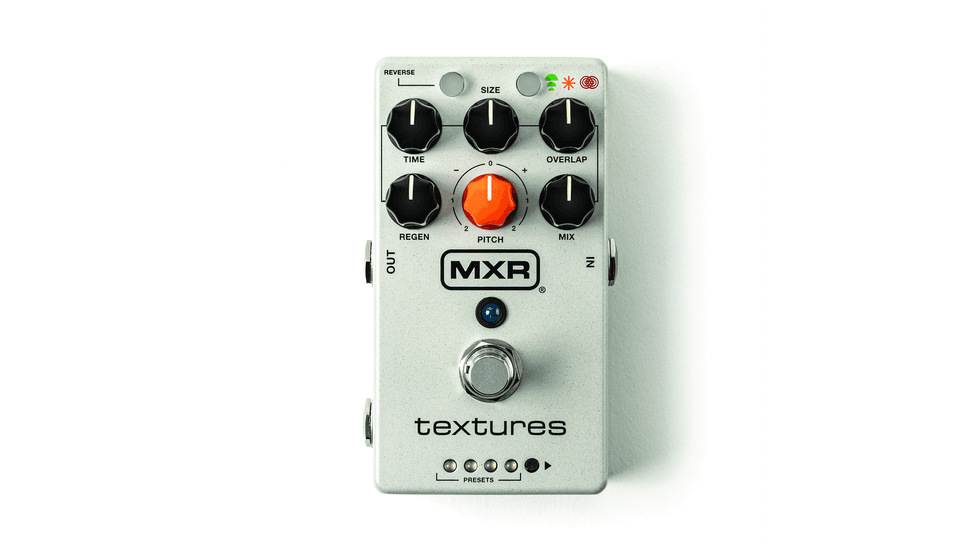
Experience your guitar in the fifth dimension.
Every so often a pedal shows up that doesn’t just add a new flavor to your rig, it quietly rewires your understanding of what a stompbox is for. The MXR Textures Granular Synth Engine is one of these. On paper, it’s a humble delay pedal—record the signal, play it back, repeat. In practice though, Textures takes that lineage and does to it what a jazz musician does to a standard: keeps the bones but discards the obligation to play it straight.
Grains, Not Repeats
Granular synthesis has been kicking around since the mid-20th century—originally achieved with tape loops sliced into fragments by composers patient (or masochistic) enough to do it by hand—and it’s taken guitar pedals an embarrassingly long time to catch up to what modular synth heads have known for decades. MXR’s approach chops your incoming signal into tiny audio “grains,” then hands the controls over to you to stretch, reverse, pitch-shift, and reassemble those grains into something your original note never asked to become. Think less in terms of “digital delay” and more like “your guitar tone, run through a very articulate blender, with the blender’s speed and blade angle fully in your control.”
Three modes anchor the experience—delay (green), auto-freeze (orange), and layers (red)—and each one reframes what the same core engine does. Delay mode is the pedal’s most familiar face: granular rhythmic repeats that can range from clean and delay-like to smeared and shimmering, depending on how aggressively you mangle the size, overlap, and regen controls. Auto-freeze is where things get genuinely magical. The pedal listens for what you play, grabs it, and sustains it into a lush, evolving wash. Put another way, you can hold one chord and let Textures turn it into an ambient soundtrack, leaving your hands free to do something else. Layers, meanwhile, samples up to four notes or chords, and each takes on its own fade characteristics. It essentially lets you build a tiny orchestra out of whatever you just played.
The Controls, Demystified
Time, size, and overlap set the length, density, and stacking behavior of your grains. Pitch and reverse handle playback speed and direction. Dial the pitch through the pedal’s +/- 2 octaves and you can cover everything from subtle chorus-like shimmer to full-on alien transmission. Delay and regen govern how those grains move and feed back through time, and mix (the great equalizer of any effect pedal) moves between bone-dry signal and granular soup. Built-in reverb, filter, and vibrato round things out, along with randomization options for players who’d rather let the pedal surprise them than try to manage every parameter by hand. (Certainly, there’s something almost meditative about hitting the randomize function and just seeing what Textures decides to do.)
Eight factory presets across two banks get you playing immediately, which matters: A pedal this deep can easily intimidate a player who just wants a cool sound now, and MXR clearly understood that. Full stereo I/O, expression pedal compatibility, and MXR’s split + tap ecosystem round out a spec sheet built for players who take their signal chain seriously.
“Think less “digital delay” and more “your guitar tone, run through a very articulate blender, with the blender’s speed and blade angle fully in your control.”
Who’s This For?
Ambient and post-rock players are the obvious audience, anyone chasing the cavernous, cascading textures of Michael Brook, David Torn, or Christopher Willits at their most exploratory, or the wall-of-sound shimmer that shoegaze and dream-pop guitarists have been building toward since Kevin Shields decided a whammy bar could be a compositional tool.
But Textures isn’t limited to reverb-drenched noodling. Layers mode alone opens doors for composers and sound designers scoring film cues, and the granular-glitch textures achievable in delay mode will appeal to anyone building the kind of unsettling, fragmented soundscapes that modular synth players will feel comfortable with. Even a straight-ahead rock player looking for one genuinely weird moment in a set—a solo breakdown that sounds like it’s dissolving into static and light—will find real utility here.
Incidentally, I ran Textures through both a clean Vox/Marshall-style amp and a Line 6 Helix modeler, and the difference in character was substantial. Through the clean amp, the grains retained more organic edge and pick-attack definition, while the modeler smoothed things into denser, more synth-like pads. Either way, this is not a pedal that requires distortion or effects loops of other units to sound complete. It’s a remarkably self-contained universe all its own.
The Verdict
At a street price of $269 Textures won’t be an impulse buy for most. But it’s genuinely deep, playable, and unique compared to other granular-synthesis pedals. Where a lot of weird pedals trade usability for strangeness, MXR found a smart middle path: three clearly defined modes, sensible presets for instant gratification, and a control set deep enough to reward the players willing to actually dig in.
Is this a pedal for everyone? No. If your board is built entirely around tight, traditional tones, Textures will sit there mostly unused, a strange and expensive houseguest. But for the ambient explorer, the film composer, the noise-curious rock player, or anyone who’s ever wondered what their guitar might sound like if it forgot what a guitar was supposed to sound like, this is a genuinely rare device: a pedal that expands your musical vocabulary rather than just adding another voice to your existing diatonic dialect.
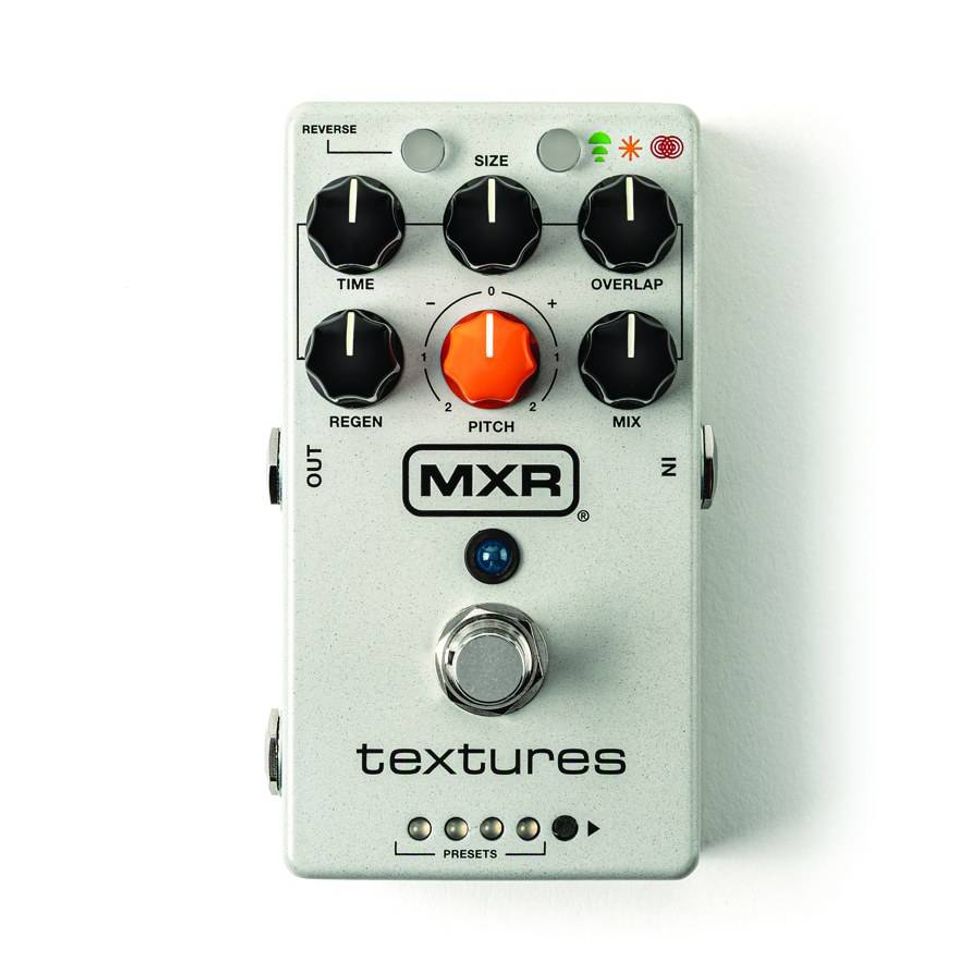
MXR Textures Granular Synth Pedal
D’Addario launches five-string set designed for the Jacob Collier’s signature five-string Taylor guitars

After partnering with Taylor last year to launch two new signature five-string acoustic guitars, musical mastermind Jacob Collier has now teamed up with D’Addario on a new set of strings “engineered specifically” to support the symmetrical D-A-E-A-D tuning used on the guitars.
A musician who’s anything but ordinary, Jacob Collier found his voice in a five-string guitar 10 years ago. “In 2016, I figured out a way for the guitar to make sense to me – it was by ripping one of the strings off a six-string guitar and leaving only five,” he told Guitar.com 2024.
“And I tuned it in a very unusual way. I did this for the first time on the day of a gig, and then I played it on the gig, which was a very funny experience.”
That love of five-strings reached a high point in 2025 when Collier launched, alongside Taylor Guitars, an Academy 22e and GS Mini.
Hand-picked by Taylor CEO Andy Powers, Collier’s new Specialty XS Phosphor Bronze String Set is designed for these signature guitars, with a custom .012-.053 gauge range optimised for D-A-E-A-D tuning. The wound strings in the set feature an ultra-thing XS film coating, while the plain steel strings feature a unique polymer treatment for “maximum corrosion resistance and extended tone life”.
And if that wasn’t enough, the strings are launching alongside a new D’addario Jacob Collier Signature Vegan Guitar Strap, which features colourful custom artwork reflecting Collier’s vibrant aesthetic.
“An artist’s voice isn’t something you find; it’s already there, like the Michelangelo quote: ‘Remove what’s not the sculpture, and the sculpture was there all along,’” says Collier.
“Trying to find my voice led me to fall in love with the five-string guitar. For me, it’s important that a string has a lot of life to it. D’Addario strings embody that – they are made with incredible care and attention to detail.”
He continues: “There is a miraculous tone and sublime feel to these D’Addario strings. This set was handpicked by Taylor’s own Andy Powers to balance the tension, feel, and pitch accuracy of this symmetric five-string tuning that forms the backbone of my custom Taylor guitar models.”
The 12-53 Jacob Collier Taylor 5-String Set and Signature Vegan Strap are both available now via D’Addario.com.
The post D’Addario launches five-string set designed for the Jacob Collier’s signature five-string Taylor guitars appeared first on Guitar.com | All Things Guitar.
Here’s how you can get the Guitar.com September/October 2026 issue

Guitar.com Magazine is back this week – here’s how you can get the September/October 2026 issue, which comes as part of a bundle with NME Magazine.
So far, the relaunched print edition of Guitar.com Magazine has had Mateus Asato, Yvette Young, Jacob Collier and Grace Bowers grace the cover. This Thursday, the fifth Guitar.com Magazine will launch. Mark your calendars for October 1 at 2pm BST – that’s when the cover star will be revealed and when this issue will go on sale exclusively via retailer Dawsons. If you’d like a sneak peek at the issue, solve the mini crossword in the waiting room, which is open now.
Subscribe here for more information about the Guitar.com Magazine and for the chance to receive an exclusive queue jump opportunity, where readers can get their hands on a copy before anyone else. Guitar.com will be sending out queue jump tickets shortly before the magazine goes on sale to randomly chosen subscribers.
The post Here’s how you can get the Guitar.com September/October 2026 issue appeared first on Guitar.com | All Things Guitar.
“The Foo Fighters stuff is in our DNA”: Nothing But Thieves on reference culture, musing on their past and falling in love with Fairlane Guitars

“It’s actually annoying how long we’ve been working on this music for,” Joe Langridge-Brown quips from the other side of a Zoom call, the heads of a couple Fender and Gibson guitars poking out from behind his head. The Nothing But Thieves guitarist is talking from his London home about the band’s fifth studio album Stray Dogs, out 25 September, before bandmate and fellow guitarist Dom Craik pops up on screen too.
“This record was built for live,” continues Langridge-Brown, “which we’ve never really done before. We started [lead single] Evolution in March, I think, and we’ve been keeping an eye on how we want to tour it from the beginning, which has taken a long time. But I’m looking forward to it.”
“It’s a long time living with music, but it’s time for the world to have it,” adds Craik.
Ten years after debuting with a critically-acclaimed self-titled album, Nothing But Thieves found themselves back where it started in Angelic Studios. Three other albums had passed since the rock quintet returned to record Stray Dogs, but this record won’t try anything experimental. The writing process was based on what the band sounds like live – allowing the five-piece to dissect footage of themselves to compose new material that feels… bespoke. Like a tailored suit. For an album themed around familiarity, community and togetherness, they’ve quite literally stuck to what they know.
“To be totally honest, Angelic is an amazing studio,” says Langridge-Brown. “It’s for residency so you go and stay there for a few weeks, and there aren’t many of those in the UK, so we love it there. But it also just made sense. We’re referencing something that harnesses how we sound, and there’s also the subject matter being about our lives and community, so it felt right to go back somewhere we were familiar with.”
 Image: Steve Gullick
True Path
For a seasoned outfit like Nothing But Thieves, every album is a stylised foothold on the journey to their true identity. 2023’s Dead Club City turned tables with a riskier route down a pop-tinted road, for example, with experimentally layered tracks and a lot more groove than fans were used to. But 2020’s Moral Panic leaned into girthy guitar and streaky choruses which, judging by the album’s angst and self-assuredness, felt like the band’s ultimate comfort zone.
“I do think the Foo Fighters stuff is in our DNA,” says Langridge-Brown, coming from his own perspective when a comparison is made between Stray Dogs and the shredded gnarliness of Dave Grohl’s rock megastars. “I listened to Wasting Light in the car for about two years every single day, and I don’t think that’ll ever leave. But in terms of other references in the guitar tones, either consciously or subconsciously, there’s probably a bit of Smashing Pumpkins and early nineties stuff in there. Pearl Jam too, which is kind of grunge, but with incredible guitars and some progressive stuff as well.”
“It’s quite interesting because it’s not like we sit down at the start and go, ‘Well, what’s the palette of the guitar tones?’”, says Craik. “Often the song comes first, and we try to shape the guitar tones around Connor [Mason’s] voice. Sometimes the heavier the guitar tones, the more challenging it can be. We’re almost steered by trying to accommodate Connor’s vocal and the song best.But there were those touch points like Smashing Pumpkins, Pearl Jam, the rawer nineties and the grunge stuff.
“There are always guitar tones that we take inspiration from, like Radiohead, as I’m sure a lot of bands do,” he continues, “just because of the variety and level of experimentation that they always do. There’s an endless pool of sonics to dive into there, so that’s something that we try and incorporate. But when we were writing this record, it was quite fun because we hadn’t really experimented with this wall of fuzz guitar sound before, and that gave Joe and I an opportunity to dig out some pedals, old and new, and plug those in to see how we could make it work with our sound.”
The Fast Lane
Talking of old and new, there were a few other changes this time round for Craik and Langridge-Brown, most notably their introduction to South London boutique builder Fairlane Guitars. The pair were approached by Fairlane – who you can read all about in their recent Guitar.com cover story – before they started using the brand’s flagship Zephyr.
“Reuben just approached me and said, ‘Look, I’ve got some guitars; would you like to try one?’”, chuckles Craik at the memory. “And I couldn’t believe this thing, it was unbelievable. It’s like an inverted Firebird body with a mastery bridge and a Fender scale length. It’s not anything too crazy, but the build quality is unreal, and they have these Monty’s handwound pickups which are just, again, unbelievable.”
The quirky Zephyr was so mesmerising that it became a feature on almost every Stray Dogs track. And it’ll likely feature pretty heavily on tour, too. “I remember when we started writing, we’d play just one chord and the boys were like meerkats at the back of the room,” Craik continues, grinning wide. “Their ears pricked up. And it’s one of those guitars that sounds like something new, so it was hard not to put it on everything. I think it might be on every song in one way or another. It’s just a beast of a guitar.”
The band’s something old, if you like, had to be all the other gear; the amps and pedals and speakers they’ve used for decades gone by whilst getting to grips with their identity. Stray Dogs might be decorated by a few shiny ornaments like the Fairlane Zephyr, but it’s those same sturdy foundations that give it a touching thrill of familiarity.
“This album was asking us to delve into all the gear that we’ve collected over the last decade and the new bits that we’ve been acquiring and not only learn them, but try and find new applications for them,” says Craik. “We were using a lot of sixties Fender Bassmans – we had a black and a silver one, which were both amazing. But I was also slowly getting to grips with the sound of different speakers: the difference between a 10-, 12-, and even a 15-inch speaker, which I know is quite unusual. But by the end of the process, I was able to dial in amp tones pretty quickly. It was definitely like going to the gym, though; it took a while to warm up.”
 Image: Steve Gullick
Playground Games
With the right gear, the writing process in the studio becomes a playground for inspiration. “That’s what’s so exciting as a guitarist,” says Langridge-Brown. “When you pick up a guitar and it makes you play something that you’ve not played before, or you put a pedal in the chain and it comes out as something completely new. When we were travelling in the US, I picked up this 12-string Strat and that made me think in a different way. There’s a song called Number Five on the record which has this chorus-y 12-string sound on it and I think that was a change in the arrangement that we didn’t initially have. So, it’s always fun as a guitarist to pick up a piece of gear and be like, ‘What can I make of this?’”
But there’s trouble with a project harnessing too much familiarity; it gets too comfortable, even a little stale. A few fresh perspectives on gear and a couple different tricks up sleeves might not be enough to salvage it. But Stray Dogs is crisp. It’s a record evolved from the past – for sure – but it’s emboldened and vitalised by nuanced songwriting and pulsing vigour that’s, to be honest, pretty palpable. It’s fresh because Nothing But Thieves have themselves as their muse. There are sly winks of Foo Fighters and Smashing Pumpkins and Pearl Jam if you claw back the thick, wiry layers of raw guitar power, but those guys aren’t the blueprint.
“It’s a weird balance where you’re trying to make a guitar-based record that isn’t cliche,” agrees Langridge-Brown. “It’s nineties-influenced, but you don’t want to come out with a record that feels like it belongs in the nineties. It’s got to have another added part of the conversation.
“You could look at our pedal boards now,” he continues. “I’m using this Chase Bliss Preamp MKII, which is a really posh distortion preamp, but with a RAT pedal. Those things together – even the order you put those pedals in – creates something completely new. And that’s one of the fun parts of the job, playing around with the sound and getting to call it a living.”
Reference Points
In truth, we’re moving through a period of reference culture where every art form has a standard of success. We’ve seen the best of what’s come before us, and it still stands up today – so how do you recreate the same effect without copying the past? “There’s a David Mitchell quote which is about culture eating and re-eating itself,” says Craik. “It’s about regurgitating anything that was good in the first place. It’s funny, because there’s definitely a bit of an eighties resurgence and the nineties has definitely been the ‘in’ thing. Whether we fell into that was definitely by accident, but we’ve always been inspired by the nineties, and it’s no bad thing for guitar music, especially in the UK, to be having a real moment. But it never goes anywhere.”
As Craik speaks, Langridge-Brown is in his own world of contemplation. “I think the David Mitchell quote Dom’s talking about is the human centipede of music,” he begins. “I think that’s where the magic is. There’s a song called Baby Kool on this record and a reason why it’s one of my favourites is because you have two worlds that are really the antithesis of each other. There’s a glam verse, and then there’s this nineties grungy chorus. If you just made a record that’s derivative of the nineties, that’s less appealing.”
Craik nods, adding: “Taking the best bits of multiple facets of genres – that’s the sweet spot. It’s hard to do, but when we land on it, something magical happens.”
Now that the album’s finally out, the biggest thing left to do – and perhaps the most important thing all along – is tour. And it’s the largest headline tour Nothing But Thieves have ever done, so it’s going to be huge.
“We’ve been doing a bunch of rehearsals, making sure the tone is bang on and making everything feel as powerful as possible, translated best from the record,” says Craik.
“At the heart of the record,” adds Langridge-Brown, “it’s us playing in a room with that simplicity of what makes a band good – without the bells and whistles. We’ve just got to give it the best version of itself live.”
Stray Dogs is out now.
The post “The Foo Fighters stuff is in our DNA”: Nothing But Thieves on reference culture, musing on their past and falling in love with Fairlane Guitars appeared first on Guitar.com | All Things Guitar.
Guitar legend John Mayer is playing six nights at the Las Vegas Sphere – here’s everything you need to know

Hold on to your hats, as guitar maestro and all-round six-string heartthrob John Mayer has just announced a six-night residency at the Las Vegas Sphere for 2027.
Mayer will take to the stage at the much-talked-about spherical venue on 8, 10, 11, 15, 17 and 18 April 2027, with each night split into three distinct sections: a solo set, a section where Mayer performs alongside his full backing band, and finally a segment with the John Mayer Trio, which also features bassist Pino Palladino and drummer Steve Jordan. The residency also marks the John Mayer Trio’s first live shows since 2017.
Of course, it won’t be the first time John Mayer takes to the stage inside the Sphere, after a hugely successful and lengthy residency with Dead & Company in 2024 and 2025.
And Mayer’s long shown his praise of the Sphere as a venue and how it facilitates “big league” bands putting on their best show.
“I think what we all love is that there’s finally once again a live-music space race,” he said in 2024. “There’s the social-media space race, the podcast space race, the AI space race. But live music pretty much stayed the same for such a long time.”
“I think this is the first time in a long time where we feel kind of honoured to be a part of something that’s so culturally right up in everyone’s view,” he added. “We’re all sort of like, how cool is this?”
So while his Sphere experience to date has been limited to Dead & Company shows, expect to hear Mayer’s biggest hits like Slow Dancing in a Burning Room, Gravity and Your Body Is a Wonderland when he returns to the venue next year.
The announcement comes on the heels of a new collaboration between John Mayer and Jaguar Land Rover, which saw a limited drop of both his signature SE and USA-made Silver Skys outfitted in classic colourways seen on the car maker’s legendary Defender SUV. Will he take a couple for a spin during his Sphere shows? We’d put money on it…
John Mayer marks the latest high-profile artist to play a residency at the Las Vegas Sphere. So far, the venue has seen residencies from the likes of Eagles, Dead & Company, U2 and electronic artist Anyma, while Metallica are scheduled to begin their Life Burns Faster residency from 1 October.
John Mayer at the Sphere – how to get tickets
Tickets for John Mayer’s Sphere residency start at $129, with Artist Presale beginning on Wednesday, 7 October at 10AM PT. A SiriusXM presale will also begin on 8 October, followed by general public on sale from 9 October at 10AM PT. Limited VIP packages will also be available from 30 September.
Learn more at johnmayer.com.
The post Guitar legend John Mayer is playing six nights at the Las Vegas Sphere – here’s everything you need to know appeared first on Guitar.com | All Things Guitar.
Summer In The City, Beatles Key Changes, And Why Their Ears Were Smarter Than Their Theory
September 25th. October is knocking. And I got completely carried away with music theory this week. Fair warning – this one goes deep. But in the best possible way. It started with Summer in the City. SUMMER IN THE CITY LESSON HERE The Descending Bass Line – And Why It Shows Up Everywhere Summer in […]
The post Summer In The City, Beatles Key Changes, And Why Their Ears Were Smarter Than Their Theory appeared first on On The Beat with Totally Guitars.
Slipknot Announce Worldwide (sic)est Stadium Tour
Slipknot have announced their (sic)est Stadium Tour, crossing the globe Summer 2027. The tour, produced by Live Nation, launches July 3 at London’s historic Wembley Stadium connected by EE, in a UK and Europe exclusive. On July 16, Slipknot touch down in D.C.’s Nationals Park to kick off their North American jaunt, which includes performances at Citi Field in Queens, New York, Chicago’s Soldier Field, Boston’s Fenway Park, Los Angeles’ SoFi Stadium, San Francisco’s Golden Gate Park and more. The tour wraps with five South American performances in Brazil, Argentina, Chile, Peru and Colombia.
Tour Launch Events Tonight in London and Los Angeles
Featuring earliest access to tickets, exclusive merch, free giveaways, and a flaming 30 foot high Slipknot Tribal S symbol!
Artist Presale Starts Tuesday, September 29 at 10AM Local Knotfest Presale Starts Tuesday, September 29 at 12PM Local Here Public On Sale Friday, October 2 at 10 AM Local Here
New Single / Video “Arsenal” Out Now
Featuring a brand new set, new staging and a setlist spanning across their career, these shows will be the ultimate Slipknot experience to date. The band are joined by Bring Me The Horizon as direct support on all North American dates with a rotation of special guests along the way including: Acid Bath, Lamb of God, Motionless In White, Lorna Shore, Kublai Khan TX, Polyphia, Loathe, and Vended. Marilyn Manson, Lorna Shore and Hatebreed support Slipknot in London for the tour kick off. Manson and Hatebreed rejoin them in South America in September along with local support to warm up the crowd.
In case you missed it, Slipknot have uncovered massive projections and snipes across the world hinting at tonight’s epic (sic)est Stadium Tour Launch experience. Fans are encouraged to meetup at London’s Wembley Stadium (5-9PM) and SoFi Stadium in Los Angeles (5-9PM) to grab whichever tickets they’d like for each respective show before the rest of the world, ahead of all presales and general onsale to the public. Each event will feature a pop-up shop with exclusive, very limited merch items, and the first 500 ticket purchasers will receive a free event poster with exclusive art. Each event is first come, first served. At sunset, fans are encouraged to gather around a 30 foot high, iconic flaming Slipknot Tribal S symbol. See details for each location below:
(sic)est Stadium Tour Launch experience London, U.K. at Wembley Stadium:
Address: Wembley HA9 0WS, United Kingdom. For help planning your trip to Wembley please check out - wembleystadium.com/plan-your-visit/getting-to-wembley
Box Office: Open from 5-9PM BST. Tickets will be available for sale at the Wembley Stadium West Ticket Office located at the top of the Olympic Steps.
How To Buy Tickets On Site: You can only purchase tickets at the box office window. Cash sales are not accepted, all tickets must be purchased on a mobile device via the Ticketmaster website / app. Tickets will not be printed, they will be emailed digitally. 8 tickets maximum per person. Ticket Options + Seating Map: VIP Packages and all ticket price levels will be available. VIP perks include early entry, access to private Slipknot-themed lounges, exclusive items signed by the band, and more. Packages will be available for purchase with each ticket. For more information on VIP packages, visit slipknot1.com/VIP
For more info and the most up to date London launch event, go HERE.
(sic)est Stadium Tour Launch experience Los Angeles, CA at SoFi Stadium:
Address: 3919 Pincay Dr, Inglewood, CA 90305 Parking: Opens at 3PM, Free parking is located right by the tribal S in Lot C. Located on Pincay Drive, please use the above address to be routed directly to the lot.
Box Office: Open from 5-9PM PST – Tickets will be available for sale at the Entry 5 Box Office
How To Buy Tickets On Site: You can only purchase tickets at the box office window. Cash sales are not accepted, all tickets must be purchased via a debit or credit card. Tickets will not be printed, they will be emailed digitally. 8 tickets maximum per person.
Ticket Options + Seating Map: VIP Packages and all ticket price levels will be available. VIP perks include early entry, access to private Slipknot-themed lounges, exclusive items signed by the band, and more. Packages will be available for purchase with each ticket. For more information on VIP packages, visit slipknot1.com/VIP
For more info and the most up to date Los Angeles launch event, go HERE.
TICKETS: Slipknot’s Artist Presale kicks off on Tuesday, September 29 at 10AM Local. Knotfest Presale starts at 12PM Local Tuesday, September 29 at 12PM Local HERE and is followed by additional presales throughout the week. The general on sale begins Friday, October 2 at 10AM Local HERE. For more information and tickets, visit slipknot1.com. Please check local listings for full presale and onsale details, as ticketing timelines vary by market.
Earlier this month, Slipknot surprised fans with their anthemic offering “Arsenal” – the band’s first new track in over three years. The single arrived alongside its eerie and imaginative music video directed by M Shawn Crahan - (clown) and starring Jackson White. On “Arsenal”, Slipknot sound sharper than ever, the direct result of their commitment to the music, first and foremost. The track is an undeniable statement of strength in the face of diversity, and a new marker for the world to deal with and wonder how Slipknot was always - and still remains - so dynamic and modern.
The culture of Slipknot has spread much farther than anyone could have predicted when nine guys from Iowa put on masks and uniforms, and began challenging the globe to keep up. The band’s influence can now be seen and felt in the underground, in those artists headlining rock and metal festivals across the world, and virtually everywhere in between. Across genres and subgenres, artists the world over are following in footsteps that have led out of the Midwest and onto stages around the world. And all without an ounce of compromise, to anyone. That authenticity has lauded them billions of streams, a Grammy award and several nominations, multiple RIAA certifications, and most recently prior to now, a completely sold-out global anniversary tour across some of the largest stages around the world (London’s O2 Arena, Madison Square Garden, LA’s Intuit Dome, etc). And they’re not letting up.
Nearly three decades in, it's evident that Slipknot still summon the drive, creativity, and band camaraderie required to make music like this. Their rise to becoming one of the greatest and most influential rock bands of the 21st century is marked by hardship, having weathered enormous personal tragedies and facing them head on, a drive that has earned them respect from their fans and naysayers alike. Through it all, they’ve kept a fighting spirit that’s allowed them to keep innovating, and keep testing the ragged edges of their sound to see how much further they can push it.
Slipknot (sic)est Stadium Tour Dates:
- JUL 03 | London, UK | Wembley Stadium connected by EE #!
- JUL 16 | Washington, DC | Nationals Park ~%
- JUL 18 | Queens, NY | Citi Field ~%
- JUL 21 | Montréal, QC | Parc Jean Drapeau ~^@
- JUL 23 | Toronto, ON | Rogers Stadium ~^
- JUL 25 | Chicago, IL | Soldier Field ~$
- JUL 28 | Hershey, PA | Hersheypark Stadium ~!
- JUL 31 | Boston, MA | Fenway Park ~!
- AUG 03 | Nashville, TN | FirstBank Stadium ~^
- AUG 06 | Houston, TX | Daikin Park ~+
- AUG 09 | Commerce City, CO | Dick's Sporting Goods Park ~=
- AUG 13 | Inglewood, CA | SoFi Stadium ~=
- AUG 15 | San Francisco, CA | Golden Gate Park ~&=
- AUG 18 | Phoenix, AZ | Chase Field ~& SEP 04 | São Paulo, Brazil | The Town
- SEP 08 | Buenos Aires, Argentina | Estadio Huracán #
- SEP 12 | Santiago, Chile | Estadio Nacional #
- SEP 14 | Lima, Peru | Estadio Nacional #
- SEP 16 | Bogotá, Colombia | Vive Claro #
- Welcoming support from:
- # w/ Marilyn Manson, Hatebreed ~ w/ Bring Me The Horizon % w/ Acid Bath ! w/ Lorna Shore ^ w/ Kublai Khan TX @ w/ Vended $ w/ Lamb of God + w/ Polyphia = w/ Loathe & w/ Motionless in White
- Non-Live Nation Date
U2 Announces New Studio Album Carnaval De Luz, Out November 13; New Track “Silencio” Out Now
Interscope Records today announces the release of Carnaval De Luz - the 16th studio album from U2 and the first album of new material from the band in nine years - out on November 13th, 2026. The news comes with a brand-new track titled “Silencio,” available now, accompanied by a music video.
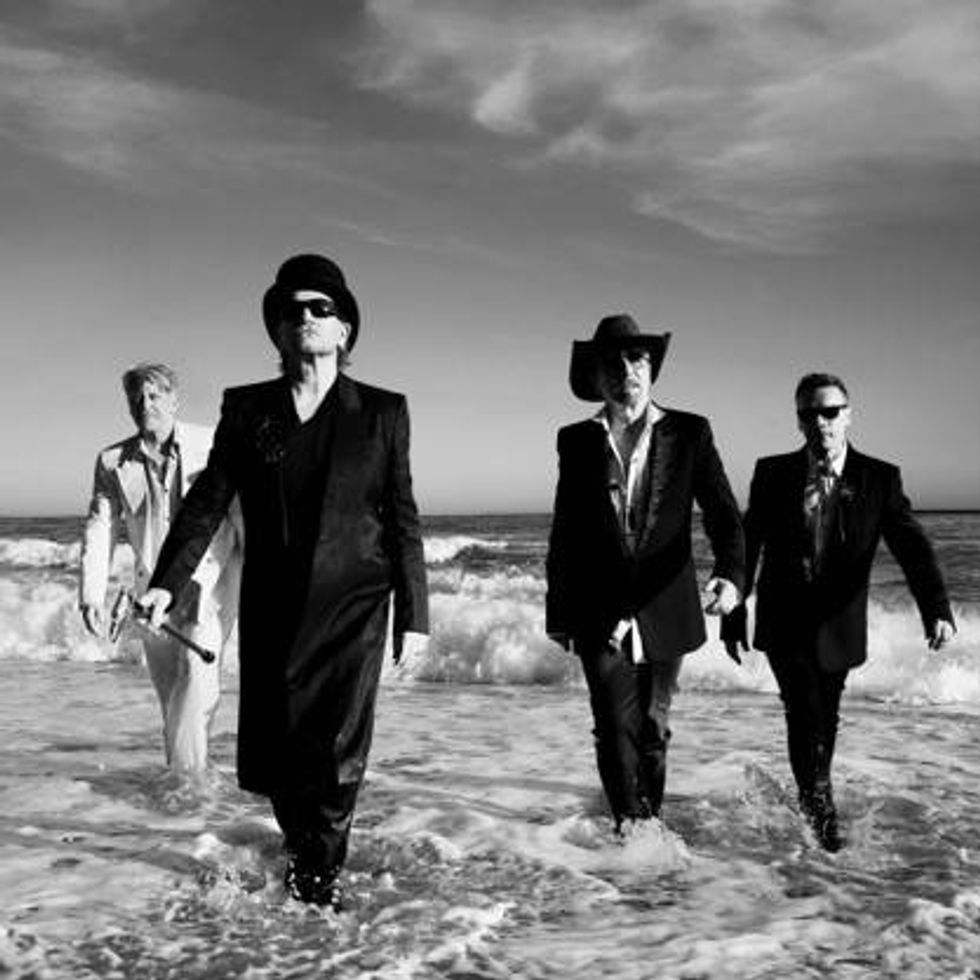
In the week that marks 50 years since Larry Mullen Jr. pinned a handwritten note to the noticeboard of Mount Temple Comprehensive School on the Northside of Dublin in September 1976, “Drummer Seeks Musicians To Form Band,” comes a body of work that sees Bono, The Edge, Adam Clayton, and Larry Mullen Jr. still finding new dimensions and possibilities within their creative process.
Recorded all over the place and produced by Jacknife Lee, Carnaval De Luz is a collection of 12 songs exploring themes of spirituality, friendship, freedom and endurance in the face of dark, encroaching forces. Sonically, there are echoes of the band’s most experimental work combined with some strict songwriting in the shape of “The Greatest Show On Earth,” “Glorify,” and “Midnight Sunshine,” as well as the 2mins 35second homage to early surf-punk insolence that is “Silencio.”
The roots of Carnaval De Luz can be traced directly to U2’s two surprise-released and critically acclaimed six-track EPs of early 2026, recorded during the same creative period as the new album. Those releases, Days of Ash and Easter Lily, followed the liturgical calendar, and so Carnaval De Luz sits, stands, and dances before them in timeline. Carnival, a celebration of the flesh, “carne,” before the denial that is Lent, a period of reflection, and the rebirth of Easter. The song connecting the album and two EPs is the final track on the new album, “Torn,” a duet between Bono and the late, great Dolly Parton, in what has sadly turned out to be her last recorded vocal performance. Co-written by U2, Parton, and Johnny McDaid, it’s a tender country song detailing broken family ties that holds wider resonances.
Carnaval De Luz is released in the band’s 50th year, 2026, one in which U2 will have released 24 new songs. The album also sees collaborations from Brian Eno (co-writing and synthesizers on “Go (Carnaval De Luz),” “The Greatest Show on Earth,” and “Can’t Stop Us Now”), Martin Garrix (co-writing on “Glorify”), and Daniel Lanois (playing pedal steel on “Torn”); with additional production from Ryan Tedder on “Silencio.”
The Edge said - “It’s a messy, provocative, sacred collection of songs — and features the first-ever use of flat-wound strings on a U2 recording. Just saying.”
Bono said - “Roll up, roll up, roll up! Bring your purple socks, your broken hearts, your rose-tinted naivety… oh be amazed in the hall of mirrors. There will be loud guitars, deep bass, some ecstatic rhythms and, yes, some silver tears will make an appearance!
'Cause in the near distance just outside our carnival of light there are all kinds of creatures… the same imagination that brings us our creativity can also bring us monsters. So we make the drums louder. We build a bigger fire. We make our stories wilder and funnier. We make the melodies sweeter and the songs, they better shine, because if the world is in darkness we better not be.”
The music video for “Silencio” was shot in Mexico City earlier this year and is directed by Cliqua, the Mexican-American directing duo Pasqual Gutiérrez and Raúl "RJ" Sanchez.
“Street of Dreams,” the first song to be taken from the new album, was released in July. Listen to “Street of Dreams” HERE, watch HERE .
The track listing for Carnaval De Luz is:
- 1. Go (Carnaval De Luz) 2. La Reina 3. Street Of Dreams 4. The Mirror Maker (Rosalía) 5. Superficiality 6. If The World Is At War We Better Not Be 7. Silencio 8. The Greatest Show On Earth 9. Glorify 10. Midnight Sunshine 11. Can’t Stop Us Now 12. Torn (Feat. Dolly Parton)
Carnaval De Luz will be available in formats including: Limited Edition Deluxe Vinyl & CD Boxsets, Various Limited Edition Coloured & Bespoke Vinyl variants, Standard CD, Standard Vinyl, Digital Download. Pre-order, pre-save HERE .
“Silencio” is available now as a digital download, as well as on DSPs.
Charlie Worsham: From Nashville Sideman to Solo Star
The Nashville fixture shares his long journey from a bluegrasser in Mississippi to Music City fixture that's included studio time alongside Lainey Wilson, Luke Combs, and Carrie Underwood, touring in bands fronted by Vince Gill & Dierks Bentley. He tells John Bohlinger about his struggle from band member to band leader and details the ultimate honor when Vince Gill invited him to join the Grand Ole Opry in August 2026. Twenty years into his stay in Nashville, Charlie Worsham isn't going anywhere but up.
Sponsored by Stewmac: https://stewmac.sjv.io/APO2ED
Mr. Black Introduces the CAT Distortion Pedal
Renowned pedal firebrand Mr. Black has introduced the CAT distortion pedal, a unique take on one of the world’s most beloved – and bruising – circuits.
One look at the CAT and you will see the inspiration; one look inside the CAT reveals an entirely new circuit, with some clever tricks slipped in to reduce noise, strengthen tone and push high-gain: hard.
The CAT Distortion doles out heaps of saturated harmonic-laden gain, while maintaining low noise, cleaning up via the guitar’s volume knob and pumping out powerful low-z output, very well equipped to drive long cables and large effects chains with authority.
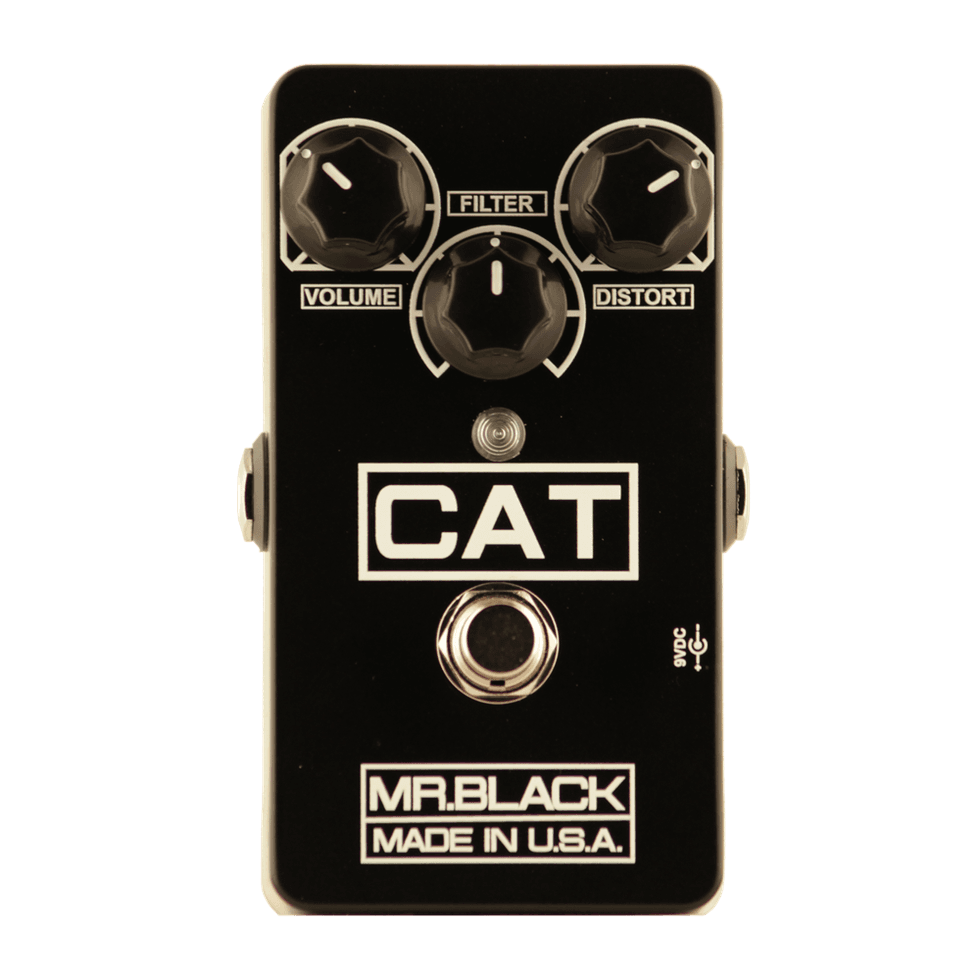
Hand built one-at-a-time in Portland, Oregon U.S.A. the CAT Distortion doesn’t just growl, it hunts.
Key features:
- 100% pure-analog high-gain distortion
- Classic vintage tone with fully re-engineered circuitry
- Loads of volume on tap with tuned low-z output
- Powered by “Industry Standard” 9VDC or internal 9V
- Gentle 9mA current draw
Mr. Black’s CAT Distortion carries a street price of $149.95. For more information visit www.mrblackpedals.com.
Luthier on Luthier: Chris Holcomb
Chris Holcomb specializes in making world-class resonator guitars in Santa Cruz, California.
Chris built a guitar in his teens and has pursued the craft ever since. In episode 118, Chris tells us this wasn’t a straightforward path, but one of persistence and dedication that ultimately paid off as he achieved his goal of making a life and living through his hands.
Link: https://www.cfholcombguitars.com
https://www.instagram.com/c.f.holcombguitars
Luthier on Luthier is hosted by Michael Bashkin of Bashkin Guitars and brought to you by the Fretboard Journal. This episode is sponsored by the Looth Group, Dream Guitars and StewMac.
Want to support Luthier on Luthier? Join our Patreon to get access to exclusive photos and content from Michael and his builds.
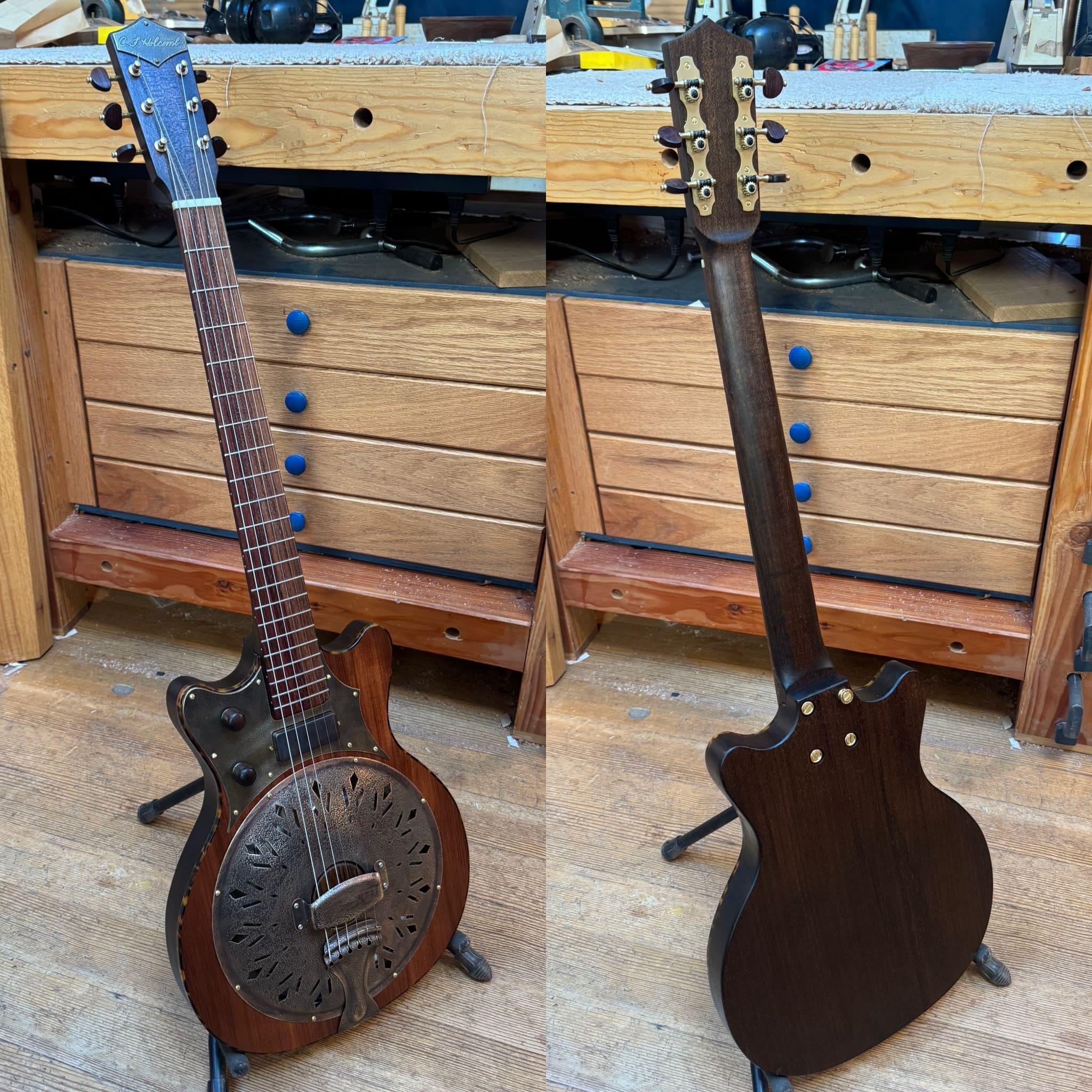
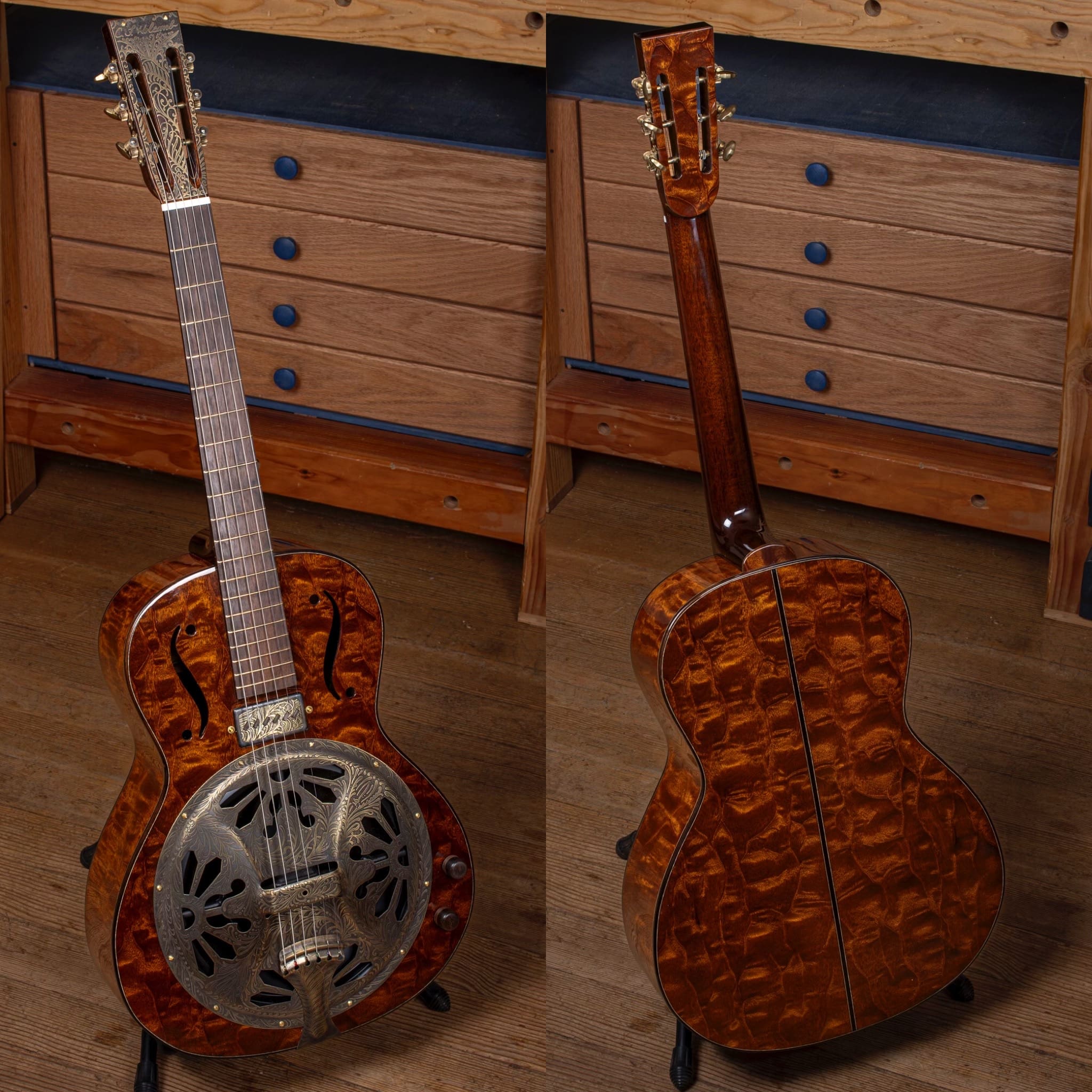

The post Luthier on Luthier: Chris Holcomb first appeared on Fretboard Journal.
Joe Satriani and Steve Vai: Full Circle
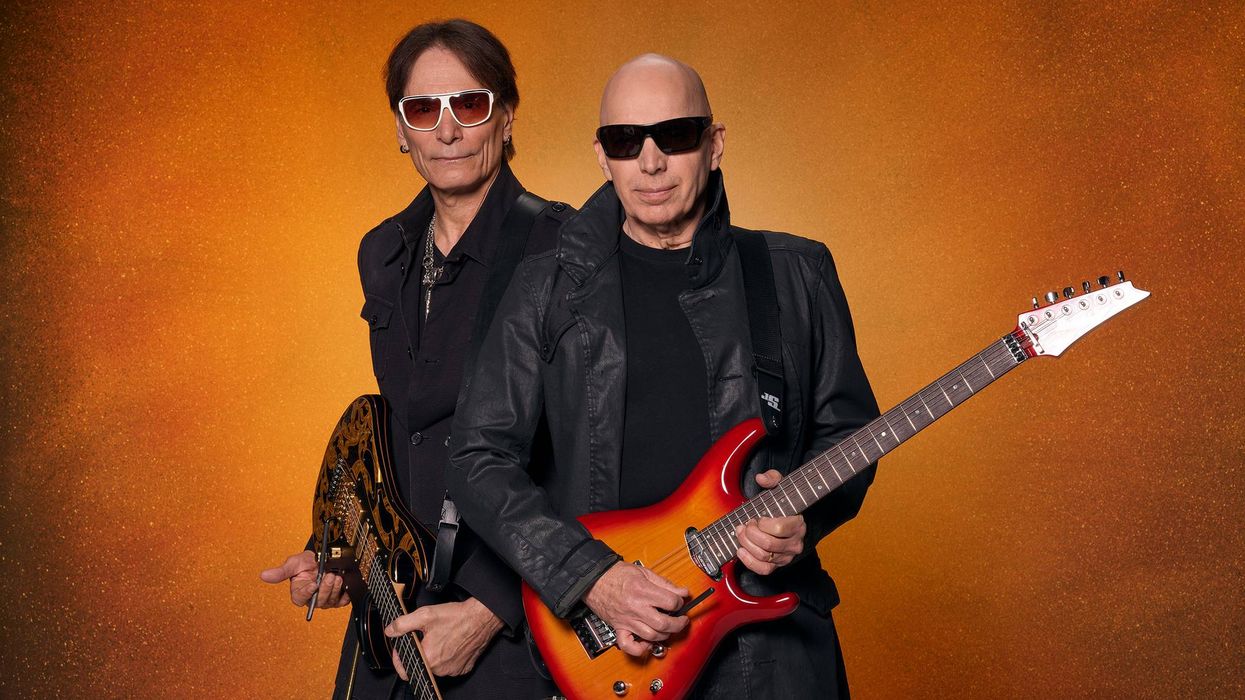
Joe Satriani and Steve Vai have been in each other’s orbit for half a century—as teacher and student, tourmates, and friends. With The Sea of Emotion, they've finally made an album together.
The last song on Joe Satriani and Steve Vai’s first album together begins with the oldest thing on it, a recording made in a teenage Satriani’s bedroom in Carle Place, Long Island, sometime in 1973. More than 50 years later, neither of them can tell you who’s playing what on it.
“The recording is pretty flat,” Satriani says. “There’s no low end, there’s no high end. And there’s a lot of personality in those areas. You can tell the way people play. But it’s just this sort of midrange thing going on.”
The 1973 recording is called “Reflections on a Year and a Half,” the year and a half in question being how long Vai had been playing guitar at the time it was made. He was still turning up weekly for lessons from Satriani, a few grades ahead of him at Carle Place High and also his guitar teacher, in a bedroom that he describes five decades later with the reverence of a 13-year-old.
“It was a glorious teenage bedroom,” Vai says. “It had all the greatest posters and albums stacked up all over the place.” In one corner was a two-track, reel-to-reel tape machine. “I would just ogle at it.”
“I think it was a Sony,” Satriani says.
“It was a Sony,” Vai continues. “And then one day Joe said, ‘Hey, let’s record.’ So Joe showed me this riff, and he was playing with some chords…”
“…every time I hear it, I still can’t figure out who’s who,” Satriani says with a laugh.
Fifteen years or so after the fact, Satriani mailed the reel to Vai, who transferred it and then did nothing further with it for a very long time. What brought it back out was this new album, and specifically an email from Satriani containing two pieces of music, which eventually became two new Satriani-Vai songs, “The Sea of Emotion, Pt. 1” and “The Sea of Emotion, Pt. 2.” Vai had an idea for a third. “I just got the idea, oh, I’m gonna take this little snippet of us both playing when we were kids, basically, and start the song and embellish the riff,” Vai says. “Try to make a song out of it.”
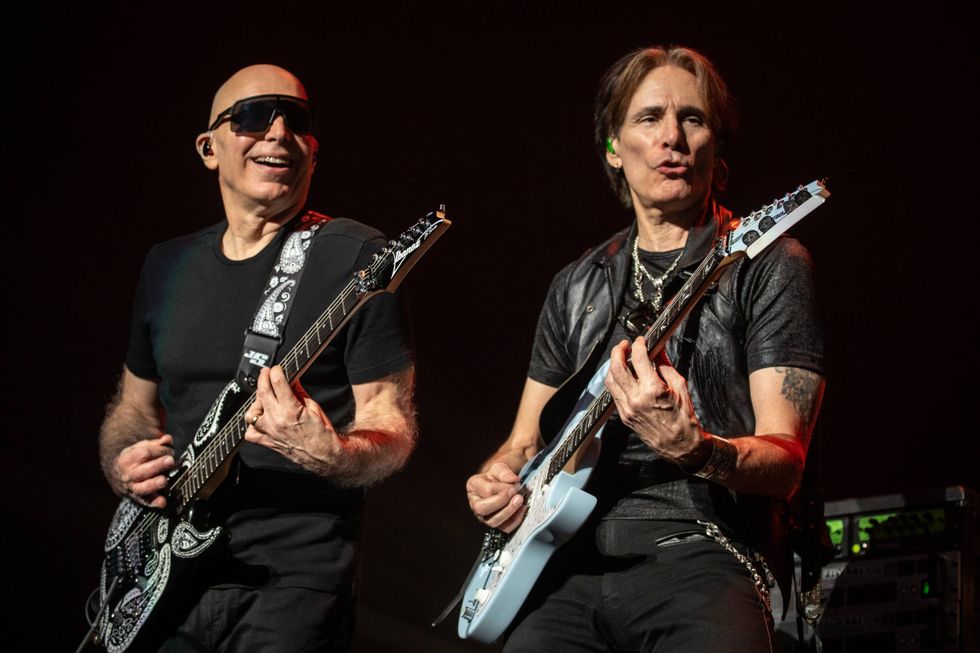
The song that resulted is “The Sea of Emotion, Pt. 3: Reflections on a Year and a Half,” and it closes the new record, which is also called The Sea of Emotion, and is officially credited to SatchVai. All of which means that an album made better than half a century into one of the most thoroughly documented friendships in the history of the instrument starts its final track with two Long Island kids and a tape machine that neither of them can identify himself on—and then builds the rest of the song out of what they were playing.
The Sea of Emotion is the first album Satriani and Vai have made together, which is a strange thing to consider given these two players’ careers have been entangled since one of them was 12 years old (the other was a ripe old 16). They’ve toured together, on and off, for three decades under the G3 banner, turned up on each other’s records, and shared magazine covers going back to the 1980s, but until the formation of the SatchVai Band—the two of them plus guitarist Pete Thorn, bassist Marco Mendoza, and drummer Kenny Aronoff—they had never actually been in a group together. And until now, they had never written an officially-released song together as adults.
While the SatchVai Band is a touring proposition, the record itself was cut with a rotating cast of musicians drawn from both players’ inner circles, with Gregg Bissonette, Jeremy Colson, Aronoff, Matt Chamberlain, and Mike Mangini trading off behind the kit and Billy Sheehan, Bryan Beller, Philip Bynoe, Matt Bissonette, Mendoza, and Henrik Linder handling the bass. The album takes its title from a field on the Carle Place school grounds where Joe and Steve used to go after dark to talk, memorialized in the suite that takes up the final three tracks. By the time The Sea of Emotion hits streaming services and store shelves, Satriani and Vai will have spent a spring playing a good deal of it live, on a 40-date North American run that also featured openers Animals as Leaders. (We’re talking backstage at one of the stops, in Durham, North Carolina, a few hours before doors open.)
Arguably, none of this would have happened without Satriani’s filmmaker son, ZZ, who called him a few years back about documenting what was then the 25th anniversary of the G3 tour, an idea that turned into a reunion tour with Satriani, Vai, and Eric Johnson—the same three who had headlined the inaugural G3 run in 1996. Afterward, Joe and Steve decided to keep going, with nothing more ambitious in mind at that point than maybe cutting a track together and playing some shows.
“We were so busy,” Satriani says. “We had finished the G3 reunion, and then we realized we weren’t going to be able to continue with G3, and we decided, well, Steve and I’ll go out. And the idea was to also do a track. But we still had work that was booked immediately, so we were either on the road with somebody else, or we were at home in our studios going, ‘I’ve got eight hours to come up with something and send it to the other guy.’”
Despite the time crunch, the ideas started flowing. To the point, eventually, where they found themselves working on an album. “We had probably 17 relatively roughed-out ideas,” Vai says. “And then it comes that time where you’ve gotta cut off one of your toes, you know? And you just start hacking at the songs. But it went very seamlessly. We kind of resonate similarly like that—’How does this record feel? What is it missing?’”
Before they could answer those questions, they hit the road together as SatchVai—first in America and then across Europe. These runs were, as far as the album was concerned, a hiatus. “I like a bit of solitude to get away from influences,” Satriani says. “And when you’re on tour, it’s just nothing but influences—especially our tour, because we’re improvising onstage every night. You can’t be locked into your own writing mode.”
“It’s remarkable to me how Joe has just been a profound figure in my life through my whole life.”—Steve Vai
Once they were home, they approached the material with fresh ears, and with the experience of having played together night after night. “We’re slowly going, ‘Oh, that song’s not gonna work. It’s the wrong character.’ That kind of thing,” Satriani says. “And then there were other songs that started to get written and sort of snowball, and you go, ‘Wow, that song that we didn’t think was a winner is just turning into this huge thing.’ So that was a nice surprise.”
Co-writing isn’t something Vai does much of, and he says so himself. “I usually don’t do that. I like being the master and commander of my own ship. But Joe has such a great ship.”
For 50 years he had been listening to Satriani’s playing as a fan, but what changed here is that there were now stakes attached. “Okay, we gotta get down to business,” Vai recalls. “We have to impress each other. And we have to raise our bar the best we can. And for us, that means better, more effective melodies. And of course you want to try to up the technique game. But the real fun for me was when the emails would come in…”
One song, “The Feeling I Know,” started as a voice memo on Vai’s phone of some chord changes he liked, which he sent over and got back with what he calls “this beautiful samba-esque Lydian thing” on top of it. “And then we went, ‘Oh, chop this up here.’ ‘What about a melody there?’ ‘Okay, you do that melody there, I’ll put the harmony and then I’ll do this here.’ And it was very seamless. I’ve never had an experience like that,” Vai says.
“And what I also noticed was, yes, we are different musically. We reach for different [sorts] of notes at times. But there was almost an intrinsic understanding—yes, this will work. No, this won’t work. It got to the point where I would go to think about doing something and I would have an instinct whether he was going to like it or not. And my only fear was that he would say yes to something that he actually didn’t like. But then, I know Joe better than that. He’s not that—”
“—nice,” Satriani cuts in.
“No,” Vai says with a laugh. “He’s not that guy.”
Which tracks, given that this is the same teacher who once sent a 13-year-old Vai home early from a lesson for not memorizing the notes on the fretboard—and still made Steve pay for the session.
At one point Vai sent Satriani a video of the Italian singer-songwriter Paolo Conte performing “Dancing,” a song the two of them went on to cut for the record. “That [song] is something I would never do,” Satriani says. “I’d probably hear it walking down the hallway somewhere and never stop to say, ‘Who is that?’ But knowing Steve, I thought, well, he wouldn’t be attracted to it unless he heard something really outrageous. And sure enough, when the session arrives and I hear 15, 20 guitars playing all those horn parts, that’s when I know—ah, he did have a vision. He’s not crazy.” Satriani laughs. “He’s not totally crazy.”
Vai also sent over “Bronco Freight Train,” but was unsure of where it was heading. Satriani had no such doubts. “As soon as I heard it, I thought, well, this has to be on the record,” he says. “And he sent it like, ‘I don’t know about this thing, this isn’t really a song yet.’ And I’m like, are you crazy? Don’t call me, ’cause I’m working on it right now.”
“I liked the core, I liked the guitar effect, and I liked the bridge,” Vai says. “And Joe just whacked the whole rest of the song and rebuilt the parts. I finally had somebody that I could really co-create with. And I’m sure there’s other people out there, but I never bothered to find them.”
The other key voice on the record belonged to producer and keyboardist Eric Caudieux, whose suggestions could be unusual, but tended to make the songs better. “He could just do the craziest things with these demos that we would send him,” Satriani says. “Changing whole passages that were in minor keys to major keys, and just assaulting our brains.” He was also the one who cut those guitar-generated horn parts out of “Dancing,” telling Vai they weren’t authentically him. Vai pushed back, but ultimately wound up agreeing it was better that way.
“Knowing Steve, I thought, well, he wouldn’t be attracted to it unless he heard something really outrageous.”—Joe Satriani
The rest of the record covers a lot of ground. Opener “Mayhem” came from Satriani, built on a riff he wrote in his home studio and sent over half-apologizing for how adolescent it was, and which Vai answered by doubling his own lines alongside Satriani’s solo. “Zoot Suit Riot,” with Mike Keneally on keys, was something of Vai’s that he thought had an “odd groove,” and had been sitting around for a while until Satriani helped finish it. The riff on “Old Sins Have Long Shadows” was Satch’s as well, with a groove inspired by Buddy Miles’ drumming on Hendrix’s “Machine Gun.”
Guitar-wise, Satriani primarily stuck to his signature Ibanez JS models on most of the record, while Vai’s workhorses were two signature Ibanez Jems: FLO, which is slightly scalloped and equipped with a Fernandes Sustainer unit, and REVO, which he says is wired similar to a standard Jem. Both are loaded with DiMarzio Evolutions in the neck and treble positions. Interestingly, Satriani cut all his guitars direct, via TONEX, SansAmp, and Brainworx SE100 plugins, and Vai used plugins for most of his parts, too—a variety of Neural DSP Archetypes, a prototype Neural DSP Vai plugin, and a SansAmp. The one exception in the amp department is “The Sea of Emotion, Pt. 3,” where Vai used his live touring rig.
On paper, what Satriani and Vai have in common is technique—fast, difficult, incredibly complex playing. But go back to the two kids in Carle Place and the thing they actually shared was composition. Both of them were writing music, and thinking seriously about writing music, at an age when most kids just want to play riffs and solos—and look cool doing it.
Both credit the same man for it: Bill Westcott, their music theory teacher at Carle Place High who, as Satriani puts it, could “make anything sound like Bach or Chopin or Gil Evans.”
“I have great memories of him just sitting down at the piano with me and saying, ‘Now, Joseph, listen to this,’” Satriani says. “And he put one hand here and he goes, ‘You hear those two chords? They can go together. And when they go together, you add up the notes, and then those are the notes you can use to play on top of the chords.’”
“Jazz was born,” Vai says.
Westcott also told them each something they still go back to. “He specifically said it to me one day, ‘Your brain will keep developing as a musician after all these points where you figure out that maybe your hands don’t do this, and your fingers won’t do that, and you’re not hitting these technical milestones that you thought you were gonna hit. Don’t worry about it. It’s all what happens up here [in your head]. So learn to write away from your instrument,’” Satriani recalls. “And we both got that. Whenever he told us separately, we both agreed and said, ‘He’s right, we’re gonna follow that.’”
There wasn’t much precedent for what the two of them would go on to do with any of it. Instrumental rock songs existed, but instrumental rock artists—players whose catalogs were instrumental and categorized as rock rather than, say, fusion—weren’t really a thing. The closest thing was Jeff Beck, and Beck had made his name in bands, playing three-minute songs. Vai dates the start of it precisely, and not to himself.
“It wasn’t until Surfing with the Alien,” he says. “And I wasn’t surprised when I heard it, because I knew that Joe had a pull toward pop, simple pop. I would listen to the Squares [Satriani’s late ‘70s/early ‘80s power-pop trio] tape that he sent me when he was in the band, and it was this intense, raging guitar being played in a pop format. There wasn’t anything to stack it against. And then when I heard [Satriani’s 1986 full-length solo debut] Not of This Earth, I said, ‘Okay, something is really forming here.’”
He continues. “And once Surfing came out, it felt like the perfect amalgamation between Joe’s polished, classical musical ear, the culmination of an evolution of guitar technique in the fingers, and a sense of the absurd coupled with pop sensibility. It was a perfect storm. And that was really, to me, the first instrumental rock guitar record.”
Vai also thinks some younger guitarists draw the wrong lesson from it. “A lot of young players feel that there was a time when instrumental rock guitar was popular and you could get signed, but it’s not now. ‘You were lucky, I’m not.’ But they’re missing the point. He created it. It’s not because it sits under the moniker of instrumental rock guitar. It sits under the moniker of inspired melodic energy.”
For Vai, all of it goes back to the field behind the school and the bedroom with the Sony in the corner. “It’s remarkable to me how Joe has just been a profound figure in my life through my whole life,” he says. “Joe always represented excellence. Just excellence. Like, this melody is written by an inspired person. Everything I hear, everything I see. Now, it could be from my perspective as a kid that was ogling at his teacher. But now it goes beyond that. I had many teachers. I’ve seen many guitar players, I’ve played with a lot.”
What’s most striking about The Sea of Emotion, in the end, are those inspired melodies. It isn’t the speed, it isn’t the near-impossible feats of agility, it isn’t the technical dazzle—it’s that the record is musical.
“It has to be,” Vai says. “If it isn't, you’re a novelty.”
Joe Satriani Gear
Guitars on The Sea of Emotion:
Ibanez signature JS Series models (JS1CR, GD, Paisley, MCR)
1958 Fender Esquire
Taylor 714ce-N nylon-string acoustic
Guild F-512 acoustic
Jerry Jones Electric Sitar
1972 Fender Precision Bass
Amps on The Sea of Emotion:
All guitars recorded DI with plugins:
IK Multimedia TONEX
Tech 21 SansAmp
Brainworx Suhr SE100
Effects on The Sea of Emotion:
Vox Joe Satriani JSWH Big Bad Wah
Roger Mayer Voodoo-Vibe
Live Amps and Effects:
3rd Power DRGN 100 Custom Shop heads
3rd Power DRGN 412 cabinets
Fender Tone Master Pro
Vox Joe Satriani JSWH Big Bad Wah
MXR EVH117 Flanger
Voodoo Labs Proctavia
TC Electronic Sub ’N’ Up
Strings:
D’Addario EXL110 and EXL120
Picks:
D’Addario Joe Satriani Satch Grip, Extra Heavy
Steve Vai Gear
Guitars on The Sea of Emotion:
Ibanez Jem “FLO” (slightly scalloped, older Fernandes Sustainer)
Ibanez Jem “REVO” (standard Jem spec, DiMarzio Evolutions in neck and treble positions)
Ibanez Jem “EVO”
PRS Dave Navarro signature (for rhythm tones)
Fender Custom Shop ‘57 Stratocaster reissue
Ibanez custom doubleneck “Glorious” (lower fretless neck with Sustainer; used for fretless part on “Old Sins Have Long Shadows”)
Amps on The Sea of Emotion:
All guitars recorded with plugins, except “The Sea of Emotion, Pt. 3: Reflections on a Year and a Half,” which was cut using live touring rig.
Neural DSP Archetype: Nolly X
Neural DSP Archetype: Gojira X
Neural DSP Archetype: Plini X
Neural DSP Archetype: Abasi
Neural DSP Vai (prototype)
Tech 21 SansAmp
Live Guitars:
Ibanez Jem “REVO”
Ibanez Jem “FLO”
Ibanez Universe UV7BK “J.R.” (drop A, .009–.056; for “Zeus in Chains”)
Ibanez Universe “Bruno” (drop A, .009–.056; for “Zeus in Chains”)
Ibanez JSM100, refinished and dipped by David Bonvillain
Ibanez PIA77BON2 Gold Filigree (black and gold baroque-style gold leafing)
Ibanez LACS (Los Angeles Custom Shop) PIA, Olympic White (slightly scalloped, Sustainiac)
Live Amps and Effects:
Synergy SYN2 preamps with Steve Vai VAI and BMAN modules
Fractal Axe-Fx III Mark II Turbo
Fryette LXII power amps
3rd Power 4x12 cabinets
Celestion Vintage 30 speakers
MIDI Solutions T8
Furman power conditioners
Dunlop 95Q Cry Baby Auto Wah
Ibanez Jemini Distortion
DigiTech Whammy DT
MXR Phase 90 (script logo)
Xotic EP Booster
Strings:
Ernie Ball Paradigm Slinky (.009-.042 and .010-.046)
Straps, Pickups, Pots, & Cables:
DiMarzio
Picks:
InTune GrippX (1.14mm and 1.5mm)
Guitar Center Honors PRS Guitars Founder Paul Reed Smith with Rockwalk Induction
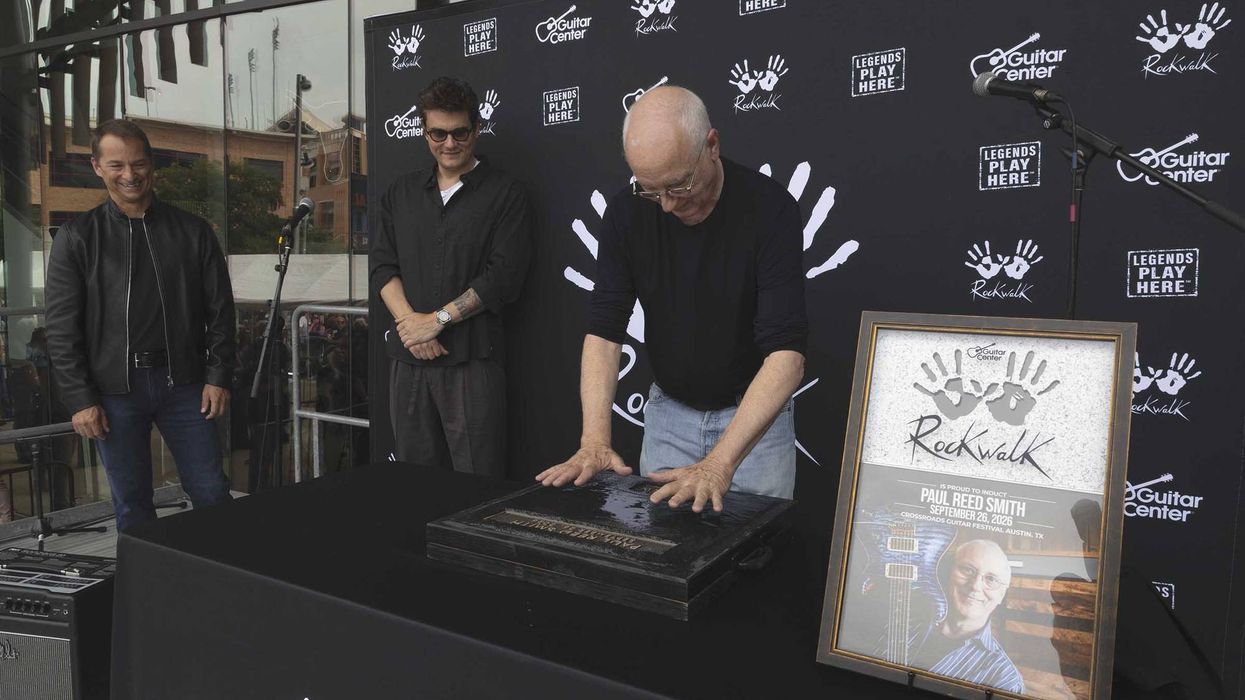
Guitar Center honored Paul Reed Smith, founder and managing general partner of PRS Guitars, with an induction into the famed Guitar Center Rockwalk on Saturday, September 26, during Eric Clapton’s Crossroads Guitar Festival 2026 in Austin, Texas. The honor recognizes Smith’s five decades of craftsmanship and innovation as a guitar maker, from his early work building instruments for artists including Carlos Santana and Peter Frampton to founding PRS Guitars in 1985 and building it into one of the world’s leading guitar manufacturers.
Founded in 1985, PRS Guitars has grown from Smith’s one-man pursuit into the third-largest electric guitar manufacturer in the United States, establishing a modern guitar company with its own unmistakable identity, design philosophy and following. Along the way, PRS instruments have become part of the musical identities of influential players across generations and genres, including Carlos Santana, John Mayer and Mark Tremonti. Smith remains actively involved in designing and developing instruments today, continuing to experiment and challenge assumptions about what a guitar can be.
Smith’s journey embodies what Guitar Center’s Rockwalk was created to celebrate: musicians, innovators and industry pioneers whose talent, ingenuity and contributions have changed the trajectory of music and made a lasting impact on music culture.
“Paul is obsessive about building the perfect guitar—and I mean that as the highest compliment. He has spent his life questioning every assumption about how a guitar should sound, feel and perform, and then doing the hard work to make it better. That obsession has materially moved the electric guitar forward and raised the bar for the entire industry,” said Gabe Dalporto, CEO of Guitar Center. “Paul is a living legend whose influence spans generations of musicians and instrument makers, and we’re proud to honor him with a place in Guitar Center’s Rockwalk.”
The induction took place at the Dell West Plaza on the Rockwalk Stage during Eric Clapton’s Crossroads Guitar Festival 2026, beginning with a live performance by Isaac Holmes. Guitar Center CEO Gabe Dalporto opened the ceremony before John Mayer introduced Smith for his induction. Smith then addressed the audience and commemorated the honor by placing his hands in cement as part of Guitar Center’s traditional Rockwalk ceremony. Smith’s handprints will travel back to Hollywood, where they will be permanently installed in Guitar Center’s Rockwalk outside its flagship store on Sunset Boulevard.
Holding the induction during Crossroads celebrated the full ecosystem of guitar culture, bringing together builders, players and fans around a shared appreciation for the guitar and the people shaping its future. Smith’s career has been deeply connected to working musicians, from Carlos Santana’s early support of PRS to his longstanding collaboration with John Mayer and other influential players. Mayer’s role in the induction reflected that relationship and Smith’s approach to guitar making: listening closely to musicians and working with them to rethink what an instrument can be.
“This is a truly special day. I am thankful to Gabe and the entire team at Guitar Center for presenting this. The Rockwalk is an iconic part of our industry, and to be part of that history is an honor,” said Paul Reed Smith. “There are many hands that have been involved in the journey. I’d like to thank everyone at PRS Guitars, past and present, along with the extraordinary musicians that continue to inspire and drive us every day. To have our longtime collaborator John (Mayer) give such a moving speech just made it all the more exceptional."
Smith’s induction continues Rockwalk’s tradition of honoring not only performers, but pioneering builders and innovators including Les Paul, Jim Marshall and Robert Moog, whose innovations gave musicians new ways to create, alongside legendary artists such as Eric Clapton, John Lennon, Stevie Wonder, Aerosmith, Jimi Hendrix and Johnny Cash.
Founded in 1985, Guitar Center’s Rockwalk is dedicated to honoring the musicians and industry pioneers whose exceptional talent, innovation and creative ingenuity have shaped the evolution of music. Located at Guitar Center’s flagship Hollywood store, Rockwalk has recognized more than 150 legendary artists and innovators.
“It’s something I never wanted to do”: Radiohead’s Jonny Greenwood admits he was a “lazy” guitar player in the band’s early days

As a guitarist, have you ever felt not particularly motivated to practice? You’re not alone – in fact, you’re in the company of Radiohead lead guitarist and all-round six-string legend Jonny Greenwood, who confesses in a new interview that he hasn’t always been totally disciplined when it comes to guitar practice.
Greenwood – who also plays guitar in The Smile, a three-piece also featuring his Radiohead bandmate Thom Yorke – tells The Independent [via NME] that while he’s now “hooked” on guitar practice, that wasn’t always the case in the early days of Radiohead.
“I will sit and play guitar every day now,” he explains. “It’s funny. It’s something I kind of never wanted to do. I used to distrust any sort of fluidity and think that was somehow part of that thing of technical playing. But now I just feel different about it. And it feels lucky that my fingers do these things.
“I’ve got a certain facility with it, so I’ve decided to accept it, and have realised that I really love playing the guitar.”
Despite helping pen some of British rock music’s most enduring hits alongside Radiohead, Greenwood admits he “always felt like a clumsy guitar player” who was “always lazy”.
“Now, just through repetition, I’ve got hooked,” he adds. “I’ve just got addicted and want to play all the time.”
Radiohead reunited last year to embark on a tour of the UK and Europe, their first shows since 2018. While the reunion led some fans to speculate about new material from the Oxfordshire five-piece, we’ve not heard anything to suggest new music is planned or on the way.
Speaking to The Times in February, Jonny Greenwood reflected that “it was great to revisit songs” on tour, but that he “found it strange not to be doing anything new”.
“I guess we are all doing new music elsewhere now so that’s where our creative energies are going.”
Asked about the possibility of a new album from the band, he replied, “I’ve no idea. I mean, I’m surprised that the tour actually happened and that we all enjoyed it so much. But venues get booked so far in advance. To do another we would have to decide now, and even then it wouldn’t happen for 18 months.”
Well, they’ve agreed to continue performing shows, and are scheduled to play 21 shows in 2027 across Perth, Melbourne and Sydney, Australia and Saitama, Japan.
Learn more at Radiohead.com.
The post “It’s something I never wanted to do”: Radiohead’s Jonny Greenwood admits he was a “lazy” guitar player in the band’s early days appeared first on Guitar.com | All Things Guitar.
Pages
