
Music is the universal language
“Glory to God in the highest heaven, and on earth peace to those on whom his favor rests.” - Luke 2:14
Norse Guitar Feeds
“Our goal was simple: have a conversation… Thomann chose a different path”: Fender directly sues Thomann for copyright infringement
![Fender Stratocaster [main], Harley Benton guitars [inset]](https://guitar.com/wp-content/uploads/2026/07/Fender-sues-Thomann-hero@2000x1500.jpg)
For months now the guitar world has watched Fender‘s dispute with the rest of the guitar industry over the Stratocaster body shape rumble on, but now things seem to have escalated once again, as the brand has confirmed it launched formal infringement action against German retailer Thomann.
Back in May, the brand sent cease and desist letters to an array of guitar companies large and small – as well as a number of retailers – demanding that they stop producing and selling electric guitars that closely resemble Fender’s Stratocaster.
The action came off the back of a ruling in a Düsseldorf court in which Chinese manufacturer Yiwu Philharmonic was found to have infringed Fender’s copyright over the Stratocaster body shape. Yiwu failed to show up to court, resulting in a default ruling.
One of the first guitar makers to reveal it had been sent a cease and desist by Fender was California-based LsL Instruments, which subsequently hired attorney and guitar industry litigation veteran Ron Bienstock to spearhead its defence.
 Image: Adam Gasson
The scale of Fender’s legal action has become more apparent in recent weeks, though, as PRS and Yamaha – two of the biggest guitar manufacturers on the planet – and Thomann, one of the world’s largest musical instrument retailers – have all revealed they’ve received cease and desists.
While many brands are still weighing up how to respond to Fender’s cease and desist letters, Thomann – which owns Harley Benton, a massive budget gear brand selling S-type guitars among its catalogue – announced that it was taking legal action against Fender in response, seeking for the matter to be “clarified in court not only for our own company, but for all parties involved”.
Thomann said it was acting on behalf of smaller guitar builders which “do not have the financial and legal means to conduct such a legal dispute”. Thomann is notably the largest musical instrument retailer in Europe, and one of Fender’s biggest retail partners, stocking a significant number of Fender guitars among its inventory.
Now, Fender has responded, filing an infringement action in the Regional Court of Düsseldorf where it won the copyright case, and setting the stage for a huge showdown between the two behemoth companies.
In a statement shared with Reuters and Guitar World, Fender takes aim at Harley Benton, Thomann’s in-house budget gear brand, which sells a selection of Stratocaster-style guitars among its product lineup.
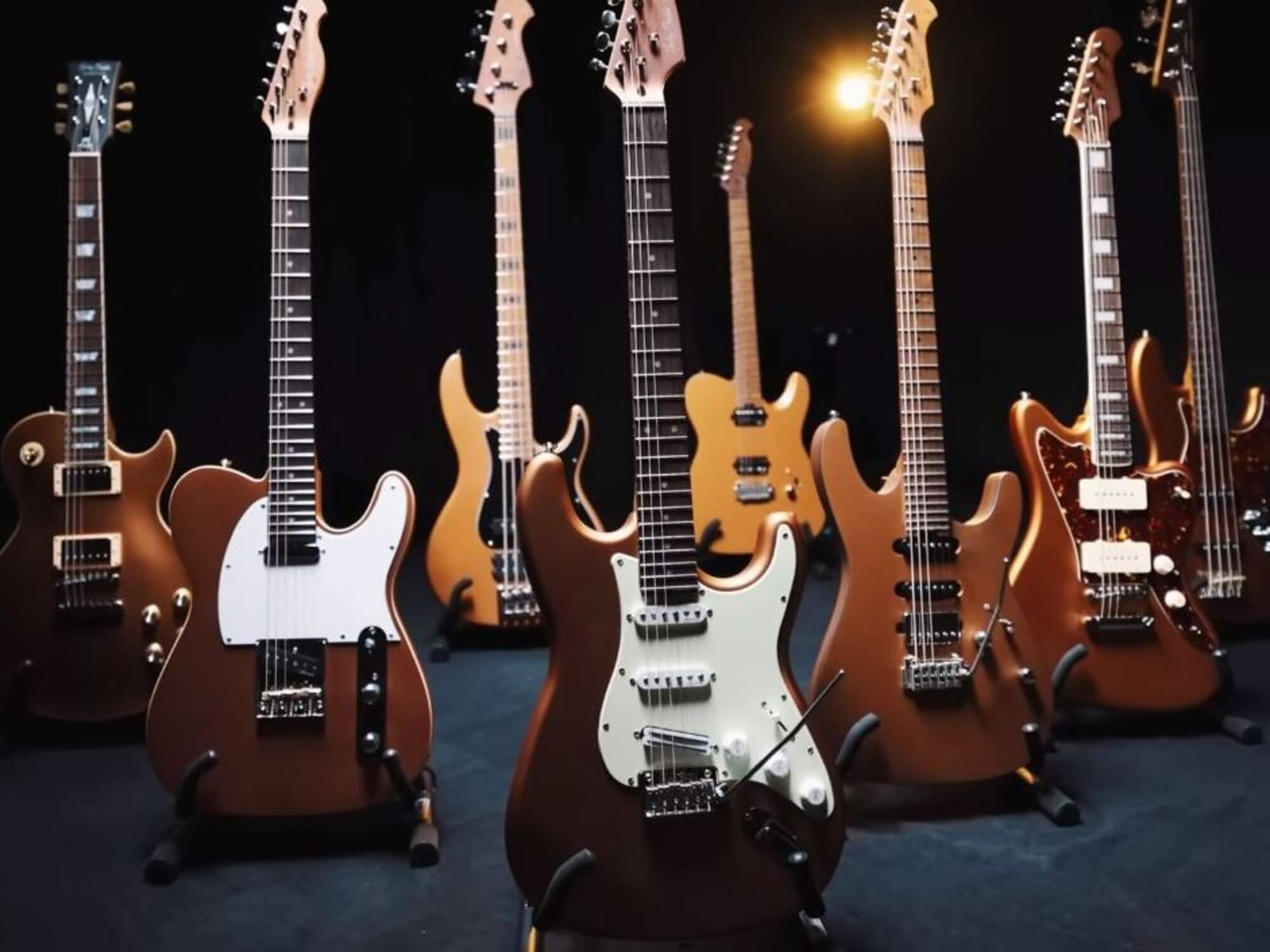 Image: Harley Benton via YouTube
“From the beginning, our goal was simple: have a conversation,” the statement reads. “Like many other companies across Europe, we reached out to Thomann to discuss practical ways to differentiate products while respecting Fender’s intellectual property. Our preference has always been dialogue and practical solutions – not litigation.
“Unfortunately, Thomann chose a different path. Rather than continuing that dialogue, it initiated legal proceedings asking the court to determine that it can continue selling guitar body designs that Fender believes copies the iconic Stratocaster. Today’s filing is Fender’s response and the expected next step in the legal process.”
Fender also reiterates its “preference” to “resolve these matters through direct dialogue rather than litigation”.
“In many instances, companies have chosen to work collaboratively with us to explore practical solutions, including design modifications that clearly differentiate their products while continuing to serve musicians,” the company continues.
“This matter is different. Thomann isn’t a small independent guitar builder. It is one of the world’s largest musical instrument retailers, one of Fender’s largest retail partners, and the owner of Harley Benton, one of Europe’s largest guitar brands.”
Fender says that its Stratocaster cease and desist action was not because it opposes competition.
 Image: Adam Gasson
“Fender has competed – and thrived – for nearly 80 years because musicians have choices. We welcome companies that challenge convention, develop new technologies, and create original instruments that inspire players,” it goes on. “That’s how this industry grows.
“What doesn’t move the industry forward is copying someone else’s iconic design instead of creating the next iconic design. We believe the guitar industry is strongest when innovation flourishes, musicians have meaningful choices, and companies compete by bringing new ideas to players around the world.”
Since the news of Fender’s Strat cease and desist letters broke in May, the guitar community has responded with ire, with large creators with hundreds of thousands of followers – including Rick Beato, Rhett Shull and Tim Pierce – criticising Fender’s move.
The new statement from Fender comes just a month after CEO Edward “Bud” Cole appeared at a dealer event, and attempted to calm down the controversy by saying Fender was “not suing anybody”.
“What we’ve done is reach out thoughtfully and [respectfully] to a handful of companies whose guitars come extremely close to replicating the iconic Fender Stratocaster design,” he said.
Fender’s full statement
Following Thomann’s recent Declaration of Non-Infringement action, Fender today filed its infringement action in the Regional Court of Düsseldorf in response to the litigation Thomann chose to initiate.
Earlier this year, the Regional Court of Düsseldorf recognized copyright protection for the Fender Stratocaster body shape as a work of applied art under European law. Following that decision, Fender engaged manufacturers, distributors, retailers, and online marketplaces across Europe whose products feature body designs that Fender believes are confusingly similar to the protected Stratocaster design. Our objective has been straightforward: protect Fender’s intellectual property, reduce consumer confusion, and explore practical solutions—including modifications that clearly differentiate products from the Stratocaster.
Those conversations continue today, and our preference has always been to resolve these matters through direct dialogue rather than litigation. In many instances, companies have chosen to work collaboratively with us to explore practical solutions, including design modifications that clearly differentiate their products while continuing to serve musicians.
This matter is different.
Thomann isn’t a small independent guitar builder. It is one of the world’s largest musical instrument retailers, one of Fender’s largest retail partners, and the owner of Harley Benton, one of Europe’s largest guitar brands.
From the beginning, our goal was simple: have a conversation. Like many other companies across Europe, we reached out to Thomann to discuss practical ways to differentiate products while respecting Fender’s intellectual property. Our preference has always been dialogue and practical solutions—not litigation.
Unfortunately, Thomann chose a different path. Rather than continuing that dialogue, it initiated legal proceedings asking the court to determine that it can continue selling guitar body designs that Fender believes copies the iconic Stratocaster. Today’s filing is Fender’s response and the expected next step in the legal process.
For more than 70 years, the Stratocaster has been one of the most influential and recognizable guitar designs in history. It has inspired generations of musicians, helped shape modern music, and become an enduring symbol of creativity around the world.
Fender has proudly served as the steward of one of the most iconic instrument designs in music history. We don’t take lightly our responsibility to protect that legacy. We believe that responsibility extends beyond Fender itself—to the artists, players, dealers, builders, partners, employees, shareholders, and the broader music community who have made the Stratocaster an enduring part of music history.
Let’s be clear: competition isn’t the issue. Fender has competed—and thrived—for nearly 80 years because musicians have choices. We welcome companies that challenge convention, develop new technologies, and create original instruments that inspire players. That’s how this industry grows.
What doesn’t move the industry forward is copying someone else’s iconic design instead of creating the next iconic design. We believe the guitar industry is strongest when innovation flourishes, musicians have meaningful choices, and companies compete by bringing new ideas to players around the world.
We’re proud of what the Stratocaster has meant to generations of musicians, and we believe it’s worth protecting. At the same time, we believe the future of the guitar industry depends on original thinking, bold ideas, and the next generation of great instruments. That’s the future Fender has always believed in—and it’s the future we’ll continue to support.
The post “Our goal was simple: have a conversation… Thomann chose a different path”: Fender directly sues Thomann for copyright infringement appeared first on Guitar.com | All Things Guitar.
“I’ve discovered that the more subtle thing works for me”: Metallica’s Kirk Hammett wishes he’d never started out using active pickups

Ask most guitarists to picture Kirk Hammett’s rig and they’ll probably imagine high-output active pickups feeding a wall of gain. These days, though, the Metallica guitarist says he wishes he’d started with traditional pickups instead.
Reflecting on his tonal journey in a chat with Guitar World, Hammett explains how spending time with Greeny – the legendary Les Paul once owned by Peter Green and Gary Moore – has cemented his love for P.A.F. pickups, to the point where he now thinks he “had it backwards”.
Hammett says his appreciation for traditional pickups has grown steadily over the years, thanks in part to the unique way they mature with age.
“Old P.A.F.s are so much more touch-sensitive and I’ve been trying to figure out for the last 10 years whether or not active pickups age well,” he says. “Because it’s a bunch of circuitry – but your traditional pickups, with [just] coils and magnets and wire, they have a tendency to age.”
“That ageing factor really makes P.A.F. pickups individual.”
The guitarist recalls dropping an old set of DiMarzios into one of his signature guitars and being surprised by the results: “I put an old pair of DiMarzio pickups in a KH [Series S-style guitar], maybe it was an LTD, and I was amazed at how good it sounded to my amp setup. I thought to myself, ‘Maybe the age of active pickups is over.’”
That isn’t to say he’s fallen out of love with active pickups entirely. Hammett says they were exactly what Metallica needed back in the ‘80s.
“They had a higher output – a battery-assisted higher output. They’re basically less microphonic, higher output, which means lower noise. And that’s what I needed back then for Metallica: we were all about distortion, being loud, high-gain… just a fucking wall of sound.”
As his playing evolved, however, so did his ears.
“As I grew as a guitar player during the ‘90s, I started noticing P.A.F. pickups. Man, that’s the sound that I grew up hearing with all these British guitar players that I loved. Even Michael Schenker’s Flying V had just stock Gibson pickups in it. Sometime in the ‘90s, I just realised that you can push a P.A.F. pickup; you can take an amp and fully just gain it out.”
“That P.A.F. will just take it and take it,” says Hammett. “You really can’t do that with a high-output active pickup: you turn up the gain and then you’re lost and it’s noisy. Then the [tonal] distinction’s gone, the harmonic distortion changes, it’s not as touch-sensitive – and you can get away with a lie, it covers up a lot of your mistakes.”
“What I love about P.A.F. pickups is the clarity of it: clarity of note, clarity in a succession of notes,” he continues. “You can’t really get away with a lot… Something like legato, it’s easier with active pickups, not so much with P.A.F.s. But when you do legato [licks] with P.A.F.s, it sounds so much better to me.”
Looking back, Hammett believes he approached his gear evolution in the wrong order.
“I still like that EMG active-pickup wall of sound and it works for our older material,” he says. “But there was a shift in me about 15 or 20 years ago where I realised that P.A.F. pickups, and stock pickups in general… I think you can push them way more than you can push EMGs.”
“You could almost say I had it backwards. I should have started with just a regular pickup, pushing that and going, ‘Okay, EMGs are the next level.’ But no, I was, like, next-level first and then went to the more subtle thing – and I’ve discovered that the more subtle thing works for me.”
He’s not the only member of Metallica who’s come around to the idea.
“James [Hetfield] is the same way,” Hammett adds. “He loves P.A.F. pickups and thinks P.A.F.s are great for lead – but, for him, the EMG active pickup sound is great for his rhythm sound and he really, really likes that rhythm sound.”
The post “I’ve discovered that the more subtle thing works for me”: Metallica’s Kirk Hammett wishes he’d never started out using active pickups appeared first on Guitar.com | All Things Guitar.
“Would they have that same attention if they weren’t wearing big clown noses?”: Why Devin Townsend isn’t sold on viral guitar duo Angine de Poitrine

Love them or hate them, Angine de Poitrine have become one of guitar’s biggest talking points this year.
The mysterious Quebec math rock duo have won admirers ranging from Dave Grohl to countless KEXP viewers, but Devin Townsend isn’t quite buying into the hype just yet.
Speaking on Jorge Botas’ Metal Global podcast, the guitarist – who earlier this year released his new album The Moth, admits it’s not so much the music that’s caught his attention, but the buzz surrounding the band’s now-iconic paper-mache masks.
“It just makes me crazy because it’s the mask thing,” says Townsend. “It’s like he’s got a big polka dot nose and so everybody really likes it.”
The guitarist is quick to point out that he isn’t dismissing the music itself.
“Okay, first off, I haven’t listened to it enough to give an accurate musical assessment of it,” he says. “It’s not to say that they’re not cool, but would they have that same attention if they weren’t wearing big clown noses?”
Ironically, Townsend admits the band’s meteoric rise has almost had the opposite effect on him.
“I mean, I should listen to them. I had so many people send them to me. At the same time I just refuse to listen to it,” he admits.
“My perspective on it is only that I’ve been irritated by it so far. But there are people in my life who are close to me who say it’s very good. So please take my assessment of it with a grain of salt.”
The viral duo – guitarist Khn and drummer Klek – shot to fame this February after their KEXP session racked up millions of views, earning praise for their knotty microtonal riffs as well as their distinctive masked aesthetic.
Townsend, meanwhile, recently announced a solo tour in support of his latest album, The Moth.
Check out the full list of tour dates at HevyDevy.
The post “Would they have that same attention if they weren’t wearing big clown noses?”: Why Devin Townsend isn’t sold on viral guitar duo Angine de Poitrine appeared first on Guitar.com | All Things Guitar.
Wes Borland accidentally got a left-handed Jackson guitar by mistake… and it turned into his signature model: “Oh, it’s not reverse headstock. It’s left-handed”

Most signature guitars begin with years of careful planning. Wes Borland’s, however, started with an accidental left-handed guitar.
In a new interview with Gear4Music Guitars, the Limp Bizkit guitarist reveals that the Jackson King V which inspired his signature model was originally a custom shop reject that he decided to rework.
Borland recalls receiving a call from Jackson’s American artists relations representative Mike Tempesta, who told him a reverse-headstock King V had become available after its original owner complained that the ebony fretboard looked too much like rosewood.
“He called me and he said that there was a guitar – it was a reverse headstock King V – that they just got in,” Borland explains. “There was a return from a customer that said the fretboard was supposed to be ebony and the ebony looked like rosewood… He goes, ‘Come in and you can have it. It’s great.’”
There was just one problem.
“We opened the case and it was a left-handed. He goes, ‘Oh, it’s not reverse headstock. It’s left-handed.’ And I just went, ‘That is not a problem. I will make a project out of it.’”
And that’s exactly what Borland did.
“Between my tech and I, I did a lot of the routing and he sort of did the fine tuning, but we got a new bridge and a new nut and changed the whole thing around. We routed a new electronics cavity so that it could be in the correct place… and filled in the holes.”
While some questioned why he didn’t simply buy a standard reverse-headstock instead, Borland says the DIY approach made the instrument feel more personal.
“People have said, ‘Why would you do that? Just get a reverse headstock V.’ But for me, it’s like taking part in your instrument, like customising it. You feel like you’ve had something to do with it. Or like you’re a part of it. It becomes a little more sentimental.”
The same philosophy applies when one of his guitars gets damaged on stage.
“Especially when I’ve had guitars that have accidentally gotten broken on stage, I like putting them back together,” he says. “It’s almost like that Japanese technique [Kintsugi] where something breaks and they fill the cracks with gold – except in this case it’s just epoxy or wood glue. It makes the guitar unique.”
When it came time to develop his signature model with Jackson, Borland knew exactly what elements had to stay.
“Keeping the Jackson headstock upside down – the reverse headstock with the logo upside down – was really important,” he says. “It’s just a fantastic King V: one volume, one [Seymour Duncan] Invader and a Floyd Rose.”
Watch the full interview below.
The Pro Series Signature Wes Borland King V KV is now available at Jackson.
The post Wes Borland accidentally got a left-handed Jackson guitar by mistake… and it turned into his signature model: “Oh, it’s not reverse headstock. It’s left-handed” appeared first on Guitar.com | All Things Guitar.
Martin 000-10E Retro review: “it authentically distils everything that’s great about 000 guitars”

$999/£999, martinguitar.com
If, like me, you attend the NAMM Show every January, there are certain constants that you can always rely on. The queue for the food truck you want will always be just a bit too long to fit in lunch between appointments; there’s always a dude with a python round his neck in the Marriott bar after the show but nobody knows why, and the Martin booth is a chastening experience.
- READ MORE: Martin Road Series D-10E Retro Sapele review: A stage-ready Martin at a seriously competitive price
The latter is perhaps more of a personal one. Like most right-thinking guitar players, I adore Martin guitars – some of the most inspirational and musical instruments I’ve ever had in my hands have been crafted by the good folks in Nazareth.
If you love Martin guitars, the brand’s cavernous booth is kinda like someone uprooted Disneyland from a couple of blocks down the street, and placed it in the middle of the Anaheim Convention Center. Dozens of the best and most exciting new instruments from the brand that pretty much invented the modern flat-top. It’s a cornucopia of excellence.
The thing that makes it so upsetting personally, however, is that most of the most captivating and exciting guitars are made in Nazareth and come with a price tag that is an entirely justified but serious investment beyond the means of many of us here in 2026.
When I walked into the booth for the 2026 edition of the show, my eye was caught by some beautiful vintage-style guitars hanging on one wall. With inviting aged tops and classic aesthetics, I was instantly drawn to them, picking one off the wall, I gave it a strum and made the face I usually make when an acoustic makes an impressive fist of G.
Usually, what happens next is that I take a look at the price tag, sigh and move on, but then I noticed the label inside said “Road Series”. This guitar that I’d been so impressed with on every level was in fact, less than a grand…
 Image: Adam Gasson
Martin 000-10E Retro – what is it?
Martin’s Road Series has been a byword for acoustic guitar buck-banging for the best part of three decades. Unlike the X Series, which requires the buyer to make peace with various build and visual compromises to attain a guitar that says Martin on it for $700 bucks, the Road Series basically takes the recipe that they use back in Nazareth and does it more affordably in Mexico, and asks for a very reasonable upcharge for the privilege.
Historically, the key element to this has been the presence of all-solid wood construction throughout the instrument – there’s no high-pressure laminate to be found anywhere on these guitars, with the exception of the headstock fascia.
That’s big news for those of us who understand that solid-wood acoustics are more likely to improve their tone and volume as the wood dries out over time – something that you simply don’t get with a laminate guitar.
There was very little wrong with the old Road Series – I was personally rather taken with a Dread I reviewed a few years back – but for 2026 Martin has decided to refresh the range in a way that keeps much of the stuff everyone liked, while adding some new flourishes that make them even more compelling.
In the case of this Martin 000-10E Retro, the most notable change is hidden in the name. The “Retro” designation is reserved for the guitars in the Road Series range that are leaning into the classic vibe more than ever before.
In practical terms, that means that the solid spruce tops have been treated with aging toner (as pioneered in the Custom Shop) to make the tops a little darker, a little more caramel-y and a little more, well, old.
That vintage vibe is accentuated by a matt satin finish all over, while the solid sapele back and sides has been given a dark mahogany stain, while the black plastic binding and simple soundhole rosette are very spartan D-18, as are the simple pearloid dot markers. If you want a bit more ornamentation, the more expensive 000-12E and 13E offer more elements from 28 or 42 Style guitars respectively.
The “Road” in the name does imply these guitars are meant to be played out, and so that means you get the reliable Martin E1 preamp (with soundhole tuner) and a semi-rigid gig bag.
 Image: Adam Gasson
Martin 000-10E Retro – build quality and playability
My first impression of the Retro guitars was of course a very positive one on the NAMM Show floor, so I’m looking forward to getting reacquainted with one in the comforts of my own home, and first impressions upon pulling it out of the gig bag are broadly very positive.
The ageing toner really does make that spruce top look great – it seems to accentuate the grain somewhat, and is such a striking contrast to the slightly emaciated appearance that more affordable spruce-topped guitars can often present.
I’m less taken by the ebony fingerboard – it’s very light on this model compared to what you’d expect from a traditional ebony, and it’s the only visual thing that really makes it feel like a more affordable guitar.
Some people will probably love the more interesting striped appearance, however, and it’s obviously going to vary from guitar to guitar, as I’ve seen 000-10E guitars with more traditional, darker ebony appearance.
 Image: Adam Gasson
Otherwise, it’s an extremely well put together guitar – the finishing and binding is flawless all over, the neck and body feel rock solid, and an internal inspection reveals some immaculately cut and finished bracing and kerfing.
The Select Hardwood neck is satin-finished and a nice transitional palmful – it’s not too big, but not slinky either. The slightly flattened D-shape of the High-Performance Taper neck is a fantastic companion for playing thumb-over cowboy chords, but the way it thins out as you move up the neck means it’s very comfortable when you’re putting your thumb on the back and trying something more ambitious.
The only real weak links in the chain are the open-gear tuners. For starters, I wish they’d simply gone for classic silver buttons instead of the cheapening ebony ones here – it really does break the ‘I’m playing a proper Martin’ illusion unnecessarily.
The open-gear machines themselves are also not the smoothest in operation either – in fact the D string required a fair bit of effort to get moving. Once they do move, the tuners are accurate and solid, but they’re clearly lacking in lubrication – this is an easy fix of course, but something that I’ve seen across multiple Road Series guitars now, so it’s not an isolated incident.
 Image: Adam Gasson
Martin 000-10E Retro – build quality and playability
The Dreadnought might be Martin’s most iconic and popular guitar, but there’s an argument to be made that the 000 is the best all-round flat-top acoustic guitar that they (or anyone else for that matter) has come up with over the last 200-odd years.
The magic of a good 000 is the way it really can handle anything you throw at it – whether that’s vigorous strumming, delicate fingerpicking, intricate flatpicking… it will throw it all back to you with projection, clarity and warmth.
No, it doesn’t shout as loud as a dread and if you’re trying to entertain a room of people without any sort of amplification you’re going to struggle… but who’s actually doing that in 2026, really?
The 000-10E Retro’s first strum is once again a sign of good things to come, open chords have a wonderfully mid-rich, produced quality to them that allows every string to be heard with clarity. It doesn’t have the rumbling power of a bigger-bodied guitar in the low end, but it actually makes those heavier strings vibrate with less muddiness as a result.
There’s a real zip and percussiveness to proceedings – especially on the unwound strings – and this makes for an easy fingerpicker. It might not have the single-note projection to make it a flat-picking mainstay, but there’s plenty to enjoy here nonetheless.
Plugged in, I’m seriously impressed with the quality of the E1 system’s replication of that warm, mid-focused tonality – it doesn’t really require any tweaking on the amp to sound fantastic, and it’s clear that whether mic’d or going direct, this would be a fantastic recording guitar.
It handles altered tunings well enough, and DADGAD opens up some rich harmonic territory here for sure – the shorter scale length of a 000 means it’s perhaps not the most adept guitar for more esoteric altered tunings and taking those top strings way down, but it’ll get you there in a pinch.
Martin 000-10E Retro – should I buy one?
There’s no escaping the fact that 000-10E Retro is a fantastic instrument – one that authentically distils everything that’s great about 000 guitars in a package that looks and plays much better than its sub-$1,000 price tag should suggest.
Of all the new Road Series guitars, I think the Retro guitars are going to find the most willing audiences for exactly that reason – aside from an under-lubricated tuner, there’s not much here to make you feel like you’re not playing a more expensive Nazareth-made guitar.
The new toned tops mean that it also looks the part in a way that is, let’s face it, hugely compelling. And as always with the Road Series, the all-solid construction means that you can bet a fair chunk of change that, like a solid-wood acoustic guitar, it’s gonna sound better and better the more you play it – it’s just had a bit of a head start in the looks department. Killer.
Martin 000-10E Retro – alternatives
If you’re just after a good-sounding, good-looking (but not AS good-looking) 000 with Martin on the headstock and you wanna save yourself a quarter of the price, the solid-topped 000-X2E ($749/£775) is a rock-solid instrument for stage and home use. Another beautiful all-solid spruce/sapele orchestra model is the very impressive Eastman E1OM ($699/£599). You’ll be looking at something in the northern reaches of two grand for a bona fide spruce-topped Martin 000 from Nazareth, but if you simply have to have US build and wanna save some pennies, the 000-15M ($1,799/£1,799) is not totally out of reach – it’s a very different (but still brilliant) sonic beast, however.
The post Martin 000-10E Retro review: “it authentically distils everything that’s great about 000 guitars” appeared first on Guitar.com | All Things Guitar.
Podcast 557: Summer School Electronics’ Mark Turley
Today on the podcast, Summer School Electronics founder Mark Turley joins us once again. We talk about Summer School’s current pedal offerings, the 2026 Fretboard Summit, and the two pedal-making classes that Mark will be teaching at the Summit.
https://www.summerschoolelectronics.com
Sign up for Summer School’s Pedal Classes: https://www.summerschoolelectronics.com/shop/p/fretboard-summit-pedal-building-class-amnk8
Register for our 2026 Summit: https://fretboardsummit.org/tickets
This year’s Summit has over 80 luthiers and brands, performances by Hand Habits, Deep Sea Diver, Jake Xerxes Fussell, Shane Parish, Michael Daves and others!
We are brought to you by Peghead Nation: https://www.pegheadnation.com
(Get your first month free or $20 off any annual subscription with the promo code FRETBOARD at checkout).
Mike & Mike’s Guitar Bar: https://mmguitarbar.com
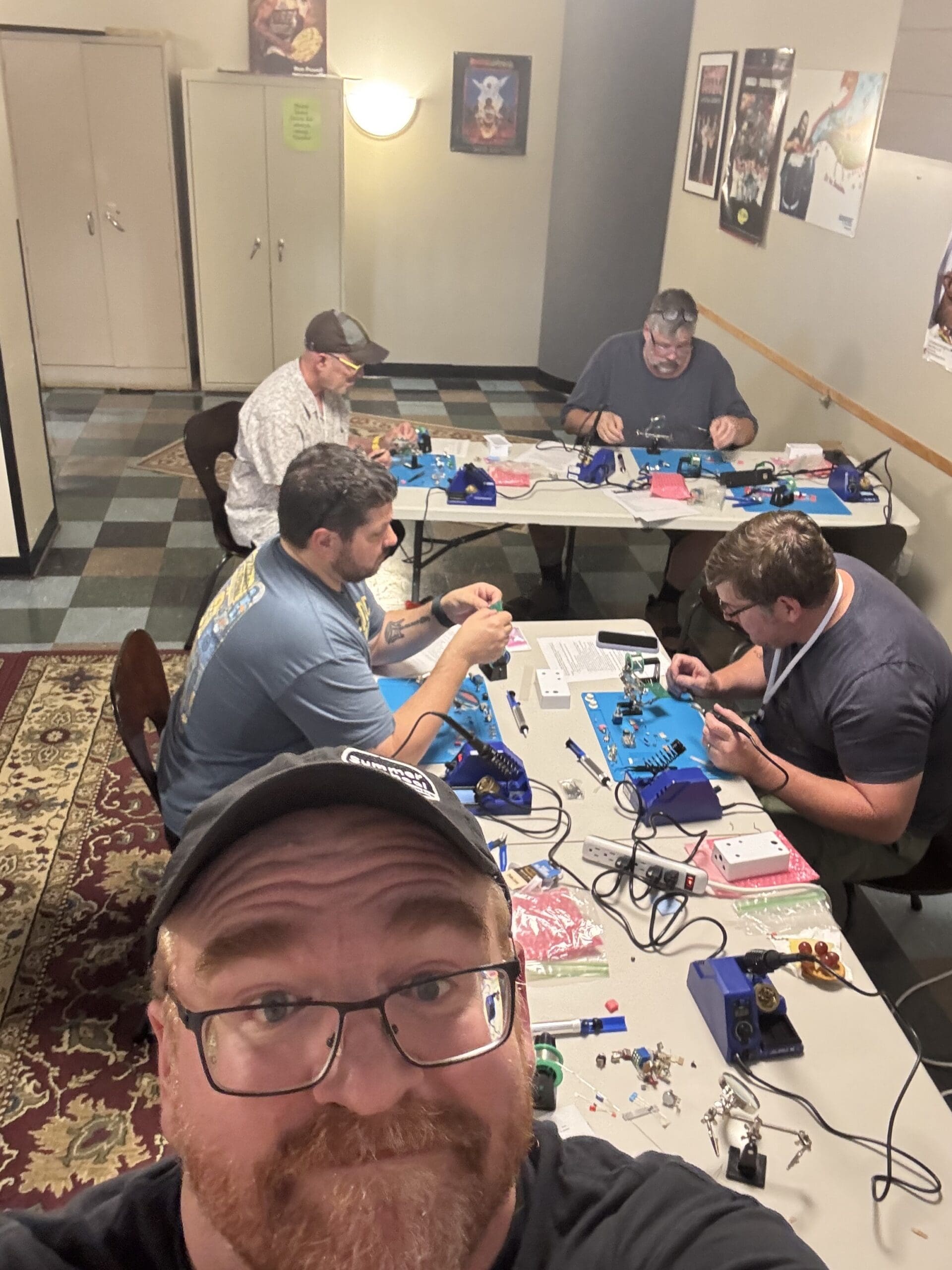


The post Podcast 557: Summer School Electronics’ Mark Turley first appeared on Fretboard Journal.
Fender Brown Panel Amps For Tonex
Why do guitars have pickup covers and what do they actually do to your tone?

Walk into any guitar shop and you’ll see them everywhere: the chrome and nickel domes capping humbuckers on Les Pauls and 335s, the white plastic rectangles on Strats, the open zebra coils on countless modern superstrats. Pickup covers are one of the most visible parts of an electric guitar, and yet the question of what they actually do – beyond looking pretty under the stage lights – remains weirdly contentious. It’s one of those many tone myth rabbit holes that litter the guitar tech landscape.
Some folks insist a cover muffles your highs and robs your tone of any bite. Others swear they can’t hear a difference and have the blind tests to prove it. The truth, as it usually does, sits somewhere in the middle, and it depends a lot on what those covers are made of and the pickup that is underneath them.
A Bit of Pickup Cover History
The covered humbucker is essentially a Gibson invention. When Seth Lover designed the PAF in the mid-50s, the metal cover wasn’t a stylistic flourish – it was there to shield the coils from electromagnetic interference and to keep dust, sweat, and the occasional drop of beer out of the works. Nickel-plated covers came standard on Gibson humbuckers from the late ’50s onwards, and they’ve remained a defining visual cue of the format ever since.
Single-coil covers, like those on a Stratocaster, by contrast, were mostly about practicality. Leo Fender’s plastic squares on the Telecaster and Stratocaster do almost nothing electrically – they’re protective shells over the coil, full stop. Anyone telling you a Strat cover meaningfully alters tone is most likely trying to sell you something. So the tone debate really lives with humbuckers, and specifically with what alloy is wrapped around them.
Material Matters More Than You Think
Most vintage-style humbucker covers are made from nickel silver, sometimes called German silver. Despite the name, there’s no actual silver in there. Nickel silver is actually an alloy of copper, nickel, and zinc with very low magnetic permeability.
Because nickel silver is barely magnetic, it doesn’t significantly disturb the magnetic field generated by the pickup’s magnets and pole pieces. Slap a nickel silver cover over a PAF-style humbucker and the tonal difference is very minimal – it’s measurable on a frequency analyzer if you’re patient, but usually invisible in a mix.
Brass, on the other hand, is highly conductive, and when you place a conductive sheet inside a fluctuating magnetic field, you induce eddy currents. Those eddy currents bleed off energy, and the energy they pull from the pickup’s signal disproportionately comes from the higher frequencies. The result is a noticeable softening of the top end. Chrome-plated brass covers, which became more common when nickel prices climbed, are part of the reason some players felt their guitars sounded duller after a re-cover job.
Gold-plated covers are usually plated over either nickel silver or brass, so the tonal character depends entirely on what’s underneath the plating. A common mistake is assuming a gold cover sounds different from a nickel one – it doesn’t, unless the base metal is different.
The “Covers Off” Question
Jimmy Page, Peter Green, Eric Clapton – the guys chasing more presence and aggression out of their PAFs claimed that taking the covers off and exposing the coils gave them a bit more clarity in the upper midrange.
If your humbucker has a nickel silver cover, removing it might give you a perceived bump in air and openness, but it’s subtle. If you’re peeling chrome-plated brass off a budget pickup, the difference can be more obvious. Either way, we’re talking about shifts of maybe a couple of dB in a fairly narrow upper-treble band – not a complete transformation. Anyone claiming their tone was completely overhauled by removing a nickel silver cover is either listening through a hi-fi rig in a dead-quiet room or hearing what they want to hear.
The Microphonic Problem
A humbucker cover that isn’t properly seated and wax-potted to the pickup beneath it can squeal like an angry kettle when you crank the gain. The cover becomes a microphonic resonator, picking up vibrations from the body and amplifying them through the coils. Original PAFs are notoriously prone to this because Gibson didn’t consistently pot the assemblies in the early days.
Modern manufacturers – Seymour Duncan, DiMarzio, Bare Knuckle, Lollar – almost universally wax-pot covers onto their pickups now, which is why you rarely hear about feedback issues from a stock guitar.
So Why Bother With Them At All?
Setting the aesthetics aside, covers protect the coils from the slow corrosive grind of gigging life. They provide a degree of electromagnetic shielding that helps in environments full of fluorescent lights and dodgy dimmer switches. They keep the pickup assembly physically stable, especially on older designs where the bobbins aren’t bonded to the baseplate. And, yes, a polished nickel cover on a flame-top Les Paul looks fantastic.
The reality, despite what you read in forums, is that pickup covers do alter tone, but the magnitude of that alteration is almost always overstated. A nickel silver cover on a quality humbucker is essentially transparent. Brass is where the real high-frequency loss lives, and that’s a story specific to certain pickups and eras rather than a universal rule. The cover-versus-no-cover debate is mostly a question of taste, looks, and tradition rather than a meaningful tonal decision. These days, if you’re opting for no covers, it’s probably an aesthetic choice, and there’s nothing wrong with that.
If you’re thinking about pulling the covers off your humbuckers in pursuit of a sound, do it because you like the look of open zebras or double-blacks, not because you’re expecting a revelation.
The post Why do guitars have pickup covers and what do they actually do to your tone? appeared first on Guitar.com | All Things Guitar.
The Long Road: Jared James Nichols
Jared James Nichols is one of those artists you like rooting for. I had a chance to meet him several years ago at a Gibson event, and he was as nice and genuine as he seems online.
Twenty twenty-six has been a big year for Jared so far. His No Cover Charge video podcast that he co-hosts with Tyler Larson hit 100,000 Youtube subscribers, which seems like a big accomplishment for a relatively new podcast. He also recently became a Marshall endorsee.
In June, he released his latest album Louder Than Fate, which I have been enjoying. He somehow manages to combine the hard rock music of the 80s and 90s into a blend that sounds of those eras, but also modern at the same time.
Finally, he was also featured in a documentary produced by Gibson TV called The Long Road: Jared James Nichols. The documentary covers how he got started playing guitar near Alpine Valley, Wisconsin up until recording his latest album. I really enjoyed it, and I’m glad to see him getting broader recognition. Check out the documentary:
Shane Parish – “Slip”
Guitarist Shane Parish performs Autechre’s “Slip” at the Fretboard Journal. For this session, Parish is using his Taylor 214E-G.
Parish’s 2026 Autechre Guitar album features groundbreaking acoustic guitar arrangements of Autechre’s early electronic music output. The original material is dense and layered with synths, but somehow Parish distills each composition to its essence and transforms it into beautiful guitar music. We talked to Parish about the project on a recent Fretboard Journal Podcast.
We are proud to announce that he’ll be both teaching and performing at our 2026 Fretboard Summit, our three-day guitar festival held at Chicago’s Old Town School of Folk Music. This year’s Summit takes place August 20-22, 2026. Register at fretboardsummit.org. Nearly 100 brands and luthiers will be exhibiting, plus hourly workshops and performances by Parish, Hand Habits, Michael Daves & Jacob Jolliff, Jake Xerxes Fussell, Deep Sea Diver and others.
The post Shane Parish – “Slip” first appeared on Fretboard Journal.
My favourite guitar ever is discounted by $150 right now

As a lover of shred guitar, very few things in life have ever brought me as much joy as the Kaizen 6.
I still remember the day I received it across my desk for review, resting it in my lap, and marvelling first at the gorgeously thin and ergonomic body, and then at how damn easy it is to play. Of course, this was all before I even plugged it in; needless to say it delivers comfortably on the tone front, too…
All three of these factors are crucial when choosing the best guitar for shred, so I feel completely confident in recommending the Kaizen to anyone looking for the perfect instrument to level up their lead chops. You can read my full review of the Sterling Kaizen 6 below:
Launched in September as the more affordable baby sibling to the USA-made Ernie Ball Music Man Kaizen, the Sterling version trades fan frets for a conventional 24-fret fingerboard, and Music Man-designed heat-treated humbuckers for Sterling in-house designed pickups, but it clocks in around $900 compared to the EBMM’s $4,000 mark, it’s every bit the well-rounded shred machine.
 Image: Adam Gasson
But wait…
As if $900 wasn’t good enough already for one of the best guitars for metal around. It’s currently discounted by $150 at both Guitar Center and Sweetwater. Seriously, I can’t explain how much I love and would recommend this guitar, so go and get yours at a massive discount while stocks last.
Further specs include a lightweight nyatoh body, roasted maple neck which is resistant to warping over time, a 24-fret rosewood fingerboard with a 15.75” radius, a modern tremolo bridge, Steinberger gearless tuners, and a dual-action truss rod for quick neck relief adjustments.
Head over to Guitar Center or Sweetwater to get yours.
 Image: Adam Gasson
The post My favourite guitar ever is discounted by $150 right now appeared first on Guitar.com | All Things Guitar.
Learn the Guitar Style of Riley Puckett, a Little-Known Country Innovator Whose Approach Still Resonates

Fender has sent Yamaha a cease-and-desist in Stratocaster crack-down

Yamaha has confirmed it was among the recipients of Fender’s wide-ranging campaign of cease-and-desist letters over the Stratocaster body shape, now joining PRS, LSL and Thomann/Harley Benton. More brands have likely received letters, although only a handful have publicly confirmed.
Yamaha told Reuters that it had received a letter – but did not specify which models were affected, or share any other details of the claim. The brand did confirm it was weighing how to respond. The letters have been sent to brands selling S-style guitars in the EU, as they are based on a legal decision made in a German court.
Fender also gave a statement to Reuters, saying, “protecting these iconic designs is part of Fender’s obligation as a steward of the brand, its legacy, and the authenticity musicians associate with Fender instruments. We remain open to engaging constructively with partners and companies across the industry.”
The cease-and-desists have sparked wide-scale backlash across the guitar community, which CEO Bud Cole addressed in a meeting with dealers. Cole’s statement that Fender was “not suing anybody” failed to quash the controversy, as many felt it was an obfuscation of the fact that Fender was still sending letters containing legal threats.
Shortly after this statement from Cole, Thomann revealed it was suing Fender over the threats – its own sub-brand Harley Benton was one of the makers to receive a letter. Thomann explained that it was fighting the legal fight in part on behalf of the many smaller makers that could not, and wanted to have the copyright status of the Stratocaster body hashed out in a more detailed court case rather than via a default judgement.
The stone that started the avalanche of this entire saga was, back in March, Fender winning a default judgement against Yiwu Philharmonic Musical Instruments, a Chinese manufacturer. Fender had filed a claim that the Strat body was an applied work of art, and the manufacturer’s S-style instruments were infringing on the brand’s copyright – not a trademark. As Yiwu did not turn up to defend, the court ruled in Fender’s favour and accepted the claims. This legal precedent is cited in the cease-and-desist letters being sent to dealers – however, Thomann claims its goal is to put Fender’s arguments to more rigorous legal testing.
As Yamaha claimed to Reuters it was “weighing how to respond,” it’s unclear if it intends to carry out a similar challenge. And while it’s not clear which exact models have been targeted by Fender, it’s likely that at least some Pacifica models are included – some of Yamaha’s flagship guitars. Yamaha is unlikely to be in a hurry to stop selling these in the EU – and is a much larger company than Fender. It remains to be seen whether it will acquiesce to the request, call Fender’s bluff or, like Thomann, initiate its own action.
The post Fender has sent Yamaha a cease-and-desist in Stratocaster crack-down appeared first on Guitar.com | All Things Guitar.
David Bowie sidemen debate whether he was a good guitarist or not: “He had a kind of caveman instinct with the guitar”

David Bowie goes down as one of the greatest songwriters and most influential musicians who ever lived. But does artistic vision always correlate with technical ability?
According to several of his six-string sidemen over the years, Bowie’s guitar playing ability wasn’t the strongest, but that had no diminishing effect on his ability to write songs.
Gerry Leonard, Adrian Belew, Eric Schermerhorn, Peter Frampton and others – all of whom have played alongside David Bowie – sit down in a new feature with Guitar World to discuss Bowie’s artistic genius, but often limited technical ability when it came to the guitar.
“David wasn’t virtuosic or anything like that. He didn’t have any aspirations in those ways,” says Leonard. “He had a kind of caveman instinct with the guitar of what he wanted to do in a broad sense. For instance, when we did The Next Day, he’d said, almost apologetically, ‘Do you mind playing this part?’ And he’d play me a part from the demo, which was a stabbing chord or something like that.
“It was great, so raw and punk rock. He’d say, ‘Take it and do what you want with it,’ so sometimes I would modify it, but I would always be very careful to try and keep the intention.
“So he got people to do the things that he wasn’t able to do himself, but he had good instincts; he could write on the guitar and he could play a mean riff, too.”
Adrian Belew, meanwhile, reflects on how he “never saw him play much of anything”.
“Not piano, not guitar. When I was his musical director in 1990, I just about managed to talk him into playing saxophone for one song, just because I thought it would be a cool look for David.
“All those years I never thought about it, but when I ask myself when he sat down and wrote all these great songs, I don’t know the answer. He must have done it privately.”
Eric Schermerhorn remembers Bowie’s unique approach to songwriting which often went against the grain of what was conventional.
“I thought what was cool was he never did barre chords. He did the E shape and slid that up and down the neck. He was letting the other strings ring on the 12-string. That’s how I remember him playing, and his timing was great.”
Peter Frampton says Bowie used the piano and guitar chiefly as songwriting tools: “He used guitar and keyboard in order to write. He was like me in the sense that I can play piano enough to write a song, but I’m not a piano player, whereas I am a guitar player.”
David Bowie died on 10 January, 2016 at the age of 69.
The post David Bowie sidemen debate whether he was a good guitarist or not: “He had a kind of caveman instinct with the guitar” appeared first on Guitar.com | All Things Guitar.
“People began to see it as a companion”: Positive Grid reveals its bestselling product – and why it’s been so successful

Founded just 15 years ago in 2011, Positive Grid has become a leading name in the guitar world, its innovative, digital-first gear making its way into the hands of thousands of guitarists all over the world.
The company’s product lineup includes its AI-powered BIAS X amp software – which places an AI assistant by your side to turn the tone ideas in your head into reality – the recent AI-loaded Reactor amp, and most significantly, the Spark, a hugely popular practice amp that’s far and away the brand’s best seller.
The original Spark amp – launched during the Covid pandemic, which Positive Grid’s Senior Vice President of Marketing Laura Whitmore attributes to its success – featured 40W of power, two 4” speakers, programmable hardware presets, and an accompanying smartphone app to access even more tones, with vast numbers of amp models and effects to choose from too. It also offered Smart Jam and Auto Chords features for intuitive practice sessions.
Positive Grid since launched the Spark 2 in 2024, bringing AI features, a built-in looper, and an upgraded 50W of power, but what exactly was it that made the original Spark such a commercial success?
“The original Spark launched during Covid, when people were looking for creative outlets and ways to stay connected,” says Whitmore, in a new interview with Guitar World.
“People began to see that amp as a companion, a way to start playing, keep improving and stay active when the rest of the music scene shut down.
“Aside from the tone, the built-in smart features and the ToneCloud community made people feel less isolated; they shared videos, traded tones and bounced ideas off each other.
“Each new Spark product found an audience while staying true to that core idea. Spark MINI hits a sweet spot. Steve Vai loves it so much he collaborated with us on a signature edition. Spark GO made the whole Spark experience even more portable and accessible.”
Head over to Positive Grid to view the company’s full product lineup.
The post “People began to see it as a companion”: Positive Grid reveals its bestselling product – and why it’s been so successful appeared first on Guitar.com | All Things Guitar.
“Yeah, I swore at a Beatle!”: Phil Collins recalls how George Harrison’s prank left him “angry, depressed, sad”
![[L-R] Phil Collins and George Harrison](https://guitar.com/wp-content/uploads/2026/07/Phil-Collins-George-Harrison-hero@2000x1500.jpg)
Nowadays, the Beatles are renowned as a pivotal piece of rock history – but, regardless of their very serious impact on music, their colourful, unserious personalities were what really made Beatlemania explode. Their entire history is coloured with sarcastic quips and pranks… and nobody was safe from their antics.
In a new interview with MOJO, singer Phil Collins recalls the time when George Harrison pulled a particularly cunning prank on him. At age 19, Collins had accepted a £15 session to play congas on Harrison’s 1970 record, All Things Must Pass – and, when Harrison dug into the archives to piece together a 30 year anniversary edition in 2000, he decided to send Collins a tape of an unused ‘studio session’.
When the tape arrived in the post, Harrison had attached a note reading: “Dear Phil, could this be you? Love George.”
However, when Collins popped in the ‘demo tape’, he was horrified. The recording seemed to capture conga playing that sounded like a “hyperactive toddler” having a field day. “At the end I heard George’s voice saying, ‘can we try one without the conga player?’” Collins says. “I rewound it and played it again and again, and thought, ‘Fuck… I was sacked and I never knew!’”
The shock was so great that it left Collins feeling a little upset. “I went back to the house feeling angry, depressed, sad,” he admits.
While Collins is a well-respected drummer, he had accepted the job without any clue how to play the congas. In fact, during a 2016 interview with Classic Rock, Collins recalled that the studio session was very rough on his hands. “I’m not a conga player, so my hands started to bleed,” he said. “[I was also] cadging cigarettes off Ringo Starr – I don’t even smoke! I just felt nervous!”
With that in mind, it makes sense that Collins just accepted the recording as his own efforts. However, as Collins tells Mojo, he wasn’t actually as god-awful as the tape suggested. When he received a call a few days later a from a mutual friend, Harrison asked to have a word with Collins. When the Beatle asked whether Collins had received the tape, Collins exclaimed: “You fucking bastard (yeah, I swore at a Beatle!)… You sent me this take and it turns out I was sacked!”
Hearing Collins’ frustration, Harrison was laughing on the end of the line. Confused, Collins went quiet… and Harrison revealed the truth. “Oh no, no, no, that was Ray Cooper on the congas,” Harrison said. “We did the tape as a joke for you!”
While Collins initially wasn’t very pleased with the ‘joke’, telling Harrison “it isn’t funny!!”, Collins admits that he eventually saw the humorous side. “We eventually managed to have a laugh about it,” he notes.
The post “Yeah, I swore at a Beatle!”: Phil Collins recalls how George Harrison’s prank left him “angry, depressed, sad” appeared first on Guitar.com | All Things Guitar.
A Bigger Muff
“He’s playing guitar like me!”: Dave Mustaine recalls the time he first saw James Hetfield play guitar in Metallica

As Megadeth continue to ride out their final chapter, currently in the thick of their grand farewell tour after releasing one last batch of tracks, frontman Dave Mustaine is feeling nostalgic. With the band’s conclusive 2026 record, Megadeth, honouring the band’s career, most fans went wild over its Ride The Lightning cover in particular – a nod to Mustaine’s history with Metallica.
In a new video, Mustaine reflects on why he felt it was necessary to produce his own cover of Ride The Lightning. As he explains, he helped write the track during his short stint in Metallica between 1981 and 1983, and this is a way of putting his own spit on it. “I wrote with the band on that song, so it just seemed like the natural thing to do,” he says. “[It was a way of] closing the circle. Pay my respects to the band that I got my break in, and let James Hetfield and Lars Ulrich know how I really feel about stuff.”
Over the years, Mustaine and Metallica haven’t exactly seen eye to eye. However, Mustaine insists that this is his way of putting an end to their infamous ‘feud’, noting that all past bitterness is now water under the bridge. “I believe that James is an excellent guitar player and that Lars is an amazing songwriter,” he insists.
He even digs into the first time he ever saw Hetfield perform. As Mustaine explains, he always knew that the Metallica frontman was a very talented chap, right from the first time he saw Hetfield riffing away in rehearsal. “He [wasn’t] playing guitar like somebody in this room would… he’s playing guitar like me,” he recalls. “I thought, ‘No fucking way this guy is that good…’”
Mustaine also notes how the song utilises the Spider Chord, his signature chord that he insists he “invented”. The chord essentially allows the guitarist to switching between power chords on adjacent strings, while minimising the need to move your fret hand – and it’s in Ride The Lightning. “It’s in several songs that I’ve penned,” he explains, noting Megadeth’s 1986 track Wake Up Dead also features it.
Megadeth also made sure to add some extra personality to Ride The Lightning, rather than just producing a cut-and-dry cover. “We sped it up a little bit… and there’s four drum fills at the end,” the frontman explains. “[We thought we’d add] a little bit of our flair to it.”
He also makes a tiny, jestful comment about how the new version tries to sway away from sounding “too much like Kirk Hammett trying to copy [Mustaine’s playing]”. But, all jokes aside, Mustaine insists that the cover is all in good faith. “It honours James playing and singing,” he concludes. “[He’s a] great singer too, fuck! I was trying to sing that song and some of it really pushed my vocal ability!”
Right now, Megadeth’s final tour is in full swing. For more info, head to Megadeth’s official website.
The post “He’s playing guitar like me!”: Dave Mustaine recalls the time he first saw James Hetfield play guitar in Metallica appeared first on Guitar.com | All Things Guitar.
“I wouldn’t know a fraction of what I know without being in the Pumpkins”: Kiki Wong on the “incredible mentorship” of Billy Corgan
![[L-R] Kiki Wong and Billy Corgan of the Smashing Pumpkins](https://guitar.com/wp-content/uploads/2025/08/Billy-Corgan-Kiki-Wong@2000x1500.jpg)
While Kiki Wong earned a spot in the Smashing Pumpkins for being a fucking fantastic guitarist, there has been a bit of a learning curve since joining the iconic grunge act in 2024. From tough tracks to getting acquainted with pedals, Wong has taken every challenge in her stride – and having Billy Corgan as a mentor has certainly helped.
In a new interview with Guitar World, Wong admits that the last two years have been a game-changing training camp in terms of technique and tone. “I wouldn’t know a fraction of what I know without being in the Pumpkins,” she says. “Billy Corgan has been an incredible mentor and showed me the ropes of how to dial in tone.”
One particular difference has been her ever-expanding pedal collection. In the past, Wong wasn’t much of a pedal girl – but that’s all changed. “Before I joined the Smashing Pumpkins, I really only used distortion straight from the amp head, and maybe a wah once in a while,” she explains. “In my previous band, Vigil of War, we ran through Kempers, so many of our effects were pre-programmed as well. Now, I feel like I’ve been exposed to a new – yet old-school – world of sound design.”
While Wong admits to being “relatively new to pedals”, she’s not shy when it comes to diving in headfirst and experimenting with new sounds. “[I’ve taken] an open stance on how to approach fusing my style with the Smashing Pumpkins’ sound,” she says.
“I wanted to find a series of pedals that allowed me to add those shoegazey-style twinkles and reverb while retaining my super-heavy metal roots…” she adds. “It’s allowed me to tap into my creativity and expand my songwriting with a wider arsenal of sounds.”
Guided by Corgan’s mentorship and her own experimentation, Wong has landed on pedalboard that “serves a variety of styles [without being] too complex”. Powered by Voodoo Lads Pedal Power 3+, Wong’s board consists of plenty of goodies, from a Dunlop 95Q Cry Baby Wah Wah, a Chase Tone Fuzz Fella, an Electro-Harmonix Pitch Fork Plus Polyphonic Pitch Shifter, and more.
Her pièce de résistance, however, is her Interstellar Audio Octonaut Hyperdrive. As she puts it, the overdrive pedal is the one she just can’t live without. “I love the distortion I get from it,” she notes. “It mixes well with my clean channel and works well as a boost!”
And she knows there’s lots more to learn. “I know it’ll be a forever learning process, changing with time as my own creativity changes,” she says. “It’ll probably never be perfect, but that’s the beauty of it. I don’t think there’s a wrong way to do things with pedals.”
After performing at Lollapalooza on 31 July, the Smashing Pumpkins will take two months off, before hitting the road from 30 September for their Rats in a Cage North America tour.
For a full list of dates, head to the band’s official website.
The post “I wouldn’t know a fraction of what I know without being in the Pumpkins”: Kiki Wong on the “incredible mentorship” of Billy Corgan appeared first on Guitar.com | All Things Guitar.
“I could not believe my eyes when it actually showed up”: How a supportive member of a Facebook group gifted Sophie Burrell the PRS of her dreams

While the internet often gets a bad rep for its slew of trolls and negativity, there are plenty of supportive online communities. In fact, guitarist Sophie Burrell has revealed that, if not for the kindness of a stranger on Facebook, she “wouldn’t be the player she was today”.
In a new interview with Guitar World, Burrell explains the “very special and quite unique” story of how she came to acquire her favourite PRS guitar. According to Burrell, she was gifted it at the age of 14… from an encouraging member of Facebook group PRS Guitar Owners Worldwide that saw potential in the young guitarist.
“I was a member of this group on Facebook called PRS Guitar Owners Worldwide, and I used to post little videos of me playing in there,” she says. “I was just playing an SE and [a man named Al] said, ‘I want to support you. You’re great. I think you deserve to be playing on a USA model, not just an SE.’”
At first, when Al was showing the potential options he could ship over to Burrell, the young guitarist wasn’t convinced the guitar would turn up at all. “I was like, ‘Whatever you want, I’ll take it… sounds good,’” she recalls. “I could not believe my eyes when it actually showed up.”
Al proved to be one of Burrell’s first diehard supporters, going so far as to ship her a genuine USA PRS guitar. It’s the same PRS guitar she plays to this day. “I’m endlessly grateful to Al, who gifted this guitar to me,” she says. “I believe I would not be the player I am today without that [support].”
While it’s earned a few “battle scars” along the way, Burrell couldn’t imagine life without the mahogany body and flame maple neck of Burrell’s 2014 PRS Custom 24 Wood Library. “It just feels like an extension of me, as soon as I picked it up the first time,” she explains. “I come up with my best ideas on this guitar… At this point, it kind of feels like it’s part of my soul!”
In a 2021 interview with Guitar.com, Burrell also expressed her soul-tie with PRS guitars: “My love for PRS goes back quite far. I first saw PRS about when I saw one of my idols playing PRS guitars – Mark Tremonti [of Creed and Alter Bridge] – and I was absolutely captivated by the birds on the fretboard.”
“I started looking into it when I was 12, I was going to get a Tremonti signature PRS. After saving up all my lunch money for about a year or two, I got one,” she continued. “That’s where the love started!”
On an unfortunate note, Burrell has recently discovered that an AI ‘influencer’ is regularly generating deepfake replicas of her content, a phenomenon that has also impacted guitarists like Sophie Lloyd.
In a new interview with Guitar World, Burrell explained: “I was scrolling on TikTok and got recommended a video of a ‘girl’ playing guitar,” she says. “It was identical to my setup. Same camera angle, same room, same guitar, same movements. It took me less than a second to realise it was literally my video, except I’d been replaced by an AI-generated character.”
The post “I could not believe my eyes when it actually showed up”: How a supportive member of a Facebook group gifted Sophie Burrell the PRS of her dreams appeared first on Guitar.com | All Things Guitar.
Pages
