
Music is the universal language
“Glory to God in the highest heaven, and on earth peace to those on whom his favor rests.” - Luke 2:14
Norse Guitar Feeds
The Long Road: Jared James Nichols
Jared James Nichols is one of those artists you like rooting for. I had a chance to meet him several years ago at a Gibson event, and he was as nice and genuine as he seems online.
Twenty twenty-six has been a big year for Jared so far. His No Cover Charge video podcast that he co-hosts with Tyler Larson hit 100,000 Youtube subscribers, which seems like a big accomplishment for a relatively new podcast. He also recently became a Marshall endorsee.
In June, he released his latest album Louder Than Fate, which I have been enjoying. He somehow manages to combine the hard rock music of the 80s and 90s into a blend that sounds of those eras, but also modern at the same time.
Finally, he was also featured in a documentary produced by Gibson TV called The Long Road: Jared James Nichols. The documentary covers how he got started playing guitar near Alpine Valley, Wisconsin up until recording his latest album. I really enjoyed it, and I’m glad to see him getting broader recognition. Check out the documentary:
Shane Parish – “Slip”
Guitarist Shane Parish performs Autechre’s “Slip” at the Fretboard Journal. For this session, Parish is using his Taylor 214E-G.
Parish’s 2026 Autechre Guitar album features groundbreaking acoustic guitar arrangements of Autechre’s early electronic music output. The original material is dense and layered with synths, but somehow Parish distills each composition to its essence and transforms it into beautiful guitar music. We talked to Parish about the project on a recent Fretboard Journal Podcast.
We are proud to announce that he’ll be both teaching and performing at our 2026 Fretboard Summit, our three-day guitar festival held at Chicago’s Old Town School of Folk Music. This year’s Summit takes place August 20-22, 2026. Register at fretboardsummit.org. Nearly 100 brands and luthiers will be exhibiting, plus hourly workshops and performances by Parish, Hand Habits, Michael Daves & Jacob Jolliff, Jake Xerxes Fussell, Deep Sea Diver and others.
The post Shane Parish – “Slip” first appeared on Fretboard Journal.
My favourite guitar ever is discounted by $150 right now

As a lover of shred guitar, very few things in life have ever brought me as much joy as the Kaizen 6.
I still remember the day I received it across my desk for review, resting it in my lap, and marvelling first at the gorgeously thin and ergonomic body, and then at how damn easy it is to play. Of course, this was all before I even plugged it in; needless to say it delivers comfortably on the tone front, too…
All three of these factors are crucial when choosing the best guitar for shred, so I feel completely confident in recommending the Kaizen to anyone looking for the perfect instrument to level up their lead chops. You can read my full review of the Sterling Kaizen 6 below:
Launched in September as the more affordable baby sibling to the USA-made Ernie Ball Music Man Kaizen, the Sterling version trades fan frets for a conventional 24-fret fingerboard, and Music Man-designed heat-treated humbuckers for Sterling in-house designed pickups, but it clocks in around $900 compared to the EBMM’s $4,000 mark, it’s every bit the well-rounded shred machine.
 Image: Adam Gasson
But wait…
As if $900 wasn’t good enough already for one of the best guitars for metal around. It’s currently discounted by $150 at both Guitar Center and Sweetwater. Seriously, I can’t explain how much I love and would recommend this guitar, so go and get yours at a massive discount while stocks last.
Further specs include a lightweight nyatoh body, roasted maple neck which is resistant to warping over time, a 24-fret rosewood fingerboard with a 15.75” radius, a modern tremolo bridge, Steinberger gearless tuners, and a dual-action truss rod for quick neck relief adjustments.
Head over to Guitar Center or Sweetwater to get yours.
 Image: Adam Gasson
The post My favourite guitar ever is discounted by $150 right now appeared first on Guitar.com | All Things Guitar.
Learn the Guitar Style of Riley Puckett, a Little-Known Country Innovator Whose Approach Still Resonates

Fender has sent Yamaha a cease-and-desist in Stratocaster crack-down

Yamaha has confirmed it was among the recipients of Fender’s wide-ranging campaign of cease-and-desist letters over the Stratocaster body shape, now joining PRS, LSL and Thomann/Harley Benton. More brands have likely received letters, although only a handful have publicly confirmed.
Yamaha told Reuters that it had received a letter – but did not specify which models were affected, or share any other details of the claim. The brand did confirm it was weighing how to respond. The letters have been sent to brands selling S-style guitars in the EU, as they are based on a legal decision made in a German court.
Fender also gave a statement to Reuters, saying, “protecting these iconic designs is part of Fender’s obligation as a steward of the brand, its legacy, and the authenticity musicians associate with Fender instruments. We remain open to engaging constructively with partners and companies across the industry.”
The cease-and-desists have sparked wide-scale backlash across the guitar community, which CEO Bud Cole addressed in a meeting with dealers. Cole’s statement that Fender was “not suing anybody” failed to quash the controversy, as many felt it was an obfuscation of the fact that Fender was still sending letters containing legal threats.
Shortly after this statement from Cole, Thomann revealed it was suing Fender over the threats – its own sub-brand Harley Benton was one of the makers to receive a letter. Thomann explained that it was fighting the legal fight in part on behalf of the many smaller makers that could not, and wanted to have the copyright status of the Stratocaster body hashed out in a more detailed court case rather than via a default judgement.
The stone that started the avalanche of this entire saga was, back in March, Fender winning a default judgement against Yiwu Philharmonic Musical Instruments, a Chinese manufacturer. Fender had filed a claim that the Strat body was an applied work of art, and the manufacturer’s S-style instruments were infringing on the brand’s copyright – not a trademark. As Yiwu did not turn up to defend, the court ruled in Fender’s favour and accepted the claims. This legal precedent is cited in the cease-and-desist letters being sent to dealers – however, Thomann claims its goal is to put Fender’s arguments to more rigorous legal testing.
As Yamaha claimed to Reuters it was “weighing how to respond,” it’s unclear if it intends to carry out a similar challenge. And while it’s not clear which exact models have been targeted by Fender, it’s likely that at least some Pacifica models are included – some of Yamaha’s flagship guitars. Yamaha is unlikely to be in a hurry to stop selling these in the EU – and is a much larger company than Fender. It remains to be seen whether it will acquiesce to the request, call Fender’s bluff or, like Thomann, initiate its own action.
The post Fender has sent Yamaha a cease-and-desist in Stratocaster crack-down appeared first on Guitar.com | All Things Guitar.
David Bowie sidemen debate whether he was a good guitarist or not: “He had a kind of caveman instinct with the guitar”

David Bowie goes down as one of the greatest songwriters and most influential musicians who ever lived. But does artistic vision always correlate with technical ability?
According to several of his six-string sidemen over the years, Bowie’s guitar playing ability wasn’t the strongest, but that had no diminishing effect on his ability to write songs.
Gerry Leonard, Adrian Belew, Eric Schermerhorn, Peter Frampton and others – all of whom have played alongside David Bowie – sit down in a new feature with Guitar World to discuss Bowie’s artistic genius, but often limited technical ability when it came to the guitar.
“David wasn’t virtuosic or anything like that. He didn’t have any aspirations in those ways,” says Leonard. “He had a kind of caveman instinct with the guitar of what he wanted to do in a broad sense. For instance, when we did The Next Day, he’d said, almost apologetically, ‘Do you mind playing this part?’ And he’d play me a part from the demo, which was a stabbing chord or something like that.
“It was great, so raw and punk rock. He’d say, ‘Take it and do what you want with it,’ so sometimes I would modify it, but I would always be very careful to try and keep the intention.
“So he got people to do the things that he wasn’t able to do himself, but he had good instincts; he could write on the guitar and he could play a mean riff, too.”
Adrian Belew, meanwhile, reflects on how he “never saw him play much of anything”.
“Not piano, not guitar. When I was his musical director in 1990, I just about managed to talk him into playing saxophone for one song, just because I thought it would be a cool look for David.
“All those years I never thought about it, but when I ask myself when he sat down and wrote all these great songs, I don’t know the answer. He must have done it privately.”
Eric Schermerhorn remembers Bowie’s unique approach to songwriting which often went against the grain of what was conventional.
“I thought what was cool was he never did barre chords. He did the E shape and slid that up and down the neck. He was letting the other strings ring on the 12-string. That’s how I remember him playing, and his timing was great.”
Peter Frampton says Bowie used the piano and guitar chiefly as songwriting tools: “He used guitar and keyboard in order to write. He was like me in the sense that I can play piano enough to write a song, but I’m not a piano player, whereas I am a guitar player.”
David Bowie died on 10 January, 2016 at the age of 69.
The post David Bowie sidemen debate whether he was a good guitarist or not: “He had a kind of caveman instinct with the guitar” appeared first on Guitar.com | All Things Guitar.
“People began to see it as a companion”: Positive Grid reveals its bestselling product – and why it’s been so successful

Founded just 15 years ago in 2011, Positive Grid has become a leading name in the guitar world, its innovative, digital-first gear making its way into the hands of thousands of guitarists all over the world.
The company’s product lineup includes its AI-powered BIAS X amp software – which places an AI assistant by your side to turn the tone ideas in your head into reality – the recent AI-loaded Reactor amp, and most significantly, the Spark, a hugely popular practice amp that’s far and away the brand’s best seller.
The original Spark amp – launched during the Covid pandemic, which Positive Grid’s Senior Vice President of Marketing Laura Whitmore attributes to its success – featured 40W of power, two 4” speakers, programmable hardware presets, and an accompanying smartphone app to access even more tones, with vast numbers of amp models and effects to choose from too. It also offered Smart Jam and Auto Chords features for intuitive practice sessions.
Positive Grid since launched the Spark 2 in 2024, bringing AI features, a built-in looper, and an upgraded 50W of power, but what exactly was it that made the original Spark such a commercial success?
“The original Spark launched during Covid, when people were looking for creative outlets and ways to stay connected,” says Whitmore, in a new interview with Guitar World.
“People began to see that amp as a companion, a way to start playing, keep improving and stay active when the rest of the music scene shut down.
“Aside from the tone, the built-in smart features and the ToneCloud community made people feel less isolated; they shared videos, traded tones and bounced ideas off each other.
“Each new Spark product found an audience while staying true to that core idea. Spark MINI hits a sweet spot. Steve Vai loves it so much he collaborated with us on a signature edition. Spark GO made the whole Spark experience even more portable and accessible.”
Head over to Positive Grid to view the company’s full product lineup.
The post “People began to see it as a companion”: Positive Grid reveals its bestselling product – and why it’s been so successful appeared first on Guitar.com | All Things Guitar.
“Yeah, I swore at a Beatle!”: Phil Collins recalls how George Harrison’s prank left him “angry, depressed, sad”
![[L-R] Phil Collins and George Harrison](https://guitar.com/wp-content/uploads/2026/07/Phil-Collins-George-Harrison-hero@2000x1500.jpg)
Nowadays, the Beatles are renowned as a pivotal piece of rock history – but, regardless of their very serious impact on music, their colourful, unserious personalities were what really made Beatlemania explode. Their entire history is coloured with sarcastic quips and pranks… and nobody was safe from their antics.
In a new interview with MOJO, singer Phil Collins recalls the time when George Harrison pulled a particularly cunning prank on him. At age 19, Collins had accepted a £15 session to play congas on Harrison’s 1970 record, All Things Must Pass – and, when Harrison dug into the archives to piece together a 30 year anniversary edition in 2000, he decided to send Collins a tape of an unused ‘studio session’.
When the tape arrived in the post, Harrison had attached a note reading: “Dear Phil, could this be you? Love George.”
However, when Collins popped in the ‘demo tape’, he was horrified. The recording seemed to capture conga playing that sounded like a “hyperactive toddler” having a field day. “At the end I heard George’s voice saying, ‘can we try one without the conga player?’” Collins says. “I rewound it and played it again and again, and thought, ‘Fuck… I was sacked and I never knew!’”
The shock was so great that it left Collins feeling a little upset. “I went back to the house feeling angry, depressed, sad,” he admits.
While Collins is a well-respected drummer, he had accepted the job without any clue how to play the congas. In fact, during a 2016 interview with Classic Rock, Collins recalled that the studio session was very rough on his hands. “I’m not a conga player, so my hands started to bleed,” he said. “[I was also] cadging cigarettes off Ringo Starr – I don’t even smoke! I just felt nervous!”
With that in mind, it makes sense that Collins just accepted the recording as his own efforts. However, as Collins tells Mojo, he wasn’t actually as god-awful as the tape suggested. When he received a call a few days later a from a mutual friend, Harrison asked to have a word with Collins. When the Beatle asked whether Collins had received the tape, Collins exclaimed: “You fucking bastard (yeah, I swore at a Beatle!)… You sent me this take and it turns out I was sacked!”
Hearing Collins’ frustration, Harrison was laughing on the end of the line. Confused, Collins went quiet… and Harrison revealed the truth. “Oh no, no, no, that was Ray Cooper on the congas,” Harrison said. “We did the tape as a joke for you!”
While Collins initially wasn’t very pleased with the ‘joke’, telling Harrison “it isn’t funny!!”, Collins admits that he eventually saw the humorous side. “We eventually managed to have a laugh about it,” he notes.
The post “Yeah, I swore at a Beatle!”: Phil Collins recalls how George Harrison’s prank left him “angry, depressed, sad” appeared first on Guitar.com | All Things Guitar.
A Bigger Muff
“He’s playing guitar like me!”: Dave Mustaine recalls the time he first saw James Hetfield play guitar in Metallica

As Megadeth continue to ride out their final chapter, currently in the thick of their grand farewell tour after releasing one last batch of tracks, frontman Dave Mustaine is feeling nostalgic. With the band’s conclusive 2026 record, Megadeth, honouring the band’s career, most fans went wild over its Ride The Lightning cover in particular – a nod to Mustaine’s history with Metallica.
In a new video, Mustaine reflects on why he felt it was necessary to produce his own cover of Ride The Lightning. As he explains, he helped write the track during his short stint in Metallica between 1981 and 1983, and this is a way of putting his own spit on it. “I wrote with the band on that song, so it just seemed like the natural thing to do,” he says. “[It was a way of] closing the circle. Pay my respects to the band that I got my break in, and let James Hetfield and Lars Ulrich know how I really feel about stuff.”
Over the years, Mustaine and Metallica haven’t exactly seen eye to eye. However, Mustaine insists that this is his way of putting an end to their infamous ‘feud’, noting that all past bitterness is now water under the bridge. “I believe that James is an excellent guitar player and that Lars is an amazing songwriter,” he insists.
He even digs into the first time he ever saw Hetfield perform. As Mustaine explains, he always knew that the Metallica frontman was a very talented chap, right from the first time he saw Hetfield riffing away in rehearsal. “He [wasn’t] playing guitar like somebody in this room would… he’s playing guitar like me,” he recalls. “I thought, ‘No fucking way this guy is that good…’”
Mustaine also notes how the song utilises the Spider Chord, his signature chord that he insists he “invented”. The chord essentially allows the guitarist to switching between power chords on adjacent strings, while minimising the need to move your fret hand – and it’s in Ride The Lightning. “It’s in several songs that I’ve penned,” he explains, noting Megadeth’s 1986 track Wake Up Dead also features it.
Megadeth also made sure to add some extra personality to Ride The Lightning, rather than just producing a cut-and-dry cover. “We sped it up a little bit… and there’s four drum fills at the end,” the frontman explains. “[We thought we’d add] a little bit of our flair to it.”
He also makes a tiny, jestful comment about how the new version tries to sway away from sounding “too much like Kirk Hammett trying to copy [Mustaine’s playing]”. But, all jokes aside, Mustaine insists that the cover is all in good faith. “It honours James playing and singing,” he concludes. “[He’s a] great singer too, fuck! I was trying to sing that song and some of it really pushed my vocal ability!”
Right now, Megadeth’s final tour is in full swing. For more info, head to Megadeth’s official website.
The post “He’s playing guitar like me!”: Dave Mustaine recalls the time he first saw James Hetfield play guitar in Metallica appeared first on Guitar.com | All Things Guitar.
“I wouldn’t know a fraction of what I know without being in the Pumpkins”: Kiki Wong on the “incredible mentorship” of Billy Corgan
![[L-R] Kiki Wong and Billy Corgan of the Smashing Pumpkins](https://guitar.com/wp-content/uploads/2025/08/Billy-Corgan-Kiki-Wong@2000x1500.jpg)
While Kiki Wong earned a spot in the Smashing Pumpkins for being a fucking fantastic guitarist, there has been a bit of a learning curve since joining the iconic grunge act in 2024. From tough tracks to getting acquainted with pedals, Wong has taken every challenge in her stride – and having Billy Corgan as a mentor has certainly helped.
In a new interview with Guitar World, Wong admits that the last two years have been a game-changing training camp in terms of technique and tone. “I wouldn’t know a fraction of what I know without being in the Pumpkins,” she says. “Billy Corgan has been an incredible mentor and showed me the ropes of how to dial in tone.”
One particular difference has been her ever-expanding pedal collection. In the past, Wong wasn’t much of a pedal girl – but that’s all changed. “Before I joined the Smashing Pumpkins, I really only used distortion straight from the amp head, and maybe a wah once in a while,” she explains. “In my previous band, Vigil of War, we ran through Kempers, so many of our effects were pre-programmed as well. Now, I feel like I’ve been exposed to a new – yet old-school – world of sound design.”
While Wong admits to being “relatively new to pedals”, she’s not shy when it comes to diving in headfirst and experimenting with new sounds. “[I’ve taken] an open stance on how to approach fusing my style with the Smashing Pumpkins’ sound,” she says.
“I wanted to find a series of pedals that allowed me to add those shoegazey-style twinkles and reverb while retaining my super-heavy metal roots…” she adds. “It’s allowed me to tap into my creativity and expand my songwriting with a wider arsenal of sounds.”
Guided by Corgan’s mentorship and her own experimentation, Wong has landed on pedalboard that “serves a variety of styles [without being] too complex”. Powered by Voodoo Lads Pedal Power 3+, Wong’s board consists of plenty of goodies, from a Dunlop 95Q Cry Baby Wah Wah, a Chase Tone Fuzz Fella, an Electro-Harmonix Pitch Fork Plus Polyphonic Pitch Shifter, and more.
Her pièce de résistance, however, is her Interstellar Audio Octonaut Hyperdrive. As she puts it, the overdrive pedal is the one she just can’t live without. “I love the distortion I get from it,” she notes. “It mixes well with my clean channel and works well as a boost!”
And she knows there’s lots more to learn. “I know it’ll be a forever learning process, changing with time as my own creativity changes,” she says. “It’ll probably never be perfect, but that’s the beauty of it. I don’t think there’s a wrong way to do things with pedals.”
After performing at Lollapalooza on 31 July, the Smashing Pumpkins will take two months off, before hitting the road from 30 September for their Rats in a Cage North America tour.
For a full list of dates, head to the band’s official website.
The post “I wouldn’t know a fraction of what I know without being in the Pumpkins”: Kiki Wong on the “incredible mentorship” of Billy Corgan appeared first on Guitar.com | All Things Guitar.
“I could not believe my eyes when it actually showed up”: How a supportive member of a Facebook group gifted Sophie Burrell the PRS of her dreams

While the internet often gets a bad rep for its slew of trolls and negativity, there are plenty of supportive online communities. In fact, guitarist Sophie Burrell has revealed that, if not for the kindness of a stranger on Facebook, she “wouldn’t be the player she was today”.
In a new interview with Guitar World, Burrell explains the “very special and quite unique” story of how she came to acquire her favourite PRS guitar. According to Burrell, she was gifted it at the age of 14… from an encouraging member of Facebook group PRS Guitar Owners Worldwide that saw potential in the young guitarist.
“I was a member of this group on Facebook called PRS Guitar Owners Worldwide, and I used to post little videos of me playing in there,” she says. “I was just playing an SE and [a man named Al] said, ‘I want to support you. You’re great. I think you deserve to be playing on a USA model, not just an SE.’”
At first, when Al was showing the potential options he could ship over to Burrell, the young guitarist wasn’t convinced the guitar would turn up at all. “I was like, ‘Whatever you want, I’ll take it… sounds good,’” she recalls. “I could not believe my eyes when it actually showed up.”
Al proved to be one of Burrell’s first diehard supporters, going so far as to ship her a genuine USA PRS guitar. It’s the same PRS guitar she plays to this day. “I’m endlessly grateful to Al, who gifted this guitar to me,” she says. “I believe I would not be the player I am today without that [support].”
While it’s earned a few “battle scars” along the way, Burrell couldn’t imagine life without the mahogany body and flame maple neck of Burrell’s 2014 PRS Custom 24 Wood Library. “It just feels like an extension of me, as soon as I picked it up the first time,” she explains. “I come up with my best ideas on this guitar… At this point, it kind of feels like it’s part of my soul!”
In a 2021 interview with Guitar.com, Burrell also expressed her soul-tie with PRS guitars: “My love for PRS goes back quite far. I first saw PRS about when I saw one of my idols playing PRS guitars – Mark Tremonti [of Creed and Alter Bridge] – and I was absolutely captivated by the birds on the fretboard.”
“I started looking into it when I was 12, I was going to get a Tremonti signature PRS. After saving up all my lunch money for about a year or two, I got one,” she continued. “That’s where the love started!”
On an unfortunate note, Burrell has recently discovered that an AI ‘influencer’ is regularly generating deepfake replicas of her content, a phenomenon that has also impacted guitarists like Sophie Lloyd.
In a new interview with Guitar World, Burrell explained: “I was scrolling on TikTok and got recommended a video of a ‘girl’ playing guitar,” she says. “It was identical to my setup. Same camera angle, same room, same guitar, same movements. It took me less than a second to realise it was literally my video, except I’d been replaced by an AI-generated character.”
The post “I could not believe my eyes when it actually showed up”: How a supportive member of a Facebook group gifted Sophie Burrell the PRS of her dreams appeared first on Guitar.com | All Things Guitar.
Periphery guitarist and djent king Jake Bowen joins Strandberg

Periphery’s Jake Bowen has become the latest guitarist to join Strandberg’s artist roster.
After already incorporating a range of 6-, 7- and 8-string models from the headless guitar specialist into his studio and live rigs, Bowen and Strandberg are now said to be eyeing up “future artist-driven projects”, though it remains to be seen exactly what that’ll entail.
One thing’s for sure though: Jake Bowen’s boundary-pushing djent-style Periphery riffs paired with one of the most innovative guitar companies around right now is something of a match made in heaven, so it’s almost assured a signature model will be on the way.
Strandberg already counts some of the guitar world’s most visionary players among its diverse roster, including Jacob Collier, Dream Theater’s Jordan Rudess and Australian guitarist Plini, all of whom have signature guitars to their names.
“A great guitar should be inspiring the moment you pick it up – they almost beckon you from across the room to play them, and when I picked up a Strandberg for the first time I knew it was going to be special,” said Jake Bowen.
“As a guitarist for 34 years, I’ve had a lot of time to discover what works in the studio and on the road. Strandberg guitars offer a lightweight, ergonomic solution without giving up tone, playability, and most importantly that instant source of inspiration.”
Jake Bowen joined Periphery in 2007, two years after the band’s formation by Misha Mansoor, and has played on all eight of the band’s full-length albums, including, most recently, 2026’s A Pale White Dot.
Learn more about the new partnership at Strandberg.
The post Periphery guitarist and djent king Jake Bowen joins Strandberg appeared first on Guitar.com | All Things Guitar.
“I’m totally a guitar guy” the OG Red Wiggle Murray Cook on Spinal Tap moments, 40s Martins and embracing his blues-rock soul

For 30 years, Australian band The Wiggles have been entertaining young kids (and their parents) with a catalogue of impeccably catchy songs that put real musical instruments and real musicians at the heart of everything – something that any parent of a young child can attest is not exactly common.
The Wiggles have sold over 30 million albums in their career, and gone through various line-up changes over that time, but the most beloved and iconic remains what fans affectionately describe as the OG Wiggles – the original line-up of Greg Page, Anthony Field, Greg Fatt and Murray Cook.
It was this line-up that gave the world legit childhood ragers like Hot Potato, Fruit Salad and of course Toot Toot Chugga Chugga Big Red Car, and it was the guitar contributions of Cook – who would call time on his Wiggly career in 2012 – that will catch the eye of any guitar-playing parent.
Watch any of The Wiggles’ classic videos, and your eye will no doubt be drawn to the parade of guitars that Cook uses. In a world where guitars on kids TV are often little more than guitar-shaped props, you’ll see vintage and modern Fenders, Gibsons, Gretsches and more.
It was clear that Cook was no casual guitar guy – a fact further evidenced by the viral Reddit post of his pedalboard a few years back that revealed a smorgasbord of boutique grails, including a Klon, a King Of Tone and a Crowther Hot Cake.
“Oh, yeah,” Cook chuckles when we ask the question. “I’m totally a guitar guy.”
Since calling time on his 21-year stint entertaining millions of families, Cook has continued to pursue his musical muse. He’s guested in the video and on stage with Aussie dance-punks DZ Deathrays, tried his hand at electronic DJing, and played in various musical endeavors on stage and off.
Since 2015 however, his primary musical vehicle has been working with vocalist Lizzie Mack, joining her band The Soul Movers. After a decade writing and working together, Murray stepped into the position of bandleader last year, and the brand rebranded to celebrate their most famous member as Murray & The Movers.
With new music and a tour of Spain marking their first non-Australian sojourn last month, it’s clear that the love of live music and connecting with his audience is what inspires Murray first and foremost.
 Murray & The Movers. Image: Jo Forster
What was the moment it all started for you in terms of guitar?
“I was born in this in the 60s, and it was actually The Monkees on television. Music was around in my house, but I wasn’t all that into it. But then I saw The Monkees, and I just thought it was so cool, these guys living in this house together, playing guitars and stuff! And then from then, when I realised that The Monkees were basically a Beatles pastiche, I got into them, and then it got a bit more serious! Then I was about 11, I pestered my parents to buy me a guitar and just got stuck in!”
What’s the one guitar that you couldn’t bear to part with?
“There’s probably a couple, actually. I’ve got a 1964 Strat, which is my go-to. And then I’ve got a late-40s Martin D-28. That used to belong to a session guy in Nashville, who played on Charlie Rich records and stuff, and it’s just beautiful. It doesn’t leave the house very much, unless I’m going to record with it. It just always sounds magical.”
Is there a guitar you’ve lost or sold that you wish you could have back?
“I’ve never had one stolen, touch wood – which is pretty amazing, because most the musicians I know have had that. But I’m pretty careful – I tend not to leave guitars in the van at these hotels and stuff.
“But my first really good guitar was an early 70s Les Paul Custom Sunburst. But then I joined this band, and I decided I was going to play bass, so I sold the Les Paul and bought a fairly crappy Ibanez bass and a bass rig. This was in the 80s, and I always wished I could find it again. Maybe eight years ago I found one that was very similar, so I bought it.”
 Murray Cook and Lizzie Mack. Image: Jo Forster
What’s the first thing you play when you pick up a new guitar?
“Often, I just do a combination of a few things – a few pentatonic scales, and then maybe a little rockabilly, fingerpicking, Scotty Moore kind of thing. And then probably Day Tripper!”
What’s the best bit of advice you’ve ever been given?
“I think a lesson that was learned in the Wiggles, was stick to your guns. If you think you know what you’re doing, do it your way. Don’t do it someone else’s way. Early on, you know, we approached an agent, and she said, ‘Ah, I don’t think I could make it work with four people, it’s too many of you.’ And we had like television producers saying, ‘You guys don’t really know what you’re doing!’
“And so we just ran our own race, we made our own TV series, and they had to take notice! Because three of us were teachers, we’d learned a lot about the way children think, and we knew what we were doing was right. And when you’re younger, you’re probably a little bit arrogant too, so it was a bit of ‘us against the world’! But I think it’s served us well.
“And I guess with the guitar – if it’s a 50s Fender, don’t get it refinished!”
 Jeff Fatt, Anthony Field, Greg Page and Murray Cook of The Wiggles perform during The Wiggles Celebration Tour in Sydney, 2012. Image: Mark Metcalfe/Getty Images
What’s your most memorable “Spinal Tap moment” on stage?
“Well we would do this thing in The Wiggles where we’d go out into the audience to collect the roses that people had brought for Dorothy The Dinosaur, and quite often, if it was in an arena or something, I’d go through a door that I thought would take me back to the stage, and I’d just end up in completely the wrong place, so it really was ‘Hello Cleveland!’.
“There were also a couple of times in the States where we were in a different city each day. And because Americans love it when you say the name of their city, so every night I’d say, ‘It’s so great to be in Dayton, Ohio…’ or something like that. But then Jeff did it once, and he said the totally wrong town – from then on, before we went out in the Big Red Car, we’d turn to one of the crew and check, ‘Where are we?’”
What’s the most important thing on your rider?
“Well, often we don’t have riders, because we’re a little band! So yeah, just a couple of beers afterwards is all we need. But when I do DJ stuff, and I do have a rider for that, and I always have Gatorade on it, because I sweat so much in the sets – you gotta keep hydrated!”
Is there a style or guitar technique that you wish you could master but you’ve never quite managed it?
“I guess that polyphonic fingerpicking style, where you’re playing the melody and the bass all at once. Not so much the Travis picking, because I did immerse myself in that once on a holiday. Learning that has actually served me quite well, because I sometimes do this play about Sun Studios, and so we play a lot of the Sun Sessions Elvis stuff – I can fake the Scotty Moore picking thing. But when I see someone like Richard Thompson do what he does, I just can’t get my head around it.”
What made you want to make music with The Movers, a blues-rock club band is a bit different to your old job…
“I have really eclectic tastes. The great thing in the Wiggles was we could play lots of different types of music, but not so much blues-rock! So it’s really nice to have the freedom, Lizzie and I, to write the songs, and whatever comes out of that, if we like it, we release it!”
And touring overseas is a new experience for the band, though I guess not for you…
“When The Wiggles first went to America, we did it just for the adventure of it. If we’d have never made it there, it didn’t really worry us that much. And I treat it a bit like that still. It’s my favourite thing. I just love getting up on stage and making music. Whether there’s 5,000 people there or 10 people there, it’s still fun.”
Find out more about Murray and the Movers at murrayandthemovers.com
The post “I’m totally a guitar guy” the OG Red Wiggle Murray Cook on Spinal Tap moments, 40s Martins and embracing his blues-rock soul appeared first on Guitar.com | All Things Guitar.
Listening to Music Every Day
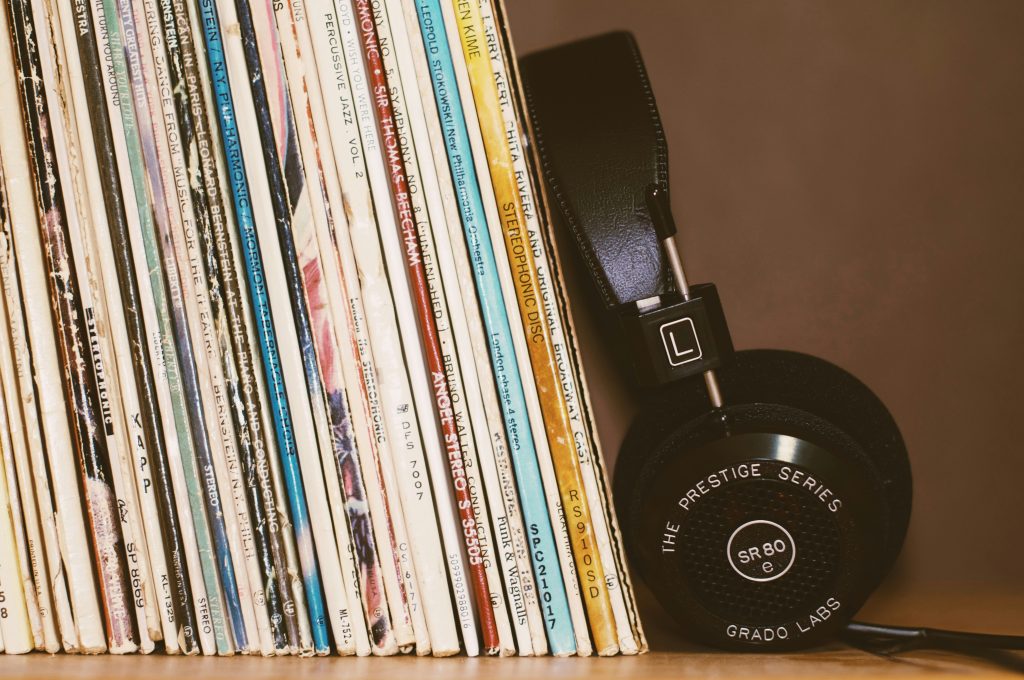
I was recently listening to an interview with guitarist JD Simo where he expressed surprise that some of the professional guitarists he knew didn’t really seek out new music to listen to or didn’t even listen to much music at all. He said that he listens to new music all the time.
It was surprising to hear that professional guitarists don’t uniformly listen to music all the time. But, after evaluating my own listening habits it may not be that surprising after all. Professional guitarists are no different than the rest of us. And I realized that I don’t listen to much new music either.
Somewhere along the way, music slowly shifted from being something I actively pursued to something that mostly filled the background. I’d put on familiar albums while doing other things, but I rarely sat down with the intention of discovering something new. When I did listen, it was usually to the same artists and records I’d listened to for years.
However, when I first started playing guitar, I did listen to music all the time. I listened to music I loved, but I also actively sought out new and different music to listen to. Finding new music I enjoyed was exciting. It seemed like something inside of me was unlocked when I found new music that really resonated with me.
Back then, finding new music meant listening to the local radio stations and trolling the local record stores. In fact some of my friends from that time period were people I met at the record stores because I was there so much.
Over time, of course, the record stores started closing. That feeling of hanging out with like-minded people and seeing what new music had come out that week kind of got lost. I’m glad to see the vinyl resurgence has helped some of the record stores stay in business, but it isn’t quite the same.
That being said, the ability to find and discover new music is unparalleled today. We have nearly the entirety of recorded music history a few clicks away. So, why are we all not listening to new music all the time?
I think it’s important to continue to seek out new music. As guitar players, we are the sum of what we’ve heard. Listening to the same music over and over will lead to playing the same things over and over. Listening to different genres or different eras of music can lead to some new ideas. I know it often does for me.
After realizing that I haven’t been doing this as much over the past few years, I’ve been trying to get back to that feeling of discovering new music. Each day I’m trying to listen to something I haven’t heard before. It doesn’t have to be brand new music. In fact, I recently went down the rabbit hole of 80s industrial music, much of which I’d never heard before.
I’m trying to actively listen to new music again. I’ve found some of the excitement that I used to have around music, and it’s been a lot of fun.
If you’ve found yourself in the same rut of listening to the same music you always have or not listening to much music at all, I would encourage you to seek out something new. A new artist, a new genre, or even just a new record you haven’t heard from a band you enjoy. Hopefully, it will give you some new inspiration.
Ed Sheeran once gave Myles Smith a guitar – here’s the bizarre item he got in return
![[L-R] Ed Sheeran and Myles Smith](https://guitar.com/wp-content/uploads/2026/07/Ed-Sheeran-Myles-Smith-hero@2000x1500.jpg)
How many guitarists get to say they’ve been personally gifted an instrument by one of the world’s most renowned artists? British singer-songwriter Myles Smith can count himself among this probably-very-tiny group, as one of his most treasured guitars, a Lowden S34C+ made its way into his collection as a gift from none other than Ed Sheeran.
Smith received the gift after attending a football match with Sheeran to watch their respective clubs, Arsenal and Ipswich Town, go head to head. “He invited me down to the game, and we won, of course,” he tells Guitar.com in the latest episode of My Guitars & Me.
“We became friends really quickly. “We had a lot in common, and so not long after meeting him, I went to his house, gave him a pair of custom trainers, and in return he gave me a guitar worth far more than a pair of custom trainers!”
Describing the guitar as the “first reason I fell in love with Lowden”, Smith goes on to explain why it’s such an important part of his studio and stage arsenal (no pun intended).
“For me this guitar plays a big part of both my recording and live,” he says. “Mainly live, because the guitar is lightweight, it’s got the resonance and the body that makes running around on stage a lot of fun. It just suits how I play.”
He goes on: “I think, for me, the reason why this guitar stood out [compared] to other guitars is just the way that it reacts to your playing. It could be really intimate and really loud all at the sound time. And you don’t often find that with guitars… It’s the perfect fun instrument. You can’t go wrong with it. You can’t overplay it and you can’t underplay it. And it just carries itself so well.
“For me, with the low action of the guitar and its playability, it’s just really fun, and it makes the guitar something that you don’t have to think about when you’re trying to play to thousands of people.”
Keep up with all the latest episodes of My Guitars & Me.
The post Ed Sheeran once gave Myles Smith a guitar – here’s the bizarre item he got in return appeared first on Guitar.com | All Things Guitar.
Rolling Stones producer Andrew Watt’s ability to coax the best out of legends explained: “He’s not afraid of being the bad guy”
![Andrew Watt, with Keith Richards [L] and Paul McCartney [R] inset](https://guitar.com/wp-content/uploads/2026/07/Andrew-Watt-Keith-Richards-Paul-McCartney-hero@2000x1500.jpg)
He might be a generation or two younger, but super producer Andrew Watt isn’t afraid to keep some of the legendary artists he works with in line…
Recently, Keith Richards lauded Watt’s no-nonsense approach when it came to the Rolling Stones two most recent albums, Hackney Diamonds (2023) and Foreign Tongues (2026). “[He’s] a breath of fresh air and a kick up the ass,” the guitarist said. “He knows his stuff musically and technically, and he doesn’t put up with any bullshit – he just gets on with it.”
And even Paul McCartney discovered Watt could be a bit “pushy” during the making of his latest solo album, The Boys of Dungeon Lane.
“I came away from the first session thinking, ‘Well, I like him, but he’s a bit pushy,” McCartney said. “But pushy’s not a bad thing in a producer. It’s just enthusiasm from someone who wants to keep making this record. It’s infectious.”
And according to Canadian producer and songwriter Henry Walter – known professionally as Cirkut, and with whom Watt has worked on numerous occasions, including on hits for Lady Gaga – Watt isn’t afraid of being the “bad guy” when it comes to songwriting and production.
“He’s not afraid to speak up in the uncomfortable situation where you don’t want to tell Lady Gaga, ‘Hey, you should try this way instead of that way,’” Walter tells the Washington Post in a new interview. “He’s not afraid of being the bad guy.”
At just 35 years old, Andrew Watt’s CV is about as stacked as they come, having worked with rock legends including Ozzy Obsourne, the Rolling Stones, Paul McCartney and Pearl Jam, as well as some of the world’s leading popular artists like Justin Bieber, Demi Lovato and Post Malone.
And even as the Rolling Stones released their 25th studio album Foreign Tongues just days ago, Keith Richards says Andrew Watt might already be eyeing up his third Stones collaboration.
“I’m very glad that we met Andrew when we did because he knows so much about The Stones that I’ve forgotten,” says the 82-year-old musician of Watt’s professional energy. “And his enthusiasm for it, you can’t beat it, it’s great fun to work with.”
The post Rolling Stones producer Andrew Watt’s ability to coax the best out of legends explained: “He’s not afraid of being the bad guy” appeared first on Guitar.com | All Things Guitar.
“He was a handful. I wasn’t enjoying it anymore”: How musical differences with Steve Marriott led Peter Frampton to leave Humble Pie and go solo

Peter Frampton’s 1976 live album, Frampton Comes Alive!, remains one of the best-selling live albums of all time. Recorded at several venues across San Francisco, San Rafael and New York between June and November 1975, the album has reportedly sold over 11 million copies worldwide since its release.
But Frampton may have never enjoyed that astounding success had he never left Humble Pie in 1971.
The circumstances surrounding his exit essentially boiled down to growing musical differences with his bandmates, notably frontman Steve Marriott. And in a new interview with Record Collector, the guitarist recalls the fracturing professional relationship that led to his decision to depart.
He explains that his decision came after the release of Humble Pie’s 1971 live album, Performance: Rockin’ the Fillmore.
“It wasn’t just the direction, it was personality-wise, as well,” Frampton says. “Steve and I were not on the same planet anymore, unfortunately. I loved him dearly, but he was a handful. I wasn’t enjoying it anymore.”
Frampton explains how concerns over the band’s sound being “chosen” for them based on the material that appeared on the 1971 live album made him preemptively exit the band.
“We started out doing acoustic without drums, acoustic with drums, electric guitar, pianos, keyboards, and then heavy… we did it all,” he goes on. “That’s what I loved about Humble Pie, to start with. But our direction was kind of chosen for us by what we put on the live record, and I knew that everyone was going to expect that, and only that, from then on, on record.
“So that was why I decided to leave before the record came out. I believed it was going to be a small hit, not knowing it was going to be a much bigger hit than I thought, and then it would be much more difficult for me to leave.”
Last month, Peter Frampton reflected on his affliction with inclusion body myositis (IBM), a progressive degenerative muscle disease which has affected his ability to play guitar. Ever the optimist, the guitarist says he enjoys the “challenge”.
“I can’t complain about my life at all,” he said. “Yes, it’s not the most pleasant thing to have. It changes your life. It’s not going to end it, but yeah, it’s a little difficult. But really I’ve gotten used to it, and I like the challenge of being able to do what I do as it progresses.”
Peter Frampton released his latest solo album Carry the Light in May this year. Listen below:
The post “He was a handful. I wasn’t enjoying it anymore”: How musical differences with Steve Marriott led Peter Frampton to leave Humble Pie and go solo appeared first on Guitar.com | All Things Guitar.
That mystery Marshall stack from Green Day’s Super Bowl set is officially here – meet the 1959BJA Billie Joe Armstrong Artist Signature

Remember that mysterious baby blue Marshall stack Billie Joe Armstrong wheeled out at this year’s Super Bowl? As many suspected, it wasn’t a one-off custom build.
After months of speculation, Marshall has officially unveiled the 1959BJA Billie Joe Armstrong Artist Signature, its first artist signature amplifier since the white snakeskin-clad 1959HW Bernie Marsden in 2019. Built in collaboration with the Green Day frontman, the handwired 100W head promises to bottle the snarling, high-gain plexi tone that helped define Dookie and an entire generation of punk rock guitar.
Developed with Armstrong, the 1959BJA builds on Marshall’s handwired 1959HW platform, but incorporates a custom “Dookie Mod” inspired by the tone shaped alongside producer Rob Cavallo during the recording of Green Day’s landmark 1994 album.
The result, says Marshall, is a classic plexi with modern performance flexibility, delivering increased gain, tighter lows and the saturated punch that brings Armstrong’s signature sound into a modern stage-ready format.
Handwired in the UK, the 1959BJA runs on three ECC83 preamp valves and four EL34 power tubes, delivering 100 watts through a single channel with controls for Presence, Gain, Master Volume and a three-band EQ. Around the back are dual speaker outputs with switchable 4, 8 and 16-ohm impedance options.
 Credit: Marshall
Visually, it’s every bit as eye-catching as it looked on the Super Bowl stage. The head sports a distinctive baby-blue finish inspired by Blue, Armstrong’s legendary first guitar (a Fernandes Stratocaster copy), complete with brass and silver panels, custom branding and the guitarist’s signature on both the front and rear panels. The unit is sold as a head only, allowing players to pair it with the cabinet of their choice.
“I’m so overjoyed to have my own signature Marshall amp,” says Billie Joe. “These amps have been a part of my musical life, from my heroes down to little old me. Turn it the fuck up!”
“Billie Joe’s guitar sound is instantly recognisable,” says Steph Carter, Culture Marketing Director at Marshall. “From the moment you hear those opening chords on Dookie, you know exactly who it is. Working with Billie to create an amp that captures that punch, aggression and clarity was an incredible project for our team.”
The 1959BJA Billie Joe Armstrong Artist Signature is available from 21 July via authorised Marshall retailers and Marshall’s website for $3,999.99/£3,099.99. Availability will vary by region.
Learn more at Marshall.
The post That mystery Marshall stack from Green Day’s Super Bowl set is officially here – meet the 1959BJA Billie Joe Armstrong Artist Signature appeared first on Guitar.com | All Things Guitar.
“Don’t lecture them”: Why Mick Jagger leaves politics out of his concerts

Rolling Stones frontman Mick Jagger has spent more than six decades mastering the art of working a crowd. But despite playing to stadiums around the world, there’s one thing he deliberately avoids bringing on stage: politics.
Speaking on the New York Times’ podcast, The Interview, Jagger explains that as a live performer, his role onstage is to help fans escape the outside world rather than “lecture” them.
Asked what his relationship to the audience means to him, Jagger says that every crowd is different depending on the setting.
“Well, first of all, it depends on where you are and what kind of event it is,” he says, pointing to appearances at festivals like the New Orleans Jazz & Heritage Festival, Glastonbury and BST Hyde Park, where not everyone in attendance is necessarily a die-hard Rolling Stones fan.
“So, they’re not necessarily coming to see – they’re not your biggest fans necessarily. I’m not saying they hate you, otherwise, they probably wouldn’t be there,” Jagger says. “But there’s different levels of these kinds of people, and you have to treat them in a slightly different way.”
That philosophy also informs his approach to politics on stage.
“The bottom line… is that my job in the live music world is to [make sure] those people that come have the best time they possibly can and for two hours forget all their problems and the problems of the world. Their mortgages and whatever. Just so they can have the best time.”
Drawing a comparison to live sports, Jagger adds, “It’s similar to going to a sports event, really. Everything else is shut out. You’re just watching to see who’s going to win. You’re not worried about everything else. You know? Those things are out of your mind.”
He also says performers should read the room rather than force a reaction from the crowd.
“Some audiences want to go completely nuts and so then you encourage them to go more nuts… You don’t want to be trying to churn them up into [getting] frustrated that they’re not being demonstrative. Or, you don’t think they’re having a good time.”
“Your job is to make them go more apeshit [about the festival]. . . . You don’t want to lecture them.”
That said, that doesn’t mean Jagger steers clear of politics altogether. The singer says he’s become more comfortable weaving political observations into his songwriting over the years, albeit sparingly.
Reflecting on the band’s latest album Foreign Tongues, in particular, Jagger says, “You could say that I wouldn’t have written any of these songs when I was 30 maybe.”
“I’ve also gotten into this habit of doing songs that are about personal relationships and then I throw a verse about politics in there. I think that’s a trick that I’ve learned from other songwriters because nobody wants to hear a whole song about politics… or social comment of any kind.”
“Like a blues song like Rough and Twisted is really just stream-of-consciousness, honestly. You talk about women and everything, and then you throw in stuff that’s obviously political. The only club was called Conspiracy . . . / All they wanted was tyranny So, you find yourself using these tricks.
Watch the full interview below.
The post “Don’t lecture them”: Why Mick Jagger leaves politics out of his concerts appeared first on Guitar.com | All Things Guitar.
Pages
