
Music is the universal language
“Glory to God in the highest heaven, and on earth peace to those on whom his favor rests.” - Luke 2:14
Norse Guitar Feeds
Feast your eyes on these lush new colours for Fender’s Player II Series: Rallye Orange and Cactus Gray

Fender has given its Player II instrument series a refresh by introducing some new colour options and a choice of fretboard and body materials on select guitars.
The Player II series was launched in 2024, building upon its original Player series that was unveiled in 2018. It replaced the Standard Series as “the new foundational offering and first official step into Fender’s electric guitar product lines”, as explained by Fender itself.
The guitars included in the refresh are the Player II Stratocaster, Stratocaster HSS, Telecaster, Telecaster Left-Handed, Telecaster HH, Jaguar, Jazzmaster, and a Mustang. Three basses also complete the line up: a Player II Precision Bass, Jazz Bass, and Mustang Bass PJ.
The new colours joining the Player II Series include Rallye Orange and Cactus Grey, along with a Birch Green which is only available in the form of a Player II Jaguar. The models are all priced between £669.00 and £919.00, and offer Modern C neck profiles and medium jumbo frets.
Tone is mostly powered by Player Series Alnico V Single-Coil pickups across this refreshed range, though there are some exceptions on the basses and other select guitars: the Telecaster HH of course being one of them, offering Player Series Alnico II humbuckers, and the Stratocaster HSS, fitted with Player Series Alnico V Single-Coil Strat pickups and a Player Series Alnico II humbucker.
Players also get a choice of body material (alder, chambered ash or chambered mahogany) on the Stratocaster, Stratocaster HSS, and the Telecaster, with the rest offering alder as standard. All models have either rosewood or maple fingerboards.
To find out more and view the full Player II Series, head over to Fender.
 Credit: Fender
The post Feast your eyes on these lush new colours for Fender’s Player II Series: Rallye Orange and Cactus Gray appeared first on Guitar.com | All Things Guitar.
Lenny Kravitz says there’s an entirely logical reason why he works out at the gym in leather trousers: “I can fit in a workout anytime, anywhere”

Two years back Lenny Kravitz sent the internet into a frenzy when he shared a workout video of him dressed in his classic attire combo of combat boots, a mesh vest, sunglasses and leather pants.
Now 62, it seems Kravitz isn’t ditching the leather trousers when exercising anytime soon, and he’s now explained why he does it. Not just about looking cool, his peculiar choice of workout clothing is tied to his performance stamina – sort of like how Beyoncé sings while on a treadmill.
Speaking to Men’s Health, he explains, “I perform onstage in leather, denim, whatever, so those are the pants I wear to train. It also means I can fit in a workout anytime, anywhere.
“I can gauge everything by how I’m in my pants,” he adds. “Like, if my pants are a little tight, I know I’m getting outta’ shape. My friend Denzel Washington gave me this phrase, ‘The pants don’t lie, the pants don’t lie.’”
Thank God for today! Grateful. Never been better. There are no shortcuts so seize your day. It is all possible. Love! pic.twitter.com/BHqQ63oNOt
— Lenny Kravitz (@LennyKravitz) April 9, 2024
In more recent Kravitz news, he spoke to Guitar World earlier this year about why he remains unconvinced by digital emulations and guitar gear tech advances.
Asked whether he could recreate the sound of his classic albums using modern gear, Kravitz replied: “It ain’t the same, man. It really isn’t the same. I A/B test everything, and while technology has come a long way and some things are very close, they’re just not close enough.
“Plus, there is the effect of the accumulation of one thing on top of the other, one old piece combined with something else vintage,” he says. “It begins to build up a sound that modern equipment can’t reproduce. Just look at old guitars – the age of the wood, you know? That’s something almost indefinable.”
The post Lenny Kravitz says there’s an entirely logical reason why he works out at the gym in leather trousers: “I can fit in a workout anytime, anywhere” appeared first on Guitar.com | All Things Guitar.
Collectors alert: the stunning Birds of a Feather inlay was previously only available on PRS Private Stock guitars – now you can get it on a Custom 24

Collectors pay attention: PRS has announced a new extremely limited-edition model, the Birds of a Feather Custom 24, limited to only 350 worldwide.
Anyone even slightly into guitars knows the classic bird inlays that decorate PRS guitars. But this one features a special flock of birds across the length of the fretboard that’s sure to make any serious collector consider getting the wallet out…
This specific fretboard inlay design – dubbed “Birds of a Feather” – is actually now 10 years old, and before this drop, was only available on PRS’s ultra-high-end private stock guitars. It was first designed by Paul Miles, who is now PRS’s Director of Manufacturing and head of Private Stock. On the new Birds of a Feather Custom 24, the flock of birds creates an exquisite transition from ebony to maple.
Three colour options are available as part of the release: Blood Red, Charcoal Microburst and Honey Gold. All three have another bird etched into their headstock, too.
 Credit: PRS
“Very often, Private Stock is an incubator for what we can do on Core. This helps our production line grow and learn new techniques that we would usually save for custom builds,” says Paul Miles. “We have passed down colours, processes, and inlay to offer more options for dealers who are looking for custom work, making the Core series a branch of the Private Stock shop.”
“I wanted to design an inlay that was simple and easy to read from across the room or on a stage but was also uniquely PRS,” he goes on. “I have always been fascinated with inlay work and PRS has afforded me the opportunity to see the evolution from hand cut shell to intricate CNC work. For me, this was a new way of looking at inlay design, using the woods to create movement and space.”
 Credit: PRS
Beyond the Birds of a Feather design, the custom model implements the same specs as other PRS Custom 24 models: a figured maple top, mahogany back, 25” scale length, and PRS DMO pickups. Elsewhere, the PRS Phase III locking tuners and the Gen III tremolo maintain tuning even for the most flamboyant players.
Of course, PRS is no stranger to dealing out custom models. This past June, the company produced a real-life version of the guitar from the popular Japanese anime, Rock Is A Lady’s Modesty. Only 690 units of that guitar were available. Then last year, PRS made a custom model for Dragonforce guitarist Herman Li. 200 lucky buyers got their hands on that one.
For more information, head to PRS Guitars.
The post Collectors alert: the stunning Birds of a Feather inlay was previously only available on PRS Private Stock guitars – now you can get it on a Custom 24 appeared first on Guitar.com | All Things Guitar.
Beto Cuevas Performs on Taylor Guitar’s Next Generation Builder’s Edition 814ce

Take a look at the smallest guitar on Martin’s books, the 5-28 Terz

Acoustic guitarists have been asking for its return for some time, and so Martin has revived a classic miniature acoustic guitar with “roots dating back to the earliest days” of the company. Meet the 5-28 Terz, a recreation of the smallest-bodied acoustic guitar ever produced by the company in its near-200-year history.
It boasts a 21.38” scale length and a 12-fret fingerboard. Six more frets exist beyond the guitar’s upper bout, but you’ll have to reach for those…
Its smaller form factor and design means the 5-28 Terz is tuned a minor third above E standard in Terz tuning, offering a distinctive bell-like character rich in upper harmonics.
“Layer it with a standard-tuned guitar, and the difference is immediate – a bright, chiming texture that adds dimension without competing for space,“ Martin says.
- READ MORE: Martin Road Series D-10E Retro Sapele review: A stage-ready Martin at a seriously competitive price
In terms of build, the 5-28 Terz features East Indian rosewood back and sides, along with a spruce top with an Aging Toner finish for a vintage vibe, antique white binding to elevate that classic Martin aesthetic, and a mahogany neck with a High-Performance Taper and ebony fingerboard with mother-of-pearl dot inlays.
“The 5-28 Terz isn’t a travel guitar or simply a scaled-down parlor model. It’s a purpose-built instrument with roots reaching back to Martin’s earliest days, built around a short 21.38″ scale and a 12-fret neck that place it in a category all its own,” says Martin.
“Don’t let its dimensions fool you. The 5-28 Terz delivers a surprising sense of depth, presence, and projection for an instrument this compact. It’s a guitar made to stand apart – in your hands, on a recording, or layered into a live arrangement.”
It might be the smallest acoustic guitar on Martin’s books, but it boasts a substantial price tag, clocking in at $3,599.99.
Learn more at Martin.
The post Take a look at the smallest guitar on Martin’s books, the 5-28 Terz appeared first on Guitar.com | All Things Guitar.
“He had a tooth missing, wearing a skin-tight outfit. I remember thinking: ‘You’ve got to be kidding’”: Label exec recalls the first time she saw Bon Scott with AC/DC

While Brian Johnson is AC/DC’s longest-serving singer – having fronted the group for the last 45+ years – the mythology of the legendary Aussie rock band wouldn’t be complete without Bon Scott.
Ronald Belford “Bon” Scott was the band’s second lead singer, joining in 1974 following the departure of original frontman Dave Evans. Scott’s tenure only lasted six years, though, and ended with his tragic death in 1980 as a result of acute alcohol poisoning after a night of heavy drinking.
But during his time with the band, his voice was forever immortalised on a plethora of now-classic AC/DC tracks, including Highway to Hell, Dirt Deeds Done Dirt Cheap and T.N.T.
Shortly after joining AC/DC back in 1974, Bon Scott was quick to make his mark. In a new feature with Classic Rock, Fifa Riccobono, former CEO of Albert Music, the first label the band signed with – also in ‘74 – remembers the first time she saw the band’s new lineup with Scott at the helm.
Riccobono attended the band’s show at Sydney’s Rockdale Masonic Hall in place of George Young and Harry Vanda, the production duo behind some of AC/DC’s iconic early albums. George Young was the older brother of guitarists Angus and Malcolm Young.
“He came out with a tooth missing, wearing this skin-tight satin one-piece outfit,” she recalls. “I remember thinking: ‘You’ve got to be kidding.’”
But despite not knowing all the words to some of the songs, Riccobono says Scott fit right in.
“You couldn’t take your eyes off him because he was so charismatic…” she says. “It felt like he’d always been there.”
“He was so charming, friendly and welcoming that I walked away with a completely different opinion,” Riccobono recalls, expecting a somewhat brash, out-there personality before meeting him backstage after the show.
“I told them he fit,” she says of her subsequent conversation with George Young and Harry Vanda at Albert Music.
The post “He had a tooth missing, wearing a skin-tight outfit. I remember thinking: ‘You’ve got to be kidding’”: Label exec recalls the first time she saw Bon Scott with AC/DC appeared first on Guitar.com | All Things Guitar.
“It was: ‘Do we spend £5 on chips or petrol?’ We always chose petrol so we could get to the next gig”: Rob Halford on the humble beginnings of Judas Priest

They’re now one of the most iconic metal bands of all time, but it took a while for Judas Priest to find success. And like so many artists, the British outfit had their years of counting pennies.
Formed in 1969, it took around a decade of relentless gigging for Priest to gather momentum, and finally saw mainstream commercial success with the release of their 1980 album, British Steel, which featured the likes of Breaking the Law and Living After Midnight.
But as frontman Rob Halford remembers in a new interview with Classic Rock, the years they’d spent prior very much consisted of paying their dues.
The band signed their first record deal in the early ‘70s, releasing their debut album Rocka Rolla through independent label Gull. “They couldn’t afford to pay us a fiver each in wages,” Halford recalls.
“It was a case of: ‘Do we spend this five pounds on some chips, or do we buy petrol?’ And we always chose the petrol so we could get to the next gig. But most bands go through the same.”
Their dues were paid, though, and Judas Priest have gone on to become one of the most important bands in the history of heavy metal, influencing the likes of Metallica, Iron Maiden and so many more.
Elsewhere in the interview, Rob Halford recalls some of the earliest lyrics he wrote with the band.
“I honestly can’t remember what the first song I ever wrote lyrics to was,” he says. “But it’s probably something like Rocka Rolla or Winter’s Retreat on that first album.
“These days I look at the words to Rocka Rolla and do a bit of an eye roll. But we were young and I was a different person then – and we had to write our own material.
“Priest had been out on the road doing pubs and clubs before we got the deal with Gull, but I don’t recall doing covers. From day one we were playing songs like Never Satisfied or Whisky Woman, which later turned into Victim of Changes, and whatever else we were noodling with at the time.”
He continues: “But I took inspiration from everywhere. We were at the beginning of something new and experimental in music. We were passing from the hippie phase into a time when everything was getting louder. I can remember sitting with KK [Downing, guitarist], listening to Hendrix, Wishbone Ash, Yes and Jethro Tull as well as the obvious stuff like Sabbath, Zeppelin and Purple.”
View a list of all of Judas Priest’s upcoming live dates at their official website.
The post “It was: ‘Do we spend £5 on chips or petrol?’ We always chose petrol so we could get to the next gig”: Rob Halford on the humble beginnings of Judas Priest appeared first on Guitar.com | All Things Guitar.
“He was so proud of himself”: Paul McCartney’s wholesome reaction after playing with the Rolling Stones on Hackney Diamonds
![[L-R] Paul McCartney and Keith Richards](https://guitar.com/wp-content/uploads/2026/07/Keith-Richards-Paul-Macca-hero@2000x1500.jpg)
Every musician has heroes, even one with such stature as Paul McCartney. Yep, most artists would kill for the chance to work with the Beatles legend, but when Macca had the chance to work with the Rolling Stones on their 2023 album Hackney Diamonds, it was he who was starstruck.
McCartney actually offered up backing vocals alongside John Lennon to two Stones tracks in 1967: Dandelion and We Love You, the latter often regarded as one of the band’s most experimental songs.
But it would be nearly 60 years until Macca worked alongside the Stones in the studio once again: just about enough time for his starstricken barometer to reset.
The past few years have seen enough collaboration to make up for lost time, though, as Paul McCartney played bass on both Hackney Diamonds’ Bite My Head Off, and Covered in You, from the Stones’ latest album Foreign Tongues, released earlier this month. Both were recorded during the same sessions.
And in a new interview with Classic Rock, Ronnie Wood recalls McCartney’s reaction after contributing to Hackney Diamonds.
“He always set it as one of his ambitions, and after he played on Hackney Diamonds he said: ‘I played with the Rolling Stones.’ He was so proud of himself, you know?” says Wood. “And from the same sessions we kept the Covered in You song and used that again.”
Last year, Andrew Watt – who produced both Hackney Diamonds and Foreign Tongues, as well as Paul McCartney’s latest solo album, The Boys of Dungeon Lane – also recalled Macca’s wholesome reaction to recording with the Rolling Stones.
“He got to just be the bass player in the band, and he fucking loved it,” Watt said. “As I was walking Paul out of the studio, he said, ‘I just fucking played bass in The Rolling Stones, and I’m a fucking Beatle!’”
As for whether the Rolling Stones plan to tour following the release of Foreign Tongues, Ronnie Wood says he and Mick Jagger “never stop wanting to play”, but whether they do depends on Keith Richards.
“Anything’s possible,” he says. “We just, you know, toss a coin and see how it lands. That’s the way we’ve always played it.”
The post “He was so proud of himself”: Paul McCartney’s wholesome reaction after playing with the Rolling Stones on Hackney Diamonds appeared first on Guitar.com | All Things Guitar.
Yard Act’s Sam Shipstone on clichés, concision and how guitars returned to their core: “Great bands really find their style, and that’s the thing they sit on”

“We’re a rock band, what are we doing?” chuckles Sam Shipstone, telling Guitar.com about the collective realisation that Yard Act needed their own space. Surrounded by flight cases, old merchandise and various paraphernalia from their first two albums, we’re taking cover from the heatwave on the outskirts of Leeds at the band’s 18-month-old HQ.
It’s quite literally their baby; the office for the Dream Job’– to coin an old song title of theirs – and a territory that enables the type of impulsive, unbroken creativity that a young Shipstone craved.
“20 years of dreaming about that, finally got three months of it!” he quips, finishing his guided tour of the room and preparing to dig into the nitty-gritty of how album three, You’re Gonna Need A Little Music, came into existence. “Even though we’ve been in this band for a little while, we’ve never afforded ourselves that privilege, and when you start in music, that’s the kind of life you really want: ‘I’m going to sit in a room for months and explore ideas.’ It’s a huge privilege, and that was not lost on us.”
Beforehand, Yard Act’s post-pandemic explosion and unrelenting touring resulted in two albums with sporadic processes, despite the post-punk cohesion of 2022’s debut The Overload and the entertaining but eccentric Where’s My Utopia? (2024). Simultaneously in the lineage of The Fall, LCD Soundsystem and Pulp, the band were soon headlining London’s Brixton Academy and Millennium Square in Leeds city centre.
 Image: James Winstanley
You Can’t Park There, Mate
After the four spent plenty of time in other bands, this one bolted from the jump, visually mirrored by what you see in this storage unit-slash-rehearsal space. Between congas, music video props and a piano gifted by vocalist James Smith’s aunt, Shipstone carefully unearths his pedalboard – although he’s taken his guitars back home to Bradford. We also spot an oud he received as a birthday present. “I’ve definitely got more invested in music theory, and with a fretless instrument, you can go a lot further. It’s a bit trendy now, microtonal stuff…
“My main boost is this Full-Drive 2, but when we’re recording, I use the RAT a lot, because I think this one’s got a thickness to it,” he continues. “The brights aren’t very punishing, and because I play with those [G&L] ASATs, you really want them to be strong, because that’s the character of that guitar, but you need to tame them a bit. So I settled for this boost, because it didn’t make the brights too crazy. But when we used the RAT, it was like, ‘This is the sound that you want, when you want a really distorted guitar.’”
He used the RAT on record for the funky, upper-cut riff of Fiction, which hundreds of fans heard for the first time in the car park of Leeds’ Brudenell Social Club at the second of two free gigs in May to launch this record. Missing from proceedings was their mascot-style car, The Rover, recently burnt to the ground, despite being a fixture of the car park and their storied pop-ups and residencies at the venue. Automobiles aside, this record feels like a reset, exemplified by Yard Act’s choice to debut the entire LP at those shows.
“Albums one and two we did on laptops, and album two specifically was really hard to try and conceive as a four-piece,” Shipstone explains. “It took a lot of work to translate how we’d recorded it to [live], whereas this record, these songs are already good to go. It made me think, imagine being The Rolling Stones, they’d literally play songs live and on record exactly the same way! Redeemer works really well. You’re Gonna Need A Little Music always gets the crowd jumping, even if they don’t know it, which is good.”
After demoing the album at their base, the group laid down the instrumentation at nearby studio The Nave before decamping to Los Angeles and the home of producer Justin Meldal-Johnsen for overdubs and vocal takes. Shipstone abstained from packing his guitars, having primarily relied on his trusty butterscotch blonde ASAT at Nave, but he couldn’t resist mucking around with Meldal-Johsen’s extensive collection.
“You see his own history reflected in the guitar choices,” Shipstone says. “He’s got a Nine Inch Nails and a Beck connection. I played a Silvertone 1448, a plucky mid-range guitar, and that feels like a Beck guitar to me. Justin had a really mint Stratocaster. I didn’t get the year, but it was beautiful. I’ve never really owned one before, and that was one where I thought, ‘Oh yeah, the bottom end of a Stratocaster, the balance of it, is really great.’”
 Image: James Winstanley
Rein It In
You’re Gonna Need A Little Music reunites the guitar with the nucleus of Yard Act’s sound. Songs like Cherophobe Rock and Thrill Of The Chase tread far closer to The Overload than album two, where Shipstone took more of a back seat, because “if you’re writing on a tour bus, you’re not going to go to a guitar first,” he tells Guitar.com. “[Those] songs get quite a lot of life in them before a guitar’s ever been thought of being added, so then you’re really adding that guitar as an overdub rather than a core part of the structure.
“We’ve got certain Yard Act clichés,” he readily admits, “but I think we need to stay more on a style than we probably are.” Why? “Great bands really find their style, and that’s the thing they sit on. I think creativity is best when it’s strangled in a certain way, when the options are closed off. All creative people want to be doing something novel, [but] following that too much will make the spirit of who you are suffer a little bit. Sometimes we need to rein in stuff that’s gone a bit too far… where it just isn’t Yard Act, this is pastiche.”
That’s not to say You’re Gonna Need A Little Music isn’t exploratory. The title track’s pop-loving chorus lands like the sun peeking out from behind the clouds, while the riff in Fiction turns their jagged post-punk guitar lines into a football chant that shadows the chorus vocal hook (“Weezer do that a bit, don’t they?”). Despite a renewed emphasis on the guitar, there is a seat at the table for pop sensibilities that offset the peculiar structures in Redeemer and Empty Pledges; an exercise in appeasement, Shipstone reckons.
“In Greek mythology, sometimes you had two gods ruling the same sphere of human activity. With modern music, there’s the god that says, ‘You need to do something that your audience will like,’ and the other god: ‘Ignore your audience and do your own thing.’ Most people that just follow that [second] god that makes crap music… but if you just follow your audience, you’re just a slave to trends that’s going to make terrible, artistically compromised music. You’ve got to have both of those gods always honoured at once. English Teacher do that really well!”
This tangent aligns with what he told us in 2024 about serving what the song needs, which he candidly admits can generate tension in the process. “It’s tricky, because when you’re in your head in those arguments, the ‘greater thing’ is your notion of what that should be,” he says, currently sitting on the fence while Smith and bassist Ryan Needham debate whether The Overload will remain in the setlist. Crucially, though: “We do listen to each other. We’re definitely bigger than the sum of our parts in this.”
 Image: James Winstanley
Post-Punk’s Latest Poster Boy
Individually, though, Shipstone’s admittance of Yard Act clichés arguably extend to his guitar playing, now honing in on the type of recognisable style that he values. “[Yard Act] definitely made me play in a different way,” he says, remembering after-school lessons on the Isle Of Man with Miss Dennett in Year Six.
“My dream, when we started this band, was to use gain and be done with it, and have a very naked, forward, spiky guitar sound. I think the guitar sound [has become] thin, lead-y, definitely wonky. Without being punk-aggressive, it needs to push out those notes hard.
“Sometimes I listen to post-punk playlists on Spotify, and there is a certain stylistic similarity,” he continues. “It’s often reverb-y, repeated staccato lines, and I think [my sound] is a little bit different. I don’t think it’s a sound that’s as strong as many other guitar players,” comes the caveat. But perhaps Shipstone – and Yard Act – are on their way to becoming the influential guitar gods that future rock bands will try to appease. “I’ll tell you what, I haven’t heard anybody copying it. Which might be because it’s not worth copying…”
Discussing inspiration from ‘lofi beats to study to’ playlists on YouTube for the fragmented chords on Janey Said, while Joy Division’s Love Will Tear Us Apart influenced Thrill Of The Chase, Shipstone has come a long way from the teenager hellbent on emulating Led Zeppelin’s Jimmy Page and mastering power chords. Every time he touches his six-string, it comes with a purpose, rather than mindless noodling or escapism.
“I think it’s just like adult life, you have a bit more responsibility,” he muses. “I’m not allowing myself to be distracted, it’s like, ‘Okay, I’ve got an hour, I’m going to do this.’” Visibly inspired by his newfound love of music theory, the learning curve – inside and out of Yard Act – will continue. “In the history of popular guitar music, most musicians shun music notation as a system. You don’t need it. But there’s a way that musical notation gives you a visual impression of chords and harmony that is a lot stronger than the guitar lets you see it.”
You’re Gonna Need A Little Music is out now via Island Records.
The post Yard Act’s Sam Shipstone on clichés, concision and how guitars returned to their core: “Great bands really find their style, and that’s the thing they sit on” appeared first on Guitar.com | All Things Guitar.
Justin Bieber used a specially made left-handed Taylor Gold Label acoustic during the World Cup Final halftime show

38 days. 104 games. Hours upon hours of football. It’s been quite the month and a bit…
In the end, Spain won the 2026 FIFA World Cup, overcoming Argentina in a 1-0 extra time win at the MetLife Stadium in New Jersey on 19 July.
This year’s edition of the tournament saw a number of changes to the format, including an expansion to 48 teams (up from 32, though FIFA is reportedly planning to expand it again to 64 teams in 2030).
It also saw the first-ever World Cup Final halftime show, with performances from Madonna, Shakira, Burna Boy and Justin Bieber.
For his segment, after a brief introduction by actor Jason Sudeikis, Justin Bieber took to the field to perform an angelic rendition of his 2025 track, Everything Hallelujah. Naturally, as a bunch of guitar nerds, our eyes went straight to the gorgeous Taylor Gold Label 517e he had in his hands.
Eagle-eyed viewers will have noticed that Justin Bieber is a leftie, and the Gold Label 517e is normally only available in a right-handed configuration.
As it turns out, the guitar he played during halftime is one of a small selection of left-handed Gold Labels made by Taylor for a handful of prominent left-handed artists, including Justin Bieber and Elliott Easton of the Cars.
Bieber’s World Cup 517e, in particular, features a Taylor’s in-house-designed Claria pickup system, in place of the LR Baggs Element electronics.
Obviously, an artist of Justin Bieber’s stature could have his pick in terms of the instruments he chooses to take to the stage, but ultimately, for the World Cup Final halftime show, he narrowed it down to two Gold Label options, a custom 717e and a 517e, rehearsing with both.
 Credit: Marvin Ibo Guengoer – GES Sportfoto/Getty Images
“A lot of coordination went into this,” Jay Parkin, Director of Artist Relations & Partnerships at Taylor, tells Guitar.com.
“When Justin was booked for the World Cup Final, his guitar tech reached out through [backline company] Studio Instrument Rentals. It’s a great example of the relationships we’ve built with backline partners like SIR, CenterStaging and John Henry’s.”
Parkin explains how he keeps a “small inventory” of Justin Bieber’s guitars at CenterStaging, a large rehearsal and backline facility in Burbank, California.
“His tech requested two left-handed Gold Labels, and I coordinated the logistics, shipping a Gold Label 517 with our Claria pickup system and a custom 717 to SIR for rehearsals. After trying both guitars, Justin and his tech chose the standard Gold Label 517 for the halftime show.”
The World Cup Final halftime show also saw performances from Madonna – who was accompanied by Brazilian football legends Ronaldo and Ronaldinho, and Shakira and Burna Boy, who performed their 2026 smash hit, Dai Dai.
The post Justin Bieber used a specially made left-handed Taylor Gold Label acoustic during the World Cup Final halftime show appeared first on Guitar.com | All Things Guitar.
Keith Richards blasts people who make music using AI: “Music could do a lot better than just trying to copy itself”
![[L-R] Mick Jagger and Keith Richards of the Rolling Stones](https://guitar.com/wp-content/uploads/2026/07/Stones-new-hero@2000x1500.jpg)
Few topics have had so much chatter in the past couple of years as AI. Artificial intelligence is now everywhere, with helpful use cases like debugging code, and not-so-helpful use cases like filling our social media feeds with slop.
As with any new technology, sometimes its use is appropriate, sometimes not. Take the Rolling Stones, for example. The group – now all in their 80s, with the exception of Ronnie Wood, who is 79 – harnessed the power of AI to make de-aged versions of themselves for the music video for In the Stars, from their latest album Foreign Tongues.
“They’re not fake people in a fake room; they’re all in a room, really playing together,” Mick Jagger says in a new interview with Billboard. “The musicians are real musicians that look a bit like the Rolling Stones in 1968. The only thing was the faces.
“They worked on mine first, and it kind of looked like me, but not really – like one of my children when they were 23 or something. And then I saw Ronnie, and I said to the people working on it, ‘It looks more like Jeff Beck.’ So they had to do a bit of extra work.”
“That’s our brushing with AI,” adds Keith Richards. “I said, ‘Very nice. I wish I looked like that now.’ But maybe that’s what they’re good for – music videos. Put it in its proper place.”
As for AI when it comes to the actual music, Richards and Jagger are less enthusiastic.
“My thoughts are: I’d rather hear something original,” says Keith. “Music could do a lot better than just trying to copy itself. After all, it’s pretty simple stuff – this is not Beethoven or Bach, and I’ve no doubt AI can do that, but so what? We want new input.
“We don’t want more and more copying and synthesizing. At least that’s my point of view. Music is to play around with. Surely there’s enough originality without having to copy nursery rhymes.”
Likewise, Jagger encourages those looking to use AI as a tool to write music to “have your own input and your own thoughts”.
“I don’t want to be imitated by AI, vocally and instrumentally, and the band doesn’t. I don’t want people just putting stuff out there that can sound exactly like the Rolling Stones – I think that’s obviously wrong. If someone wants to make music by AI, go ahead, but it has to be original.”
The post Keith Richards blasts people who make music using AI: “Music could do a lot better than just trying to copy itself” appeared first on Guitar.com | All Things Guitar.
Jack White apparently wanted to use The White Stripes’ Seven Nation Army as a James Bond film theme

It goes without saying that Seven Nation Army features one of the most iconic riffs of all time. However, White Stripes frontman Jack White initially had a very different vision for the famous riff – namely, he felt it would be the perfect soundtrack to a James Bond movie.
In a new interview with Uncut, music producer Liam Watson recalls his time working with White on the White Stripes’ 2003 record, Elephant. White opted to record at Watson’s recording studio, Toe Rag, and that’s where Seven Nation Army took form. Throughout the process, White frequently expressed his espionage dreams for the track. “When we did Seven Nation Army, Jack said it would be great to get it on a Bond film,” he says.
Watson also explained how the process wasn’t exactly simple. “The recording was more complicated as Jack was going through two guitar amps, with two mics on each amp going down to a single channel,” he explains. “Half the mixing was done as it was played, and it took over an hour to get all the elements right, but they didn’t mind playing it again and again.”
White has told numerous people about his gut feeling that Seven Nation Army was worthy of a Bond soundtrack. In fact, he even expressed the sentiment to Jimmy Page and U2’s The Edge back in 2009. In the middle of the It Might Get Loud documentary, White said: “For a second I left [the riff] and thought ‘oh, maybe one day if I ever have to do a James Bond theme song or some spy movie, maybe I’ll use it.”
He also explained how the riff first came to be. While the track has since become recognisable across the globe, it had pretty mundane beginnings; White simply landed on it during a soundcheck in Australia. “I started playing that riff… and I thought ‘oh, this is really cool,’” he recalled.
Sure he had landed on something great, he called over his friend and room mate, Ben Swank, to show him – before Swank quickly humbled White. “I said ‘what do you think of this?’ and he said ‘…it’s alright,’” White said. “It’s great when people say that, because it makes you get defensive in your brain – you think, ‘no, there’s something to this, you just don’t see it yet!’”
White took some time to cook up the final track, sitting on the riff for some time. Eventually, he penned lyrics for the song, opting to use the killer riff to take aim at people gossipping about his relationship with drummer and ex-wife Meg White.
In a 2024 countdown of the 500 Greatest Songs of All Time, Rolling Stone ranked the legendary hard rock track at number 36. In the short bio of the track, White explained that the name of the track was a nod to his childhood; “I didn’t have lyrics for it until later on [after the soundcheck], and I was just calling it ‘Seven Nation Army’… that’s what I called the Salvation Army when I was a kid”.
Jack White’s latest record, Frozen Charlotte, is out now.
The post Jack White apparently wanted to use The White Stripes’ Seven Nation Army as a James Bond film theme appeared first on Guitar.com | All Things Guitar.
“She played quite loud, but that didn’t worry me”: Former Pretenders guitarist remembers playing alongside Chrissie Hynde
![[L-R] Chrissie Hynde and Robbie McIntosh of the Pretenders](https://guitar.com/wp-content/uploads/2026/07/Chrissie-Hynde-Robbie-McIntosh-hero@2000x1500.jpg)
Robbie McIntosh has recounted auditioning to be a guitarist in the Pretenders, and his experience playing alongside frontwoman Chrissie Hynde.
McIntosh joined the Pretenders in September of 1982, following the tragic death of founding member James Honeyman-Scott aged just 25 in June that year. Despite being friends with Honeyman-Scott, Mcintosh’s audition was the first time he met Chrissie Hynde.
- READ MORE: Master luthier, custom modding legend and Superstrat pioneer Wayne Charvel has died aged 85
As for what the audition entailed? He explains, in a new interview with Guitar World: “We just jammed. I played for maybe 20 minutes with another guitar player, Mick Green, who I was sort of in awe of, and a bass player whose name I can’t remember. Martin [Chambers] was playing drums. Chrissie and Dave Hill, the manager, sat in front of the stage.
“A few days later, I got the call from Chrissie and she said she wanted me in the band. I didn’t have a clue that I’d passed the audition.”
What followed was his first actual rehearsal alongside Hynde. “I remember she played quite loud, but that didn’t worry me,” he recalls. “I was more concerned with how I could complement her and play off what she did. I can’t remember whether the first thing we did was 2000 Miles or Middle of the Road. I think it was Middle of the Road.”
The latter famously featured a blistering lead guitar solo, which he says he pieced together through multiple takes in the studio.
“In the studio I did maybe three or four solos, all different kinds of things, and [producer] Chris Thomas said, ‘I like that bit. We’ll keep the first half.’ I think I dropped in the really fast bit on its own, and I did that thing with the delay at the end of the solo. We worked on it for maybe half an hour.”
Reflecting on how his approach to the solo was different to what James Honeyman-Scott would have done, he continues: “It was a bit more aggressive and flashy.”
“People always ask me about the picking on that solo,” he says. “I just used my fingers, and the pick was inside my hand. Then if I needed the pick, I’d just pull it out. Chris Thomas always complimented me on the guitar playing on the album. I saw him a couple of years ago and he said the same thing. He said what a great time he had making that album. I was quite chuffed.”
The post “She played quite loud, but that didn’t worry me”: Former Pretenders guitarist remembers playing alongside Chrissie Hynde appeared first on Guitar.com | All Things Guitar.
Master luthier, custom modding legend and Superstrat pioneer Wayne Charvel has died aged 85

Luthier Wayne Richard Charvel has died at the age of 85, leaving a long legacy of game-changing custom axes in his wake.
Charvel’s love-affair with guitars spans back over 50 years. After three years of cutting his teeth and learning the ropes in the Fender workshop, 1974 saw Charvel breaking off and setting up his own shop, Charvel’s Guitar Repair. While the brand had quaint, humble beginnings, Charvel’s penchant for custom mods soon lured in artists from far and wide.
Over time, the shop gained a reputation. It was the hot spot for artists seeking something unique, with Charvel managing to craft even the most buckwild fantasy guitars. In just a few years, Charvel’s vision grew the brand to legendary status – and pretty soon Jackson swooped in, buying the brand in 1978.
Countless guitarists have collaborated Charvel guitars over the years. From Eddie Van Halen’s striking Bumblebee guitar, which made its debut on some of the Van Halen II album artwork, to clips of him riffing on a white Strat-head logo Charvel, to Slipknot’s Jim Root’s 2022 signature Charvel, plenty of artists have been honoured to brandish the iconic brand.
A slew of artists have rolled up to share their condolences. Among the messages, British guitarist Lita Ford of the Runaways has shared a message on Instagram. “Superhero guitar luthier and legend that changed the face of the rock world!” she writes. “Deepest condolences to his family, friends, and fans! Greatness never dies.”
Elsewhere, glam metal star Michael Angelo Batio of Nitro fame has also shared his sadness over Wayne’s passing. In an Instagram post, Batio shares a snap of him and the late guitar maker, before showing off an extensive slideshow of custom Charvels he has rocked over the years – including his crazy four neck Quad guitar.
“It is with great sadness that I write this… the legendary Guitar builder and master luthier Wayne Charvel passed away recently,” he writes. “Wayne built many of my most famous Guitars and was not only one of the all time best, but he was also a great friend. He is greatly missed.”
Charvel’s relationship with Batio is one of numerous occasions where Charvel consistently went above and beyond. Speaking to Guitar World back in April, Batio recalls how his four-necked guitar came to be – and it was all in a big to one-up Steve Vai’s heart-shaped triple-neck guitar.
“Steve Vai came out with his three-neck heart guitar, and my label wanted me to challenge Steve to a duel…” Batio recalled. “The label went, ‘Michael… Steve’s got three necks, and you have two. You know what you need?’ And I went, ‘Four.’ They loved it!”
“As it happened, Wayne Charvel was building all my guitars,” he continues. “I said to him, ‘Can you do this?’ I have a good engineering mind for guitar design, so I designed the Quad. I told him how I thought it should be four separate guitars, and that was that. It was the wildest thing. There was no limit to what we were trying to do.”
From selling parts in his shop to making dream guitars a reality, Charvel’s custom mods encouraged guitarists to dream big. His influence on the modding world can’t be understated – and we’re sure his ambitious creations will inspire luthiers for years to come.
The post Master luthier, custom modding legend and Superstrat pioneer Wayne Charvel has died aged 85 appeared first on Guitar.com | All Things Guitar.
Electro-Harmonix Bass Big Muff Pi 2 review: all the low-end grind you could need?

$122/£124.99, ehx.com
You’d think at this point we’d have run out of things to say about the Big Muff circuit, but alas, it keeps on being relevant and interesting, despite its basic formula being pretty nailed-down for nearly 60 years at this point.
The latest big development in the Big Muffverse was, of course, when Josh Scott teamed up with EHX to issue a hitherto unreleased version of the circuit – an early, unrealised variant of the dual-op-amp Big Muff Pi, warranting a big ol’ “2” on the box. It’s the sequel to the Big Muff!
 Image: Press
Electro-Harmonix Bass Big Muff 2 – what is it?
So are we talking Terminator 2 or Jaws: The Revenge? Luckily, a little more of the former – like any good sequel, the Big Muff 2 keeps the core appeal of the original, while still jumping off into new territory. It is still a bunch of clipping gain-stages in a row, with a dual-filter tone control – but there’s a bunch of tonal tweaks that make it a compelling alternative to even the other op-amp variants of the circuit, perhaps most notably an extra pair of back-to-back clipping diodes in the first gain stage, where almost all other Big Muff variants only have clipping diodes on the second two (out of four total) gain stages.
Most important for today’s purposes, though, is the fact that the Big Muff 2’s altered layout did lead to a little more grind and thickness, making it primed to be worked into a new version of the Bass Big Muff Pi. Bass fuzzes are notoriously finicky to voice right – will this be a sustain-soaked success or a flubby mess?
There are two additional controls here when compared to the regular three-knob zero-switch Big Muff 2. There’s a clean blend control and a bass boost switch. The clean blend goes from no clean blend at all to fully clean – albeit still boosted by the pedal’s volume control to properly compete with the fuzz signal. There’s also a bass boost toggle switch, which does what you’d expect.
Electro-Harmonix Bass Big Muff 2 – usability and sounds on bass
Allow me, for a moment, to inject a little narrative into this review. Thanks to an incident involving my bassist’s car’s clutch dying a surprising and noisy death, he was left without access to his usual gear for a week. And so he had to play a gig with an improvised mini-pedalboard and the venue’s backline bass amplifier. In some ways, this laid a perfect test-ground for the Bass Big Muff 2 – it was his only source of distortion for a set that very much needs bass distortion.
The sounds this pedal can create are nothing short of fantastic – through an affordable MarkBass head set dead clean and a 1×15” cab, it provided a thunderous amount of low-end, even with the distortion maxed out. The clean blend was very welcome for the sake of retaining this low-end and clarity, and also midrange – the Big Muff 2 still keeps a version of the famous Big Muff tone stack, infamous for making your sound disappear in a busy band mix, but here, the boosted clean sound bolsters the sharp, singing saturation of the distorted side of the pedal. And so in what is perhaps one of its most crucial environments – on the board of a bassist in a doom metal band – the Bass Big Muff 2 more than does the job.
 Image: Press
Electro-Harmonix Bass Big Muff 2 – usability and sounds on guitar
Now, just because it says ‘bass’ on the box, that doesn’t stop us from having a little six-string fun. The pedal’s bass-friendly features are just as handy for accentuating the tones of any electric guitar, not just a doomy downtuned one. The Big Muff circuit has a reputation for completely removing all hope of complex chord voicings; however, the presence of the clean blend lets you bring some of that back in some unconventional ways.
With a light overdrive in front of the pedal the clean blend is then mixing between this light overdrive and the sound of a bassy Big Muff, tightened and boosted by an overdrive pedal – it’s a really cool combo – if your amp has the headroom to deal with the sound as is, it’s a unique parallel drive sound. If it doesn’t, it’s an equally unique over-fuzzed tone. For six-string use the bass-boost switch will very much need to remain off, as with a guitar amp it’s likely a one-way ticket to flub town, but the overall voice of the pedal is still interesting in a non-bass context.
 Image: Press
Electro-Harmonix Bass Big Muff 2 – should I buy one?
As a “sequel” to the original bass Big Muff, this new pedal does indeed elevate the formula. Whereas previous iterations had some of these elements, the “dry” switch was a binary toggle. The clean blend knob brings in a very cool feature from the Deluxe variant of the pedal, adds it seamlessly to the affordable single-stomp version, and uses a new Muff variant that works fantastically for bass. In that regard, it’s pretty successful.
It also manages to dodge the previous curse of EHX’s bass-focused Muffs, in that it’s actually a pretty good-looking pedal – the less said about the original’s shade of green and border of unfinished metal or the deluxe’s faux-crackle, the better. EHX has also recently started knurling their knobs, meaning you can actually turn them in the middle of a sweaty gig, which is good!
Is it for everyone? Well, it is still ultimately a Big Muff-derived thing – and even with the clean blend in play, tonal subtlety is still hard to wrangle out of it. Fans of a tasteful smattering of overdrive will find the fuzz side of the pedal quickly getting too distorted. But if you like that thick, sludgy distortion – then you’re in luck.
Bass Big Muff 2 – alternatives
If you’re the kind of person who wants flexibility above all, the Way Huge Pork And Pickle ($199/£189) is a cool two-mode bass-friendly fuzz/overdrive combo with a clean blend, and can go from subtle to saturated. If you’re the kind of person who just wants a straightforward bass-friendly overdrive without the bells and whistles, the EQD Blumes ($129/£124.99) will have you covered. And if you’re the kind of person who lights cigars with burning $100 bills and employs a dedicated monocle polisher, then you could look into the Walrus Audio Mantle ($749.99/£719) for a bit of bass saturation.
The post Electro-Harmonix Bass Big Muff Pi 2 review: all the low-end grind you could need? appeared first on Guitar.com | All Things Guitar.
Review: Fishman Fluence Acoustic Pickups Offer Tone-Targeted Models and Real-Time Voice Switching

Totally Guitars Weekly Update July 17, 2026
July 17, 2027 Last week it was Simon & Garfunkel and this week it was The Eagles that were in heavy rotation around TG Central. A little bit of Desperado to start, some Jethro Tull to follow (We Used To Know), a hint of my latest project in there with Classical Gas as the finale. […]
The post Totally Guitars Weekly Update July 17, 2026 appeared first on On The Beat with Totally Guitars.
20 Things I Can’t Wait to See at the 2026 Fretboard Summit
As of this writing, we are one month out from one of the most unique guitar gatherings on Earth: The Fretboard Summit.
This is where the staff from the Fretboard Journal (including yours truly), Chicago’s famed Old Town School of Folk Music, and dozens of brands and independent luthiers, collectors and players of all stripes get together for an annual hang unlike any other “guitar festival” you’ve heard of.
It’s a highly curated guitar show, equally inspired by TED Talks and some of our favorite music festivals. Mostly, it’s an ever-growing family reunion for guitar geeks who want to connect, learn and have fun.
For 2026, we have nearly 100 guitar brands and luthiers exhibiting. Hand-picked bigger brands like Taylor, Yamaha, Collings and Martin exhibit, as do dozens of solo luthiers from around the globe. We welcome select pedal and amp makers, too, including Chase Bliss, JHS, Two-Rock, Henriksen and others.
We have quiet rooms if you want to test an acoustic and loud rooms if you want to hear a guitar through a cranked-up amp. There are multiple classrooms, a bar with guitar-themed cocktails, a vintage amp library (see below) and even a pretty special wine tasting hosted by one of our readers (who happens to be an acclaimed vintner from Australia). It’s basically Disneyland if you’re into cool or rare fretted instruments.
Every Summit is different and filled with surprises – prior Summits featured unannounced cameos by Rosanne Cash, Ben Harper, luthier Jim Olson and others.
But here’s what I’m most excited about for 2026’s hang.
1. New Faces: If you look at our poster, you’ll notice we have some younger artists this year. But we’re also welcoming a fresh crop of attendees, the recipients of our first-ever Summit scholarship program. Thanks to the generous support of the Music Emporium, ten up-and-coming young luthiers and music students will be a part of the 2026 Summit experience. I’ve read their applications, and they’re all incredible people. I can’t wait to meet them all.
2. Summer School’s Pedal Class: Mark Turley is the owner of Summer School Electronics, but he’s also a public school teacher. During his summer break, he relaxes, builds a bunch of cool pedals (all school-themed) and does kooky things like teach pedal-making at the Summit. This will be his second year teaching a pop-up pedal class within the Summit. He’s a natural. This costs a bit extra and takes a couple of hours, but everyone goes home with a rad, homemade souvenir…the pedal they just built. We talked about it on the most recent FJ Podcast.
3. Bob Taylor Going Deep on tonewoods. For months, Taylor Guitars’ co-founder Bob Taylor and I have been going back and forth on this session: A brain dump from Bob on the state of guitar woods in 2026, things we should be worried about, things we should be hopeful about, regulations, treaty updates and more. Bob has been on the forefront of this stuff for decades and this seems important for all to hear (even Taylor’s peers and competition in the business), so we’re opening up our theater early on Saturday so that exhibitors and attendees can glean some knowledge before the show floor opens.
4. The Science Fair. Every year, we see some wild innovation at the Summit. On Friday, we’re bringing back our old-school Science Fair, where inventors can show off and explain their forward-thinking creations to our audience. It’s just like your old Junior High Science Fair, but with more talk of sustain and fewer volcanoes.
5. Wine Tasting with Bill Downie. Fretboard Journal reader Bill Downie just happens to be one of Australia’s most respected Pinot Noir makers. Once again, he’s bringing a couple of cases of wine to share with Summit attendees. It’s a great chance to connect with guitar fanatics from around the world.
6. Chris Martin IV. Technically, we’ve done seven Fretboard Summits. They always have a ton of Martin coverage, but this year Chris Martin IV is actually attending and speaking.
7. Josh Scott’s world premiere screening. JHS’s Josh Scott just released a monumental book on the history of Electro-Hamonix. While he was writing it, he was also secretly filming a full-length documentary about the brand and his research. He’ll be showing it on the Summit’s big screen for the first time ever.
8. The Volcano Brothers is one of those insider, only-in-Nashville bands: A traditional Hawaiian string band featuring heavy hitters session musicians Steve Dawson, Fats Kaplin, Richard Bennett, Dave Jacques, and Andy Reiss. They’ll be playing their first-ever show in Chicago at the Summit and leading workshops all weekend long. I can’t wait.
9. Hand Habits (aka Meg Duffy) has been featured in our magazine (Fretboard Journal 58) and on our podcast before. They are finally attending the Summit in 2026 and playing a co-bill with Jessica from Deep Sea Diver. As if that wasn’t enough Meg will be collaborating with our dear friend Chris Vincent (R2R Electric) during Chris’ ultra-rare pedal workshop.
10. Into bluegrass? Michael Daves and Jacob Jolliff are performing this year. Though they just released a new record of Jim & Jesse covers, Daves will also be teaching a workshop on the guitar stylings of Norman Blake.
11. Gabe Noel’s recording discography is like a who’s who of great pop records of the last two decades, including Harry Styles, Sombr, Kendrick Lamar, and Dijon. As we showcased in a recent video, this bassist/cellist has also fallen head over heels in love with tenor guitars.
Gabe actually took music lessons at Old Town School when he was a kid, so we decided to bring him back to his roots to showcase his new love for guitar. On Saturday night, he’ll close out the Summit with other instrumentalists like Jonathan Stout, Twanguero and Shane Parish. It’ll be an unforgettable night of guitar wizardry.
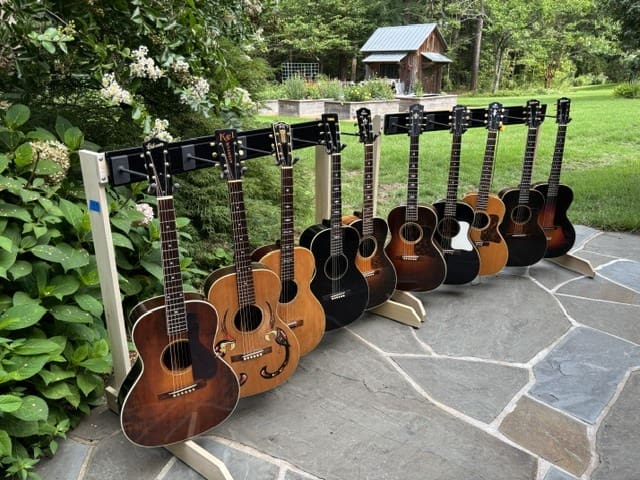
12. Mark Stutman’s Gibson Petting Zoo. Folkway Music’s Mark Stutman is THE guy when it comes to vintage Gibson acoustics. This year, he’s not only talking about the magic found in these quirky 90-year-old instruments, but he and a private collector are also bringing out over a dozen examples for Summit goers to try out.
13. The Pinewood Derby. Last year, we sent a bunch of Pinewood Derby car kits to famous guitarmakers to see what they’d come up with. It ended up being one of our favorite Summit memories, so we’re making it an annual tradition. Come see your favorite racers/luthiers and see what an actual wood master can do with a block of pine.
14. Teach Your Kids: Free Guitarmaking Class. A handful of exhibitors and attendees last year bonded over a shared love for guitars and giving back. They decided to throw a totally free intro-to-guitarmaking class for any kids who want to attend. The fun starts at 9 am on Saturday and should run for around 90 minutes in the Szold Theater. No Summit pass required.
15. New prototypes from Collings. Every year, Collings pulls out all the stops and unveils prototypes and not-yet-released models at the Summit, even stuff that hasn’t been showcased at NAMM. This year at the Summit, expect a few more surprises.
16. I can’t get over the guitar playing and arranging mastery of Shane Parish. He transcribed his favorite tracks by Autechre – an electronic music group that makes complex and layered music with seemingly no discernible notes – and turned them into guitar compositions that could fit nicely on any Kottke or Fahey record. I made a quick playlist A/B’ing a couple of Shane’s recordings after the originals. Check it out and then come see him play at the Summit. He’ll be hosting a workshop, too, where you can ask him directly about this project and how he does it.
17. Pedal Party Clinic with Jessica Dobson of Deep Sea Diver. Deep Sea Diver’s frontperson and Chris Benson from Benson Amps are longtime collaborators. During this workshop, Jessica will walk us through how she adds textures and tones to her songwriting using pedals and effects. While we always have a songwriting workshop or two at the Summit, this one takes it up a notch. Jessica is also playing our mainstage on Friday night.
18. A new-and-improved Truth About Vintage Amps room. Chicago’s amp tech Brian McAllister is a Truth About Vintage Amps listener and contributor. He always stocks the Summit with dozens of rare tube amps and PAs for other TAVA listeners and Summit attendees to check out. The room has become a surprise hit (and, of course, it can get loud), so we’re expanding its footprint this year to our East building. This is a great place to hear rare amps but also to try out the hundreds of luthier-built electrics that are for sale at the Summit.
19. Live Podcasts: All weekend long onstage, we’ll be interviewing some of our favorite artists and builders for our podcast network. This year, we’ll also be hosting a live Dipped in Tone episode, hosted by Rhett Shull, Zach Broyles (Mythos Pedals) and Addison Sauvan.
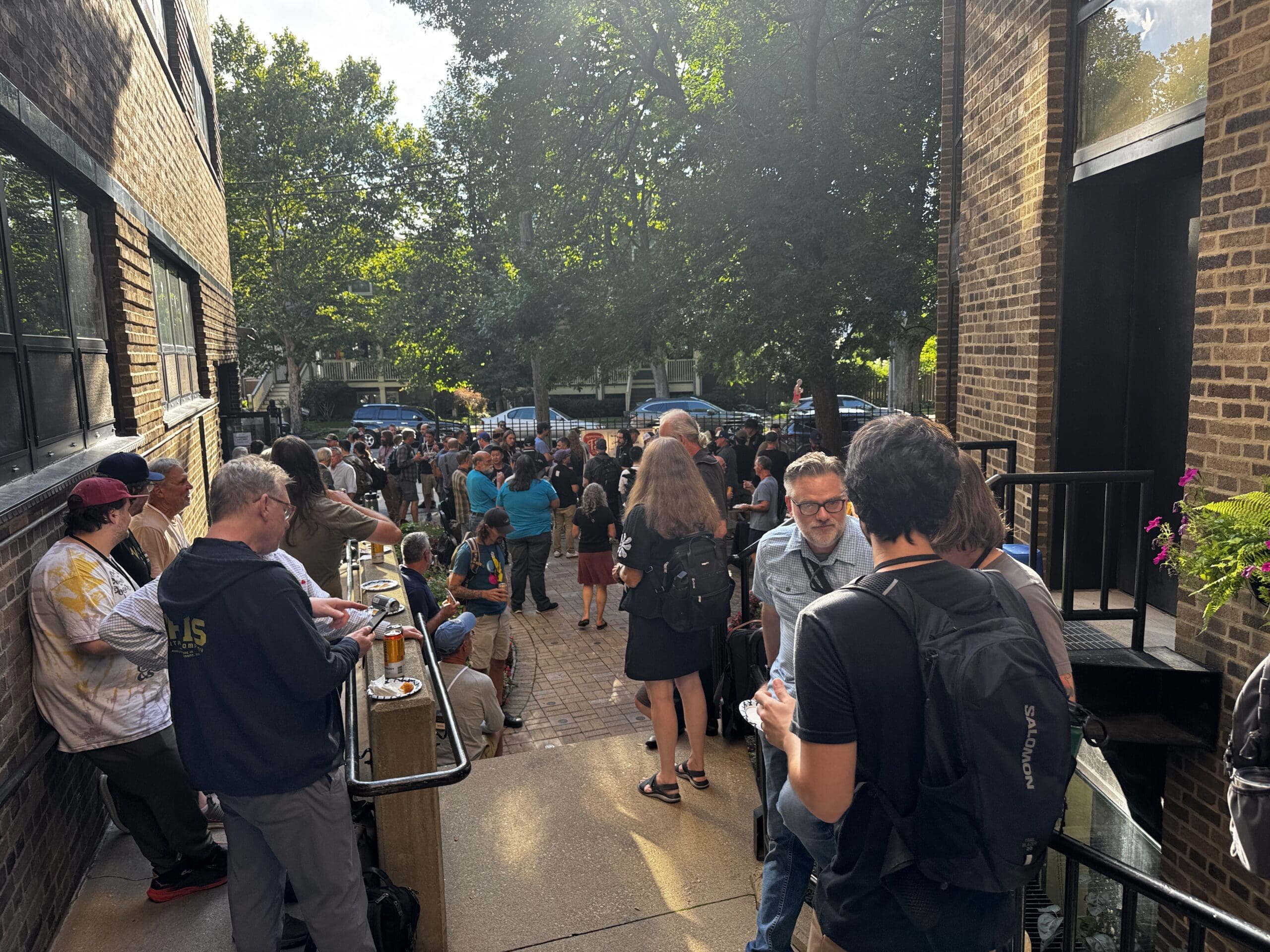
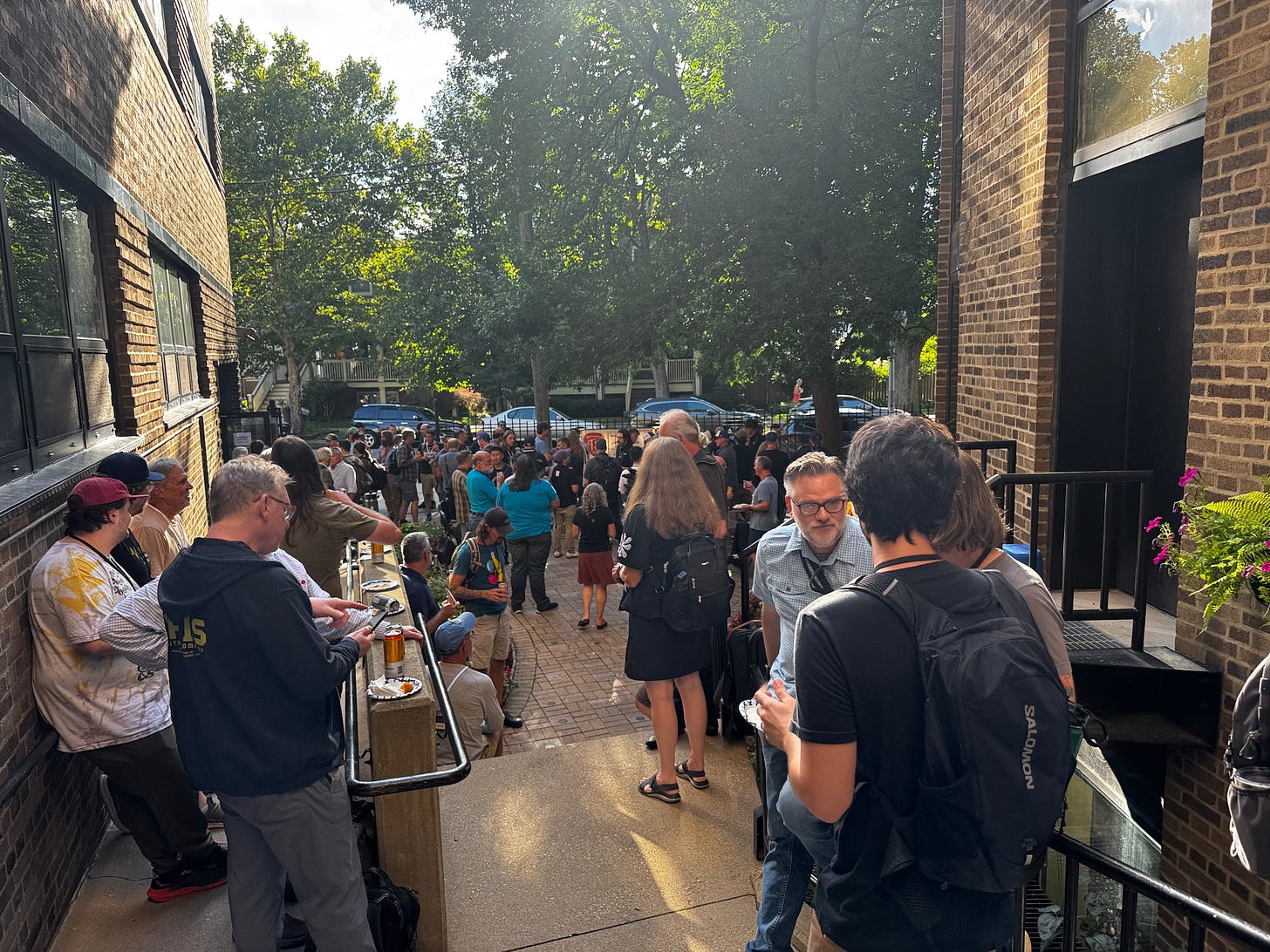
20. The people. Every year, I’m blown away by the handmade guitars, but also all the people I run into at the Summit. This weekend somehow draws Grammy winners, new players just starting out and some of the nicest people in the guitar community together. I hope to see you there, too.
Want to join us? Register for the 2026 Summit here.
The post 20 Things I Can’t Wait to See at the 2026 Fretboard Summit first appeared on Fretboard Journal.
“Me and Mick, we never stop wanting to play”: Ronnie Wood says it’s still possible The Rolling Stones will tour again, but it depends on Keith Richards

Despite being in their 80s – with the exception of Ronnie Wood who is 79 – the Rolling Stones are still very much active. In fact, the group just this month released their 25th studio album, Foreign Tongues.
But as for whether they plan to tour the record? That’s still up in the air, Ronnie Wood explains in a new interview with Classic Rock. Asked whether he and his bandmates Mick Jagger and Keith Richards plan to hit the road in support of the record, he replies: “Let’s hope.”
“Not this year, but maybe next year – we’d love to,” Wood says. “It’s an obvious thing that we would love to, because the Stones…”
Any rockstar approaching their 80s would be forgiven for wanting to slow down a bit, and even call time on touring entirely, but Wood goes on to reveal his and Jagger’s never-ending love of playing music.
“Me and Mick, we never stop wanting to play,” he says. “That’s why I’m going to take my solo band out to do a few gigs, to keep the chops together in my fingers. It’s got to be done. You’ve got to keep it warm, keep the music warm.
Back in April, Ronnie Wood added two new shows in the UK and Germany to his live schedule later this year.
“It’s great,” he continues. “And if the Stones can tour next year, let’s do it. That’s our attitude.”
One thing that might get in the way of plans to tour, though, is guitarist Keith Richards’ arthritis. Last year, the band cancelled a string of planned tour dates as Richards “didn’t think he could commit” to the gruelling schedule.
But Ronnie Wood remains optimistic. “Anything’s possible,” he asserts. “We just, you know, toss a coin and see how it lands. That’s the way we’ve always played it.”
Mick Jagger echoed Ronnie Wood’s comments in May, saying he would “absolutely love” to tour Foreign Tongues.
Foreign Tongues is out now. Listen below:
The post “Me and Mick, we never stop wanting to play”: Ronnie Wood says it’s still possible The Rolling Stones will tour again, but it depends on Keith Richards appeared first on Guitar.com | All Things Guitar.
“Our goal was simple: have a conversation… Thomann chose a different path”: Fender directly sues Thomann for copyright infringement
![Fender Stratocaster [main], Harley Benton guitars [inset]](https://guitar.com/wp-content/uploads/2026/07/Fender-sues-Thomann-hero@2000x1500.jpg)
For months now the guitar world has watched Fender‘s dispute with the rest of the guitar industry over the Stratocaster body shape rumble on, but now things seem to have escalated once again, as the brand has confirmed it launched formal infringement action against German retailer Thomann.
Back in May, the brand sent cease and desist letters to an array of guitar companies large and small – as well as a number of retailers – demanding that they stop producing and selling electric guitars that closely resemble Fender’s Stratocaster.
The action came off the back of a ruling in a Düsseldorf court in which Chinese manufacturer Yiwu Philharmonic was found to have infringed Fender’s copyright over the Stratocaster body shape. Yiwu failed to show up to court, resulting in a default ruling.
One of the first guitar makers to reveal it had been sent a cease and desist by Fender was California-based LsL Instruments, which subsequently hired attorney and guitar industry litigation veteran Ron Bienstock to spearhead its defence.
 Image: Adam Gasson
The scale of Fender’s legal action has become more apparent in recent weeks, though, as PRS and Yamaha – two of the biggest guitar manufacturers on the planet – and Thomann, one of the world’s largest musical instrument retailers – have all revealed they’ve received cease and desists.
While many brands are still weighing up how to respond to Fender’s cease and desist letters, Thomann – which owns Harley Benton, a massive budget gear brand selling S-type guitars among its catalogue – announced that it was taking legal action against Fender in response, seeking for the matter to be “clarified in court not only for our own company, but for all parties involved”.
Thomann said it was acting on behalf of smaller guitar builders which “do not have the financial and legal means to conduct such a legal dispute”. Thomann is notably the largest musical instrument retailer in Europe, and one of Fender’s biggest retail partners, stocking a significant number of Fender guitars among its inventory.
Now, Fender has responded, filing an infringement action in the Regional Court of Düsseldorf where it won the copyright case, and setting the stage for a huge showdown between the two behemoth companies.
In a statement shared with Reuters and Guitar World, Fender takes aim at Harley Benton, Thomann’s in-house budget gear brand, which sells a selection of Stratocaster-style guitars among its product lineup.
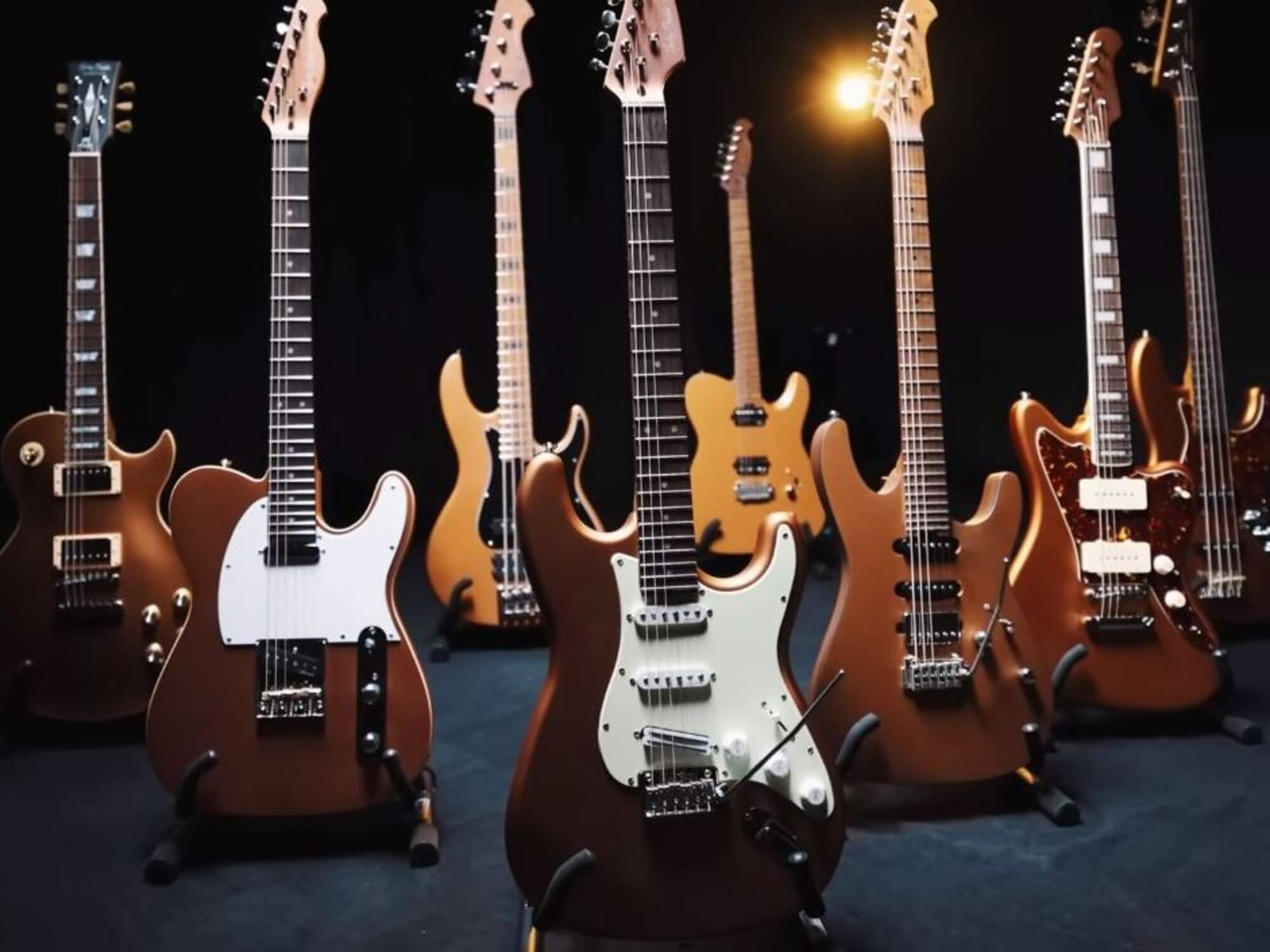 Image: Harley Benton via YouTube
“From the beginning, our goal was simple: have a conversation,” the statement reads. “Like many other companies across Europe, we reached out to Thomann to discuss practical ways to differentiate products while respecting Fender’s intellectual property. Our preference has always been dialogue and practical solutions – not litigation.
“Unfortunately, Thomann chose a different path. Rather than continuing that dialogue, it initiated legal proceedings asking the court to determine that it can continue selling guitar body designs that Fender believes copies the iconic Stratocaster. Today’s filing is Fender’s response and the expected next step in the legal process.”
Fender also reiterates its “preference” to “resolve these matters through direct dialogue rather than litigation”.
“In many instances, companies have chosen to work collaboratively with us to explore practical solutions, including design modifications that clearly differentiate their products while continuing to serve musicians,” the company continues.
“This matter is different. Thomann isn’t a small independent guitar builder. It is one of the world’s largest musical instrument retailers, one of Fender’s largest retail partners, and the owner of Harley Benton, one of Europe’s largest guitar brands.”
Fender says that its Stratocaster cease and desist action was not because it opposes competition.
 Image: Adam Gasson
“Fender has competed – and thrived – for nearly 80 years because musicians have choices. We welcome companies that challenge convention, develop new technologies, and create original instruments that inspire players,” it goes on. “That’s how this industry grows.
“What doesn’t move the industry forward is copying someone else’s iconic design instead of creating the next iconic design. We believe the guitar industry is strongest when innovation flourishes, musicians have meaningful choices, and companies compete by bringing new ideas to players around the world.”
Since the news of Fender’s Strat cease and desist letters broke in May, the guitar community has responded with ire, with large creators with hundreds of thousands of followers – including Rick Beato, Rhett Shull and Tim Pierce – criticising Fender’s move.
The new statement from Fender comes just a month after CEO Edward “Bud” Cole appeared at a dealer event, and attempted to calm down the controversy by saying Fender was “not suing anybody”.
“What we’ve done is reach out thoughtfully and [respectfully] to a handful of companies whose guitars come extremely close to replicating the iconic Fender Stratocaster design,” he said.
Fender’s full statement
Following Thomann’s recent Declaration of Non-Infringement action, Fender today filed its infringement action in the Regional Court of Düsseldorf in response to the litigation Thomann chose to initiate.
Earlier this year, the Regional Court of Düsseldorf recognized copyright protection for the Fender Stratocaster body shape as a work of applied art under European law. Following that decision, Fender engaged manufacturers, distributors, retailers, and online marketplaces across Europe whose products feature body designs that Fender believes are confusingly similar to the protected Stratocaster design. Our objective has been straightforward: protect Fender’s intellectual property, reduce consumer confusion, and explore practical solutions—including modifications that clearly differentiate products from the Stratocaster.
Those conversations continue today, and our preference has always been to resolve these matters through direct dialogue rather than litigation. In many instances, companies have chosen to work collaboratively with us to explore practical solutions, including design modifications that clearly differentiate their products while continuing to serve musicians.
This matter is different.
Thomann isn’t a small independent guitar builder. It is one of the world’s largest musical instrument retailers, one of Fender’s largest retail partners, and the owner of Harley Benton, one of Europe’s largest guitar brands.
From the beginning, our goal was simple: have a conversation. Like many other companies across Europe, we reached out to Thomann to discuss practical ways to differentiate products while respecting Fender’s intellectual property. Our preference has always been dialogue and practical solutions—not litigation.
Unfortunately, Thomann chose a different path. Rather than continuing that dialogue, it initiated legal proceedings asking the court to determine that it can continue selling guitar body designs that Fender believes copies the iconic Stratocaster. Today’s filing is Fender’s response and the expected next step in the legal process.
For more than 70 years, the Stratocaster has been one of the most influential and recognizable guitar designs in history. It has inspired generations of musicians, helped shape modern music, and become an enduring symbol of creativity around the world.
Fender has proudly served as the steward of one of the most iconic instrument designs in music history. We don’t take lightly our responsibility to protect that legacy. We believe that responsibility extends beyond Fender itself—to the artists, players, dealers, builders, partners, employees, shareholders, and the broader music community who have made the Stratocaster an enduring part of music history.
Let’s be clear: competition isn’t the issue. Fender has competed—and thrived—for nearly 80 years because musicians have choices. We welcome companies that challenge convention, develop new technologies, and create original instruments that inspire players. That’s how this industry grows.
What doesn’t move the industry forward is copying someone else’s iconic design instead of creating the next iconic design. We believe the guitar industry is strongest when innovation flourishes, musicians have meaningful choices, and companies compete by bringing new ideas to players around the world.
We’re proud of what the Stratocaster has meant to generations of musicians, and we believe it’s worth protecting. At the same time, we believe the future of the guitar industry depends on original thinking, bold ideas, and the next generation of great instruments. That’s the future Fender has always believed in—and it’s the future we’ll continue to support.
The post “Our goal was simple: have a conversation… Thomann chose a different path”: Fender directly sues Thomann for copyright infringement appeared first on Guitar.com | All Things Guitar.
Pages
